138-Person Event Boat from Eminönü: Season & Timing Guide
Picking the Date Matters More Than Picking the Boat
Most groups start the conversation with the same question: which boat? With a 138-person event, the real difference is made later, when you decide which day and which time slot the boat will sail. The same deck becomes an open-air celebration on a warm July evening and something entirely different on a November night, when the heated indoor lounge takes over. The vessel stays the same, the experience does not.
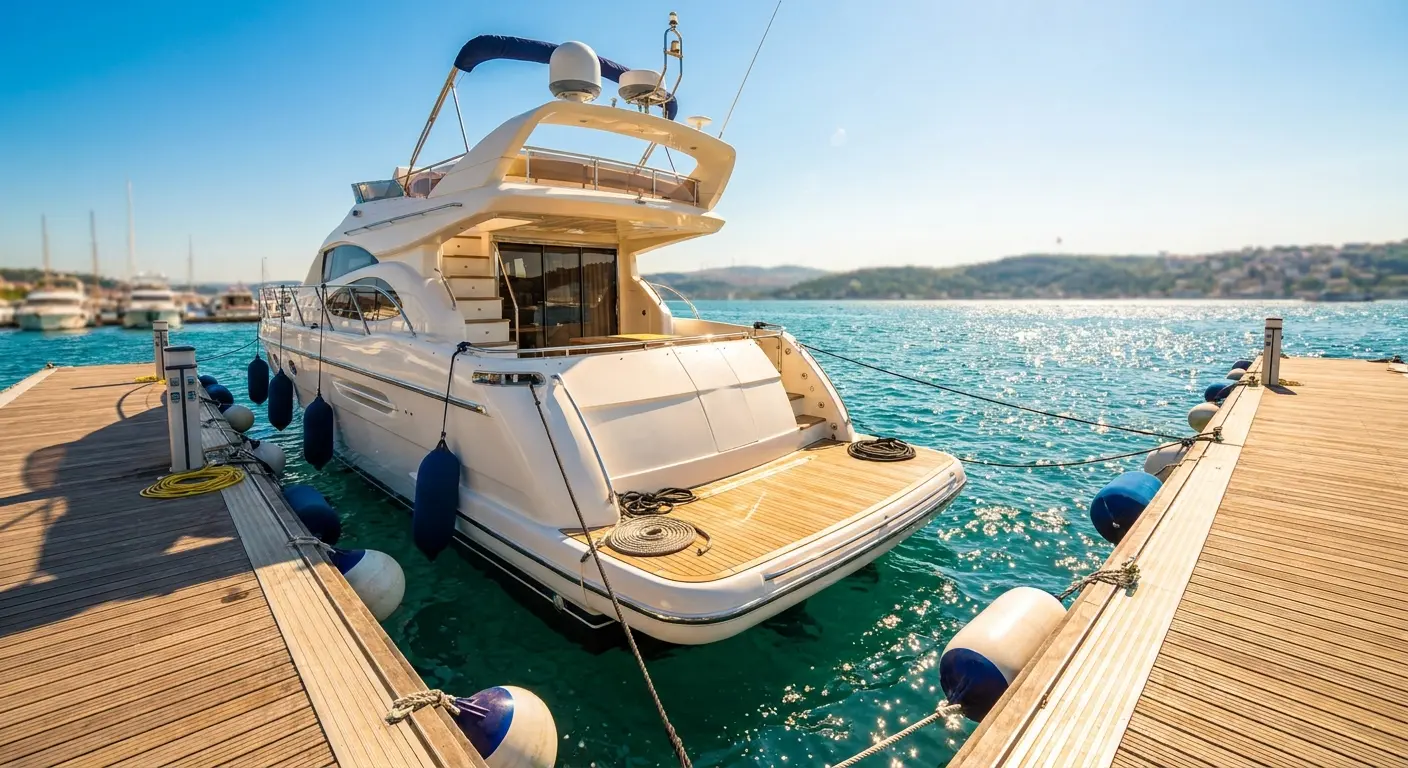
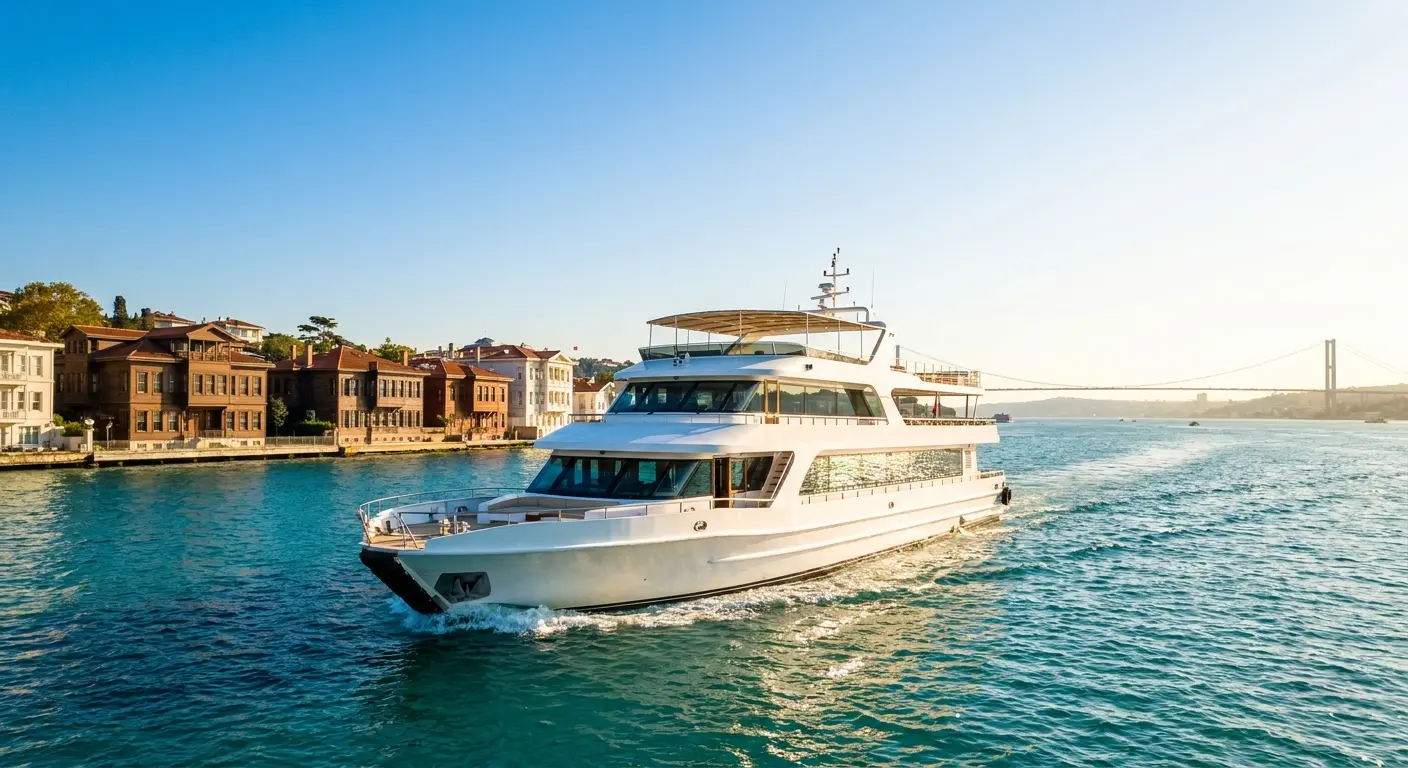
Take a closer look at the 138-person private event boat departing from Eminönü on Turlago. At 24 metres, it brings together an indoor seating area, a sound system, a television, a PlayStation, WiFi, a sun deck and a heating system under one roof. Disabled access, a WC, a swimming ladder and a shower area used during swimming stops round out the comfort side. That range of equipment makes the boat usable across most of the year, which naturally pushes the decision towards a different question: which season, and which hour.
What follows is a season-by-season and hour-by-hour breakdown of who each window suits, how weather reshapes the experience, and when you should actually book.
One Day, Three Different Products: Choosing Your Time Slot
Time slots get far less attention than seasons, yet they change the event just as much. Within a single day there are three distinct products, and they are not interchangeable.
Daytime: swimming, sun and open air
The stretch from late morning to mid-afternoon is when the boat's outdoor spaces work hardest. The sun deck is fully in use, the swimming ladder and shower area come into play, and any children in the group have room to move. It is also the most forgiving window for mixed-age groups, because everything happens in daylight. The trade-off is heat: in July and August, a midday start can make the open deck uncomfortable for long stretches. If you book daytime in high summer, treat the indoor seating area as a genuine cooling-off station rather than an afterthought.
Sunset: the strongest window for atmosphere and photography
Sunset is the most requested slot for event boat charters, and for good reason. The light shifts fast, the city skyline sits in the background, and the deck becomes a natural setting for both celebration and photos. Temperatures drop compared with midday, so the open deck turns comfortable. The catch is duration: the golden light typically lasts somewhere between forty and seventy minutes. For weddings, engagements or any event built around a specific ceremonial moment, that window has to be planned precisely rather than left to chance.
Evening: the heating system widens the season
An evening charter is where the indoor seating area, heating system, sound system and television earn their place. This is what turns the boat from a summer-only option into a year-round venue; even in winter, an evening event is entirely workable. There is a second advantage: guests can join after work or school without rearranging their day. For corporate events and friend groups, that is often the deciding factor.
A simple rule of thumb: if your group has a high share of children or older guests, lean towards daytime or sunset. If it is mostly adults, an evening slot tends to run more smoothly.
Spring: The Quiet Opening of the Season
April and May are the least discussed months in event boat planning, and often the smartest choice. The heat has not arrived yet, and evenings are cool without being unpleasant. The Bosphorus tends to be breezier in this period, so if you plan to use the open deck, a light extra layer is worth having on hand.
The biggest advantage of spring is calendar flexibility. Even weekend evenings offer a wider pool of available dates, so you are not locked into a single date months in advance the way you might be in summer. Spring is also attractive for corporate groups: April and May are prime months for companies running first-half team events, launches or motivation days.
For families, spring offers a good balance for child-friendly events. Because the temperature is not draining, the programme can run longer. An afternoon start that extends into the evening lets you use daylight and sunset within the same booking, which makes the most of an hourly rate.
The one thing to watch is that spring is a transitional season. Short spells of rain and sudden wind shifts are normal. Having an indoor seating area on board is real insurance here: instead of cancelling, you simply move the event inside and carry on.
Summer: Peak Season and Why Early Booking Decides Everything
June, July and August are when a 138-person event boat is used at full stretch. Every outdoor feature is in play: the sun deck, the swimming ladder, the shower area. Sea temperatures become genuinely inviting, and the charter shifts from a simple boat rental into a full day out on the water with swimming stops.
The downside is exactly that popularity. Every boat on the Bosphorus is competing for the same demand, and weekend sunset slots fill months ahead. If you are aiming for a Saturday evening in July, leaving the decision late is not realistic. What remains available late in the season is usually limited to weekdays and daytime slots.
Managing heat is the central task of a summer event. On a programme that starts at midday, alternating between the cool indoor seating area and the open deck noticeably improves comfort. As the afternoon softens, the deck becomes the most attractive space again.
For working groups, charters starting after 17:00 are the practical answer: guests come straight from the office to Eminönü and the event runs into the night. This is the pattern friend groups and corporate teams choose most often.
One detail that gets overlooked in summer planning is boarding time. A group of 138 needs a much longer boarding window than a group of twenty. When you set the charter time, work from the meeting time rather than the departure time, otherwise the first half hour you have paid for can disappear at the pier.
Autumn: Where Price, Comfort and Scenery Balance Best
September and October are the months experienced planners gravitate towards, for three reasons. First, sea temperatures do not drop immediately after summer, so a swimming programme is still realistic. Second, air temperatures stop being oppressive and the open deck stays comfortable all day. Third, summer crowds have dispersed, which makes finding a date easier.
From a corporate perspective, autumn opens the year-end event season. From September onwards, companies finalise budgets and start looking at October and November dates. As a result, autumn is not as quiet as spring; from mid-October, Friday and Saturday evenings fill up quickly. If you are planning a corporate event, settling the calendar as soon as summer ends is the safest move.
For families, autumn aligns neatly with school calendars. A four to five hour programme beginning in the afternoon, covering sunset and ending with dinner, is neither exhausting nor wasteful of daylight.
For couples, autumn means a calmer, less crowded atmosphere. Boat charters are usually framed as group events, but for intimate celebrations the stillness of autumn makes a real difference. If you want to compare formats at different scales, it is worth looking at the private occasion event boat options.
Winter: Indoor Space and Heating Change the Equation
November through March is generally considered off-season for water-based events. This boat is a partial exception: the indoor seating area and heating system mean winter events remain practical. That removes the vessel from the summer-only category and turns it into a year-round venue.
The strongest winter scenario is the year-end celebration. In December, demand for a different kind of venue spikes as companies look for year reviews, award ceremonies and team parties. Because the indoor lounge, sound system, television and WiFi are all available, programme elements such as presentations, video screenings or award handovers can run on board. For corporate groups wanting to step outside the hotel ballroom template, that is a clear differentiator.
Winter's main advantages are flexibility and date availability. Between mid-December and February, you can typically confirm a date quickly and often still find weekend options. The last week of December and the New Year period are the exception; those few days fill as fast as a summer Saturday evening.
The critical point in winter planning is daylight. Between November and February, it gets dark early, so if you want a view-led or photo-led programme you need to push the departure into the afternoon. Otherwise the entire event runs under artificial light and night skies. For some groups that is exactly the appeal; for others it is an unexpected surprise.
Which Season Suits Which Group?
The right timing shifts clearly depending on who is on board. The following pairings offer a practical framework.
Families and multi-generation groups
Where children and older guests share the same event, comfort and safety come first. The best window here is an afternoon charter in May, June, September or October. The weather is neither stifling nor cold, daylight lasts, and the programme does not feel rushed. Peak July and August midday heat, and the early darkness of December and January evenings, are the two most difficult extremes. If a family event has to happen in winter, the indoor lounge and heating become the main selling point, and a shorter programme with an earlier start works best.
Couples and intimate celebrations
For engagements, anniversaries or proposals, atmosphere is the deciding factor. Sunset is almost always the first choice, and autumn or spring delivers a quieter, more personal setting away from summer crowds. In winter, the warmth of the indoor lounge and city lights reflecting on the water create a completely different frame. Planned around dinner, winter is a far stronger option than it first appears. For a sense of the flow, see the Bosphorus dinner and entertainment cruise.
Corporate groups
Corporate calendars follow business cycles rather than personal preference. For first-half team events and launches, April and May stand out; for year-end reviews and celebrations, November and December do. Corporate groups usually prefer weekday evenings, which makes dates easier to secure and insulates them from weekend demand. The combination of indoor lounge, sound system and television makes winter a genuinely strong corporate window for programmes that include presentations.
Friend groups
Friend gatherings offer the most flexibility, so the best season is simply the one where dates are easiest to find. May, early June, September and October all provide comfortable weather and room on the calendar. Friday and Saturday evenings are the most contested slots, so if you are targeting those days, lock the date early. If swimming is part of the plan, June to August is effectively the only realistic range.
What 138-Person Capacity Means for Timing
Capacity is not just about how many people fit on board; it also dictates when the event needs to start. A 138-person vessel needs a noticeably longer boarding and settling period than a smaller boat.
- Boarding window: In large groups, welcoming guests one by one, showing them to seats and setting up service takes time. Treat this as a separate block before departure rather than part of the sailing hour.
- Movement space: A 138-person capacity leaves generous room on deck and in the lounge. This improves comfort on longer charters, but on short programmes guests may never fully explore the boat.
- Programme density: An event with several parts, such as dining, speeches, music and free time, gets squeezed into anything under three hours. The more segments you plan, the longer the charter needs to be.
- Disembarking: Getting everyone off at the end also takes time. For groups arranging onward transport, this has to be built into the schedule.
When planning duration on a 138-person event boat, it is more accurate to think in terms of the actual event flow than in clean hourly blocks.
Pricing and How to Plan Duration
The boat is listed at 19,600 TL per hour, which makes duration a direct cost line in your budget. On an hourly charter, the central question is simple: how many hours does the group genuinely need?
Short, single-focus events usually sit at three to four hours. That is enough for a celebration, a birthday or a brief corporate gathering. Events with multiple parts, such as a ceremony, dinner and entertainment, run more comfortably at four to six hours. As programmes lengthen, particularly with large groups, energy and participation change, so catering and music should be paced accordingly.
The most efficient way to control cost is not to cut duration but to choose the timing well. Off-peak windows offer more flexible start times because dates are easier to secure. Weekday evenings are generally simpler to arrange than weekends. For large groups, another practical approach is to calculate the per-person cost, which makes the budget transparent: at full capacity the time cost spreads across a wide base, while smaller groups absorb the same rate across fewer people.
For a like-for-like comparison at a similar scale but a different concept, the 23-metre Bosphorus yacht with party equipment is a useful reference point.
Weather and Your Plan B
Weather is the one variable you cannot control on the water. The Bosphorus has its own wind pattern; a calm morning can turn into a breezy afternoon. Planning around a single scenario is therefore a risk.
The strongest feature of this boat is that it offers indoor and outdoor space together. A programme that starts on the open deck can move into the indoor seating area if conditions change, without the event breaking up. The heating system makes that transition comfortable in shoulder seasons and winter.
- Do not tie the most important moment, such as a ceremony, speech or cake cutting, to one specific outdoor time.
- Set up sound and music so they work both on deck and inside.
- If swimming is planned, position it as an optional extra rather than a fixed highlight.
- When advising guests on clothing, factor in evening coolness.
This approach removes most weather-related disappointment and lets you focus on the flow of the event rather than its date.
When Should You Actually Book?
Booking lead time varies significantly by season. The framework below offers a realistic planning calendar.
- Summer weekends (June to August): The most competitive window. Weekend evenings should be confirmed months in advance.
- Summer weekdays: More flexible, but still worth moving early, as corporate groups use this slot heavily.
- Spring and autumn: The most balanced period. A few weeks of lead time is usually enough, though corporate demand rises sharply after mid-October.
- Winter, excluding late December and New Year: The easiest period. Dates can often be confirmed at short notice.
Whichever window you choose, it is safest not to finalise your guest list or send invitations before the date is locked. With large groups, changing a date is far more expensive than it is with a small party.
Quick Decision Checklist
- Identify the group type: family, couple, corporate or friends.
- Write down how many parts the programme has: welcome, dining, speeches, music, free time.
- Choose a time slot accordingly: daytime, sunset or evening.
- Pick the season based on real needs rather than weather expectations.
- If swimming is planned, prioritise June to August.
- For a corporate event, consider the April-May or November-December windows.
- Add boarding and disembarking time to the total charter duration.
- Write your Plan B for weather in advance.
- Reserve the confirmed date early.
Final Thoughts: Getting the Calendar Right Is Half the Experience
A 138-person event boat, planned around the right date and hour, is a venue that works across almost the entire year. In summer it becomes an open-air day with swimming; in autumn, a balanced and comfortable evening; in winter, a celebration shaped by the indoor lounge, heating and city lights. What decides the outcome is not the boat itself, but which day and hour you place it in.
Take a look at the 138-person private event boat departing from Eminönü on Turlago and settle on the season and time slot that fits your group. Once you weigh capacity, equipment and charter details together, choosing the date becomes a far more deliberate decision.