Bodrum Milas Airport to Yalıkavak Private Transfer Route Guide
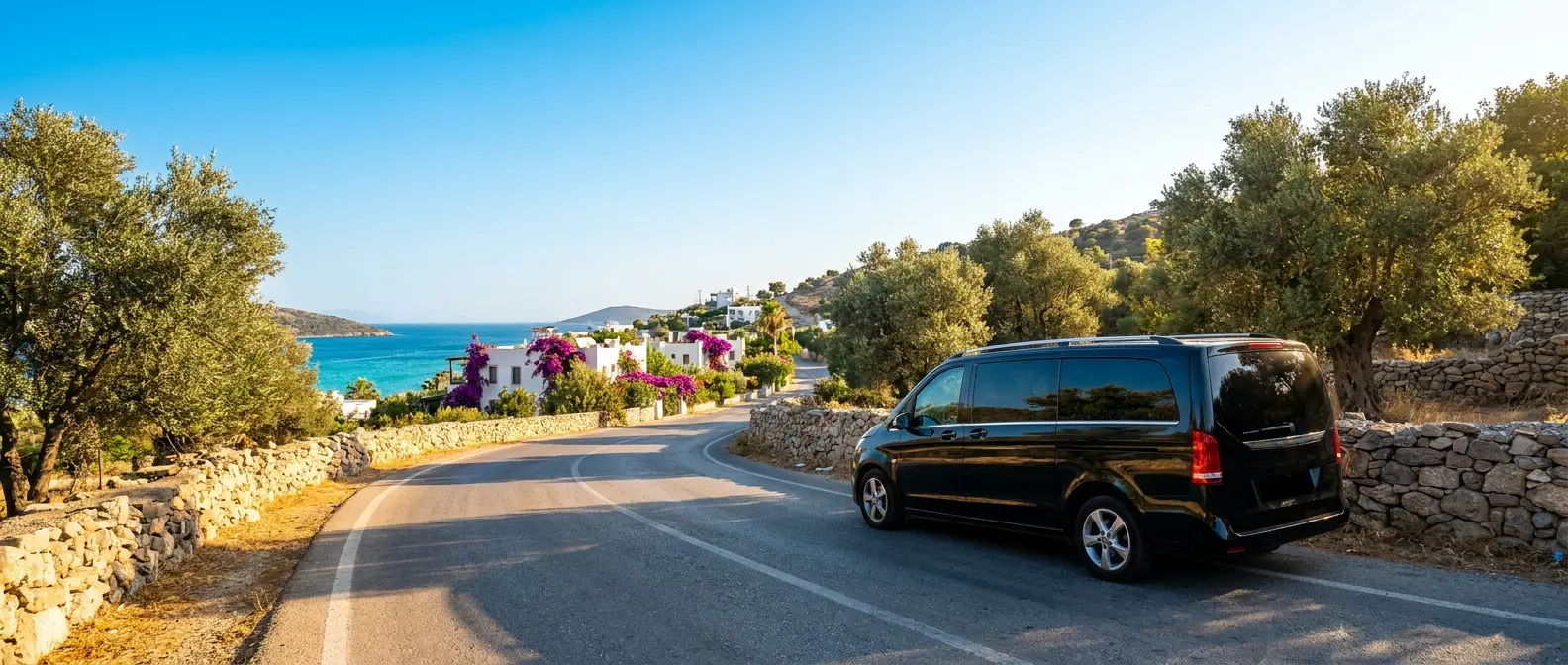
On a map, Bodrum-Milas Airport (BJV) to Yalıkavak looks like a single line of about fifty kilometres. On the ground it is two different journeys sharing a starting point. One runs along the coast through one resort town after another — scenic, obvious, and slow when everyone else has the same idea. The other swings inland behind Milas, cuts through olive groves and pine forest, and rejoins the peninsula from the north.
Most people booking a private transfer ask one question: how long does it take? It is the wrong question to start with, because the honest answer is "it depends on the hour you land and the month you land in." This guide walks through the route the way you would actually plan it — flight details first, then the fork in the road, then the last five kilometres into Yalıkavak, where most of the avoidable confusion happens.
What the fifty-kilometre figure hides
The Bodrum peninsula is a narrow finger of land on Turkey's south-west coast. The airport sits outside it, on the edge of the Milas plain. That geographic fact shapes everything: every vehicle heading to Yalıkavak has to leave the flat valley first and then climb onto the peninsula's spine. The first thirty kilometres are relatively straight and fast. The final twenty are winding, narrowing, and slower in summer.
Yalıkavak itself sits at the north-western tip. That position makes it look remote compared with Bodrum centre, but it is also the breeziest corner of the peninsula — which is precisely why it developed the way it did. The marina, the windmill ridge above the bay, and the coves around Tilkicik are all within a few kilometres of each other, yet they are reached by different roads. Knowing which side of Yalıkavak your hotel is on matters more than knowing the total distance.
Local drivers draw a simple distinction: Yalıkavak splits in two. The marina and centre sit along a flat coastal line. The hillside villa estates sit above it, reached by steep, narrow streets with tight junctions. If your transfer vehicle is a large minibus, that distinction becomes practical rather than academic, because some estate entrances are awkward for wide vehicles. Giving the full name of your property at booking — not just "Yalıkavak" — prevents a slow, wrong-turn finish.
Step one: pin down the flight, not just the date
A good transfer plan begins with a flight number, not a calendar entry. Bodrum-Milas handles heavy arrival traffic in summer, and charter flights from different countries cluster into the same windows. Baggage reclaim and passport control times therefore vary enormously from one arrival to the next.
Reputable private transfer operators ask for your flight number because they track it, not merely to hold a sign. Confirm that this actually happens before you book. Ask directly: do you monitor the flight, and is there a charge if it lands late? That single question prevents the most common arrival-day surprise.
Think of your arrival in three separate blocks:
- Touchdown: the moment the wheels are down. Start counting from here.
- Terminal exit: passport control plus baggage. In high summer this can stretch even on short-haul flights.
- Meeting point: the driver waiting outside the arrivals exit, usually with a name board.
A separate note for late-night arrivals: the Yalıkavak road is not as forgiving after dark. Rural stretches are sparsely lit and the bends are sharp. Working with a driver who knows the route matters most on these arrivals. Share your hotel's location pin in advance so you are not giving directions from the back seat at midnight.
Step two: choose between the coastal line and the inland cut
Leaving the airport you join a single main road, the Milas–Bodrum highway. From there the route splits. Here is the comparison that actually helps.
The coastal line: Güvercinlik, Torba, Bodrum, Ortakent, Gündoğan
This is the classic route. You stay on the highway toward Bodrum, pass the Güvercinlik cove, and enter the peninsula proper. Torba leads to Bodrum centre, then Gümbet and Bitez, then Ortakent-Yahşi, and finally the Gündoğan ridge before dropping into Yalıkavak.
Its advantage is constant civilisation: fuel stations, markets, pharmacies, places to stop. The scenery never lets up either — every bend opens onto a different bay. Its disadvantage is Bodrum centre. In summer, the approach into town clogs badly in the afternoon and early evening. Friday and Saturday evenings are the worst, because weekend traffic merges with local movement.
The inland cut: Milas, Mumcular, Gündoğan, Yalıkavak
This is the route local drivers reach for. From Milas you turn toward Mumcular, the road narrows, and you wind through olive groves and pine forest before joining the Gündoğan ridge. The descent into Yalıkavak from there is short.
Its great advantage is that it never touches Bodrum centre. In peak season, especially on Friday and Saturday evenings, it can meaningfully shorten the total journey. The trade-offs are real: the road is narrower, the bends come more frequently, and lighting is poor at night. If you want to stop for a break, options are limited. For passengers with a lot of luggage, motion sensitivity, or small children, it is the less comfortable of the two — worth knowing before you choose it.
A working rule: morning arrivals suit the coastal line; it makes a pleasant first hour. Afternoon and evening arrivals between June and August usually favour the inland cut. In practice, traffic decides on the day, and a good driver will adjust the plan mid-route. Asking at booking whether the operator selects the route — or whether you do — tells you how much flexibility you actually have.
Step three: know what you are driving past
Route knowledge is not only about minutes. Knowing where you are turns the transfer into the first chapter of the trip rather than a gap between the plane and the pool. Here is what you pass, in order:
- Milas: built over ancient Mylasa, the closest town to the airport. The Gümüşkesen monument area is the best-known short stop. The district is associated with olive oil and honey production.
- Güvercinlik: where the highway first meets the sea. A small cove, fish restaurants, a quiet shore — the last calm stop before the peninsula.
- Torba: a hotel strip along a sheltered bay. In the morning the water is almost glassy.
- Bodrum centre: castle, marina, bazaar. On the coastal line this is the slowest stretch. If your route passes through, timing is everything.
- Ortakent-Yahşi: a long beach and a flat coastal road. The first point where you feel you have left Bodrum's noise behind.
- Gündoğan: wedged between two bays and known for its late-afternoon light. Both routes converge near here, so when you see Gündoğan you are into the final quarter of the drive.
Why does this matter practically? If you are travelling with children and the journey stretches, Güvercinlik or Ortakent are realistic places to pause. Conversely, if you want a non-stop run, knowing which section will jam lets you set expectations honestly. Knowing the place names also makes the conversation with your driver easier.
Step four: the last five kilometres into Yalıkavak
Once you cross the Gündoğan ridge, the Yalıkavak bay opens up in front of you. The drive is not over — it simply changes character, because Yalıkavak is not one place but several, and which one you are heading to determines the final fifteen minutes.
Marina and centre: the area around Yalıkavak Marina stays busy all summer. The road in is wide and well surfaced, so large vehicles are fine. In the evening, though, the immediate marina area gets congested and parking takes time.
The windmill ridge: the mills are the emblem of Yalıkavak, sitting on a ridge above the bay. Properties up here are usually reached by narrow, sloping lanes. When you state your vehicle size at booking, mention this.
Tilkicik and the surrounding coves: the further out you go, the narrower the roads become, and in places asphalt gives way to a rougher surface. Boutique hotels and villas here look close on a map but can take longer than expected. Sharing the property name and a location pin lets the driver pick the right approach.
Villa estates and gated sites: Yalıkavak's back streets hold a lot of gated complexes and rental villas. Some have security gates, and if the vehicle is not pre-registered, you wait at the barrier. Telling your property that a transfer is coming, and passing on the plate number, speeds up the arrival.
In short: arriving in Yalıkavak means reaching the right lane, not the right town. That is why the address matters at booking time, not on the day.
Step five: match the vehicle to the party
Vehicle choice usually gets reduced to a headcount. Three other factors matter at least as much: luggage volume, the character of the road, and comfort expectations.
Luggage: a large share of Yalıkavak arrivals are long-stay. As the suitcase count rises, a standard sedan stops being adequate. Give the number of bags as well as the number of passengers, and mention pushchairs, beach umbrellas or sports equipment separately.
Comfort and the road: on a winding route like the inland cut, a higher, softer vehicle beats a low, stiff one. For children in the back seat, or anyone prone to motion sickness, this is not a minor detail.
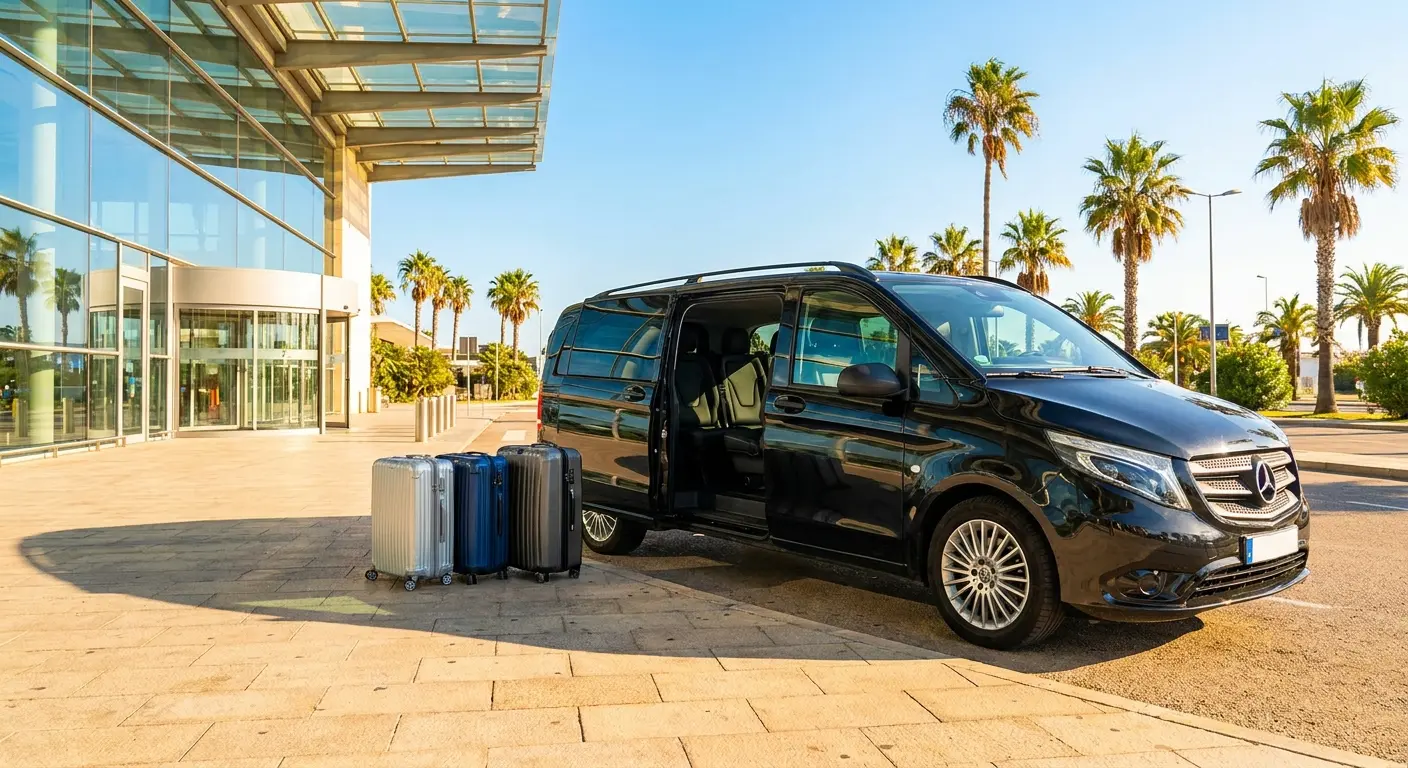
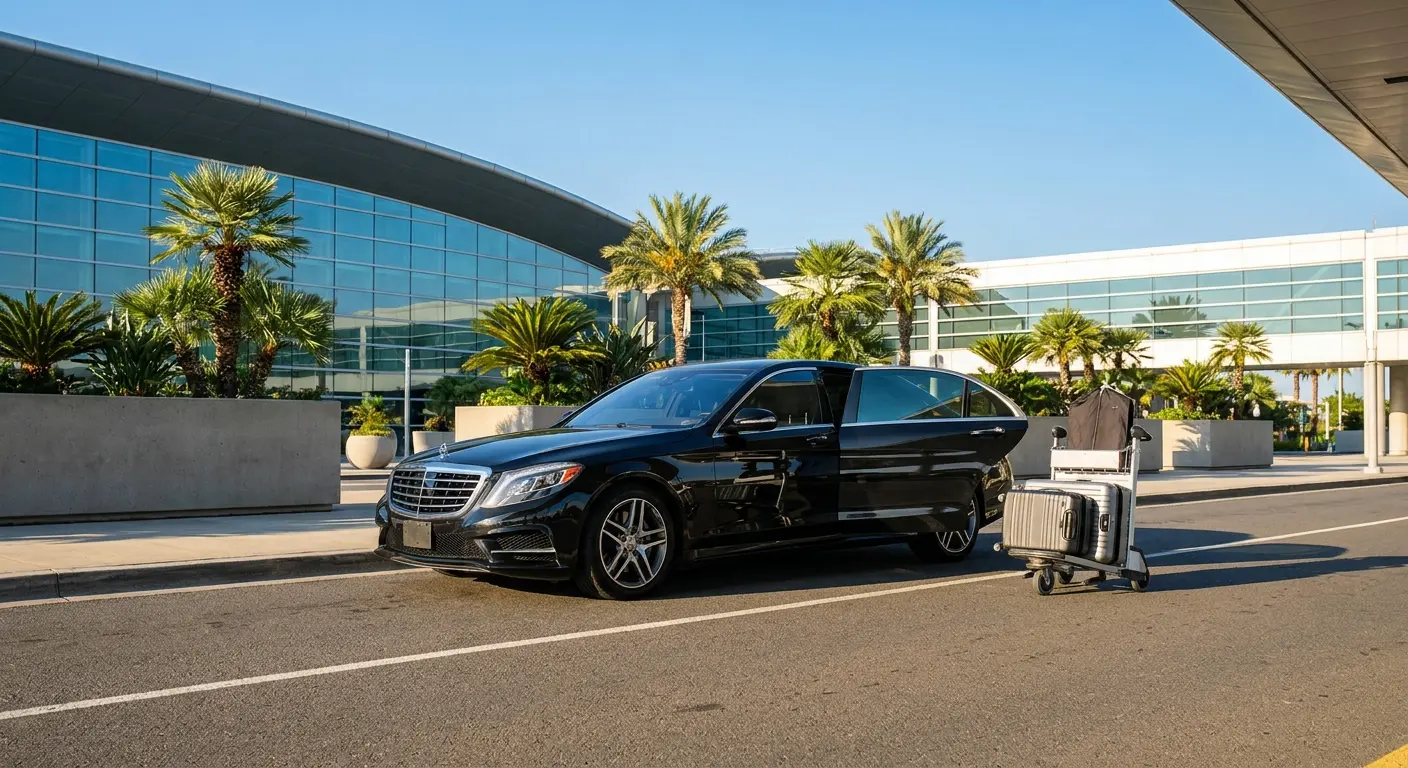
When a VIP transfer makes sense: if you are arriving as a group, landing at night, or have something scheduled on arrival day — a marina reservation, a boat departure — a pre-arranged private vehicle removes uncertainty. Turlago's premium VIP vehicle rental options are built around exactly that: a continuous flow from the airport exit to the hotel door. The point is not luxury for its own sake; it is removing guesswork from arrival day.
Larger groups: beyond eight passengers, two vehicles or a minibus is more comfortable than squeezing into one. Raise this at booking, not on the day — suitable minibuses get scarce in high season.
Step six: meet-and-greet, waiting time and communication
Waiting time is where airport transfers most often go wrong. Find out in advance what happens if your flight is delayed and how long the vehicle will wait if your baggage is slow.
These are the points to settle at booking:
- Meeting style: name board, phone call, or messaging app?
- Free waiting time: how many minutes after landing are included?
- Delay policy: is the flight tracked, and is there a surcharge?
- Meeting point: exactly where outside the arrivals exit?
- Communication channel: can you message the driver on WhatsApp?
- Payment: prepaid, in the vehicle, card accepted?
- Extra stops: can you pause briefly at a market en route?
Getting these seven answers in writing removes most of the wandering-around-with-a-phone-in-your-hand that defines a bad arrival. If you are communicating across a language barrier, written confirmation matters even more.
Season, traffic and the Friday problem
Traffic on the Bodrum peninsula follows the calendar closely. The general pattern:
- May and October: open roads. Route choice barely matters. The sea is still good and crowds are low.
- June: quiet midweek, busy at weekends. The Bodrum approach starts slowing in late afternoon.
- July and August: peak. Afternoons and evenings make the coastal line a test of patience. Friday and Saturday are the heaviest days as weekend visitors arrive.
- September: crowds thin while the weather holds. Route choice becomes flexible again.
One practical tip: if you land in the afternoon and want to reach your hotel before dinner, do not plan the transfer optimistically. Adding an hour to your expected arrival time saves the first evening of the holiday from turning tense.
Common mistakes
The same errors come up repeatedly. Most are not caused by ignorance but by one missing detail:
- Giving only the town name. "Yalıkavak" is not an address. Give the property name and a location pin.
- Forgetting the luggage count. Passenger numbers are right; bags were never mentioned. Result: a vehicle swap at the airport.
- Not sharing the flight number. This makes delay tracking impossible.
- Leaving stops unplanned. If you want a short break, say so upfront — most operators accommodate it happily.
- Underestimating a night arrival. Giving directions in the dark is hard. Share the pin beforehand.
- Booking the return leg late. Sort the round trip in one conversation rather than mid-holiday.
Booking checklist
Work through this list in order and the transfer stops being a variable:
- Have your flight number, landing time and terminal ready.
- Confirm passenger count and total luggage count.
- Note the exact hotel name and a location pin.
- Confirm meeting point and greeting style in writing.
- Ask about free waiting time and the delay policy.
- Choose the vehicle class based on luggage and road conditions.
- Check whether there is any route flexibility.
- Confirm payment method and currency.
- Plan the return transfer in the same conversation.
Once those nine are done, only one thing is left: knowing who will be waiting when you walk out of arrivals. That small certainty softens the beginning of a long journey more than most people expect.
Conclusion: knowing the road is knowing the trip
The fifty kilometres between Bodrum-Milas Airport and Yalıkavak is one of the most variable stretches in Turkey. The same distance can take forty minutes or ninety, depending on the hour and the season. What makes the difference is not the car but the planning: which line you take, what time you set off, and how clearly you explained where you are going.
That is where local knowledge earns its keep. Knowing the inland cut exists, recognising that Gündoğan means you are into the final quarter, understanding that the lanes around Tilkicik take longer than the map suggests — these are the details that never make it into guidebooks but shape your arrival day directly.
If you would rather make that route predictable, take a look at Turlago's premium VIP vehicle rental options and build the whole plan — airport exit to Yalıkavak doorstep — in one place. The road itself is beautiful; the trick is taking it at the right time, in the right vehicle.