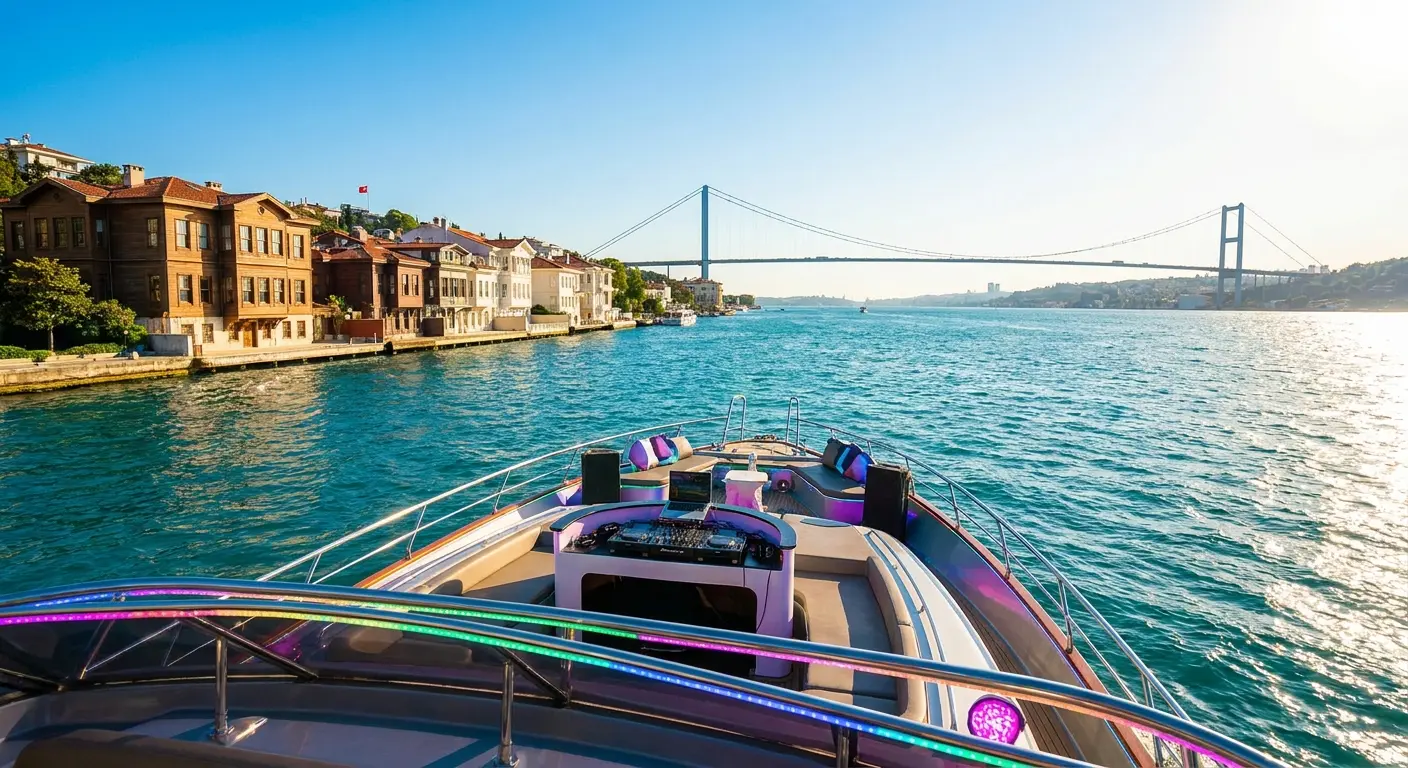
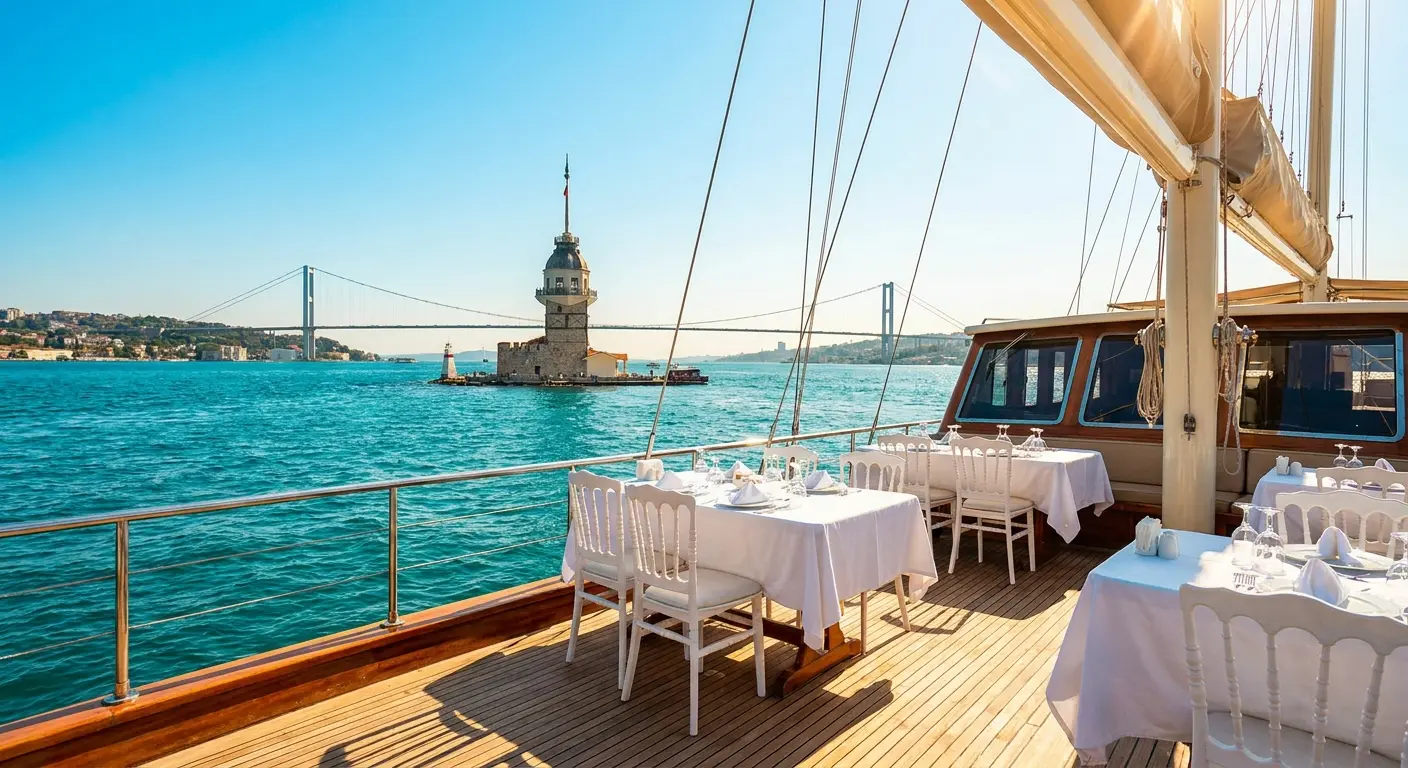
Bosphorus Cruise 2026: Best Time, Season and Route
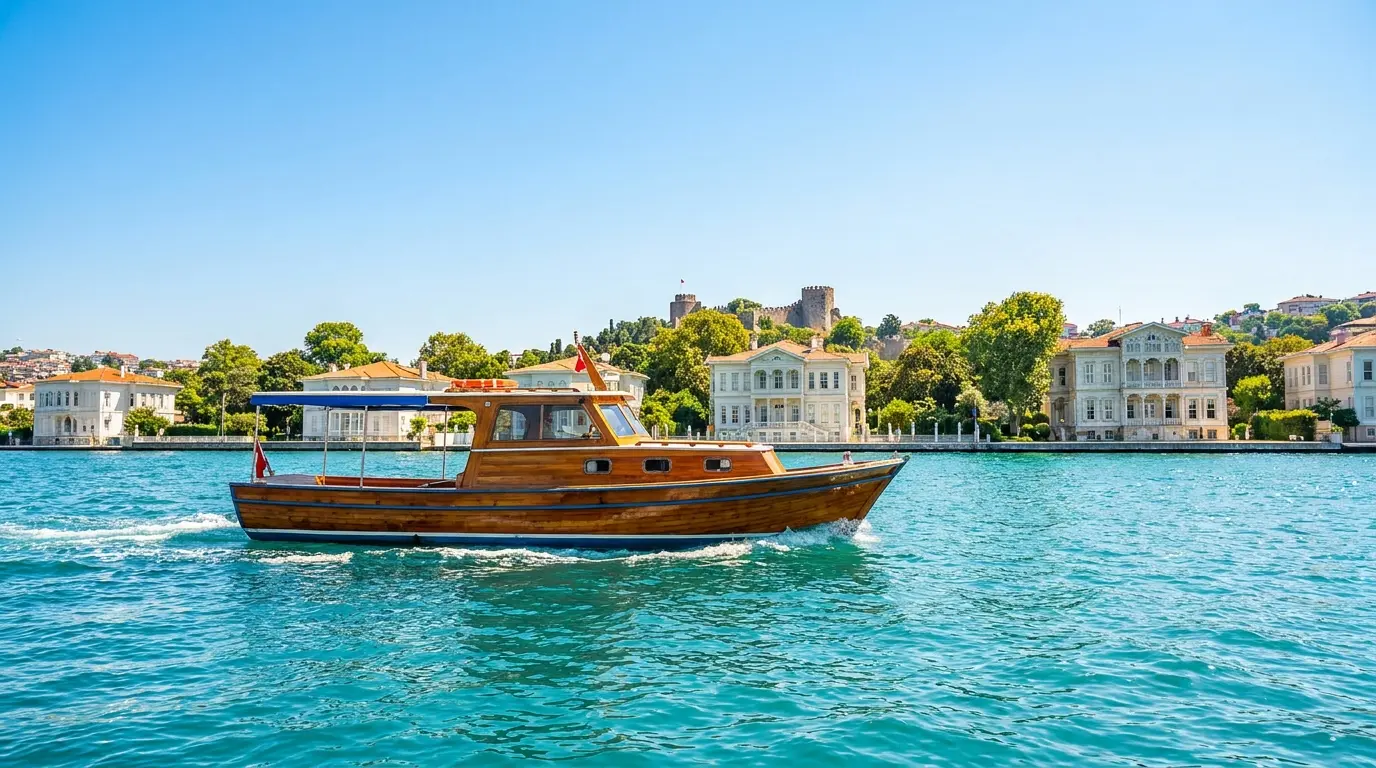
There is no single best time for a Bosphorus cruise
Most people plan a Bosphorus cruise the same way: they scan price lists, then pick whichever departure fits their calendar. In practice, the price is rarely what separates a great cruise from a forgettable one. The hour and the month do. A 09:00 sailing usually means flat water, soft side light and enough deck space to actually sit down. The 17:00 departure on the same day means crowds, a stiffer breeze and completely different light on the shoreline. Both are technically a Bosphorus cruise; experientially, they are two different products.
So this guide answers a narrower question than the usual “which cruise is best”: which time slot and season actually suit you. That means photographers chasing reflections, families with young children, travellers with a single free day in the city, and business visitors squeezing a two-hour boat break between meetings.
For live 2026 departure times, vessel types and route options, view Bosphorus cruise options on Turlago. What follows is the timing decision you need to make before you book any of them.
Four different straits in one day: hour-by-hour
The Bosphorus changes colour, texture and mood across the day. The same shoreline can look grey-blue at noon and deep navy by late afternoon. That is why the departure hour should be your first decision, not your last.
08:00–11:00 — calm water, empty deck
This is the most honest window of the day. The water is usually flat, the morning air is cool enough to sit outside comfortably, and the boat is rarely full yet. For photography, the light is directional and soft, so you are far less likely to blow out the sky. It is also the most comfortable slot for families and anyone sensitive to motion. The trade-off is practical: some waterfront cafés and pier-side shops may not be open yet, so plan your post-cruise coffee accordingly.
- Best for: photographers, families, anyone who wants quiet, travellers with another plan later that day
- Watch out for: the early alarm; in winter, rare morning mist can soften visibility
- What you gain: deck space, softer light, less noise
11:00–15:00 — brightest light, biggest crowds
Midday is when operators schedule the most departures, because that is when most day visitors are in the city. The upside is choice: from most piers you will find a sailing every 30 to 60 minutes. The downside is contrast. With the sun overhead, shadows are short and skies blow out easily in photos. On a July or August midday, ninety minutes on an open deck is more tiring than it sounds — bring a hat, water and a light layer.
15:00–18:30 — the golden window
This is the slot people wish they had booked. As the sun moves west, the facades of the waterfront mansions light up and long reflections stretch across the water. For most of the year it is still fully daylight; in summer you can stay on deck almost until sunset. Crowds thin out compared with midday as day groups disperse.
Evening and night sailings — atmosphere over scenery
Evening cruises are an atmosphere product, not a sightseeing one. Shore lights, illuminated bridge cables and reflections on the water create a strong impression, but the architecture, wooden villas and fortress walls become hard to read. Photographers face high-ISO decisions; phone cameras usually disappoint. Perfect for a romantic evening, less effective if your goal is to actually see the strait.
Month by month: what to expect
Cruises run year-round, but the quality of the experience shifts significantly by season. Four periods matter.
April – May: the most balanced stretch
Warm enough to sit outside, not yet at summer crowd levels, and the light is long and soft. Windy days can roughen the water, but cancellation risk is generally low. This is the most efficient window for anyone who wants both comfort and scenery. From mid-May, school groups and domestic holiday traffic pick up, so favour weekdays over weekends.
June – August: long days, high season
Late sunsets mean late-afternoon sailings give you the longest daylight experience; an 18:00 departure can run entirely in full light. Prices peak and decks fill. The practical advice: take the first sailings of the morning or the later afternoon ones, and skip the midday heat.
September – October: best value for experience
The water is still warm, the air is mild and crowds have thinned. Light angles are ideal for photography, and the shoreline looks more layered as trees begin to turn. From late October the wind picks up, so morning departures become the safer bet.
November – March: fewer people, changeable weather
Departures drop, some operators close for the season and others switch to enclosed or heated vessels. In return you get an almost private deck and off-season pricing. Winter is governed less by temperature than by wind: on strong northeasterly days, smaller boats simply do not sail. Build flexibility into your plans and reconfirm 24 hours ahead.
Wind, current and cancellation risk
The Bosphorus is a corridor between the Black Sea and the Sea of Marmara, so wind shifts fast here. A southerly brings warm, humid air and usually choppier water. A northeasterly brings cooler, clearer conditions and better visibility but a cold open deck. The rule of thumb: small boat plus a windy day equals cancellation or a shortened route. Larger vessels with enclosed salons are far more tolerant.
Before paying, get three answers in writing: (1) What is the refund or date-change policy if the sailing is cancelled? (2) Which pier does it leave from, and how will you be notified if that changes? (3) If the route is shortened, how is the fare adjusted? Booking without these answers is an unnecessary risk, especially in the shoulder months.
Crowd calendar: days to avoid
Comfort on the water is closely tied to the calendar. Expect noticeably fuller piers and decks during:
- Saturday afternoons — peak domestic visitor traffic
- Public holidays and long weekends, particularly spring bridge days
- Religious holiday weeks — city transport and pier areas get busy and some businesses run different hours
- July and August sunset departures — the most crowded slot of the year
By contrast, Tuesday to Thursday mornings are the quietest option in almost every season. If your dates are flexible, shifting by a single day often buys you a much better experience at the same price. Check the official holiday calendar each year before locking dates; the dates move.
Route options and how they differ
Short route (roughly 1.5–2 hours)
Typically leaves from a central pier, runs up to around the second bridge and returns. Satisfying even for repeat visitors and more than enough for a first-timer. The sensible choice for tight schedules, families and business travellers.
Long route (upper strait, roughly 3–4 hours)
Continues toward the Black Sea end, past small waterfront settlements, ruins and green hillsides, usually with a stop. More scenery, more time, higher cost. The right pick for photographers and for anyone who wants to see as much as possible in one go.
Private boat and yacht charter
No crowds, your own itinerary, and — most importantly — you choose the light. If you are travelling as a group, the per-person cost can come close to standard tours, so compare on total budget rather than headline price.
Choosing a departure pier
Where you board determines how much of your day disappears into traffic and what you can do before and after. Practical notes:
- Historic peninsula piers: strong tram and ferry connections, easy to combine with a morning of sightseeing
- Beşiktaş area: close to a major interchange, convenient for evening returns
- Kabataş area: ferry and tram integration makes it one of the most popular departure points
- Üsküdar side: a time-saver if you are staying on the Asian side, with a different angle on the skyline
Arrive 20–30 minutes before departure for check-in and a good deck spot. On busy days, allow 45.
Seven factors that drive the price
Bosphorus cruise pricing is not a single number, because very different products are sold under the same name. Compare on these:
- Duration: 90 minutes versus four hours is a direct price difference
- Vessel type: classic wooden boat, glass catamaran, large enclosed ferry, private yacht
- Departure time: sunset and evening sailings usually cost more
- Season: a clear gap between summer peak and winter
- Inclusions: guiding, audio commentary, refreshments, stops, photo breaks
- Group size: on a private boat, per-person cost falls as the group grows
- Booking lead time: booking a few days ahead beats last-minute, especially weekends
I am deliberately not quoting figures here, because they shift with the season — the live listings are the only reliable source. Do budget for the extras: transport to the pier, food and drink before or after, any hotel transfer, and small tips.
If you are shooting photos: light direction matters
Harsh midday sun is the enemy; reflections are the friend. A few practical points:
- Side or back light reveals the texture of the water; shooting straight into the sun blows out the sky
- Choose your port or starboard seat based on which shore you want to photograph — ask at boarding
- After 15:00 the light is more layered for villas and fortress walls
- On a phone, lock exposure on the sky and pull down slightly; the water recovers later
- From a moving boat, aim for at least 1/500 shutter speed to keep things sharp
If you are filming, morning sailings are steadier; afternoon boat traffic adds chop.
A 2026 planning calendar
January – February
Few sailings, lowest prices, no crowds. Choose an enclosed vessel and keep the route short.
March
Transition month: one day feels like summer, the next like winter. Keep the booking flexible and target mornings.
April – May
The most balanced period of the year. A weekday morning sailing is the best experience available all year.
June – August
Go early or go late. Skip midday. Bring water, a hat and sun protection.
September – October
Best light for photography and reasonable crowds. The ideal window for the longer upper-strait route.
November – December
Wind decides everything. Confirm cancellation terms and avoid late evening departures.
Three quick profiles
Families with children: a 90–120 minute short route, morning departure, enclosed salon. Ask about toilets and refreshments in advance.
Couples: a late-afternoon departure, small-capacity boat or private charter. Romance is difficult on a packed deck, so check capacity.
Solo travellers: a pre-noon sailing, short route, plus a walk along the shore afterwards. Budget-friendly and efficient.
Pairing the cruise with something else
A cruise fills half a day on its own and a full day when combined well. Three suggestions: an hour-long waterfront walk afterwards, a stop in one of the neighbourhoods you spotted from the water, and a short cross-strait ferry ride on the way back. One caution — two long water activities on the same day is exhausting, especially with children.
Seven common mistakes
- Finding out the departure pier on the day of the cruise
- Booking an open deck in the midday heat
- Skipping the cancellation terms
- Not asking about vessel capacity, toilets or refreshments
- Leaving a weekend sunset booking until the last minute
- Checking the temperature forecast but ignoring wind in winter
- Forgetting to add transfer time when planning the day
Decide with the calendar, not the price tag
A Bosphorus cruise is one of the most efficient few hours you can spend in Istanbul — when the timing is right. At the wrong hour it becomes a crowded, hot deck ride. Ask yourself three questions: which season will you be here, where do you want the sun, and how much time can you give it? Those three answers narrow dozens of options down to the one that fits.
To compare 2026 departure times, vessel types and routes, browse current Bosphorus cruise listings on Turlago. Read the cancellation terms and inclusions before you pick a date — two minutes of checking saves a day.