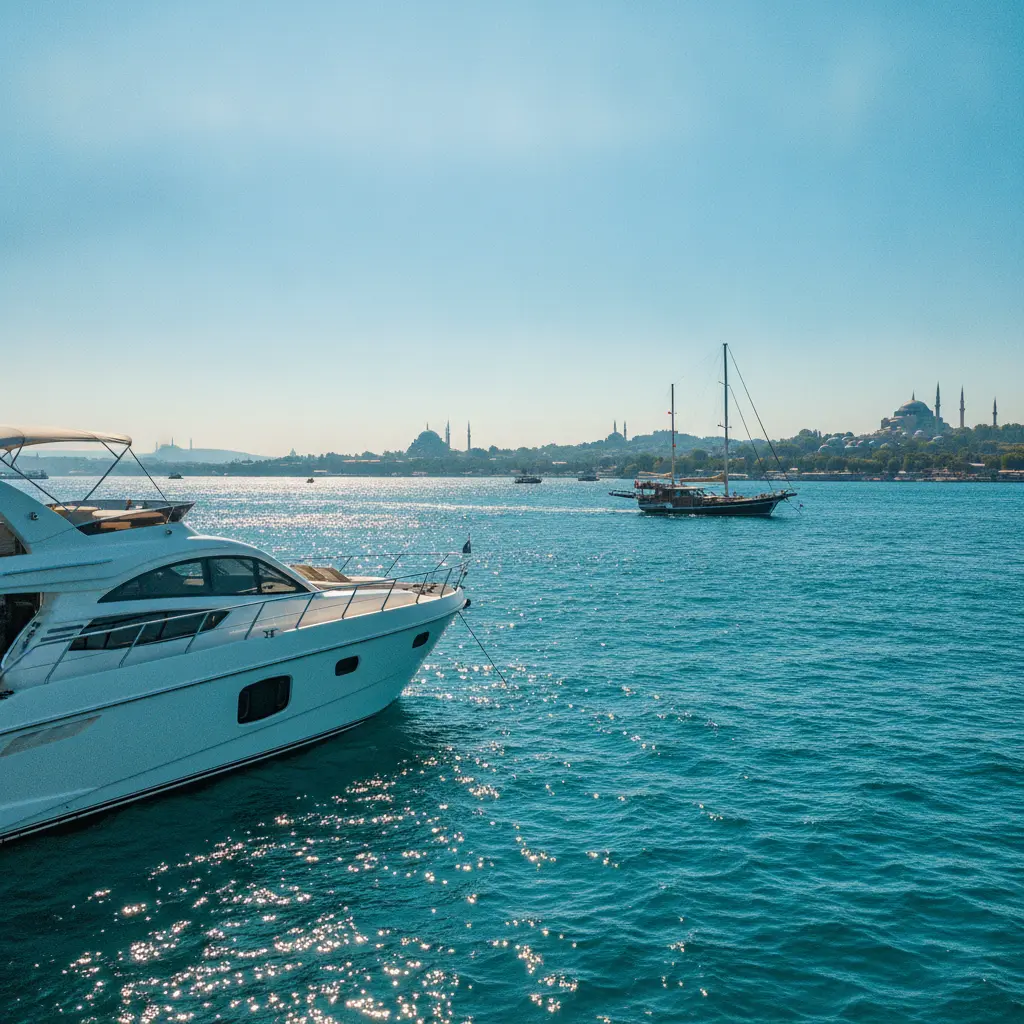
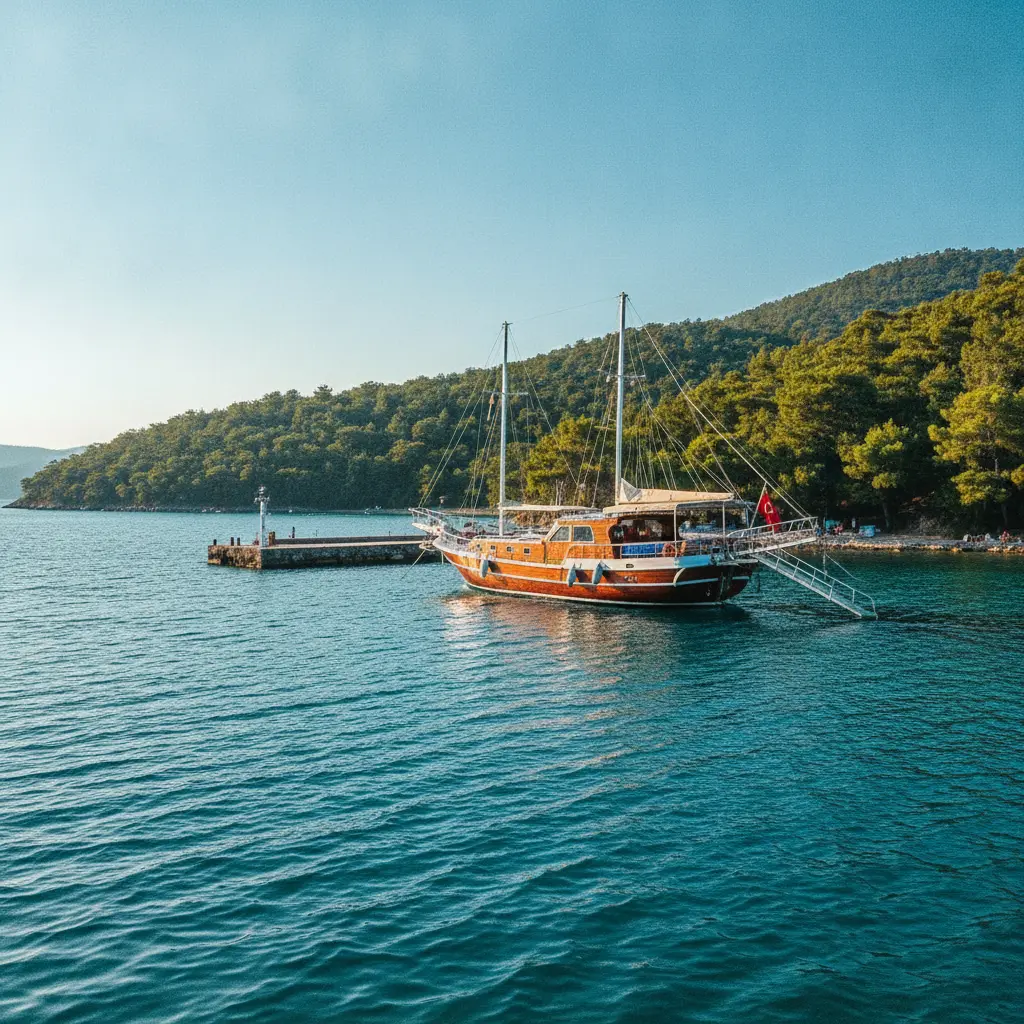
Golden Horn Yacht Charter Route: Shipyards & Sea Walls
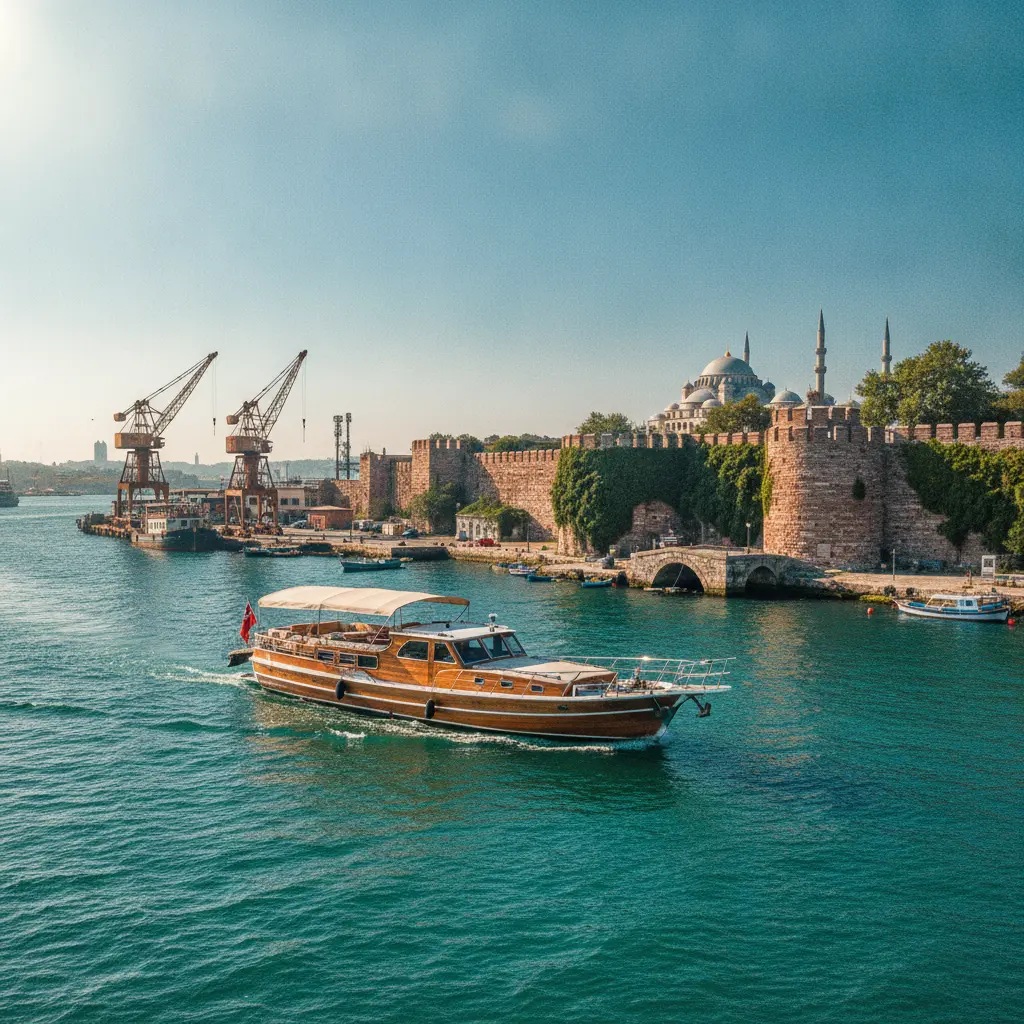
The Golden Horn is not a view you look at, it is a shoreline you read
Most people who take a boat into the Golden Horn do the same thing: they slip under the Galata Bridge, motor a few hundred metres, take a handful of photographs and turn back. That is a pity, because the Golden Horn is a corridor of roughly seven to eight kilometres where the two banks behave completely differently from one another. Planning a Golden Horn yacht charter route starts with knowing what you are looking at. From the same deck, the northern shore tells a story of shipyards and industrial labour; the southern shore tells a story of walls and neighbourhoods.
This guide is for travellers who would rather not reduce the Golden Horn to a ten-minute photo stop. It covers where the shipyard shore begins, where the Byzantine sea walls meet the water, which bridges actually limit your boat choice, and which type of group each route suits best. You can browse current Golden Horn and Bosphorus yacht charter options on Turlago and use this route framework to narrow down boat type and duration before you book.
Two banks, two different clocks
The southern bank — Karaköy, Cibali, Fener, Balat, Ayvansaray — was the walled face of the city. Here the water and defensive architecture grew into each other: moles, gates, vaulted substructures and houses that simply leaned against the walls centuries later. The northern bank — Kasımpaşa, Hasköy, Sütlüce, Halıcıoğlu — developed as a production belt of shipyards, slipways, carpentry workshops and dock labour.
The practical consequence is useful: running the same stretch twice is not a waste of time. A plan that focuses on the northern shore in the morning and the southern walls later in the day will feel far richer than trying to absorb everything in a single pass. Light matters too. The sea walls on the southern bank face north, so they sit in soft, shaded light for most of the day — excellent for brick and stone texture, less good for high contrast. The northern bank takes direct sun through the afternoon, which makes shipyard cranes and hulls read sharply from the water.
The shipyard shore: the Golden Horn’s working memory
The Haliç Shipyard sits at the centre of a zone established after the Ottoman conquest and quickly expanded into the main production base of the Ottoman navy. From Kasımpaşa up towards Hasköy you still pass cranes, slipways and dry docks: one of the longest continuously operating industrial sites in Istanbul. The Camialtı and Taşkızak yards were consolidated under the Haliç Shipyard in the 1980s. The name Taşkızak is literal — the stone slipways where vessels were hauled out of the water for heavy maintenance.
What should you look for from a boat? First, the sloped lines where the slipways meet the water. Then the large hangar doors and the tangle of pier legs and mooring bollards along the bank. This working waterfront is unusually open compared with the rest of the city. A 2019 proposal to relocate the yard to Tuzla and redevelop the site triggered significant public debate, and the area’s future remains unsettled. Seeing this shore from the water is, in a small way, witnessing a part of the city in transition.
Three stops worth slowing down for on the north bank
- In front of the Haliç Shipyard: vessels under repair and heavy cranes — the densest visual layer of the whole route.
- Aynalıkavak Pavilion: an Ottoman pavilion just west of the yard in Hasköy, whose garden wall and timber facade give the route a quiet pause.
- Hasköy pier and the museum vessels: historic ferries and a boat collection moored alongside, adding an entirely different time layer to the shipyard zone.
The sea walls: a defensive line from Ayvansaray to Cibali
The walls on the southern bank of the Golden Horn are not the land walls. This is the stretch of the city’s maritime defences that faces the Golden Horn itself, running from Ayvansaray through Balat, Fener, Ayakapı and Cibali towards Sirkeci. The gates set into this line survive in neighbourhood names: Balat Gate, Fener Gate, Ayakapı, Petri Gate. Passing them by water is the quickest way to understand how the city held out for so long.
At Ayvansaray, one of the most famous Byzantine complexes lies immediately behind the wall: the Blachernae area. The multi-storey structure known today as the Prison of Anemas is legible from the water, pressed against the defensive line. A little further on, the Palace of the Porphyrogenitus — Tekfur Sarayı — is the most recognisable element of the wall circuit, with its alternating brick and stone bands. Look above the walls and you get the full three-layer composition in a single frame: water, wall, city, with the domes of Zeyrek and Süleymaniye rising on the ridge behind.
The chain across the Golden Horn
In the Byzantine period the mouth of the Golden Horn was closed with a chain anchored between the Kastellion on the Sarayburnu side and the Galata shore. It was designed to keep an enemy fleet out. What defeated it in 1453 was a logistical manoeuvre that is still told and retold: ships moved overland and launched into the Golden Horn behind the chain. Passing under the Galata Bridge with that story in mind is one of the most interesting moments of the route — and it is also where the busiest crossing of modern Istanbul’s inner-city water traffic begins.
Bridges decide your route before you do
When planning a Golden Horn charter, the factor that determines boat type is not comfort or price. It is bridge clearance. The headroom under the Galata and Atatürk bridges is a real constraint for sailing yachts with tall rigs, which is why motor yachts are the usual choice for entering the Golden Horn. The Haliç Metro Bridge, by contrast, was designed high enough not to block water traffic, making the upper reaches easier to reach.
Ask this before booking: “What is the mast height, and does this boat actually enter the Golden Horn?” If the answer is vague, either choose a smaller motor yacht or plan a route that stays on the Bosphorus side of the bridge. Experienced skippers will not find the question strange; they will find it helpful.
Three concrete route templates: 2 hours, 4 hours, full day
Building the route hour by hour is the simplest way to get value out of your charter time. These three templates cover different expectations.
1. The core route (2 hours): Karaköy – Kasımpaşa – Hasköy – return
The most efficient short itinerary. Entry under the Galata Bridge, the shipyard frontage along the northern bank, Aynalıkavak, Hasköy pier, then back. No stops, high information density, ideal for photography and city-memory focused groups. The trade-off: you see the sea walls only on the return leg. Solution: hug the northern bank outbound and the southern bank inbound.
2. The balanced route (4 hours): both banks plus an Eyüp stop
The best choice if you want both the shipyard face and the wall face, plus time on foot in a neighbourhood. Leave Karaköy, run up the northern bank past Sütlüce and approach Eyüp. Step ashore for a short walk around Eyüp Sultan, optionally taking the short cable car up towards Pierre Loti. On the return, close the southern bank to read the walls, Balat and Fener.
3. The full day (6–8 hours): Golden Horn plus a Bosphorus exit
Swimming inside the Golden Horn is not realistic — water quality and traffic rule it out. Full-day charters therefore tend to clear the Golden Horn in the morning and head out to the Bosphorus for a swim stop in the afternoon. This gives the widest variety of scenery and light, and it is the most comfortable format for corporate groups and larger parties of friends.
Which group suits which route: families, couples, corporate, friends
The best thing about this corridor is that the same geography offers something different to each group. Match the format correctly and the boat stops being transport and becomes the day itself.
Families: short, shaded and with a stop
With children, the two-to-three hour core route almost always works better. What matters: shaded or enclosed seating, short distances between decks, life jackets in the right sizes, and a toilet on board. The shipyard bank is genuinely entertaining for kids — cranes, dry docks, huge hulls. An Eyüp stop turns the outing into a full day rather than a boat ride.
Couples: small, private, short but dense
For two guests the issue is not deck space but how present the crew feels. Three to four hours is enough to reach the upper Golden Horn and come back close to the southern walls. Avoiding midday helps with both light and heat; the water surface is usually calmer in the late afternoon.
Corporate groups: the location advantage is real
With the Haliç Congress Center at Sütlüce and the university building at Cibali, the Golden Horn is a genuinely practical corporate location. A two-hour cruise after a meeting removes transfer time entirely. Ask different questions for this group: microphone and sound system, presentation screen, catering format, simultaneous boarding capacity, and pier fees. For larger headcounts, one bigger boat beats two smaller ones and keeps the programme running to schedule.
Friends: longer route, clear rules
Groups of friends usually push towards a full day. Two points need agreeing in advance: the music policy and the swim stop. Loud music inside the Golden Horn can be a genuine issue given the residential shoreline. The swim stop belongs outside the Golden Horn, on the Bosphorus. Settling both before departure prevents an awkward conversation later.
Photographing the walls from the water
The key fact for photographers: the southern sea walls face north. They receive no direct sun for most of the day and stay in soft, shaded light. That is excellent for brick and stone texture, but low in contrast, so keep compositions clean. The northern bank takes strong afternoon light, which makes shipyard cranes and rigging read precisely.
A practical tip: work in the 35–50mm range rather than ultra-wide. The corridor is narrow, and very wide lenses flatten the walls and the shoreline into nothing. To include reflections, wait for the moments when the boat slows — approaching piers, the water turns almost mirror-like.
Going ashore: Balat, Fener, Eyüp
Treating the Golden Horn as a purely afloat experience misses half the point. Once you step ashore, the route gains another layer. In Balat, streets slip inland through the old wall gates; in Fener the fabric runs parallel to the water; in Eyüp the pace of the neighbourhood slows the whole itinerary down.
- Balat: enter through the wall gate and walk the streets around the historic synagogues and painted facades. Allow 45–60 minutes for the stop.
- Fener: the gap between waterfront and neighbourhood is short, so a brief walk keeps the schedule intact.
- Eyüp: the natural stop on four-hour routes. A short walk after disembarking, with an optional cable car ride up the hill.
Season, weather and water conditions
The Golden Horn is noticeably more sheltered than the Bosphorus. That is a real advantage for anyone worried about seasickness; even on windy days the inner reaches stay calmer. In return, summer midday air can go still and the heat becomes oppressive. April to June and September to October are the most balanced windows for both light and temperature.
Winter does not close the route, but it changes the boat type: motor yachts with enclosed, heated saloons come to the fore. On wet days the shipyard and the walls are much harder to read from the water, so keep the itinerary flexible and review the forecast together with the operator before confirming.
Seven questions to ask before you book
- What is the mast height, and does this boat enter the Golden Horn?
- Are fuel, pier fees and crew included in the price?
- How many crew are on board, and at what group size is a second crew member required?
- Is catering provided on board, and can you bring your own food and drinks?
- Is the route flexible, and what happens if weather forces a change?
- What are the cancellation and rescheduling terms, in writing?
- Are life jackets, shade and toilets sufficient for everyone in the group?
Getting these answers in writing is far more reliable than a phone conversation. Listings on Turlago show capacity and what is included, which makes comparison straightforward. If you are organising arrival for a larger party, it is also worth looking at Istanbul VIP car rental options — arriving at the pier as one group saves a surprising amount of time.
Six mistakes worth avoiding
- Planning to swim in the Golden Horn: water quality and traffic do not allow it; keep the swim stop for the Bosphorus.
- Not asking about mast height: your route can quietly shrink on the day.
- Booking a boat with no shade: July and August midday on an open deck is punishing.
- Squeezing the Eyüp stop into 20 minutes: disembarking, walking and reboarding needs at least 45.
- Pushing capacity in a large group: comfort drops fast and deck space disappears.
- Skipping the commentary: the Golden Horn does not explain itself; a short briefing changes the whole experience.
Final thoughts: read the Golden Horn in layers
A Golden Horn yacht charter route only becomes meaningful once you start reading the contrast between the shipyard shore and the wall shore. A working city to the north, a defended city to the south, and the same water between them for centuries. Build the plan around your group type, ask about bridge limits up front, and spend your stops where they actually add something.
Whether you choose the two-hour core loop, the four-hour both-banks route or a full day that continues out to the Bosphorus, matching boat type and time slot to this framework makes the difference. Compare current vessels and capacities on the Turlago yacht charter page and combine the Golden Horn and Bosphorus into a single, coherent day on the water.