Istanbul Bosphorus Tour: A Speedboat Day for Eight Friends
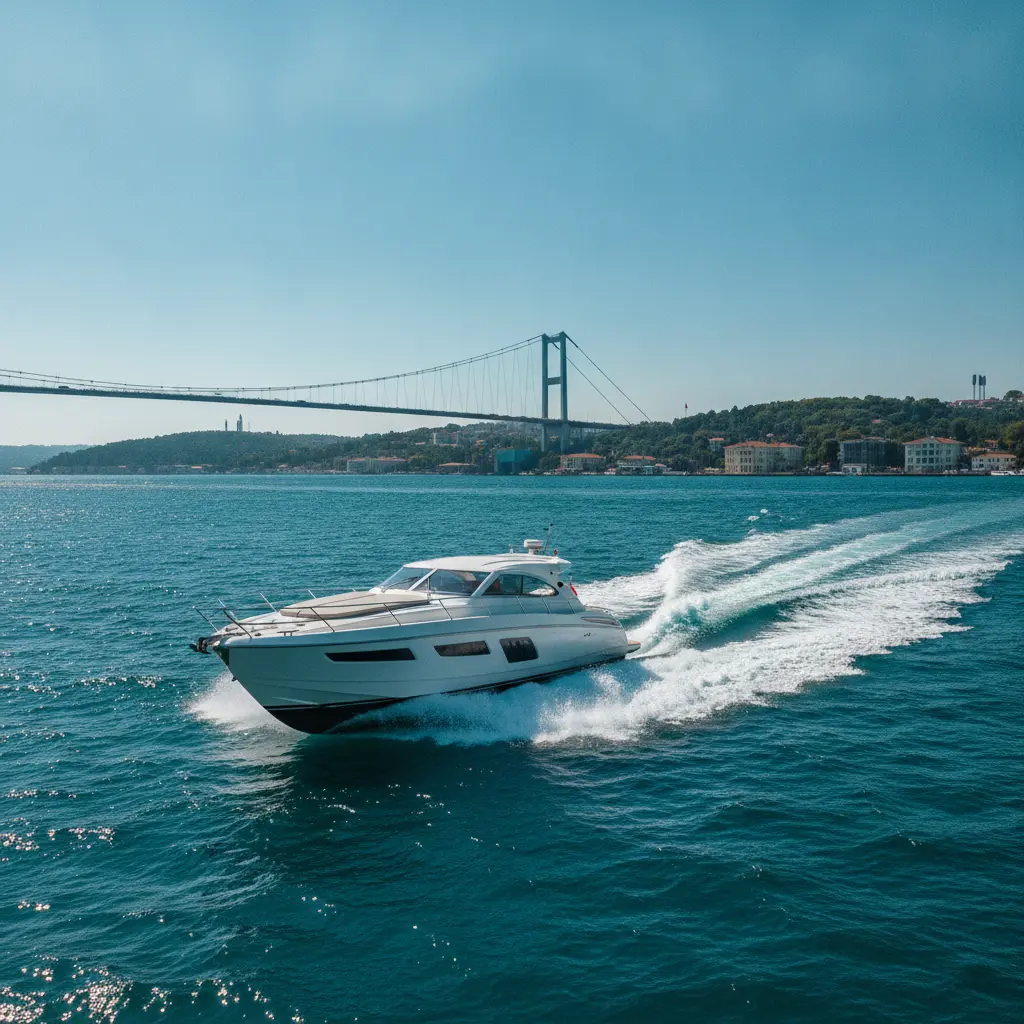
The group chat went quiet for two days. Eight friends, two free afternoons in Istanbul, and nobody willing to commit to anything. The problem was not a lack of options — it was that every option seemed to eat the whole day. A full Bosphorus cruise meant three hours on a crowded deck. A museum meant queues. A long lunch meant nobody would move afterwards. What the group actually wanted was simple and slightly awkward to ask for: something short, something that would show them the whole skyline in one go, and something that would not dissolve the group into eight separate people staring at their phones. The answer turned out to be a one-hour speedboat ride along the Bosphorus, viewable on Turlago. This is what that afternoon actually looked like, and how you would set up the same thing for your own group.
One thing to be clear about from the start: this is a one-hour experience, not a day trip. So the question is not whether an hour is enough. The question is how to use one hour well. The answer depends heavily on two variables most people ignore when booking: the season and the time of day. The route stays the same; the experience does not.
Friday, Just After Noon: Building the Meeting Plan
The geography of the group was classic Istanbul. Three people coming from the Asian side, two from the central business districts, one from the far west of the European side, one who had landed at the airport that morning, and one who could simply walk. Getting eight people to the same coordinates at the same time is usually where these plans die.
What saved it was the meeting point: an iskele near Kabataş, on Meclis-i Mebusan Caddesi. That address does a lot of quiet work. It sits within walking distance of the Kabataş tram and funicular stops, which means the Asian-side contingent could take a ferry across, the central group could use metro plus funicular, and the friend arriving that morning could reach it with a single connection. Nobody had to drive, nobody had to be picked up, and nobody had to negotiate a pickup route.
The example departure time was 12:30. Treat that as one option rather than a fixed schedule, because the departure time is chosen at booking. For a group of eight, that flexibility is the single most useful feature of the product: it lets you anchor the boat to the rest of your day instead of building the day around the boat.
The Fifteen Minutes Before Departure
Meeting the captain is followed by a short safety briefing. This is not the boring part — it is the part that determines how relaxed everyone feels for the next hour. Life jackets are fitted, seating is explained, and the captain covers what to do during the faster stretches. Life jackets and safety equipment are on board, and soft drinks are included. Two people in the group had never been on a speedboat before, and a calm, clear briefing removed their nerves in about ninety seconds. It is worth saying plainly: the adrenaline here is not chaos. It is speed with a captain managing the dose.
The First Stretch: Palace, Mosque, Waterline
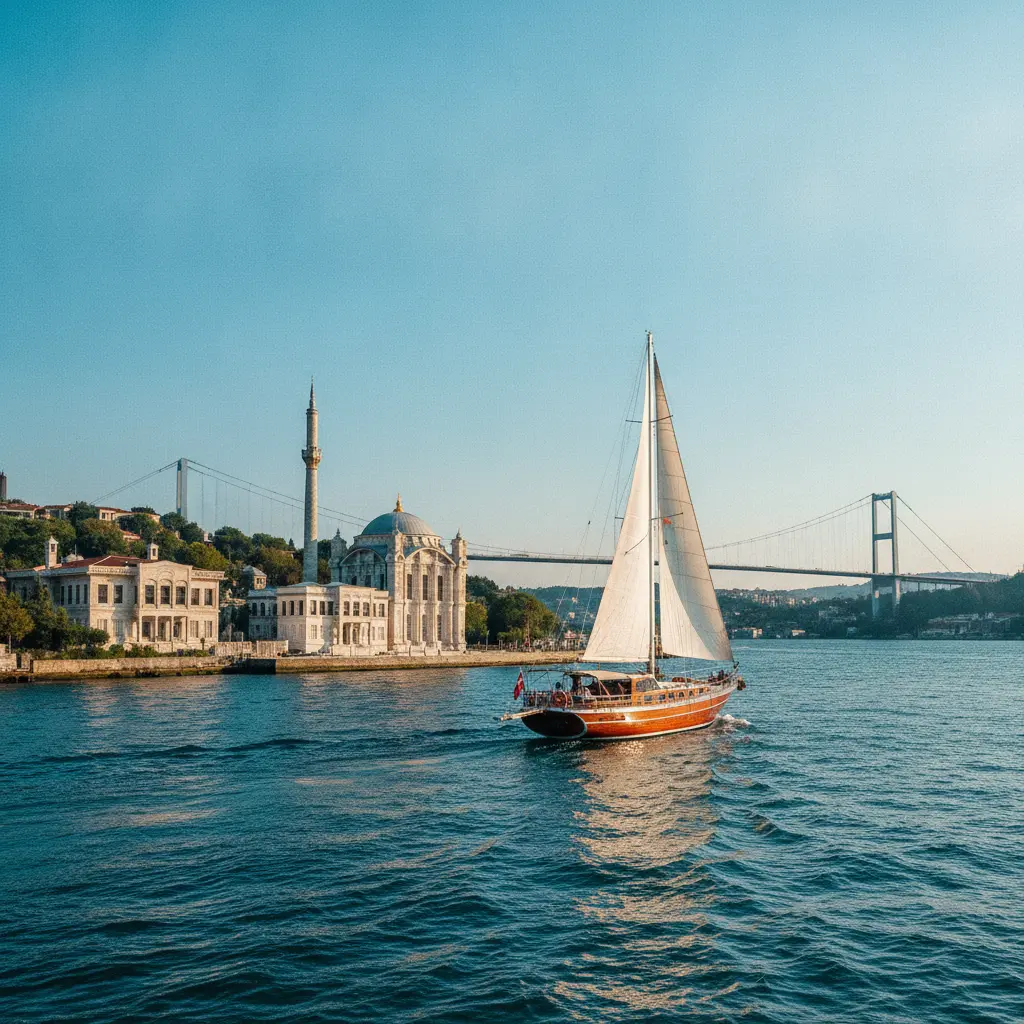
Leaving Kabataş, the boat does not launch into full speed. It opens up gradually. That ramp matters, because the city starts sliding past while you can still actually see it. Along the European shore, Dolmabahçe Palace appears at a completely different scale than from land. Its facade, the hills behind it and the water in front all land in the same frame, and the sense of proportion changes. Then Ortaköy Mosque and the bridge piers arrive, and the photographers in the group stand up.
This is where the design of the route becomes obvious. The captain speeds up in open stretches and slows down at the points worth photographing. A boat that ran at one constant speed would either give you no photographs or no thrill. The alternation gives you both.
The historic waterfront mansions, the wooden yalıs and the shoreline mansions pass one by one. From the water, these buildings stop being scenery and become details: the carved bays, the private wooden piers, the gardens stepping down to the waterline. From the shore they are pretty houses; from a metre above the water, they are stories.
Under the 15 July Martyrs Bridge: The Peak Moment
If you only remember one thing about this ride, it will be this. The boat crosses from the European side to the Asian side and passes directly beneath the 15 July Martyrs Bridge. Seeing a suspension bridge from a distance is one thing. Being under it, with the structure overhead and the sound of the water against the hull, is another. Nobody in the group said “we saw the bridge.” Everyone said “we went under it.”
It is also one of the fastest sections. The captain opens the throttle, the wind shifts across the deck, and both continents sit in your field of view at once. Then the boat slows, and the Asian shore begins.
The Asian Side: Beylerbeyi and the Maiden's Tower
On the Asian side, the route passes Beylerbeyi Palace and the area around the Maiden's Tower. Beylerbeyi's sea facade and its landing pier read completely differently from the water, and the slope behind it suddenly makes sense. The Maiden's Tower, meanwhile, works as a natural anchor point: when the boat passes, everyone turns the same direction without being asked.
A small practical tip from the day: shoot vertical as well as horizontal. On a moving boat, horizons tilt easily, and vertical frames are far more forgiving. Also, record video in short bursts of ten to fifteen seconds rather than one long take — editing eight people's clips into something watchable is much easier that way.
When Should You Actually Go? A Season-by-Season Guide
This is the question that comes up most often, and the honest answer is that the trip works in every season while feeling completely different in each one.
Spring: The Safest Bet
Mild air, generally manageable wind, a city that is wide awake. You may want a light layer on the boat, but you will not be uncomfortable. If someone in your group dislikes heat, spring is the least risky choice. The Bosphorus hillsides are also at their most colourful, with gardens and trees in full leaf.
Summer: Brightest, Busiest
July and August are peak demand. The light is high, the water is brilliant, and photographs come out vivid. The trade-off is midday contrast: shooting straight into overhead sun will blow out the sky in one frame and darken the shoreline in the next. In summer, consider a mid-afternoon departure rather than a midday one — better light and a more comfortable ride. Bring a hat with a chin strap (it will try to leave) and sunglasses.
Autumn: For the Photographers
September and October are my personal favourite. Softer light, smaller crowds, deeper colours in the water. The speed feels sharper in cooler air. If your group includes anyone serious about photography, this is the window. The one caution is variability: book a few days ahead rather than same-day, and aim for the brightest part of the afternoon.
Winter: Short, Sharp, Underrated
\n\nFewer people book this in winter, and there is a reason: it is cold. But the Bosphorus in winter is quieter, the shoreline more legible, and the skyline unusually clear. With the right layers — a windproof outer shell, gloves, a warm hat — one hour on the water is genuinely striking. If you go in winter, pick the warmest part of the day and plan something indoors immediately afterwards.
Bottom line: spring and autumn for comfort, summer for atmosphere, winter for clarity and calm. Route and speed are adjusted by the captain according to the weather, so whichever season you pick, adapting to conditions is not your job.
Choosing the Hour: Same Route, Different Ride
Because you select the departure time when booking, this is entirely in your hands. A practical framework:
- Early morning: Calmest water, weakest wind. The safest slot for anyone in the group with a sensitive stomach. The waterfront is quiet and the light is clean.
- Midday (like 12:30): The most practical slot. After breakfast, before lunch. This is what the group chose, and it left the entire rest of the day free. Light is high and contrast is strong.
- Mid-afternoon: Softer light, cooler air, the most balanced photographs. In summer, this is my recommendation.
- Late afternoon: Ideal if you want to go straight into an evening plan. Groups choosing this often pair it with an evening of Bosphorus dinner and a Turkish night show to complete the same day.
One caution: a departure just before sunset sounds romantic, but the strength of this trip is seeing the city. As light drops, the detail along the shore disappears. Choose a bright slot for visual memory, a late slot for atmosphere.
Group Logistics for Eight People
The boat holds 13 and is reserved for your group alone. For eight people, that means real comfort: nobody is shooting photographs over a stranger's shoulder, and nobody is wondering whether they will get a seat. Because the capacity is 13, do not quietly grow the group to 14 — confirm the number before booking.
Who Does What
- Organiser: Books, chooses the departure time, and sends the meeting point and time in a single message. One owner prevents the “I thought you had it” spiral.
- Photographer: Arrives with a charged phone and a power bank. One hour on the water drains a battery fast.
- Drinks coordinator: Soft drinks are included on board, but anyone with a specific preference should flag it in advance. Food and drink beyond the included soft drinks are not part of the package, so a light snack before boarding is a good idea.
- Timekeeper: Gets everyone to the meeting point fifteen minutes early. The safety briefing happens before departure, and arriving late affects the whole group.
Getting There and Getting Away
Hotel pickup and drop-off are not included. That sounds like a downside but works as an upside: after the ride everyone can continue on their own route. The drop-off point is within walking distance of Kabataş, so you can take the funicular up to Taksim, catch a ferry to the Asian side, or walk along the shore towards Dolmabahçe Palace. The group split three ways and everyone made their evening plans.
What to Bring and What to Wear
- A thin windproof layer. Apparent temperature drops as speed increases, even in summer.
- Flat, non-slip shoes. The deck moves under you.
- A hat with a chin strap and sunglasses. Non-negotiable in summer.
- A small waterproof pouch or dry bag. Spray is unlikely but not impossible.
- A power bank. Photos and video eat battery.
- A microfibre cloth. For the lens and the screen.
What you do not need to bring: life jackets and safety equipment are on board, and soft drinks are included. Personal expenses, tips and food or drink beyond the included drinks are yours to cover.
How It Differs From a Big Ferry
Public ferries are the cheapest way to see the Bosphorus, and that is fine. The difference is the type of experience. On a large ferry you watch the view. On a speedboat you move through it. Being close to the waterline, reading the detail on the wooden mansions, passing under the bridge and feeling the speed are not the same product. On a crowded deck, group conversation breaks up. On a private boat, it does not.
Groups who want a slower tempo, swimming and sunbathing should look at a different kind of day: a classic Lobster motor yacht charter for a calmer pace. And if the occasion is bigger — a large birthday, a company gathering — the scale changes entirely, with options like a 23-metre charter yacht with party equipment for bigger celebrations. For eight friends, the speedboat is exactly the right size. For twenty, it is not.
Where to Point the Camera
Rather than trying to shoot everything in an hour, focus on three moments:
- The Dolmabahçe to Ortaköy stretch: palace facade and mosque in one frame, with the boat moving relatively slowly.
- Under the bridge: shoot upwards. This is the most striking video moment of the ride.
- Around the Maiden's Tower: ideal for wide shots and vertical frames.
The captain slows at the key viewpoints, which makes planning easier. Keep in mind that route and speed are adjusted according to weather, so the order of landmarks can shift — what you see does not.
Frequently Asked Questions
Is one hour really enough?
For seeing the city from the water and having a private experience with your group, yes. The route covers both continents, the pass under the bridge, the palaces and the Maiden's Tower area. If you want a longer day, combine it with other plans rather than stretching the boat.
Is it suitable for families with children?
Life jackets and safety equipment are provided, and the captain adjusts speed to the group. With small children, supervision and following the seating guidance on board matter. Because the boat is private, the pace is set by your group.
How much does it cost?
Current pricing is shown on the listing page. It can vary by season and date, so I am not quoting a fixed number here — you see the exact amount during booking.
What happens if the weather turns?
Route and speed are adjusted by the captain according to conditions. That flexibility exists for safety, not as a workaround. Checking conditions on the day is always sensible.
Can I bring a larger group?
The boat holds 13 and is reserved for your group only. Larger groups should look at yacht and motor yacht options.
Extending the Same Day
The best thing about a one-hour ride is that it does not take over the day. It creates a window and hands the rest back to you. After the midday departure, this group walked from Kabataş towards Dolmabahçe, then went up to Taksim to scout dinner. For eight people, one shared hour acts as an anchor: everyone starts the day on the same page, and the rest of the planning becomes easier.
If your group tends to stall on “what are we doing later,” the most practical solution is to book the boat for the afternoon and close the day with a dinner. That combination balances energy and budget well.
Conclusion: What Eight People Learned From One Hour
The group's verdict at the end of the day was unanimous: two hours would have been worse. A one-hour speedboat ride is the right scale for a group that wants to see Istanbul quickly, without dissolving into a crowd. Choosing your own departure time, having the boat to yourselves and covering both continents in a single loop are what separate this from a standard ferry cruise.
If you are planning it, nail down the date and time first, then confirm the headcount. Decide whether you are optimising for comfort or atmosphere — they point to different months. And then: view the Bosphorus speedboat experience on Turlago, pick your departure slot, gather your people, and go under that bridge yourself. One hour does more for Istanbul than you would expect.