Istanbul Yacht Charter: Match Your Route to the Weather
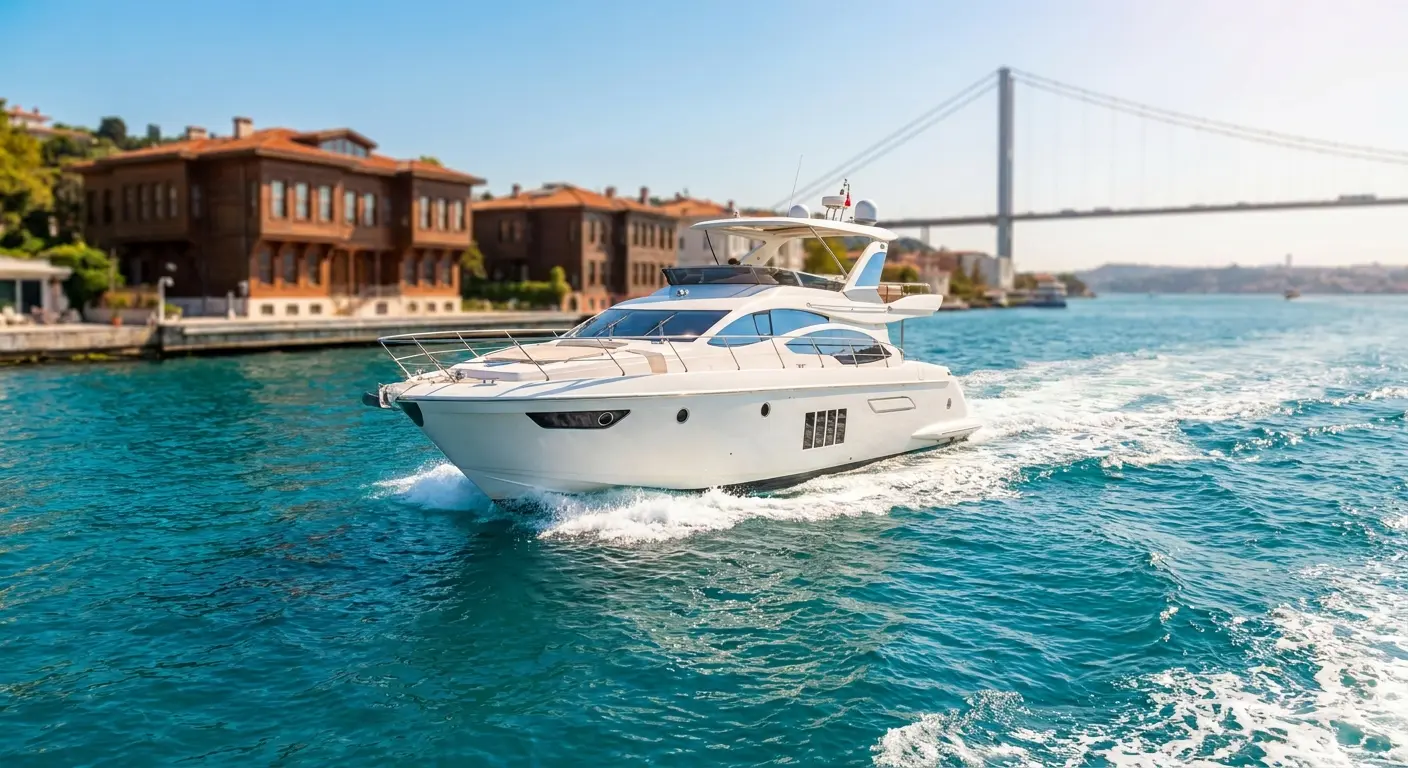
Ask ten people who chartered a yacht in Istanbul last summer what they remember, and almost none of them will mention the boat. They will talk about the wind. One group spent a calm afternoon anchored off Ortaköy with the city folded neatly behind them; another spent the same money bouncing past a headland while a plate of mezes slid across the table. Same city, same season, same budget — completely different day.
That gap is almost always a planning problem rather than a boat problem. I have read through hundreds of post-charter reviews and spoken with crews across the marinas, and the pattern is remarkably consistent: satisfaction tracks the fit between the forecast and the itinerary, not the length of the hull or the quality of the upholstery. This guide is written for people who want to get that fit right before they pay — whether they are travelling with small children, planning a proposal, organising a team offsite, or simply splitting a week between friends.
Flip the order: weather first, route second, boat last
The usual sequence is backwards. Most people shortlist a boat from photographs, pick a date that suits the group, and leave the route as a conversation for the boarding dock. In a city with two dominant wind systems and five very different cruising zones, that is the most expensive shortcut you can take.
- Check the forecast before you fix the date. Saturday and Sunday of the same weekend can behave like two different cities.
- Choose a cruising zone based on wind direction. Not on which photo looked best.
- Pick the vessel type that suits that zone. Enclosed saloon for the northern Bosphorus; shaded open deck for the Marmara coastline.
- Negotiate price and contract last. Route changes have a fuel implications, and the agreement should reflect that.
Here is the practical version of that insight: the difference in satisfaction between two weekend charters at the same price point is rarely a matter of boat class. A mid-range boat on the right route beats a premium boat on the wrong one almost every time.
The two winds that decide everything on the Bosphorus
Istanbul's marine weather boils down to two patterns. Understanding them lets you make a confident call faster than you can read a forecast app.
The poyraz: cool, clear, awkward in the north
Blowing in from the Black Sea, the poyraz is the dominant summer wind. It clears the sky, drops the humidity, and turns the water a colour the city rarely sees otherwise. For photography, swimming, and general good mood, it is close to perfect. It has two weak spots, though: the upper Bosphorus beyond Yeniköy, and the mouth of the strait where it opens into the Black Sea. In those areas it builds short, steep chop, and on anything under about 15 metres the day becomes a test of patience.
On a poyraz day, the right move is to pull the route south into sheltered water: the Golden Horn, the stretch between Karaköy and Ortaköy, the water around Maiden's Tower, the bays off Moda and Fenerbahçe. The wind loses its teeth there and the surface stays close to flat.
The lodos: warm, hazy, uncomfortable in the Marmara
Coming from the southwest, the lodos warms the city, softens the light into haze, and lifts the Sea of Marmara into something genuinely unpleasant. When the lodos is strong, the public ferries stop running — treat that as your most honest marine forecast. On lodos days the Princes' Islands route and anything exposed to the Marmara is the wrong call, while the inner Bosphorus tends to stay workable, especially heading north.
Which gives you the short version: poyraz means go south; lodos means stay inside the strait. That single line solves about half of all Istanbul charter planning.
How much wind is too much: a rough scale
Forecasts are more useful when you convert them into decisions. Captains talk in wave height and knots; here is what those numbers actually mean for a charter group.
- Waves up to 0.5 m: comfortable on anything. All routes open.
- 0.5–1 m: fine on boats over roughly 15 metres; sensitive guests may notice on smaller vessels.
- 1–1.5 m: larger, heavier boats only, and the route should be moved to sheltered water.
- Above 1.5 m: no longer fun. This is the point to discuss rescheduling or a serious route change.
In knots, 12–15 is the sweet spot for most charters. Sustained winds above 20 knots are a signal to change the plan, not to test the crew.
Five cruising zones and the weather each one can handle
1. The Historic Peninsula and the Golden Horn
Karaköy, Eminönü, Balat, Eyüp. This is the most weather-proof zone in the city: buildings and hills break most of the wind, and the water stays close to glassy. It is photographic but visually repetitive, which makes it better for a short city cruise than a full day. For families with elderly guests, or anyone who wants a guaranteed-flat outing, it is the safe card.
2. The lower Bosphorus: Ortaköy, Bebek, Emirgan, Kanlıca
The classic Istanbul route, and the most forgiving. It holds up in a poyraz and stays pleasant in a lodos as long as you head north. Waterfront mansions, fortresses, Maiden's Tower, both continents in one frame. For first-timers, for hosting guests, and for anyone who wants to feel they have seen the city in a single afternoon, this is the most efficient zone in Istanbul. Swimming is limited — if a proper swim stop matters, look elsewhere.
3. The upper Bosphorus: Yeniköy to Anadolu Kavağı
The most beautiful section and the most fragile. Yoros Castle, the fishermen's quay, the gateway to the Black Sea. In a poyraz, this route can make the open deck unusable; in a lodos, it is usually acceptable and often quiet. The trade-off is the long return leg if conditions change. I would not recommend it to families with small children or anyone prone to seasickness until the forecast has settled.
4. The Marmara shoreline: Moda, Fenerbahçe, Caddebostan
The easiest option for city dwellers who mainly want to swim. It is fully exposed to the Marmara, so it takes the lodos head-on. A group that plans this route on a lodos day often ends up turning back halfway.
5. The Princes' Islands and the Black Sea mouth
Büyükada, Heybeliada, Burgazada — a full-day, high-expectation route with swimming, cycling and slow lunches. Both dominant winds build seas on this line and total passage time is long. The Black Sea mouth at Kilyos and Riva is even more conditional: large, stable vessels and genuinely calm days only. Neither is a beginner's route.
Match the itinerary to who is actually on board
The same route in the same wind can be a highlight for one group and an endurance test for another. The deciding factor is not boat capacity; it is the profile of the people.
Families with children
The priority list is fixed: shade, stable footing, short passages, an accessible toilet. All four coincide on short, sheltered routes. The lowest-risk combination is a three- to four-hour late-morning departure on the lower Bosphorus. Poyraz forecast? Move to the Golden Horn. Lodos? The inner strait is already calm.
The common mistake is assuming children will prefer the islands. A long open-water passage, choppy seas and a tired return leg is not a treat for anyone. Also resist the temptation to fill the boat: legal capacity and comfortable capacity are different numbers, and putting ten people on a twelve-person vessel is what gives everyone a seat on deck.
Couples and celebrations
Here the weather is not a logistics detail; it is the atmosphere itself. Wind direction decides whether the table stays still and whether the photographs have contrast. A poyraz evening in the upper Bosphorus will move the tablecloth; the same hour off Ortaköy and Kuruçeşme will feel almost windless. Lodos brings haze, which flattens long-range shots — worth knowing in advance if photos matter.
The formula that works best is short passage plus one strong stop: approach Maiden's Tower, then anchor off Bebek for dinner, rather than trying to tick four locations. Fewer stops, better timing, much better memory.
Friends and larger groups
This group has a high tolerance for weather and a different set of expectations: music, swimming, water toys, staying out longer. A poyraz is actually a gift here — cooler air, clear skies, bright water. The right routes are the ones with a real swim stop: the Moda to Fenerbahçe line, short departures from Kalamış, and the islands if the sea is genuinely settled.
Two things to sort out early. First, match deck space to headcount; a 20-person group on a small open deck is a cramped afternoon. Second, agree the overtime rate before you board, because "one more hour" is almost guaranteed.
Corporate groups and hosted events
For a corporate charter, the real question is not which boat but whether the programme will slip. Guests leaving the office late, traffic, and a missed departure time are the classic failure modes. That makes the departure point as important as the route: put it near where people are coming from.
Moving a large team to a marina such as İstinye or Kalamış usually means splitting people across taxis with bags and equipment. In that situation, arranging Turlago VIP car rental with driver keeps arrival times predictable and gets everyone home in one movement afterwards. For corporate groups the weather criterion also shifts: programme reliability outranks adventure, which points toward short, sheltered, well-timed routes.
Timing: the same route behaves differently at 11am and 5pm
Istanbul's wind has a daily rhythm. Mornings are usually calmest, the poyraz builds through the afternoon, and it eases again towards evening.
- 10:00–14:00: the calmest window. Best for swim stops, young children and first-timers.
- 14:00–18:00: the windiest stretch in summer. Fine for long passages only if you plan for it.
- After 18:00: the wind drops and the light softens — the most reliable slot for dinner cruises and celebrations.
Weekends add a second variable: traffic on the water. The Princes' Islands line and the water around Maiden's Tower slow down on Sunday afternoons. The same route on a Saturday morning feels noticeably quieter.
What to get in writing before you pay
This is the part that saves money. However well you plan the route, nothing verbal is guaranteed.
- The weather clause: "adverse weather" on its own means nothing. Who decides, at what threshold, and is the remedy a refund or a date change?
- Route flexibility: can the captain change the itinerary, and does the price move if he does?
- Fuel: is the route included, or priced per hour? Longer itineraries often carry a supplement.
- Departure and return marina: is there a charge for returning to a different port?
- Overtime: the hourly or block rate for going over schedule.
- Capacity: is the quoted number legal capacity or comfortable capacity?
- Food and drink: is service included, can you bring your own, and is there a corkage fee?
- Crew: how many staff beyond the captain, and can they serve a group of your size?
- Licensing and insurance: is the vessel licensed to carry paying passengers?
Most of this is settled in one phone call. If it cannot be settled, that is your answer.
When the forecast turns: a realistic Plan B
Istanbul forecasts occasionally shift between morning and afternoon. Good planning assumes that will happen.
The first line of defence is a route change — same boat, same hour, different zone. If the poyraz arrives, drop the northern plan and head south; most captains will suggest this anyway. The second is a time shift, moving a morning departure to late afternoon. The third is a date change, which is the easiest solution if your group has weekday flexibility. Cancellation is the last resort.
Which is why a yacht charter should never be the only fixed plan of a weekend. Keeping a backup day, or booking with a flexible-date option, removes most of the stress. Late May, June, September and October are the most changeable; July and August are the most stable and the easiest to plan around.
Packing, and the details people forget
Comfort at sea usually starts with the right bag.
- Shoes with proper grip — flip-flops on a wet deck are a genuine hazard.
- A light windbreaker; poyraz evenings are cool even in August.
- High-factor sunscreen and a hat; sun off the water hits twice.
- Seasickness tablets taken before boarding, not after.
- A power bank and a waterproof phone pouch.
- Spare clothes for children; getting wet is part of the plan.
One photography note: on a bright, clear day the midday sun is harsh and shadows go hard. If pictures matter, book an early or late departure — the same route produces completely different images.
Seven mistakes that come up again and again
- Choosing the boat first and letting the captain choose the route.
- Planning the islands without checking wind direction.
- Treating legal capacity as comfortable capacity.
- Accepting a verbal "we will sort it out" on the weather clause.
- Ignoring how a large group will actually reach the departure marina.
- Trying to fit a swim stop, a city tour and a dinner into one afternoon.
- Making the charter the single, unchangeable plan of the weekend.
The takeaway: weather is a route selector, not a restriction
What makes a charter in Istanbul memorable is rarely the most expensive boat on the list. It is being in the right bay in the right wind. Poyraz means sheltered water to the south; lodos means staying inside the strait. Know your group: families need short, shaded routes, couples need one strong stop, friends need water to swim in, corporate teams need a programme that does not slip. And whatever you decide, put the weather clause and the route flexibility in writing.
Once you plan around the fact that wind changes during the day, a boat trip stops being a gamble and becomes a controlled, genuinely enjoyable outing. If you would rather remove the transport variable as well, Turlago VIP car rental with driver covers marina pick-ups and returns so the timing stays in your hands. Right weather, right route, right group — that is the whole formula.