Luxury Yacht Rental Istanbul: 16m Motoryacht First-Timer Guide
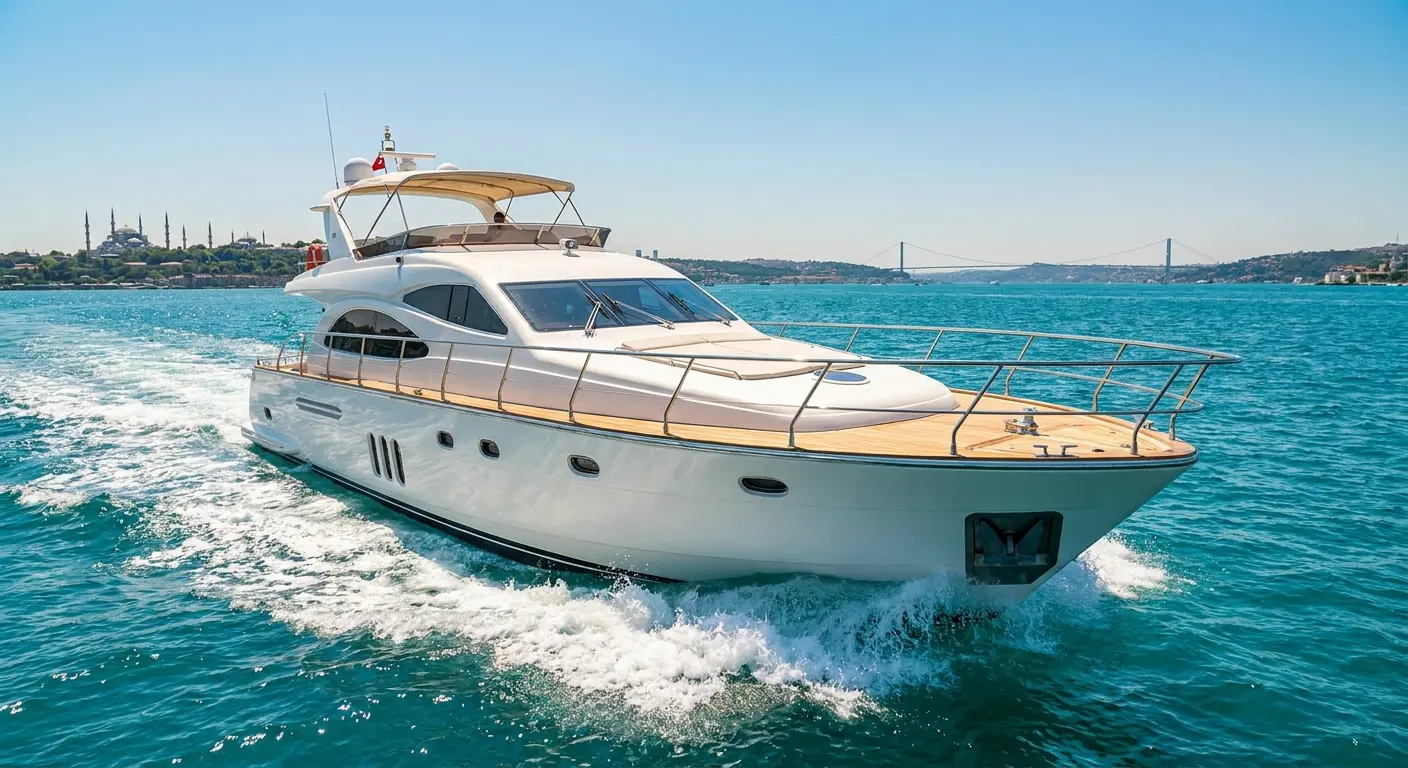
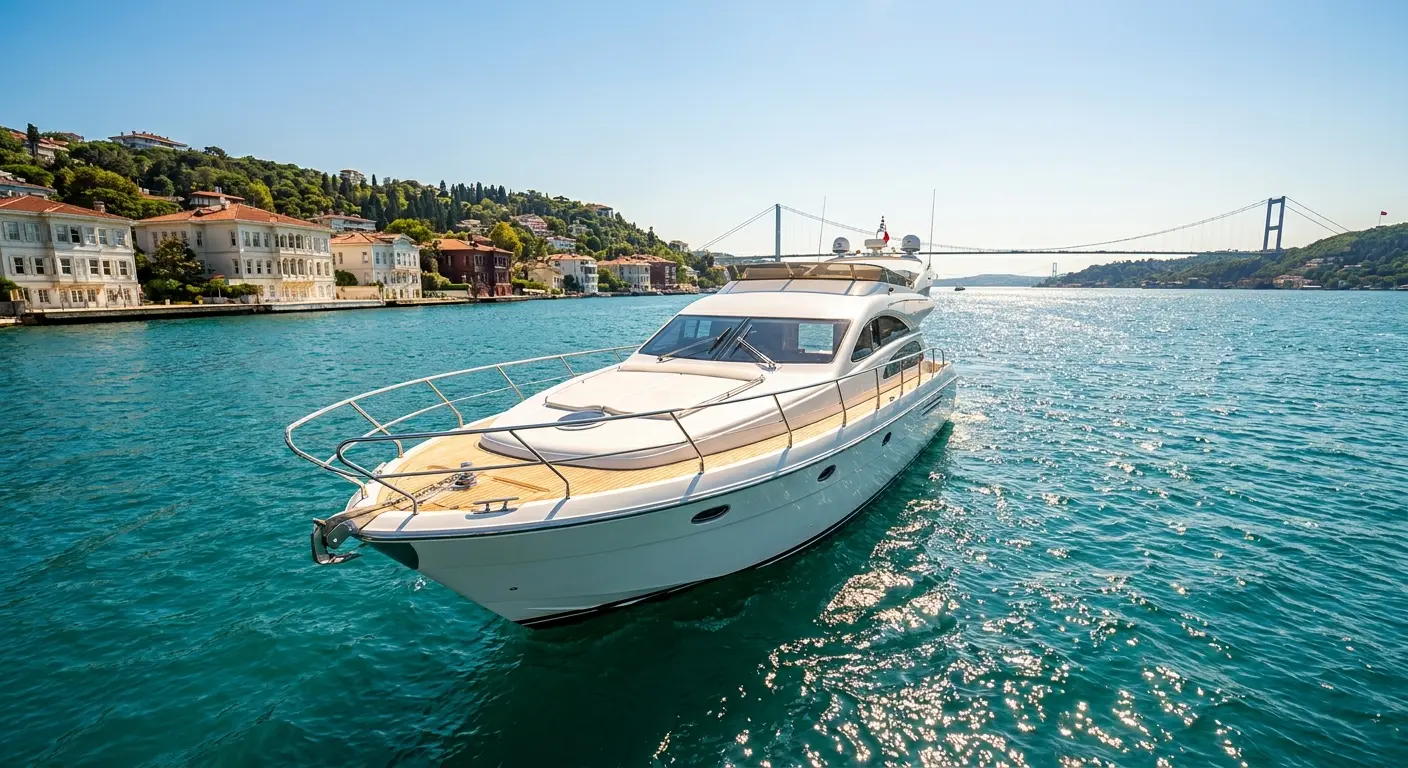
If you have never chartered a boat before, the anxiety is rarely about the boat itself. It is about the invoice. Nobody wants to step off a yacht in Eminönü and discover that fuel, the captain, the ice and the overtime hour were all billed separately. This guide is written for that exact person: someone who wants to see the Bosphorus from the water, has a group of friends or family ready to go, and simply does not know what questions to ask first. The boat I use as the reference point throughout is the 16m custom-built luxury motoryacht on the Bosphorus, which you can view on Turlago. It departs from Eminönü, carries up to 10 guests, measures 16 metres and is listed at 3,750 TRY per hour.
What does 3,750 TRY per hour actually buy?
The single most common first-timer assumption is that an hourly rate is an all-inclusive rate. It usually is not. An hourly rate is a charter rate: it covers the hire of the vessel for a defined period, and everything else sits on a sliding scale that differs from operator to operator. Before you pay anything, get a written answer on each of the following:
- Captain and crew: Bareboat chartering is rare in Istanbul. Confirm that the crew is included and find out how many people will be on board.
- Fuel: Short hops inside the Bosphorus burn very little. A run towards the Princes' Islands burns a lot. Ask explicitly whether fuel is included or metered.
- Port, pier and harbour fees: Some operators absorb these; others pass them on.
- Cleaning: Evening charters sometimes carry a separate end-of-night cleaning charge.
- Catering: Tea, coffee, fruit platters, dinner service, birthday cakes. Almost always extra, and always worth pricing in advance.
- Onboard equipment: Sound system, refrigerator, and deck barbecue use are chargeable on some boats.
- Overtime: This is where first-timers get caught. Agree the per-hour overtime rate before you board, not after.
A practical habit that saves money and awkwardness: instead of negotiating on the hourly figure, describe your exact scenario. "Saturday 5 August, three hours, nine guests, departing Eminönü." Ask for one total number, in writing. Once you have a single total, you can compare it against anything else you were considering — and you suddenly understand what 3,750 TRY really means in your specific case.
Reading the listing like someone who has done this before
A handful of terms appear in every yacht listing and mean nothing to a newcomer. Here is the plain-English version.
- Motoryacht: A power-driven boat with no sails. Deck space is generous, manoeuvring is quick, which matters in a narrow, busy, current-heavy waterway like the Bosphorus.
- Custom-built: Not a production model off a factory line, but a boat designed around a specific owner's brief. In practice this usually means a more thoughtful interior layout than a same-length production boat — and a more individual character.
- Gulet: The classic wooden, sail-assisted, slow-cruising boat you associate with the Aegean and Mediterranean. Rare in the Bosphorus.
- Lobster boat: A traditional hull shape with a rounded stern. Extremely photogenic, often chosen for style rather than volume.
Now the numbers. Sixteen metres is a mid-to-upper segment day boat. It sits comfortably above the 10–12 metre class and below the 23-metre-plus party vessels. For a first charter, that middle ground is genuinely useful: big enough that ten people do not spend the afternoon apologising to each other, small enough that a captain can thread it through the Bosphorus traffic and current without drama.
Ten guests is the maximum number of passengers, typically excluding crew. The most common first-timer error is filling that number to the brim. Nobody will stop you, but ten people on a 16-metre deck is a working lunch. Eight is the number where a charter starts to feel relaxed — where someone can lie on a sun pad, someone else can take photographs from the bow, and a third person can sit in the shade without negotiation. Since the price is per boat rather than per head, dropping from ten to eight raises your cost per person, which is precisely why you should settle the guest list before you book, not after.
One honest note: this particular listing has no reviews yet, which simply means it is newly listed. That is not a red flag, but it does mean you should do one extra round of due diligence. Ask for recent photographs, request a short video call if the operator offers one, and ask for a deck plan. Those three steps remove most of the uncertainty from a first charter.
Departing from Eminönü: what the day actually looks like
Eminönü is a smart departure point. It sits right beside the historic peninsula, it is easy to reach by tram, ferry or taxi, and it puts you on the water close to the busiest, most visually dense stretch of the strait. What follows is a realistic picture of a three-to-four-hour Bosphorus charter, written so you know what to expect rather than to promise a fixed itinerary. The exact route is always settled with the captain on the day, according to weather and traffic — knowing that in advance is half of expectation management.
Before departure (allow 30–45 minutes)
Meeting at the pier, a short safety briefing, the shoe policy, and settling onto the deck. If you are new to this, arrive twenty minutes early. That buffer is genuinely needed for gathering your group, taking the first photographs and asking the captain your remaining questions while everyone is still calm.
First hour: the historic peninsula and the mouth of the strait
You leave Eminönü and pass along the Sarayburnu shoreline, with the Maiden's Tower and the old city palaces rolling past on your left and the ferry lanes on your right. Almost every first-timer says the same thing at this point: the city does not look like itself from the water. Residents who have lived here for decades are often the most surprised.
Second hour: bridges, palaces and coves
This is the stretch past Dolmabahçe, Ortaköy, the Bosphorus bridges and the fortress pair at Rumeli Hisarı and Anadolu Hisarı. Because your boat is 16 metres rather than 30, it can hug the shoreline where larger vessels cannot, which makes the waterfront architecture far more legible. The coves around Bebek and Tarabya are the classic spots for a swimming stop — but whether a swimming stop happens at all depends on the season, the current and the weather on the day, so confirm it before departure rather than assuming it.
Third and fourth hours: the return leg and dinner
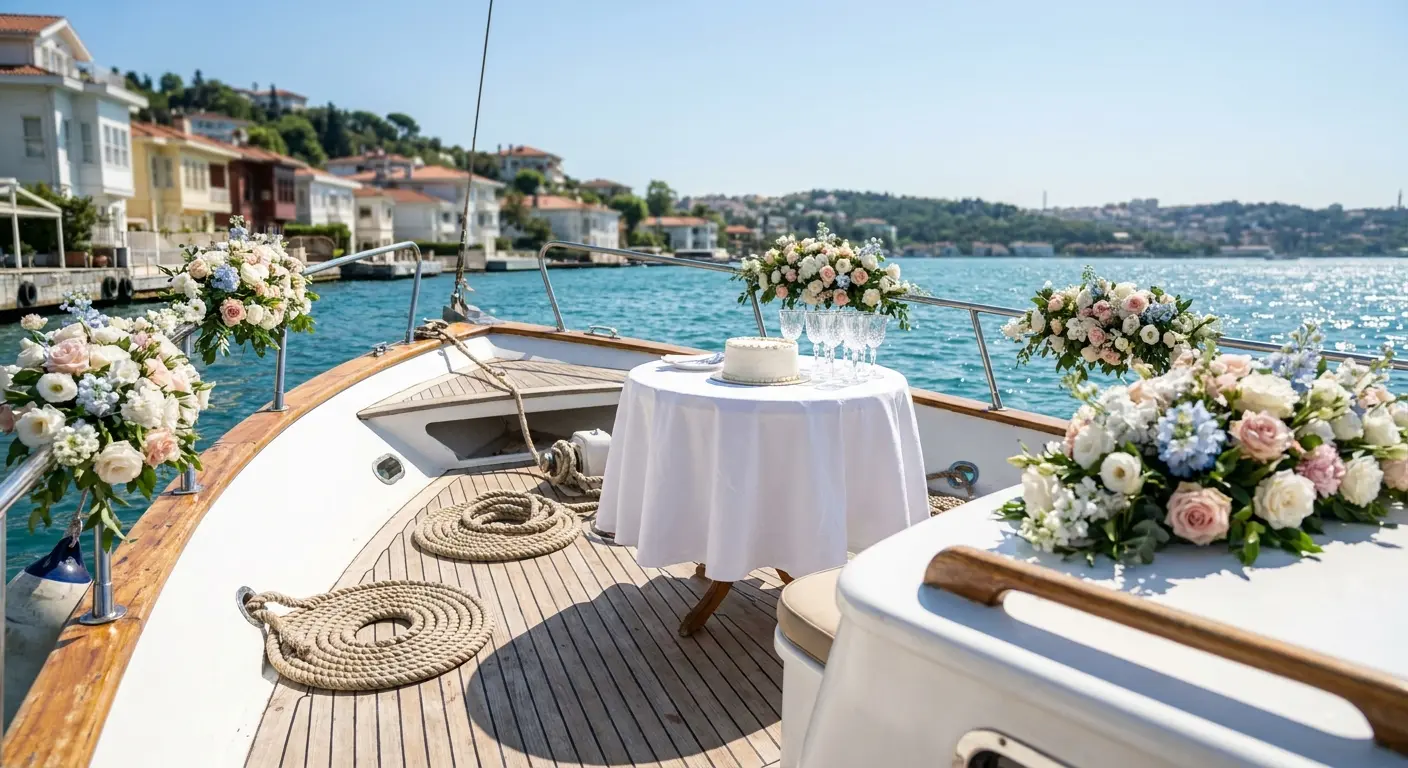
On the way back, a table can be set on deck and dinner served. As the listing itself notes, this boat is designed to cover everything from a quiet romantic dinner to a full celebration. You have two catering routes: the boat's own menu, or delivery arranged from a partner restaurant. Whichever you choose, settle the menu and the service time at least three or four days ahead. Last-minute catering is the single most reliable source of disappointment on a first charter.
Who is this boat genuinely right for?
No vessel suits every group. Here is how a 16-metre, 10-guest motoryacht maps onto the four group types that book most often.
Families
This size is close to ideal for families with children. The deck is open, the seating is comfortable, and the distances are short enough that younger passengers do not get restless. On a large party boat, supervising a child is exhausting; on a boutique motoryacht it is manageable. If you are assembling three generations for one afternoon, a group of eight or nine fits this boat very comfortably.
Couples
A two-person charter has the highest cost per head and the best privacy. Dinner on a deck reserved entirely for you two is the classic use case. If the budget is the constraint, pairing up with another couple is the smart move: at four guests, the per-person figure drops sharply and the boat still feels airy.
Groups of friends
Birthdays, hen parties, graduations, or simply a Saturday escape. A 16-metre boat is large enough that a sound system does not prevent conversation, and compact enough that the group does not fragment into separate corners. If you want a celebration without the roar of a 23-metre party vessel, this is the right register.
Corporate groups
Team offsites, client hosting, business dinners and recognition events all work well here. A professional crew and a capacity you will not exceed create a lasting impression on guests. For corporate charters, sort the operational details before you book: invoicing, a proper contract, and precise pier information. Corporate payment processes are far easier to arrange upfront than retroactively.
On the other hand, if what you have in mind is a hundred-guest reception with a DJ booth and a dance floor, this boat is too small and you should be looking at a larger platform. In that scenario, compare the 23-metre luxury yacht with full party equipment instead.
Eight mistakes first-timers make over and over
- Judging by the hourly rate alone. The number that matters is the total, including inclusions and overtime.
- Filling the boat to maximum capacity. Ten guests on a ten-guest boat is legal, not comfortable.
- Leaving the route verbal. A loop around the Bosphorus and a run out to the islands are wildly different in time and fuel. Confirm start time, end time and cruising area.
- Ignoring the weather until the last day. Wind on the Bosphorus shifts within hours. Read the cancellation and rescheduling terms before you pay.
- Sorting food and drink at the last minute. Menu, alcohol policy, outside-food rules and service times all need to be agreed in advance.
- Not thinking about what to wear. Soft-soled or bare feet are the norm on deck. Heels and hard soles damage teak and are unsafe on a moving boat.
- Forgetting power and cash. Your phone will be working hard all afternoon — bring a power bank. Carry some cash for tips even if the boat takes cards.
- Not reading the cancellation policy. Know what happens if your group size changes, your date shifts, or the weather turns.
Twelve questions to ask before you pay a deposit
Open this list before you pick up the phone. Getting the answers in writing reduces first-charter uncertainty to almost nothing.
- What is the total price for my exact date, time window and group size?
- Is fuel included?
- Are the captain and crew included, and how many crew members will be aboard?
- What is the hourly overtime rate?
- Does the stated guest capacity include crew?
- How flexible is the route and the return time?
- Will there be a swimming stop, and where?
- What is on the catering menu, what do drinks cost, and may we bring our own food?
- Is the sound system included?
- What are the cancellation and rescheduling terms if the weather turns?
- How is payment handled, what deposit is required, and is a proper invoice issued?
- Can you arrange decorations, a cake or flowers for a specific celebration?
What to wear, what to bring, what to leave ashore
This is where first-timers overthink. Boat clothing is simpler than it looks.
- Footwear: Soft-soled, easy to slip off. Bare feet or deck shoes are standard on board.
- Clothing: Light, breathable, quick-drying fabrics. It is always a notch cooler on the water than in the city, so a thin layer for the evening is worth packing even in August.
- Sun protection: Hat, sunglasses and high-factor sunscreen. Reflection off the water makes burning far more likely than on a beach.
- Bag: Small and zippable. Large suitcases take up deck space and get wet.
- Electronics: Power bank and a waterproof phone pouch.
- Leave behind: Valuable jewellery, high heels, and slippery fabrics in pale colours.
Best season and best time slot on the Bosphorus
The charter season runs roughly from late April into mid-October, but each month behaves differently.
- June to August: Hottest and busiest. Best months if a swimming stop matters to you. Weekend slots can sell out weeks ahead.
- May and September: The connoisseur's choice. Water is still swimmable, crowds thin out, and availability improves.
- Early October: Lovely for evening cruising, cooler for daytime. Wind becomes more likely, so read the cancellation terms carefully.
- November to March: Cruising is possible but cold and breezy, and sitting on an open deck for hours becomes uncomfortable. Boats with enclosed saloons have the advantage.
As for timing, you have three practical windows: the daytime cruise (typically 11:00–15:00), the late-afternoon cruise (16:00–19:00) and the dinner cruise. Daytime is best for photography and swimming, late afternoon for light and cooler air, evening for dining and celebration. Weekdays are quieter and usually more flexible.
Budgeting beyond the hourly rate
At 3,750 TRY per hour, the arithmetic is straightforward: two hours is 7,500 TRY, three hours is 11,250 TRY, four hours is 15,000 TRY. The most revealing exercise is to convert that into cost per person. Three hours with a full group of ten works out at roughly 1,125 TRY per head. Compare that with an evening of dinner, transport and entertainment in Istanbul and the number starts to make a lot more sense.
Be careful, though: package pricing does not always scale linearly from the hourly figure. Some operators discount three-hour packages, others apply minimum charter durations. Build your budget on the written total you were quoted, not on a multiplication you did yourself. The extras you should plan for are catering and drinks, any fuel supplement, a tip (a gesture in the region of five to ten percent of the total is customary), transport to the pier, and a possible overtime hour.
One final piece of advice for a first charter: book three hours rather than five. It is long enough to decide whether you enjoy being on the water, and short enough that nobody is counting the minutes. If you love it, your next booking can be a longer route.
Same water, different boats: alternatives worth comparing
The 16-metre motoryacht is a balanced choice. If your priorities sit elsewhere, two other options are worth a look:
- Classic and elegant lobster motoryacht charter: distinctive traditional lines and a highly photogenic profile. A strong pick for couples and small groups where aesthetics come first.
- Special occasion celebration boat: configured around a single moment — a proposal, an anniversary, a milestone birthday.
When you are deciding, ask yourself one question: what am I actually buying here? Style and photographs, space and a crowd, or privacy and romance? Once that answer is clear, the boat chooses itself.
Booking, step by step
- Lock your group. How many people, which date, how many hours. Without those three facts, price conversations waste everyone's time.
- Study the listing. Note the photographs, capacity and departure port.
- Send your questions. Use the twelve-point list above.
- Get the total in writing. Negotiate on the total, not the hourly rate.
- Read the cancellation terms. Ask about weather, illness and changes to group size.
- Pay the deposit and get confirmation. Request the meeting point, time and a contact number in writing.
- Reconfirm 24 hours ahead. Check the forecast and whether the programme has changed.
The short version
Chartering a yacht on the Bosphorus looks complicated from the outside and is really three decisions: pick the right boat, nail down the total cost before you commit, and choose a time slot that suits your group. View the 16m custom-built luxury motoryacht on the Bosphorus on Turlago — at 16 metres, for up to 10 guests, departing Eminönü, it is a sensible first charter. Turn the 3,750 TRY hourly rate into a total for your own scenario, ask your questions in writing, and be at the pier twenty minutes early. The Bosphorus will handle the rest.