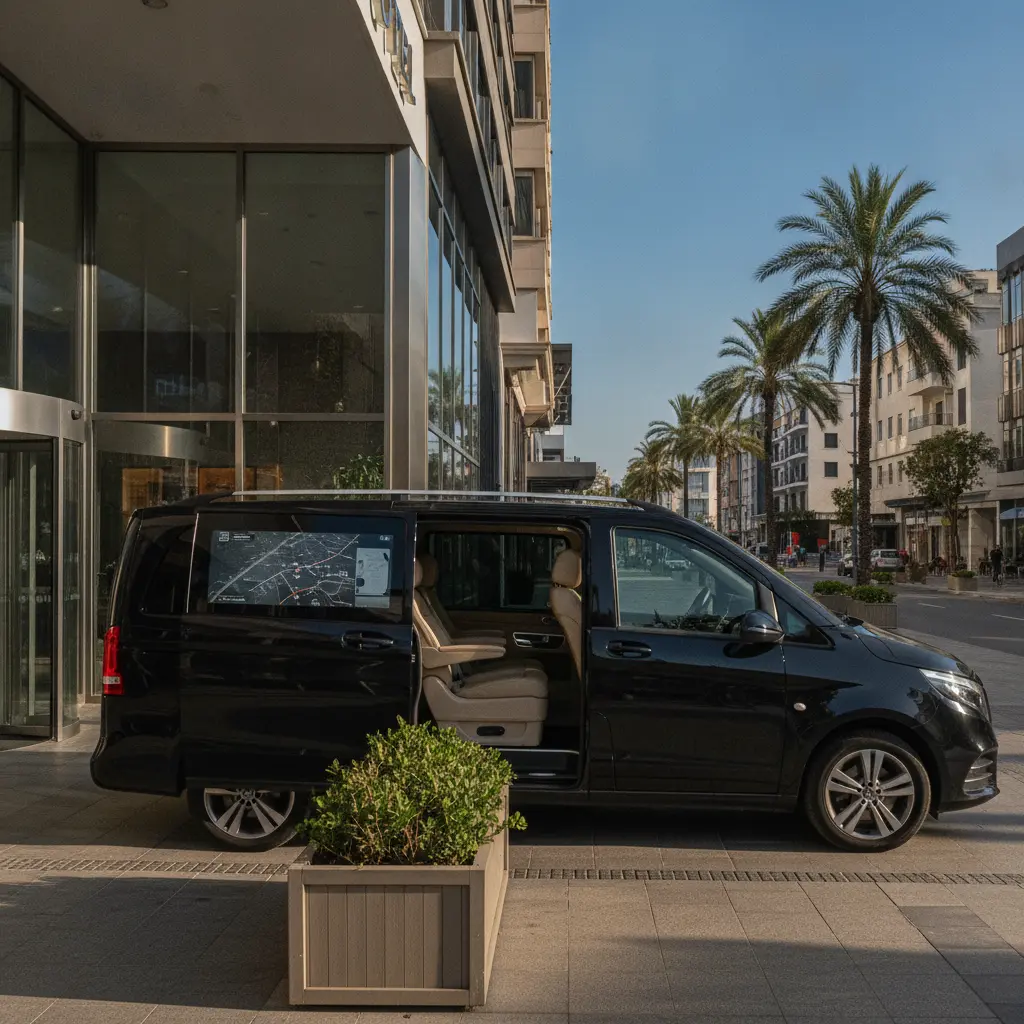
14+1 Chauffeur Minibus Rental Istanbul: A Budget Guide
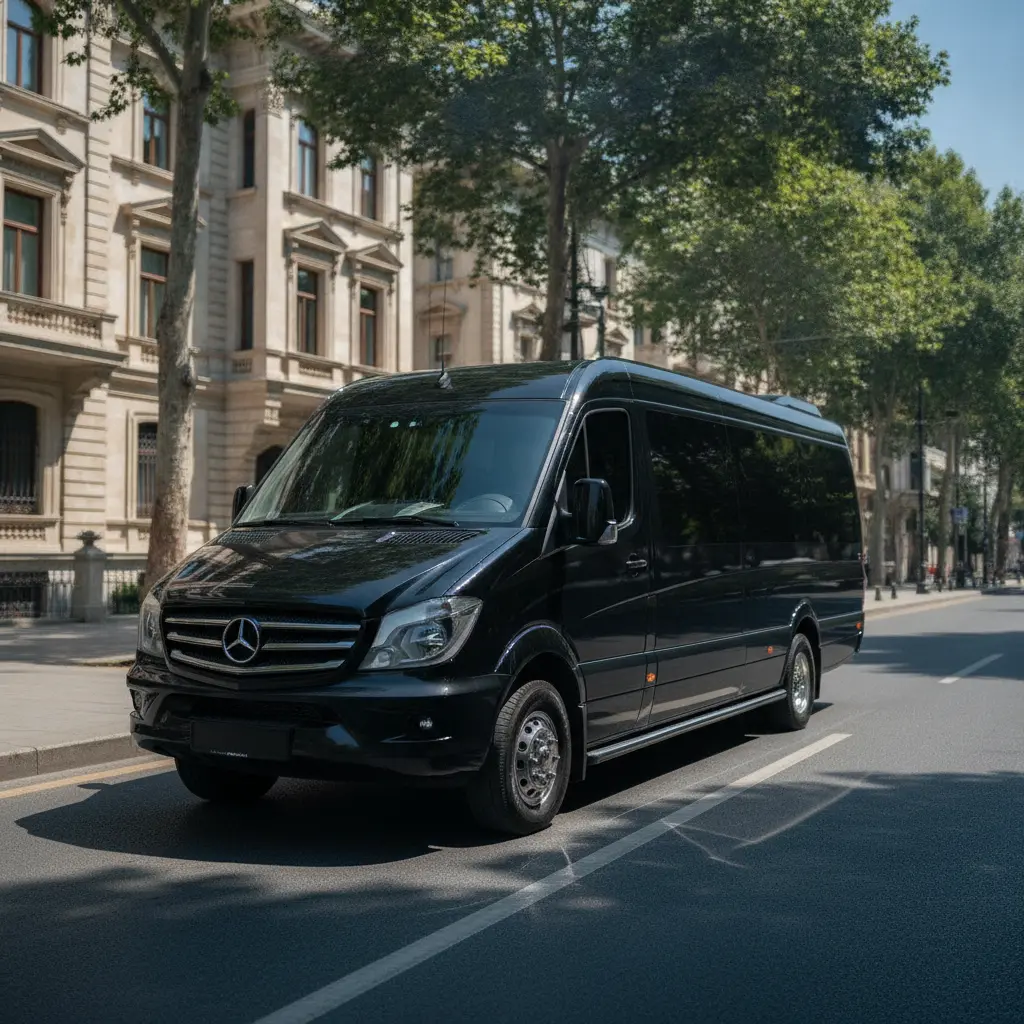
What actually drives the price of a chauffeured minibus in Istanbul
Ask for a quote on a 14+1 minibus and you get one number. Inside that number sit at least five separate cost lines: the vehicle, the fuel, the driver, insurance and licensing, and operations such as parking and coordination. If you do not know which of those are bundled in, you cannot compare two offers — you can only compare two totals. And a total is exactly the thing that misleads people most often.
This guide is written from a budgeting angle, using the booking logic behind the 14+1 chauffeured VIP minibus rental service on Turlago as the reference point. There is no price list below, because a list would be wrong for your itinerary. What you get instead is a way to read any quote and see where the money is going.
Hourly, daily or per-kilometre — three pricing models
Almost every chauffeured rental contract falls into one of three shapes, and they produce very different totals for what looks like the same service.
- Hourly blocks. Usually sold in minimum blocks of four, six or eight hours. This suits short city programmes: hotel to venue, a business meeting, a quick multi-stop errand. The trap is traffic. On a congested day, a six-hour block can disappear between two addresses.
- Daily packages. Priced around a working window, often morning to evening, and frequently with a kilometre allowance attached. This is the most efficient model for a city tour, a wedding day, or a full day of hosting guests. Always ask what the allowance is and what happens when you exceed it — overage is billed per kilometre and it adds up quietly.
- Distance-based. Used for airport transfers, intercity runs and one-way movements. Here the driver's time is not the main cost; the kilometres and the empty return leg are. If you are going one way, ask whether the return positioning is already inside the quote.
A practical rule: the more predictable your programme, the better your rate. Suppliers price uncertainty as risk. Give them addresses, stops and timings up front and the quote becomes easier to sharpen. Vague requests always cost more, because someone has to absorb the unknown.
Vehicle class and equipment
Even within the 14+1 category, vehicles are not interchangeable. The differences that move the price:
- Model year and seat layout. Newer vehicles, leather seating, generous legroom and a quiet cabin all cost more. The gap between two vehicles with the same seat count shows up not in the photos but in how tired your group is at the end of the day.
- Luggage volume. This is the single most overlooked budgeting factor. With all 14 seats filled, a minibus has very little boot left. A group arriving from the airport with one suitcase each will not fit. The fix is either a larger vehicle or a second one, and either option roughly doubles the transport line. Ask about luggage at the same time you ask about seats.
- Climate control, charging points, Wi-Fi, water. Small features, large impact on long days. If it is not written in the offer, do not count on it being there.
- Sound system and microphone. For guided or large-group travel, especially intercity, a microphone is a genuine comfort upgrade. Decide whether it is worth the difference based on how your group will actually use the vehicle.
The legal costs baked into a chauffeured rate
A vehicle carrying paying passengers commercially must be licensed and operated accordingly, with a driver registered to that vehicle. Those obligations are a real cost on the supplier's side, and they are folded into the rate. This matters to you because when a quote is pushed down hard, the first things that get cut are driver hours, insurance scope and maintenance — in other words, your safety margin.
Before booking, ask whether the vehicle holds the required passenger transport documentation, whether the driver is authorised for that specific vehicle, and what the passenger liability and comprehensive insurance actually cover. Professional operators answer these questions willingly. Anyone who finds them annoying is telling you something useful.
Timing: season, weekday and hour
The same route, the same vehicle, a different date — a different price. These are the periods that push rates up:
- Public holidays and long weekends. Demand spikes while fleet size stays fixed. Booking early here is not only about price; it is about whether a vehicle exists at all.
- Summer and wedding season. Saturday evenings are the most contested slot in Istanbul. The same service on a Friday evening or a Sunday can be noticeably easier on the budget.
- Late nights and very early mornings. Out-of-hours driver duty carries a premium. If your flight lands at 05:00, say so at the quoting stage. Discovering a surcharge later is far more irritating than seeing it priced in from the start.
- Congress and major event weeks. When thousands of visitors are being moved across the city at once, fleet capacity evaporates. Check the event calendar and book weeks ahead if your dates overlap.
Four line items that rarely appear in the first quote
An offer that looks reasonable can end up costing more by the time the contract closes. These four are the usual suspects:
- Parking and bridge or motorway tolls. In city programmes, hotel and venue parking is a serious line. Who pays?
- Waiting time. If a flight is delayed or the programme runs long, is there a waiting charge? How many minutes are free?
- Extra stops and route deviations. Does adding an unplanned stop change the price?
- Driver accommodation and meals. On intercity or multi-day programmes, who covers the driver's overnight stay and food? This is the quiet line item that reshapes long itineraries.
Twelve questions to ask before you sign
Treat this as a checklist. Every unanswered question becomes a surprise cost later.
- How many hours or kilometres does the price include, and what is the overage rate?
- Exactly which model and model year is the vehicle?
- Is it 14+1, and are driver seats included in that count?
- How much luggage space remains at full capacity?
- Is fuel included?
- Who pays parking, bridge and motorway fees?
- What languages does the driver speak, and do they know the route?
- How is waiting time charged?
- What insurance covers the vehicle and passengers, and can you see the policy?
- What are the cancellation terms, and until when is cancellation free?
- How is payment structured, and what deposit is required?
- How are extra stops or route changes during the programme priced?
How many people fit in a 14+1 — and why that changes your budget
14+1 means fourteen passenger seats plus one driver seat. It does not mean fourteen people will travel comfortably. In practice, the comfortable band is closer to ten to twelve passengers, once you account for seat pitch and luggage.
Seat count and luggage space are inversely related
In a minibus, the boot is the narrow space behind the last row. Fill all fourteen seats and even one cabin bag per person becomes a puzzle. Airport pickups are where this goes wrong most often. You have two options: a larger vehicle (16+1 or a midibus) or a second vehicle. Both raise the budget, but a luggage crisis at the kerb costs more — in time, in stress, and often in a hastily arranged taxi.
Child seats and extra seat requests
Families routinely forget to mention child or booster seats. Confirm up front whether these are complimentary or charged. The same applies to strollers and wheelchairs, which require the luggage plan to be rebuilt rather than adjusted.
Route-based budgeting
Airport transfers
For transfer-type bookings, price is driven by distance and waiting policy, not by hours. Flight delays are normal, so ask whether the first 45 to 60 minutes of waiting are included. Also confirm whether the driver meets you inside arrivals with a name board — for a group arriving on a long flight, that detail is worth more than a small discount.
Full-day use inside Istanbul
The biggest budget trap in city use is traffic. Between 08:00 and 10:00, and again between 17:00 and 20:00, a short hop can take twice the map time. Plan around that reality and the same hourly package delivers far more. Clustering stops around one district and keeping distances short is the single most effective way to cut cost without cutting service.
Intercity and multi-day programmes
On longer programmes departing Istanbul, pricing switches from hours to days and kilometres. Driver accommodation, empty return legs and vehicle rest periods all enter the calculation. If you are planning a multi-day itinerary, state up front that the minibus will be used for local movement at the destination as well as the transfer itself. On a multi-stop programme such as a 3-day Cappadocia tour, the vehicle typically shuttles between hotel and sites; that usage is quoted by the day rather than by the hour, and it is materially more economical overall.
Evening programmes and late returns
Dinner, entertainment and a late ride home bring two extra items into play: out-of-hours surcharge and waiting time. Programmes such as the Bosphorus dinner and entertainment cruise in Istanbul usually finish after midnight. Set the package window to cover the return leg from the start; negotiating an extra charge at 01:00 in a car park is nobody's idea of a good evening.
The driver: the one line item you should never bargain down
When a quote needs to come down, the driver is the easiest place to cut. It is also the only place where cutting changes the entire experience. The badge on the bonnet, the seat material and the sound system will not compensate for a bad driver.
Language and communication
If you are hosting international guests, the driver's language ability matters. The bar is not fluent guiding — it is basic communication and the ability to solve a problem under pressure. A professional driver who does not share your language will still route the right question to the right person.
Traffic and parking knowledge
A good Istanbul driver does not follow the navigation line; they know the correct line. Which avenue to avoid at which hour, where a minibus can actually wait at a hotel entrance, which car park has clearance for a tall vehicle — that knowledge converts directly into fuel and time savings. Experience is a quiet discount.
Discretion and professionalism
If you are moving corporate guests, artists or private visitors, discretion is not optional. Non-disclosure of the day's programme and of anything discussed inside the vehicle should be written into the agreement. It rarely raises the rate, but it is what separates a professional service from a taxi with a bigger boot.
Insurance, permits and what the contract must say
Before signing, make sure three things are in writing:
- Vehicle and policy details. Plate, model, passenger liability cover and comprehensive insurance scope.
- Service definition. Start time, end time, included kilometres, included waiting time and the agreed route.
- Liability and force majeure. What happens in traffic, bad weather or a breakdown, and what replacement vehicle commitment applies.
The replacement vehicle clause is the one nobody asks about and everybody needs eventually. If the vehicle fails, how many hours until a substitute arrives? Get a number.
Deposits, cancellation and refund terms
Deposits are standard in chauffeured rental, and reasonably so: the vehicle is being blocked for your date. A fair structure is a deposit at booking and the balance on the day of service. Cancellation terms should be tiered — the more notice you give, the higher the refund. Inside the final 48 to 24 hours, a deduction is normal because the driver's slot has already been reserved; find out the percentage in advance rather than at the moment you need to cancel.
Pay through a traceable channel and get written confirmation. Verbal agreements will not protect you in a dispute that arises after the service.
When a minibus is the wrong answer
Sometimes the best budgeting decision is choosing a different vehicle class entirely.
- 1–4 people: a chauffeured minibus is usually overkill; a sedan or executive car costs far less.
- 5–10 people: a 14+1 is comfortable and sensible, and luggage fits without drama.
- 11–14 people: borderline. With luggage, the minibus will not cope; plan for two vehicles or a larger one.
- 15–25 people: move up to a midibus. One midibus is cheaper and far easier to coordinate than two minibuses.
- 25+ people: coach territory or a multi-vehicle plan, where coordination cost starts to outweigh the per-seat price.
One more consideration: a single large vehicle reduces flexibility. If part of your programme requires splitting the group, two smaller vehicles can be the smarter spend even though the headline number is higher. On the ground, it buys back time.
Budget comparison checklist
Before putting two quotes side by side, confirm both answer every line below identically. Otherwise you are comparing apples to oranges and the cheaper one will not stay cheaper.
- Same package duration and same included kilometres?
- Fuel, parking and tolls included in both?
- Same waiting time policy?
- Equivalent model year and equipment?
- Driver experience and language stated?
- Insurance scope disclosed and policy shared?
- Cancellation and refund terms in writing?
- Replacement vehicle commitment included?
- Payment schedule and deposit percentage clear?
Conclusion: not the lowest price — the clearest one
Real savings on a chauffeured minibus do not come from finding the smallest number. They come from knowing exactly what sits inside it. A quote with every line item discussed in advance means no surprises on the day, and that is the only version of your budget that is genuinely under control. Fix your programme, choose the right capacity, refuse to compromise on the driver, and put everything in writing.
If you are planning chauffeured transport in Istanbul with a 14+1 vehicle, review the service scope and vehicle details on the chauffeured VIP minibus rental page on Turlago, then share your route and passenger count so the scope can be matched to your programme. Base the decision on a line-by-line comparison, not a single figure.