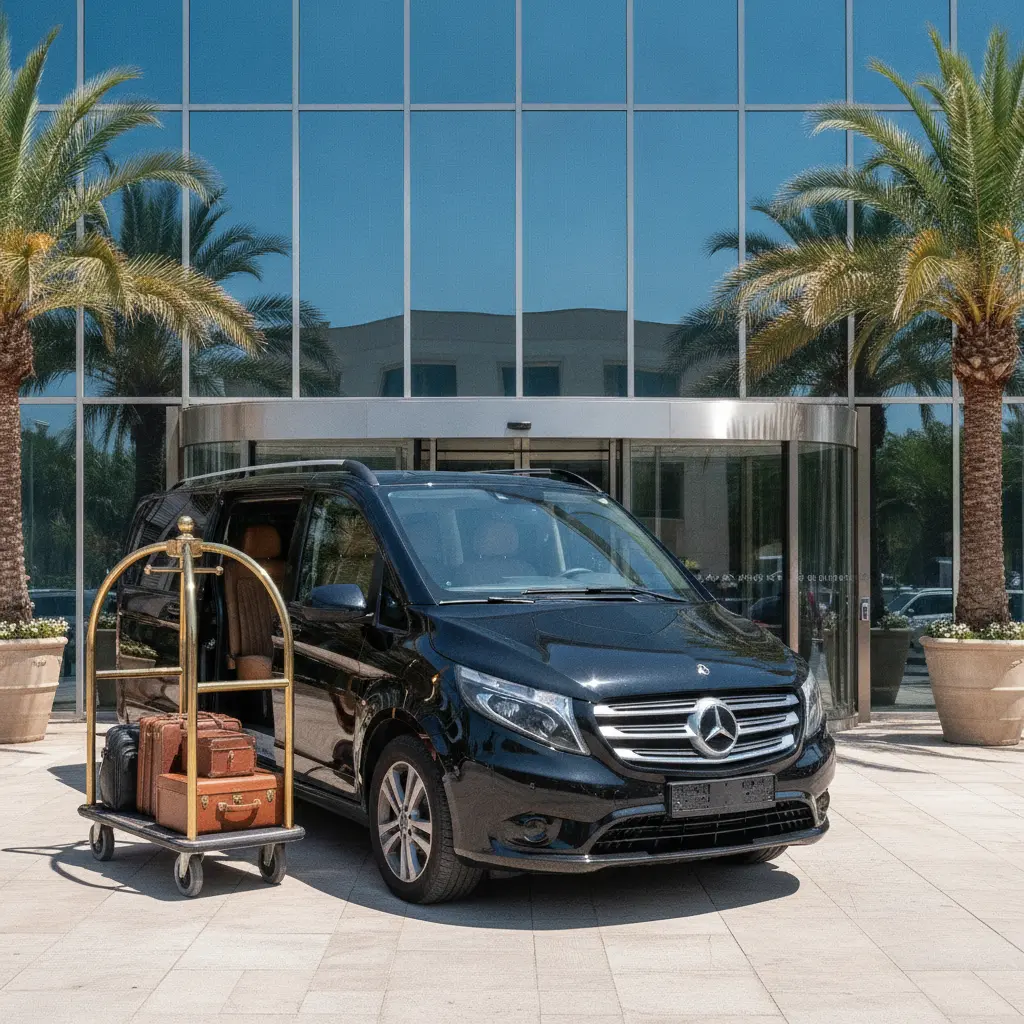
Chauffeur-Driven Vito Hire: Budget & Price Comparison Guide
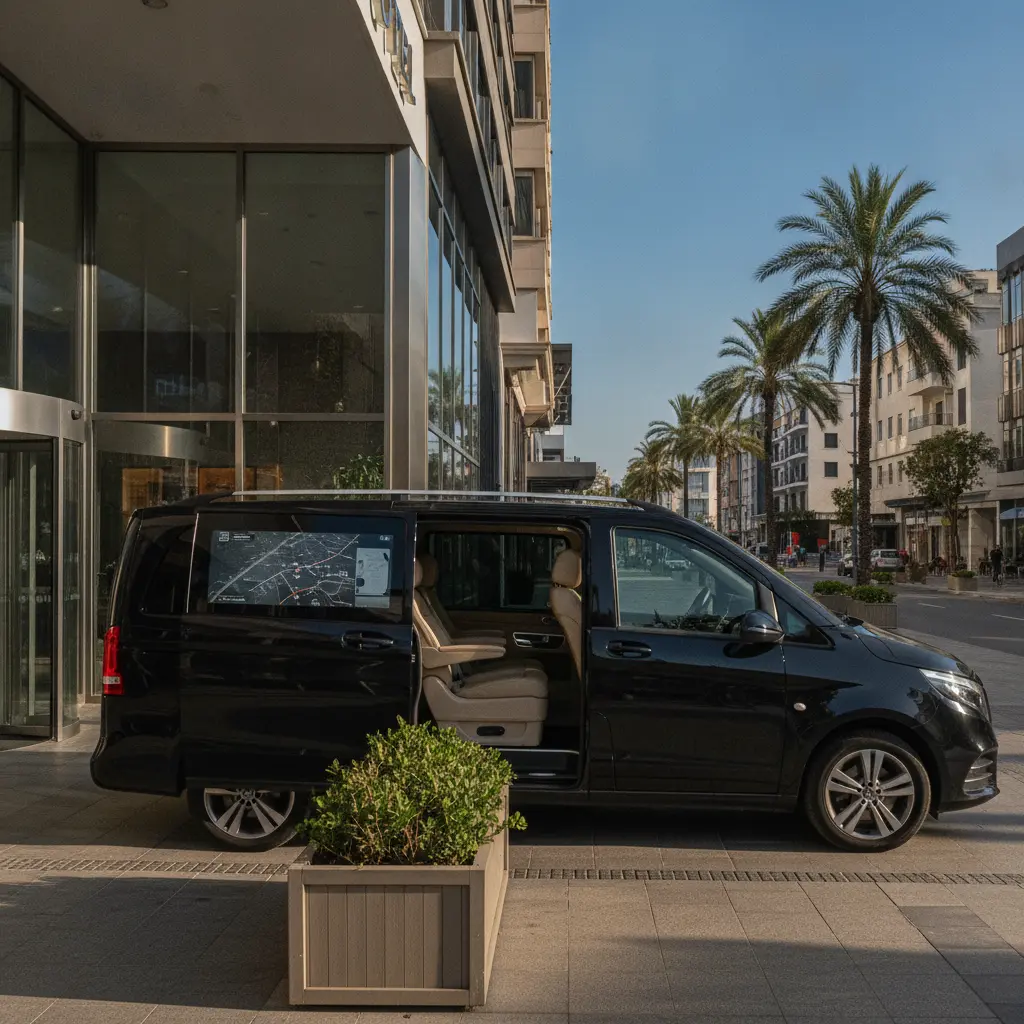
Two quotes for the same Vito, the same route and the same four-hour window can differ by a factor of two. The instinct is to assume one operator is overcharging. The more useful reading is that the two quotes describe two different products. One price includes fuel, tolls, parking and waiting time; the other leaves those items to be settled at the end of the day. Once the trip is over, the totals usually converge — and occasionally the cheaper quote turns out to be the more expensive one.
This guide treats chauffeur-driven van hire as a budgeting decision rather than a comfort upgrade. We will break down what actually drives the price, which line items are negotiable and which are not, how a five-passenger capacity changes the cost per person, when an in-car entertainment system earns its premium, and whether long-term hire is genuinely cheaper. For a concrete reference point, view the chauffeured VIP Mercedes Vito listing on Turlago and keep the checklist below next to it.
Why the same van produces two different numbers
A chauffeur-driven hire price is never a single figure. What appears on the quote is usually just the vehicle plus the driver's time for that day. Everything else — fuel, motorway and bridge tolls, parking, the driver's meals and overnight accommodation, night surcharges, waiting time — is either inside the package or outside it. A quote that looks cheap is often simply a quote with more items left outside. A quote that looks expensive may already contain all of them.
The practical consequence is that you cannot compare quotes until you have normalised them. Before you look at the number, ask both operators the same five questions: Is fuel included? Who covers the driver's meals and accommodation? After how many minutes does waiting time become chargeable? What time does the night rate start, and is it applied to the pickup or the drop-off? Who pays for parking and tolls? Until those five answers are on paper, no price comparison is meaningful.
The seven components of a chauffeur-driven hire price
Almost the entire cost sits in seven buckets. Each has a different negotiating margin, and spending your bargaining effort on the right bucket is what actually moves the total.
- Vehicle (fixed): Class, age and specification set this. A VIP-spec van with leather seating and an in-car entertainment system does not rent at the same rate as a standard minibus. There is very little room here, and none at all on a small fleet with a specialised vehicle.
- Driver (semi-flexible): A professional, vetted, calendar-managed driver is not the place to squeeze. What is negotiable is the definition of the working day: booking eight hours instead of ten lowers the quote without insulting anyone.
- Fuel (flexible): Some operators bundle it; others charge per kilometre. Per-km pricing usually works in your favour on short city runs, while a bundled rate is more predictable on long intercity transfers.
- Tolls, bridges and parking (variable): In a city like Istanbul these can be a noticeable share of a short hire. Bundling them removes the risk of a surprise at drop-off.
- Waiting time (negotiable): This is the most argued-about line. "Free waiting" usually means the first 15 to 30 minutes; after that an hourly rate applies. For weddings, receptions and meetings where schedules slip, insist this is written down.
- Night and holiday rates (flexible): Journeys starting after midnight, public holidays and peak season can all trigger a different tariff. If your timing is flexible, this is where real savings live.
- Add-ons (flexible): Meeting signage, child seats, in-car refreshments, extra stops, gaming consoles. Some of these carry genuine cost, others are simply a package label — ask which is which.
Image suggestion: a printed quote, a pen and a car key on a desk — alt text: "Comparing line items on a chauffeured Vito hire quote"
Hourly, daily or packaged: the budget logic of four scenarios
Hire pricing behaves like hotel pricing: the unit you buy determines the unit cost. Switching between units within the same day is the fastest way to improve your budget.
Scenario 1: a single airport-to-hotel transfer
Here you are not buying time, you are buying an outcome: arriving at your destination with your luggage, without drama. Transfer prices are therefore usually fixed and published in advance, and traffic does not change them. For a group of five, one van is cheaper and far simpler than two separate cars. A daily hire offers zero advantage on this route; you would simply be paying for hours you will not use.
Scenario 2: a four-to-five hour city programme
Pickup at the hotel, two or three stops, a meal break, return. Hourly packages look attractive here, but check the edges: waiting time and parking are frequently excluded. Ask for a price based on door-to-door elapsed time, not on a nominal hour count, and confirm the hourly rate that applies if a four-hour programme runs to five.
Scenario 3: a full day of eight to ten hours
In a city where distances are long and traffic is unpredictable, a full-day package is almost always the rational choice if you plan to cover three different districts. The cost per hour drops sharply compared with short packages, and you gain operational advantages that never appear on a quote: the van waits at your door, your plans can change mid-day, and you can leave belongings in the vehicle instead of carrying them. A van booked for the day is also a storage locker and a place to sit down.
Scenario 4: multi-day and corporate use
Beyond two days, the pricing logic shifts from "daily rental" to "contract". The negotiating surface widens: consecutive-day discounts, who pays for the driver's accommodation, daily kilometre allowances, and whether the vehicle is swapped between days. We deal with this separately below.
Does the in-car entertainment system pay for itself?
An in-car gaming and entertainment system looks at first like a child-distraction extra, and an adult traveller may reasonably dismiss it. In practice, whether it earns its premium depends entirely on the length of the hire and the age profile of the passengers. Three scenarios are worth separating.
- It earns its keep on long journeys: On intercity routes or in unpredictable traffic, particularly with children aged roughly six to fourteen, an entertainment system reduces the number of "are we there yet" interruptions and, more importantly, the number of unscheduled stops. That is a direct saving in time and in stop-related cost.
- It earns its keep on waiting-heavy programmes: If the van works like a corporate car — dropping you, waiting an hour or two, collecting you — the interior becomes your space during the gaps. A rear screen makes those gaps considerably more comfortable.
- It does not pay on a short transfer: Nobody opens a console on a twenty-minute airport run. On that booking, any premium you paid for the system is simply money spent for nothing.
One practical negotiating note: when the entertainment system is sold as a "package difference", ask whether that difference reflects hardware or only a label. Put a quote with the system next to an identical vehicle without it and let the gap inform the decision. If you want to see how this looks in a real listing — five-passenger capacity, chauffeured service and gaming equipment in one package — view the PlayStation-equipped chauffeured VIP Vito on Turlago and test it against the cost checklist in this article.
Five passengers: the cost-per-person and luggage maths
The most commonly overlooked budgeting factor in van hire is the cost per person. A Vito carrying up to five passengers looks like a simple capacity figure, but in practice it is a multiplier that halves the total. Running the same programme in two separate cars means two drivers, two fuel bills, two parking charges and twice the coordination.
The second half of that equation is luggage, and this is where plans fall apart. Five passengers does not mean five large suitcases. Once the cabin is full, the remaining luggage volume shrinks sharply. On airport transfers, at the end of a long holiday, or on shopping-heavy city days, that gap can force a second vehicle and blow the budget. Ask directly: "Can we travel with five passengers and five large suitcases in one vehicle, or do we need extra luggage capacity?" If the answer is vague, that is the weakest point in the quote.
The third factor is the composition of the group. Five people willing to share one vehicle divide the cost neatly. But if the same group has different arrival times, different hotels or different evening plans, a single van becomes inefficient by mid-afternoon. The correct fix is not a bigger vehicle but splitting the day into time blocks: a transfer at the start, a block of hours in the middle, a transfer at the end.
Six costs that are not on the quote
What damages a chauffeur-driven budget is rarely the headline price; it is the items that were never written down. These six are the classic additions that appear at settlement, and all of them can be fixed in advance with one question each.
- Waiting charges: Whether an hourly rate kicks in when traffic, a delayed flight or an overrunning programme adds time — and how many free minutes you get before it does.
- Night surcharge: Usually triggered after a set hour. Crucially, check whether it applies to the pickup time or the drop-off time, because the difference can be significant.
- Driver meals and accommodation: On day hires the driver normally covers their own meals, but on intercity or multi-day work, overnight costs may appear as a separate line. Settle this before booking.
- Tolls, bridges and parking: A real amount on short city hires. Bundling removes the risk entirely.
- Extra stops and route changes: A "stop outside the programme" clause can turn every spontaneous detour into an extra charge. Build a slightly generous itinerary from the start.
- Cancellation and amendment terms: How much comes back if plans change, and how much notice is required. Do not pay before reading this clause.
Is long-term hire actually cheaper?
"Wouldn't a monthly contract be cheaper than booking day by day?" is a sensible question for project teams, anyone in town for a trade fair or congress, and companies hosting long-stay guests. The honest answer is conditional: long-term hire is cheaper when the vehicle is moving, and more expensive when it is waiting.
Think in terms of average daily usage. If you need the van for three hours a day over a week, paying for seven full days is poor value; building a week of short blocks is usually better. If you are in the vehicle eight to ten hours a day, a multi-day contract both lowers the unit cost and removes the daily hunt for a new quote. Use a single metric to decide: average hours of use per day. Above roughly six hours, a multi-day package almost always wins. Below four, buying time in blocks is smarter.
Three clauses deserve negotiation on any long-term deal. First, a consecutive-day discount. Second, the daily kilometre allowance — the sneakiest item in multi-day contracts, because per-km overage can wipe out the discount in a single long trip. If you have out-of-town work, raise the allowance or ask for unlimited mileage. Third, the driver's accommodation. And if you are weighing a self-drive long-term rental against a chauffeured one, remember that self-drive leaves parking, fuel and traffic stress with you, while a professional driver's knowledge of city routes often recovers part of the cost in fuel and time.
Transfer or full-day hire? A simple decision path
Six questions resolve the product choice before you ever discuss price.
- Are you going from A to B in one movement? Book a transfer.
- Are there two or more stops in the day? Hourly package or full day.
- Does the vehicle need to wait for you? Full-day hire.
- Are some passengers arriving at different times? Two separate transfers, not one large vehicle.
- Is the programme longer than two days? Multi-day contract.
- Heavy luggage and five passengers? Get capacity and luggage volume confirmed in writing.
There is one exception to this path: occasions where the vehicle is part of the impression you are making. For a welcome, a reception or a protocol event, the van is not transport, it is part of the host's image — and in that case the right choice is the most consistent quote, not the cheapest one. If your day includes an evening on the Bosphorus, pairing transport with a private-table Bosphorus dinner and Turkish night lets you settle vehicle and venue in a single booking.
Why the price of the same van moves from day to day
Chauffeur-driven hire is not statically priced. The same vehicle on the same route will quote differently on different dates. That is not inconsistency, it is demand being priced. If your dates can move, date flexibility is the single strongest lever you have.
Weekends versus weekdays
Saturdays absorb most of the fleet, because weddings, receptions and city events cluster there. Moving the same programme to a Friday or a Monday usually returns a better quote. If you have one day of flexibility, this is where it pays.
Major events in the city
Trade fairs, congresses, large sporting fixtures and international summits drain available VIP vehicle capacity quickly, and the remaining vehicles price upwards. If your dates collide with one of these, do not leave the quote to the final week. On this category, early booking is about availability as much as price.
Time of day
Early mornings and post-midnight pickups are priced higher because they disrupt the driver's working rhythm. Shifting a flight or a programme by 45 to 60 minutes can keep you out of the night band and out of the surcharge.
Season
Summer months and public holidays bring domestic and international demand at the same time. In winter the same service is noticeably more competitive. If budgeting is your priority, your calendar is your best negotiating tool.
Fourteen questions to send before you book
Copy this list and send it to every operator you are considering. Written answers turn a comparison into a ten-minute exercise.
- Is fuel included, and is there a mileage limit?
- Who covers the driver's meals and accommodation?
- How many free waiting minutes are included, and what is the hourly rate after that?
- When does the night rate start, and which time is it applied to?
- Are tolls, bridges and parking included?
- What is the vehicle's model year and age?
- How many passengers, and how many large suitcases, can it carry at the same time?
- Is the in-car entertainment system included, or is it a paid extra?
- Can child seats be provided, and at what cost?
- Does the driver speak the languages your guests need?
- What is the charge if the programme overruns?
- Is there a charge for stops outside the itinerary?
- What are the cancellation and amendment terms?
- What insurance cover applies, and how are damage claims handled?
Handover and contract checklist
Your budget is protected during the trip as well as before it. Five minutes of checks at handover prevent most later disputes.
- Vehicle identity: Do the plate and model match the quote? Confirm you have not been downgraded to a lower class.
- Interior equipment: Leather seating, climate control, entertainment system and screen all functioning. Report anything that is not before departure.
- Cleanliness and odour: On a long journey this is the first condition of comfort.
- Damage record: Walk around the vehicle together and photograph any existing marks.
- Driver details: Name, phone number and programme in writing, plus who to call if plans change.
- Contract: Total price, inclusions, waiting and night-rate clauses all in writing. Verbal agreements are forgotten at payment time.
Three negotiating moves that work
Negotiating a chauffeured hire is less about cutting the number and more about clarifying scope. Three moves do most of the work.
Narrow the scope. "Can you do a discount?" tends to produce a half-answer. "Eight hours instead of ten, no extra stops" produces a definite reply, because the operator's cost genuinely falls.
Move the date. Thursday instead of Friday, 09:00 instead of 06:00. Date and time flexibility is a stronger tool than asking for money off, because it fills a gap in the operator's calendar rather than eating into their margin.
Make the comparison transparent. Saying "the other quote includes fuel and parking" forces a line-by-line response, which clarifies both price and real scope at once. Do not invent a quote you did not receive, though; a fabricated comparison ends trust in the first minute and is easy to spot.
The decision in three lines
Everything in this guide reduces to three practical rules:
- Compare total cost, not the daily rate. Two quotes that both include fuel, tolls, parking, waiting and night rates are the only two quotes you can genuinely compare.
- Match the product to hours of use. Single movement: transfer. Under four hours: hourly block. Over six hours: full day. Over two days: contract.
- Confirm capacity together with luggage. Five-passenger capacity is an advantage on paper and a budget trap when the suitcase maths is skipped.
If you want the entertainment system, the five-passenger layout and the chauffeured service in one package, take this checklist with you and view the chauffeured VIP Mercedes Vito hire on Turlago before confirming anything. A traveller who asks the right questions does not always get the lowest price — but they do get a predictable total, and in budgeting that is the real win.