Mercedes Vito Tourer Hire: Chauffeur Budget Checklist
You have three quotes for the same Mercedes Vito Tourer, on the same day, for the same route, and none of them match. One is priced per hour, one per day, one as a flat transfer. It feels like you are comparing prices. In reality you are comparing three different products, and the gap sits almost entirely in the fine print: driver hours, mileage caps, parking, bridge tolls, waiting time, deposit rules and where VAT lands.
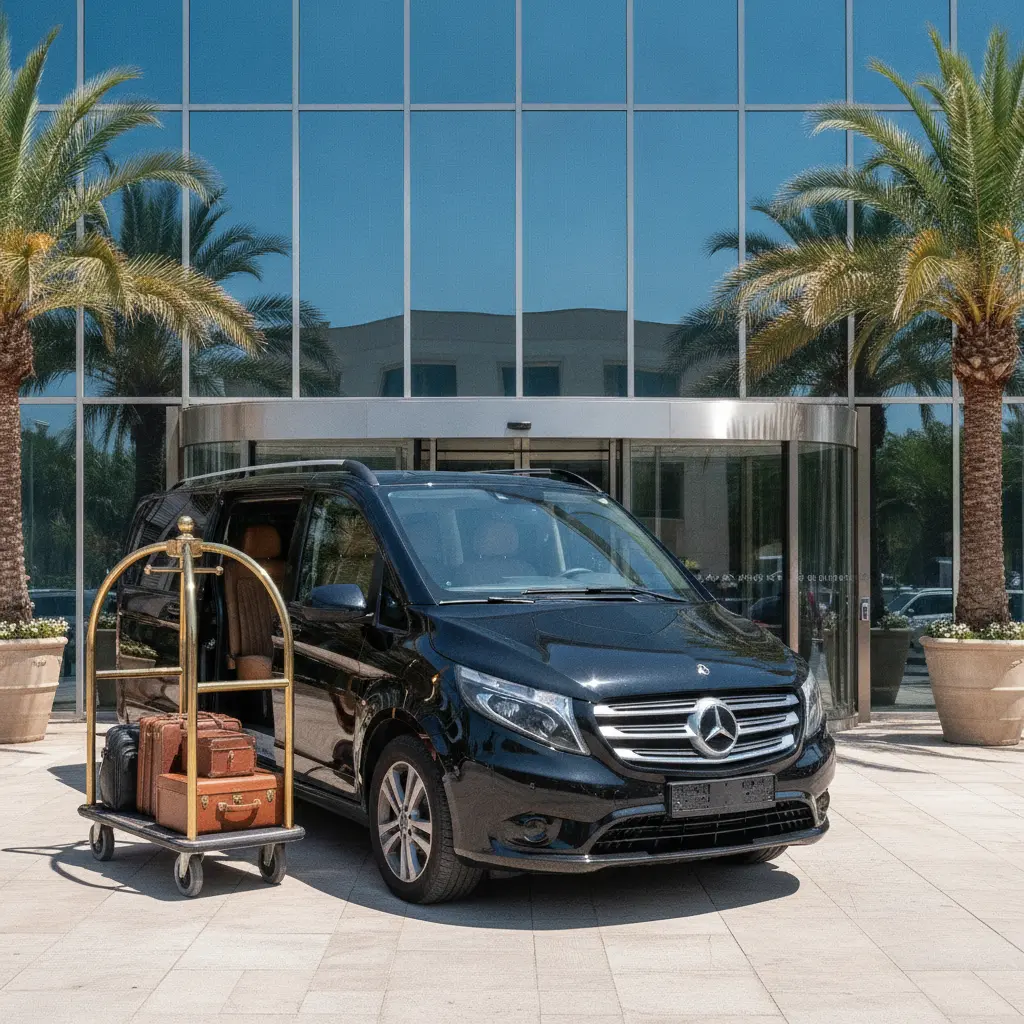
What follows is not a sales pitch. It is a working checklist for the three moments that decide your budget: before you book, at the moment you sign, and during the first fifteen minutes you have the vehicle. Chauffeur-driven vehicle hire goes wrong in predictable ways, and almost every one of them can be closed off with a written question in advance. You can review the current vehicle specification and availability on the starlight-roof chauffeured Mercedes Vito Tourer listing on Turlago.
Before you request quotes: turn your plan into numbers
"How much is a Vito Tourer?" gives a supplier nothing to price. Six details change the number materially, and sending all six in one message is what turns a vague estimate into a comparable quote.
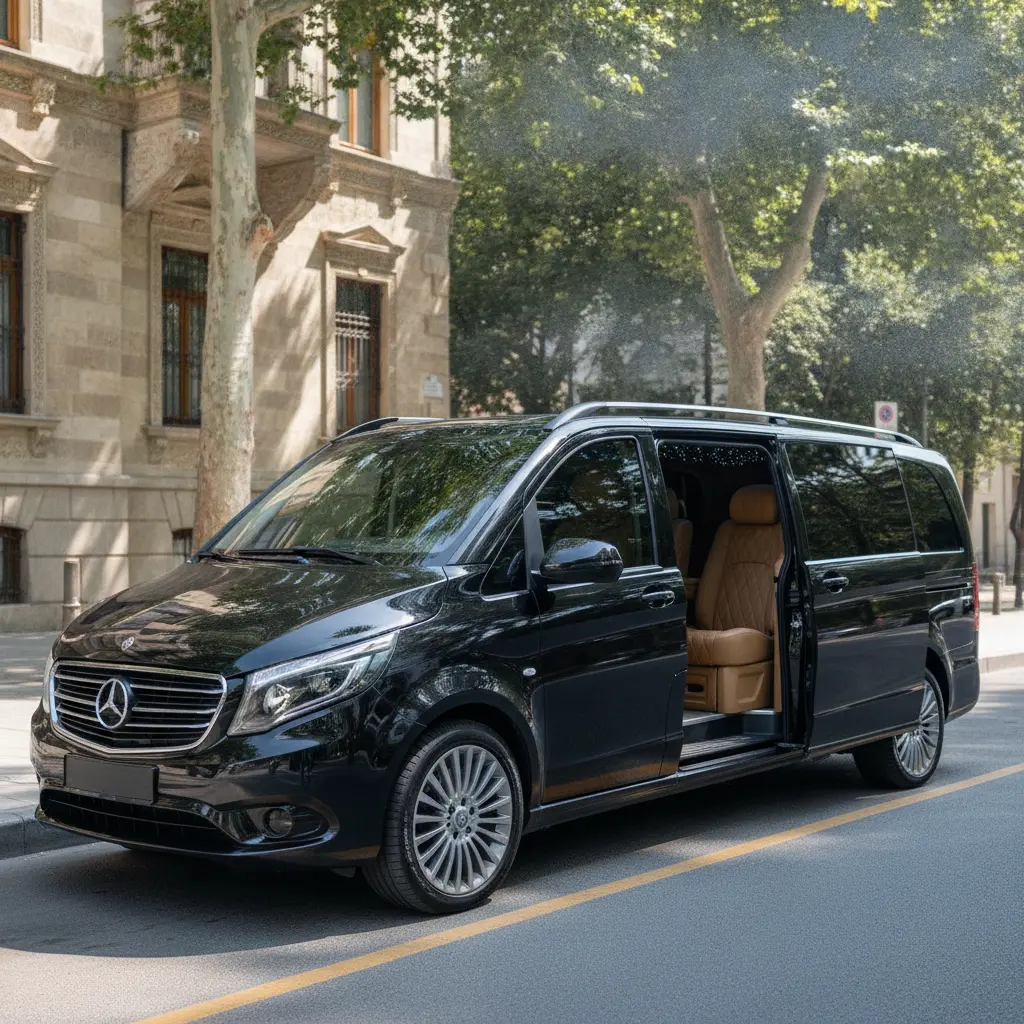
- Passenger count and seating layout. Seating is not fixed. A standard Vito Tourer can carry seven or eight; a VIP conversion usually drops to six in exchange for wider seats and more legroom. State how many people will actually travel, and whether any are children.
- Luggage volume. Seven adults and seven large suitcases do not fit in the same vehicle. Airport arrivals live or die on suitcase count, so separate cabin bags from checked bags. On long-term hire, luggage is the constraint far more often than headcount.
- Time window, not just date. A 10 km hop at 08:30 in Istanbul can take twice as long as the same hop at 20:00. On hourly pricing, that difference is your money.
- Route and number of stops. One address to one address, or five stops across a day? Every additional stop introduces waiting time and the search for parking.
- Driver expectations. Is driving enough, or do you want door-opening, a name board, and English or another second language? That is a different price tier in the same vehicle, and it should be declared upfront.
- Equipment. Child seat, booster, Wi-Fi, cool box, presentation screen, ambient roof lighting. Some are standard, some are add-ons. Ask in writing which are included.
Once a supplier has those six answers, the remaining differences between quotes are usually real differences in scope, not real differences in price.
The seven line items that actually build the price
Chauffeur-driven Vito Tourer pricing is built from a surprisingly short list. If you learn to split a quote into these seven, you will spot exactly where the budget inflates.
1. Driver hours and the overtime rate
Most day packages cover eight to ten hours. What matters is when the clock starts: at the garage, at your address, or when your flight lands. The same question applies to the finish. If your flight is delayed, does waiting time accrue, or is there a tolerance? This single clause causes more end-of-trip surprises than any other.
2. The mileage cap
City hires usually carry a daily kilometre allowance with a per-kilometre charge above it. If you are planning an intercity run, agree the cap before you book. A return trip out of Istanbul can turn an attractive quote into an expensive one. Unlimited packages look pricier upfront and frequently win on total cost for longer routes.
3. Fuel policy
Three models exist: fuel included, return at the level received, or full-to-full. With a chauffeur, fuel is normally the operator's responsibility, but on long-distance work you want it stated. An unstated fuel clause is the most argument-prone line on a handover sheet.
4. Tolls, bridges and parking
A programme that crosses from the European to the Asian side of Istanbul generates a bridge crossing. Add airport parking, hotel valet and event parking, and this line becomes real money. Who pays, the operator or you? If the answer is not written down, the answer is you.
5. Waiting time and extra stops
On airport pickups the first 45 to 60 minutes of waiting is typically free, then hourly rates apply. Every "I will just pop in somewhere" stop falls into the same category. Three stops becoming five is how a fixed budget moves.
6. Insurance cover and excess
Compulsory traffic insurance is a given. The real questions are the comprehensive cover and the excess amount. With a chauffeur, most risk sits with the operator, but some contracts carve out interior damage, smoke damage and odour remediation. On a VIP conversion with a starlight roof, ask which clause covers damage to the ceiling lighting itself.
7. Tax and payment terms
Ask whether the quoted price includes VAT, and at what rate. Ask when any deposit is refunded, and whether it is a charge or a card hold. Confirm the prepayment percentage, how the balance is settled on the day, and whether an invoice will be issued. If you are travelling for business and reclaiming costs, an invoice is not a detail.
Ask by email, not by phone
Nothing said on a phone call has evidential value on handover day. Send these twelve questions in a single email and ask for written answers. It makes comparison mechanical and removes the argument before it starts.
- What exact model and year is the vehicle, and what is the seating layout? Can you send photos?
- Is the starlight ceiling standard on this vehicle or an option? Does it work with the engine off?
- How many hours does the package include, and when does the clock start and stop?
- Is there a daily mileage cap, and what is the excess charge per kilometre?
- Who pays for fuel, motorway tolls, bridge crossings and parking?
- How many minutes of waiting are free, and how is additional waiting charged?
- Does the price include the driver, insurance and VAT? At what VAT rate?
- Is a deposit required? How much, refunded when, and by what method?
- What languages does the driver speak, and is there a dress standard?
- Are child seats chargeable?
- What is the cancellation policy, day by day?
- If the vehicle breaks down, what replacement is guaranteed and how quickly?
Anyone holding written answers to those twelve is no longer comparing prices. They are comparing products, which is the point.
At signature: five clauses worth reading properly
- Plate and chassis number recorded, and matching the vehicle at your door. Any model substitution should be approved by you before delivery, not discovered by you at the kerb.
- A damage sheet completed before you set off, with existing scratches, dents and wheel damage photographed and logged.
- Fuel level and odometer written down, with a photo of the dashboard.
- Excess and exclusions read aloud, specifically for interior, ceiling, upholstery and electronics.
- An emergency contact and protocol: who you call for a breakdown, accident or road closure, and how long a replacement vehicle takes.
Do not take the keys until those five are settled. A handover that is rushed is usually a handover that will have problems.
The fifteen-minute handover checklist
This quarter hour decides the tone of the next three days. Work through it in order.
Exterior and wheels
Position the vehicle in daylight, not in shade. Walk the four corners in sequence. Lower bumpers, sills, door edges and wheel faces are where marks hide. Photograph all four corners and the roof.
Interior
Check seat upholstery for stains, burns and wear. Look for cracking on leather, pilling on fabric. Test every seatbelt for latching and retraction. Confirm headrests are present and seated.
Climate control
Set the air conditioning to its lowest temperature and check that cold air reaches the rear vents. In a large cabin like the Vito Tourer, rear climate is a separate circuit; testing only the front is not a test. In summer this single check is half of your comfort.
Electronics and connectivity
Test USB and USB-C ports, charging points, and any Wi-Fi or display system. Switch on the starlight roof: do all the fibre-optic points illuminate, do colour and brightness controls respond, and does it stay on with the engine off?
Boot and equipment
Open the boot. Spare wheel, jack, warning triangle and first-aid kit present? If you requested a child seat, is it fitted or still in the boot? Ask for it to be fitted rather than doing it yourself.
Documents
Registration copy, insurance policy, valid inspection date and the driver's licence should all be shown. A document you have not seen does not exist.
Notes specific to the starlight roof conversion
The starlight ceiling is an aftermarket conversion, so a few questions only apply to these vehicles. Establish whether the light source is genuine fibre optic or an adhesive LED strip: on a good conversion the points are recessed into the headlining and each glows individually, while cheaper work looks like a sheet stuck to the roof. Dimming matters more than brightness; there should be a setting low enough not to distract the driver at night. Headroom also drops by a few centimetres in converted vehicles, which taller passengers notice. If you are hiring for a wedding, engagement, proposal or photo shoot, ask for a short video showing how the ceiling looks in the evening. A daylight photo tells you nothing about the effect you are paying for.
Working with the driver
The least discussed and most decisive part of chauffeured hire is the working arrangement. Settle three things at booking.
- Hours and rest breaks. On long days a driver's rest break is a legal requirement. Ask whether that break counts against your hired hours. If it does, plan around it.
- Contact channel. Who do you message for a programme change, and on what number? The driver's number should reach you the day before, not on the morning.
- Boundaries. Smoking, eating and drinking, music, and unscheduled stops. Agreeing these before departure is easier for everyone than negotiating them in traffic.
Put the route on paper. A verbally described itinerary becomes an argument the moment traffic intervenes. For a five-stop day, write each address, the expected duration and a contact name.
Four budget scenarios and how each is priced
Scenario one: airport transfer
One way, fixed price, meet and greet. Pricing is by distance and vehicle class, and usually includes flight monitoring, a name board and luggage assistance. The only clause to pin down is how delay is handled. For a group arriving together, one Vito Tourer is frequently both cheaper and better coordinated than two separate taxis.
Scenario two: a full day in the city
Hourly or day rate, shaped by the time window and mileage cap. For a multi-stop day of museums, palaces, bazaars and dinner, this is the most efficient structure, because the vehicle waits and your luggage stays with it. You spend the day not hailing taxis.
Scenario three: intercity
Mileage is the decisive line item here. An unlimited package often looks expensive per day and wins on total cost. Get fuel, tolls and driver accommodation confirmed in writing before you commit.
Scenario four: long-term hire
A fixed monthly rate plus a mileage allowance. What lowers the price here is not negotiation but contract length and predictable usage. On monthly terms, confirm who covers tyres, servicing, insurance and inspection, and write down the vehicle swap conditions and the notice period for termination.
The hidden cost list
These are the items that rarely appear in a headline quote and almost always appear on a final bill:
- Overtime for programmes running late into the evening
- Mileage overage
- Parking and valet
- Bridge and motorway tolls
- Additional stops and waiting
- Child seats and extra equipment
- Driver accommodation on out-of-town work
- The card hold period for any deposit, which affects your available balance
- Cleaning or odour damage deductions
- A VAT line added at the end
Paste this list at the bottom of your enquiry and ask a single question: which of these are included, and which are not? When the answer arrives in writing, comparison ends and decision-making begins.
Cancellation, delays and refunds
Cancellation terms on chauffeured vehicles can be stricter than hotel terms, because the vehicle and driver are blocked for that slot. Ask about three separate windows: cancellation more than 72 hours out, within 24 to 72 hours, and inside 24 hours. Then ask what happens if your flight is cancelled or delayed; some operators track flights and absorb reasonable waiting, others start the meter. If you cannot get that in writing, it is the one clause that justifies travel insurance.
Seasonality: what moves price and availability
In summer, wedding season, festivals and conference calendars collide, and VIP-class vehicles like the Vito Tourer disappear from availability quickly. New Year, long public holidays and major trade fair weeks behave the same way. Two things happen in those windows: fewer vehicles remain, and last-minute bookings cost more. If your date is fixed, booking early is not only about price, it is about having options at all. In quieter periods the same budget can buy a longer day or a higher trim level, so it is worth asking what flexibility buys you.
Making the vehicle part of a bigger plan
The practical advantage of a chauffeured Vito Tourer is that it links several plans in one day without friction. If your evening is an Istanbul Bosphorus dinner cruise and entertainment night, seamless hotel-to-pier-to-hotel transport saves both time and energy. For something more private, a Bosphorus dinner with a private table and Turkish night programme pairs naturally with a vehicle that collects you at the door when the night ends. And if you are arranging a group day such as a 32-person luxury yacht charter in Istanbul, moving everyone to the pier in one vehicle is often the single most useful logistical decision of the day. In all three cases the vehicle is not the event; it is what makes the event run on time. Keep that distinction when you allocate budget.
Seven mistakes worth avoiding
- Asking only for a price. A quote with no scope is an estimate, not a comparison.
- Ignoring the mileage cap. Irrelevant for a short city day, decisive for anything leaving the city.
- Skipping the handover inspection. An unphotographed scratch is a scratch that becomes yours.
- Not asking when the driver's clock starts. Driving time and waiting time are billed differently.
- Judging the starlight roof from daylight photos. The effect only exists after dark. Ask for video.
- Relying on a verbal agreement. A phone promise does not survive handover.
- Having no plan for a delayed flight. The most common airport failure is not the delay itself, it is the absence of a written rule about it.
The one-page summary
Protecting your budget on a chauffeured Mercedes Vito Tourer booking is not about pushing the price down. It is about removing ambiguity. Define your need in six points before you enquire. Read every quote as seven line items. Send twelve questions by email and insist on written answers. At signature, verify plate, damage sheet, fuel, excess and emergency protocol. At handover, spend fifteen minutes on bodywork, interior, climate, electronics and documents. If the vehicle is a starlight conversion, confirm the lighting is genuine fibre optic, dimmable, and functional with the engine off.
All of it serves one goal: no surprises on the road. For current availability, specification and pricing, view the chauffeured Mercedes Vito Tourer hire listing on Turlago, and send the twelve questions along with your enquiry. A booking that starts with the right questions is usually the only kind that ends without a dispute.