18-Metre Motoryacht: Private Bosphorus Route Guide
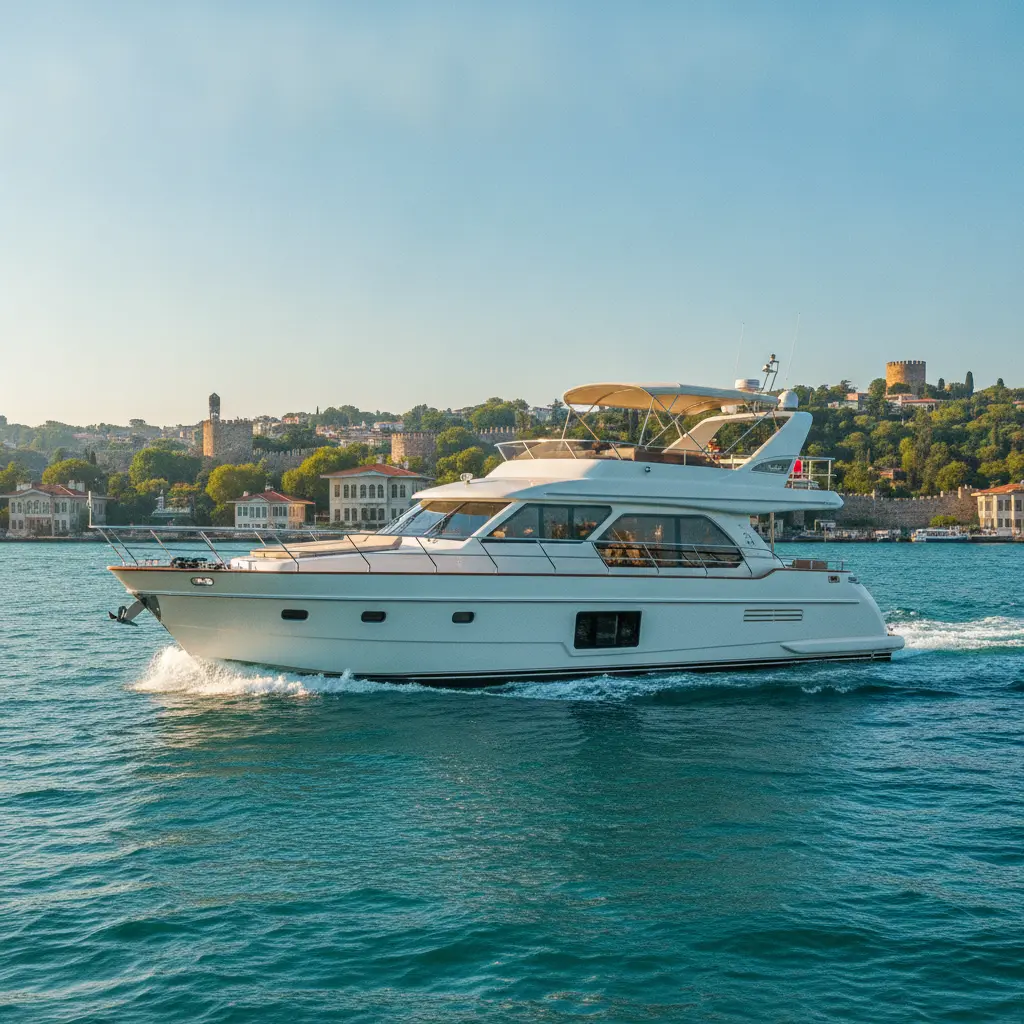
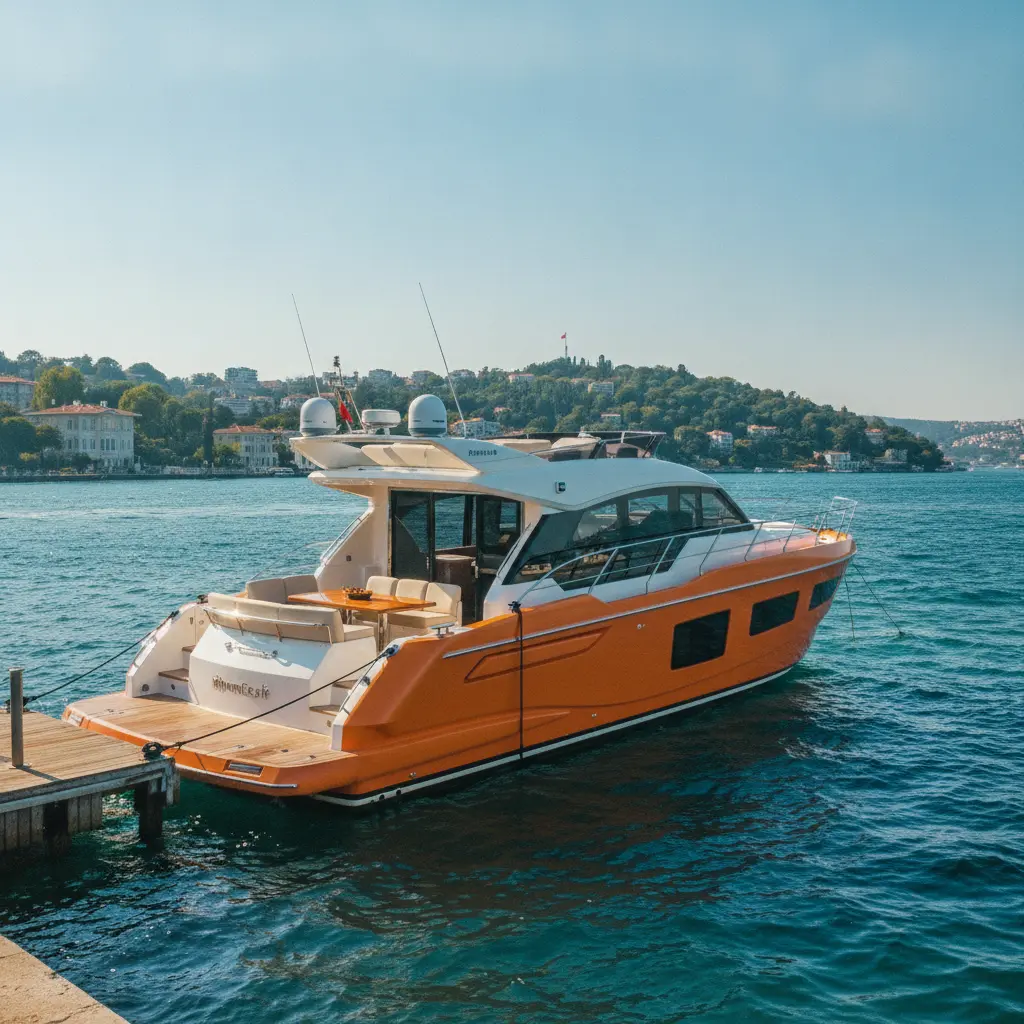
Most people choose a Bosphorus boat trip by looking at photos. The better filter is geography: how close the hull can get to each shoreline, which side of the strait you travel on the way out, and which side you save for the return. The 18-metre private motoryacht for up to 12 guests is a custom-built flybridge boat departing from Beşiktaş İskele, and its listed route is unusually specific: the historic shores of the Golden Horn, the Galata and Karaköy waterfront, Dolmabahçe Palace, Ortaköy Mosque, the Bosphorus Bridge, and the Arnavutköy–Bebek coastline.
This guide works through that route shoreline by shoreline, then answers the question that actually decides a booking: which kind of group is this boat right for — families, couples, corporate teams, or friend groups. Each one wants something different from the same 18 metres.
The specification, read practically
The listing gives five numbers and details that matter more than any photo: 18 metres length, 5 metres beam, capacity for 12, a flybridge deck, and a professional captain on board.
- 18 metres: At this size the hull stays stable in the Bosphorus current and in the busy crossing at the mouth of the Golden Horn. Motion sickness, which is a genuine risk on smaller boats, drops sharply. You can set a glass down on a table and leave it there.
- 5 metres beam: A length-to-beam ratio of roughly 3.6 — a fast, balanced hull rather than a wide floating platform. This is the reason a four-hour charter can comfortably cover both the Golden Horn and the run up to Bebek.
- 12 guests: Large enough to split into two groups, small enough that nobody is standing. It lets you use the enclosed saloon and the flybridge as two separate spaces at the same time.
- Flybridge: The most valuable square metres on board. It gives you elevation for reading the shoreline, a clean horizon line for photographs, and breathing room in a fuller group.
- Professional captain: The most underrated line in the listing. Routing on the Bosphorus is not a map exercise; it is current, traffic and wind management.
One booking detail worth confirming early
The listing's port is given as Beşiktaş İskele, while the recommended route description begins at Unkapanı. Both refer to the same body of water, but they are different departure points, and they change how your day is timed. Confirm the actual pick-up point in writing before you build a plan around it. The route notes below follow the itinerary as the listing describes it.
The Golden Horn: the sheltered first act
The Golden Horn is the most misunderstood stretch of Istanbul's waterways. Many tours treat it as a ten-minute transit; in reality, running along its historic shores is the oldest readable layer of the city seen from water. Leaving from Unkapanı, the shoreline on your port side unfolds as a settlement sequence running from Byzantium to the late Ottoman era: the brick facades around Fener, the street wall of Balat, the old warehouses and hans lined up parallel to the water.
Its other quality is physical: the water is flat. This is the most protected section of the entire route, and experienced captains treat it as the warm-up — the stretch where a group settles in, cameras get configured, and service gets organised before the boat meets the Bosphorus current. Plan your timings the same way.
Galata and Karaköy: a facade you only read from water level
As you approach the Galata Bridge line, the skyline suddenly steepens. What you see here is a face of the city that the street level hides. From the water, the Galata Tower sits visibly on the slope of the historic peninsula, the dome of Kılıç Ali Paşa Mosque appears to sit almost on the surface, and the Tophane quay rises directly beside your course.
This is also the most urban part of the route — ferry traffic, quay activity, fishing boats running close to shore. Not difficult for an 18-metre motoryacht, but a section that asks for the captain's attention. Look at the shorelines while it happens: 19th-century stone buildings and newer construction stacked in the same frame is the contrast these tours talk about most and photograph least.
Dolmabahçe Palace: the longest uninterrupted facade on the route
Once you enter the Bosphorus proper, Dolmabahçe is the first major landmark. Its waterfront face is the longest continuous building surface on the itinerary — roughly 600 metres of pale stone running directly along the water. Two things are only visible from the sea: the rhythm of the quay gates and the way the structure meets the waterline. It is the clearest statement of how 19th-century Ottoman architecture related to the sea.
A practical note: the water in front of Dolmabahçe carries some of the heaviest vessel traffic on the strait. Captains usually pass at a distance rather than hugging the wall, which means the best viewing angle is 50–100 metres off, not close in. If you are shooting, a 35–50 mm lens beats an ultra-wide here; the facade is too long for a wide angle to hold together.
Ortaköy Mosque and the Bosphorus Bridge: the pivot point
Ortaköy is the most photographed corner of the strait, and there is an architectural reason. From water level, the neo-baroque mosque, the bridge piers and the hillside behind them all fit into one frame. It is Istanbul's most reproduced composition, and it only works from the sea.
Passing under the Bosphorus Bridge is the psychological threshold of the trip. Beyond it, both the geography and the atmosphere change: waterfront settlement thins out, the slopes turn green, the water shifts to a lighter tone. On an 18-metre boat, the moment the deck shadow slides across the hull is one of the most talked-about few seconds of the charter. Being on the flybridge pays off here — the underside of the bridge deck is only legible from above.
Route decision point: turn back, or continue? The listed itinerary continues toward Arnavutköy and Bebek. On an hourly charter this is your call. Four hours or more comfortably includes the Bebek run; a three-hour booking is more realistic with a short push past the bridge and a return.
Arnavutköy to Bebek: the quietest, most local stretch
The coastline north of the bridge is the least known and most characterful part of the Bosphorus. Arnavutköy is lined with wooden yalıs, most of them late 19th or early 20th century residential architecture, and from the water their facade rhythms are still readable. The shoreline is narrow and steep here, which means the distance between hull and buildings shrinks and detail gets larger.
The technically interesting point is Akıntıburnu — literally "current point." The Bosphorus flow is at its most noticeable around these headlands, so the route moves slightly offshore, because the current runs parallel to the coast and strong. It is a good spot to watch the captain work; for passengers, it is where the wind is felt most on the flybridge.
Bebek Bay and the return leg
Bebek is the natural endpoint. The shape of the bay makes it easy to bring the boat close in, and it delivers one of Istanbul's most recognisable water views: moored boats inside the cove, plane trees on the shore, settlement climbing the slope. On the way back, running the same water closer to the Anatolian shore keeps the route from repeating itself — the waterside pavilion facade at Beylerbeyi and the silhouette of Üsküdar add a layer you did not see on the outbound leg.
Which shore, which light
On the Bosphorus, trip quality is directly tied to how close you run to each coast. As a working rule: European shore on the way out, Anatolian shore on the way back. Same water, two different views.
- European coast (Beşiktaş–Ortaköy–Arnavutköy–Bebek): Palace facades, wooden yalıs, steep slopes. High detail density, strong for photography.
- Anatolian coast (Üsküdar–Beylerbeyi–Çengelköy): Wider perspective, gardens running down to the water, a calmer line. The right side if you want the European skyline as a whole.
- Mid-channel: For framing both shores at once, at the cost of detail.
Season matters too. In midsummer, midday light is harsh and pale stone facades blow out; shaded stretches of the northern European shore photograph better. In spring and autumn the afternoon light arrives at a softer angle and the texture of the wooden facades comes through.
Who this boat actually suits
A 12-guest capacity with a flybridge layout serves four quite different use cases. Each needs the route planned differently.
Families: safe and divisible in one booking
The real question for families is boredom. On an 18-metre motoryacht the risk is low, because the boat has two distinct rooms — the enclosed saloon and the flybridge. Children can be on the upper deck in open air while adults sit below and talk. The Webasto heater in winter and air conditioning in summer keep the interior usable regardless of season, which matters with small children.
Suggested family route: keep the Golden Horn section short and focus on Dolmabahçe and Ortaköy. The mosque and the bridge are the two landmarks children remember most easily. If you want a swimming stop, a protected spot just past the bridge is more time-efficient than running all the way to Bebek Bay.
Couples: the right scale for privacy
A 12-guest boat may sound like too much for two people, but that is exactly why it works. The charter is exclusive, so 12 is a ceiling, not a headcount — it means a wide flybridge, an empty saloon and an uninterrupted shoreline for your group alone.
Suggested couple route: skip the Golden Horn and go straight to the Bosphorus. Sunset is the most requested slot, as the listing notes, but it is not the only good one — early morning brings flatter water and quieter shores. For planned moments such as a proposal, the forward end of the flybridge gives you both privacy and the best backdrop.
Corporate groups: a genuine meeting alternative
The listing explicitly names business meetings, and the equipment supports it: Wi-Fi, a television, Bluetooth/USB/AUX sound, a refrigerator, an ice maker and a coffee machine. That combination makes it realistic to move a half-day meeting for a team of eight to ten people onto the water.
Suggested corporate route: short and predictable. Depart Beşiktaş, run Dolmabahçe to Ortaköy and back, two to three hours. Long routes usually cost corporate groups productivity, because the working segment and the scenery segment need to be separated. Practical tip: schedule the presentation segment while the boat is in the flat water of the Golden Horn, and the networking segment once you are out on the Bosphorus. The calmest stretch is the one to spend at a screen.
Friend groups: birthdays, send-offs and celebrations
The listing includes birthdays and bachelor or bachelorette send-offs among its uses, and the layout genuinely fits: the saloon carries the sound system, the flybridge provides open air, and the deck leaves enough space for photographs and the moment itself. Twelve guests is neither too crowded nor too thin for a celebration.
Suggested friend-group route: the full line. Running from the Golden Horn up to Bebek fits comfortably in a four-hour charter. The most common planning mistake in this group is choosing too late a departure; once it is dark on the return, the flybridge becomes unusable and you have wasted the boat's best space.
Choosing your time slot
Same route, three different experiences:
- Morning (09:00–11:00): Flattest water, quietest shores, soft light. The most controllable window for photography. Best for families and corporate groups.
- Afternoon (14:00–17:00): High light, bright facades. The most comfortable hours to sit on the flybridge. Good for friend groups and larger families.
- Sunset (the listing's most requested slot): The shoreline silhouette is at its most dramatic and the water shifts from orange to navy. Highest demand, so book well ahead.
One caveat: after dark the boat's open areas become harder to use. If you are planning a celebration, a departure 60–90 minutes before sunset lets you catch both the light and the darkness.
Reading the onboard equipment list
The listed items look ordinary, but each one has a route-level function:
- Flybridge: Elevation for reading the coastline. The bridge pass and the yalı facades are best from up there.
- Webasto heating in winter, air conditioning in summer: What makes the boat usable year-round. The enclosed saloon works in any season, which matters most for families and corporate teams.
- Bluetooth, USB and AUX sound plus television: Bring your own playlist, or use the screen if you are presenting.
- Wi-Fi: Connectivity for corporate use, and convenient for sharing your position along the route.
- Refrigerator and ice maker: Critical for drinks on longer routes. An ice maker keeps cold service going through a four-hour charter.
- Coffee machine: A small detail, frequently asked about, and it matters on early departures.
Budget and duration: how to read an hourly rate
The listing gives an hourly price of TRY 6,250, with no daily rate published. Hourly charter budgeting has three components: boat time, real cruising time between departure and return, and extras.
- 2–3 hours: Departure from Beşiktaş, the Dolmabahçe to Ortaköy line, the bridge pass and return. Enough for corporate meetings and short celebrations.
- 4 hours: Golden Horn entry, the Bosphorus line, and the run toward Arnavutköy and Bebek. The duration that lets you cover the listed route at an unhurried pace.
- 6 hours and up: Room for a swimming stop, the Anatolian shore, and a different coastline on the return. The most comfortable option for families and friend groups.
One way to make the budget concrete is to think per person: divided across a full 12 guests, the hourly rate becomes far more accessible than most people assume. If you are planning something larger, the 32-guest luxury yacht organisation in Istanbul is worth comparing — capacity changes both the route options and the service setup.
What to bring, what the boat provides
Provided: professional captain, sound system, television, Wi-Fi, refrigerator, ice maker, coffee machine, heating and air conditioning, seating areas.
Bring:
- A light windproof layer — the flybridge gets cool in the evening and cold in winter
- Non-slip shoes; decks can be wet
- Sunscreen and a hat on summer departures; shade outside the saloon is limited
- Your own playlist (AUX and Bluetooth are ready)
- Any celebration items such as cake or decorations — confirm these in advance
- A 35–50 mm lens if you are shooting; a phone's wide angle breaks the long facades apart
Pre-booking checklist
- Confirm the departure point: The listing shows Beşiktaş İskele as the port and Unkapanı in the route notes. Get the actual pick-up point in writing.
- Match duration to route: If Bebek is on your list, do not plan under four hours.
- State the exact headcount: 12 is the ceiling; group dynamics and service setup depend on it.
- Ask about seasonal equipment: Heating for a winter departure, air conditioning and shade for summer.
- Explain any special occasion in advance: Birthdays, proposals and business meetings all need the boat set up differently.
- Check the forecast 48 hours out: Wind on the Bosphorus can reshape a route; keep a flexible plan B.
Frequently asked questions
How long does the 18-metre motoryacht Bosphorus route take?
The listed route — Golden Horn shores, Galata and Karaköy, Dolmabahçe, Ortaköy, the Bosphorus Bridge, Arnavutköy and Bebek — runs comfortably in four hours at an unhurried pace. A shorter version needs two to three.
Is the boat really exclusive to our group?
Yes. The listing describes a boat reserved only for your group in the Bosphorus; 12 is your group's ceiling, not a shared headcount.
Can it be chartered in winter?
Yes. The Webasto heater keeps the enclosed saloon usable. The flybridge is limited in winter, though, so expect to watch the route from inside.
Is it suitable for families with children?
The capacity and two-level layout suit families well. Small children still need supervision on the flybridge, which is an open deck.
Are food and drinks included?
The listing does not define a catering package. The refrigerator, ice maker and coffee machine are the onboard equipment; ask about menus and service when you book.
The route is the decision
Choosing a Bosphorus charter comes down to the route more than the boat. An 18-metre motoryacht with a 5-metre beam and a flybridge lets you cover the line from the flat water of the Golden Horn to Bebek Bay in a single day without fatigue. It gives families a safe, divisible space, couples a private upper deck, corporate teams a workable saloon, and friend groups a layout built for celebrating.
Before you decide, match the specification and equipment list to your own group: how many hours, which shoreline, which season. Answer those three and the rest is logistics. You can review capacity, equipment and pricing on the 18-metre private Bosphorus motoryacht page on Turlago and shape the route around your group.
If you are planning something larger or a different concept entirely, compare premium yacht charter options, and if you want the evening hours, look at the Bosphorus dinner cruise alternative. Each reads the same geography at a different pace.