Istanbul Daily Yacht vs Hourly Boat vs Event Boat: Which Fits
Most people start their boat search in Istanbul by asking which boat to book. That is the wrong question, and it is why so many groups end up mildly disappointed on a perfectly good vessel. The decision that actually shapes your day — the cost, the pace, the photos, the mood — is the format: a full-day yacht charter, a short hourly boat hire, or an event boat built around a celebration. These are not three sizes of the same product. They are three different products that solve three different problems.
Below is an honest comparison written for the person who has to make the booking and then live with the consequences: what each format includes, where each one quietly fails, how to run the per-person maths, and which group profile each format genuinely suits. When you are ready to compare live availability and pricing, you can arrange premium VIP car rental on Turlago for the ground leg as well, which matters more than most groups expect when fifteen people have to reach the same pier at the same time.
What each format actually buys you
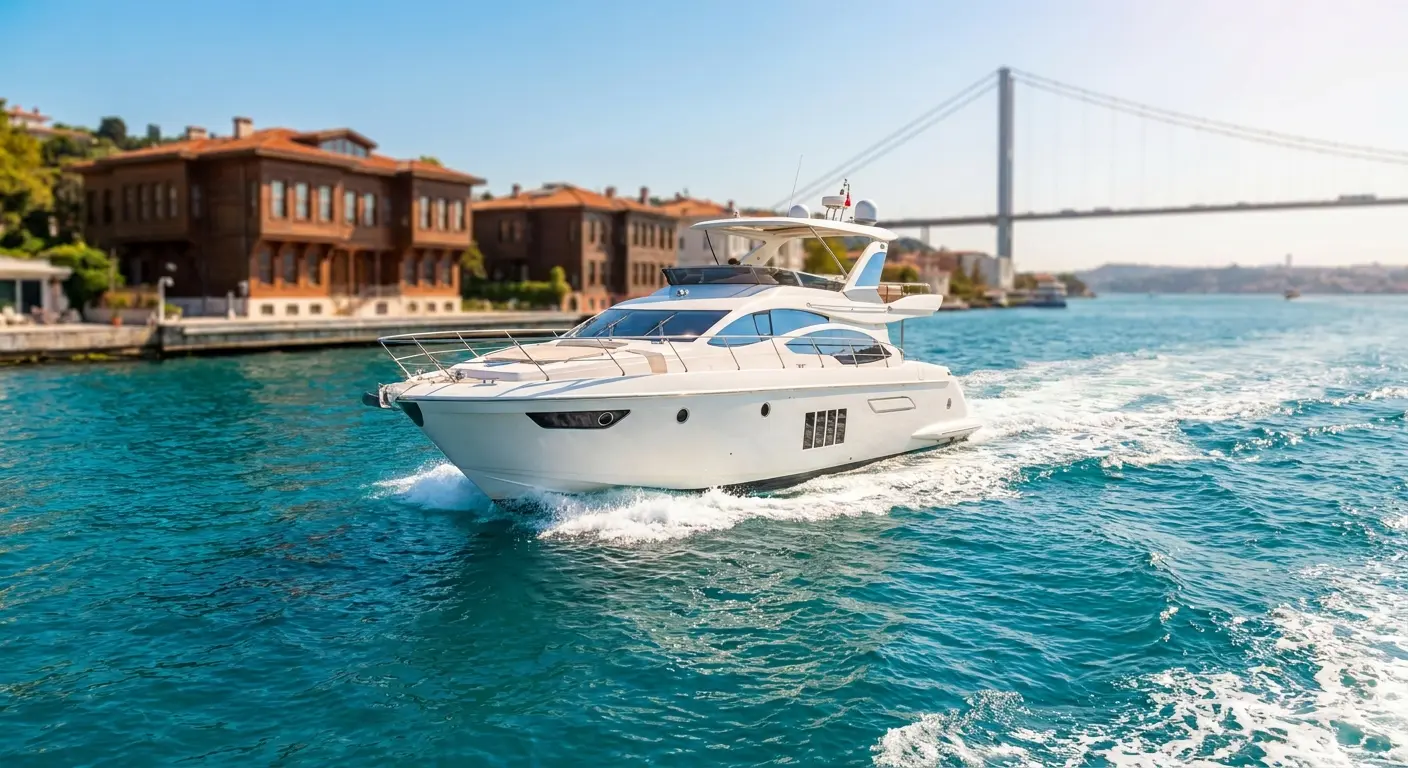
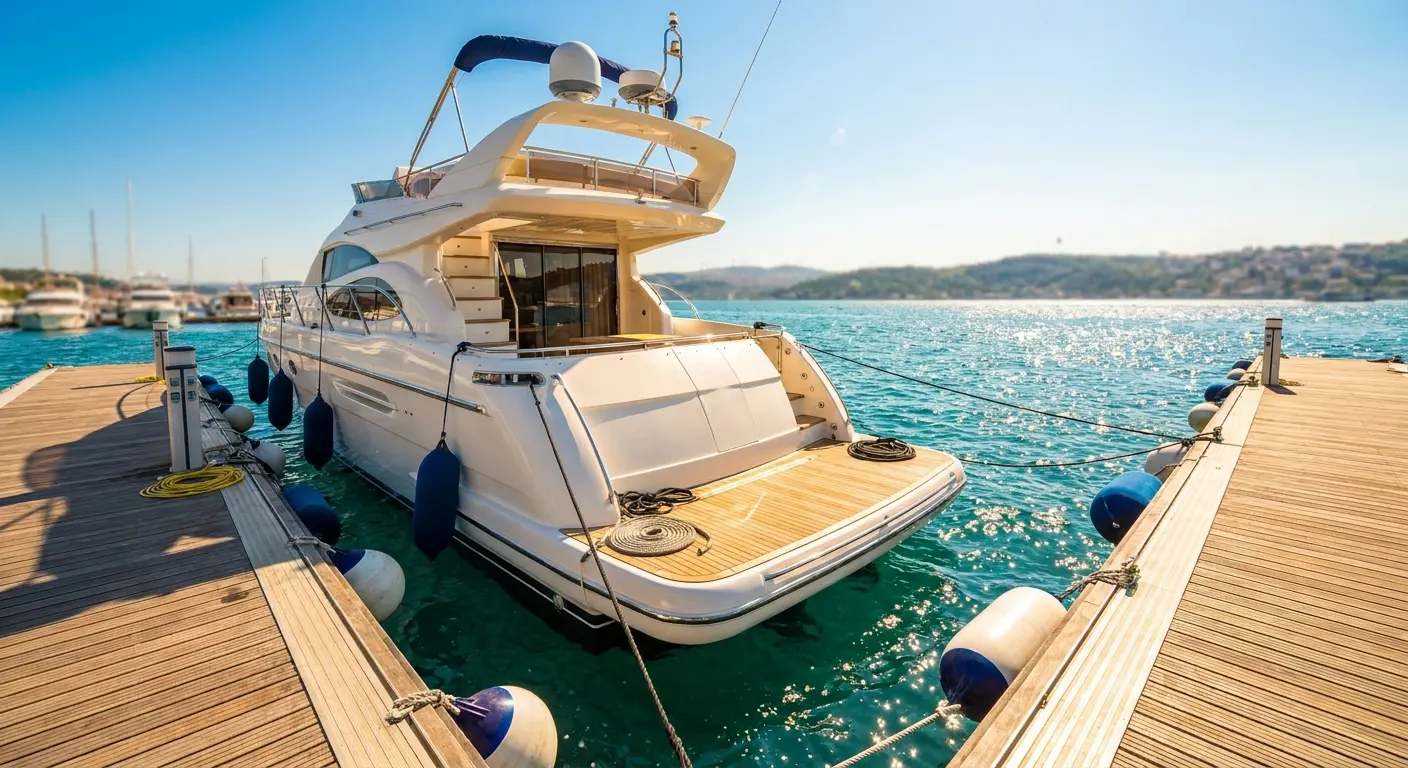
A full-day yacht charter is a block of time, usually six to eight hours, typically departing mid-morning and returning in the early evening. Captain, crew and in most cases lunch are included, and the route is agreed with the captain on the day, adjustable for weather and crowds. The boat is large enough that sitting, shade, swimming and eating do not compete for the same square metres. This is the format designed for groups of roughly twelve to forty, and it is the only one where the per-person cost falls as the group grows, because crew, fuel and berth fees do not change with headcount.
Hourly boat hire is sold in two to four hour slices. It exists for a short Bosphorus run, a photo session, a swim stop between meetings, or a couple who simply want an hour of water before dinner. A captain is normally included; food, drinks and sometimes fuel are not. The route is almost always fixed, because there is no time to improvise. The trade-off is honest: less freedom, much less commitment. It is the cheapest way to test whether anyone in your group actually enjoys being on the water.
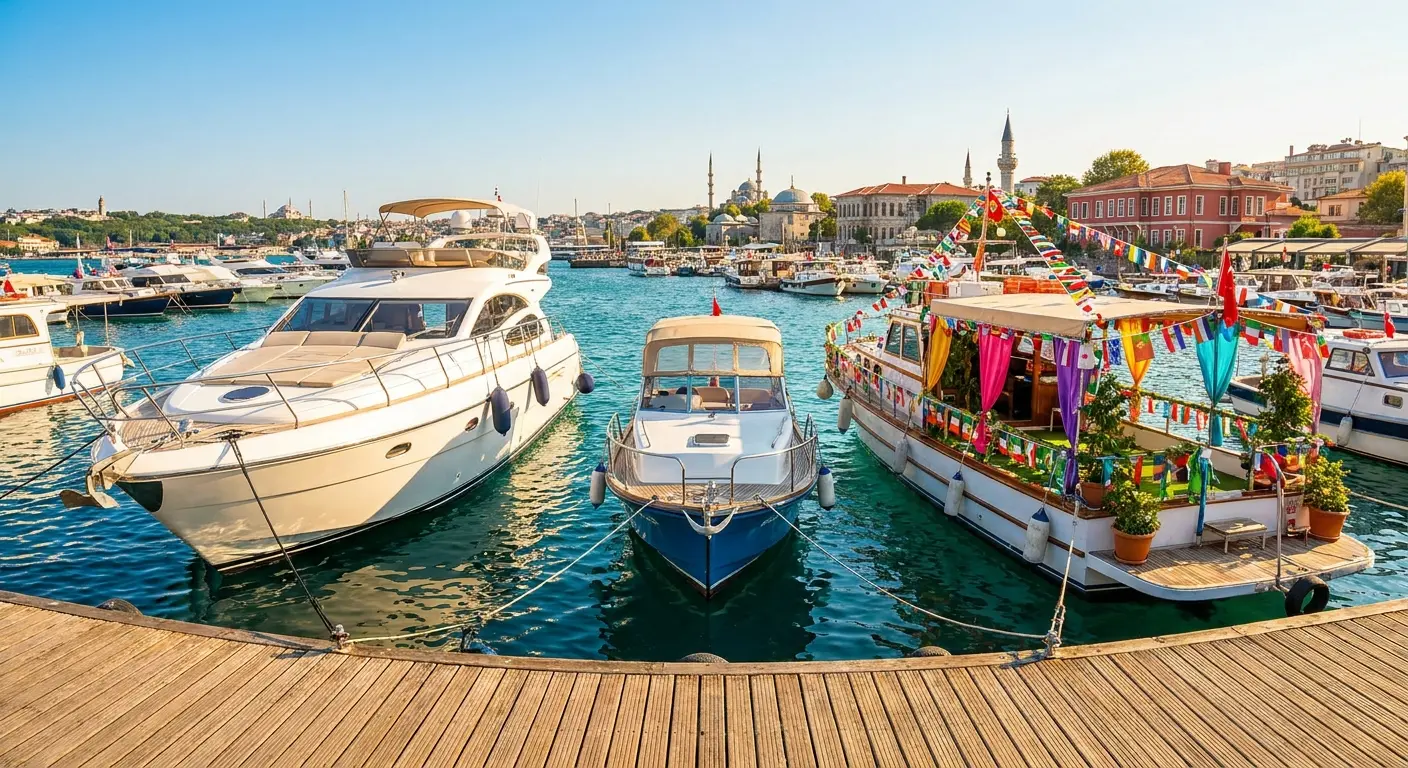
An event boat is not transport, it is a venue. Birthdays, engagements, henna nights, product launches and company parties are booked here, which is why sound systems, lighting, decoration, a DJ booth, a dance floor and catering are part of the price rather than extras. The relevant questions are not about hours but about people: how many will stand, how many will sit, what will they eat, what will they hear, and what will the photographs look like. A beautiful boat with a badly planned event is still a badly planned event.
Seven criteria that decide the outcome
Ignore brochure language and compare the formats on these seven points. Each one changes the shape of the day rather than the look of the boat.
1. Pace and duration
A full-day charter gives you a slow day: a swim stop, a long lunch, time on deck doing nothing in particular. Hourly hire gives you a fast day: board, look, disembark. An event boat gives you a programmed day, because there is an organiser behind it. If your group needs structure to stay together, the programmed format wins. If your group needs to unwind, the daily charter does.
2. Capacity, and what capacity really means
Headcount limits are misleading. The real questions are how many guests can sit at once and how many can stay in shade. A day yacht comfortably seats twenty. Hourly boats often cap around eight to twelve and expect people to stand. Event boats carry high standing numbers but lose floor space fast once a seated dinner is served, so ask specifically about seated capacity, not maximum capacity.
3. How the price is structured
Each format prices differently. Daily charters are usually a single block price per boat, which is why larger groups pay less per head. Hourly hire prices by time, and the total can approach a full-day rate on smaller vessels because fixed costs do not shrink with the clock. Event boats are priced as a package: vessel, catering, decoration, sound, staff, often with a minimum spend or minimum hour requirement. Never compare boat prices against each other; compare end-to-end totals.
4. Crew and service level
Full-day charters come with a captain, deckhand and usually someone serving. Hourly boats frequently have a captain and nothing more, so do not expect table service. Event boats add waiting staff, DJ, photographer and coordinator roles, which is exactly the part of the budget that determines how smooth the evening feels. Travelling with children? Service level matters more than the boat's finish.
5. Food and drink
Lunch is generally included on a day charter, and you can usually see the menu in advance. On hourly hire food is optional and often unnecessary — a fruit platter and cold drinks are enough for three hours. On an event boat catering is a specialism: buffet or set menu, alcohol or not, vegetarian options, and how many staff will serve how many guests in what timeframe. Get all of it in writing.
6. Route flexibility
On a day charter you can talk to the captain in the morning and change direction based on wind and crowds, heading south to the islands instead of north up the strait. Hourly hire does not allow it: the clock sets the route. On an event boat the route is secondary, because guests look inward more than outward. If a specific stretch of water is the point of the trip, say so at the enquiry stage.
7. Sound, privacy and flexibility
The event boat's genuine advantage is audio and separation: your own playlist, your own speeches, your own noise. Day yachts have sound systems but sit close to other vessels, especially at weekends in the Bosphorus. Hourly boats generally expect a quiet cruise. If the plan is a romantic evening, ask whether the boat has an enclosed area, because weather in Istanbul does not always cooperate with plans made three weeks earlier.
Match the format to your group
This is where the decision really gets made. Read the four profiles below and pick the nearest one; in mixed groups, the majority profile should decide.
Families with children: full-day yacht
Three things make or break a family day on the water: shade, a usable toilet, and a swimming stop long enough for children to actually get in. A day charter provides all three plus a fixed lunch and a pace that does not rush anyone. Hourly hire tends to disappoint here — just as the children settle in, it is time to leave. Event boats are usually too loud and too crowded for young children. The single question to ask a family-friendly boat: where exactly do we sit in the shade between noon and four?
Couples and small groups: hourly hire, or a private short charter
Two people should not charter a twenty-passenger yacht; the cost makes no sense and the space feels absurd. Hourly hire is the efficient choice: a short Bosphorus run, a coffee, a few good photographs. But if the occasion is an anniversary or a proposal, a small, well-appointed boat on a private four to six hour charter with light catering removes the hurry that hourly hire inevitably creates. Sunset departures are the most requested slot of the week, so the same-week availability is thin.
Friends' groups: full-day yacht with the right boat
Ten to twenty friends on a day charter is both economical and genuinely fun; the per-person cost drops and music, swimming and food can all happen at once. The only real risk is mismatched expectations, since one person wants to swim, another wants photographs, and a third just wants to sit and talk. Split the day: an active morning, a slower afternoon, and a route that supports both. Wide decks, a functioning sound system and real shade make the difference.
Corporate events: event boat
Company dinners, launches, team celebrations and award nights have one correct format. What matters here is not entertainment but control: welcome, name badges, microphone, presentation screen, service on schedule, and a departure time that is honoured. Hourly hire cannot carry a corporate programme. A day charter can technically work but may not deliver the sound and staging infrastructure people expect. Insist on a backup audio system, lighting, a separate service area and a named on-board coordinator.
Running the per-person maths
Rates shift with season, vessel size and menu, so no fixed figures here — search your date and group size on Turlago to see current quotes. The arithmetic, however, is always the same:
- Vessel cost — a block price, or hourly rate multiplied by hours.
- Fuel and berth fees — sometimes separate, especially on long routes and larger boats.
- Food and drink — per-person menu price multiplied by headcount; if outside catering is allowed, add a service charge.
- Service and gratuity — a small percentage is normal; agree it upfront rather than at the end of the evening.
- Ground and extras — transfers to the pier, parking, decoration, cake, photographer.
- Divide by headcount. This is the decision point. If the per-person figure is well above a restaurant dinner plus transport for the same day, the format is probably wrong.
One useful pattern: below roughly fifteen people, a full-day yacht becomes the most expensive option per head. Above twenty, it delivers more value and a lower per-person cost than hourly hire. Event boats almost always carry the highest total, but against a restaurant venue with room hire and programme management, the gap is often narrower than expected.
Timing the day
Departure time is the most commonly mishandled part of boat hire in Istanbul. Morning departures mean calmer water, cleaner light and fewer vessels; ideal for families and swimming-focused groups. Midday departures put you in the strongest sun, which is punishing on boats without real shade. Afternoons are the most balanced, giving both swimming and photography. Evenings belong almost entirely to events, celebrations and romantic dinners, with higher expectations around music and service.
The calendar matters as much as the clock. Weekends are busy along the Bosphorus and piers can queue. Weekday departures are quieter and often more flexible on terms. Corporate groups gravitate to weekday evenings and friends' groups to Saturday daytime, so book those slots early rather than hoping.
Choosing a route shape
Short line — Maiden's Tower, Ortaköy, the Beşiktaş waterfront and back. Right for hourly hire and two to three hour trips; good for photographs and first-timers, limited for swimming.
Middle line — Emirgân, Kandilli, Anadolu Hisarı and the second bridge area. This is where most day charters settle: one swim stop, lunch, and a comfortable return.
Long line — north towards the Black Sea mouth, or south to the Princes' Islands. It fills the day, raises fuel cost and makes sea conditions the deciding factor. Usually too ambitious for groups with small children or a tight weekend.
Ask one question before choosing: at the end of the day, what will people remember? Swimming, the skyline, the meal, or the music? Once that is clear, the route chooses itself.
Contract checklist: where hidden costs live
Boat hire does not work on a handshake. Confirm these in writing before paying a deposit:
- Departure and return times, and how delays affect the booked hours
- Departure pier and return pier, and whether they are the same
- Whether fuel is included, and any supplementary fuel clause for long routes
- Number of crew and the scope of service
- Menu, headcount, vegetarian and allergy provisions
- Whether drinks are included, and the corkage rule if they are not
- Sound system, microphone, lighting and decoration inclusions
- Cleaning fee and damage deposit
- Weather policy, cancellation and refund schedule
- Payment plan: deposit percentage and when the balance is due
Most operators answer these in a minute. If they cannot, that is information too.
Seven questions to ask an event boat
- What is the seated capacity, and is there enough table space for everyone to be served at once?
- Is catering included, and if not, is outside catering permitted?
- Is the music live, DJ-led, or can we plug in our own playlist — and how far does the sound carry?
- Is there a coordinator, and who runs the schedule on the night?
- If it rains or the wind picks up, is the indoor area genuinely sufficient?
- How many waiting staff will be on board, and over what service window?
- What time can we board to set up, and will decoration be finished before guests arrive?
Common mistakes worth avoiding
The first is leaving the headcount open. Capacity and catering are planned around it, so late additions are either refused or priced higher. The second is assuming the boat has everything: towels, sun cream, a change of clothes and snacks for children are almost never included. The third is not discussing photography; a professional shoot is a separate service and needs booking. The fourth is treating presentation needs on a corporate charter as an afterthought. The fifth, and the most frequent, is treating the return time as flexible — arriving back late affects your own evening and the next client's booking, and operators will hold you to it.
Frequently asked questions
Is hourly boat hire cheaper than a full-day yacht?
In total, usually yes. Per hour, usually no. A two-hour hire can cost a quarter of a day rate for a third of the time. Always compare on cost per hour, not on the headline number.
At what group size does an event boat make sense?
There is no technical threshold; the type of occasion decides. A birthday for twenty-five fits an event boat, while a family outing for forty can be more comfortable and cheaper on a day yacht. If there are speeches, music or a presentation, the event boat wins.
What is best for families with children?
A full-day yacht. Shade, an enclosed toilet, served food and an unhurried schedule are decisive with children. Hourly hire only works if the children are already comfortable on water and the trip stays under two hours.
What happens if the weather turns?
Wind and sea state are the two factors that decide whether a boat leaves the pier. Most operators offer a date change or refund when the captain judges conditions unsafe, but this must be written into the agreement. Ask before you pay, not on the morning of the trip.
How far in advance should I book?
For weekends and sunset slots, a few weeks is realistic. Weekday mornings can often be arranged at shorter notice. In high season, a month ahead is a sensible target for an event boat.
Can we bring our own food and drinks?
It varies. Full-day charters usually include lunch and discourage outside food; event boats are bound by their catering agreement. Small exceptions such as a birthday cake, a special bottle or baby food are often accommodated — just ask directly rather than assuming.
Conclusion: decide with three questions
Answer these in order and the format chooses itself. How many of us are there, and how many hours do we actually have? At the end of the day, do we want a view, an event, or simply quiet time on the water? And how much of the total budget can go to the boat itself? Those three answers separate the full-day yacht, the hourly boat and the event boat faster than any brochure.
After that it is logistics: date, time, pier, transport and menu. You can compare boats and check availability for your group size on Turlago, and if the group is large or the schedule is tight, look at premium VIP car rental on Turlago so the forty-five minutes on land are as comfortable as the six hours at sea.