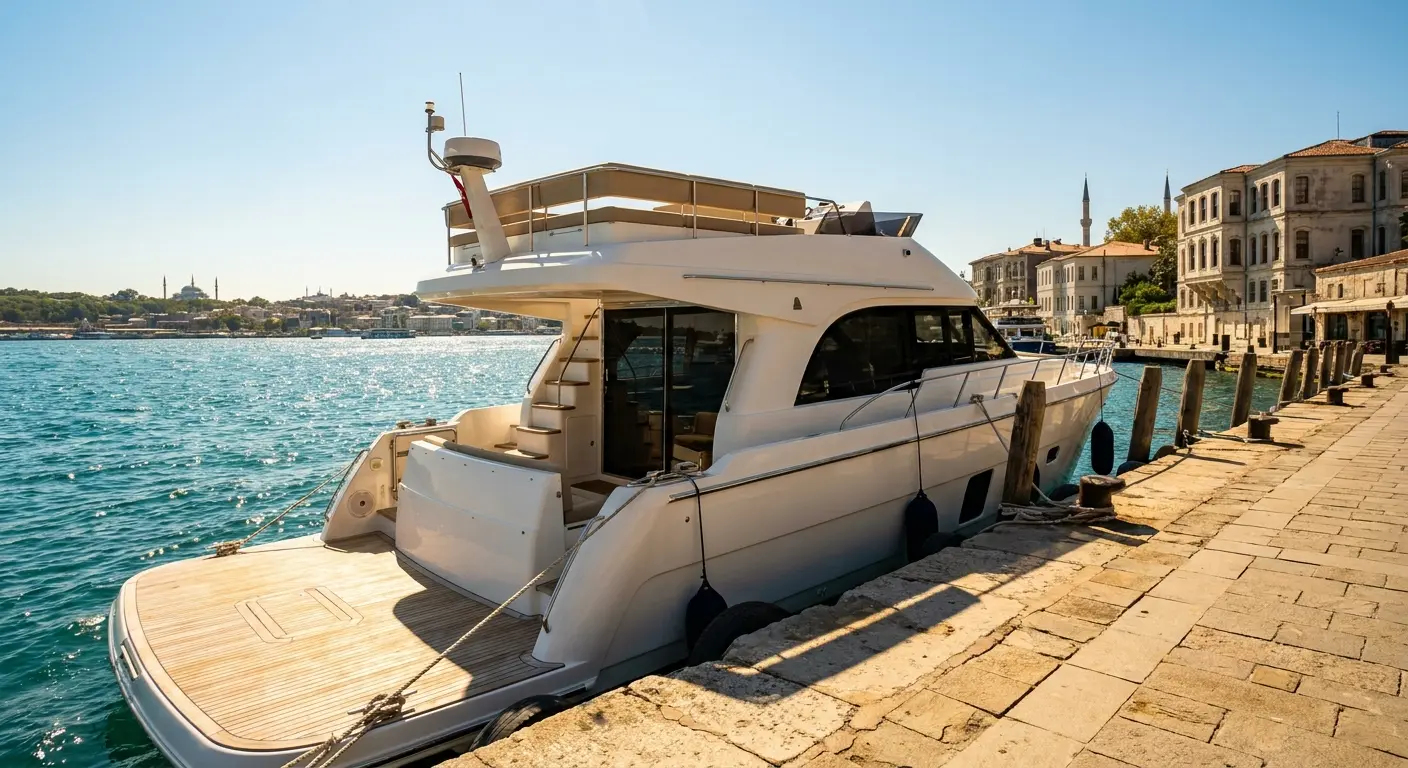
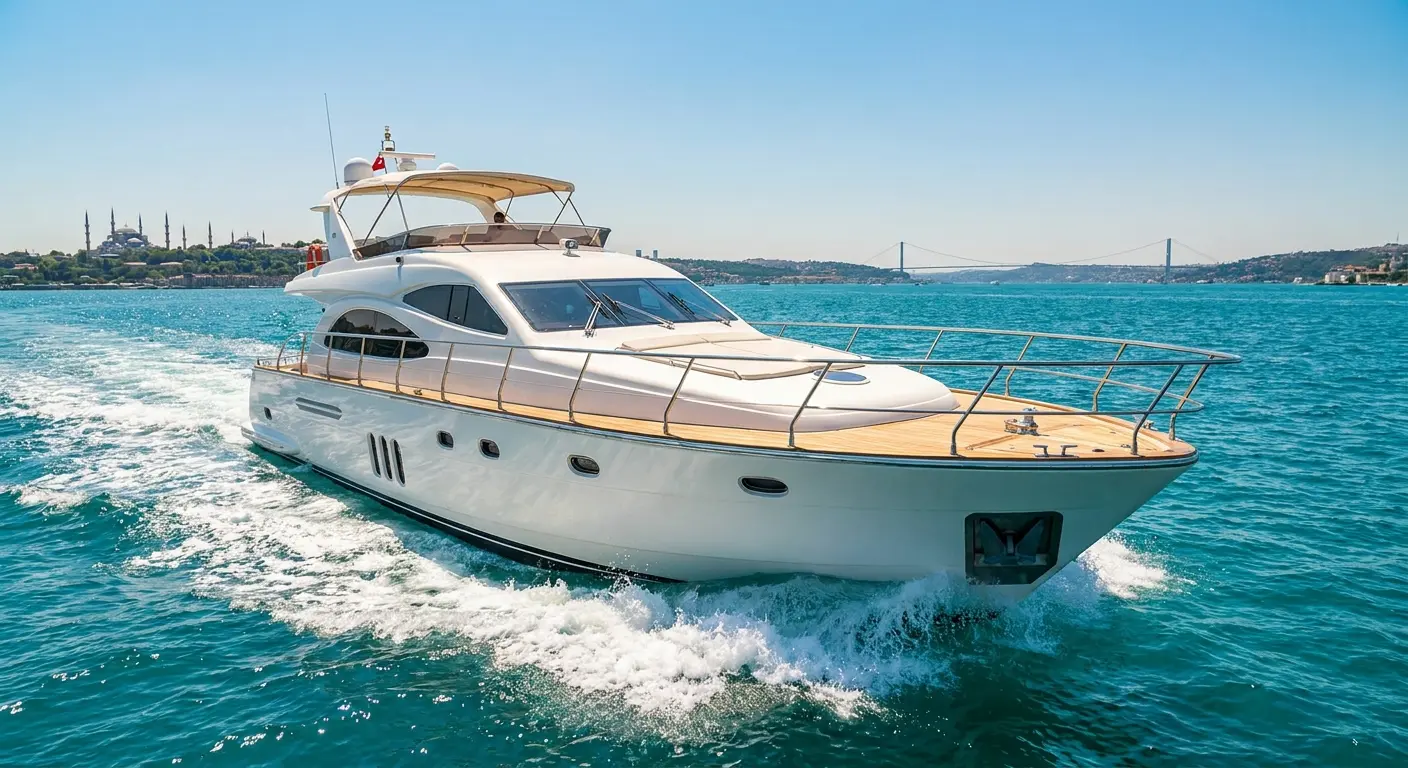
22m Private Motoryacht on the Bosphorus: Who Is It For?
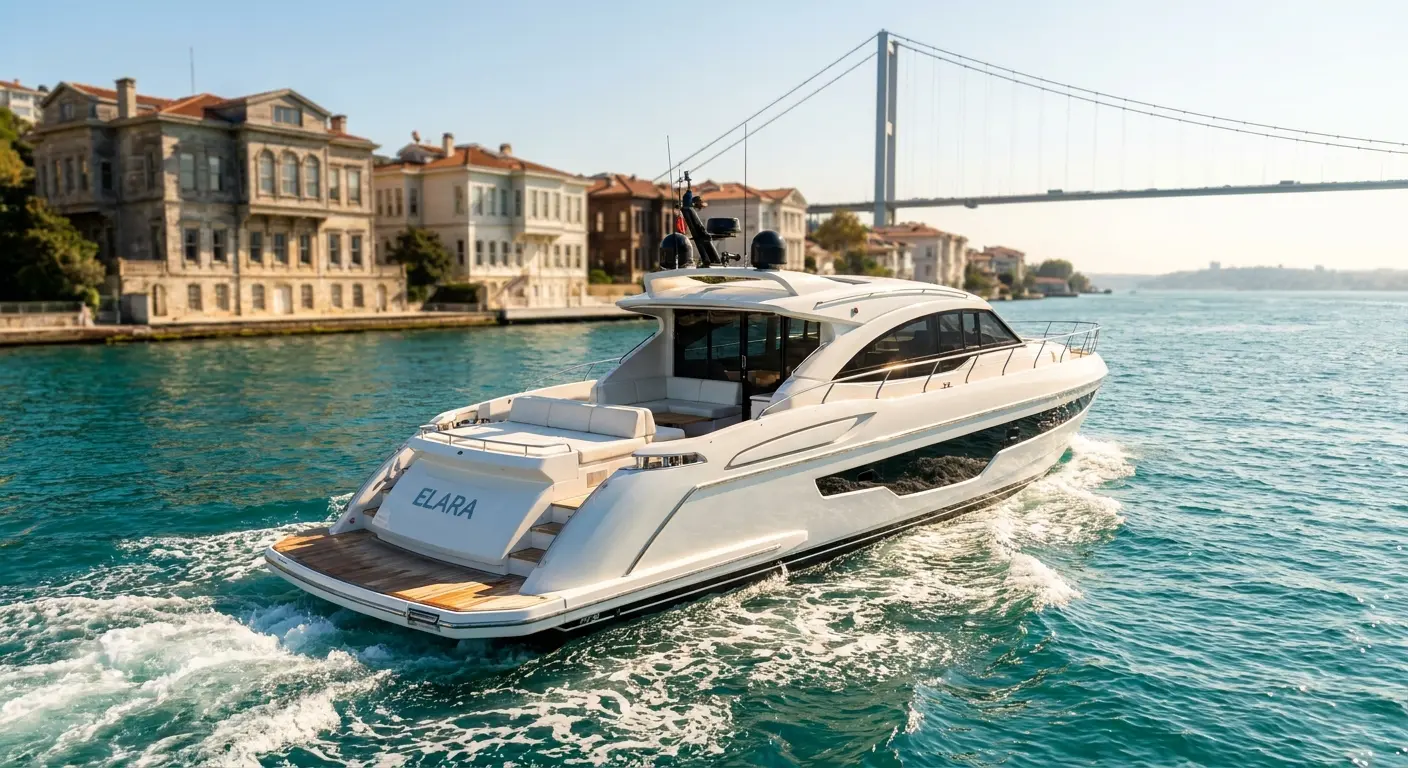
Most people read a yacht listing from the bottom up: price first, capacity second. The question that actually decides whether the day works comes third — does this boat match how your group will spend its hours on board? view İstanbul Boğazı'nda Kiralık 22 Metre Özel Yapım Motoryat on Turlago and the facts are laid out plainly: 22 metres of length, 7 metres of beam, capacity for up to 50 guests, departure from Bebek Sahili, and an hourly rate starting at 10,000 TRY. What follows is not a sales pitch. It is a fit guide — which groups genuinely benefit from this scale, which groups quietly overspend, and what you should pin down before paying a deposit.
One rule governs everything below: space per person, cost per person, and what your group actually wants to do. A 50-guest yacht can be a wonderful day for twelve people and a disappointing one for fifty. The difference is never the boat. It is the match.
Fifty guests is a ceiling, not a target
The listing's capacity figure is the most misread number in yacht charter. Treat it the way you would treat the maximum load on a lift: useful to know, unwise to aim for. At full capacity, a 22-by-7 metre vessel turns into a busy venue — full decks, tight walking lines, a service team working at pace. For some events that energy is exactly right. At 25 to 30 guests, the same boat behaves like a floating lounge with room to breathe.
Do the rough arithmetic and the point becomes obvious. The footprint of a 22 × 7 metre hull is about 154 square metres; usable deck space is a portion of that. Split across 50 guests, you are working with a couple of square metres each — enough to stand, sit and turn, not enough to move freely. Split across 25, you have roughly double that, which is the difference between a queue and a party.
The 7-metre beam matters here too. It is a generous ratio for a 22-metre hull, and it pays off in the least glamorous part of any event: the service line. When seating and serving occupy the same strip of deck, the food slows down and guests keep rearranging themselves. A wider deck lets those two functions sit side by side instead of on top of each other.
Group by group: where this yacht earns its price
The listing itself names the occasions it is built for — birthdays, marriage proposals, anniversaries, bachelorette parties, graduation celebrations and corporate events. Here is what each of those actually looks like in practice, including the cases where you should look elsewhere.
Families and multi-generational gatherings
This is the strongest match on the list. A family reunion spanning three generations needs exactly what a 22-metre deck provides: generous seating so older guests are not permanently on their feet, and enough separate corners that families with young children can settle without being in everyone's way. The Bosphorus does the rest of the work — the historic waterfront mansions, palace facades and bridges give children and adults alike something to point at, and on a boat the commentary is optional because the view is the programme.
What matters for families is not headcount but the age spread. With more children on board, supervision along the deck edges becomes a real planning item, so ask specifically about deck boundaries, stairs and access points before you book. Food is the second practical issue: across three generations, expectations diverge sharply, and a rigid set menu is usually the wrong answer. Keep catering flexible and confirm exactly what is included rather than assuming.
Couples: be honest about the scale
Marriage proposals and anniversaries appear in the listing, and this yacht can absolutely stage a memorable one. But chartering a 22-metre, 50-guest vessel for two people is, in most budgets, an unnecessary expense. Divide 10,000 TRY per hour by two and you are at 5,000 TRY per person per hour — a figure that buys a far smaller and more intimate boat elsewhere.
The exception is a couple who want to be at the centre of a larger celebration: an engagement, a surprise party, a moment with family and friends watching. Then the scale makes sense. The deciding factor is the guest list, not the romance of the vessel. If you do choose this boat for two, choose it knowingly — for presence and view, not for privacy.
Corporate teams
Corporate events are where the 50-guest capacity genuinely pays for itself. Moving a department off-site — a team reward, a product launch, a year-end gathering — changes how people behave in a way no hotel meeting room manages. The wide deck supports a dual setup: a presentation area at one end, circulating guests at the other, without either disrupting the other.
The risk in corporate charters is rarely budget; it is an underspecified programme. Is there a sound setup suitable for a speaker? Can a presentation area be reserved? Will food service interrupt the speeches? Settle those in advance or the event becomes a pleasant boat ride that misses its business purpose. On the administrative side, confirm invoicing, contracts and cancellation terms before your internal approval process starts, not after.
Friends: birthdays, bachelorette parties, graduations
This is the liveliest use case, and the one where planning discipline matters most. For a group of 25 to 40, the boat is both the venue and the entertainment, which means decoration, music and catering all stack on top of each other. The most common mistake is leaving every decision to the final week.
Two things need agreeing early for celebration groups: music levels and the yacht's own house rules on sound. Operators on the Bosphorus have their own limits, and discovering them on the day spoils the mood. For graduation groups, age range and chaperone arrangements are usually the operator's first question, so answer it upfront rather than being asked twice.
What 10,000 TRY an hour means per person
The honest way to read the price is to divide it. Take a three-hour charter at 10,000 TRY per hour — 30,000 TRY in total — and run it across different group sizes:
- 50 guests: roughly 600 TRY per person — the most efficient scenario by far.
- 30 guests: roughly 1,000 TRY per person — the sweet spot between comfort and cost.
- 20 guests: roughly 1,500 TRY per person — lots of space, diminishing value.
- 10 guests: roughly 3,000 TRY per person — at this scale a smaller boat almost always wins.
The structure is simple: this yacht gets cheaper per head as the group grows. That single insight reframes the decision. You are not comparing a 22-metre yacht against a small boat on sticker price; you are comparing cost per person at your actual guest count.
One caveat worth stating plainly. The listing shows an hourly rate, but it does not specify whether catering, decoration, sound equipment or additional services fall inside that figure. Budget for those as separate lines and get them confirmed in writing at quotation stage. The listing also carries no reviews yet, so weigh verifiable details — length, beam, capacity, departure point, rate — and the answers you get from the operator rather than relying on ratings that do not exist.
A three-hour charter from Bebek Sahili, hour by hour
Departure is from Bebek Sahili, and that shapes the logistics as much as the scenery. Getting guests to the boarding point, agreeing a meeting spot and handling parking all take more coordination than a central pier would. For a large group, define a 30-minute arrival window instead of a single call time — it protects both your schedule and the crew's.
A realistic three-hour flow looks like this:
- 0–20 minutes: Welcome, boarding, a short briefing. The best window for photographs and a welcome drink.
- 20–60 minutes: Heading out along the Bosphorus. The historic mansions, palace facades and bridges come into view; the decks are busiest here.
- 60–120 minutes: The core of the programme. A speech, a cake, a surprise announcement or a presentation belongs in this block.
- 120–160 minutes: The group has settled. This is the most productive stretch for conversation and photos — spread service across it to avoid a first-hour bottleneck.
- 160–180 minutes: Return and disembarkation. Keep a five-to-ten-minute buffer so the ending does not feel rushed.
Treat that as a planning template, not a promise. Exact routing and timing depend on traffic on the water and conditions, and the operator decides them. Ask in advance how those decisions are made and communicated — it is the step first-time charterers most often skip.
Season and time of day: same boat, two different days
On the Bosphorus, the experience depends more on month and hour than on any feature of the vessel. Late May to June and September to early October give the most balanced combination of temperature and light. July and August can make long stretches on an open deck uncomfortable at midday, which is why a 17:00 departure in high summer often feels like a different boat entirely.
Wind is the second variable. The Bosphorus is a more changeable corridor than open sea, and northerly winds can put a chop on the water. A 22-metre hull with a 7-metre beam handles that far better than a small day boat, but if you have young children or guests prone to seasickness, favour morning departures or calmer days. Ask the operator concrete questions: what happens in bad weather, what the postponement and refund terms are, and who makes the call, and when.
Time of day also changes the character of the event. Midday suits family and corporate groups; late afternoon suits celebration-driven groups of friends. Light quality affects photographs directly, so if you are planning a proposal or an engagement moment, choose the slot around the pictures you want, not around habit.
Twelve questions to ask before you pay
This list is not about inspecting the yacht. It is about pinning down how your event will actually run. Get the answers in writing and most disputes never happen.
- What is included in the 10,000 TRY hourly rate, and what is charged separately?
- Is the 50-guest maximum firm, and does crew count towards it?
- Where exactly is the meeting point at Bebek Sahili, and how does boarding work?
- How much flexibility is there around departure and return times?
- Can we bring our own food and drink, and is service support available?
- How much help does the crew give with decoration, cake and similar details?
- Is there a sound system, and are there limits on volume or music style?
- What are the cancellation and postponement terms for rain or wind?
- What is the payment schedule, deposit amount and refund policy?
- For corporate bookings, how do invoicing and contracts work?
- How accessible are the deck and stairs for guests with limited mobility?
- Can we bring an outside photographer, DJ or production team?
Seven planning mistakes that sink a large-group charter
- Filling the boat because you can. You are not obliged to use all 50 places; a group of 30 will enjoy the same yacht more.
- Skipping the per-person maths. The headline rate looks high until it is divided across a real guest list.
- Improvising the programme. Three hours without a loose timeline dissolves quickly. A simple schedule saves the day.
- Front-loading the service. Spreading food and drinks across the charter keeps the decks clear and the mood steady.
- Ignoring weather terms. Cancellation and postponement rules should be settled before payment, not on the morning of.
- Forgetting the logistics. Travel to Bebek Sahili, parking and the meeting point are invisible line items that drive guest satisfaction.
- Assuming everyone wants the same thing. Some guests want the music, others want a quiet corner; plan the deck layout for both.
When this yacht is the wrong choice
Three scenarios argue for looking elsewhere, and saying so is more useful than pretending otherwise. First, groups under about ten people: the space goes unused and the budget goes with it. Second, a two-person romantic evening: a smaller vessel wins on both intimacy and cost. Third, very short, tightly programmed events: a one-hour charter does not give you enough time to experience what a 22-metre deck actually offers.
Everything in between — a family reunion, a corporate off-site, a birthday, a graduation, a bachelorette party — sits squarely in this yacht's range, provided the group is genuinely 25 to 50 strong. The test is simple. If your guest list is dense, the scale works. If it is thin, you are paying for space nobody will use.
Three steps to settle the decision
Write down the number of guests you are confident will actually arrive, not the number you invited. Divide the charter cost by that number and look at the per-person figure honestly. Then finish this sentence: on this day, my group mainly wants to talk to each other, or mainly wants to celebrate. Those three steps turn a gut-feel booking into a plan you can defend to whoever is splitting the bill.
A day on a 22-metre custom-built motoryacht on the Bosphorus is genuinely memorable with the right group and an expensive crowd with the wrong one. The only variable that matters is how many people you bring and what you want the day to be. For current availability, pricing and departure details, view İstanbul Boğazı'nda Kiralık 22 Metre Özel Yapım Motoryat on Turlago and put the twelve questions above straight to the operator. Decide from your group's real needs, not from a photograph.