Istanbul Yacht Charter: 7 Things to Check Before You Book
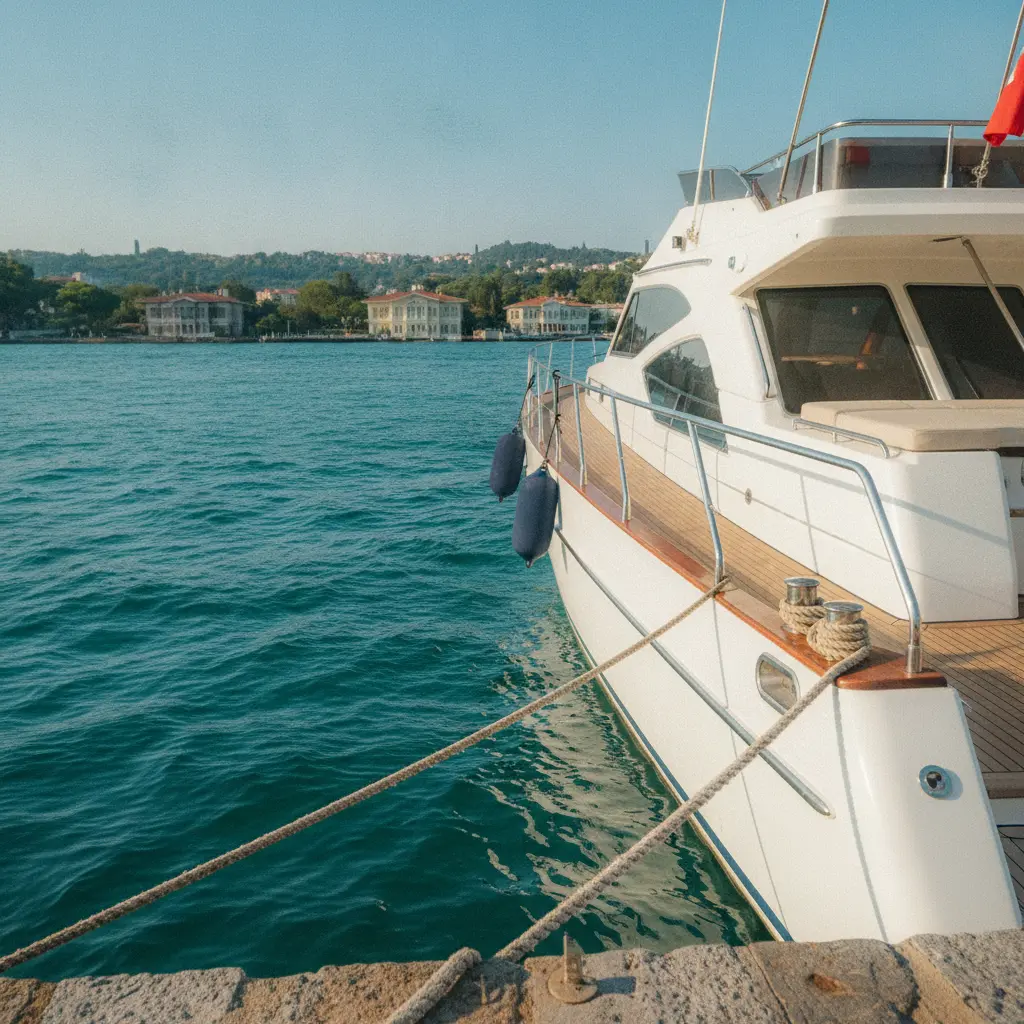
Two listings, one afternoon. Both boats are the same length, both promise the same coves, and the prices are within a hundred euros of each other. On the first, twelve guests spread out comfortably across the deck; on the second, nine people are already shuffling for space before the anchor is up. Nothing in the photographs explains it. The difference lives in how capacity is defined, how many crew members are on board, and what the quoted price actually covers.
This guide is written for the moment before you pay a deposit. Instead of comparing boats by price, we treat an Istanbul yacht charter as a decision with seven checkpoints, each of which explains why it matters and what goes wrong when it is skipped. If your group is arriving from a hotel across the city, it is also worth sorting the ground leg early: Turlago's premium VIP car rental service removes the usual scramble of splitting a large group across taxis on the way to the marina.
Start with your group, not with the boat
The most expensive mistake in yacht chartering is deciding on the vessel first and thinking about the guest list last. A 20-metre motor yacht that feels safe and generous to a family with small children can feel cramped and chaotic to a company hosting a client dinner. Before you open a single listing, write down five things: the age range on board, the number of children, how many guests swim, whether alcohol will be served, and the time everyone needs to be back on land. Those five answers will eliminate most of the market for you.
Families with children
For families, the priorities are shade and safety, not style. Look for high bulwarks, non-slip decking, a proper canopy and a crew that seems genuinely comfortable around children. Child-sized life jackets are not a detail you can assume; ask directly. The number and condition of toilets matter far more than most parents expect, and a shorter route usually beats a longer one. A three to four hour Bosphorus or bay cruise will leave everyone happier than a six hour program that ends with tired children and a rushed return.
Couples and celebrations
Chartering a large boat for two people is the wrong purchase. Couples are better served by a smaller vessel with fast, discreet service and a genuine private corner: an upper deck, a forward seating area, a separate cabin. If the day has a purpose, such as an anniversary or a proposal, confirm in writing whether flowers, music and a photographer are included. These add-ons are frequently quoted separately at the last minute and can double a budget that looked reasonable a week earlier.
Groups of friends
With friends, two factors decide the day: sound and space. Boats with a good sound system, a wide swim platform and several separate seating zones handle these groups best. One caution, though: a group of ten should be looking at a boat rated for twelve or more, not one rated for exactly ten. A boat filled to its legal maximum turns cramped within an hour. For birthdays or pre-wedding parties, clarify whether food and drinks are charged per person or as a flat package, because that single line changes which quote is actually cheaper.
Corporate groups and client entertaining
Corporate charters are judged on punctuality and paperwork as much as on the boat itself. If there will be a presentation, you need an enclosed saloon, a screen and a quiet area away from the music. Watch out for operators who run two groups on the same day; departure times can slip. The most common corporate complaint is a final invoice that does not match the quote, so insist that fuel, marina fees, crew and VAT appear as separate lines on the written offer.
1. Hull type: motor yacht, gulet or sailing yacht?
Listings use three words constantly, and they are not a matter of taste. The hull type sets your route, your schedule and a good part of your budget. You can sail the same stretch of water on all three, but the day will feel completely different.
Motor yacht
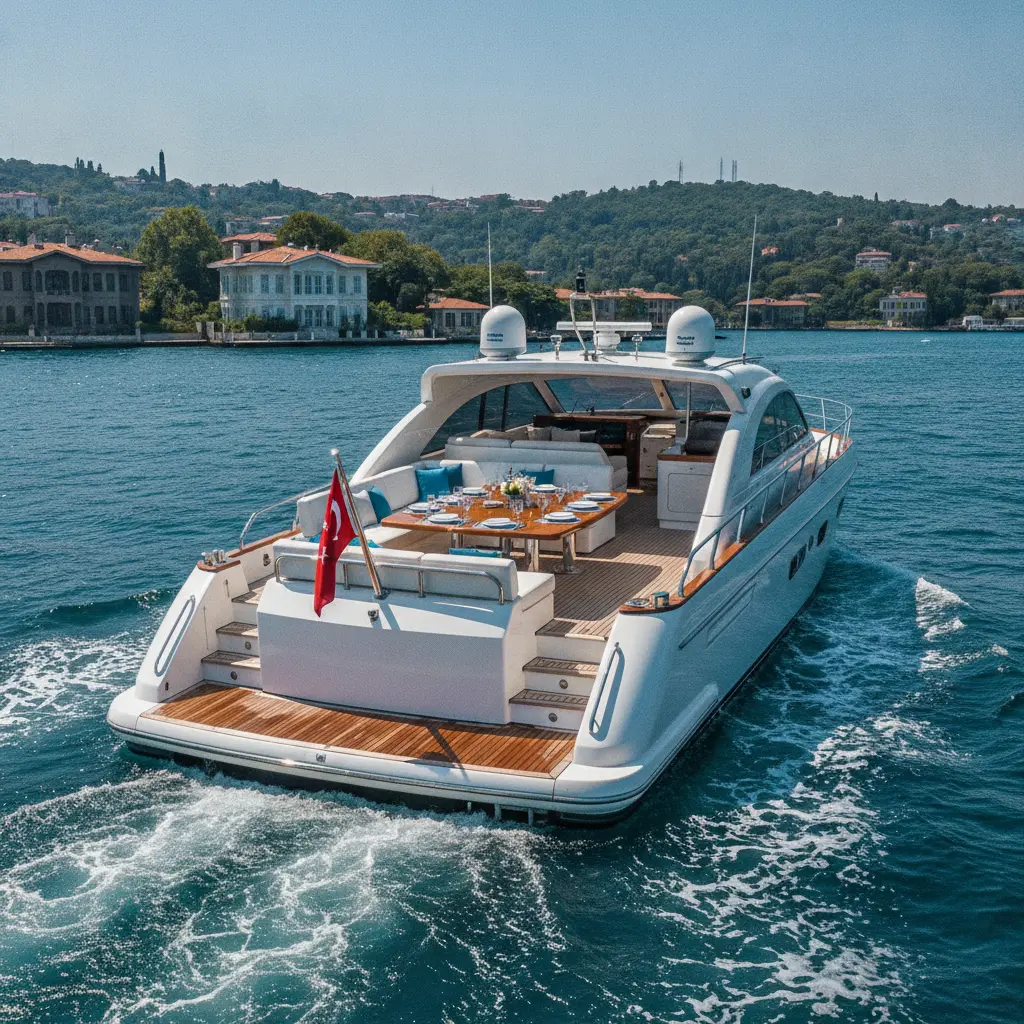
Choose this when speed and comfort lead. A motor yacht covers distance quickly, which makes the Princes' Islands or the northern bays easy from a central marina. Air conditioning, an enclosed saloon and a large deck make it work for both daytime and evening use. The trade-off is fuel consumption, which is exactly why you must establish whether fuel is included or metered by the hour.
Gulet
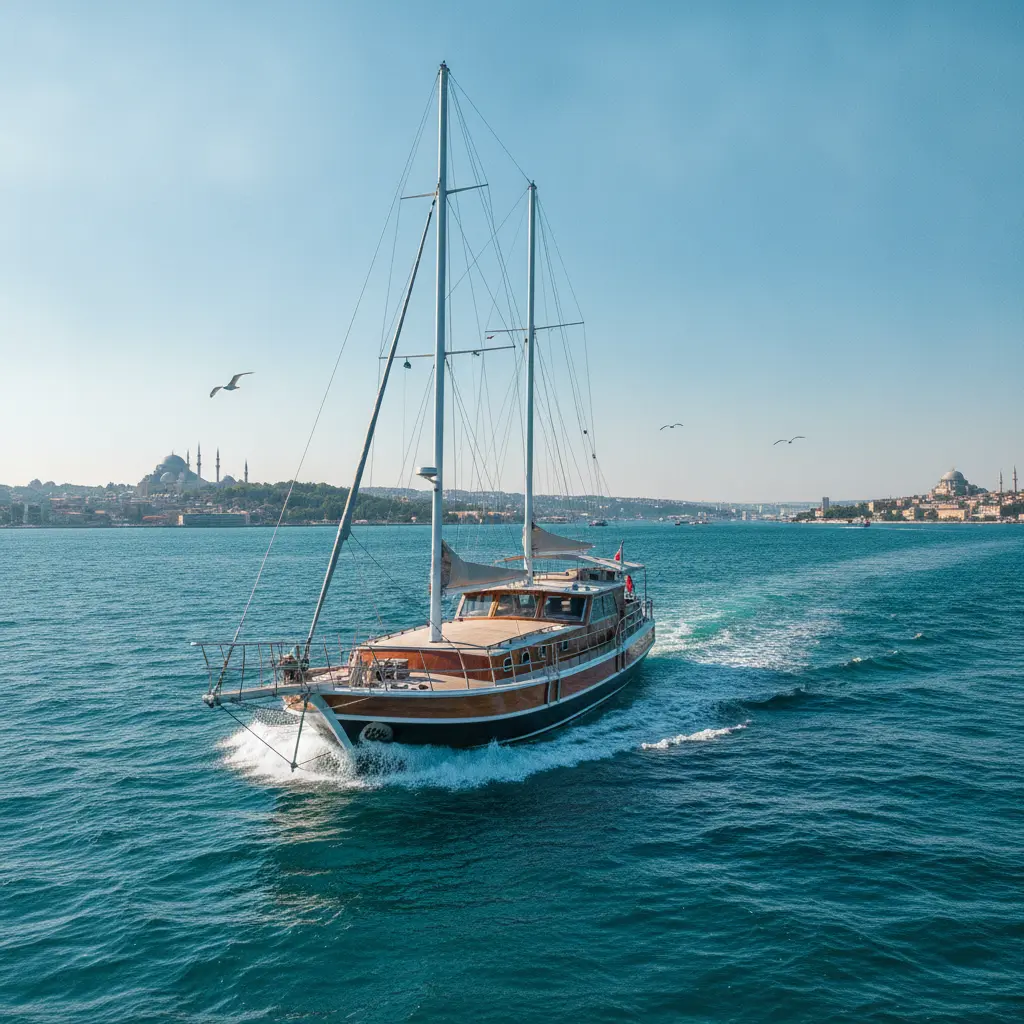
Slow, wide and traditional. On a day charter, gülets tend to attract large families and long, food-centred programs. They manoeuvre poorly, so they are a poor fit for short itineraries, but excellent if your idea of a good day is sitting still with a long table and no rush. Wide decks and generous seating make service easier for big groups.
Sailing yacht
For people who want to feel the water. Heeling, wind and the occasional spray are part of the package, which is why sailing yachts are a poor match for small children or guests with limited mobility. Shade is scarce and the itinerary follows the wind. In exchange you get silence, motion without an engine and the best photographs of the three.
2. Capacity: the number in the listing is not the number you want
Every listing carries a figure: 12 guests, 20, 30. In most cases that is the maximum passenger count on the vessel's licence, not a comfort rating. The gap between the legal maximum and the number of people who will actually be comfortable is the single biggest driver of a disappointing day. Put twenty people on a twenty-passenger boat and everyone can technically board, but seating, shade and service space become a competition.
A practical way to test capacity is to ask three questions: how many guests can be seated at a table at the same time, how many can sit in shade, and how many toilets are on board. Those three answers tell you more than the headline figure. On group charters, toilet count is decisive; a single head on a fifteen-person boat costs real time at every stop. Also check whether the service area is separated from the seating area. When crew traffic runs through the guests, the whole meal is punctuated by people stepping around each other.
3. Crew: who is on board, how many, and doing what?
This is the most overlooked checkpoint in Istanbul yacht chartering. A good boat with the wrong crew still produces a bad day. First, establish whether a captain is included or whether you are expected to handle the vessel yourself. Recreational licences allow limited private handling, but in Bosphorus traffic and with a group on board, a professional captain is almost always the right call.
Second, how many crew members? A group of twelve may be fine with a single captain, but if you also expect meal service, drinks and cleaning, you need at least one steward. Confirm whether crew is included or invoiced separately, because some operators quote the boat and the staff as two items. Third, experience and language: if you have international guests, an English-speaking crew changes the entire rhythm of the day. Finally, raise the subject of tipping before you board. The common practice after good service is a modest percentage of the charter total, and learning that at the end of the evening is avoidable friction.
4. Route and timing: the Bosphorus and the islands are different products
Same boat, same price, different route, entirely different day. The Bosphorus is a sightseeing route: short distances, constant scenery, few swimming stops. The islands and the northern bays are a water route: longer cruising, more anchor time, a looser schedule. When you book, do not ask which route; ask how the day is distributed. How many hours under way, how long at anchor, how many swim stops, and where exactly?
Departure time matters just as much. Morning departures tend to mean calmer water and quieter anchorages. Afternoon departures often run into the sunset, which is beautiful, but the wind typically builds through the day. For evening programs, check lighting on deck, heating or cooling in the enclosed saloon, and the exact return time. The most common source of frustration is the gap between the advertised duration and the time actually spent on the water, because boarding, briefing and turnaround are not cruising hours. Knowing that a six-hour charter means roughly five hours afloat sets the right expectation.
5. What the price includes, and the hidden-cost checklist
Charter prices vary wildly for the same service because operators bundle different things. Rather than comparing totals, ask for an itemised breakdown. The following should appear explicitly in any serious quote:
- Fuel: included, or charged by consumption? On motor yachts this can be a significant line.
- Marina and berth fees: mooring, departure and pier service charges are often billed separately.
- Crew: captain and steward included or not?
- Food and beverages: set menu per person, a package, or bring your own? Is there a charge for bringing your own alcohol?
- Cleaning: end-of-charter cleaning is sometimes invoiced as an extra, particularly for large groups.
- VAT: get written confirmation whether quoted prices include it.
- Extras: sound system, water toys, snorkelling gear, photographer, decorations.
- Gratuity: never compulsory, but worth budgeting for realistically.
Once these are laid out, you can tell whether the price gap between two offers is real. The cheapest quote frequently becomes the most expensive option after fuel and crew are added, while a higher headline figure that genuinely includes everything can end up cheaper overall.
6. Age, maintenance and safety
Photographs do not date the boat in front of you; some listing images are several seasons old. Ask how old the vessel is, when it was last serviced and where. Then look at the details that shape a day without appearing in the brochure: condition of the canopy and how much shade it actually creates, seat cushions, number of working toilets, shower area, sound system, fridge capacity.
On safety, be concrete. Is the vessel insured? How many life jackets are on board, and are there child sizes? Are the life ring and fire extinguisher visible and accessible? Is there a first aid kit? With a full group, life jackets should never be fewer than passengers. If you have non-swimmers, ask how the crew handles swim stops. Reliable operators answer these questions without hesitation, and evasive answers are information in themselves.
7. Contract, payment and cancellation terms
The least discussed and most dispute-prone part of chartering is paperwork. Before paying, get the deposit percentage, the balance due date and the refund policy in writing. The weather clause deserves particular attention: if wind or a storm prevents departure, is the offer a refund or a date change? Do not transfer money before reading that clause.
Payment method matters too. For corporate bookings, the company name, tax number and description of service must be correct on the invoice. For private charters, verify the account you are paying into; cash handed over without a receipt leaves you with no recourse. The contract should name the vessel, the departure marina, the time and the number of guests. These feel like small details until the day arrives, and then that document is the only thing you can point to.
Six mistakes that ruin a charter
- Choosing on price alone. The lowest quote is usually the one with the most extras attached.
- Reading legal capacity as comfort capacity. The licensed maximum is not the pleasant maximum.
- Ignoring toilets and shade. On a long program, these two decide how the day feels.
- Not discussing the route in detail. Vague cruising hours lead to vague disappointment.
- Skipping the weather clause. On the water, weather is part of the plan.
- Leaving the transfer to the last morning. Getting a large group to the marina takes longer than you think.
Twelve questions to send before you book
Send them in one message and ask for written answers. It is faster for the operator and safer for you.
- What is the vessel's exact name, model and year?
- What is the licensed capacity and the recommended comfortable capacity?
- How many toilets and showers are on board?
- Are captain and crew included, and how many will be present?
- Is fuel included, and if not, what is the estimated consumption?
- Who pays marina and pier fees?
- Are food and drinks included, and may we bring our own?
- Which marina do we depart from, and what are boarding and return times?
- Is the route flexible depending on weather?
- How many life jackets are there, including child sizes?
- What are the cancellation and rescheduling terms?
- How is payment made, and is an invoice issued?
Season, time of day and weather flexibility
Istanbul's charter season is long but not uniform. Early June to mid-September is the most stable window, with water warm enough for comfortable swimming in July and August. May and October can be glorious, but wind probability rises, so keep the itinerary short and flexible. Weekend afternoons are the busiest slot at both the marina and the popular anchorages; a weekday or a morning departure will feel noticeably calmer.
Time of day should follow your group. Families do best between 10am and 3pm. Couples tend to prefer a late afternoon start that stretches into the evening. Friend groups gravitate towards a departure that catches the sunset, while corporate groups want a schedule that fits the working day and a clearly stated return time. Be realistic about weather, too: on a windy day the boat does not have to go out. A good operator will offer a date change rather than push a marginal sea state, and that single behaviour tells you more about reliability than any brochure.
Decision checklist
- Group type and final headcount confirmed?
- Capacity verified alongside comfortable capacity?
- Toilets, shade and seating layout discussed?
- Captain and crew numbers confirmed in writing?
- Fuel, marina fees, VAT and gratuity separated on the quote?
- Route, departure time and total hours on the water agreed?
- Insurance, life jackets and first aid answered?
- Cancellation and weather clause in the contract?
- Marina transfer arranged?
The short version
The right yacht is not the newest or the most expensive one; it is the one that fits your group, your route and your budget at the same time. Work through the seven checkpoints in order and you will be left with two or three realistic options, at which point the decision becomes easy. Start by asking for an itemised quote, a written cancellation policy and a clear schedule; those three documents frame the entire day.
Give the ground logistics the same attention. Arriving at the marina as a scattered group, one taxi at a time, wastes the calmest hour of the day. Turlago's premium VIP car rental option turns the hotel-to-marina leg into a single planned step instead of an improvisation. After that, there is nothing left to manage but the water, the sun and a well-chosen boat.