3-Day Cappadocia Tour: A Family of Eight, Day by Day
20:45 in Yenibosna: a family of eight opens its notebook
Nesrin is sixty-two. She lives in Yenibosna, a short walk from the Airport AVM, and for years she has had one plan in mind: to see the fairy chimneys of Cappadocia with her grandchildren. This year she finally says it out loud. They become eight people — herself, her husband, her son, her daughter-in-law, two grandchildren, and her sister-in-law and her husband who come up from Izmir. Choosing a tour for eight people is nothing like choosing one for a couple, because the question stops being “where should we go” and becomes “who, when, at what price, and how tired will we be at the end”.
The family lands on the 3-day Cappadocia tour from Istanbul, which you can view on Turlago. What follows is not a sales pitch. It is the order in which things actually happened to them — the good parts, the tiring parts, and what would change in a different season. The product data is simple: departure from Istanbul, three days, vehicle capacity 100 people, 4,499 TL per person, one night in a five-star hotel in Cappadocia, and a route that runs from Lake Tuz to the Ihlara Valley, from Narli Lake to the Kaymakli Underground City, from the Avanos workshops to the Haci Bektas Veli lodge.
The decision process: getting eight people onto one bus
In a large family, a tour is not voted on; it is negotiated. Nesrin's conditions are clear: an overnight departure so nobody loses a working day, a proper hotel, a guide, and a per-person price under 5,000 TL. Her daughter-in-law has a different list: nothing boring, and not hours of sitting on a bus. The grandchildren have exactly one criterion: balloons. Her sister-in-law's husband asks one question only: how many hours on the road?
Very few tours satisfy all four demands at once. Day trips are eliminated immediately because a single day cannot physically hold Ihlara, Goreme and the workshops. Flight-inclusive packages double the budget for eight people. What remains is the bus-departure format with two full days on the ground — and crucially, a hotel at the end of the first day, so that the children and the older members get one real night of recovery.
What the 4,499 TL covers and what it does not
This is where most family budgets go wrong: the listed price and the money you actually spend get confused. So split it in two.
Included:
- One night in a five-star hotel in Cappadocia
- One open-buffet breakfast at the hotel
- One open-buffet or set-menu dinner at the hotel
- Transport in comfortable vehicles, assigned according to group size
- The sightseeing stated in the programme and a professional guide
- Water on board, agency cover, and mandatory travel insurance under Turkish Tourism Law no. 1618
Not included:
- Breakfast on the first morning
- All lunches
- Dinner on the final day
- Drinks with any meal
- Museum and archaeological site entry fees (municipal and privately operated sites)
- The Museum Pass for sites run by the Ministry of Culture and Tourism
- Personal spending and any extra organisation not listed in the programme
For a family of eight, the practical translation is this: lunches, drinks and museum entries are a separate line in the notebook. They added a buffer on top of the 4,499 TL per person before they left, and it removed the whole “did you pay or did I pay” conversation from the trip.
Departure evening: meeting points and timing
The official meeting points are 21:00 at Yenibosna Airport AVM, 21:30 at Mecidiyekoy Torun Center, 22:00 at the Kadikoy Marriage Office car park, 22:20 under the Kartal bridge and 22:40 in front of the Cayirova McDonald's. The night programme also lists additional pick-up points further east — Bostanci bridge, Pendik bridge, Gebze Center, Izmit Halkevi and the Sakarya Alpet petrol station — so the route stretches well beyond the city.
For Nesrin's family this list meant one thing: not everybody boards at the same place. The relatives arriving from Izmir were better off at Cayirova or Gebze, while the Yenibosna branch walked to the Airport AVM. Deciding this in advance is what stops eight people from trying to converge on one corner in traffic.
One warning: 21:00 does not mean the door is open at 21:00. With a large group, loading luggage and checking names takes fifteen to twenty minutes. The family rule became: arrive thirty minutes early, one person handles the bags, the others stay with the children. That small arrangement bought them a calm start.
The overnight coach: an honest note on sleeping upright
The least discussed part of this product is the night drive. The title says three days; the calendar actually works like this — first night on the road, second night in the hotel, part of the third night on the return drive. Plan your sleep around that, not around the marketing.
In practice, people who can sleep on a coach arrive surprisingly fresh, and people who cannot hit a wall in the early afternoon of day one. The fix is unglamorous: finish the previous day early, bring a thin pillow and earplugs, and put the screen away. For the grandchildren, the lifesavers were a travel pillow and a downloaded cartoon.
There is also an expectation to manage: this is a tour with a capacity of 100 people. A full coach means queues at rest stops. The family handled it with a buddy system — one person for the toilet queue, one for the counter, one with the kids — which is how a fifteen-minute stop actually becomes useful.
Lake Tuz in the morning: sunrise is not guaranteed
The first stop after the night drive is Lake Tuz, and the product description carries an important caveat: in periods when sunrise comes late, the lake may not be visible. Read that as planning information rather than a warning. In winter, the sky is still dark when you arrive early in the morning; in summer, the opposite happens and the salt flat turns into a white plain in full daylight.
The family's expectations were high and were met, because there is free time on the salt flat and plenty of room for photographs. Three practical notes that helped: sunglasses are essential against the white ground, your shoes dry with a white salt crust afterwards, and you should not walk too close to the edges. For the children, this was the stop that began with the question “is this the sea?”
Free time is followed by a breakfast break. That breakfast is not part of the tour price, and it sat as its own line in the family's budget. With eight people, ordering individually is slow and expensive; sharing a couple of breakfast platters got them fed and back on the bus on time.
The Ihlara Valley: looking down from the glass terrace
After breakfast the route turns toward the Ihlara Valley with Mount Hasan in the background. One number explains the scale: the gorge carved by the Melendiz river reaches depths of over 120 metres in places and runs roughly 14 kilometres. The programme does not ask you to hike the valley floor; it offers a bird's-eye view from the glass terrace plus a briefing from the guide.
For a family of eight this detail is worth real money. Long descents into the valley are hard on older knees and small children. The terrace lets you see the gorge without paying for it physically. When Nesrin's husband said he did not want to go down, nothing in the programme forced him to; photographing the view and listening to the guide was enough.
A timing note: the valley floor can be cool in summer and windy in winter. A thin jacket works in every season while you stand on the terrace. The family packed two light fleeces and used both.
Narli Lake: the crater lake shaped like a heart from above
The least known stop on the route is Narli crater lake, promoted for its heart shape when seen from above. That is a genuine draw for photographers, but be honest with yourself: the shape needs altitude. Standing at the water's edge and looking straight across, do not expect to see a heart. What the programme schedules here is a photo stop.
The family's real gain at this point was simply getting off the bus and breathing for a few minutes in the middle of a crowded day. The area around the crater is open ground, which makes it a short but effective stop for children with energy to burn. Keep an eye on the edges and do not let kids wander alone.
Kaymakli Underground City: single file, nobody left behind
The most physically demanding part of day two is the Kaymakli Underground City, visited with a guide. For eight people there is exactly one rule: nobody gets lost. The tunnels are narrow, the passages are single file, and in a large group you must not lose the person in front of you or the one behind.
Nesrin's solution was simple and effective: the guide at the front, the youngest adult at the back. That way neither the elderly nor the children were left trailing. One more honest note: the narrow tunnels can be uncomfortable for anyone with claustrophobia. Telling the guide in advance makes it possible to arrange a short alternative before the group goes in.
This is also where entry fees and the Museum Pass matter. Sites run by the Ministry of Culture and Tourism work with the Museum Pass; municipal and privately operated sites charge separately. So budget for entries at stops like the underground city and the open-air museum. The family had calculated this in advance and was not surprised at the ticket window.
Pigeon Valley, Pasabag, Devrent: three stops, three different Cappadocias
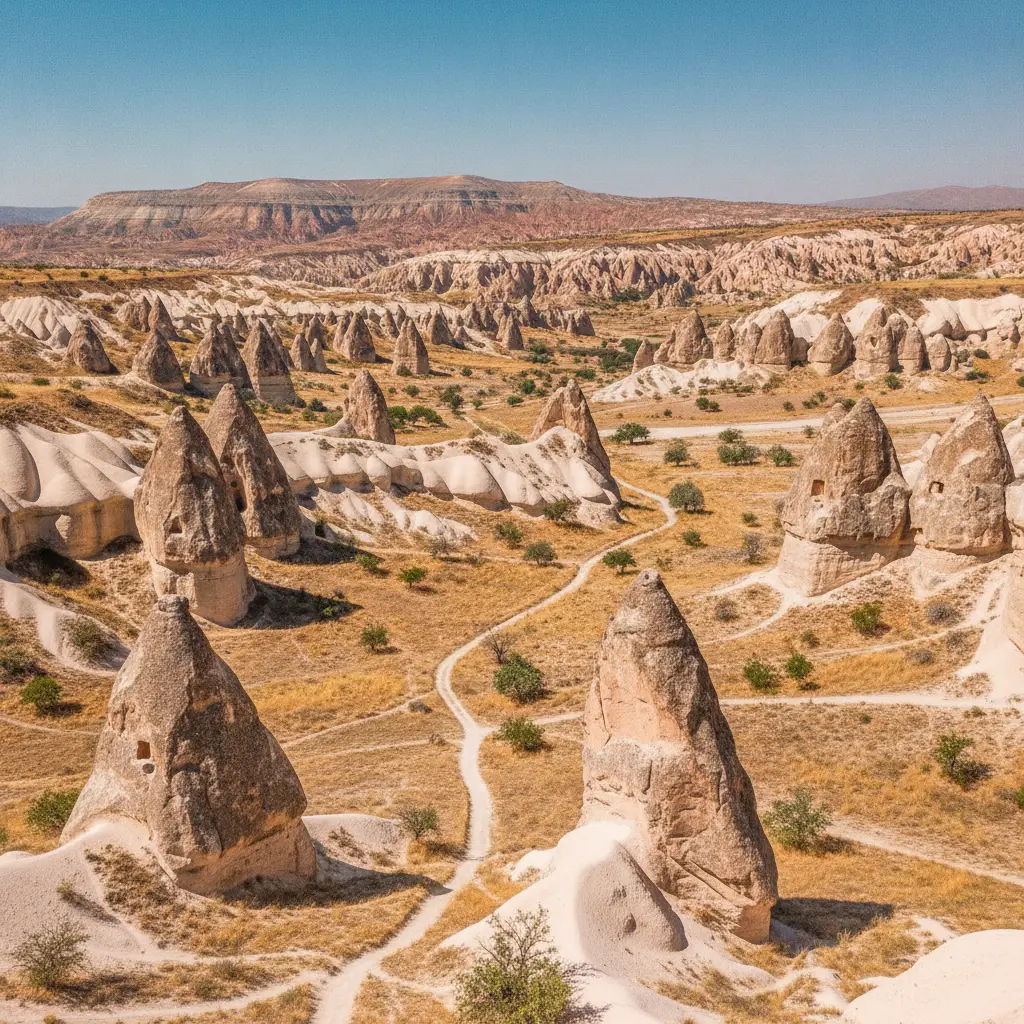
Three stops follow each other on the same day, and each shows a different face of the region. Pigeon Valley is a photo stop, with the valley's texture and the famous nazar trees as the draw. Pasabag is one of the best-known fairy chimney silhouettes, and the programme schedules a walk there. Devrent Valley is another photo stop.
After three valleys in one day, fatigue is real. The family's method: nobody tried to photograph everything at every stop. Instead they rotated a “photographer of the stop” role, which kept phones charged and meant nobody was always the last one back on the bus. At Pasabag, watch your footing — the tuff ground is soft, dusty and slippery in places.
The pottery workshop in Avanos: the first time hands touch the trip
One of the most memorable stops is the pottery workshop in Avanos, listed in the programme as a demonstration and shopping visit. For the grandchildren it was the first moment of the whole trip where they could touch something instead of looking at it. Watching clay rise into shape was, by the family's own account, the quietest ten minutes of the day.
On the shopping side, be straightforward: prices in these workshops vary widely. The family set a ceiling before going in. Small pieces were bought for the children, and larger items were deferred with a simple “we'll decide at home”. It is also worth thinking about logistics — a fragile piece bought in the middle of a three-day coach trip has to survive the rest of the trip. That is exactly why the large jug was postponed to the way home.
The hotel night: buffet, early bed, and planning tomorrow
The day ends at the five-star hotel in Cappadocia, with an open buffet or set-menu dinner included. The listing does not go into detail about the property, so set expectations at “clean, comfortable, and suitable for an early start” rather than anything more specific.
Checking eight people into a hotel is its own small operation. The smartest thing the family did was not unpacking fully; taking out only what was needed saved twenty minutes the next morning. The other note: do not push dinner late. If there is an early balloon plan the next day, an early meal and an early night are the only real solutions.
The balloon flight: an optional extra, and how to decide
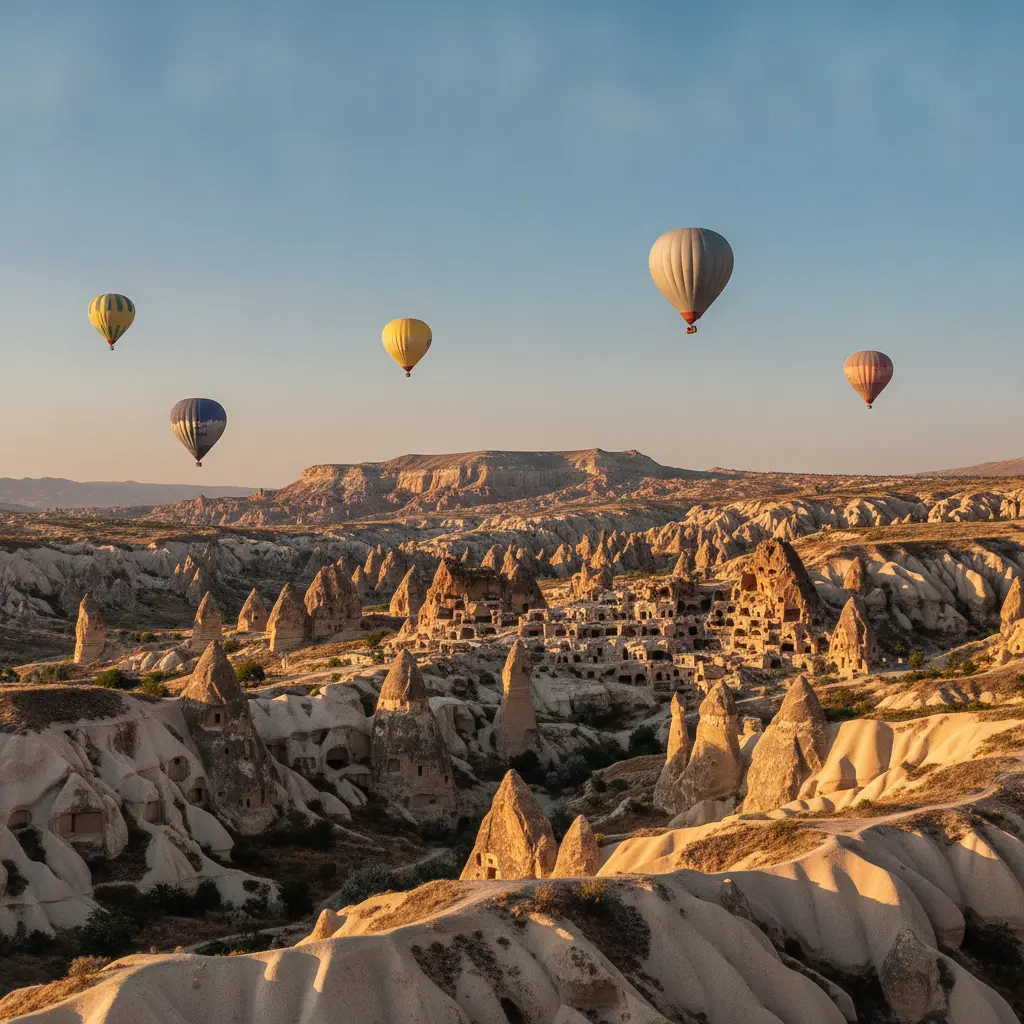
Day three begins with an optional extra: the hot air balloon flight. The programme is clear about the sequence — an early lobby meeting, a transfer to the launch site, watching the balloons being prepared with refreshments, then a flight of roughly one hour, followed on landing by a champagne toast and a certificate.
Two things need saying plainly. First, the balloon flight is not part of the base price; the extra list includes a balloon viewing transfer service at 450 TRY. Second, balloon flights depend on weather, and wind cancellations are always a possibility. That is why the family refused to make the balloon the only meaning of the trip. The grandchildren wanted it badly, but the sentence “if it doesn't happen, we'll still be standing among fairy chimneys at Pasabag” kept that morning calm.
The booking mechanics are also spelled out: you write your extra requests in the notes field at checkout, the agency calls you after booking, and a payment link follows. In other words, decide it up front rather than hoping to arrange it on the day.
Urgup, Love Valley and Asmali Konak
After the balloon morning, the group returns to the hotel and the day continues around Urgup. The programme includes a visit to Love Valley and an exterior view and photo stop at Asmali Konak. Manage expectations here: this is a look from outside, not an interior visit. The family knew this and was not disappointed.
Love Valley is one of the most photogenic stops of the day. The formations want a wide lens; switching your phone to wide angle helps you get a clean frame through the crowd. Morning light is an advantage here, because contrast climbs toward noon.
Goreme Open Air Museum: does a guided visit really matter?
Goreme Open Air Museum is the cultural centrepiece of the programme, scheduled as a guided museum visit. The guide's value here is concrete: without knowing what the rock-cut spaces were, which period they belong to and what the frescoes depict, the visit collapses into a few photographs and a walk back to the bus.
Among eight people, the group naturally split: the adults listened, while for the children the highlight was simply going in and out of the carved rooms. A tip that worked — give children a small task, such as finding a specific fresco. It pulls them into the visit instead of leaving them waiting by the exit. Entry fees and the Museum Pass apply again, since this is a ministry-run site.
Leather and onyx workshops: managing the shopping stops
The programme also includes a leather workshop (with a fashion show and shopping) and an onyx stone workshop. These are standard workshop stops on Cappadocia itineraries. For a family, two things matter here: duration and limits.
The leather show is visually entertaining and holds children's attention. At the onyx workshop you watch stonework being demonstrated. The family's approach was to say out loud, before entering, “we are looking and listening, not buying”. Stating this in advance removed the haggling fatigue at the exit. For anyone who does buy, the fragility of the pieces and the space in the suitcase are the first things to think about.
The Haci Bektas Veli lodge and the road home
The final cultural stop is the Haci Bektas Veli lodge. The product is literally named the Cappadocia Ihlara Hacibektas tour, so this visit is a core part of the route, not a filler. Inside, observe the basics: quiet, appropriate clothing, and discretion with photography. For the older members of the family, this was the stop that moved them most.
The return drive follows, and the tour ends back at Yenibosna Airport AVM. On the way home one question circled the bus: would we do this again? The answers split, but everyone agreed on one point — fitting this many stops into three days only works with a well-built programme.
The season question: how the same tour changes month by month
The single most important planning variable for this itinerary is the season, because two of its highlights depend directly on weather and daylight: the Lake Tuz morning and the balloon.
Spring (March to May): the Ihlara Valley is at its greenest, with the Melendiz running high and the scenery vivid. Sunrise comes at a reasonable hour, so the Lake Tuz stop usually works. For a large family this is the most comfortable walking season, because midday heat has not yet arrived.
Summer (June to August): long days and very early sunrises, which improves your chance of seeing Lake Tuz in full light. The trade-off is serious heat at open-air sites such as Pasabag, Goreme and Love Valley around midday. If you choose summer, hats, sunscreen and water are non-negotiable, and a light lunch saves the afternoon.
Autumn (September to November): in my view the most balanced window for this tour. Temperatures suit walking, the light is softer for photography, and crowds are lighter than in summer. After mid-October the evenings turn cool, so layering matters.
Winter (December to February): the biggest risk is exactly what the programme itself notes — Lake Tuz can still be dark when you arrive, because the sun rises late. Snow landscapes can be spectacular for photography, but the underground city and valley stops are harder in the cold, and balloon cancellations come up more often in this period.
The practical conclusion for a family of eight: if children are in school, summer; if older travellers are in the group, spring or autumn. If the balloon is the priority, look at periods when wind is generally calmer. If the salt flat photograph is the priority, choose months when sunrise comes early.
The extras: which are worth it and which are not
The extra list reads as follows: balloon viewing transfer 450 TRY, Turkish Night without dinner 1,800 TRY, horse riding 1,500 TRY, ATV single 1,250 TRY, ATV double 1,500 TRY, a private testi kebab menu 750 TRY, a casserole kebab menu 650 TRY, and an open buffet at 650 TRY.
For eight people this adds up fast. The family's assessment: a regional dish such as testi kebab is worth trying once, because skipping it in Cappadocia feels odd. ATV is fun for teenagers, but the programme already fills two full days, so time and energy may simply not be there. Turkish Night generally does not fit this itinerary at all, since the third evening is the return drive; that kind of evening is better planned in Istanbul after you get back.
For groups who want exactly that, this page is the natural continuation: a private table on the Bosphorus for a large group in Istanbul turns the end of the tour into a celebration instead of a full stop.
Who this tour suits and who will find it hard
This is a product for people who want to see a lot in a short time. If your idea of a holiday is sitting in a cafe for three hours, it is the wrong choice.
It suits: multi-generational families, first-time Cappadocia visitors, travellers who want a guided and structured flow, people who can sleep on a coach, and anyone happy to trade depth for breadth across two days.
It is harder for: people who cannot sleep on overnight transport, anyone uncomfortable in narrow enclosed spaces, guests with limited mobility (underground tunnels and stairs are demanding), families with very small babies, and travellers who expect long free time at every stop.
A checklist for a family of eight
- Write the meeting point separately for each household; not everyone boards at the same place.
- Add a separate budget on top of the tour price for lunches, drinks and museum or Museum Pass entries.
- Decide the extras in advance, write them in the notes field at checkout, and confirm by phone afterwards.
- Pack a pillow, earplugs and one thin layer for the overnight coach.
- Keep a light jacket and sunglasses in the day bag whatever the season.
- Agree a single-file rule for the underground city, with an adult at the back.
- Set a spending ceiling before the workshops and leave fragile purchases for the way home.
- Do not fully unpack at the hotel; prepare one bag for the next morning.
- Have a plan B for weather-dependent activities such as the balloon flight.
- Keep the day after your return light; the fatigue of three days arrives a day late.
Closing: two nights on the road, one in a hotel, and a family album
Nesrin's notebook opened in Yenibosna and closed in Yenibosna. Ask the family what they actually gained and the answer is a photo album: the white of Lake Tuz, the depth of Ihlara, the heart of Narli Lake, the tunnels of Kaymakli, the silhouettes of Pasabag, the clay of Avanos, the frescoes of Goreme and the courtyard at Haci Bektas. What fit inside three days was not really a route; it was a shared memory for eight people.
If you are planning something similar with a large group, read the whole programme before you decide. It tells you which meals are included, which stops are photo breaks, and which day will be the tiring one. See the full day-by-day itinerary of the 3-day Cappadocia tour on Turlago, and check every line from meeting points to optional extras before you open your own family's notebook. A good tour should show you a great deal without wearing you out; this route is built for exactly that.