3-Day Konya Şeb-i Arus & Cappadocia Tour vs Standard Cappadocia
Two questions decide everything: what you want to see, and when you can travel
Cappadocia is the busiest tour destination in Türkiye, so almost every operator sells some version of a three-day package. Most of them share the same skeleton: overnight drive, two days around Göreme and Ürgüp, one hotel night, home on day three. Trips that fold Konya into the route answer a different need altogether. The 3-day Konya Şeb-i Arus and Cappadocia tour sits right in that gap: it gives one full day to Konya, the former Seljuk capital, closes the day with a Sema ceremony, and leaves day three for Cappadocia.
This is not a promotional piece. It is a decision guide, because the difference between these two options is not simply one extra city. It shows up in pace, in sleep, in total cost and above all in season. Work through the sections below and you will close the tab knowing which product fits you.
The short answer up front: if you want a culture and faith-led weekend, if seeing a Sema ceremony live is on your list, and if a night bus does not frighten you, this tour makes sense. If your goal is to cover Cappadocia properly — two full days of valleys, cave churches and balloons on a relaxed morning — a standard Cappadocia package will serve you better.
What the three days actually look like
Rather than copy the brochure text, here is what each day means in practice, because the same schedule can feel wonderful to one traveller and exhausting to another.
Day 1: overnight departure from Istanbul
Pick-up points cover both sides of Istanbul and continue east: 21:00 at Yenibosna Airport AVM car park, 21:30 in front of Mecidiyeköy Torun Center, 22:00 at Kadıköy Evlendirme Dairesi car park, 22:10 Bostancı Bridge, 22:15 below Kartal Bridge, 22:20 Pendik Bridge, then Çayırova, Gebze Center, İzmit Halkevi and a final stop at Sakarya Alpet fuel station at 23:59. That last stretch matters: if you live in Kocaeli or Sakarya you can join without travelling into Istanbul first.
The night drive is the single biggest comfort threshold of this trip. You arrive in Konya in the morning and the programme starts immediately — there is no hotel check-in and no recovery nap. If you sleep easily on a coach, fine. If you do not, day one will be long. In fairness, most standard Cappadocia tours use exactly the same overnight model, so this is not a flaw in this particular product. It is simply a fact you should budget your energy for.
Day 2: Konya — Seljuk heritage and the Sema ceremony
The city tour opens at the Karatay Museum. Built by Celaleddin Karatay during the reign of Sultan İzzeddin Keykavus II and remembered as a meeting place for Mevlana's contemporaries, the medrese now displays tile and ceramic work. Next comes the İnce Minare Medrese, commissioned by the vizier Sahip Ata Fahreddin Ali as a school of hadith studies and now housing the Museum of Stone and Wooden Works. Both are strong stops if carved Seljuk stonework interests you.
The programme also includes the Alaeddin Mosque, the Green Dome, the Mevlana complex and the tomb of Şems-i Tebriz. The order can shift slightly depending on crowds and opening hours, so treat the printed sequence as a guide rather than a contract. Lunch leans into local cooking — etli ekmek, bamya çorbası, sac arası — which is a small detail with a big signal: this itinerary treats Konya as a destination, not a fuel stop.
The day ends with the Sema ceremony, and the ticket is included in the tour price. That is a meaningful line item, because during the Şeb-i Arus period ceremonies run as separate ticketed events with heavy demand. Start times and running length vary by date, so confirm the specifics when you book. Also ask your guide about photography during the ceremony; respecting the atmosphere is part of the experience.
Day 3: Cappadocia — balloon, Ürgüp, Göreme, Hacıbektaş
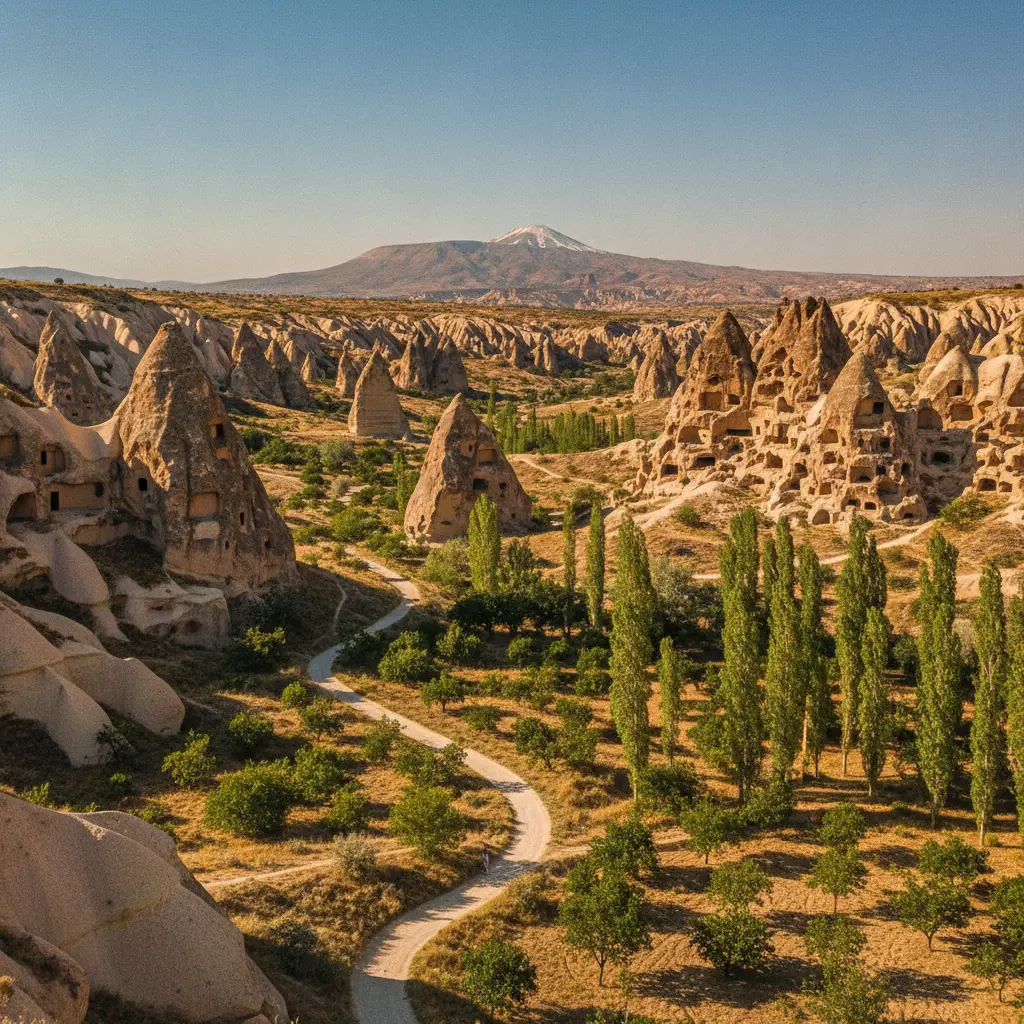
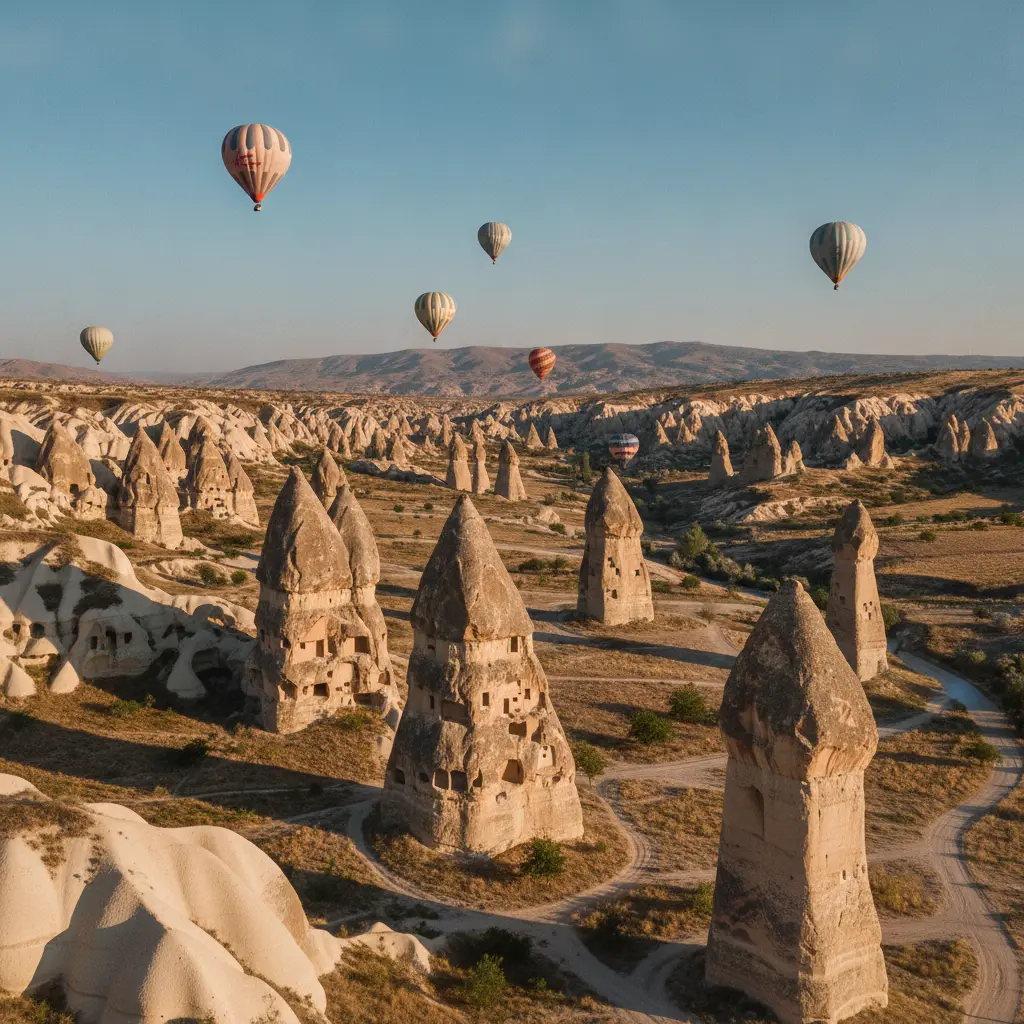
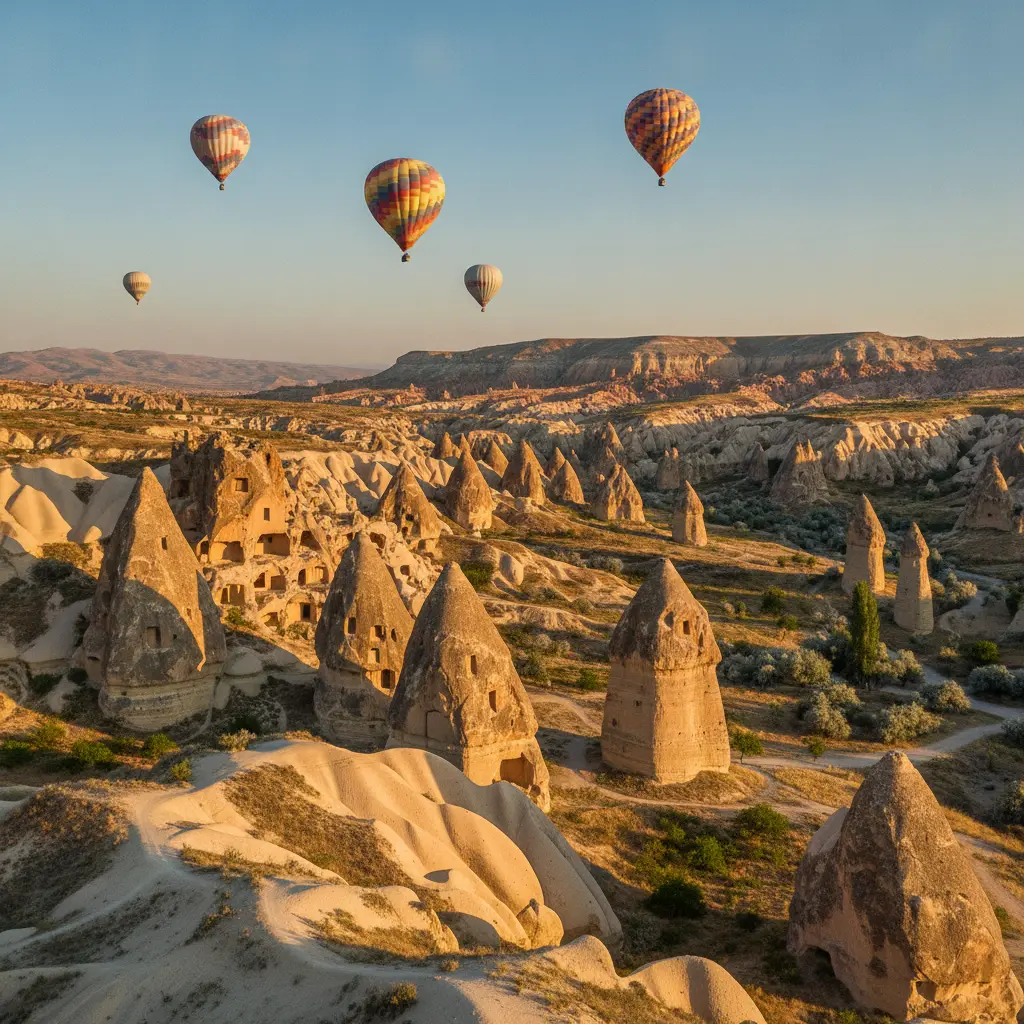
You meet in the hotel lobby before dawn for the optional balloon flight. It is priced separately and not part of the tour fee, so treat it as its own budget line. The add-on typically covers the transfer to the launch field, watching the balloons inflate, roughly an hour in the air, a celebratory drink after landing and a certificate. Back at the hotel, the overland route begins: Ürgüp, the Asmalı Konak house, a wine factory visit, the Göreme Open Air Museum and an onyx workshop. On the way home the bus stops at the Hacı Bektaş-ı Veli tomb.
That third day is dense, and it explains why the “3 day” label deserves scrutiny. Walking the Göreme Open Air Museum, studying the frescoes in the rock-cut churches and still reaching Hacıbektaş the same day requires tight scheduling. If you join the balloon flight, your morning begins around 04:00-05:00 and you will be on your feet until evening. This is a programme, not a holiday.
Head to head with a standard 3-day Cappadocia tour
Same duration, same departure city, similar price band. So where does the difference sit?
- How the days are split: A standard 3-day Cappadocia tour spreads two full days across different valleys, underground cities and panoramic viewpoints. This one gives an entire day to Konya. The trade-off is straightforward: fewer Cappadocia stops, more cultural depth.
- Thematic spine: A standard Cappadocia trip is built on landscape and geology. This one is built on faith, history and literature — Mevlana, Şems-i Tebriz, the Sema. If those names already mean something to you, you are getting two different experiences for the same money.
- Accommodation: Here you get one hotel night, one open buffet breakfast and one dinner. Standard Cappadocia packages usually include two nights and two breakfasts, because the first night is not spent on a bus.
- Pace and distance: Both are busy, but this route covers far more ground — Istanbul, Konya, Cappadocia and back. If you enjoy long drives, fine. If not, day one will test you.
- Season dependency: The Şeb-i Arus theme peaks in December. A standard Cappadocia tour can be bought almost any month of the year. So a flexible calendar raises this tour's value considerably, and a rigid one lowers it.
- Group size: Capacity runs up to 100 guests, so expect a large coach. Faith and culture-focused departures tend to attract a calmer crowd, but there is no guarantee of that.
In one line: the same budget buys you either more Cappadocia, or Cappadocia plus Konya. That is a question of priority, not of quality.
Timing: December versus spring versus summer
Season is the most concrete variable separating this tour from a standard Cappadocia trip, because Şeb-i Arus — the commemoration of Mevlana's passing — is marked in Konya every year in December.
December: peak meaning, demanding weather
During the Şeb-i Arus period Konya changes character. The city turns its attention to the commemoration, ceremonies take centre stage, and there is a genuine sense of occasion. The cost is climate: mornings in Konya and Cappadocia can hover near freezing and the wind bites. Balloon flights in Cappadocia are more frequently cancelled in winter due to wind, so treat the flight as a bonus rather than a certainty if you choose this window.
April-May and September-October: the most balanced months
These are the most comfortable weeks for walking the valleys, spending time in the open air museum and photographing the landscape. Temperatures are reasonable and the light is generous. The catch is thematic: outside December, the Konya leg becomes a straightforward cultural visit. A Sema ceremony may still be on the programme, but the anniversary atmosphere will not be there.
July-August: most reliable for balloons, hardest for walking
Long days and statistically better flying conditions make summer appealing for the balloon. On the other hand, crossing the Göreme Open Air Museum under midday heat is draining, and crowds peak. If you are travelling with young children or anyone heat-sensitive, put summer lower on the list.
A simple decision rule
If atmosphere leads, choose December. If comfort and photography lead, choose late spring or early autumn. If the balloon is the priority, choose summer. Want all three at once? Book outside December and accept the Konya leg as a cultural city visit rather than an anniversary pilgrimage.
Who should book this — and who should not
Read this as a filter, not a sales pitch.
- A good fit: You are interested in Mevlana and Seljuk history, you want to see a Sema ceremony at least once, and you are a working traveller trying to make a weekend count.
- A good fit: You live in Gebze, İzmit or Sakarya. The pick-up network means you do not have to reach Istanbul first.
- A good fit: You value an all-inclusive structure — guide, transport, one hotel night, one breakfast, one dinner, ceremony ticket and insurance are already in the price.
- Not for you: You want two full days of valley hikes, underground cities and landscape photography. That time does not exist in this itinerary.
- Not for you: An overnight coach followed by an immediate full-day programme will physically knock you out. Back or neck problems and poor sleep should push you towards a two-night alternative.
- Not for you: The balloon is your only real reason for going. Here it is an optional extra and weather-dependent.
Budget: what the 5,999 TRY actually covers
At 5,999 TRY per person, the price sits in a reasonable band for three days. But the real cost only becomes clear when you separate what is included from what is not.
Included
- One night in a hotel
- One open buffet breakfast at the hotel
- One dinner at the hotel, open buffet or set menu
- Transport in modern coaches, vehicle type depending on group size
- Sema ceremony ticket
- Guided visits to the sites listed in the programme
- Bottled water on board
- Compulsory travel insurance under Turkish Tourism Law 1618, plus platform assurance
Not included — add these to your budget
- Breakfast on day one (you will be on the road, so pack something)
- Dinner on the final day
- The Cappadocia balloon flight and any activity marked as an extra
- Personal spending
- Museum and archaeological site entrance fees
- The Museum Pass (Müze Kart)
The most useful practical tip here concerns the Museum Pass. Several stops on this route — Karatay, İnce Minare, the Mevlana complex, the Göreme Open Air Museum — are run by the Ministry of Culture and Tourism, and the pass can replace individual entrance fees at those sites, often saving a meaningful amount across the trip. Check the current price and coverage before you book, and remember it does not apply at municipal or privately operated sites.
The balloon flight: do not leave it to the last morning
The balloon is the most talked-about and least guaranteed part of the programme. Three things are worth knowing in advance. First, flights depend on weather; if wind exceeds the limit, they are cancelled. That is a safety standard, not a service failure. Second, capacity is finite, and last-minute requests during busy periods often go unanswered. Third, a 04:00-05:00 start combined with a full day of sightseeing is genuinely tiring.
So: if the balloon is non-negotiable for you, book it at the same time as the tour and ask in writing what happens if the flight is cancelled. If it is a nice-to-have, a slow breakfast at the hotel on day three is a perfectly good alternative.
Practical preparation
- Pack layers. Mornings and evenings in Konya and Cappadocia differ sharply from midday.
- Bring comfortable shoes with decent grip; the ground at the Göreme Open Air Museum is uneven.
- Carry a large water bottle. Hydration is the first thing people forget after a night bus.
- A neck pillow and a thin blanket make the overnight leg far more bearable.
- Bring a power bank; hunting for sockets for three days wastes time.
- Sort out your Museum Pass before departure.
- Keep some cash — card machines in small shops are not always reliable.
- For the ceremony and tomb visits, pack a layer that covers your shoulders.
Frequently asked questions
Is this better than a standard Cappadocia tour?
Not better — different. If Cappadocia is the centre of gravity, the standard package is more efficient. If you want to fit Konya and the Sema into the same weekend, this one earns its place.
How many nights am I in a hotel?
One. The first night is on the coach, the second is in a regional hotel, and you travel home on day three.
Is it suitable for solo travellers?
Yes, as a guided group tour it works well for solo guests. If you want a single room, ask about the supplement at the time of booking.
Why are museum entries excluded?
It is standard practice on Turkish cultural tours, since entrance fees change periodically. The Museum Pass offsets most of it.
Can I bring children?
The programme is dense and includes an overnight drive. For younger children, a slower two-night alternative is a better fit.
How does it compare with a single-day cultural tour?
Day trips exist for people who want no overnight stay at all. For example, the Cumalıkızık, Gölyazı, Mudanya and Trilye day tour from Istanbul is a practical short escape. But Konya and Cappadocia cannot be compressed into one day; two full days is the realistic minimum.
Verdict
Three sentences. One: if Mevlana, Seljuk heritage and the Sema ceremony are the reason you are travelling — not a bonus — book this tour. Two: if you want two mornings of walking between fairy chimneys and valley after valley, choose a standard Cappadocia package instead. Three: if your dates land in December the whole thing gains meaning; if you book for April or May, frame it as a cultural tour and you will not be disappointed.
To see the full day-by-day programme, the included services and current availability, view the 3-day Konya Şeb-i Arus and Cappadocia tour on Turlago — and pick your departure point carefully. Whether your trip begins at 21:00 in Yenibosna or 22:00 in Kadıköy shapes your first day far more than you would expect.