Antalya Airport to Hotel Transfer: Booking Checklist
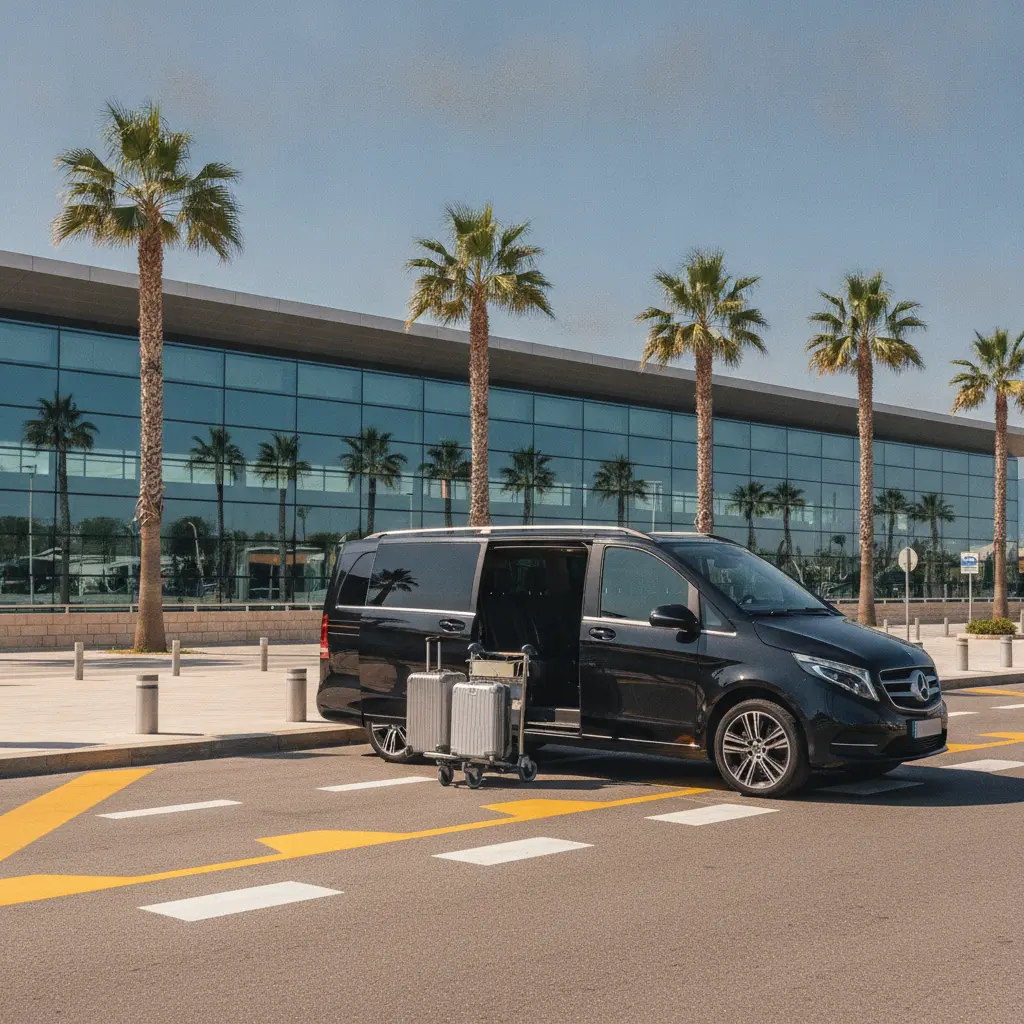
The twenty minutes after landing in Antalya tend to follow the same script for most travellers: wait at the belt, push through the crowd, check how far the taxi line stretches, and quietly wonder whether the fare you were just quoted is fair. This guide exists to remove that twenty minutes entirely. We treat the airport-to-hotel leg as part of the trip itself — something to be planned with the same care as the flight — and lay it out as a sequence of checklists you can tick off before booking, during booking, and on arrival day. Keep your own reservation open beside you as you read; most of what follows is a yes/no you can answer in seconds. If you already know you want a fixed-price vehicle waiting with a name board, you can browse VIP car rental options and use the comparison below to confirm the decision.
Six details to collect before you open a booking form
A transfer booking is a data-collection exercise in disguise. With the following six items on hand, the form usually takes three minutes. Without them, you either book the wrong vehicle class or end up describing your hotel's address over the phone while standing in arrivals.
- Flight number and scheduled landing time. Copy them exactly as printed. The flight number lets the operator track your aircraft live and shift the pickup automatically when you are delayed. "We land in the early afternoon" does not achieve that.
- Passenger count and children's ages. Ages matter because an infant under three may need a carry seat rather than a booster, and child seats are often free but only if requested at the time of booking.
- Luggage count and the size of the largest piece. "Two suitcases" tells nobody anything. Two 28-inch hard-shells occupy a very different footprint than two cabin bags. Add prams, ski bags, golf bags or surfboards as separate items.
- Hotel name plus full address. Name alone is not enough. Antalya has hotel brands with properties in several districts, and the distance between a Belek branch and a Kundu branch of the same name is roughly forty kilometres.
- Terminal. Domestic and international arrivals exit at different points, and the driver's waiting position depends on which one you name.
- A phone number that will be live on arrival. A number that receives WhatsApp is usually the most practical channel for international visitors, since roaming calls can be hit and miss.
Write these six items into a single note on your phone. The same note will serve you again when you arrange the return leg.
Which transfer type actually fits you? Four honest comparisons
There are four common ways to get from Antalya airport to your hotel, and none of them is best for everyone. The comparison below is built around real use cases rather than marketing claims.
Private transfer
The vehicle is assigned to your group alone, you are met at the exit, and you drive to the hotel without stops. The price is locked at booking, so sitting in traffic does not change it. Families with young children, late-night arrivals, business travellers and anyone landing in a city for the first time get the most value here. The trade-off is cost per person: it looks expensive for a solo traveller, but the gap narrows fast once the group reaches three or four.
Shared shuttle
You share a vehicle with passengers heading in the same direction, and the per-person price drops. What you pay instead is time: other guests' hotel drop-offs, queueing to board, and waiting for the vehicle to fill can easily double the journey. It makes sense for short hops such as Lara or Kundu when you have no schedule to keep. It is riskier on the return leg, because shared shuttles often collect you three to four hours before departure.
Airport taxi
The most flexible option: no booking, no waiting, straight out of the rank. The price, however, follows the meter and the traffic, and on long routes to Side, Alanya or Kaş it becomes genuinely unpredictable. Large groups with bulky luggage may also find that one car is not enough. For short distances, late at night, travelling alone, it remains a perfectly reasonable choice.
Car rental
If you plan to drive during your holiday, collecting at the airport makes sense — but you pay for it on day one with fatigue, parking searches and unfamiliar roads. For a two- or three-night stay, rental usually costs more than a transfer once fuel and parking are counted.
- One or two people, short distance, night arrival: taxi or private transfer.
- Three to five people, first visit, unfamiliar city: private transfer.
- Budget first, flexible timing, medium distance: shared shuttle.
- A week or longer, plans to explore the region: car rental.
Seven variables that set the price
The difference between a quote for two passengers and a quote for a family of six is not explained by headcount alone. When you read a price tag, mentally separate these seven items:
- Distance and district. The single largest factor. Lara, Kundu and the city centre sit in the short-distance bracket; Belek, Kadriye and Side are mid-range; Kemer, Kaş and Alanya are long-haul.
- Vehicle class. An economy sedan, an estate with a large boot, a six-to-eight-seat minivan and a premium VIP vehicle are priced differently on the same route. Once you pass four passengers, moving up a class stops being optional.
- Season and date. July, August, public holidays and the New Year period push demand up across the fleet. A November price for a route is never identical to an August price.
- Time of day. Arrivals between midnight and 06:00 may carry a night supplement, usually shown as a separate line at checkout.
- Meeting style. A meet-and-greet with a name board inside the terminal and help with luggage is included by some operators and charged as an extra by others.
- Waiting time. The free waiting window for flight delays is typically 45 to 60 minutes; beyond that, an hourly charge applies.
- Return-trip bundling. Round-trip rates can beat two one-way bookings, but only if your return pickup time is planned properly.
Do not compare single numbers. Ask for the inclusions list: luggage assistance, waiting allowance, motorway tolls, parking, child seat, extra stops. That is where the surprises live.
How the meeting point works at Antalya airport
Most transfer complaints are not about the vehicle. They are about failing to find each other. Domestic and international passengers exit through different doors. International arrivals clear passport control and baggage reclaim and emerge into a hall where dozens of name boards are raised at once. Your driver normally stands at the barrier directly opposite the exit, holding a card with your name.
Three habits make this painless. First, save a screenshot of the confirmed meeting point before you fly, so you are not hunting for airport Wi-Fi. Second, message the driver the moment you land — a short "landed, waiting for bags" is enough. Third, if your luggage is delayed, tell them on the same number; good operators adjust their team's waiting time accordingly.
Some services operate curbside, meaning the car waits at the kerb outside and you walk to it. That model is cheaper but requires wheeling bags through a busy forecourt. If you are travelling with children or older relatives, ask for meet-and-greet explicitly rather than assuming it.
A twelve-point checklist for filling in the booking form
Run through this list before you hit confirm. Most of it is one line of data, but a single missing item tends to become a problem on arrival day.
- Flight number, airline and landing time entered correctly?
- Date format unambiguous? (day/month order catches many international bookings)
- Passenger count split into adults and children?
- Luggage count and largest item noted?
- Child or infant seat requested if needed?
- Hotel name, district and full address complete?
- Arrival terminal stated?
- Meeting style specified — name board or curbside?
- Inclusions written down in the confirmation?
- Free waiting allowance in minutes?
- Cancellation and refund terms read?
- Time window for receiving the driver's contact details confirmed?
Payment, cancellation and refund: five clauses worth reading
Transfer contracts are short, but a few lines carry real weight. Check these before you pay:
- Deposit ratio. Are you paying in full or just a deposit? Is the balance settled in cash or by card to the driver? Not every vehicle carries a card terminal.
- Cancellation window. Whether refunds apply at 24, 48 or 72 hours before pickup, and what happens inside the final 24 hours.
- No-show definition. If your flight lands but you are not at the meeting point within the stated time, what follows? Read this alongside the delay clause, not separately.
- Flight cancellation. If the airline cancels outright, is the transfer refunded or converted into a date change?
- Vehicle guarantee. Is the class guaranteed, or does the wording say "similar or higher class"?
If any of these five is missing from the confirmation email, ask in writing before booking. A written answer now prevents an argument later.
What happens when your flight is delayed
Delays are the most common disruption in transfer operations, and the good news is that the handling is largely standardised. Operators track your flight using the number you supplied, so when the landing time moves, the pickup moves with it. You do not need to do anything special — though a short message after landing speeds things along.
The detail worth checking is how the free waiting window is calculated. Some providers define it as "60 minutes from the scheduled landing time"; others say "60 minutes from the actual landing time". The second is better for you. Factor in a long baggage queue, passport control and the walk through a large terminal, and the first definition can shrink to a real-world window of about half an hour.
If your flight is cancelled or diverted to another airport, notify the operator in writing immediately. Reputable companies refund without penalty in that scenario, but whether that is contractually guaranteed is something you can check in advance — and should.
Luggage, capacity and special equipment
Vehicle capacity looks generous on paper and shrinks once luggage appears. A practical rule: four adults with four large suitcases will not fit a sedan; book a minivan. A folding pram goes in the boot, a full-size one becomes a space claim of its own.
- Skis or snowboards: need a roof rack or a minivan; winter traffic toward Saklıkent exists even on the Mediterranean coast.
- Golf bags: common on the Belek corridor. Two golf bags mean a large boot, not a compact car.
- Dive gear and surfboards: frequent on the Kaş and Çıralı routes. Anything longer than about 180 cm should be declared separately.
- Bicycles: not carried in standard transfer vehicles; they require a rack and a separate quote.
Rather than filling the last seat, move up a vehicle class. The journey is more comfortable, luggage is not crushed, and the price difference is usually smaller than the cost of a mid-trip problem.
Arrival day, step by step: from touchdown to hotel in an hour
If everything is arranged in advance, arrival day runs on rails. Follow this sequence and you remove the need to make decisions inside the terminal.
- Before landing: switch off airplane mode and have the driver's number ready.
- On touchdown: send the short message: "Landed, waiting for bags."
- Passport and baggage: queues at international arrivals can be long. Nobody can shorten that for you, but advance notice means your team waits.
- Confirm your bags: do not head for the exit until you have eyes on your suitcase.
- Exit doors: stay inside the arrivals hall until you spot the board; the hall is the safest meeting point.
- Verify identity: confirm the driver's name and plate; your booking number is enough to close the loop.
- Loading: count your bags as they go in.
- The drive: ask for an estimated arrival time so you can alert the hotel reception.
Planning the return leg backwards
The outbound transfer is easy. The return is where planning skill matters. The rule is short: aim to be at the airport at least two hours before departure for domestic flights and three hours for international ones. Then add the drive time and a traffic buffer to work out when to leave the hotel.
The formula: Hotel departure = departure time − 3 hours (international) − drive time − 30 minutes buffer. For a 22:00 international departure from Belek, subtract roughly 45 minutes of driving and the buffer, and you are leaving the hotel around 17:45 to 18:00. Doing this arithmetic at the time of booking is what prevents a stressful last day.
Antalya traffic has two blind spots: the morning urban peak between 08:00 and 09:30, and the coastal strip between 17:00 and 19:00. If roadworks appear on the airport approach, increase the buffer. And if you choose a shared shuttle for the return, remember that operators collect you significantly earlier — which may mean giving up breakfast.
Approximate transfer times by district
The figures below are averages under normal traffic, measured from the airport. Your hotel's exact position, the final side streets and seasonal congestion will move them; treat the estimate on your confirmation as the authoritative number.
- Lara and Kundu: roughly 15-25 minutes. The closest resort belt to the airport.
- Antalya city centre (Kaleiçi, Konyaaltı): roughly 25-35 minutes.
- Belek and Kadriye: roughly 40-55 minutes. Heavy golf and conference traffic.
- Side and Manavgat: roughly 60-80 minutes.
- Kemer and Beldibi: roughly 60-75 minutes, partly along mountain foothills.
- Alanya: roughly 2 to 2.5 hours, closer to the upper end in daytime traffic.
- Kaş and Kalkan: roughly 3 to 3.5 hours; priced as long-distance transfers.
- Olympos and Çıralı: roughly 1.5 to 2 hours, with narrow road on the final stretch.
On long-distance transfers, a rest stop may be needed. Ask at booking whether a break is included in the quoted price, so it does not become a negotiation at a service station.
Eight mistakes that come up again and again
- Rounding the flight time. "Around 14:00" breaks the pickup plan. Use the printed time.
- Incomplete hotel address. Same-name properties exist in different districts.
- Not declaring luggage. Extra bags discovered on the day force a class upgrade and a price change.
- Leaving the return leg until the last day. Book both directions together.
- Not asking about the waiting allowance. Not knowing the free window is how surprise charges happen.
- Leaving payment method vague. The car may not accept cards; plan cash if needed.
- Requesting a child seat last minute. Seats are limited in number.
- Typing the contact number wrong. An unreachable number defeats the best plan.
Families, larger groups and passengers with reduced mobility
Travelling with children, clarify three things: the seat type (infant seat or booster), whether it will be physically in the vehicle, and whether it carries an extra charge. Then size the vehicle generously — a family of four, a pram and three suitcases is minivan territory, not sedan territory.
For groups, one minivan or minibus usually beats two cars on both cost and coordination: nobody gets separated, and everyone arrives at the same time. Above ten passengers, recalculate luggage separately, because boot space falls away quickly as seat count rises.
Passengers using a wheelchair or with reduced mobility should request a ramp-equipped vehicle at the time of booking; such vehicles are limited in number and last-minute requests often cannot be met. Choosing meet-and-greet also shortens the walk from the exit, which matters when luggage and mobility are both concerns.
Frequently asked questions
Does the price go up if we sit in traffic?
On a private transfer, no. The fare is fixed and traffic does not change it — only extra stops you request might. On a metered taxi, the opposite is true.
Do I pay extra if my flight is three hours late?
Usually not, provided you supplied the flight number and the operator is tracking it. Still, confirm in writing how the free waiting window is defined before you book.
What if my luggage does not arrive?
Tell the driver and ask them to wait while you file the lost-baggage report. The waiting allowance may be exceeded, so knowing the extra-charge policy in advance helps.
Can I change hotels after booking?
Generally yes, especially within the same district. A move to a different district changes the distance and may change the price.
Are late-night arrivals hard to arrange?
Antalya receives plenty of night flights, so private transfer operators work around the clock, though a night supplement may apply. Shared shuttles run fewer night departures.
How will the driver find me?
By the name board and your booking number. Print the name clearly and readable, and use the plate number as a second confirmation during busy periods.
The final check, 48 hours before departure
A well-planned transfer calms the first and last hours of a holiday. Compressed onto one page, the whole guide comes down to three moves: collect the six details before booking, get the inclusions and cancellation terms in writing at booking, and calculate your return pickup backwards from the departure time.
Forty-eight hours before you fly, run the short check: is the flight number and time still correct, is the hotel address right, have passenger and luggage numbers changed, is the child seat confirmed, do you hold the driver's contact details, and have you worked out the return timing? Six yeses and the only thing left to do at the airport is find your name on a board.
If you would rather arrive to a fixed price and a confirmed pickup than to a taxi rank negotiation, take a look at the VIP car rental options and finish the planning on a single screen. On the Antalya corridor, a well-built transfer shapes the rest of the trip more than most travellers expect.