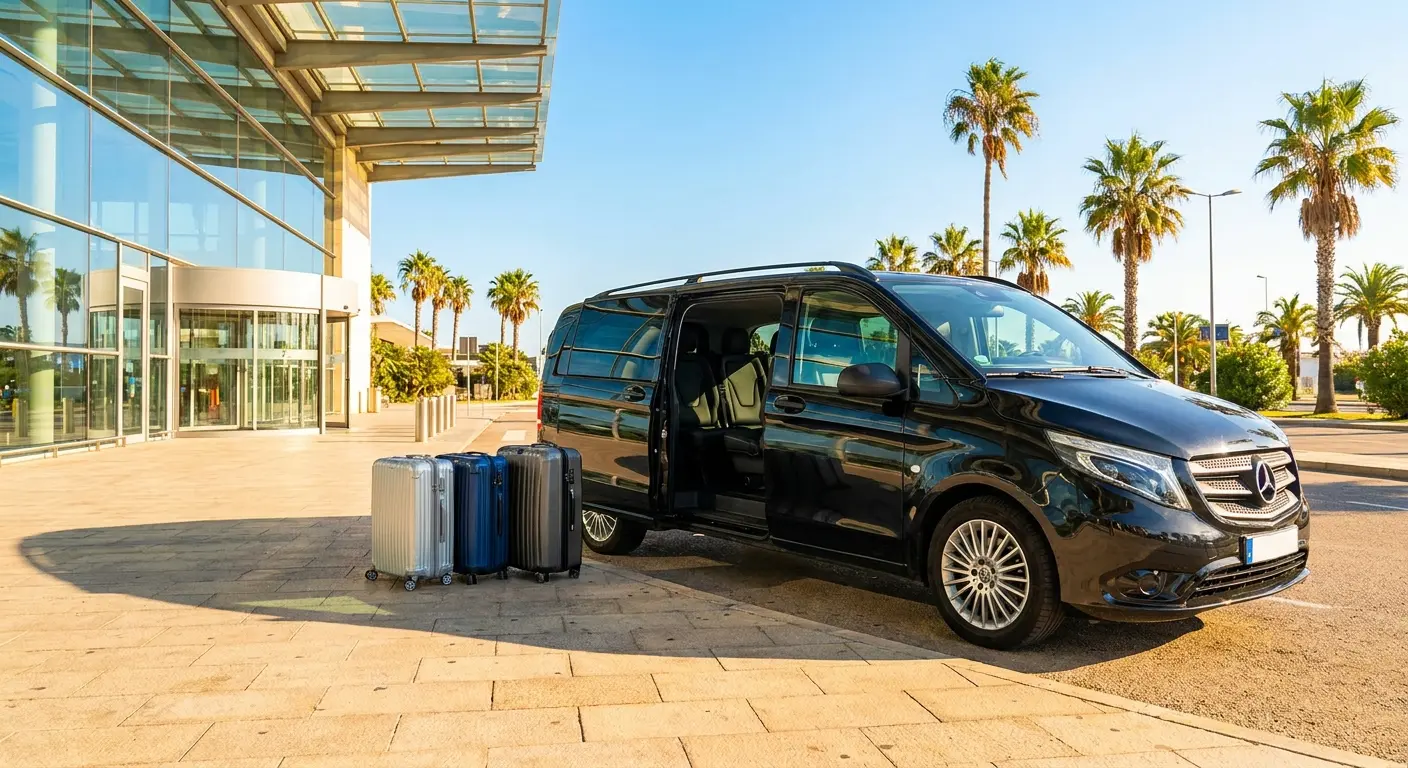
Private Transfer Route: Sabiha Gökçen Airport to Bostancı Pier
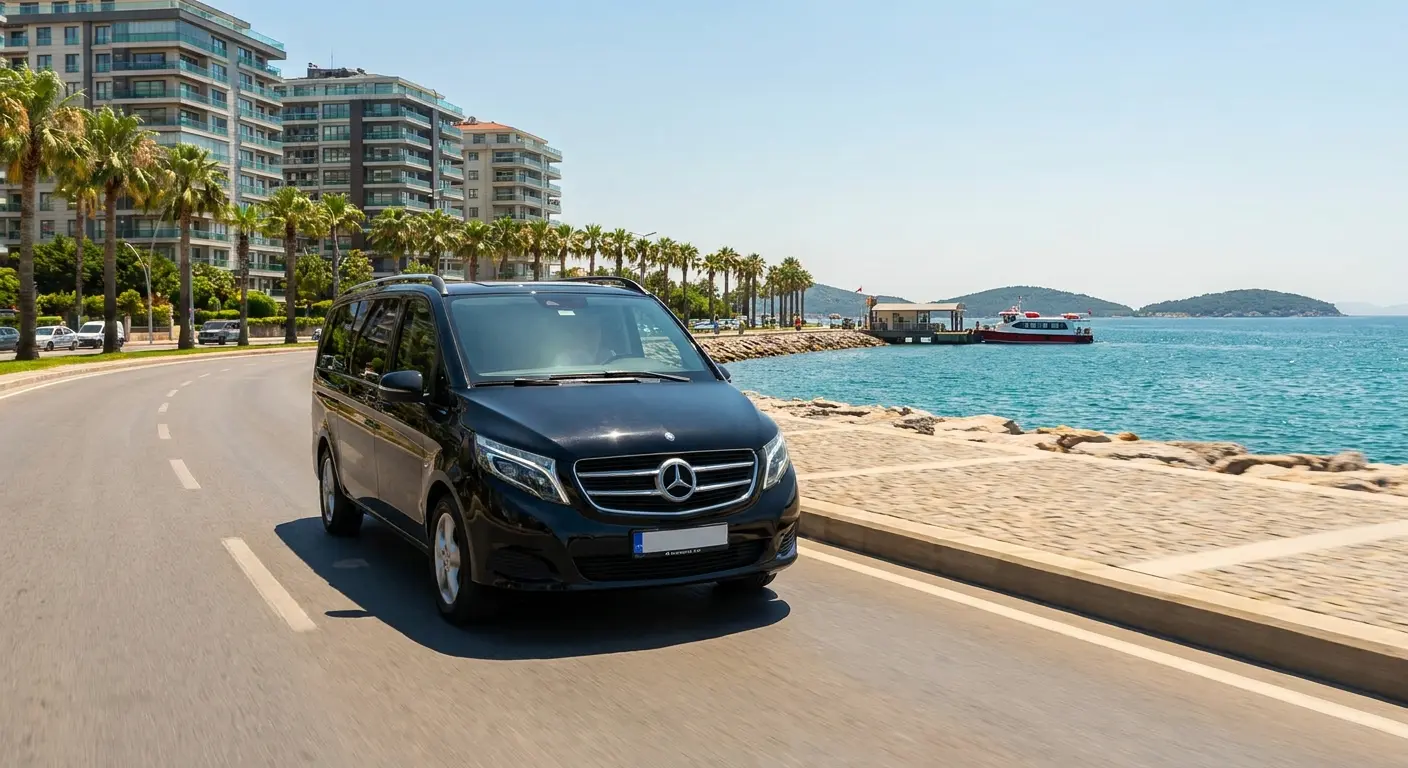
Your flight lands at Sabiha Gökçen at 07:40. The ferry to Büyükada leaves Bostancı at 09:30. Between those two facts sit roughly 32 kilometres of road, and depending on what Istanbul's traffic is doing that morning, that distance can take 35 minutes or it can take 95. This guide exists for exactly that calculation: a street-level, junction-by-junction look at the private transfer route from Sabiha Gökçen Airport to Bostancı Pier — which corridor to pick at which hour, what you pass on the way, and what waits for you at the quay.
If you would rather skip to the booking side, Turlago's VIP car hire options cover this entire corridor. But knowing the road first is the most reliable way to guarantee you leave at the right time.
Who actually uses this corridor? Three passenger profiles
The Sabiha Gökçen to Bostancı run is one of Istanbul's most-used and least-explained transfer corridors. It differs from the standard "airport to hotel" movement in one important way: it delivers people to a pier. Your destination is not a building — it is a departing ferry.
That single fact splits the passengers into three groups:
- The Princes' Islands traveller. Bostancı is one of the main departure points for ferries to Büyükada, Heybeliada, Burgazada and Kınalıada. On a summer Saturday morning the quay gets genuinely busy. For this passenger, comfort is secondary — catching the sailing is everything.
- The business arrival. Bostancı sits at the eastern edge of Kadıköy district and is the closest coastal point to the Bağdat Avenue strip, Suadiye, Caddebostan, Ataşehir and the office towers around Kozyatağı. This is the most common drop-off for people landing on a morning flight and heading straight to a midday meeting.
- The connector. Travellers moving onward from Bostancı to Kadıköy, to Kabataş, or across to the European side via the Marmaray line. For this group, the number of suitcases and whether they can physically be moved between platforms often matters more than the route itself.
All three have one thing in common: none of them booked a transfer to admire the view. Which is precisely why route choice matters — the right call saves one passenger twenty minutes, and saves another an entire ferry.
Distance and duration: how far is Sabiha Gökçen from Bostancı Pier, really?
As the crow flies, it is about 27 kilometres. But there is no direct road between the Marmara shoreline and the airport, so the driving distance shifts depending on which corridor you take:
- Via the O-4 Anatolian Motorway: roughly 33–35 km
- Via the coastal road (Pendik – Kartal – Maltepe): roughly 30–32 km
- Via the D-100 (E-5): roughly 31–33 km
Note the trap here: the shortest distance is not the fastest route. The coastal road looks shorter on paper, but traffic lights, pedestrian crossings, beach car park entrances and summer seaside congestion can make it slower than the motorway. The motorway is three or four kilometres longer yet usually quicker because it flows without interruption.
Realistic expectations by time of day
The ranges below reflect typical private transfer driving times on ordinary weekdays. During public holidays, religious holidays and school opening weeks, add 30–40% on top.
- 05:00 – 07:00: 30–38 minutes. The most predictable window of the day, and the only sensible option for an early ferry.
- 07:00 – 09:30: 45–70 minutes. The school-and-office peak; the D-100 and the coast road both seize up.
- 09:30 – 16:00: 35–50 minutes. The most balanced stretch, especially between 10:00 and 14:00.
- 16:00 – 20:00: 60–95 minutes. The evening peak. Nothing except the motorway is reliable here.
- 20:00 – 24:00: 35–50 minutes. Once the evening rush clears, the coastal road becomes attractive again.
- 00:00 – 05:00: 25–35 minutes. Quickest of all, though a night tariff applies and the vehicle must be confirmed in advance.
The practical rule: work backwards from the ferry departure, not forwards from the landing time. Add 45 minutes to your landing time for baggage and arrivals, add the driving time for that hour, then add a 20-minute buffer. A 07:40 landing plus 45 minutes plus 60 minutes plus 20 minutes lands you at 09:45. You have missed the 09:30 sailing and should be looking at the next one. Doing this arithmetic before you book is far cheaper than doing it in a panic at the terminal.
Three corridors, three personalities
There is no single correct road on this corridor. There are three main options and each suits a different passenger. Good private transfer planning means knowing all three — because agreeing the route in advance with your driver dramatically reduces the chance of an unpleasant surprise.
1. The motorway corridor (O-4 Anatolian Motorway): the predictable choice
From the airport exit you join the O-4 heading west and follow it to the Kozyatağı exit, then descend towards Bostancı via the connecting roads. Its character is simple: continuous flow, very few traffic lights, minimal pedestrian interference.
Choose it when:
- Your flight lands between 07:00–09:30 or 16:00–20:00 — the hours when the city locks up
- You have less than 45 minutes to reach the ferry
- You are carrying a lot of luggage — fewer stops and starts means the boot stays organised
- It is a winter morning when fog or frost can reduce visibility on the coast road
The downside is the view: green buffers, industrial zones, motorway fencing. But if the goal is making the island ferry, the view ranks last.
2. The coastal road (Pendik – Kartal – Maltepe): scenic but variable
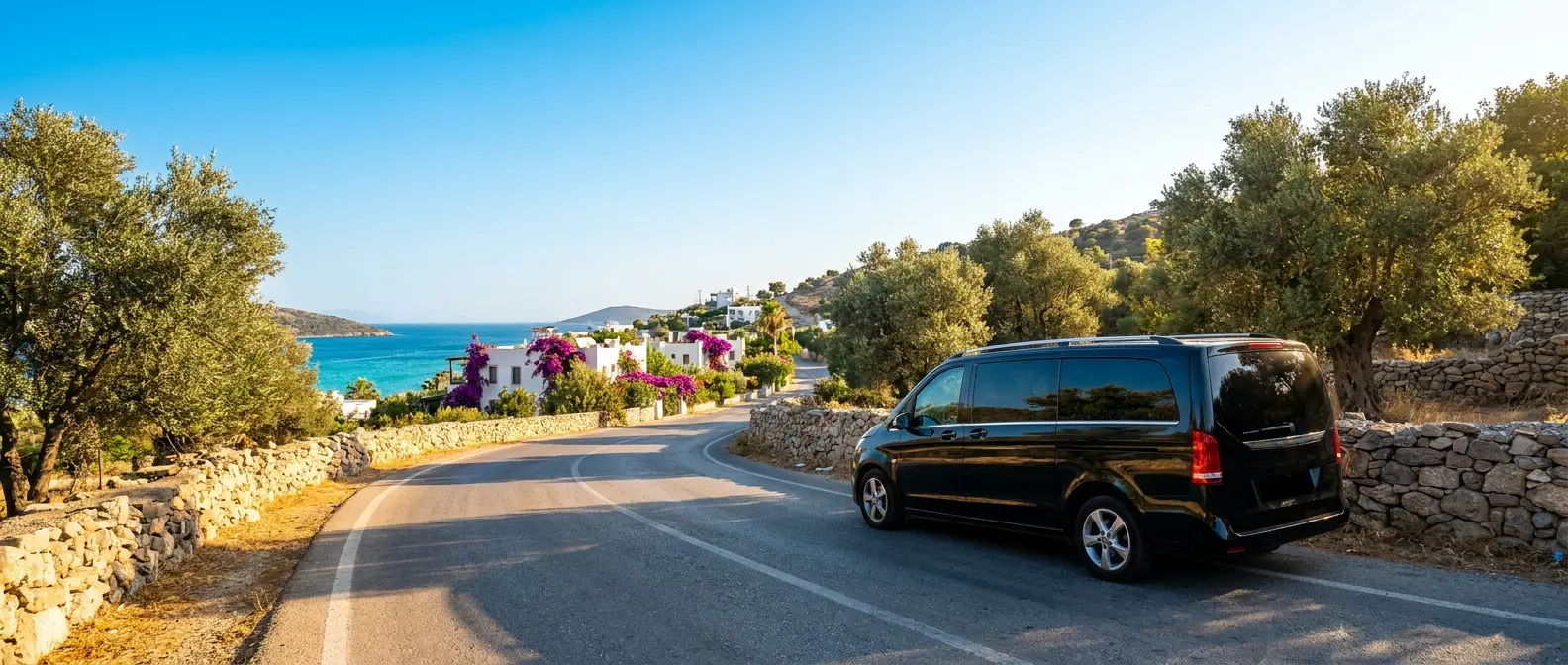
Dropping down from Kurtköy to the Pendik shoreline and continuing through Kartal, Cevizli, Maltepe, İdealtepe and Süadiye to Bostancı, this route traces the entire Anatolian shoreline. The sea stays on your right the whole way.
When it makes sense:
- After 09:30 in the morning or after 20:00 in the evening, once coastal traffic has cleared
- If you have had a long wait at the airport and want to actually see a bit of Istanbul
- When travelling with children — stopping to breathe is far easier on the seafront than on a motorway
- If you are staying in Kartal, Maltepe or Suadiye rather than Bostancı, in which case this is your natural route anyway
When to avoid it: weekday 17:00–19:30, summer Saturday afternoons, and any sunny weekend when the coastal parks are full. At those times the coast road can take twice as long as the motorway.
3. The D-100 (E-5) city route: the middle path
From Kurtköy to the Pendik junction, then via the Kartal and Maltepe exits down to Bostancı, this corridor tries to combine motorway speed with coastal proximity. Its weakness is inconsistency — a road that flows at 07:00 can be stationary by 08:15.
Where the D-100 genuinely earns its place is as a live alternative. If there is an incident or roadworks on the motorway connection, this is what lets your driver switch instantly. That is the concrete, practical value of travelling with an experienced transfer driver: selecting the route from live traffic data rather than from memory.
Which one? A one-line decision guide
Less than 60 minutes to the ferry, take the motorway. More than 90 minutes and it is 10:00–16:00 or after 20:00, take the coastal road. Somewhere in between, plan for D-100 and trust your driver's live traffic picture. Best of all, settle this at booking time rather than at the airport exit.
What you pass along the way: local landmarks
The least-told part of this corridor is the sequence of neighbourhoods along it. Knowing them gives you a sense of where you are and how much road remains.
- Kurtköy. The first settlement outside the airport perimeter, now largely converted into residences and office blocks. Traffic on this first five kilometres almost never jams; the real decision point comes after it.
- Şeyhli and the Pendik flyovers. Effectively where the motorway-versus-coast decision becomes physical reality. The conversation with your driver needs to have happened before this point.
- Pendik shoreline and marina area. The first breathing space if you took the coastal route — a small yacht harbour, cafés and a waterfront strip that is notably calm in the early morning.
- Kartal. The busiest stretch of the shoreline band. Kartal's centre and seafront run parallel to the D-100, and traffic constantly swaps between the two.
- Cevizli and Maltepe. Maltepe's large waterfront city park makes this the most open section of the coastal route. It is also where weekend crowds begin in summer — which means expect slowdowns on a Saturday afternoon.
- İdealtepe and Süadiye. Your signal that Bostancı is close. The side streets running up to Bağdat Avenue start here; density rises but distance is short.
- Bostancı. The last stop on the shoreline before Kadıköy proper, where the pier, the railway station and the seafront all meet in one place.
The practical payoff of knowing these markers is that you can estimate remaining time without asking. If you have just cleared Maltepe at 09:00, you have roughly 20–25 minutes to the quay.
Arriving at Bostancı Pier: boarding points and connections
The pier area is not a single point but a small transport hub where several functions overlap. Knowing the distance between where you are dropped and where you need to board prevents a lot of dragging suitcases at speed.
Bostancı has three mobility axes:
- The ferry quays. Island services and the city lines towards the Bosphorus and the historic peninsula both depart from this area. In summer, ticket queues for island sailings can form; if contactless card entry is available, you skip the queue entirely.
- The Marmaray station. Bostancı is a significant stop on the Marmaray cross-city line, within walking distance of the quay. If you are heading to the European side or towards Üsküdar, this is the fastest option — though stairs and ticket gates with large suitcases can be genuinely tiresome.
- The coast road and avenue connections. Taxis, minibuses and bus routes pass through the pier area, and Bağdat Avenue is a short taxi ride uphill.
One practical note worth repeating: if your private transfer is dropping you at the pier, agree the exact drop-off point with your driver in advance. Stopping points on the coast road are limited, and at busy times "I can't stop here" is a real scenario. In a well-planned transfer, this detail is already in the booking notes.
Booking a private transfer: a step-by-step sequence
The order below is designed to remove surprises at the arrivals exit. Skipping steps typically turns ten minutes of comfort into forty minutes of trouble.
- Enter the flight details correctly. Flight number, landing time and terminal. The flight number is the single key to delay tracking; without it, no transfer company can manage a delay automatically.
- Specify "Bostancı Pier", not just "Bostancı". Bostancı is a large neighbourhood; the pier, the railway station and the avenue are distinctly different points.
- State passenger and luggage numbers honestly. A cabin bag and a 32-kilogram suitcase do not occupy the same volume. Split luggage into large and small.
- Choose the vehicle class. For groups, work out seats and luggage together rather than separately.
- Get the meeting point in writing. Name-board greeting inside arrivals, or a specific door outside? In the crush of an arrivals hall, this detail changes everything.
- Ask about waiting time. How long is the free waiting window if the flight is delayed? What if the baggage is delayed? Get both answers in writing.
- Confirm the night tariff. Landings between midnight and 06:00 often carry a different rate. A surprise surcharge is the single most common transfer complaint.
- Get a fixed-price confirmation. Clarify whether time spent in traffic affects the fare. The entire point of a private transfer is that a worsening jam does not worsen the invoice.
- Save the contact channel. Have the driver's or the coordination desk's number to hand. One WhatsApp message can save you twenty minutes in a terminal.
- Add the ferry time to the booking notes. This is the most-skipped step of all. "I need to make the 09:30 island ferry" directly influences your driver's route choice and pace.
Flight delays, baggage and child seats: the practical scenarios
On paper everything runs to plan. At the airport, three things break: the flight time, the baggage delivery time and the number of passengers.
If the flight is delayed, a good operator tracks it and repositions the vehicle accordingly. That only works if the flight number was in the booking. Do your part too: send a quick message after landing, especially for delays beyond 60 minutes.
If the baggage is delayed, the biggest risk is the free waiting window expiring and a surcharge appearing. On international arrivals, baggage delivery can take 40 minutes. If your ferry time is tight, consider a fallback plan rather than waiting at the belt — a transfer vehicle cannot deliver your suitcase later, but missing the ferry collapses the whole itinerary.
If you are travelling with children, request the child seat at booking. Fitting one on the spot at the airport is not always possible, and the fleet may not carry the right size. State the age band clearly (0–1, 1–3, 3–6 years).
On the Marmaray alternative with luggage: Bostancı station at peak times is genuinely difficult with large suitcases. With more than two big bags, using the transfer vehicle all the way to the quay is far less stressful in practice.
Choosing the right vehicle class
The most common mistake on this corridor is choosing the car by headcount and forgetting the luggage. A rough guide:
- Sedan (1–3 passengers): comfortable up to three people with three large suitcases. Four people plus four large cases will feel tight.
- Large MPV / VIP minivan (4–6 passengers): the most popular class on this route, balancing boot space against seating comfort. For a family going from the airport to the pier, this is usually the most efficient choice.
- Minibus (7–14 passengers): for larger groups, wedding parties or friend groups heading to the islands. Cost per person is lowest in this class.
- VIP class: if you are heading straight to a meeting, or need to work during the drive. Wider seats, quiet and power outlets matter at that point.
A simple formula: if passengers + large suitcases + 1 exceeds five, think MPV rather than sedan. If it exceeds eight, think minibus.
What drives the price
On the Sabiha Gökçen to Bostancı Pier corridor, price is not a single number but a combination of variables. Knowing them strengthens your hand when comparing quotes:
- Distance and route: motorway toll sections can create a small difference.
- Vehicle class: the gap between a minibus and a sedan narrows considerably once divided per person.
- Time of day: night landings commonly carry a different rate.
- Waiting time: is free waiting included, and is it billed hourly once exceeded?
- Extra stops: dropping someone at a hotel en route, or a second address — surprises if not declared upfront.
- Season: summer and public holidays push prices up because demand rises.
When comparing, look at what is included rather than at a single figure. Meet-and-greet service, flight tracking, tolls and bridge crossings, waiting time and luggage allowance are what actually determine the real difference between two quotes.
Eight mistakes people keep making
- Writing only "Bostancı". The distance between the pier and the avenue is not a walkable one with luggage.
- Not giving the flight number. Delay management becomes impossible.
- Planning from the landing time. Ignoring baggage and arrivals time is the most common error of all.
- Not mentioning the ferry time. It prevents the driver from choosing the right route.
- Hiding luggage behind headcount. This is the only reason a sedan ever turns up for a group of five.
- Not asking about night rates. Learning about a surcharge at the airport sours the trip.
- Leaving the meeting point vague. Fifteen minutes hunting for a name board can mean a missed ferry.
- Underestimating a summer Saturday morning. Island sailings and coastal traffic peak at the same hour on the same day.
Alternatives: transfer, metro or shuttle?
Honestly, this corridor has several reasonable options. Which suits you depends on your luggage and your ferry time:
- M4 metro plus Marmaray: from the airport by metro towards Kadıköy, then Marmaray to Bostancı. The cheapest option by far. Drawbacks: multiple changes, stairs and ticket gates with luggage, and unpredictable total time. Sensible with one bag and plenty of time.
- Airport shuttle buses: routes towards Kadıköy can connect onward to Bostancı. Inexpensive, but departure times are fixed and may not match your sailing.
- Airport taxi: available at the kerb and flexible, but time spent in traffic shows up on the meter and you cannot guarantee an arrival time in advance.
- Private transfer: door to door, fixed price, flight tracking, vehicle class confirmed in advance. It looks more expensive, but with two or more passengers and two or more suitcases the per-person figure comes surprisingly close — and you gain a time guarantee on top.
The decision rule is simple: critical ferry time plus luggage means private transfer; plenty of time and a single bag means the metro. In every scenario in between, the comfort difference justifies the price difference.
Seasonal notes: how this corridor behaves through the year
- June to September: island demand peaks. Weekend mornings are crowded around the quay and the coastal road runs slow. Early weekday mornings are gold in this period.
- Religious holidays: intercity departure traffic hits both the motorway and the D-100. Add 40% to journey times on the days around them.
- October and November: the most predictable stretch of the year. Rain arrives, but traffic volumes fall and journey times shorten.
- December to February: morning fog can cut visibility on the coast road, making the motorway the safer pick. The wind at the quay is sharp in winter — do not underdress.
- April and May: ideal for the coastal route. Traffic is moderate by day and the scenery is at its best.
Frequently asked questions
How long does a private transfer from Sabiha Gökçen to Bostancı Pier take?
30–38 minutes outside peak hours; 60–95 minutes during them. For landings between 07:00–09:30 and 16:00–20:00, plan for the longer figure.
Will I make my ferry?
Take your landing time, add at least 45 minutes for baggage and arrivals, add the driving time for that hour, then add a 20-minute buffer. If that total does not fit before departure, plan around the next sailing.
Can the vehicle drive right up to the pier?
Access to the pier area is possible, but the drop-off point can shift at busy times. Confirm the exact spot with your driver in advance.
Are transfers available for late-night landings?
Yes, but advance booking is essential. A night tariff may apply and fewer vehicles are available than during the day.
Is the island ferry ticket included in the transfer package?
Usually not — the transfer covers ground transportation only. Buy the ferry ticket separately; contactless card entry at the quay is the quickest way through if available.
The bottom line: timing, not distance
On a map, the private transfer route from Sabiha Gökçen Airport to Bostancı Pier looks like a simple line: leave the airport, head west, drop down to the sea. The reality is that the difficulty here has nothing to do with distance and everything to do with which corridor you choose at which hour. The motorway, the coast road and the D-100 are three distinct characters heading for the same destination; the right call returns thirty minutes, and the wrong one costs you a ferry.
So make your next step a simple one: think about your flight number, your suitcase count and your ferry time together, then book around all three. To see the available vehicle classes and route options, take a look at Turlago's VIP car hire options and remove the uncertainty before you even board your flight. A good transfer makes the dullest part of the journey invisible — when you step onto that ferry at Bostancı, you should be thinking about the islands ahead, not about the half hour you spent at the airport.