Antalya Airport Transfer: A Step-by-Step Planning Guide
The wheels touch down, the seatbelt sign goes off, and somewhere between the baggage carousel and your hotel reception the holiday either starts smoothly or quietly falls apart. For most travellers landing at Antalya Airport, the single most consequential decision of arrival day is not which hotel they booked — it is how they get there. This guide treats that decision the way it deserves to be treated: as a short, repeatable checklist rather than a last-minute gamble. If you would rather see the live options side by side, you can compare Antalya airport transfer options on Turlago; what follows explains which option fits which trip, how the price is actually assembled, and what to ask before you pay.
Start With Distance, Not Price: What Each Resort Area Really Costs You in Time
Antalya Airport (AYT) sits at a single point on the map, but the region's holiday geography fans out in two directions. To the west lie Kemer, Beldibi and Göynük; to the east lie Belek, Side, Manavgat and Alanya. That split matters more than any price list, because a transfer that feels effortless at 35 km becomes a genuine endurance test at 130 km. The figures below assume normal traffic; in July and August, add 20–30 minutes on the eastern corridor, particularly between Side and Alanya.
- Antalya city centre / Kaleiçi: roughly 13–15 km, 20–25 minutes
- Lara: about 12 km, 20 minutes
- Konyaaltı: about 20 km, 30–35 minutes
- Belek / Kadriye: about 35–40 km, 35–45 minutes
- Kemer, including Beldibi and Göynük: about 45–60 km, 50–65 minutes
- Side / Manavgat: about 65–75 km, 65–80 minutes
- Alanya, including Avsallar and Konaklı: about 120–130 km, 110–130 minutes
- Kaş / Kalkan: about 190–220 km, 3–3.5 hours
Two practical conclusions follow. First, under about 40 km the comfort gap between a shared shuttle and a private car rarely justifies the price difference. Second, beyond 100 km — Alanya being the obvious case — trying to save money by stringing together public transport is a false economy. Dragging two suitcases through a transfer or two can turn a two-hour drive into a four-hour ordeal in 35-degree heat.
Four Ways Out of the Terminal — and Who Each One Actually Suits
"Airport transfer" is often used as if it describes one product. In reality there are four distinct options at Antalya, and the right choice depends on your luggage, your group size, your arrival hour and your budget.
1. Private / VIP Transfer: Met at the Door, Delivered to the Door
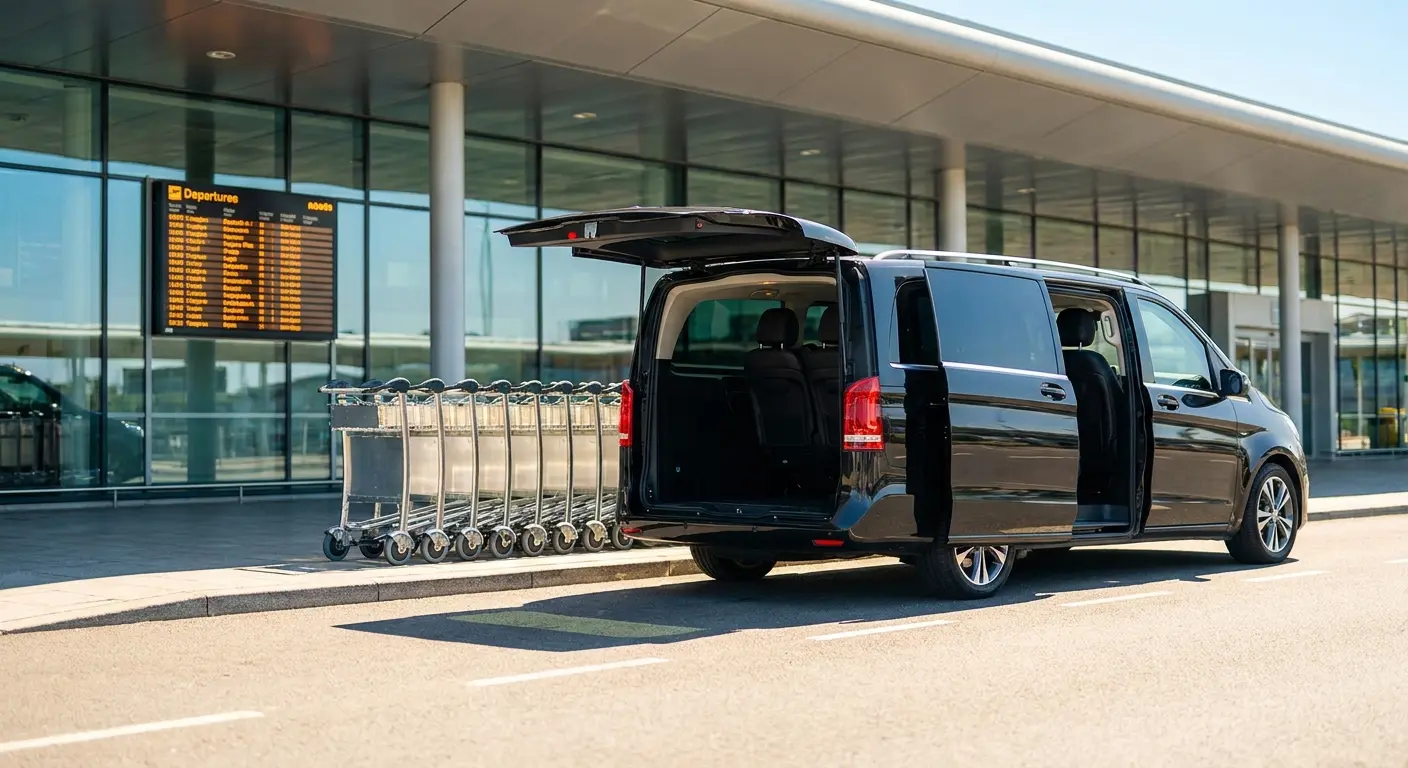
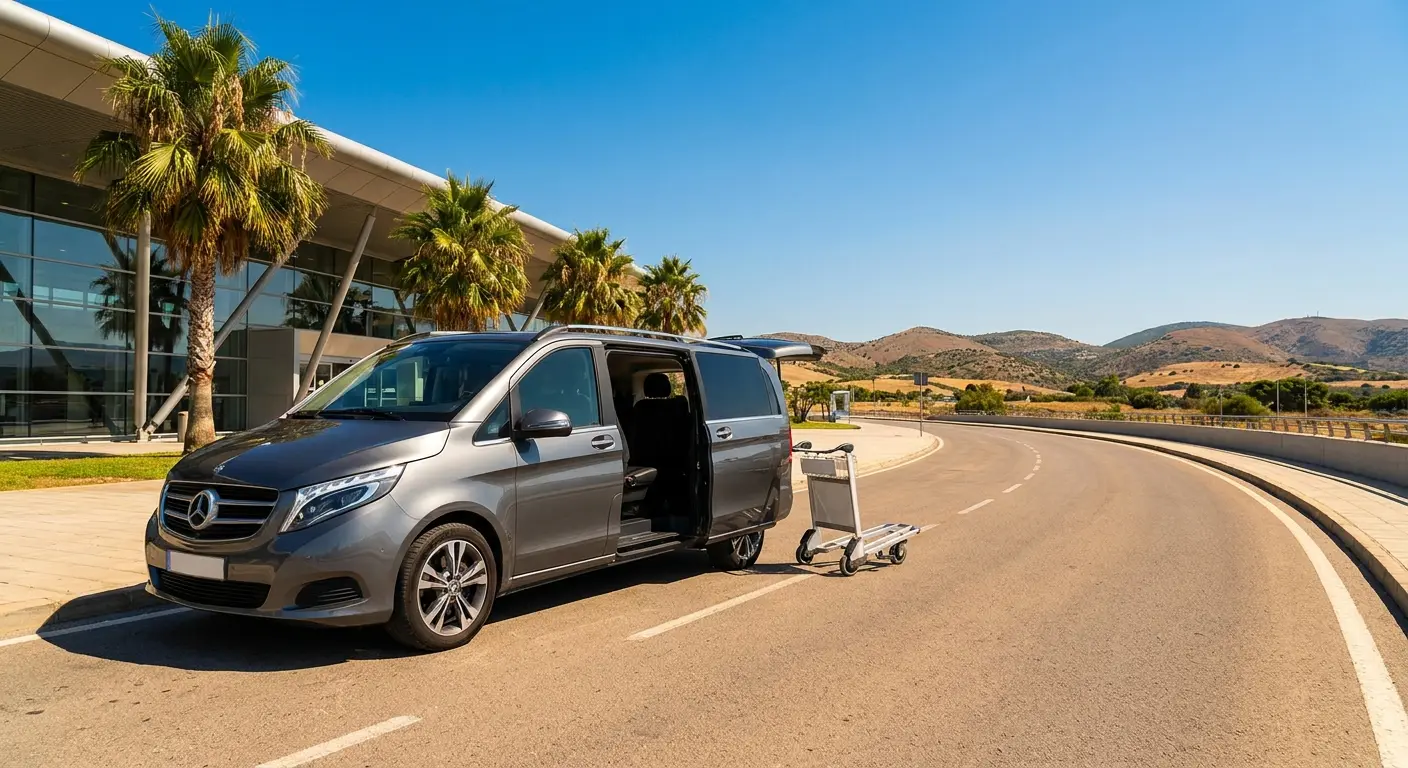
A driver tracks your flight, waits even if you are delayed, and meets you with a name board. The vehicle is yours alone, so there are no stops, no detours and no other hotel drop-offs. For a family of three or four, a couple arriving late at night, or anyone heading to Alanya, this is usually the sensible choice. Vehicle classes typically run from an economy sedan through a comfortable SUV to a six-to-eight-seat minivan; larger families should treat the minivan class as the default rather than an upgrade.
2. Shared Shuttle: Budget-Friendly, Patience Required
Passengers heading to the same area are grouped into one vehicle and charged per person. For solo travellers watching costs, it is the cheapest door-to-door option. The trade-off is twofold: you wait for the vehicle to fill, and you sit through other hotels' drop-offs. On the Lara or Belek corridor that might add 20–40 minutes. If you are the last stop on an Alanya run, the total journey can easily double. Late-night landings are a further complication, since shuttle frequency drops sharply after midnight.
3. Taxi: Immediately Available, Priced on the Day
There is always a taxi at the terminal kerb, and no booking is required. The downside is variability: luggage surcharges, night rates and route choices can all shift the final number. For short hops into the city centre, a taxi is genuinely convenient. For long-distance runs, a pre-agreed fixed transfer price is almost always the more predictable arrangement.
4. Public Buses and Airport Shuttle Services: Cheapest, Slowest
Bus routes and airport shuttle services reach the centre and some districts at the lowest possible cost, but they do not deliver you to a hotel door. The final kilometre is on you, usually with a taxi. With two large suitcases in unfamiliar heat, that last kilometre tends to consume the whole first afternoon. For a light-packing solo traveller arriving in daylight, it remains a perfectly reasonable choice.
How the Price Is Built: Bands, Inclusions and the Extras Nobody Mentions
Transfer pricing is not a single number; it is a bundle. Much of the gap between two quotes for the same route comes down to what one of them quietly leaves out. The bands below describe the general shape of the market rather than exact figures — final amounts depend on date, vehicle class and passenger count, and should always be confirmed at the time of booking.
- Antalya centre / Lara / Konyaaltı — private transfer: the lowest band; over such short distances the gap to a shared shuttle narrows considerably.
- Belek / Kemer — private transfer: mid band; it steps up noticeably once you move into the minivan class.
- Side / Manavgat — private transfer: upper-mid band; a late-night return leg can affect the quote.
- Alanya — private transfer: the highest band, rising roughly in line with distance, fuel and driver hours.
- Shared shuttle: charged per person, so it wins clearly for one or two travellers and roughly converges with a private car for a family of four.
When comparing quotes, ask these five questions: Are motorway and bridge tolls included? Is parking charged separately? Is waiting time free during a flight delay, and from what minute does it become billable? Is a child seat an extra? Is the price fixed, or does it change with traffic? The answers reveal the real difference between two offers far more reliably than the headline number. And do the arithmetic honestly: for a family of four, per-person shuttle pricing and a single private vehicle often end up within the price of a coffee of each other.
Booking in Seven Steps
The sequence below is deliberately ordered so that the items most often skipped — and most likely to cause problems — come first.
- Get the flight details right. Flight number, airline, landing time and terminal form the foundation of the booking. Without a flight number the driver cannot track you, and delay protection effectively disappears.
- Write the address, not just the resort. "A hotel in Belek" is not enough. Give the property name, the district and any gate number, and specify which entrance to use at large resorts — main building, villas section or a separate reception.
- Count people and count bags. Luggage volume determines vehicle class directly. Flag pushchairs, surfboards, golf bags or ski bags separately; they do not fit standard luggage maths.
- Choose the vehicle class. One to three passengers with two or three suitcases usually fits a sedan. Four to five needs an SUV or higher. Six or more needs a minivan. Choosing the correct class up front is always cheaper than upgrading at the kerb.
- Decide on the meet-and-greet style. Name board inside the terminal, or "the car is outside, we will call you"? For late-night arrivals and first-time visitors, the name board is a meaningful comfort upgrade rather than a gimmick.
- Read the payment and cancellation terms. Deposit, full prepayment, or cash in the vehicle? Note the cancellation window in hours and what happens if your airline cancels. If a refund is promised for airline cancellation, get it in writing.
- Save the contact channel. A WhatsApp line, an emergency number, and clarity on when driver details are shared. Being able to send a single location pin after landing saves real minutes in a crowded arrivals hall.
Once those seven steps are done, keep the confirmation somewhere accessible offline. Airport Wi-Fi is not guaranteed, and a screenshot takes five seconds.
Delays, Late Bags and Midnight Landings: How Waiting Rules Work
Waiting time is where transfer contracts are most often tested. The standard structure is this: the operator uses your actual landing time, not the scheduled one, and then grants a free waiting window — typically 45 to 60 minutes. On international arrivals, passport control and baggage reclaim push you toward the top of that range, so ask for it explicitly.
If your bags are delayed, message the driver before you join the queue at the lost-luggage desk. A well-run operator will extend the window; one that will not was worth asking about before you booked. If your flight is cancelled outright or moved to another day, rescheduling is normally free — confirm that in writing too.
Late-night arrivals deserve their own paragraph. Between roughly midnight and 05:00, shared shuttles become scarce, taxis thin out and prices firm up. For a flight landing in that window, a private transfer is effectively the only dependable option. It is also worth checking in advance whether your hotel offers 24-hour reception; some boutique properties need separate arrangements for a small-hours check-in.
Groups, Children and Bulky Luggage: What Changes the Vehicle You Need
Vehicle class is not decided by headcount alone. In practice, these items push you up a category:
- Child seats: legally required booster or infant seats are not universal fittings. Specify the child's age group at the time of booking.
- Pushchairs and wheelchairs: a folded pushchair fits a boot but eats volume; a wheelchair needs a wide boot and ramp assistance.
- Sports equipment: golf bags, dive cylinders and windsurf boards are not part of standard luggage allowance. Undeclared, they simply will not fit.
- Groups above eight: one minivan is not enough. You need two vehicles or a larger service vehicle, and booking through a single supplier keeps departures coordinated.
- Families arriving at night: after a long journey, skipping the transfer stage and going straight to the hotel is a genuine necessity, not a luxury.
Season Calendar: When Early Booking Stops Being Optional
Transfer demand in Antalya is not flat across the year. It lifts from mid-April, peaks in July and August plus public holiday weeks, and eases by late October. Knowing this rhythm affects both price and availability.
- High season (July–August): same-day availability is a real risk, especially for minivans. If you have booked your flight, lock in the transfer two to four weeks ahead.
- Public holidays and long weekends: domestic and international demand rise together. Prices follow, so if your schedule is flexible, favour morning landings.
- Shoulder season (May, September, October): the most balanced window — sea temperatures still work, prices stay reasonable and vehicles are easy to find.
- Low season (November–March): the cheapest period, but service frequency and vehicle availability drop in some areas. In Kemer and Side especially, fewer properties stay open through winter.
Eight Mistakes That Cost Travellers Money
- Omitting the flight number. The entire delay-protection mechanism depends on it.
- Giving a vague hotel name. Similar property names and sprawling resort campuses both lead to being dropped at the wrong entrance.
- Not counting luggage. A family of four with three large cases and a pushchair who booked a sedan will pay an upgrade fee at the kerb.
- Not asking what is included. Tolls, parking and extended waiting time can all appear on the final bill.
- Forgetting the return leg. Booking one-way and hoping to find something on the way back usually costs more.
- Miscalculating departure time. Confusing hotel check-out with flight departure is one of the most common causes of missed flights.
- Skipping the licensing check. Choose an operator with a valid transport licence and insured vehicles, not simply the cheapest quote.
- Losing the contact number. Being unable to reach anyone when something goes wrong at the airport is the least pleasant scenario of all.
Transfer or Rental Car? A Simple Decision Path
The answer depends on the shape of your trip. Run this quick test:
- Transfer wins if: you are staying at one hotel, your days revolve around the beach and organised excursions, parking would be a headache, and you would rather not think about driving at all.
- Rental car wins if: you are staying in two or three different places (the Kaş–Kalkan–Antalya circuit, for example), you have long daily drives planned, or you will shuttle repeatedly between Side and Alanya.
- The hybrid option: transfers on arrival and departure, with a short rental in between. This works especially well when hotel parking is chargeable.
Remember that a rental car's headline rate excludes fuel, parking, tolls and deposit. A transfer price is fixed from the start, which makes it the easiest way to keep a holiday budget predictable.
The Return Leg: When to Leave the Hotel
Departure transfers get far less attention than arrivals but carry more risk. A workable rule: aim to be at the airport at least two hours before departure, and push that to three during peak summer and for international flights. Work backwards from there:
- Belek / Kemer: add 45–60 minutes of driving plus a traffic margin.
- Side / Manavgat: 70–90 minutes; summer evenings can be slow along the D400.
- Alanya: 2–2.5 hours, which makes an early departure effectively mandatory.
If your flight leaves before breakfast, note that you will miss it. Many hotels provide a packed breakfast if reception is told the day before. Booking the return transfer together with the arrival — ideally in a single reservation — usually improves both the price and the coordination.
Frequently Asked Questions
How long does an Antalya Airport to Alanya transfer take?
Roughly 120–130 km, which translates to between 1 hour 50 minutes and 2 hours 10 minutes in normal traffic. Add 20–30 minutes for summer evenings and weekend return traffic.
Is a shared shuttle worth it for a solo traveller?
Yes, particularly for Lara, Belek and Kemer. Per-person pricing makes it the cheapest door-to-door option for one passenger. On the Alanya corridor, the longer routing means it is worth re-weighing comfort against cost.
What happens if my flight is delayed?
If you supplied your flight number, the operator tracks the landing and adjusts. Still, confirm the length of the free waiting window at the time of booking rather than assuming.
Are child seats provided?
Most operators can supply them, but they are not always standard and may carry a small charge. State the child's age at booking; otherwise the correct seat may not be in the vehicle.
When should I pay?
The common arrangement is a small deposit to secure the booking with the balance paid in the vehicle. Where full prepayment is required, insist on the cancellation terms in writing.
How do I find my driver at the airport?
It depends on the meeting style: a name board at the terminal exit, or a meeting point shared by message after landing. The confirmation should state this clearly.
The Short Version: Do Not Leave the Transfer to the Last Day
A well-planned Antalya Airport transfer is invisible infrastructure — it protects the first and last day of your holiday without ever becoming the story. The work is small: know your distance, count your people and bags, pick the vehicle class accordingly, supply a complete flight number and ask exactly what the price includes. Those five items remove almost every uncertainty that people experience at the terminal kerb.
To see vehicle classes and current options in one place, browse the Antalya airport transfer services on Turlago. Booking your arrival and return legs together typically produces a better total price and leaves you with a single point of contact. That is the most practical way to start a holiday at the hotel pool rather than on the airport pavement.