Balkan Bus Tour 2026: The Best Time to See 8 Countries
Most people book a multi-country tour by comparing hotels. With this one, that is the wrong first question. The 8-country Balkan coach tour spends two nights on the bus, five nights in hotels and roughly everything in between outdoors — in old bazaars, on stone bridges, along a lake shore. So the decision that actually shapes your holiday is the departure date. The same itinerary in mid-May and mid-August feels like two different products, even though the hotels, the guide and the route are identical. This guide reads the real programme — the one you see when you view the 8-country Balkan bus tour on Turlago — through a seasonal lens rather than a sales lens.
Seven days, eight countries: what the timetable really looks like
The structure is unusual, and understanding it solves half the planning. Departure is from Istanbul in the evening: 21:00 from Kadıköy Wedding Hall, 21:30 in front of Mecidiyeköy Oto Ekspertiz, 22:00 at İncirli Ömür Plaza and 22:30 at Beylikdüzü Marmara Park. The first night is not in a bed; it is on the road toward the Kapıkule border crossing. The final day works the same way in reverse, returning through Xanthi, Alexandroupoli and the İpsala border gate.
In between there are five hotel nights: one in Belgrade, one in Sarajevo, one in Trebinje or its surroundings, one in Ohrid and one in Skopje. Five nights out of seven days means the remaining time is transport, borders and walking tours. That is exactly why the month matters: daylight hours, border queues and pavement temperature all move with the calendar, and all three affect how much you actually enjoy Mostar, Kotor or Ohrid.
One honest note about the listing itself: this route shows a capacity of 100 travellers, a starting price of 23,844 TL and no reviews yet. That is normal for a new listing, and it means your diligence should go into the itinerary details, the visa rules and the season — not into star ratings.
A month-by-month map for a Balkan coach tour
The route crosses Bulgaria, Serbia, Bosnia and Herzegovina, Montenegro, Albania, North Macedonia and Greece. That is not one climate. Sofia and Sarajevo sit in continental territory; Kotor and Budva feel Mediterranean; Ohrid has its own lake microclimate. So instead of chasing a single perfect month, decide what you want to gain and what you are willing to trade.
April and May: the most balanced window
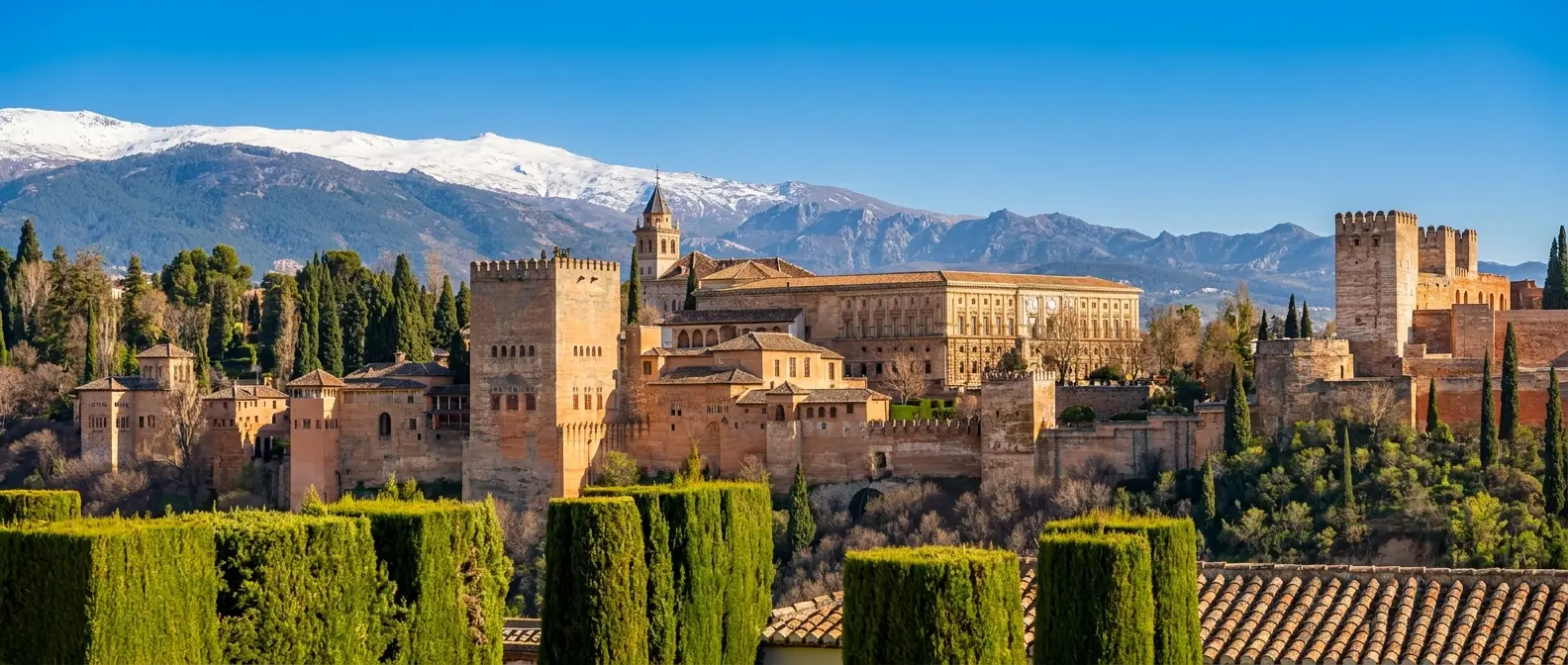
Spring gives you the most comfortable temperatures for the walking-heavy portions of the programme: Baščaršija in Sarajevo, the old town of Mostar, Kotor's Stari Grad and Ohrid's harbour square. Long stretches outdoors stop being tiring, and the light is soft enough for photographs at almost any hour. Rain is possible anywhere in the Balkans in spring, so pack a light shell jacket rather than an umbrella you will resent carrying.
Crowds are also manageable, which matters on the Mostar bridge and along the Ohrid waterfront where a slow walk is the whole point.
June: the longest days
June offers something this itinerary quietly rewards: daylight. Panoramic city tours start in the morning and finish in the evening, and because the sun sets late you still have light after dinner for a short walk in Ohrid or Skopje. Temperatures have not yet reached their August peak, and the Adriatic coast is warm without being crowded.
July and August: hot, busy, alive
Kotor and Budva are at their most energetic. The panoramic viewpoint over St Stefan and the Budva coastline is exactly the postcard people come for, and the lake in Ohrid is at its most inviting for the optional boat trip. Two practical realities: midday heat in Mostar and Thessaloniki makes open-air walking genuinely demanding, and coastal crowds compress the free time you get in each stop.
If you travel in high summer, a wide-brimmed hat, high-factor sunscreen and a spare shirt are not optional extras — they are part of the kit.
September and October: the photographer's compromise
September keeps the water warm while the crowds thin. Walking through Ohrid and Kotor feels calmer, and photographs stop being a fight with other people's shoulders. October is quieter still, but evenings in the interior turn distinctly cool; the crossing of the Mavrovo mountains and the evening meals will want an extra layer.
November to March: a narrow window
Winter changes the character of this tour. Daylight shrinks, panoramic tours lose their impact and mountain sections can slow the schedule. The open-air highlights — Blagay, Vrelo Bosna park, the Matka canyon area — are far less pleasant in cold, wet conditions. If you do choose this route in winter, set expectations around the border-crossing experience and hotel comfort rather than around long walks in old towns.
Day by day: what the clock tells you
Reading the itinerary with times attached is the clearest way to understand the seasonal trade-offs. The flow below follows the published route.
- Day 1 – Istanbul departure: pickups at 21:00, 21:30, 22:00 and 22:30, then the Kapıkule border, customs and passport formalities, and the road toward Sofia. No hotel tonight. Sleep quality here decides how the second day feels.
- Day 2 – Sofia and Belgrade: early arrival in Sofia and a panoramic city tour covering St Nedelya Church, the Russian Church, the Rotunda Church, Hagia Sophia Church, Parliament, the National Library, the former Royal Palace, Sofia University, Alexander Nevski Cathedral, the Presidency, the Council of Ministers and the Banya Bashi Mosque. The military club where Mustafa Kemal Atatürk attended a ball in janissary dress is also pointed out. After free time, the coach heads to Belgrade for an evening panoramic tour.
- Day 3 – Sarajevo and Vrelo Bosna: an early start toward the Bosnian capital, a panoramic tour, a walk through Baščaršija and the Sebil fountain that became the bazaar's emblem, plus the Vrelo Bosna national park visit.
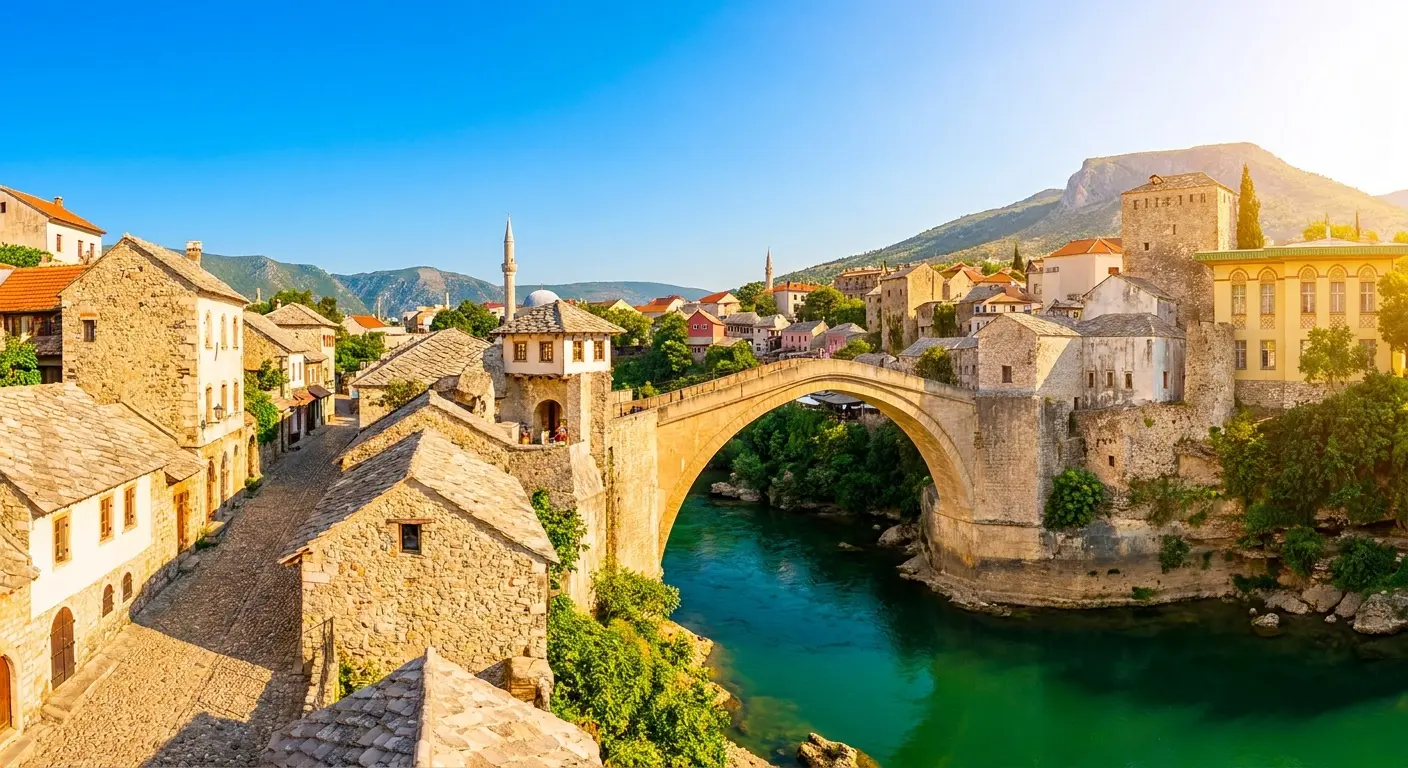
- Day 4 – Blagay, Mostar and Trebinje: the Blagay visit is included in the price, followed by Mostar. The walking tour covers the Old Bridge, built by Mimar Hayreddin in 1557, destroyed by Croatian artillery in 1992 and reopened in 2004 with substantial Turkish contribution. Free time in the old bazaar and local markets, then transfer to the overnight town. The Počitel visit is part of this leg.
- Day 5 – Kotor, Budva, Tirana and Ohrid: crossing into Montenegro, a walking tour of Kotor's Stari Grad, a pass through Budva and a panoramic stop above St Stefan (subject to coach parking availability), then a transit through Tirana toward Ohrid for the night.
- Day 6 – Ohrid, St Naum, Tetova and Skopje: over the Mavrovo mountains to Ohrid. The tour starts at the harbour square, continues past the statues and the historic Ottoman houses used in the Elveda Rumeli series, takes in the Hagia Sophia church and ends with the famous Ohrid pearl presentation. An optional lake boat trip organised by the guide is available at 15 EUR. Then St Naum at the source of the lake, Tetova (Kalkandelen) and Skopje, with the Macedonian Night dinner and Bosnian meatballs among the regional food experiences.
- Day 7 – Matka Canyon, Thessaloniki and Istanbul: the Matka Canyon visit is included, then Thessaloniki: the waterfront promenade, the White Tower, the rotating tower, the fairground, Ottoman and Byzantine monuments, the Cathedral of Saint Demetrios, the Alexander the Great statue, Hamza Bey Mosque, the Venizelos and Constantine statues, and the Vardar, Makedonia, Aristoteles and Eleftherios squares. The city tour closes at the house where Atatürk was born, then the return via Xanthi, Alexandroupoli and the İpsala border gate.
Six of the seven days involve substantial time outdoors. That single fact is why season selection deserves more thought than hotel category.
Borders, visas and the invisible timetable
On multi-country coach tours, borders are the topic everyone discusses and nobody plans for. This route exits via Kapıkule, re-enters via İpsala and crosses between Bulgaria, Serbia, Bosnia and Herzegovina, Montenegro, Albania, North Macedonia and Greece. Crossing times vary by season and hour.
- Visa scheduling: the exclusions list is explicit — a multi-entry Schengen visa or a multiple-entry Bulgarian visa is required. Green passport holders are exempt. Apply well ahead of your departure date; leaving it to the final week is the single most common timing error on this route.
- Arrival hours: because the first departure runs from 21:00 to 22:30, the Kapıkule crossing happens around midnight. Queues fluctuate at that hour, so carry water and something to eat.
- Fees and extras: a city tax of 20 EUR per person is paid to the guide during the tour, so keep it in cash and in euros. The overseas exit fee and travel health insurance are also excluded, which means they belong on your pre-departure checklist, not on your holiday to-do list.
Timing, in other words, is not only weather. It is visa appointments, exit fee payments, insurance and a small envelope of euro cash.
City by city: which season flatters which stop
- Sarajevo: Baščaršija rewards long, unhurried walks; spring and early autumn are the most comfortable. Mid-summer brings the heaviest footfall.
- Mostar: the bridge and the old bazaar are entirely open-air, so shoulder season avoids the midday heat that makes the stone streets glow.
- Kotor and Budva: the Adriatic influence makes July and August lively but crowded; September offers the same scenery with more breathing room.
- Ohrid: the lake walk and the optional boat trip (15 EUR, arranged by the guide) work best in mild weather. Wind can cancel the boat plan, so stay flexible.
- Skopje: the city tour and Matka Canyon share one day, so daylight length matters. Short winter days squeeze the canyon section.
- Thessaloniki: it lands on the return day, when energy is lowest — a mild, clear day genuinely rescues that city tour.
Packing by season: five things that change
- Footwear: Mostar, Kotor and Ohrid mean cobblestones and stone steps. Bring broken-in walking shoes, not new ones.
- Layers: cool mornings, warm afternoons and mild evenings are common in every season. A thin jacket earns its place.
- Cash: keep euros ready for the 20 EUR city tax and the 15 EUR boat trip.
- Power: the region generally runs on 220-230V sockets; a universal adapter covers you.
- Documents: passport, visa, insurance policy and exit fee receipt in one folder saves real time at border gates.
Budget timing: what is inside the price and what is not
The Turlago listing shows a price of 23,844 TL for this 7-day route. Included: all transport throughout the programme, local professional Turkish-speaking guiding, five nights in 3- or 4-star hotels with breakfast (Belgrade, Sarajevo, Trebinje or surroundings, Ohrid, Skopje), a Macedonian Night dinner at a regional restaurant, Bosnian meatballs at a regional restaurant, three evening meals taken at the Belgrade, Trebinje and Ohrid hotels or restaurants, the Vrelo Bosna national park tour, the Blagay tour, the Počitel tour, the Sveti Naum tour, the Matka Canyon tour, the Thessaloniki tour, compulsory local guiding in certain cities, all motorway check-point and parking fees, and customs duties.
Excluded: museum and archaeological site entries, tours organised by the guide, all personal expenses, the city tax of 20 EUR per person payable to the guide, lunches, drinks with meals, driver and guide tips, the multi-entry Schengen or multiple-entry Bulgarian visa, the overseas exit fee, and travel health insurance.
The seasonal implication is simple. In high season, optional entries and free-time spending feel heavier, and lunch budgets need more discipline in crowded areas. In shoulder season, the same money buys shorter queues and a seat at the table.
Optional extras: decide early, pay sensibly
- Decide before departure, pay on tour: choose which optional activities you want and ring-fence the budget in advance. This removes decision fatigue on long days.
- Stay flexible on weather-dependent options: the Ohrid lake boat trip at 15 EUR is the clearest example — a windy or wet day changes the answer.
One caution: Day 5 (Kotor–Budva–Tirana–Ohrid) and Day 7 (Matka–Thessaloniki–Istanbul) are the two densest days. Stacking optional activities on top of them risks turning the headline stops into a sprint.
Who should travel when
- Families: June and September — moderate heat, longer daylight.
- Photographers: May and September–October — softer light, thinner crowds.
- Older travellers: spring and early autumn, when walking pace and temperatures are more forgiving.
- Coastal atmosphere seekers: July–August, when Kotor and Budva are at their liveliest.
- Crowd avoiders: late September and October, when city tours feel noticeably calmer.
Five timing mistakes worth avoiding
- Leaving the visa to the last week. The multi-entry Schengen or Bulgarian visa requirement directly constrains your date options.
- Underestimating the first night. A 21:00–22:30 departure, a border crossing and an early Sofia tour the next morning is a real combination; plan your sleep.
- Treating five hotel nights as one destination. Belgrade, Sarajevo, Trebinje, Ohrid and Skopje each have their own climate and walking rhythm.
- Forgetting lunch. Lunches are excluded, and free time is exactly when you want to try local food — budget for it up front.
- Adding a same-evening plan on the return day. Day 7 ends with a border crossing into Istanbul; a tight onward booking is a risk, not a plan.
Conclusion: the right date is half the tour
This itinerary is honest about what it is: two nights on a coach, five nights in hotels, and days built around walking tours through cities that have been fought over for centuries. The programme does not change with the calendar. What changes is how much of it you actually enjoy. Spring and early autumn suit this walking-heavy route best; high summer is for travellers who want the Adriatic and the lake at their most alive.
Decide the season, the visa and the budget together rather than separately, and the rest of the planning becomes mechanical. To check inclusions, exclusions, the full route and current pricing, view the 8-country Balkan bus tour on Turlago and match it against your own calendar before you commit.