Bosphorus Half-Day Tour: Pierre Loti, Eyüp and Balat Compared
Most Istanbul planning starts with the wrong question. People ask which tour is “the best”, when the useful question is: given one free afternoon, which option lets me see the most layers of the city without wasting the time I have? This article answers that by comparing three formats side by side: a half-day combined coach-and-boat tour, a conventional full-day Bosphorus cruise, and a privately chartered boat. By the end you will have a decision path rather than a vague impression.
The reference point is a real listing: the Bosphorus, Pierre Loti, Eyüp Sultan and Balat half-day boat and coach tour. It stands out not because it promises everything, but because it stacks three different versions of Istanbul into a single afternoon. You look down on the Golden Horn, then step down into the spiritual centre of Ottoman Istanbul, then walk at street level through Balat, and finish on the water. Four perspectives, one block of time.
The facts are unglamorous and specific: a 13:00 meeting point, departure from Sultanahmet, an advertised duration of three hours, capacity for 30 guests, with an air-conditioned coach, a boat ticket and a cable car ticket included. What matters is what those details actually mean for your day.
What the route actually covers, step by step
The real risk with any half-day tour is that it blurs the difference between having seen a place and having visited it. Getting off a coach, taking a photo and getting back on counts as a tour only on paper. So here is the programme in order, so you can weigh it against your own priorities and work out which stop is non-negotiable for you and which one you could live without.
Meeting point and the Golden Horn drive
The tour begins in Sultanahmet, in front of Buhara 93 Restaurant on Sultanahmet Square. If you book the hotel-transfer option you skip that step entirely; the listed pickup areas also include Sultanahmet, Osmanbey, Harbiye and Fındıklı, which means guests staying around Şişli do not have to make their own way to the old city first.
From there an air-conditioned coach follows the Golden Horn shoreline towards Eyüp. Sit on the window side. Remnants of the Byzantine sea walls, the old mansions of Fener and Balat and the bridges over the inlet all slide past. Your guide narrates the neighbourhoods as you go, and that detail matters: on a good city tour, transport is part of the content. On a bad one, it is just traffic.
Pierre Loti Hill: the view from above
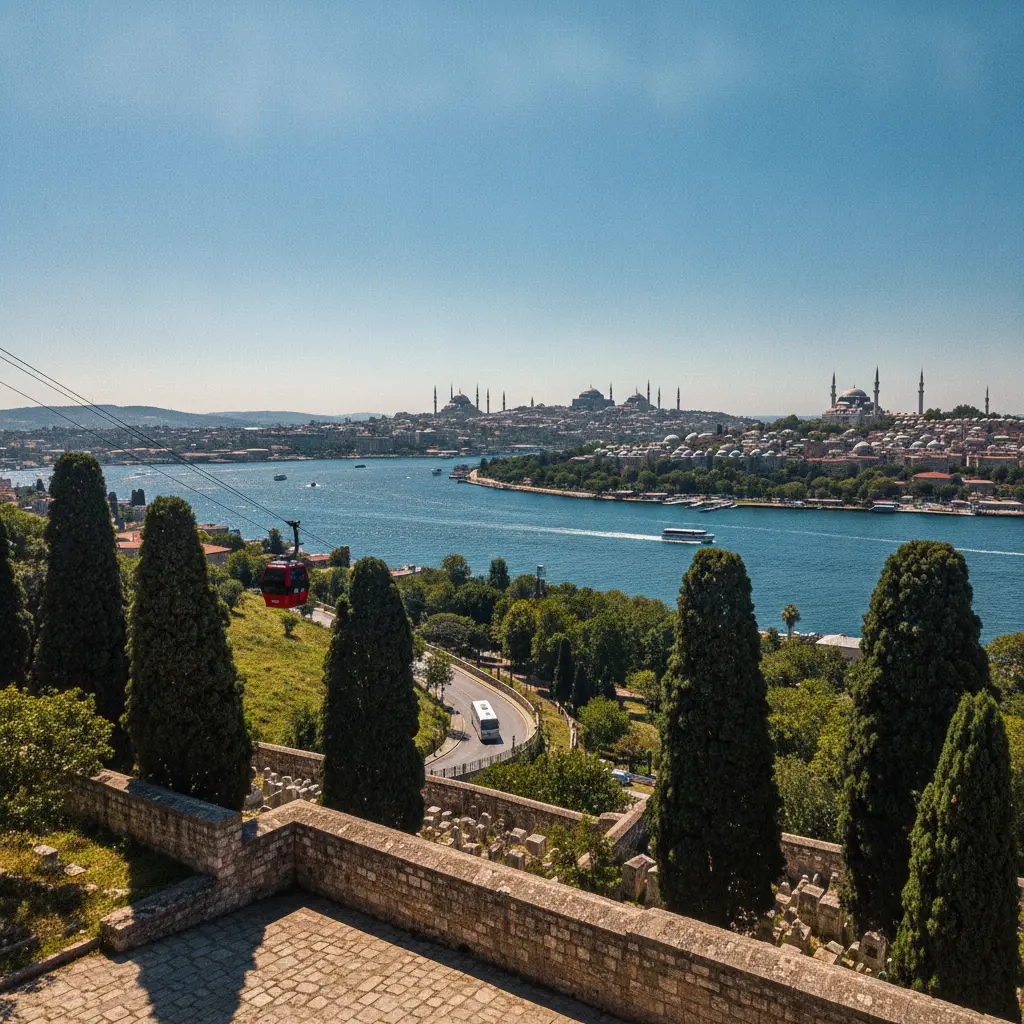
The first major stop sits on the hill above Eyüp. The name comes from the French naval officer and novelist Pierre Loti, who lived in Istanbul at the end of the nineteenth century and carried the city into his books; the coffeehouse where he is said to have watched the Golden Horn still operates under his name. From the terrace you see the full length of the inlet, its bridges, Galata in the distance and the silhouette of the Historic Peninsula.
After the guide's introduction there is free time for photographs and tea, with café purchases at your own expense. Be clear about what this stop is: the length of that free time shapes the whole character of the tour. If you are chasing a sunset shot, you are on the wrong programme, because this runs in the afternoon. What afternoon light gives you instead is legibility — the details of the skyline that dissolve into haze at dusk stay readable in the middle of the day.
The cable car down to Eyüp
A ride of roughly two minutes brings you down to Eyüp Square, and the ticket is included. From the cabin you look out over the Golden Horn and along the slope of the Eyüp cemetery, one of the oldest burial grounds in the city. Two minutes is not much, but it is the most photographically efficient two minutes of the afternoon, so keep your phone in hand rather than in your bag.
Eyüp Sultan Mosque and tomb
The tomb of Ebu Eyyub el-Ensari, a companion of the Prophet Muhammad, is among the most visited spiritual sites in Istanbul. He died outside the city walls during the seventh-century Arab siege, and after the conquest Mehmed II had the tomb and mosque built over his grave. Ottoman sultans were girded with the sword here when they ascended the throne. With your guide you visit the tiled tomb courtyard and the mosque rebuilt under Selim III.
One practical note: entry can be briefly suspended during prayer times. That single sentence explains why timing runs through this whole article. The same route at a different hour is a different tour.
Balat at street level
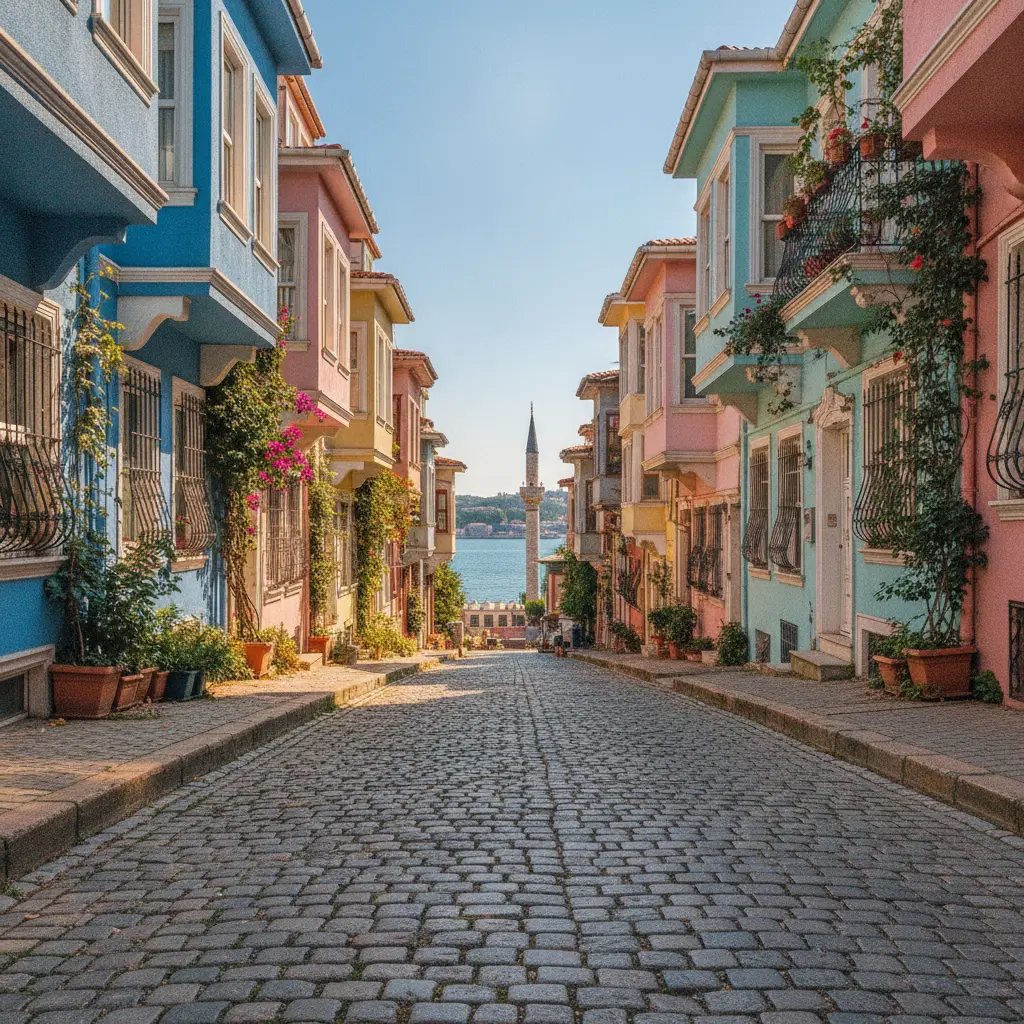
Balat is the Golden Horn neighbourhood where Greek, Jewish and Armenian communities lived side by side for centuries. You walk its steep streets of colourful bay-windowed houses with your guide, hearing about the Fener Greek High School known as the Red Schoolhouse for its brick facade, the Sveti Stefan Bulgarian Church cast in cast iron in Vienna and shipped here in pieces, and the old synagogues, churches and schools of the district. The painted stairways and small cafés are the most photographed corners.
Then comes a tasting stop at a local shop: Turkish delight, baklava and apple tea. You can buy what you like afterwards, and there is no obligation to purchase. Do not dismiss these pauses. What breaks the fatigue curve of a walking tour is rarely a museum; it is ten minutes sitting down with something to drink.
The Bosphorus by boat from Eminönü
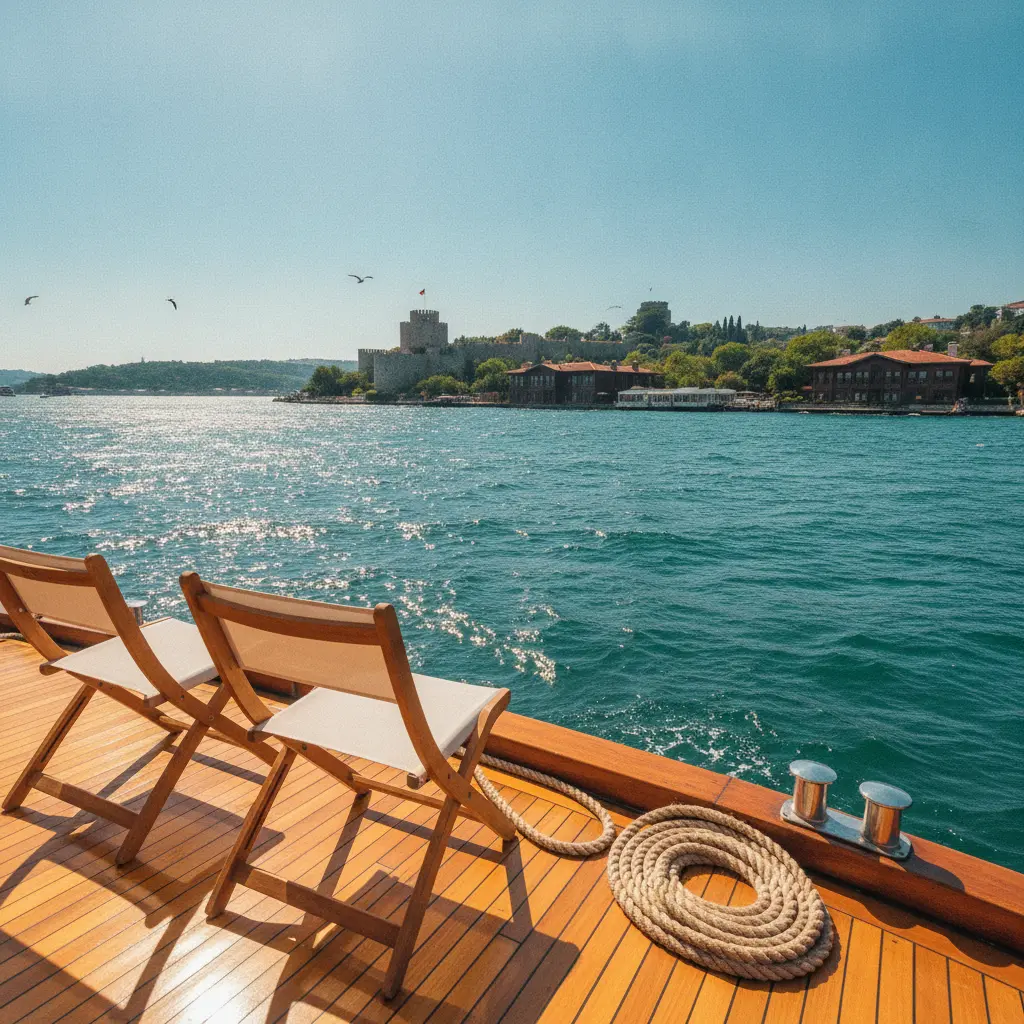
The final section is the boat cruise departing from Eminönü pier. On the European shore you see Dolmabahçe Palace, completed in 1856, Çırağan Palace, now a hotel, and the Ortaköy Mosque right beside the bridge. On the Asian side, Beylerbeyi Palace, Sultan Abdülaziz's summer residence, and the Kuleli Military High School at Çengelköy. The boat heads towards Rumeli Fortress, built by Mehmed II a year before the conquest, then turns back with the Maiden's Tower and Galata Tower accompanying the return leg.
This last section is what turns the itinerary from a city tour into a genuine Bosphorus tour. Palaces seen from the road and palaces seen from the water do not feel like the same buildings; the facades, the landings and the gardens facing the water only become readable from the deck. Afterwards the coach returns you to the meeting point in Sultanahmet, or drops you in your own area if you booked the transfer option.
Half day, full day or private boat: matching format to traveller
To compare honestly I use the same five criteria for each option: coverage, time cost, control, crowd factor and budget flexibility. None of the three is superior in the abstract. They serve different travellers.
- Half-day combined tour (this listing): It takes your afternoon and gives you the Golden Horn, Eyüp, Balat and the Bosphorus in one package, with coach, boat and cable car tickets and a guide included. You do not control the route. Capacity is 30 guests, so group dynamics are part of the experience.
- Full-day Bosphorus cruise: Usually a morning start with a longer time on the water and more stops, including coves and shores that are hard to reach by land. The trade-off is the entire day, which makes pairing it with anything else difficult, and a higher fatigue threshold.
- Private boat charter: You set the route, the duration, the departure time and the swimming stops. No crowd, no fixed schedule, complete freedom to stop for photographs. In exchange, the per-person cost rises and the organisational load — food, drinks, timing — moves to you. It makes sense for family gatherings and corporate groups; for a solo traveller it is usually overkill.
The question that settles it is simple: how many days do you have in Istanbul, and on how many of them do you actually need a guide? With two days and a first visit, this half-day format keeps your second day free. With four or five days, a full-day cruise fits comfortably. And if the boat itself is the point rather than the transport — a celebration, a proposal, a group event — then look at a charter instead; you can compare the premium yacht charter option on Turlago.
Timing: how the same route changes month by month
Half of this itinerary is outdoors, a third of it is on water, and a meaningful share is on foot. Weather therefore drives quality directly. Here is what to expect season by season.
April to June: the most balanced window
In these months Istanbul's light stays soft for long stretches, temperatures are reasonable for walking, and Balat's steep streets can be covered without breaking a sweat. This is the best window for actually enjoying the free time on Pierre Loti Hill. Early April can still carry a cool breeze, so bring a light layer if you plan to stand on the upper deck during the boat section. From late May into June, both the cable car queue and the piers get busier; a 13:00 start helps here because you miss the morning peak.
July and August: dressing correctly matters more than timing
In high summer the hardest part of the route is the Balat walk, because the streets are narrow, shade is scarce and afternoon heat is at its peak. The boat section, by contrast, becomes the highlight, and the Bosphorus takes on its most vivid colour. Practical advice: light, light-coloured clothing, a wide-brimmed hat and water. Keep a layer that covers shoulders and knees for the mosque visit; it is both respectful and more comfortable. Note also that harsh midday sun creates hard shadows, so position yourself in open areas rather than under trees when photographing the view.
September and October: the photographer's window
From mid-September the light softens, crowds thin and the wind evens out for the boat section. The Golden Horn is calmer in the afternoon, so reflections come out sharper in photographs taken from the hill. This is where the half-day format performs at its best: you are neither escaping heat nor racing against an early sunset. Late October is changeable, so keep a backup plan.
November to March: works with the right expectations
In winter the outdoor sections shrink and the open deck becomes less appealing, with the indoor salon the better choice. In exchange, the city returns to its own rhythm: fewer people photographing Balat's streets, a calmer visit at Eyüp Sultan, and room to actually talk to your guide. On some January and February days rain can shorten the outdoor portion; if your schedule is flexible, shifting the date based on the forecast is the smartest move. The winter advantage is simple: at almost every stop, the place feels more like itself.
Choosing the day: weekends, Fridays and the religious calendar
Because the route includes a working house of worship, the day of the week matters as much as the weather. On Fridays the area around Eyüp Sultan Mosque gets busier around midday prayer, so a weekday visit is noticeably calmer than a Friday afternoon. Saturday is the busiest day overall, with both domestic travellers and foreign groups on the move; part of your free time on the hill will be spent among crowds.
During Ramadan and Eid the area around Eyüp Sultan and the streets of Balat get livelier. That is not a problem — atmospherically it is richer — but adjust expectations if you want quiet photography. Sundays have their own advantage: cafés and shops in Balat are open, which makes it the most animated day for street photography.
Why a 13:00 start works, and when it does not
The clearest benefit of an afternoon departure is that your morning stays yours. Mornings are the most efficient time for Istanbul's major museums and palaces, so placing this tour in the afternoon avoids a clash with a Topkapı or Hagia Sophia visit. Second benefit: you eat lunch on your own schedule instead of being tied to a set menu.
The drawback is equally clear: you walk Balat's unshaded streets during the hottest part of the day, which in summer is a genuine comfort issue. And if you want golden-hour light, this format is not for you; build a separate evening instead, for example with an evening dinner and Turkish night on the Bosphorus. Combining both on the same day gives you the city in two different lights.
Who this suits, and who should book something else
Saying “it suits everyone” would be lazy. Two honest lists instead.
Book this if…
- You have one or two days in Istanbul and want maximum variety in one block.
- It is your first visit and you want a guided introduction rather than self-navigation.
- You would rather not deal with tickets, cable car queues and transport logistics.
- You are travelling as a group and need a format everyone can agree on.
- You enjoy walking but do not want to be on your feet all day.
Skip it if…
- You mainly want to be on the water for hours; here the boat is one section, not the whole product.
- You want to set your own pace and decide how long to stay at each stop.
- Crowds drain you and group dynamics feel tiring.
- You want depth in a single museum rather than breadth across a district.
Logistics: meeting points, transfers and what to bring
Meeting points are listed as Sultanahmet, Osmanbey, Harbiye and Fındıklı, with Buhara 93 Restaurant as the main one. Hotel transfers are included, so if your accommodation is near one of those areas you are collected at the door. Build in traffic time: in Istanbul the same distance can take twice as long depending on the hour.
What to bring is short: comfortable shoes, because Balat's streets are sloped and paved with stone; sun protection and water; a light layer for the mosque visit and the breeze on deck; a power bank for your phone. Avoid large luggage, since you will move between a coach, a cable car and a boat. For photography, a wide lens earns its place at Pierre Loti and on the Bosphorus.
Budget: what is included and what to plan for separately
The inclusions are specific: a professional guide, air-conditioned transport, boat or ferry tickets, the cable car ticket, a local tasting, Turkish coffee and tea, hotel pickup and drop-off, and taxes. In practice this covers most of the hidden costs that catch people out on half-day tours; you are not paying separately for the boat or the cable car.
Excluded are tips, personal expenses, food and drinks outside the set menu, and museum entrance fees. The practical consequence is to carry a little cash. The café on Pierre Loti Hill is at your own expense, the tasting in Balat is included but anything you buy afterwards is not, and tips are customary. When budgeting, compare the total of tour plus personal spending, not the headline price alone.
What to do with the rest of the day
This tour closes the afternoon and leaves your evening open. The most rewarding combination is to see the city in two different lights on the same day. Having already seen the Golden Horn and the Bosphorus by daylight, finishing on the water makes sense: an evening dinner and Turkish night on the Bosphorus pairs naturally. If you prefer flexibility, plan the evening yourself; the tour ends in Sultanahmet, which makes Eminönü and Karaköy easy to reach.
For groups closing the day with an occasion — a birthday, an engagement, corporate guests — a private event boat for special occasions layers an evening programme on top of the afternoon. One caution: if you combine two programmes on the same day, leave at least an hour between them. Delays compound, and a rushed evening undoes a good afternoon.
Seven mistakes worth avoiding
- Treating a half day as an incomplete tour. The route is short but broad; it fits Balat, Eyüp and the Bosphorus into one afternoon. What is limited is your expectation, not the itinerary.
- Leaving the mosque visit to chance. Entry can be briefly suspended at prayer times; take the guide's timing seriously.
- Sitting down at the café before seeing the view. Tea is pleasant, but walk the terrace first and sit afterwards.
- Wearing the wrong shoes. Balat is sloped and stony; thin soles make the day longer than it needs to be.
- Planning for sunset. This is an afternoon programme; schedule the last light separately.
- Treating the boat as a transfer. The waterfront facades of the palaces only make sense from the water, so keep your phone charged.
- Carrying no cash. Small purchases, tips and anything you buy after the tasting are simpler with a little cash on hand.
Conclusion: decide with three questions
Reduce the comparison to a simple practice. First question: how many days do you have? With one or two, the half-day format almost always wins, because it leaves the other day free for a different layer of the city. With four or five, the full-day cruise is comfortably in play.
Second question: who should control the route? If you want a sequence that will not test or surprise you, a guided group tour is exactly right. If you want your own route and your own timing, move towards a private boat. Third question: which season are you travelling in? April to June and September to October are the most balanced windows for this itinerary; July and August demand comfort management; winter offers a quieter city and a calmer visit.
Answer those three honestly and only one task remains: read the programme yourself. You can view the Bosphorus, Pierre Loti, Eyüp Sultan and Balat half-day tour on Turlago to compare meeting points, inclusions and live availability. Do not make price your only criterion. Make it this: which layer of Istanbul do you want to spend that afternoon on?