Full-Day or Half-Day Istanbul Tour? Ayasofya, Bosphorus, Balat
Most Istanbul itineraries break down at the same point: you have two or three days, you list what you want to see, and Ayasofya, Sultanahmet, the Grand Bazaar, Balat and the Bosphorus simply refuse to fit. A seven-hour guided full-day tour closes most of that list in a single day. Splitting the same day into two half-day tours is equally possible. So which one is right for you? This guide answers that using the tour's actual published programme rather than general assumptions: where it starts, where it ends, how much you walk, and which month pushes you towards which format. View the Ayasofya, Bosphorus Cruise and Balat full-day guided Istanbul tour on Turlago and keep this comparison open while you read it.
The thirty-second version: which one fits your trip?
Before the detail, here is the practical split. If you answer yes to any of the following, your choice is largely made.
- Take the full-day tour if: you have fewer than two full days in Istanbul, you would rather not engineer a Balat and Eyüp trip yourself, or you prefer one guide holding the whole day together instead of stitching together separate bookings.
- Take a half-day tour if: your walking range is limited, you are travelling with a small child or an older relative, or you want the afternoon free for shopping, rest or a museum you have already picked.
- Take neither, and go for the evening instead if: you are already exploring the city on your own during the day and only want the Bosphorus with dinner attached. In that case, moving the waterborne part of the day to the evening is more efficient. The Bosphorus dinner and Turkish night option suits this profile well.
- There is a third route: do the culture circuit by day and take the Bosphorus later on a private boat, at your own hour and without a crowd. The Bosphorus yacht charter option replaces the boat leg of the tour — but it becomes a second line in your budget.
What actually happens on the full-day tour, hour by hour
Abstract criteria are easy to write and hard to use. So let us open the published programme. The tour begins at 09:00 in Sultanahmet Square, in front of Buhara 93 Restaurant; you recognise your guide by the flag. If you booked the hotel-transfer version, you do not need to reach that point yourself. Capacity is 30 guests and the duration is 7 hours, which means a day that wraps up around 16:00.
Morning block: walking the Historic Peninsula
The day opens at Sultanahmet Mosque, completed in 1616. Its interior is covered with more than twenty thousand İznik tiles, and those blue tones are why the world knows it as the Blue Mosque. Your guide walks you through the courtyard and the interior and explains the architecture commissioned by Sultan Ahmed I. Right beside it is the Hippodrome, today Sultanahmet Square, where Byzantine chariot races and ceremonies once took place. Here you see the roughly 3,500-year-old Obelisk brought from Egypt, the Serpent Column relocated from the Temple of Apollo at Delphi, and the German Fountain gifted by Kaiser Wilhelm II.
Then it is on to Ayasofya. Opened as a church in 537, converted into a mosque after 1453, turned into a museum in 1934 and reopened for worship as a mosque in 2020, the building's fifteen-century story is told in front of its vast dome and mosaics. One detail matters for your planning: entry is left to you, because the ticket is not included and costs 25 € per person in cash at the door. There is also a security check at the entrance.
Before the Grand Bazaar there is a short stop at a local souvenir shop — no purchase required. Then you enter the Grand Bazaar, founded in 1461 under Mehmed the Conqueror: more than sixty streets and over four thousand shops. Your guide explains the bazaar's history and then gives you free time to wander among carpets, jewellery, ceramics, spices and leather at your own pace.
Midday break and the move to the Golden Horn
After the bazaar there is free time for lunch in Sultanahmet. Lunch is not included; you pick a restaurant in the neighbourhood. That freedom is a good thing, but it is a line item worth remembering when you budget. Afterwards a climate-controlled coach carries you along the Golden Horn towards Eyüp. Remains of the Byzantine sea walls, the old mansions of Fener and Balat, and the Golden Horn bridges pass your window while your guide narrates the story of these districts.
Afternoon: Pierre Loti, the cable car and Eyüp Sultan
The hill above Eyüp takes its name from Pierre Loti, the French naval officer and novelist who lived in Istanbul in the late nineteenth century and carried the city into his books. The coffeehouse where he is said to have watched the Golden Horn still operates under his name. From the terrace you see the full length of the Golden Horn, its bridges, and in the distance the silhouettes of Galata and the Historic Peninsula. After the guide's commentary there is free time for photographs and tea; café purchases are your own. You descend by cable car — about two minutes — looking down on the Golden Horn and on Eyüp Cemetery, one of Istanbul's oldest burial grounds. The cable car ticket is included.
The Eyüp Sultan Mosque and Tomb holds the grave of Abu Ayyub al-Ansari, a companion of the Prophet Muhammad, and is one of the most visited spiritual sites in the city. He died outside the walls during the seventh-century Arab siege, and after the conquest Mehmed the Conqueror had the tomb and mosque built over his grave. Ottoman sultans were girded with the sword here upon accession. You visit the tomb courtyard with its İznik tiles and the mosque rebuilt under Selim III. Note that the mosque can close briefly during prayer times.
Closing chapter: Balat streets, a tasting, and the Bosphorus by boat
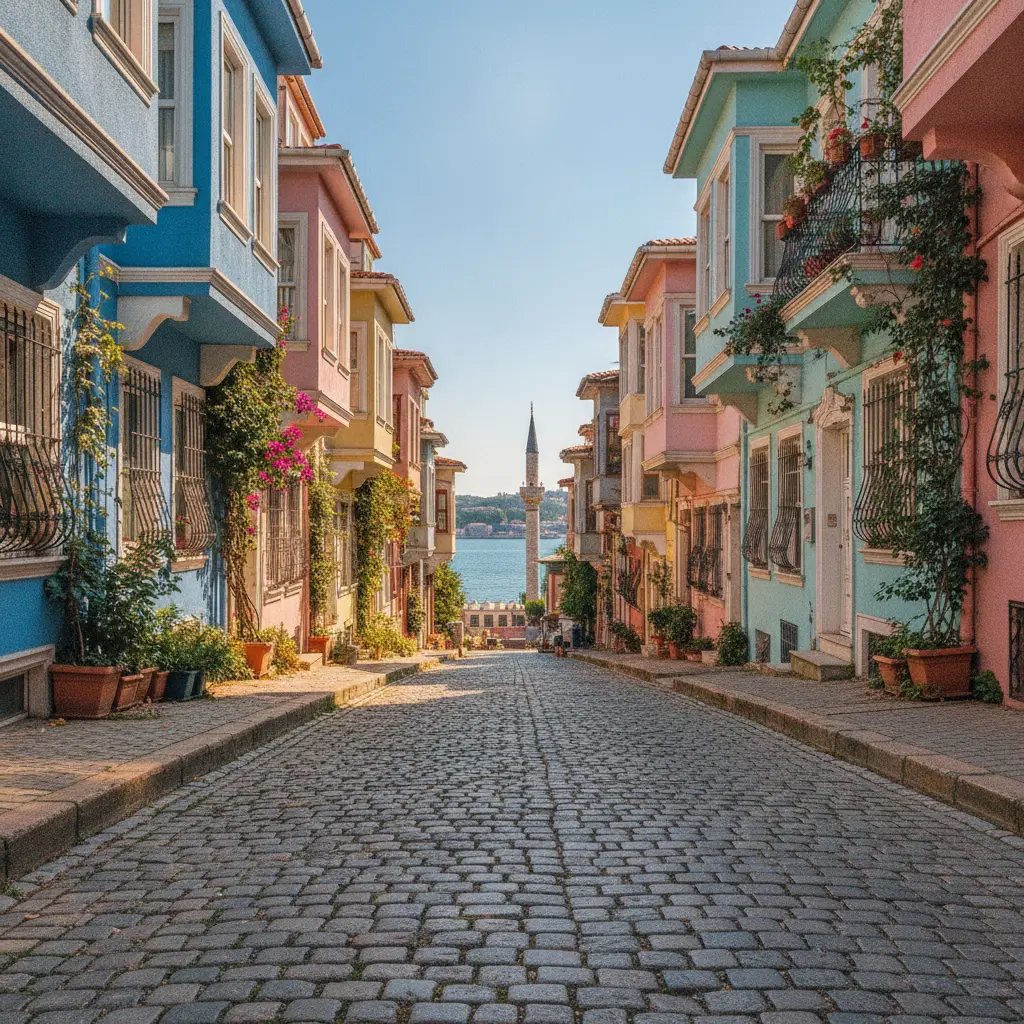
Balat is the Golden Horn district where Greek, Jewish and Armenian communities lived side by side for centuries. You walk its steep streets of colourful bay-windowed houses with your guide, hearing about the Fener Greek High School known as the Red School for its red brick, the Sveti Stefan Bulgarian Church cast in Vienna in cast iron, shipped in pieces and reassembled here, and the district's old synagogues, churches and schools. The painted stairways and small cafés are the most photographed corners. At a local shop you are offered Turkish delight, baklava and apple tea; you can buy what you like, but nothing is compulsory.
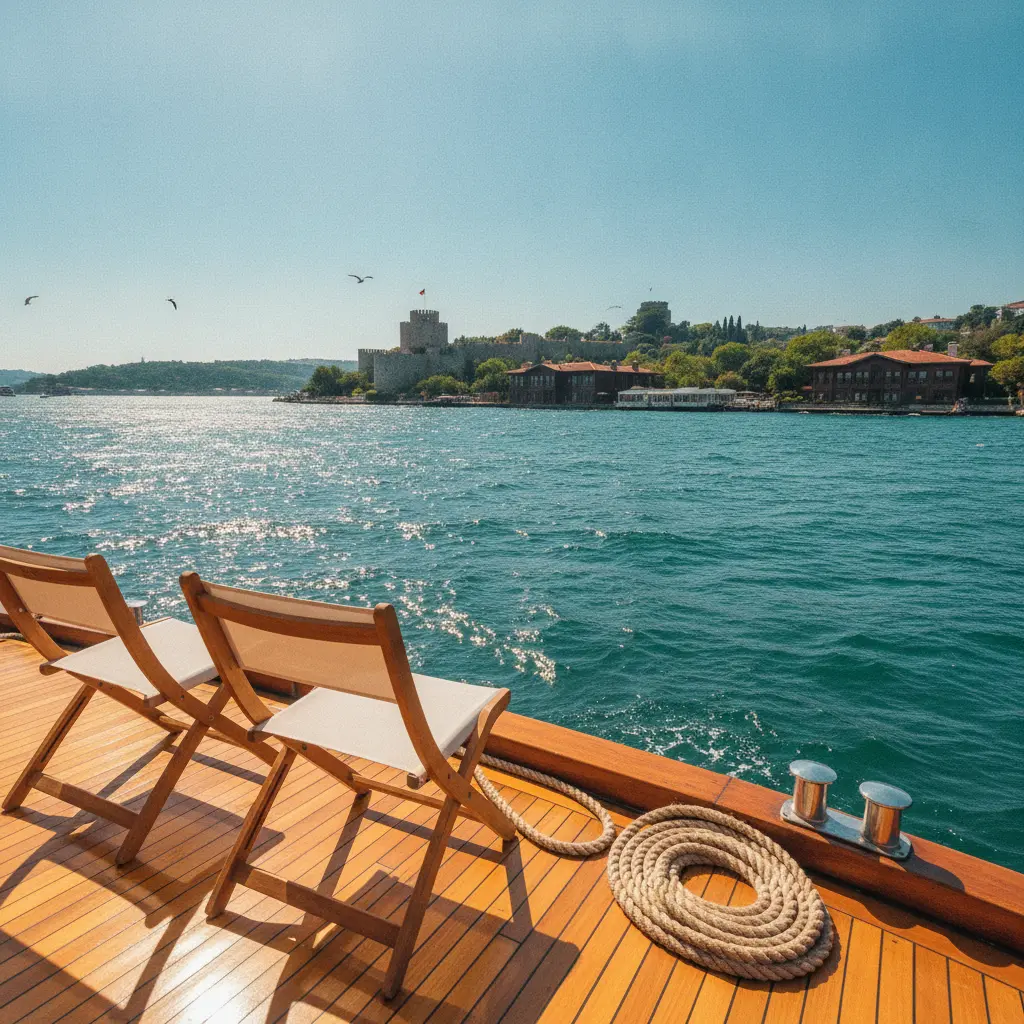
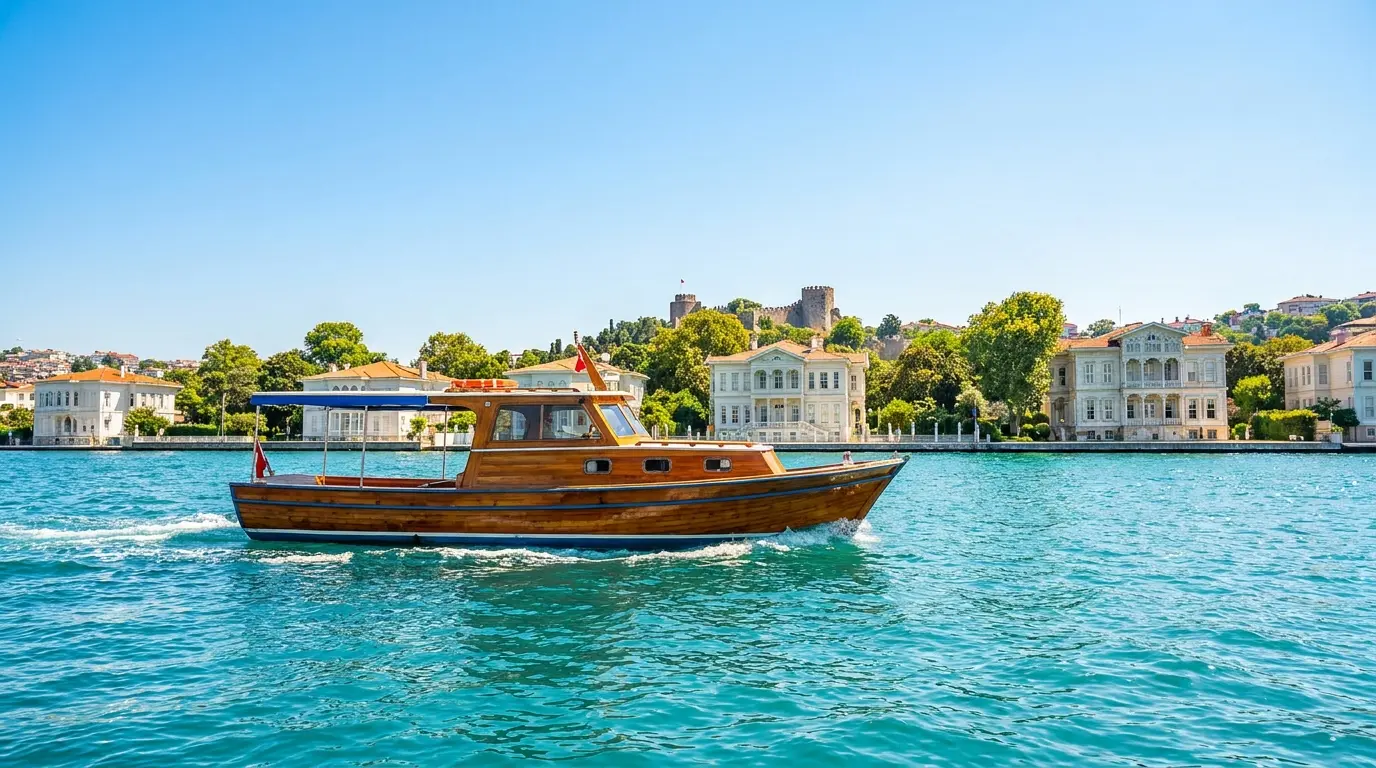
The final section is the Bosphorus cruise departing from Eminönü Pier. On the European shore you see Dolmabahçe Palace, completed in 1856, the Çırağan Palace now operating as a hotel, and Ortaköy Mosque right beside the bridge; on the Asian shore, Beylerbeyi Palace, Sultan Abdülaziz's summer residence, and the Kuleli Military High School at Çengelköy. The boat heads up towards Rumeli Fortress, built by Mehmed the Conqueror a year before the conquest, then turns back, with Maiden's Tower and Galata Tower accompanying the return. After disembarking, the coach brings you back, and the tour ends in front of Buhara 93 Restaurant in Sultanahmet, or in Şişli, Fatih or Beyoğlu.
What half-day tours cover — and what they leave out
Half-day tours in Istanbul generally run along one of two axes: the Historic Peninsula only (Blue Mosque, Hippodrome, Ayasofya, Grand Bazaar), or the Bosphorus and shoreline only. The difference that matters is this: the inner Golden Horn — Pierre Loti, Eyüp, Balat — almost never appears in a half-day format. That circuit requires a coach transfer out of Sultanahmet, walking on the hill and through the streets, a cable car descent, and a return to the pier. On its own it eats three to four hours.
The practical consequence: if you choose a half-day tour, you must either plan Balat and Eyüp as a separate block yourself (tram plus bus, or taxi) or drop them entirely. Doing those two neighbourhoods independently is far from impossible, but it means two separate days, two separate transport plans, and at least one more half-day committed. A half-day tour is not cheaper in effort — it is simply shorter, and the price of that shortness is the ground you have to cover alone.
Seven criteria, side by side
- Total duration: 7 hours for the full day (09:00 to roughly 16:00) versus a typical 3–4 hours for a half day. The gap comes from joining two distinct routes into one day.
- Coverage: The full day delivers Sultanahmet Mosque, the Hippodrome, Ayasofya, the Grand Bazaar, Pierre Loti, Eyüp Sultan, Balat and the Bosphorus cruise as one package. A half day gives you roughly half of that.
- Walking load: On the full day, the morning is walk-heavy, then the coach and cable car rebalance it in the afternoon; Balat adds sloped streets. On a half day your step count drops noticeably.
- Transport ease: On the full day every inter-neighbourhood transfer happens in an air-conditioned vehicle. You never have to link Balat, Eminönü and Sultanahmet yourself — the single biggest comfort difference for first-time visitors.
- Narrative depth: Seven hours with one guide lets the story connect: Byzantine hippodrome to Ottoman foundation culture to the minority districts of the Golden Horn. Two separate half-day tours break that thread in two.
- Flexibility: The half day wins clearly. Your afternoon stays yours. On the full day, the day belongs to the programme.
- Budget: The full-day price looks higher, but it contains transport, the cable car ticket, guiding and tastings. Buying two separate half-day tours usually totals more — and lunch plus the Ayasofya entry sit outside either scenario.
Pace and stamina: what seven hours really feels like
Seven hours sounds long, but you are not standing for all of it. The morning block is walking-based: the Blue Mosque, the Hippodrome and Ayasofya are within a few minutes of each other, and the Grand Bazaar sits in the same district. After the lunch break the coach takes over and you ride along the Golden Horn. There is a tea pause at Pierre Loti, a two-minute cable car descent, a courtyard visit at Eyüp Sultan, and a street walk in Balat. Balat is the most physically active stretch, because the streets are steep and cobbled.
The takeaway is straightforward: comfortable shoes are not a luxury on this route, they are a requirement. Bring a light layer — you will notice the difference between morning cool and the afternoon Golden Horn breeze. Carrying water and a small snack makes the stretch before lunch much easier. A 30-guest capacity keeps things manageable; still, keep an eye on the guide's flag around the Ayasofya entrance and inside the Grand Bazaar so you do not drift off the group.
Season and timing: which months favour which format
Because of how this route is built, three timing questions decide your experience: how hot it will be, how long daylight lasts, and how heavy the crowds are. The answers shift significantly by season.
April–May and September–October: the most efficient window for the full day
These are the periods when a seven-hour programme is completed with the least wear. Temperatures suit walking, Balat's sloped streets do not overwhelm, and drinking tea outdoors at Pierre Loti is genuinely pleasant. Daylight lasts long enough that when the tour ends around 16:00 you still have light left and can plan an evening. Crowds are manageable compared with the summer peak. If your dates are flexible, place the full-day tour here.
June–August: workable, but bring a strategy
A 09:00 start is genuinely smart in summer, because the Sultanahmet and Grand Bazaar block is finished during the cooler part of the day. The afternoon Balat and cable car stretch, however, can feel tiring in the heat — while the Bosphorus cruise becomes the most refreshing part of the whole day. If you choose the full day in summer, pack a hat and sunglasses, carry extra water, and take a light top for the boat. The Grand Bazaar is very crowded in high season; note the gate you entered through so you can find your way back during free time.
November–March: winter thins the crowds but shortens the day
The main winter advantage is space: Ayasofya and the Grand Bazaar are far easier to move through. The disadvantages are shorter daylight and a cold open deck on the Bosphorus. It might seem that winter favours a half day, but the opposite is often true: on the full-day tour all transport is in a vehicle and the transitions are indoor-to-indoor, so you are not designing the day yourself. Dress in layers, carry a small umbrella, and accept in advance that the boat's upper deck will be windy.
Day of the week and the religious calendar
Season is not the only variable — the day of the week matters too. The Grand Bazaar is generally closed on Sundays, so if your date falls on a Sunday, confirm with the operator how the bazaar block will be handled before you book. On Fridays there is prayer congestion around midday and Eyüp Sultan may close briefly to visitors. During Ramadan and on public holidays, both mosque and bazaar crowds rise noticeably; here an early-morning full-day start works in your favour, since you reach the busy sites before the peak. Also expect security queues at Ayasofya and possible visitor restrictions around prayer times.
Which traveller should pick which
- First-time visitors with two or three days: the full day. You see three distinct faces of the city in one go and keep your remaining days free.
- Families with small children: a half-day tour, plus an optional separate boat trip. Seven hours is long for a child and motivation dips after lunch.
- Travellers with limited mobility: the half day. Balat's sloped streets and the cable car descent can be demanding; tell the operator in advance either way.
- Photographers: the full day, because Balat's lanes, the Pierre Loti terrace and the Bosphorus shoreline all appear within one day in different light.
- Business travellers with daytime constraints: a half-day culture tour plus a Bosphorus dinner. Meetings by day, waterfront by night is the realistic balance.
- Return visitors who only want the neighbourhoods: the Golden Horn half of the full-day itinerary is exactly your section — just accept that the Sultanahmet block may feel like a repeat.
Reading the price correctly: what is in and what is not
The inclusions and exclusions are the most commonly misread part of the decision. Included: a professional guide, air-conditioned transport, guided visits to Sultanahmet Mosque, the Hippodrome and Ayasofya, the Eyüp Sultan Mosque and Tomb visit, the boat or ferry ticket, the cable car or funicular ticket, a local tasting, Turkish coffee and tea, hotel pick-up and drop-off, and taxes.
Excluded, clearly: the Ayasofya entrance ticket (25 € per person, cash at the door), lunch, gratuities and personal spending. Add café purchases at Pierre Loti and anything you buy at the Balat shop. Your real daily cost is therefore the tour price plus roughly one lunch, 25 € for Ayasofya, and pocket money. Knowing these three lines in advance is what prevents a surprise halfway through the day.
Logistics: meeting points, transfers and entry rules
Listed meeting points are Buhara 93 Restaurant, Sultanahmet, Osmanbey, Harbiye and Fındıklı. If you are staying in Sultanahmet, walking to the meeting point is the simplest option. If you are on the Şişli, Harbiye or Fındıklı line, the hotel-transfer version saves real time in morning traffic. The tour finishes in Sultanahmet, Şişli, Fatih or Beyoğlu, so plan your evening around whichever of those suits you.
Two practical notes: carry cash for the Ayasofya entrance, since cash moves faster than card even where card is accepted; and allow for a security queue at the entrance instead of rushing the morning block — your guide is already building that timing into the schedule.
Five mistakes worth avoiding
- Assuming Ayasofya entry is included. It is not, and it is paid in cash at the door. Budget for it.
- Not leaving time for lunch. Eating something quick during free time directly affects your energy for the Golden Horn afternoon.
- Wearing the wrong shoes. Cobbled, sloped Balat streets plus thin soles equals a very long day.
- Expecting the Golden Horn on a half-day tour. Pierre Loti, Eyüp and Balat are generally absent from standard half-day formats. Choose with that in mind.
- Ignoring the Sunday question. Confirm the day before booking, because the Grand Bazaar block depends on it.
The verdict
In one sentence: if your time is tight and you want three different faces of Istanbul in a single day, take the full day; if you need to manage your energy and keep half the day for yourself, take the half day. The difference between them is not price, it is coverage and pace. The full day hands you Sultanahmet, the inner Golden Horn districts and the Bosphorus inside one guide's narrative; the half day hands the rest of the day back to you.
When you decide, do not start from your calendar — start from how you want the day to feel. In spring or autumn, on a first visit, with Balat on your wish list, the answer is fairly clear. View the Ayasofya, Bosphorus Cruise and Balat full-day guided Istanbul tour on Turlago, match the programme against your own dates, and settle the meeting-point options at the time of booking. If you want the evening on the water as well, you can add the Bosphorus dinner and Turkish night to the same day, or look at the Bosphorus yacht charter option if you would rather experience the boat leg in a more private format.