Car Rental from Istanbul Airport: 2026 Budget Guide
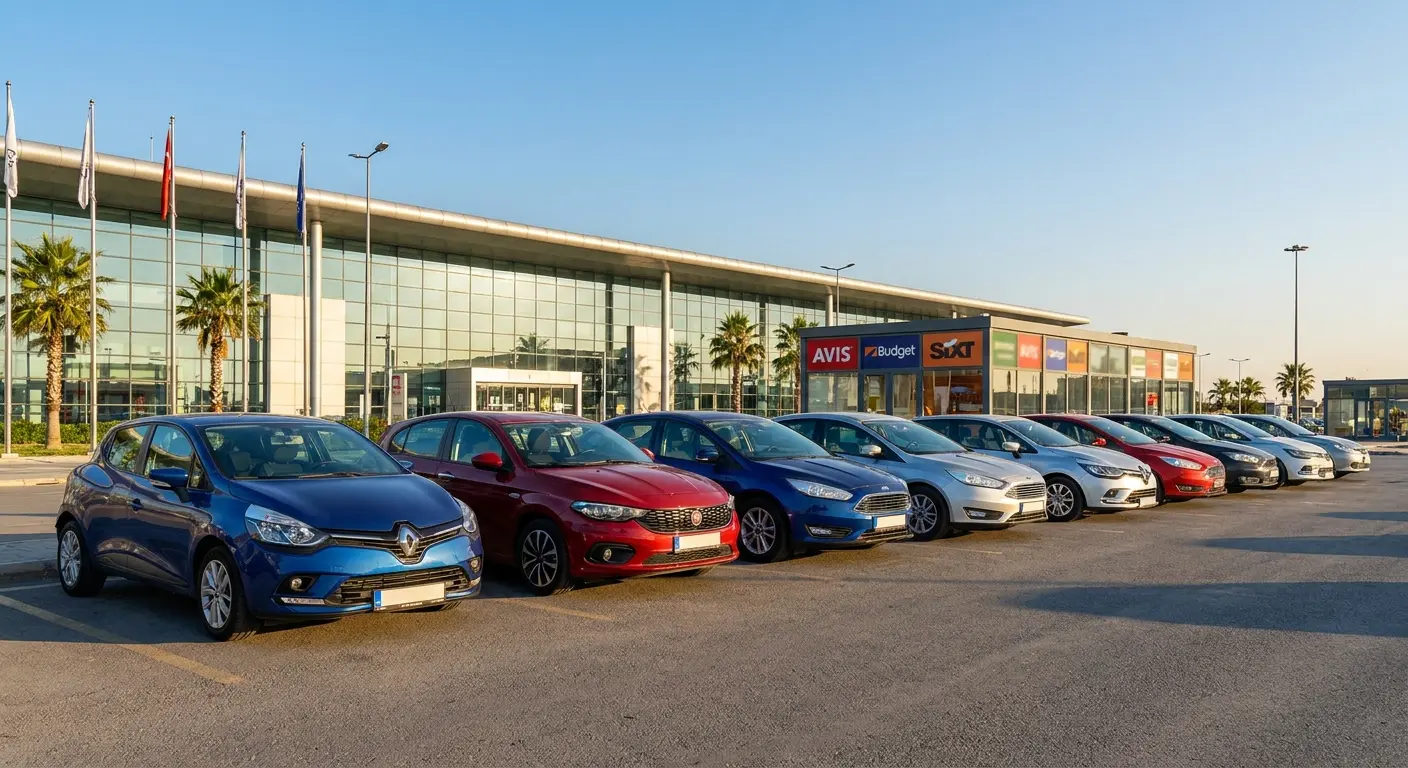
Most people who rent a car at Istanbul Airport compare exactly one number: the daily rate. That number tells you almost nothing about what you will actually pay. The final bill is built from the insurance package, the fuel policy, the deposit hold, the one-way fee and the hour you choose to return the car. This guide takes the budget angle seriously: what really inflates your total, where there is room to negotiate, and how to pay less in 2026 without accepting a worse car. You can compare current options on Turlago's car rental page.
Why the same car costs different amounts on the same day
Rental desks at a major airport price against flight schedules, not against a fixed rate card. Morning arrivals and evening departures create peaks; between them, the parking lot is fuller than the demand. Reservation engines update prices in real time against that fleet utilisation, which is why a quote you saved before lunch can look very different after dinner.
The second factor is holding time. A car collected on Friday and returned on Monday cannot be rented to anyone else over the weekend, so that lost revenue is priced in. The same number of days split across Tuesday to Thursday usually costs less. If your plans are flexible, shifting the pick-up to the afternoon and matching the return to the same block of hours is the easiest way to avoid paying for an extra day you never used.
The seven line items that actually make up your bill
When you compare offers, the daily rate is only the first of seven numbers. The ranges below are typical bands observed in early 2026 and vary by supplier, season and how far ahead you book.
- Base rental rate: An economy car at an airport desk moves across a wide band depending on season; city branches frequently undercut the airport rate for the identical model.
- Insurance package: Basic cover is usually included, but the package that reduces the excess to zero pushes the daily rate up noticeably.
- Deposit hold: Not a charge, but a temporary block on your credit card that reduces available limit for the length of the trip.
- Fuel: The quietest line item on the bill; with anything other than full-to-full, you may pay above forecourt prices for fuel.
- One-way fee: Returning to a different branch adds a separate charge based on distance.
- Extra and young driver fees: Charged per day, which becomes a serious sum on longer rentals.
- Tolls and bridge crossings: Every HGS gate you pass returns on the final invoice, often with an admin fee attached.
Write those seven numbers into one table and the cheapest daily rate is frequently not the cheapest total. The gap usually appears in items three and four.
Hidden fees to look for before you sign
Airport contracts look standard until you read the small print. Ask about these nine items before you confirm anything:
- Airport surcharge: Some suppliers add a facility fee on top of the rental rate.
- Young driver surcharge: A fixed daily amount for drivers below the age threshold; it is rarely negotiable.
- Additional driver fee: Adding a second name to the contract carries a daily cost.
- One-way fee: A separate charge for returning to a different branch, scaled by distance.
- Early or late return penalty: Some contracts charge even when you bring the car back ahead of schedule.
- Refuelling service charge: Returning the tank empty is billed per litre above forecourt prices.
- Cleaning and smoking penalties: Interior clauses tend to carry high fixed amounts.
- Toll admin fee: An administration charge applied per HGS crossing.
- Loss of key and damage excess: The excess figure sits in small print and can be charged to your card.
A practical rule: if the confirmation does not show the total and the inclusions, the offer is not comparable. Request a written breakdown of all nine items. A supplier who cannot produce one in writing is a supplier who can produce surprises later.
Insurance: which package actually earns its price
The most heavily sold add-on at any airport desk is the insurance upgrade. Basic cover is normally included but comes with a substantial excess, meaning a small scrape can still come out of your pocket. Packages that reduce the excess to zero raise the daily rate, so put two numbers side by side before deciding: the total cost of the upgrade and the size of the excess.
On short rentals of two or three days, the upgrade total stays small relative to the excess and is genuinely reassuring. On longer rentals the daily upgrade compounds within a couple of weeks until it approaches the excess itself; at that point it makes more sense to check whether your travel policy or credit card already covers rental damage. Card cover is usually capped by vehicle class and rental length, so read the terms rather than assuming.
Glass, tyres and underbody damage are commonly excluded from standard cover. Those three are exactly what city parking and rough roads produce most often, so if you do buy an upgrade, confirm they are included.
Fuel policy: the quietest line on the bill
There are two main models. Full-to-full means you collect the car full and return it full, and the only fuel you pay for is what you buy at the pump. Pre-purchased fuel means the supplier sells you the tank in advance and generally does not refund what you leave in it. On a trip where you drive modest distances, that model works against you.
For the return day, a simple habit saves money: mark the filling stations around the airport in advance and refuel before you head back. Stations inside the airport perimeter often price above the city average, and filling up a few kilometres outside makes a measurable difference. Leave at least twenty minutes of buffer for refuelling before your return slot. Missing it and paying for an extra day is the most irritating outcome in the whole process.
Vehicle class: where the value actually sits
Airport fleets are deepest in the economy and compact classes, which is also where price competition is fiercest. For a two-person city trip, economy is enough and cuts the total noticeably. For a family of four, a compact sedan or small SUV is the realistic choice on luggage volume alone.
Be sceptical of upgrade offers at the desk. A class upgrade raises fuel consumption and parking cost alongside the daily difference, and it makes tight streets harder to negotiate. On a budget-focused trip, taking one class larger than you need is usually an unnecessary expense. Count your passengers and your bags, then stay in that class.
Book early or book last minute?
The general rule is that booking early costs less, but the gap is not always dramatic. Availability at airport branches tightens quickly in summer and around public holidays, when last-minute prices climb and your preferred class may simply be gone. In low season, by contrast, last-minute promotions can be genuinely attractive.
A balanced approach works better than either extreme: book three to six weeks out, choose a rate with free cancellation, then check the price once more. If it drops, cancel and rebook. That covers both the high-season sell-out risk and the risk of paying too early. On non-refundable rates, early booking may not be worth the loss of flexibility if your plans could move.
The seasonal pricing calendar
Prices at Istanbul Airport track the calendar directly. July and August sit at the top of the band, driven by both inbound visitors and domestic holiday traffic. April to May and September to October are the sweet spot: the weather still works and demand is more balanced, which makes those months the most efficient on a price-to-comfort basis.
November to February reads as low season, though New Year and school breaks create short spikes inside it. Public holidays and long weekends form their own price band regardless of season. Plan around your arrival date rather than the holiday calendar; shifting pick-up by a single day sometimes moves you into a different band within the same week.
On-airport desk versus off-airport branch
A desk inside the terminal is the most convenient option: you are in the car minutes after landing. The price of that convenience is usually a higher daily rate and less room to negotiate. Off-airport branches can be cheaper, but you need to budget time for a shuttle, moving luggage and a longer return.
Decide by comparing totals rather than rates. Is the higher daily rate at the terminal genuinely larger than what you save at the outside branch? On short rentals the terminal desk usually wins once you cost your time. On rentals of a week or more, the outside branch can repay the extra effort.
One-way rentals: when they make sense
If you are driving from Istanbul to another city and flying home from there, a one-way rental looks appealing. That flexibility is not free: a one-way fee applies and varies by return branch, sometimes amounting to a significant share of the rental itself. Some suppliers also restrict the vehicle classes available for one-way trips.
The alternative is a round trip back to the same branch. When comparing, add the one-way fee, the motorway cost and the fuel for the return leg together. On some routes the one-way fee comes in below the cost of driving back, and then the flexibility genuinely pays. On others it does not.
Driver age, licence and the extra driver charge
The age threshold is the most commonly overlooked item at airport desks. Drivers below it pay a daily young driver fee, which is not negotiable. On longer rentals the cumulative effect is significant; across a week it can approach the base daily rate itself.
Two licence rules matter: validity and country of issue. Foreign licences are accepted, though some suppliers ask for additional documentation. Adding a second driver also carries a daily charge. If two of you plan to share the driving, budget for it up front, because a driver who is not named on the contract may fall outside the insurance cover after an incident. That is a far more expensive problem than the daily fee.
Deposit holds and credit card blocks
A deposit is not a charge; it is a guarantee temporarily blocked on your credit card. Airport branches apply holds that scale with vehicle class, and that amount becomes unavailable against your limit for the duration of the trip. Build it into your cash flow when you plan the budget.
Releasing the hold depends on the card issuer once the car is returned undamaged; it can take days or weeks. Some suppliers refuse debit cards or cash deposits entirely and accept credit cards only. Confirm the accepted card types and the hold amount in writing before you book, because learning it at the airport desk is too late.
Tolls, HGS and bridge crossings
Once you rent in Istanbul, bridge and motorway crossings become hard to avoid. Cars usually carry an HGS tag and crossings are added to your final invoice. The budget impact depends on your route: modest if you stay inside the city, noticeable if you travel between cities.
The detail to watch is the administration fee layered on top of each crossing. Some contracts apply a fixed transaction charge per pass, which grows quickly when you make many short crossings. At pick-up, ask how the HGS balance works and whether you will receive a crossing statement at return.
Long-term rental: a month changes the maths
Stay longer than a month and the logic inverts. Monthly contracts lower the daily rate, but per-day items such as extra driver, young driver and insurance upgrades accumulate into a larger sum. On long rentals the real question is not the daily rate but what the package includes.
Ask four questions: does the monthly rate include maintenance and scheduled servicing, who is responsible for tyres, how does a vehicle swap request work, and what deposit applies? The answers define what the monthly figure actually buys. Deposits on monthly contracts can be higher, so plan your card limit accordingly. For city driving, economy is enough; for weekend escapes, renting two different cars in two different periods can beat holding one larger vehicle for the whole month.
Negotiation, coupons and loyalty: where they work
Room to negotiate at an airport desk is limited because rates come from a central system. There are still three places where flexibility appears: the upgrade fee, the additional driver charge and the refuelling service charge. If you are collecting at a quiet hour and can spend a few minutes talking, your chances improve on those items.
On coupons and promotions, the reliable method is to build the reservation through a direct comparison rather than hunting for codes. A coupon presented at the desk rarely beats the online price. Loyalty programmes pay off over years, not on a single trip; for one holiday, focus on the rate that lowers the total instead.
Three budget scenarios, one airport
Scenario one: three-day city break, two people
Economy car, terminal desk, full-to-full fuel, excess reduced to zero. Most of the total is the daily rate and insurance; toll spend stays low. The only real saving here is shifting pick-up to a quieter block and refusing an unnecessary class upgrade.
Scenario two: one-week family holiday, four people
Compact sedan or small SUV, second driver named, full-to-full fuel. The extra driver fee and luggage space become decisive. On a weekly rental, compare the total cost of the insurance upgrade against the excess; your travel policy or card cover may fill the gap. Toll crossings become a visible line in the budget.
Scenario three: one-month stay, single driver
Monthly flat rate, maintenance included, lower vehicle class. Here the package contents matter, not the daily items. The deposit amount and the length of the card hold affect cash flow. Fuel and tolls look small on a monthly basis but add up to a sum you cannot ignore, so budget them as a separate monthly line.
Pre-booking checklist
Keep this list open next to the booking screen. If you can tick every line, the offer is comparable.
- Does the total include all taxes and the airport surcharge?
- What is the excess and which damage types fall outside cover?
- Is the fuel policy full-to-full or pre-purchased?
- How large is the deposit hold and which card types are accepted?
- What do the young driver and additional driver fees add up to?
- Is there a one-way fee, and how much is it?
- Are early or late return penalties applied?
- Is there a per-crossing admin fee on HGS tolls?
- Is cancellation flexible, and what is the last cancellation date?
Once all nine are answered, the reason for the difference between two quotes becomes obvious. The offer that looked cheapest is usually missing two or three lines and turns out to be the most expensive total.
Bottom line: budget is the sum of line items, not the daily rate
Saving money on a rental from Istanbul Airport is less about finding a lower daily rate and more about choosing the insurance package deliberately, setting the fuel policy correctly, calculating the deposit hold in advance and planning the return hour properly. Keeping the seasonal calendar and pick-up time flexible is simply a way of buying the same car in a cheaper band.
Rather than fixating on one quote, put the line items side by side and compare totals. You can review current options and seasonal offers on Turlago's car rental page, and settle your total-cost maths before you choose the car that fits your budget. Ask the right questions up front and the gap between what you planned to spend and what you actually pay at the airport almost always closes.