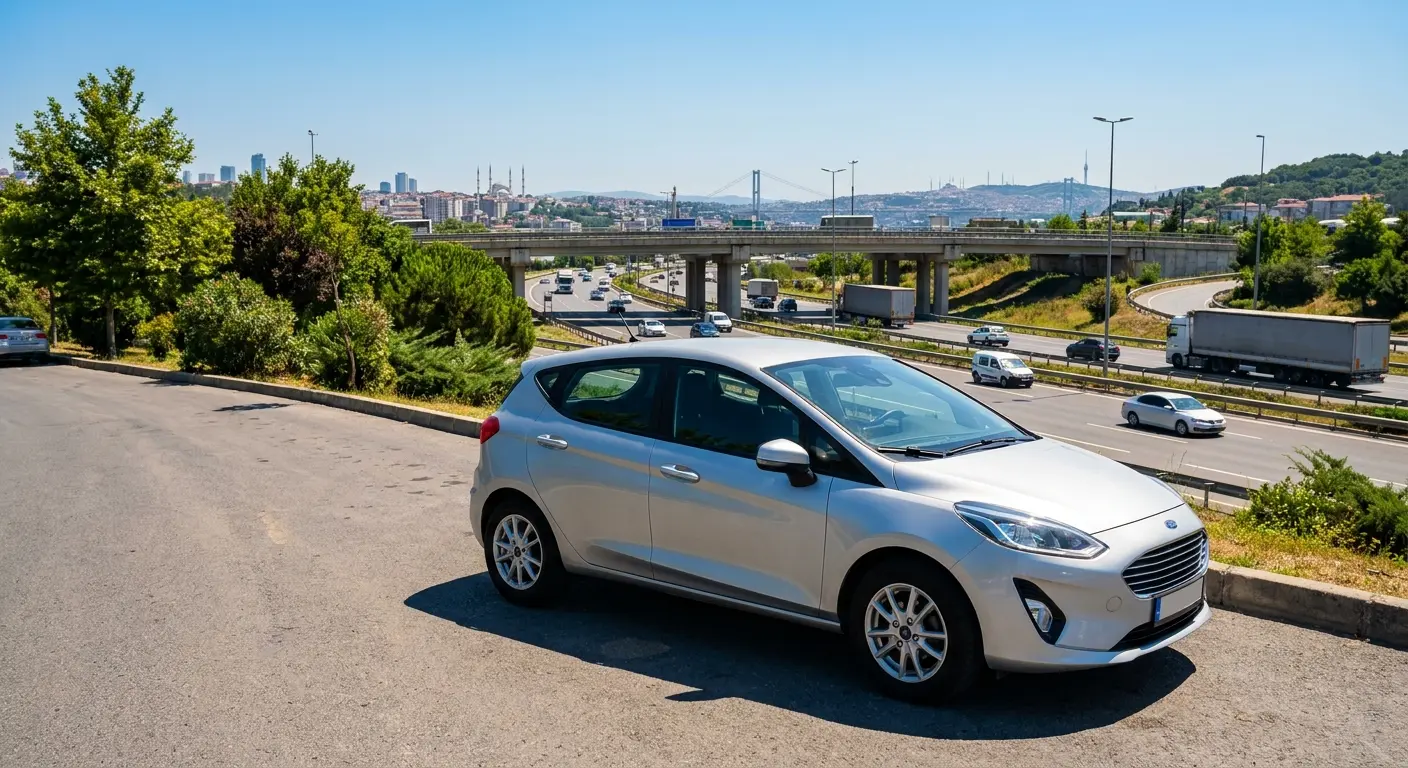
One-Way Car Rental in Istanbul: Costs and FAQ Guide
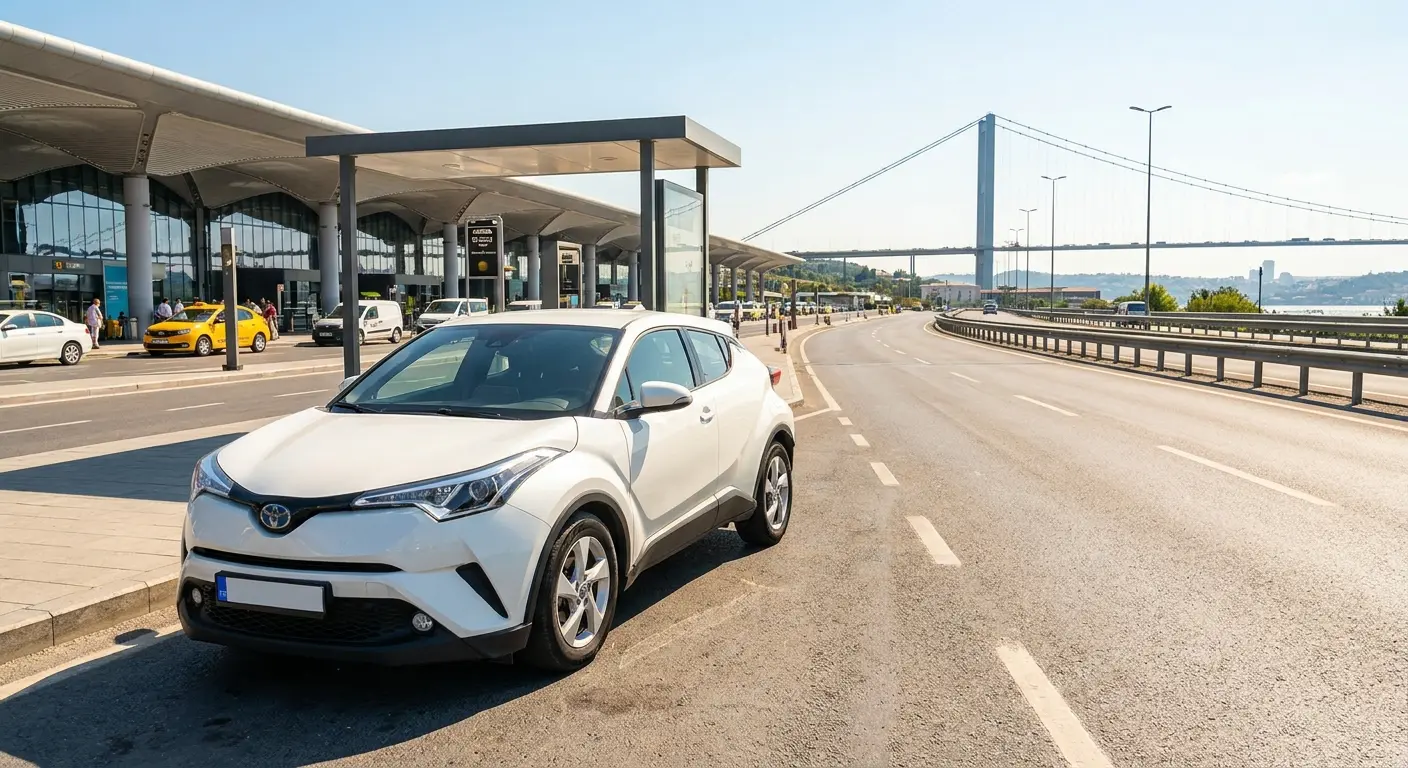
What exactly is one-way car rental?
One-way rental — often called "drop-off" or "one way" — means picking a car up at point A and returning it at point B. In Istanbul, that usually means one of three things:
- Picking up at an airport and returning at a city office (or the reverse),
- Collecting on one side of the city and dropping on the other,
- Driving from Istanbul to another city such as Bursa, Izmir, Ankara, Eskisehir or Antalya and leaving the car there.
Each of those scenarios is priced differently, and the pricing logic is what most travellers misunderstand. In a round-trip rental, the car comes back to the same location, so the operator's logistics cost is close to zero. In a one-way rental, the car stays somewhere else — it either has to be driven back or re-rented from that city. The line item you see on your invoice, the "one-way fee", is mostly a logistics charge, not a penalty. Treating it as a service cost rather than an unfair surcharge makes budgeting much easier. When you browse premium car rental listings on Turlago, you will notice that each listing states its pickup and drop-off points clearly; comparing on that field first prevents most surprises later.
Why do rental companies charge a one-way fee, and how big is it?
The fee covers repositioning, branch balancing, and sometimes the cost of an empty return drive. How it is applied varies widely:
- Flat fee: A single amount regardless of route, most common for same-city drop-offs.
- Percentage of the daily rate: The one-way fee is calculated as a share or a multiple of your daily rate. It is lower for economy cars and noticeably higher for SUVs and premium models.
- Distance-based fee: For intercity drops, a per-kilometre charge applies. A 200 km route and a 600 km route never cost the same.
- Vehicle class multiplier: On the same route, an economy car and a large SUV can be hundreds of lira apart, because a premium car is harder to re-rent in a smaller city.
One important detail: unlike a deposit, the one-way fee is not blocked on your card — it is charged. That means your true total is not "daily rate × days" but "daily rate × days + one-way fee + airport surcharge + additional driver + mileage overage".
How do you actually calculate a one-way rental budget?
The numbers below are illustrative, not a quote — the point is to show how operators build a total. Say you rent an economy car at an equivalent of 1,000 per day for four days:
- Base rental: 4 × 1,000 = 4,000
- One-way fee (assume half a daily rate): +500
- Airport service charge: +250
- Additional driver (4 days × 100): +400
- Mileage overage (if applicable, 100 km × 5): +500
With taxes, that lands in roughly the 5,700–6,000 range. The same car on a round-trip basis, same number of days, would have stayed around 4,500–4,800. The gap is roughly one night of hotel accommodation. So before you commit, ask yourself a blunt question: does one-way save me enough time and hassle to justify that gap? If yes, it is the right call. If not, either plan a loop or look for a different transport combination — a transfer, a bus, or a domestic flight for the return leg.
Are city routes or intercity routes more expensive?
Short answer: intercity routes are almost always more expensive. The car ends up outside Istanbul and joins a different fleet pool, which forces the operator to plan a return. As long as your drop-off stays inside Istanbul — for example picking up on the European side and dropping on the Asian side — the extra cost is usually symbolic. Some operators charge nothing at all for same-city drops; others only add a motorway or bridge toll line. Intercity routes are a different story. Demand patterns matter enormously: if nobody wants to drive the car back, the fee climbs. Late-week drops and peak summer dates push it up further. If you are optimising purely for budget, staying inside the city and returning the car where you picked it up is nearly always cheaper — unless your actual itinerary makes that impossible.
Airport pickup to city drop-off, or the other way round?
Pricing is rarely symmetrical, and it is driven by how easy the car is to re-rent at the drop-off location:
- Airport pickup, city drop-off: Usually the most expensive combination, because the airport service charge and the one-way fee stack up.
- City pickup, airport drop-off: Often cheaper. The car arrives where the next customer usually is, so some operators waive the one-way fee entirely in this direction.
- City pickup, city drop-off: The most economical option. If the two offices are close, the fee is either minimal or zero.
A practical tactic: build your rental around your flight schedule rather than around your first hotel. Arriving at the airport and taking a transfer into town, then picking up a car in the city a day later and dropping it at the airport at the end of your trip, frequently produces the most balanced budget. It also keeps you away from airport parking costs and unfamiliar multi-storey car parks on your first jet-lagged evening.
Which routes out of Istanbul make economic sense one-way?
One-way works best on corridors where the car has a realistic chance of coming back — either because return traffic exists or because another customer will rent it in that city:
- Istanbul to Bursa: Short distance, heavy traffic both ways. Usually one of the most reasonably priced one-way routes.
- Istanbul to Izmir: Long but busy. Summer pricing fluctuates sharply.
- Istanbul to Ankara: Business-driven demand, generally cheaper midweek and pricier on weekends.
- Istanbul to Eskisehir or Sapanca: Popular weekend escapes where small car classes keep costs down.
- Istanbul to Antalya: Frequently one of the priciest one-way routes. Compare against a domestic flight before deciding.
Where you drop the car also matters: a downtown office often costs less than an airport counter on the same route. If you are planning a long one-way drive, remember that motorway and bridge crossings are logged to the vehicle's toll transponder and may be charged to you at the end of the rental, sometimes with a small handling margin.
What hidden line items inflate a one-way rental bill?
These are the charges international visitors most often miss:
- One-way (drop-off) fee: The main item. If it is not listed separately in the quote, ask for it in writing.
- Airport service charge: Applied at airport counters, usually absent at downtown offices.
- Additional driver fee: Charged per day, so it compounds quickly on longer rentals.
- Young or senior driver surcharge: A daily premium for drivers outside a defined age band.
- Mileage overage: In limited-mileage packages, every kilometre past the limit is billed.
- Fuel difference: Returning the car below the pickup level triggers a refuelling charge plus service margin.
- Toll transponder charges: Bridge and motorway crossings are recorded on the car and billed afterwards.
- Cleaning or minor damage charges: Items outside the damage waiver can be invoiced individually.
- Early or late return: Early returns rarely generate refunds; late returns add a day plus a late fee.
If you add all nine to a comparison, one-way pricing becomes transparent. Ask for a written quote that lists every one of these items; a verbal "it should be around that much" has no contractual value.
How do mileage limits work on one-way rentals?
Mileage rules are generally stricter on one-way rentals, because the operator cannot predict how far the next customer will drive the car. You will see three models:
- Unlimited mileage: A higher daily rate, but complete freedom in route planning. On long intercity drives this is usually the best value.
- Mileage package: A total allowance (for example 1,000 km) and a per-kilometre charge beyond it. You plan the route around the allowance.
- Daily mileage cap: A limit per day, with unused kilometres generally not rolling over.
The classic budgeting mistake is choosing a package without checking the daily price difference between limited and unlimited. For a 300 km round trip, a package can work well. For a 900 km one-way route out of Istanbul, unlimited mileage is almost always safer. Always confirm the per-kilometre overage rate; 100 km of overage looks trivial until you multiply it out.
How do deposits and card blocks affect your travel budget?
A deposit is not part of your rental cost, but it is temporarily blocked on your card. That creates two parallel money flows:
- Rental payment: Charged and spent.
- Deposit hold: Blocked from your available credit and released after the vehicle is returned and inspected.
This distinction matters a lot for budgeting. On one-way rentals, deposit amounts are sometimes set higher because the car is being left in a different city. Release of the block can also take several banking days. If you are travelling on a tight budget, earmark that amount from day one. Another common issue for foreign visitors: the card used at the counter must usually be in the main driver's name, and it must have enough available limit to cover both the rental and the deposit — otherwise the car will not be released. Check the exact hold amount before you travel, and check your card limit too. It takes two minutes and prevents a genuinely bad start to a holiday.
Which insurance package actually makes financial sense?
Insurance is the fastest-moving number in a rental total. The basic structure:
- Mandatory third-party cover: Legally required, included in the base rate, and covers damage to others.
- Collision damage waiver with excess: Cheap daily rate, but you remain liable up to a set excess amount.
- Zero-excess / full protection: Higher daily rate, near-zero liability if something happens.
- Glass, tyre and undercarriage cover: Often sold separately, and genuinely relevant on Turkish roads.
A budget-conscious strategy is not "buy the most expensive package", but "close your biggest risk at a fair price". If you choose a high-excess policy, make sure you can actually cover that excess if the worst happens — otherwise you have not really bought protection. On a multi-city route with unfamiliar parking situations, glass and tyre cover is often worth the extra. And if you are considering full protection, compare the total against a shorter rental with a cheaper package: sometimes cutting one rental day beats upgrading the insurance.
Fuel policy: full-to-full or prepaid?
Fuel rules are a quiet cost driver on one-way rentals. There are two main models:
- Full to full: Collect full, return full. You refuel just before the drop-off. This is the most transparent and usually the cheapest approach.
- Prepaid fuel: You pay for a full tank upfront and return the car empty. Unused fuel is generally not refunded.
On a one-way route, plan your final refuel in advance — find a station 10–15 km before the drop-off point rather than hunting for one in an unfamiliar district at the last minute. If you skip it, the difference is billed at a premium rate plus a service margin. One more small but common mistake: fuelling a diesel car with petrol (or the reverse). Confirm the fuel type on the contract at pickup, and note it on your phone.
Round trip or one-way: a side-by-side comparison
Put two scenarios next to each other:
- Round trip: Pick up in Istanbul, drive to Bursa, drive back. Four days. No one-way fee, no airport surcharge, returned where collected. Total cost is essentially rental plus insurance plus fuel.
- One-way: Pick up in Istanbul, drop in Bursa, return by coach or flight. Rental plus one-way fee plus possible branch or airport surcharge plus a one-way ticket home.
The most common budgeting mistake here is comparing only the rental figure. Add the return journey: on some routes the flight or coach ticket eats the entire saving, and on others the one-way rental still wins because it removes a full day of driving, fuel and fatigue. The right question is never "which is cheaper?" in isolation — it is "on my specific route, which produces the lower total?"
How do season and booking timing change the price?
One-way fees are not fixed; they move with demand:
- Summer and public holidays: Peak demand lifts both daily rates and one-way fees. Availability, not just price, becomes the problem.
- Weekends: Friday and Saturday drop-offs generally cost more than midweek.
- Shoulder seasons: Both daily rates and drop-off fees soften, and promotional offers appear.
- Last minute: Occasionally there is a bargain, but on one-way rentals it is risky — the specific drop-off location you need may simply be unavailable.
The budget-friendly playbook: if your dates are flexible, aim for a midweek pickup and return. Booking extremely early is not automatically cheaper, but for one-way rentals a window of roughly three to six weeks ahead tends to be the sweet spot. Align your pickup time with your flight arrival, and remember that late-night or early-morning collections can carry an out-of-hours staff charge.
When is a chauffeured car or transfer the smarter buy?
Not every one-way need requires self-drive. Compare three options:
- Self-drive: Maximum freedom, but fuel, tolls, parking and the deposit hold are all on you.
- Chauffeured rental: A higher daily rate, but parking, fuel, driving fatigue and navigation stress disappear. For groups of four or more, the per-person cost often becomes competitive.
- Point-to-point transfer: If you simply need to get from one address to another, a transfer is frequently cheaper and unquestionably simpler than renting. No deposit, no one-way fee, no fuel policy.
For airport-to-hotel runs, single city hops, or travellers who would rather not drive in Istanbul traffic at all, a transfer usually wins on both cost and stress. Self-drive takes the lead when you need multiple stops, flexible timing and luggage capacity over several days.
Does one-way make sense on a long-term rental?
Beyond about a month, rental pricing switches to a completely different logic: lower daily rates, different deposit ratios, and monthly packages. Long-term rentals are usually built around staying in one city, which makes one-way drop-off an outlier. There is one realistic scenario though: someone relocating for work who rents for a month and wants to hand the car back in the new city. In that case the one-way charge is calculated on logistics rather than on daily rate multiples, and it becomes a fairly small share of the monthly total. Even so, drop-off flexibility on long-term contracts is limited — get a written answer to "can I return this car in another city, and at what cost?" before signing anything.
The ten budgeting mistakes we see most often
- Comparing daily rates without calculating the total cost.
- Not asking about the one-way fee at booking time and discovering it at drop-off.
- Planning a long drive without reading the mileage limit.
- Leaving the deposit hold out of the budget entirely.
- Adding an extra driver late and ignoring how the daily fee compounds.
- Missing the fuel policy and paying a premium at return.
- Forgetting that bridge and motorway tolls are logged to the car.
- Over-insuring while cutting rental days that actually mattered.
- Misaligning the drop-off time with the flight and paying an out-of-hours fee.
- Getting a quote from one company only and skipping the comparison.
Use this as a checklist before you confirm. On the Turlago car rental category, filtering listings by drop-off point and included coverage is the fastest way to see what each option actually costs you.
Quick answers to common questions
Is one-way rental inherently more expensive?
Almost always yes. For the same car class and the same number of days, a one-way rental produces a higher total than a round trip.
Do you pay a one-way fee for a same-city drop in Istanbul?
Sometimes nothing at all, sometimes a small handling fee. The amount rises sharply whenever an airport is involved.
How far in advance should you book?
Four to six weeks ahead in peak season, one to two weeks in low season. Earlier is not automatically cheaper.
Is the deposit part of the rental price?
No. The rental is charged; the deposit is blocked and released after return.
Is insurance mandatory?
Mandatory third-party cover is included by law. Damage waivers are optional, but plan for the excess amount if you choose a cheaper policy.
Is a chauffeured one-way rental more expensive?
The daily rate is higher, but when you factor in fuel, parking and driver fatigue, it can work out better value for larger groups.
Final word: decide one-way with the budget open in front of you
One-way car rental in Istanbul is a convenience you pay for. Ask the right questions upfront — where is the drop-off, what is the one-way fee, what is the mileage limit, how large is the deposit hold, is there an airport surcharge — and you will see the real number before you commit instead of reading contract clauses on the last day of your trip. Weigh the season, the drop-off time, the car class and your return options together. More often than not, a round-trip rental plus a single transfer or coach ticket produces the most balanced budget of all. To compare every option in one place and filter by drop-off location, start with premium car rental listings on Turlago — and keep both your itinerary and your wallet under control.