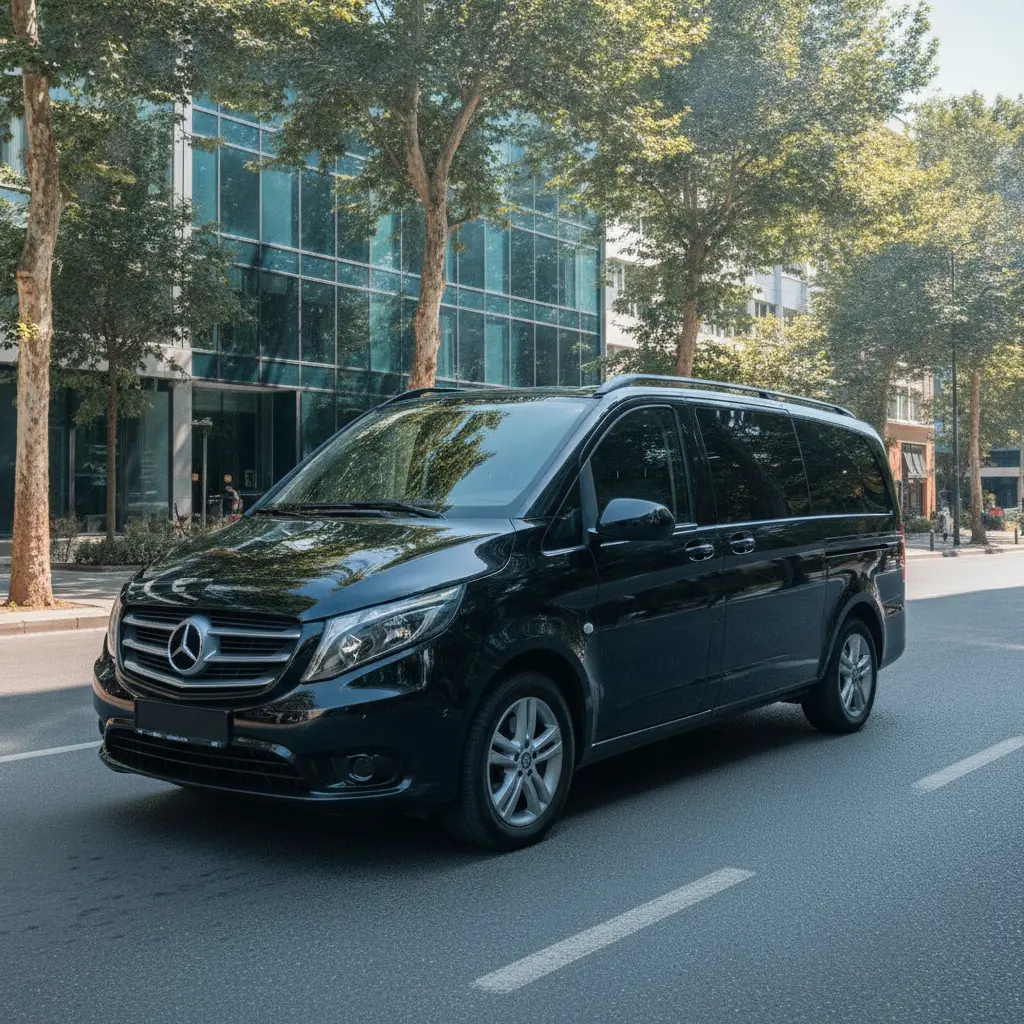
Chauffeur-Driven Minibus Hire Istanbul: 35+1 Otokar Cost Guide
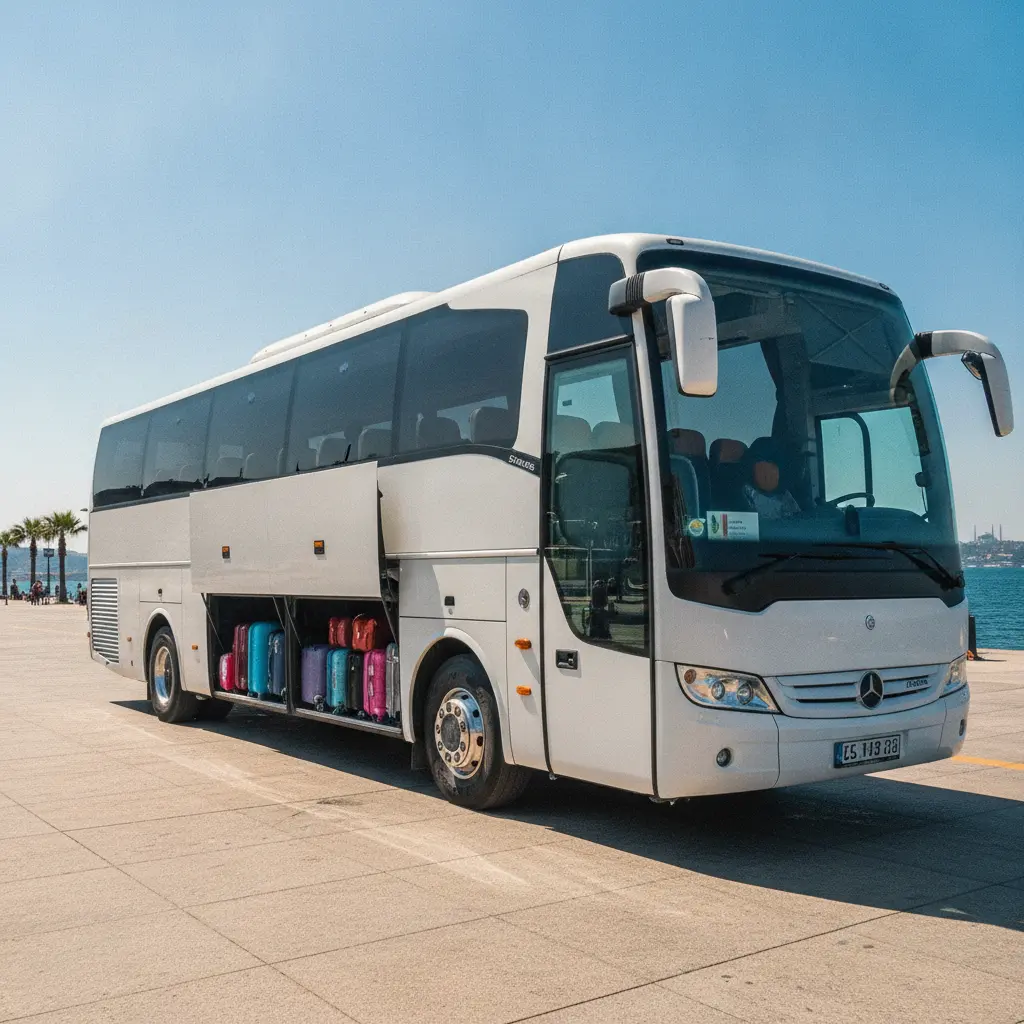
Two quotes arrive for the same 35-seat minibus, same date, same route across Istanbul, and one is almost half the other. The gap is rarely about the vehicle. It is about what sits inside the quote and what quietly sits outside it: fuel, driver hours, bridge tolls, parking, waiting time, VAT, a second driver for the late return. A cheap headline number can turn into an expensive day once the group is already on board and the meter starts running.
This guide breaks down how a 35+1 Otokar Sultan Mega class minibus is actually priced when you hire it with a driver, and which decisions move the number the most. If you want to see the listing itself, you can view the 35+1 Otokar Sultan Mega chauffeur-driven minibus hire in Istanbul on Turlago. The rest of this page is about asking better questions before you commit.
What 35+1 actually means once people start boarding
In minibus terminology, 35+1 means 35 passenger seats plus one seat for a guide, tour leader or assistant. The arithmetic looks simple until you fill all 36 seats with real people carrying real bags. Aisle space shrinks, the rear luggage compartment reaches its limit long before the seat count does, and boarding takes longer at every stop.
Three separate numbers matter for budgeting: how many people are travelling, how many will be on board at any one moment, and how many will arrive with large luggage. A conference group of 35 rarely boards all at once; a wedding group always boards at once but rarely returns at once; a full-day out-of-town trip boards with luggage. The same vehicle behaves like three different vehicles in those three scenarios.
The real commercial argument for this class is access. A 35+1 minibus reaches hotel forecourts and narrow streets that a 46+1 coach cannot. In areas like Sultanahmet, Beyoğlu and the one-way ramps around Nişantaşı, a coach may have to drop the group several hundred metres away. That distance becomes taxis, umbrellas and lost time, and it erases the apparent per-seat saving of the bigger vehicle.
The seven line items that make one quote bigger than another
Chauffeur-driven minibus pricing is assembled differently by every operator, which is why two quotes that look similar are often not comparable at all. Tick these off against each quote before you decide:
- Vehicle age and class: A newer unit costs more per day but carries lower breakdown risk and better ride quality on long routes.
- Number of drivers: Long-distance and late-night returns usually require a second driver; this rarely appears as its own line unless you ask.
- Fuel: Some operators include it, others charge per kilometre. Excluded fuel is the most volatile part of an out-of-town budget.
- Mileage cap: If the quote says 200 km included per day, compare that with your actual route before signing.
- Time definition: How many hours are included, what is the hourly overage, when does the night rate begin? These three answers can move a budget by a third.
- Tolls and parking: Bridges, motorways, airport entry and coach parking — who pays?
- Tax and service fee: Is VAT included, and is it written on the offer?
Once these seven are marked on both quotes, the one that looked 40 percent more expensive often turns out to be the cheaper option. The reverse also happens: a headline bargain climbs to last place as soon as overtime and tolls are added.
The driver line: the part most clients misread
The gap between self-drive and chauffeur-driven hire is not simply a salary. A professional driver knows where a 9-metre vehicle can legally stop in Istanbul traffic, which hotel entrance can take a group drop-off, and which bridge is jammed at which hour. That knowledge keeps the schedule intact, and a schedule that holds is money saved, because overtime hours never get billed.
Four things need to be explicit in the quote. First, the driver's working window: is this a 12-hour day or a 6-hour one? Second, who covers the driver's meals and, on overnight trips, accommodation — small line items that add up across a two-day programme. Third, documentation: does the operator hold a passenger transport authorisation and does the vehicle have a commercial passenger licence, and can they send copies? Fourth, has the driver actually seen the route plan?
Driving and rest periods for commercial passenger transport are regulated. Planning a 14-hour day with one driver is a safety and insurance problem, not just a comfort issue. If you are leaving Istanbul for Bursa, Sapanca or Edirne and returning the same day, ask the driver-count question directly. Adding a second driver costs less than a forced roadside rest that derails the programme.
There is also a quieter cost: a driver who does not know the plan follows navigation, and navigation routes large vehicles into streets they cannot exit. An experienced driver takes the initiative; an inexperienced one reverses a 35-seat vehicle out of a residential lane with the whole group watching. Share the plan in writing and get the timings confirmed.
Luggage: will 35 suitcases really fit?
The most common disappointment in minibus hire happens at the luggage bay. A 35+1 vehicle does not have space for 35 weekend suitcases. As a working rule, the number of full-size hard cases that fit comfortably in the rear compartment is well below the seat count, and overhead racks are for hand luggage only. Treat luggage as part of the quote, not as an afterthought.
Practical fixes: count the bags in advance and send the number in writing; prefer soft cases, which compress and stack, over rigid ones; and for an airport run with 35 people plus 35 large cases, plan either a second vehicle or a larger coach. The outbound airport transfer is usually fine — it is the return leg, after everyone has shopped, where the problem appears.
Equipment counts as luggage too. If the group carries a PA system, microphone, cool box, display screen or exhibition stand materials, declare the volume. Hiring a minibus for a trade fair group is not only about moving people; the stand has to travel with them. In that case, reducing the seat count is the correct decision: 30 people plus cargo in one vehicle is a better plan than 35 people and a cargo problem.
The simplest safeguard is to ask for a photograph and, where possible, the dimensions of the luggage bay before booking. A verbal assurance that it will fit is difficult to resolve at the kerbside with a group waiting.
Hourly, daily or per-kilometre: comparing the three pricing models
Chauffeur-driven minibus hire in Istanbul is generally priced one of three ways, and the right model depends entirely on the shape of your programme.
Hourly suits short, point-to-point work: an airport-to-hotel transfer, a dinner run, a three-hour hotel-venue-hotel loop. The hidden factor is the minimum charge. Some operators bill a four-hour or five-hour minimum, so a two-hour job at a five-hour minimum pushes the per-person cost up sharply.
Daily suits full-day city programmes and single-day out-of-town trips. The critical questions are how many hours constitute a day, what the overtime rate is, when the night tariff starts, and whether there is a mileage cap. A package defined as 10 hours becomes two overtime hours on a 12-hour wedding schedule.
Per kilometre can work on long, variable routes, but in Istanbul traffic the odometer moves slowly while the clock moves fast. If you choose this model, make sure fuel inclusion is written down and that the route is agreed in advance.
Whatever the model, write out every stop with its planned time. Waiting-time charges cause most disputes: if the quote says the first 15 minutes of waiting are free, get that in the contract. Late hotel check-outs, wedding exits and delayed flights are all waiting time, and all of it lands on the budget.
Season, day of week and event type: the same vehicle at three prices
Minibus pricing is demand-led. The May-to-September wedding season, graduation and school trip periods, the congress and trade fair calendar, New Year week and public holidays all push rates upward. The same vehicle will not cost the same on a Tuesday as on a Saturday.
Three flexibilities are worth testing: date, start time and route. Date flexibility saves the most. A midweek day trip is often priced well below a Saturday equivalent. Start time matters too, because a 09:00 departure blocks the vehicle from a morning job; if you can shift to 10:00 and the vehicle is otherwise idle, there is room to negotiate.
Event type changes the operational load. Weddings involve decoration, pauses and photo stops, meaning the vehicle is effectively reserved for the day and priced accordingly. School trips bring teacher supervision, consent requirements and fixed return times. Corporate transfers bring invoicing, tax compliance and punctuality discipline. Same vehicle, different cost structure.
If you are combining the transfer with an evening programme, plan the venue and the vehicle together. You can view the private table Bosphorus dinner and Turkish night on Turlago; agreeing the drop-off and pick-up point with the venue in advance is the single most useful step for a night-time group movement.
The invisible route costs: bridges, motorways, parking and toll transponders
Any Istanbul programme that crosses between the continents carries toll exposure, and the route you choose changes the cost. Ask explicitly whether bridge and motorway charges are included, and whether the vehicle's toll transponder usage is billed to you. Each crossing looks minor in isolation; across a multi-stop day that touches both sides of the city, the total is noticeable.
Parking is discussed even less. Around Sarayburnu, Sultanahmet, Beyoğlu and Nişantaşı, large-vehicle parking is scarce and hourly rates are high. If your programme includes a four-hour museum visit, the minibus either pays to park or drives out and returns, which costs fuel and time. Ask who covers parking during waiting periods, and get the answer in writing.
Airport transfers add entry, exit and car park tariffs. When a flight is delayed, the vehicle waits in an airport car park, and that wait appears as both time and parking. For corporate accounts, folding this into a fixed package is the easiest way to avoid an unexpected invoice at month end.
Fifteen questions to send before you accept any quote
Copy this list straight into your enquiry. Written answers are always safer than a phone conversation.
- What is the vehicle's model year and seating layout, and does 35+1 mean 35 passenger seats plus one?
- How many hours does the quoted price cover, and what is the hourly overage?
- At what time does the night tariff begin?
- Is fuel included, and if not, what is the estimated fuel cost for this route?
- Is there a mileage cap, and what is the excess rate?
- Who pays bridge, motorway and parking charges?
- How is waiting time billed, and how many minutes are free?
- How many drivers are included, and is a second driver required for this route?
- Are driver meals and accommodation included for out-of-town work?
- Does the operator hold a passenger transport authorisation, and does the vehicle have a commercial passenger licence? Can you send copies?
- What insurance cover applies, and is there a per-passenger limit?
- What are the cancellation and rescheduling terms, and what notice is required?
- Are the seats, belts, air conditioning, microphone and cool box all in working order?
- How many large suitcases does the luggage bay hold, and can you send a photo?
- How is payment handled — deposit, balance, and when is the invoice issued?
Anyone who gets written answers to these fifteen can genuinely compare offers. If one answer is “we will sort it on the day”, that quote is not yet a price.
What the contract and the offer sheet should contain
Even for a short transfer, insist on a written offer. It should state the date, times, pick-up and drop-off points, vehicle model and seat capacity, number of drivers, total price, inclusions and exclusions, hourly overage, cancellation terms, payment schedule and a contact number.
For longer programmes, attach the stop-by-stop schedule with estimated durations. If the schedule is signed as an annex to the contract, the “that is not what we agreed” conversation disappears. Set a rule that route changes require written confirmation; verbal route changes are the most common source of extra-kilometre and overtime invoices.
Do not skip insurance and liability. Ask whether the vehicle carries the compulsory traffic policy and passenger cover appropriate for commercial passenger transport. If a guide, interpreter or tour leader will be present, record their seat and their role in the programme. On a tour where the guide speaks throughout, a broken microphone quietly reduces the value of the whole day.
A ten-minute handover checklist
Even with a driver, you are entitled to a short inspection at handover. Ten minutes protects the rest of the day.
- Photograph any existing bodywork or glass damage.
- Run the air conditioning and check that air reaches the rear rows.
- Confirm that seat belts are present and latching in every row.
- Check the fire extinguisher and first aid kit are present and in date.
- Open the luggage bay and agree the loading plan with the driver.
- Test the microphone, sound system and any screen.
- Note the fuel level and agree the level for return.
- Take the driver's phone number and hand over a printed copy of the schedule.
Do this before the group starts boarding. Agreeing the luggage layout while the bay is empty saves fifteen minutes at departure; rearranging 35 bags at the kerbside costs the programme time it does not have.
Three budget scenarios: a wedding, an airport run and a day trip
Rather than quoting numbers that shift with season and supplier, here is what actually drives cost in each case.
Scenario one, a wedding: afternoon transfer from hotel to venue, late-night return. The two dominant costs are waiting time and the night tariff. The vehicle is effectively held for hours and the driver is on duty throughout. The expensive element is time, not distance, so an hourly package makes the budget predictable.
Scenario two, an airport transfer: 35 people and 35 suitcases. Cost is driven by luggage and waiting, not distance. A flight delay, car park charges and the possibility of a second run all inflate the total. If luggage capacity is not confirmed in advance, hiring a second vehicle becomes the single largest cost increase of the whole trip.
Scenario three, a day trip out of the city: early departure, evening return. Cost is driven by distance, fuel, motorway tolls and driver count. A 14-hour day with one driver carries a real risk of a mandatory rest stop shifting the schedule. Ask about the mileage cap and fuel inclusion before anything else.
For outbound international departures, the minibus usually handles the airport leg. A large group heading on the 7-night Italy tour departing from Istanbul, viewable on Turlago needs the transfer timed against the flight, which directly affects both vehicle size and luggage planning. On winter departures such as the 4-day Bavaria and Alps Christmas market tour on Turlago, bulky cold-weather clothing makes the luggage plan the most critical part of the transfer cost.
Minibus, coach or van: where the capacity thresholds sit
Vehicle class is the biggest single lever on budget. Rough thresholds: 6-8 people, a large van or SUV; 10-16, a 16+1 minibus; 17-27, a 27+1 midibus; 28-37, a 35+1 midibus; above 40, a 46+1 coach.
Moving up a class is not automatically more expensive. Hiring two vans for a group of 33 can cost more than one 35+1 midibus and splits the group in the process. Splitting means two drivers, two parking spaces, two waiting clocks and twice the coordination. One vehicle, one schedule, one invoice.
Moving down is not automatically a saving either. Squeezing 30 people into a 27+1 vehicle creates a compliance and safety problem and reduces comfort. Choose capacity on the basis of comfortable travel, not mathematical fit. For groups of 30 to 32, the 35+1 class is usually the best balance of seating, luggage and aisle space.
Conclusion: the best quote is not the cheapest one
The real cost of a chauffeur-driven minibus is not the single figure on the offer sheet. It is that figure plus everything sitting outside it: overtime, the night tariff, tolls, parking, driver meals, a second driver, and the extra vehicle you hire when the luggage does not fit. Plan for those and the budget holds; ignore them and it breaks somewhere on the road.
A reliable order of work looks like this. Fix the headcount and the luggage first. Write the schedule out hour by hour. Collect three quotes and compare them against the fifteen questions above. Only then read the contract and the cancellation terms. That sequence protects both your budget and the rhythm of the day.
To see current terms and availability, view the 35+1 Otokar Sultan Mega chauffeur-driven minibus hire on Turlago. Send your dates, timings and route in writing, and you will finally see exactly what the price you are paying actually covers.