Chauffeur-Driven S400 4MATIC Hire in Istanbul: Cost & Booking Guide
Most people deciding on a chauffeured luxury car ask the same three things: what should a reasonable daily budget be, what does that rate actually include, and is the S400 4MATIC worth the premium over a standard executive sedan? This guide answers those questions in plain terms, with the cost mechanics laid out section by section rather than in brochure language.
To check live availability, package durations and a quote tailored to your dates, view the chauffeured S400 4MATIC hire service on Turlago. The rest of this article explains exactly which lines to look at when the quote arrives.
What is actually included in a chauffeured S400 4MATIC booking?
In short: the car, a professional driver, standard insurance, and a defined window of time within a defined route. That single sentence is not enough to budget from, because the real differences between packages sit in everything that sentence leaves out. When two quotes for the same car, same city and same hours differ noticeably, the reason is almost always scope.
Six items usually inside the rate
- Vehicle hire: Exclusive use of the S400 4MATIC for the agreed period. Long-wheelbase rear comfort and a quiet cabin are the actual product being sold.
- Driver service: Not just someone at the wheel — a suited driver who knows the route, opens the door, and manages waiting time. This is the largest and least visible part of the price.
- Fuel: Normally included up to a stated mileage or within the booked time block. Beyond that, it becomes an extra.
- Insurance and licensing: Compulsory traffic insurance and commercial operating permits. In chauffeur-driven hire the liability sits with the operator, not with you.
- Standing time: The car waiting outside a venue, ceremony or meeting. The number of included waiting hours must be asked about explicitly.
- Taxes: VAT and any service fee. If you need a company invoice, ask for it to appear as a separate line.
What usually sits outside
Bridge and motorway tolls, parking, the driver's meals and overnight costs on intercity trips, late-night surcharges, additional stops, and excess mileage. None of these is dramatic alone; combined, they can move the total by 15-20%. One question covers it: which items are included and which are charged separately?
Which seven variables move the price?
Different numbers for the same car are not hidden discounts — they are seven variables being calculated differently.
- Duration: Hourly, half-day, full-day, multi-day. Cost per hour falls sharply as the block lengthens; short bookings carry the highest hourly rate.
- Season: May to September is wedding and event season in Istanbul. Friday and Saturday, plus the December holiday period, are the most contested dates.
- Day and hour: Weekday daytime is the cheapest band. Programmes ending after midnight or starting before dawn may attract a surcharge.
- Route: A programme that stays on the European side is not priced like one that crosses to the Asian side. Bridge crossings cost both time and money.
- Mileage cap: Some packages are time-based, others come with a kilometre allowance. Any city programme exceeding roughly 40-60 km makes a capped package the worse deal.
- Vehicle age and specification: Newer long-wheelbase cars with rear massage and blinds sit at the top of the band; an earlier model year of the same car eases the budget.
- Supply on the day: Multiple requests on the same date push rates up. Last-minute booking is expensive; early booking is flexible.
Before comparing two quotes, confirm the model year, the driver's language skills, the included waiting time and the mileage cap. Comparing rates without equalising those four is meaningless.
Hourly or full-day: which is the better buy?
Short answer: if the programme runs past four hours, the full-day package almost always wins. Hourly rates are not only paying for time — they are paying for the operator's risk of not being able to resell that car that day.
Three scenarios, three cost logics
- 2-3 hours (wedding exit, short city hop): Hourly makes sense. The car collects you, drops you, leaves. If the wait runs long, extra hourly charges start.
- 5-8 hours (full city day, chain of meetings): The full-day block drops the cost per hour substantially, and waiting time is usually inside the package.
- 10+ hours or two days (wedding plus next-day transfer, intercity): Requires a multi-day or bespoke quote. The critical question here is who pays for the driver's overnight stay.
A practical rule: write your programme in hours, then add a 30% buffer. Traffic, ceremony delays and photo sessions mean the plan is almost always overrun, and the extra-hour rate is higher than buying the full day upfront.
How does the S400 compare with an E-Class or a Vito on budget?
This is the most frequently asked and most poorly answered question. The right answer is not “the S400 is best” but “which one is sufficient for your scenario”. There is a clear ladder in hourly pricing, and the S400 sits near the top — typically well above the executive sedan band and close to or above people-carrier pricing.
- E-Class / 5 Series class: More than enough for two or three people on city business. The budget-conscious choice, with a more restrained executive feel.
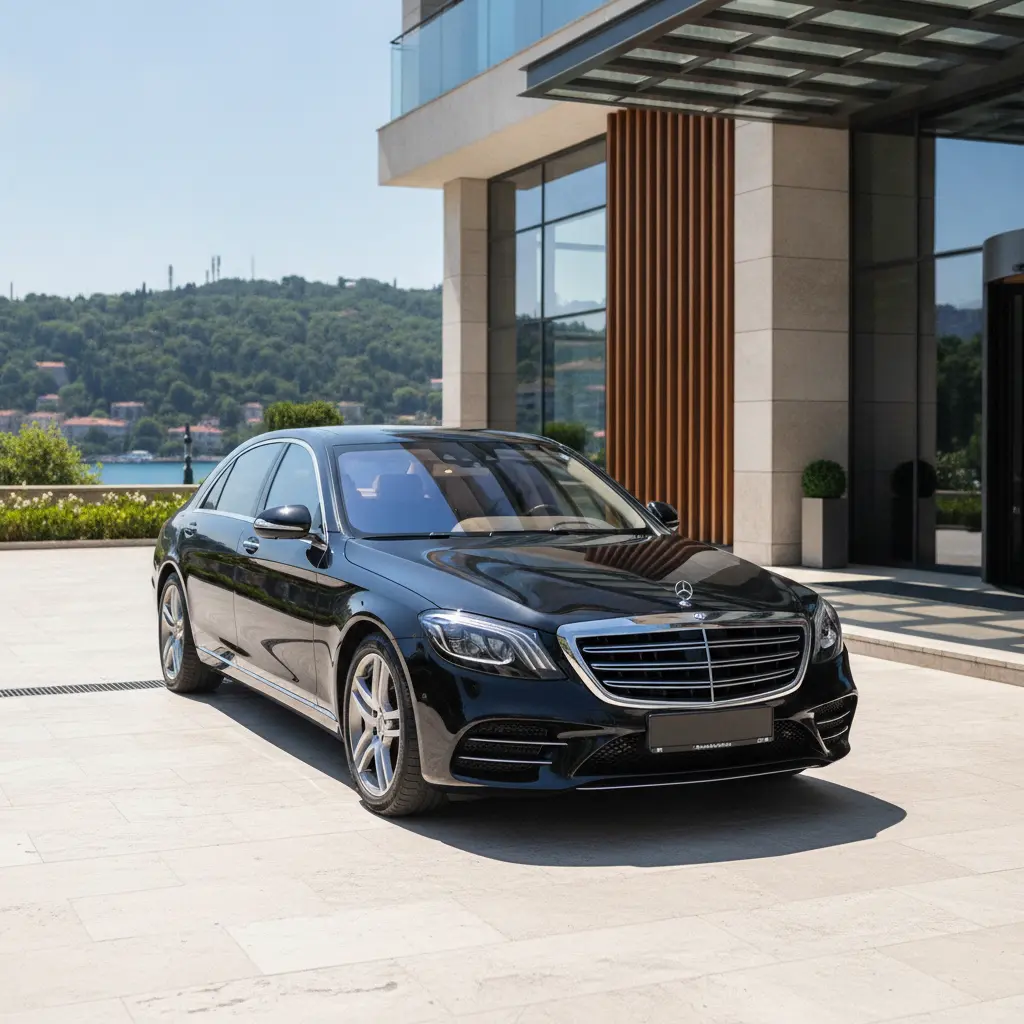
- S400 4MATIC: Built for one to three people who need to work, rest or be represented in the rear. Long wheelbase, quiet cabin, all-wheel drive. The premium buys measurable things: rear legroom, suspension comfort and low road noise.
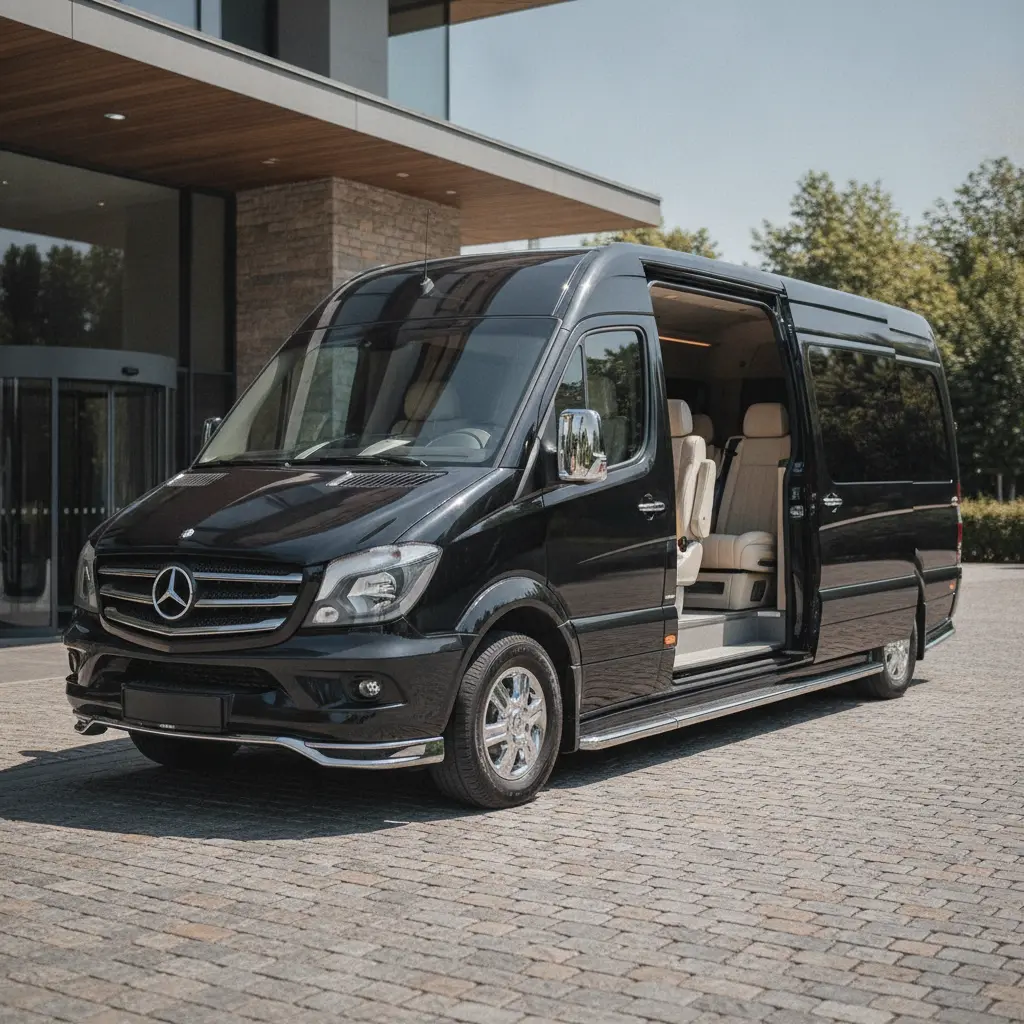
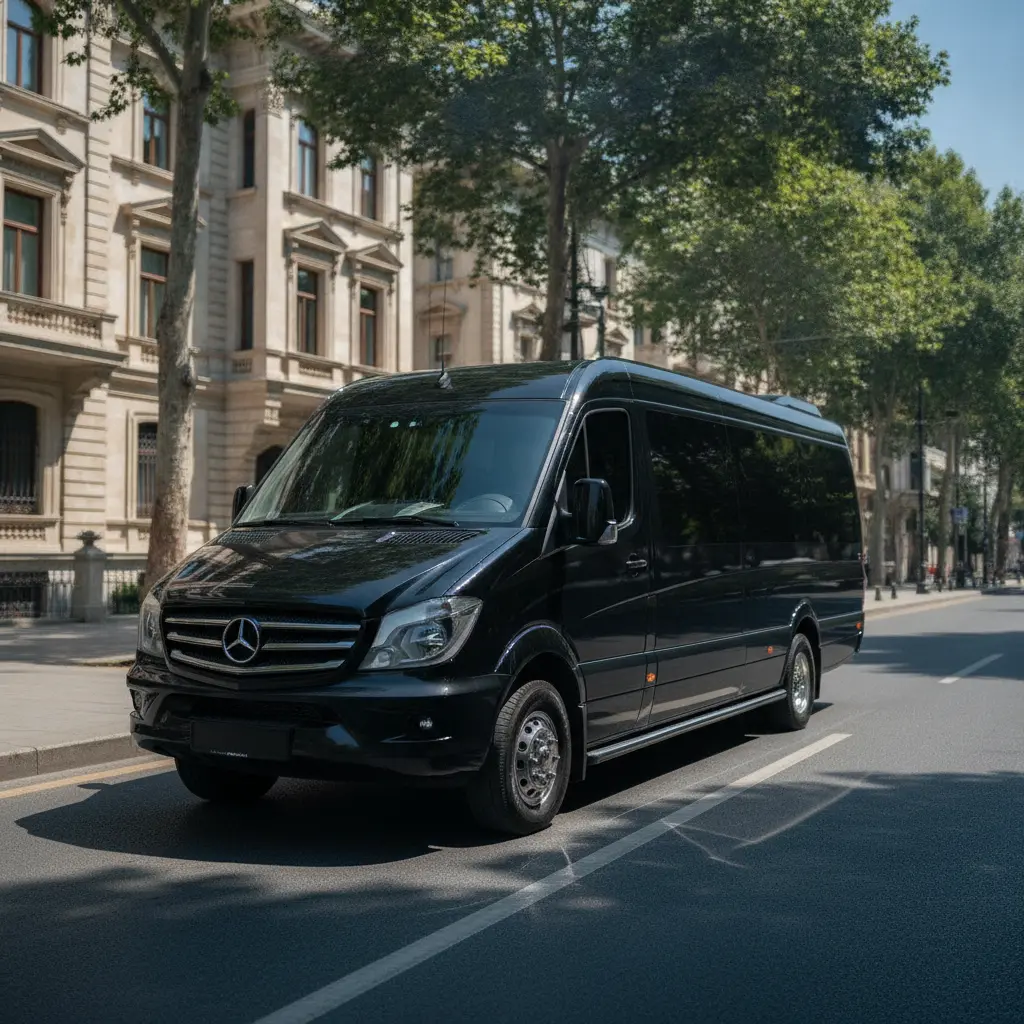
- Vito / Sprinter class: The lowest cost per person for groups of five to seven. For one or two passengers it is simply wasted money.
The decision sentence: if you are torn between two options on the same budget, count people first, programme hours second, and the badge last. Booking a van for a six-hour, three-person itinerary wastes budget; squeezing seven people into an S400 means hiring a second car.
How many passengers and suitcases does it really take?
Direct answer: three adults in genuine comfort, four at a squeeze. The centre rear seat works for short hops; on a longer run, three adults is the comfort limit. The boot realistically takes two large cases and two cabin bags.
This capacity figure has a direct budget consequence. Four people with four large suitcases heading to the airport will usually be cheaper in a single van than in two S400 runs. Conversely, a two-person business trip with light luggage gets full value from the S400. Stating passenger and luggage numbers at the time of booking removes the risk of a mid-programme vehicle swap — and a swap always costs extra.
Is the driver worth the money?
The driver is the biggest line item in the budget, and the difference between operators lives precisely there. A good driver plans around traffic windows, knows the alternative route, manages waiting time, and understands when protocol requires the door to be open. A poor one returns the same car and the same itinerary to you as a thirty-minute delay and unnecessary fuel.
Ask these before booking:
- How much Istanbul driving experience does the driver have, and is the route planned in advance?
- Does the driver speak English or another language? Essential if you are hosting international guests.
- What is the dress standard — suit, gloves, both?
- Will the same driver stay with the car throughout, or is there a shift change?
- Where does the driver wait during standing time, and how quickly can they be reached by phone?
If none of this appears in writing, confirm it verbally. You can only compare prices once driver standards are equal.
How much does the route change the bill?
In Istanbul you pay for crossings, not for distance. The same twenty kilometres costs more at rush hour and more again via a bridge.
Four typical routes and their budget impact
- Within the European side (Levent, Beşiktaş, Nişantaşı, Fatih): The most predictable scenario. No bridge, limited parking need. An hourly block usually suffices.
- Crossing to the Asian side (Kadıköy, Ataşehir, Sabiha Gökçen): Bridge or tunnel plus traffic variability. A full-day package is the safer structure.
- Airport transfer (IST or SAW): One direction, best priced as a fixed transfer. Ask separately about meet-and-greet and waiting cover.
- Intercity (Bursa, Sapanca, Edirne): A day-plus programme. Driver accommodation, fuel and tolls materially change the total. Insist on a single all-inclusive price.
Write your itinerary as arrival and departure times at named addresses rather than as distances. Once waiting time becomes visible, the quotes become comparable.
Does the S400 make sense for an airport transfer?
Yes if you are arriving straight into a meeting, a hotel check-in with expectations, or a guest you are receiving. No if the only objective is the lowest cost between two points — standard transfer vehicles are the budget answer there.
Compare transfers on these four points:
- Meet and greet: Name-board welcome included? Is waiting free during flight delays, or charged hourly?
- Luggage: Does the cabin-bag plus large-case combination actually fit, or is a second vehicle needed?
- Arrival time: Is there a night surcharge for late landings?
- Return leg: Is a discount applied when both directions are booked together?
A return booking with the same operator is almost always cheaper than two one-way bookings, and the same driver on the return day simplifies luggage and timing coordination.
How should a long-term hire budget be structured?
For needs lasting more than a week — a project team, an extended guest stay, a seasonal workload — the logic changes entirely. Daily hire becomes expensive because you pay a separate operational cost for every single day.
When thinking monthly or weekly, split three items:
- Fixed vehicle plus driver fee: The daily equivalent falls significantly on monthly terms, but a monthly commitment is required.
- Fuel and mileage: Monthly contracts usually carry a kilometre allowance. Every kilometre beyond it is an extra, and heavy city use makes that gap real.
- Cost of flexibility: Cancellation and shortening terms are stricter than on daily hire. If your plans are not fixed, weigh the monthly discount against the lost flexibility.
Practical threshold: fewer than four days of use per week favours daily hire; five to six days and above justifies a weekly or monthly conversation. Below that threshold, a monthly contract means paying for days you never use.
How many hours does each type of event actually need?
This is the most concrete step in budgeting. The ranges below already include a buffer.
- Wedding exit / post-ceremony: 2-3 hours. Venue exit, photos, drop-off at home or hotel.
- Full wedding programme (preparation, ceremony, exit): 5-7 hours. Standing time dominates here, so confirm how many waiting hours the package includes.
- Corporate meeting chain (three stops): 4-6 hours, plus a traffic allowance between stops.
- Guest hosting programme (hotel, lunch, evening event): 8-10 hours, or two separate blocks. If the evening ends at a Bosphorus dinner, pairing it with an Istanbul Bosphorus dinner and entertainment cruise is more efficient than hiring twice — the car collects you from the pier at the end.
- Intercity day trip: 10-12 hours. No driver overnight needed, but the shift is long.
For a more tailored evening, options such as a private-table Bosphorus dinner with a Turkish night show pair well with a one-way drop rather than hours of standing outside. That single change removes the waiting charge from the total.
When and how should you book?
Short answer: three to five days ahead in normal periods, two to three weeks ahead in wedding and event season. If you need a specific model and specification, allow even longer — same-day availability in the S-Class bracket is never guaranteed.
Confirm the following at the time of booking:
- Exact address and time: Hotel name and entrance, not just a district. A clear pickup point prevents delay.
- Passenger and luggage count: A later vehicle upgrade changes the price.
- Duration and buffer: State your expected end time and ask the extra-hour rate upfront.
- Cancellation terms: How many hours before the booking is cancellation free? What happens if the event date moves?
- Payment plan: Full prepayment or partial on the day? Flag company invoicing early.
- Contact: Whose number do you call on the day, and is the driver's number shared in advance?
Get a written confirmation covering these points. A verbal agreement leaves you exposed the moment a small dispute appears on the day itself.
Eight ways to keep the premium look without inflating the budget
- Tighten the itinerary. Cutting three stops to two reduces the hourly total directly.
- Plan drops instead of waits. If an event runs four hours, two short transfers can be cheaper than keeping the car outside. Price both options.
- Choose a weekday. Friday and Saturday carry a higher rate for the same block.
- Stay in daytime hours. Programmes ending late can trigger a tariff difference.
- Go one-way premium. S400 on the arrival, standard transfer on the return. The arrival is where you are seen; nobody studies the badge on the way back.
- Book both legs with one operator and ask for a discount on the second leg. It is the easiest negotiation available.
- Use a mileage-capped package for city work and an unlimited structure for intercity trips.
- Book early. In peak season, a car left until the last day costs a premium, not a discount.
Five expensive mistakes
- Comparing vehicle rates only. Once driver, fuel and waiting are stripped out, the cheapest quote often becomes the most expensive total.
- Not asking about standing time. At weddings and events, waiting is often half the booked duration.
- Changing the passenger count later. A class change costs more than choosing the right car at the start.
- Ignoring the late-night tariff. Ask upfront whether a surcharge applies after 23:00.
- Skipping the cancellation policy. On a flexible date, a strict policy means paying in full for a service you never used.
The conclusion: right budget, right car, right duration
The chauffeured S400 4MATIC decision reduces to three questions. How many of you are travelling and how much luggage? How many hours does the programme run, and how much of that is waiting? Which side of the city is the route on, and how many crossings does it include? Once those answers are clear, quotes become genuinely comparable — before that, any comparison misleads.
For budget-minded readers, the short version: take the full-day package on anything over four hours, get the waiting allowance in writing, keep both legs with one operator, and ask for the model year in the quote. None of that dilutes the premium impression; it just removes the unnecessary lines.
To check availability and the package lengths that fit your dates, view the Istanbul chauffeured S400 4MATIC hire page on Turlago. Submit your date, time and route, and the quote is built around your actual programme rather than a generic day rate.