Classic Italy Tour 8 Days 7 Nights: Best Time to Go
Most travellers choosing an Italy itinerary spend their time comparing cities. The question that actually decides whether the trip feels effortless or exhausting is quieter: which week of the year are you travelling? The same eight-day loop that feels like an unhurried stroll in mid-April can feel like a forced march through crowded squares in mid-August. This guide looks at the Classic Italy Tour from Rome to Milan purely through that lens — what each month realistically delivers city by city, which optional excursions genuinely work in which season, how daylight shapes the pace, and what changes in your budget.
If you want the full day-by-day structure, inclusions and departure details, view the Classic Italy Tour 8 Days 7 Nights on Turlago. What follows is the timing conversation around that itinerary.
Why the calendar matters more than the map on this particular tour
The tour starts with an early meet-up at Istanbul Sabiha Gökçen Airport at 06:10 and a Pegasus Airlines scheduled flight to Rome, and it finishes with a transfer to Bergamo Airport for the flight home. In between, seven nights are split across four bases: three nights in Rome, two in Montecatini, one in Venice and one in Milan. That distribution is exactly why season choice has an outsized effect.
Rome is the flexible part. Days two and three are left open for free time and for the optional excursions the guide organises. So how those two full days are spent is largely your decision — Vatican and the lake district, or Naples and Pompeii, or simply a slower day in the city. Weather directly shapes that call.
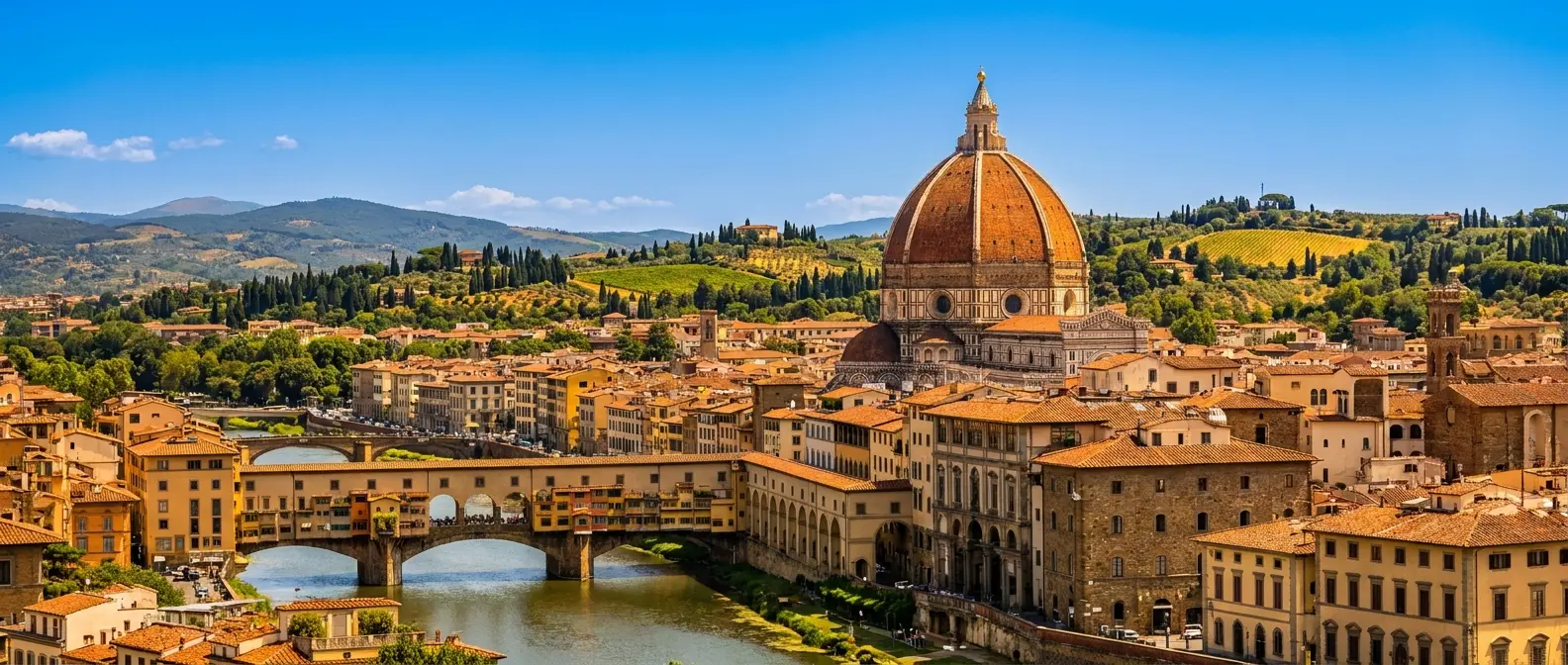
From day four onward the rhythm changes. Each day brings a new city: a coach transfer to Florence with a panoramic tour covering the Arno, Ponte Vecchio, Palazzo Vecchio, Piazza della Signoria, Santa Maria del Fiore and the Baptistery, then an overnight in Montecatini. A transfer to Venice with a short vaporetto crossing to St Mark's Square, a panoramic walk past the Basilica, the Bridge of Sighs, the Grand Canal, Rialto Bridge, the Doge's Palace and the bell and clock towers. Then Milan, with the Duomo, the Fortezza and the Galleria Vittorio Emanuele. On these days, comfort is decided by two variables: temperature and crowd density. Both are seasonal.
Put simply: the season shapes your free days in Rome, and daylight hours shape your transfer days. On an eight-day trip, you need to think about both at once.
A city-by-city seasonal map
Four cities, a few hundred kilometres apart, do not behave the same way. Reading the route city by city is the most reliable approach.
Rome: where heat and crowds bite hardest
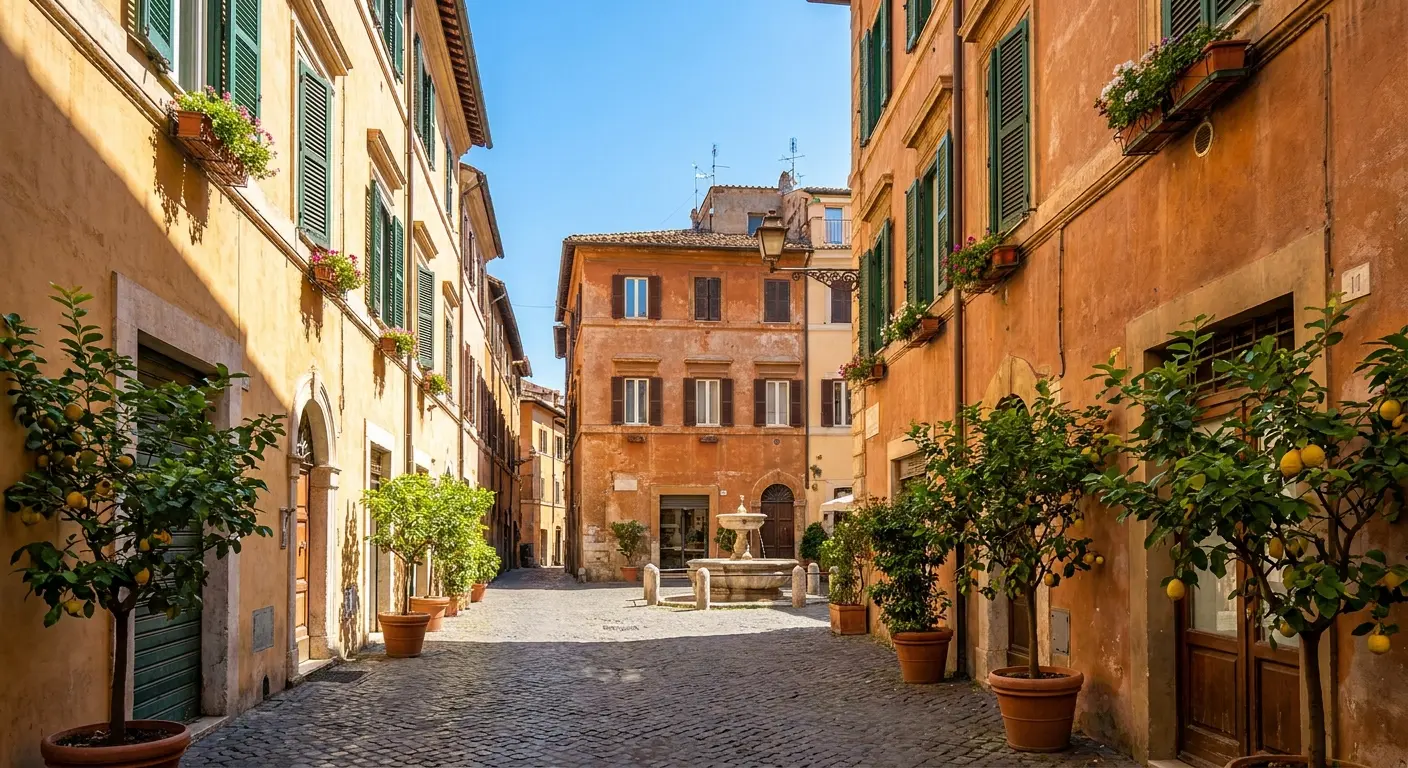
Rome opens the tour and carries the most walking. The panoramic circuit includes Castel Sant'Angelo, Piazza Venezia with the Vittorio Emanuele II monument, the Colosseum, the Trevi Fountain and the Spanish Steps — almost entirely outdoor, on foot, in the middle of the day. In summer that circuit is genuinely demanding; in spring and autumn it becomes a pleasant city walk. April, May, September and October are the most comfortable windows for covering it.
Florence and Montecatini: valley humidity plus a spa-town breather
Day four moves you from Rome to Florence for the panoramic tour, then to the hotel in Montecatini for the night. Florence is a humid city in summer; the stone lanes of the historic centre hold heat through July and August. Montecatini Terme, by contrast, is a classic spa town — which makes April and October especially appealing if you want to actually rest at the end of a walking day rather than collapse.
Venice: the stop that changes character most
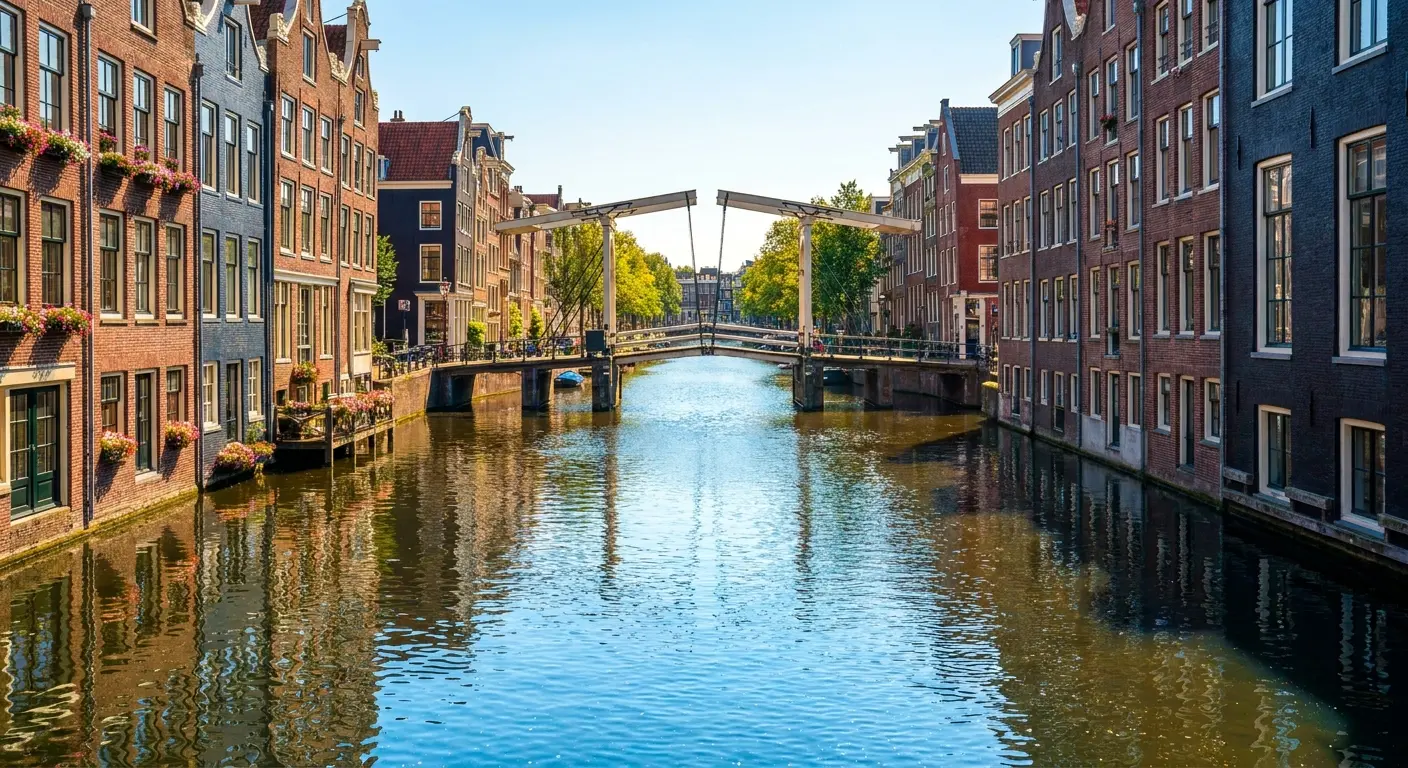
Day six brings arrival at Tronchetto, a short vaporetto crossing and the panoramic tour around St Mark's Square: the Basilica, the Bridge of Sighs, the Grand Canal and Rialto Bridge, the Doge's Palace, the bell and clock towers, and San Giorgio Maggiore. Venice is the one stop where season changes not just temperature but how you move through the city. Autumn and winter can bring acqua alta, the high-water events; summer brings humidity and heavy foot traffic. Because it is a single night, there is no flexibility to shift the day, so it is worth choosing your departure date with Venice specifically in mind.
Milan and Bergamo: the closing days
Day seven is the transfer from Venice to Milan, with the Duomo, the Fortezza and the Galleria Vittorio Emanuele on the programme. Day eight is the hotel-to-Bergamo-Airport transfer and the flight home. Milan and the Po Valley can be cold and foggy in winter, and daylight is short. If you travel in the colder months, plan on the last two days being squeezed into a narrower window of light.
Spring (April–May): the most balanced window on the route
Spring is the most balanced stretch of the year for this itinerary, and the reason is structural: the programme is outdoor-heavy, and outdoor-heavy programmes work best at moderate temperatures. The panoramic circuit in Rome, the historic-centre walk in Florence and the vaporetto-to-St Mark's crossing in Venice can all be completed in April and May without the heat becoming the story.
Daylight is the second advantage. On an eight-day trip, daylight hours translate almost directly into how much you can see. By April, Italian evenings are long enough that you still have usable light after dinner — a real benefit on Rome's open days, when the shape of the afternoon is up to you.
Crowds are the third. Late April and May are busy but not yet at the summer peak, so photographing squares, managing queues and finding a table are all noticeably easier than in July.
The one caveat is variability. April can throw short showers at you, so a light rain shell and layered clothing are the two most useful items in the suitcase.
Autumn (September–October): when the crowds thin and the water still works
September is the other genuinely smart choice. The summer heat has broken while sea and lake temperatures remain pleasant — and that matters for the optional excursions. On day five, the Pisa and Portofino excursion includes a boat trip to Portofino, so the season is not a side detail; it is the difference between a highlight and a chilly crossing.
October offers a different profile: cooler, quieter, softer light. In Venice, the chance of high water rises from late October, so taking an earlier October date is sensible. Milan and the north cool down noticeably in the evenings.
There is also a practical benefit that never shows up in photos: the walking distances stay the same, but you cover them without overheating. Around the Colosseum, the Spanish Steps and Piazza della Signoria, that difference is immediate.
Summer (June–August): long days, high tempo
Summer makes the itinerary look its best. Days are long, evenings start late and there is abundant light for outdoor touring. But the realities are real, and knowing them in advance prevents disappointment.
- Heat: Rome and Florence can be oppressive at midday. The panoramic tours are walking tours, so a hat, water and light clothing are not optional.
- Crowds: July and August are peak season across Italy. Around St Mark's Square and the Colosseum, your pace will drop whether you like it or not.
- Humidity: Florence and Venice can feel considerably heavier than the thermometer suggests.
- Excursions: Open-air programmes such as Naples and Pompeii are far better in the morning than after lunch.
If you do choose summer, the single most useful tactic is to split your days. Use the early hours actively, retreat during the early afternoon, and go out again in the evening. Rome's two free days suit that pattern perfectly. In Florence, the stone lanes of the centre trap heat, so build in more frequent stops than you think you need.
Winter (November–March): lower prices, thinner crowds, shorter days
Winter's advantage is concrete: fewer people and generally softer pricing. On an outdoor-heavy programme, thinner crowds genuinely improve the experience — walking across St Mark's Square or photographing the Spanish Steps is far easier in January than in July.
But there are two real trade-offs. The first is daylight. Italian afternoons close in early during winter, which can mean the outdoor portions of panoramic tours happen in fading light. Because the tour begins with a 06:10 meeting point, winter also means starting the first morning in darkness. That is normal — just plan for it.
The second is weather. Venice has its highest chance of high water in winter, and Milan and the Po Valley can be foggy. In exchange, museums, galleries and indoor spaces are calmer. Winter suits travellers who want to be in the city rather than photograph it.
Matching the optional excursions to the right season
The most important thing to understand about this itinerary is that a large part of the experience is shaped by optional excursions. The same add-on can be the best day of your trip or the most tiring, purely depending on when you take it.
- Outlet & Lake District & Vatican (day 2): Combines the village of Nemi and Castel Romano Outlet with free time at St Peter's Square and the Basilica. Most comfortable in spring and autumn; in summer the outdoor sections can land in the hottest hours.
- Rome by Night (day 2, evening): The least season-dependent option. In winter, early darkness pushes the start time earlier; in summer, the late sunset works in your favour.
- Naples & Pompeii (day 3): Pompeii involves substantial walking in the open. Spring and autumn are ideal; in summer, insist on a morning start and carry more water than you think you need.
- Orvieto (day 4, en route): The historic centre sits on a steep tuff plateau and the Duomo visit involves walking. Noticeably easier in cooler months.
- Pisa & Portofino (day 5): The most weather-sensitive option because of the boat to Portofino. May to September is the sweet spot; cold or windy days can make the crossing unpleasant.
- Bologna (day 6, en route): Piazza Maggiore, the Neptune Fountain, the Quadrilatero and the two towers — a walking programme that works year-round, though shade is scarce at midday in summer.
- Verona & Lake Garda (day 7, en route): Juliet's House, the Verona Arena, the Scaligero Bridge, the cathedral and Lake Garda. Spring and autumn suit the lake; the city walk works in any season, including winter.
One practical note: every optional excursion is organised by the guide and none of them are included in the tour price. Deciding in advance which ones you want removes the pressure of deciding on the day.
Weekday and time-of-day planning: the second layer
Season is only half of it. Where you are at a given hour matters too — and this itinerary actually makes that easy to manage, because Rome's free days come before the one-city-per-day stretch.
- Plan Vatican time early. The area fills up towards midday. Since free time at St Peter's Square is part of the excursion, use the first hours of the day.
- The Colosseum appears in the day-one panoramic tour as an exterior stop; museum and site entry fees are not included. If you want to go inside, reserve one of the Rome free days for it.
- Venice gets one day. The vaporetto crossing to St Mark's and the Rialto area can coincide with the busiest hours. An early start pays off more here than anywhere else on the route.
- Milan closes the trip. The Duomo and Galleria are a short walk; with an airport transfer the next morning, an early evening is the sensible choice.
Managing the eight-day pace, season by season
The tour is designed for groups of up to 100 people, which means there is a shared daily rhythm. Within that rhythm, managing your own energy is up to you.
In spring and autumn the pace manages itself. Cooler air makes walking easier, and even if fatigue accumulates you usually still have something left for an evening wander. The only thing to watch is layering: cool mornings, mild middays and cool evenings.
In summer, the strategy is different — split the day in two. Use the early hours, rest through the early afternoon, and go out again late. Rome's free days are built for this. In Florence, take more breaks than feel necessary.
In winter, it is the reverse: protect the daylight. Head out straight after breakfast so the outdoor sections of panoramic tours happen in good light, and save the evenings for indoor spaces, cafés and museums.
Packing by season: a short, useful list
- Any season: comfortable walking shoes (cobblestones are everywhere), a small daypack, a refillable water bottle, a power bank, a universal adapter.
- Spring / autumn: a light rain shell, a thin jacket or cardigan, layers, closed but breathable shoes.
- Summer: hat, sunglasses, high-factor sunscreen, linen and cotton, spare T-shirts.
- Winter: waterproof shoes, a warm base layer, scarf and gloves, an umbrella.
- Any season, for religious sites: something that covers shoulders and knees. At St Peter's and St Mark's this is practical housekeeping, not a formality.
Budget: what the season actually changes
The listed starting price on Turlago is 34,464 TRY, and it will of course vary with dates, availability and room type. Included in the price: economy class Pegasus Airlines tickets on the Istanbul (SAW) to Rome (FCO) and Milan (BGY) to Istanbul (SAW) legs, airport taxes, seven nights bed and breakfast in 3- and 4-star hotels, airport-hotel-airport transfers, all intercity transfers, panoramic city tours in Rome, Florence, Venice and Milan, city taxes (€25), the vaporetto fee (€15) and professional Turkish-speaking guiding.
Excluded — and this is where seasonal budgeting actually happens: visa fees and service charges, travel health insurance, the outbound exit fee, lunches and dinners, hotel extras and personal spending, optional excursions and en-route add-ons, museum and archaeological site entry fees, the Venice tourist tax, and anything not explicitly listed as included.
Season affects two lines most: optional excursions and food. In summer, restaurant prices and queues rise; on the other hand, long days let you break meals up rather than committing to one long dinner. In winter and early spring, thinner crowds mean the same budget buys a more relaxed experience.
Since lunches and dinners are not included, setting a simple daily food budget before departure removes the mid-trip arithmetic entirely.
Which season suits which traveller
- You want to explore on foot: April–May or September–October.
- Photography comes first: May and September — soft light, manageable crowds.
- The Portofino boat matters to you: between May and September.
- You want to avoid crowds: November–March, accepting shorter daylight.
- You love long days and late evenings: June–August, with a heat plan in place.
- Travelling with family: late spring or early autumn, when both weather and pace are more predictable.
Booking windows and practical notes
Day one begins with a 06:10 meet-up at Sabiha Gökçen Airport's international departures terminal. It is an early start, and in winter it will still be dark. Sorting your airport transfer the day before removes the only real stress of day one.
The visa process is not included and is the longest preparation item. Travel health insurance and the outbound exit fee are also separate. Completing all three before your travel date means the trip itself runs without interruption.
Accommodation is bed and breakfast in 3- and 4-star hotels. Breakfast being included is a genuine advantage on early-start days.
Finally: with four different bases across seven nights, you will open and close your suitcase more than once. Packing so that repacking takes two minutes is the habit that pays off most on this route.
The takeaway: the right dates double the value of the right itinerary
The route itself is already well chosen — Rome's landmarks, Florence's historic centre, Venice's canals and Milan's galleria. What turns that route into either a pleasure or a slog is usually the calendar. If it is your first visit and you want both walkable sightseeing and optional excursions that deliver, aim for April–May or September–October. If you prefer cool air and quiet squares over heat, winter works — as long as you accept shorter days. If long evenings matter most, summer is your window, provided you plan around the heat.
Before deciding, read the day-by-day flow once more: seeing which days are free and which are transfer-heavy makes the seasonal choice much clearer. View the Classic Italy Tour 8 Days 7 Nights on Turlago, compare the departure dates against the itinerary structure, and pick the season that matches how you actually like to travel.