First Time Renting a Car in Istanbul: Budget & Price Guide
The number on the sticker is not your budget
When someone rents a car for the first time, they almost always budget for the wrong number. They look at the daily rate on a comparison page, assume that is the cost, and then discover at the desk that the final figure looks nothing like it. This is not because rental companies are dishonest. It is because the daily rate covers a fairly narrow slice of the transaction: the use of the vehicle, compulsory third-party cover and routine maintenance. Everything else sits outside it.
What follows is not a price list, and you should be suspicious of any article that gives you one. Rates move with season, vehicle class, pickup location and how far ahead you book. Instead, this guide explains which line items move your budget, which questions to ask before you confirm, and how to compare two offers without being misled by the headline figure. If you are renting a car in Istanbul for the first time, the skill that matters is not negotiation. It is building a fair comparison.
To see live options side by side, explore the Turlago car rental page and keep the categories below open as you browse. A comparison only works when both offers are broken down the same way.
What the daily rate includes — and what it quietly excludes
Three things are normally inside the daily rate: the vehicle, the mandatory traffic insurance and standard maintenance. That is the full extent of it. The following items are usually excluded and stack on top of the headline price:
- Excess reduction package: Standard cover leaves you liable for a damage excess. Reducing that excess to zero is an added daily cost, and often a substantial one.
- Security deposit hold: Not a charge, but a pre-authorisation placed on your credit card. It can remain blocked for days after you return the car.
- Additional driver: If a second person will drive, they must be named on the contract, and most companies charge for this.
- Fuel policy: Full-to-full means you buy fuel yourself outside the station. A partial-return policy lets the company price the missing fuel, usually above pump price.
- Mileage cap: Some cheap rates include a daily kilometre allowance, with a per-kilometre charge beyond it.
- Different return location: Dropping the car at a different office triggers a one-way fee.
If you take one habit away from this article, make it this: write every offer down against those six lines. Two offices might differ by twenty percent on the daily rate, but if one includes excess reduction and the other does not, the cheaper-looking quote may well be the more expensive rental. Compare totals, never headlines.
Six line items that decide the real price
1. The excess amount is your biggest unknown
Under standard cover there is a ceiling on what you pay if the car is damaged. Find that number before you book rather than hunting for it in a contract at the counter. Then put the daily cost of the excess reduction package next to the excess itself. On a short rental, the package usually justifies itself: a single car park scrape can exceed the excess. On a long rental the maths reverses, because the package cost accumulates daily while the excess stays fixed.
2. The deposit blocks money you cannot spend
A deposit is not deducted from your account, it is held. While it is held, that portion of your credit limit is unusable. For a traveller on a fixed budget, this quietly reduces the money available for everything else. Release times after return depend on your bank and can range from a couple of days to a few weeks. Plan your card limit around the hold, not just around the rental charge.
3. Additional and young driver surcharges
If a partner, friend or family member will also drive, they must be added to the contract. An unnamed driver involved in an incident can void the insurance entirely, which turns a small saving into an unlimited liability. Drivers below a certain age also attract a daily young driver fee. Entering the driver age accurately at booking prevents an unpleasant conversation at pickup.
4. Fuel: why full-to-full is the safer choice
Collecting the car full and returning it full gives you the most control. You fill the tank yourself and keep the receipt. Policies where the company prices the fuel tend to charge above pump rates, and they are the single most common source of disputes at the return desk. For a first rental, do not try to optimise this line item. Choose the clearest rule available.
5. Mileage caps and out-of-city plans
If you stay within Istanbul, a mileage cap rarely matters. If you are planning an extension to Bursa, Sapanca or Abant, unlimited mileage becomes important. Overmileage charges on a capped rate can easily cost more than the difference to an unlimited rate. Estimate your rough distance before booking and price both options.
6. Bridges, car parks and traffic fines
These are not the rental company's charges, but they land in your budget all the same. Bridge and motorway tolls, hotel and mall parking, and camera-issued fines are typically passed on afterwards, often with an administration fee attached. Set aside a small daily allowance for them. For first-time renters in Istanbul, this is the group of costs that causes the most surprise.
Vehicle class: where the money actually moves
The most common first-timer mistake is treating an upgrade as a trivial difference. A small daily gap widens once fuel consumption, parking practicality and damage risk are added in. In Istanbul, choosing a class is also a parking strategy.
- Economy: The most efficient choice for one or two people. Easy to place in narrow streets and underground car parks, with low fuel consumption. Boot space is limited.
- Compact / mid-size: The realistic sweet spot for two travellers with two suitcases. Still comfortable in the city, more stable on longer drives.
- SUV: A high seating position and generous boot are appealing, but finding parking in dense neighbourhoods gets harder and fuel costs rise. Worth it mainly for out-of-town itineraries.
- Automatic transmission: A genuine comfort upgrade in Istanbul traffic. It costs more per day, but a first-time renter wrestling a manual gearbox in congestion loses the first day of their holiday.
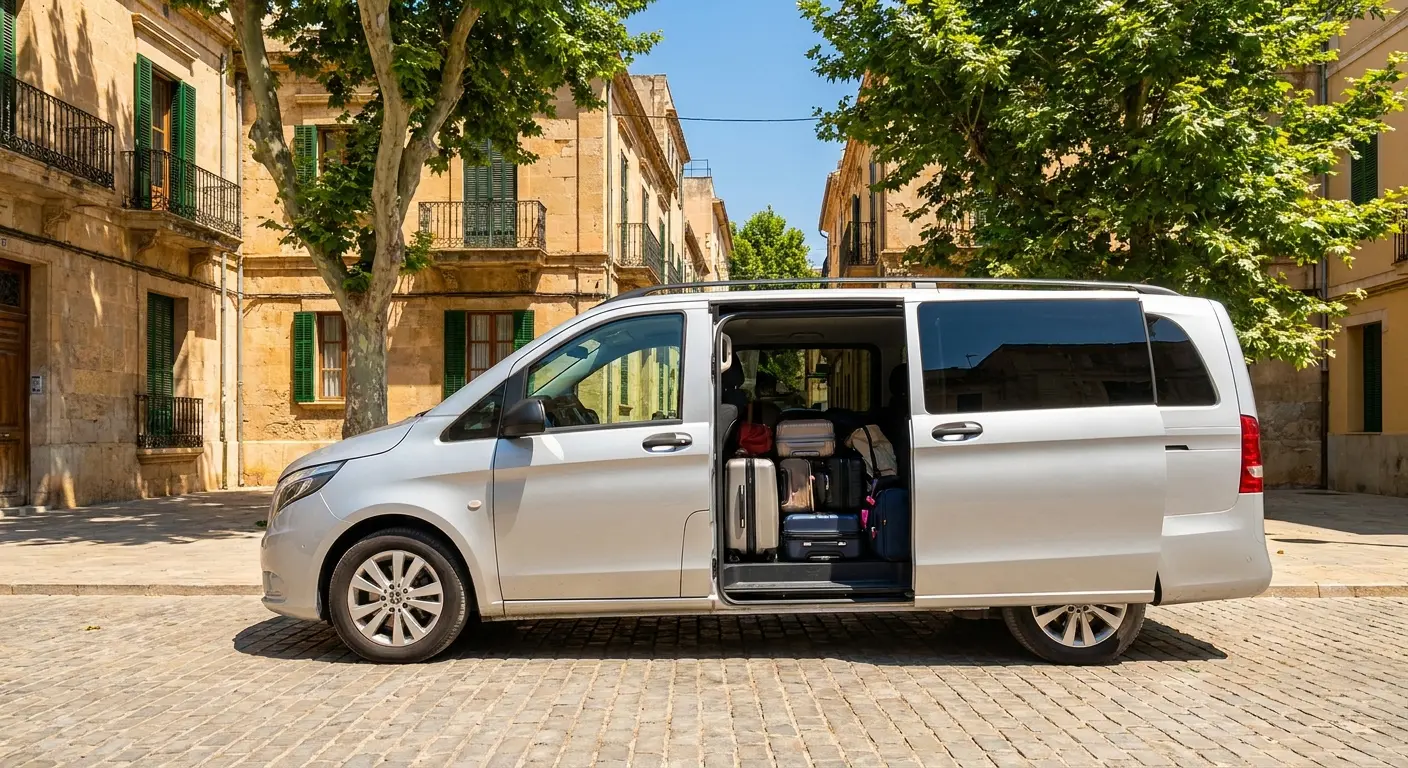
- Seven and eight seaters: The per-person cost drops for families and groups, while parking and fuel costs rise. Rarely practical for short city stays.
Ask yourself one question before choosing: how many people, how many suitcases, and on what route? Once that answer is clear, the class debate usually settles itself.
Airport desk vs city desk: why the gap exists
Airport desks offer real advantages: long opening hours, pickup timed to your flight, and the ability to drop the car and walk straight to departures. In exchange, two cost items appear. There is often an airport surcharge, and airport rates themselves tend to be higher. City offices usually quote a lower daily rate, but they keep shorter hours and you have to travel to them.
When comparing, do not stop at the daily rate. A one-way fee for collecting at the airport and returning downtown, the cost of a taxi to a city office, and any out-of-hours pickup charge all change the total. If your flight lands after midnight, the airport desk is close to the only practical option. If you land in the morning, a city office can save meaningful money. For larger families, the time saved at the airport desk frequently outweighs the surcharge.
Rental length and the long-term maths
Rental pricing is tiered. Weekly and monthly rates are progressively better value than daily rates, which means the shortest possible booking is not always the cheapest. Some three-day rentals become cheaper overall when they roll into a weekly package, because the average daily cost drops significantly.
Timing matters as much as length. Rental periods are usually calculated in 24-hour blocks, so a one-hour overrun can be billed as an extra day. Set your return time realistically rather than optimistically. Collecting in the morning and returning in the evening can land you in a shorter billing block than two full days, but confirm how the office counts partial days before you commit.
Long-term rental works on entirely different logic. If you are staying a month or more, a monthly contract is usually far more economical than stacking daily rates. Maintenance, insurance and sometimes tyre replacement are included, and flexibility such as a vehicle swap may be negotiable. Be aware that the deposit on a monthly contract is typically higher than on a short rental.
Deposits, pre-authorisations and card limits
Deposits are usually held against a credit card, and debit cards or cash are frequently refused. This detail derails a surprising number of first rentals at the counter. Confirm the accepted card type and the hold amount before you book, not on arrival.
The hold scales with vehicle class: modest for economy, considerably higher for SUVs and premium categories. Your available limit should sit comfortably above the hold, not exactly at it. The card also normally needs to be in the main driver's name; a deposit placed on someone else's card is often declined.
Release timing after return depends on your bank. Treat it as cash flow planning: if you intend to use your card heavily in the days after your trip, assume the hold may still be in place.
A worked example: three days in Istanbul on a budget
The framework below contains no real prices. It is a skeleton you fill with the numbers from your own quotes, and it is the single most useful exercise in this article.
- Daily rate × 3: The class you selected. Recalculate if a weekly package applies.
- Excess reduction × 3: Recommended on short rentals. Usually the largest single addition above the base rate.
- Additional driver × 3: Zero if you are the only driver.
- Fuel: On full-to-full, the tank you pay for at collection largely comes back to you on return. Your net cost is the fuel you actually burn.
- Tolls and parking: Small daily amounts that accumulate. Low for a city-only itinerary, higher if you head out of town.
- Deposit hold: Not a cost, but a limit reduction. Record it separately beneath the table.
Complete this twice, once for each offer, and the genuinely cheaper option becomes obvious. Most first-time renters skip the exercise and end up choosing the lowest headline rate instead of the lowest total cost.
First-timer's checklist before you sign
- Licence age: A young driver surcharge may apply below a certain age. Ask about the threshold when booking.
- Card type and limit: Credit or debit? Does the hold fit within your available limit?
- Excess amount: Get the figure before you book, not while standing at the counter.
- Mileage policy: Unlimited or capped? Match it to your itinerary.
- Fuel rule: Full-to-full or partial return? Pick the most transparent option.
- Pickup and return times: Understand the 24-hour block so you do not trigger an extra day.
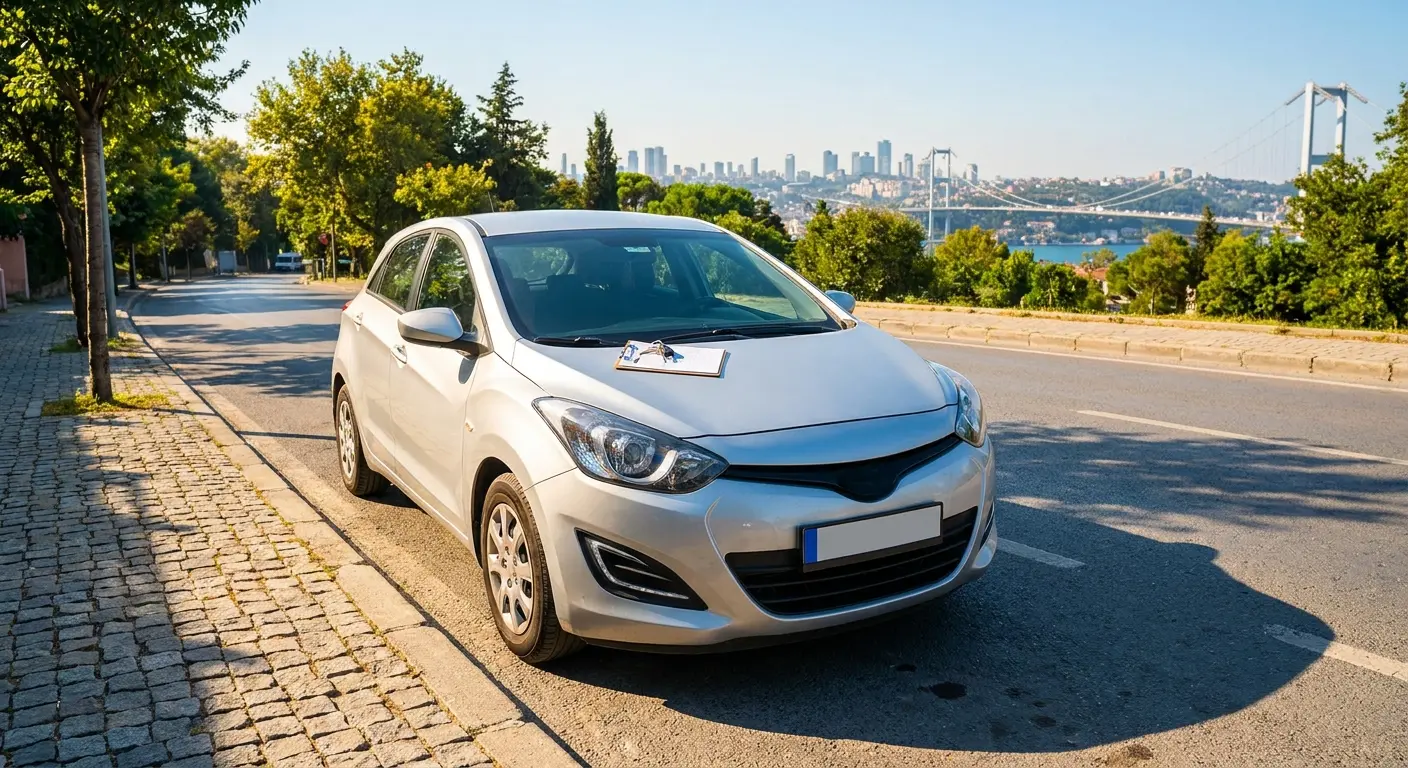
- Walkaround inspection: Circle the car with the agent, log every existing mark, and photograph everything.
- Equipment check: Spare wheel, jack and warning triangle all present?
- Emergency number: Save the roadside assistance line in your phone before you drive off.
- Return paperwork: Keep a copy of the document you sign when handing the car back.
Five mistakes that cost the most
- Comparing headline rates only: Without insurance and deposit, the comparison is meaningless.
- Not registering an additional driver: Insurance can be voided after an incident, and the cost dwarfs any saving.
- Skipping the inspection: A damage claim you cannot disprove is a claim you pay for.
- Ignoring a mileage cap on a cheap rate: One out-of-town detour can double the effective price through overmileage charges.
- Not checking opening hours: Arriving at a closed office knocks out the following day's plans as well.
Bottom line
If this is your first rental, the reassuring news is that the process is far less complicated than it looks. Only the order matters. Confirm driver and card details first, then establish the excess, fuel rule and mileage policy, and only then look at the daily rate. Follow that sequence and no quote will surprise you at the desk.
Throughout your planning, keep asking one question: what does this car cost me in total? Once that is clear, Istanbul traffic, the search for parking and the rest of your itinerary all become far more manageable. To compare live offers with the full picture in view, explore the Turlago car rental page and keep the checklist above beside you. The real win from your first rental is simple: next time, you will already know exactly what to look at.