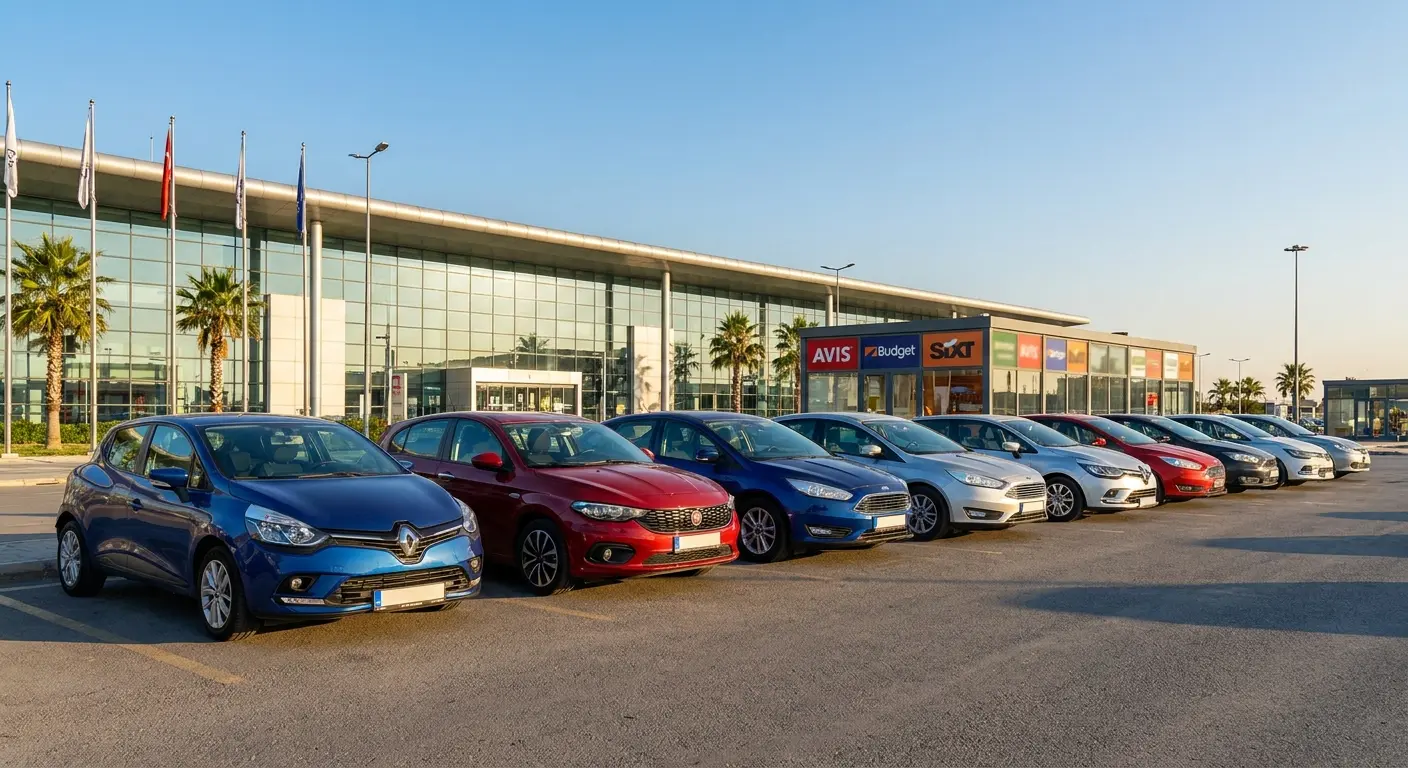
Renting a Spacious Car in Istanbul for a Family of 8 on Budget
Eight People, Six Suitcases, One Stroller: How This Started
The Demir family is standing at the baggage belt at Istanbul Airport, and the numbers are not in their favour: eight travellers, six large suitcases, two cabin bags, a folded stroller, and a debatable three neck pillows. The group is a grandmother, two parents, two adult children, an uncle, and two kids aged fourteen and six. They have six days in Istanbul and one day trip to relatives in Bursa before flying home.
They booked three weeks earlier, on a phone screen. The listing said “7-seat SUV, generous boot”. In the photo the car was parked on a mountain road with a single daypack leaning against the rear wheel. In reality, the tailgate closed on the first suitcase, the second went into the footwell behind the middle row, and the youngest passenger spent the first half hour wedged between her grandmother and three bags.
This article exists so that mistake does not repeat itself. There is no catalogue copy here — only what a family of eight actually pays for when renting a spacious vehicle in Istanbul, which line item inflates the budget, and which decision changes the total by a meaningful margin. If you want to see current classes and seating layouts side by side, start with Turlago's premium car rental options.
What the Family Actually Needed (Not What the Website Said)
Most groups decide by asking “how many of us are there?” That is the wrong first question. The right one is: how many people, with how much luggage, for how many days, on which route? The Demir list looked like this:
- Passengers: eight (six adults, two children). One child uses a booster seat.
- Luggage: six large cases (roughly 65x45x28 cm), two cabin bags, one stroller, one folding pushchair.
- Duration: six days in Istanbul plus a Bursa day trip.
- Drivers: two licensed adults, but only one willing to drive in Istanbul traffic.
- Comfort needs: legroom in the back for the grandmother, a sliding door for safe child boarding.
Once that list is on paper, the phrase “7-seat SUV” collapses on its own. For eight people, the seat count is already at its limit; add luggage volume and the class has to move up. Writing the list before checking prices is the cheapest step in the whole process.
Which Vehicle Class Really Fits a Family of Eight?
In Istanbul, four classes come up again and again for large families. Each has a different effect on the budget, but more importantly, each has different limits. The assessment below is built on usable volume, not seat count.
Seven-Seat SUV: The Attractive Trap
Visually the most appealing option is usually the narrowest one. Third-row seats are designed for emergencies, not adults. With those rows up, boot space is close to zero; with them folded, eight people simply do not fit. For a family arriving with six suitcases, this class only works alongside a second vehicle or a luggage delivery service — which pushes the real total above what the sticker price suggested.
Nine-Seater Van: The Natural Answer
High-roof, long-boot nine-seat vans are one of the few classes that carry eight people and six suitcases in one go. The trade-offs are real: height restrictions in car parks, manoeuvring in narrow streets, and a driving style that takes a little adjustment. The upside: the daily rate is meaningfully lower than luxury classes offering the same volume, and diesel consumption stays reasonable on longer runs.
The Minivan Class: Where Comfort Meets Budget
Sliding-door, seven-to-eight-seat minivans with folding rear rows are the most balanced choice for most families. You can fold part of the seating to create luggage space, parking is easier, and child boarding is safer. Priced close to a panel van, more comfortable than a large SUV.
Chauffeur-Driven Van: The Comfort Invoice
A driven, spacious van is genuinely valuable for airport arrivals, dinner returns, and a long day outside the city. The daily rate can be several times a self-drive booking. That is why the smart structure for most families is hybrid: self-drive for short city days, chauffeur for the long, tiring ones.
Seat Count Is a Marketing Number; Cargo Volume Is the Truth
Rental sites list vehicles by seats because seats are easy to compare. But the real unit for a family of eight is litres. A quick estimate: a large suitcase holds around 90–110 litres, a cabin bag 30–40. Six large cases plus two cabin bags is comfortably over 600 litres of cargo.
Two rules make this manageable:
- Seats = people + 1. For eight travellers, a nine-seat vehicle is the right starting point — both legally and practically. Extra seats become folding luggage space when needed.
- Ask for measurements, not photos. Message the supplier before booking: “Will six cases of 65x45x28 cm fit?” No answer usually means no.
Suggested image: six suitcases lined up in front of an open tailgate. Alt text: “Checking cargo volume before renting a spacious car in Istanbul for a family of eight”.
The Four Line Items That Build Your Budget
Families usually compare only the first line and are surprised by the total on the way home. A large-family rental is made of four parts:
- Daily rate: Varies by season, vehicle age, supplier and pickup point. Airport pickups usually cost more than city-office pickups.
- Insurance and excess: Standard cover often comes with a high damage excess. The upgrade that reduces the excess to zero adds a noticeable percentage to the daily rate.
- Fuel: Big vehicle, big appetite. In stop-and-go city traffic, 10–13 litres per 100 km is normal — multiply that by your six-day plan.
- Invisible city costs: Parking (hotel and central car parks commonly charge a daily fee), bridge and motorway tolls, the toll tag deposit, additional driver fees, child seat rental, and extra-kilometre charges.
Families who skip these four lines typically underestimate their budget by 20–30 percent. That is why the scenarios below are built on totals, not on the advertised daily price.
Three Realistic Budget Scenarios
The figures below are indicative bands for a summer week in Istanbul. They shift with supplier, vehicle age, pickup point and how early you book. The point is not to memorise numbers but to see the ratio between line items. Always treat the live quote on the booking screen as final.
Scenario 1 — Economy: Nine-Seat Van, Self-Drive
Six days, airport pickup, diesel, basic cover. Rental at an indicative daily band, six days multiplied out; add fuel for roughly 400 km of mixed city driving, parking and tolls, a child seat and an additional driver. The advantage is price; the disadvantage is vehicle age and height restrictions in car parks. This is the scenario that looks cheapest on paper and stays cheapest only if you plan parking in advance.
Scenario 2 — Balanced: Minivan, Self-Drive, Zero-Excess Cover
Same duration, sliding-door minivan, insurance upgrade that removes the excess. The daily rate is higher, but parking is easier, luggage is flexible, and boarding children and grandparents is safer. Expect an indicative total roughly a quarter to a third above Scenario 1. For most families with kids and older travellers, that gap pays for itself in daily ease.
Scenario 3 — Comfort: The Hybrid Build
The smartest comfort setup is not a full week of chauffeur service. Example: chauffeur-driven van for the airport arrival and hotel transfer, self-drive minivan for free city days, chauffeur again for the Bursa day. You avoid driving fatigue on the long days without paying a driver for all six. The total lands below full chauffeur service and above full self-drive.
Comparison: Two Standard Cars Instead
Every family asks it: would two normal cars be cheaper? On the daily-rate line, possibly similar. In reality you need two insurance packages, two parking bills, two fuel tanks, two toll deposits and — crucially — two drivers. Driving in convoy through Istanbul, finding two parking spaces, and managing two vehicles at every stop is not a holiday. For eight people, one large vehicle is usually both cheaper and far less exhausting.
Self-Drive vs Chauffeur: A Decision Table
Decide with three questions, not with feelings: how many days will you actually drive? How many willing drivers are in the group? Does the route include intercity legs?
- Self-drive works when: at least two licensed adults are available, the hotel has parking, and daily distances stay under about 40 km.
- Chauffeur works when: several travellers are over 65 or travelling with small children, the schedule is dense (museum in the morning, the other continent at noon, dinner at night), or parking will be a constant problem.
- Hybrid works best: chauffeur on arrival, departure and the out-of-town day; self-drive in between.
One note: chauffeur services are usually priced as a vehicle-plus-driver package. Make sure the contract states the daily hour limit, overtime rules and whether fuel and tolls are included. If someone promises “unlimited hours”, get it in writing.
When Long-Term Rental Beats a Weekly Booking
If you are staying a month or longer, the maths reverses. Long-term (monthly) rentals come as a fixed monthly package, often including servicing, tyres and sometimes insurance. For a family needing a spacious vehicle, there are three clear advantages: a lower unit cost, no vehicle swaps, and the freedom to leave luggage in the car between trips.
What to check: mileage limits, who is responsible for servicing and inspection, early-return terms, and how long the deposit refund takes. Monthly rental is the right product for residents and long-stay guests — not for a six-to-ten-day holiday.
Twelve Questions to Ask Before You Click “Reserve”
Ask these by phone or in writing, and keep the answers:
- Is the exact model guaranteed, or is it “similar or higher class”?
- How many seats, and is the third row usable by adults?
- What is the boot volume in litres — will six large cases fit?
- What is the damage excess, and can it be reduced to zero?
- How much is the deposit, and when and how is it refunded?
- Is an additional driver included or charged extra?
- Are child seats and boosters available, and at what price?
- Is there a mileage limit, and what is the overage rate?
- What is the fuel policy — full-to-full, or prepaid fuel?
- How are motorway and bridge tolls charged?
- Can the vehicle be returned to a different location, and at what cost?
- What is the roadside assistance number and replacement time in case of breakdown?
The Small Print: Insurance, Deposits and Extra Fees
Most budget surprises live on the last page of the contract. The recurring ones:
- Excess: Standard cover leaves part of any damage with you. On a large vehicle, a small scrape can reach that amount quickly.
- Deposit hold: A sum is blocked on your credit card. Keep it outside your holiday budget.
- Additional driver: If two people plan to drive, the second must be added to the contract — otherwise cover may not apply.
- One-way fee: Collecting at the airport and returning downtown can carry an extra charge.
- Early or late return: Returning early rarely refunds money; returning late is billed as an extra day.
- Cleaning and smoking penalties: With children on board, even snack crumbs can be invoiced as a deep-clean fee.
Families who add these lines to the total up front avoid the mid-holiday budget conversation entirely.
Driving a Large Van in Istanbul: Practical Notes
A big vehicle in Istanbul is a planning problem, not a comfort problem:
- Height limits: High-roof vans cannot enter many underground car parks. Confirm your hotel's clearance before booking.
- The historic peninsula: Parking around Sultanahmet and the Grand Bazaar is painful with a large vehicle. Leave the van in a car park and use the tram — faster and cheaper.
- Tolls: Crossing bridges without an active toll tag risks a fine. Verify the tag is live at pickup.
- Peak hours: Avoid planning city drives between 08:00–10:00 and 17:30–19:30; lane changes in a van are noticeably more stressful then.
- Summer stock: In July, August and long public holidays, eight and nine-seat vehicles sell out fast. Booking early is about availability before it is about price.
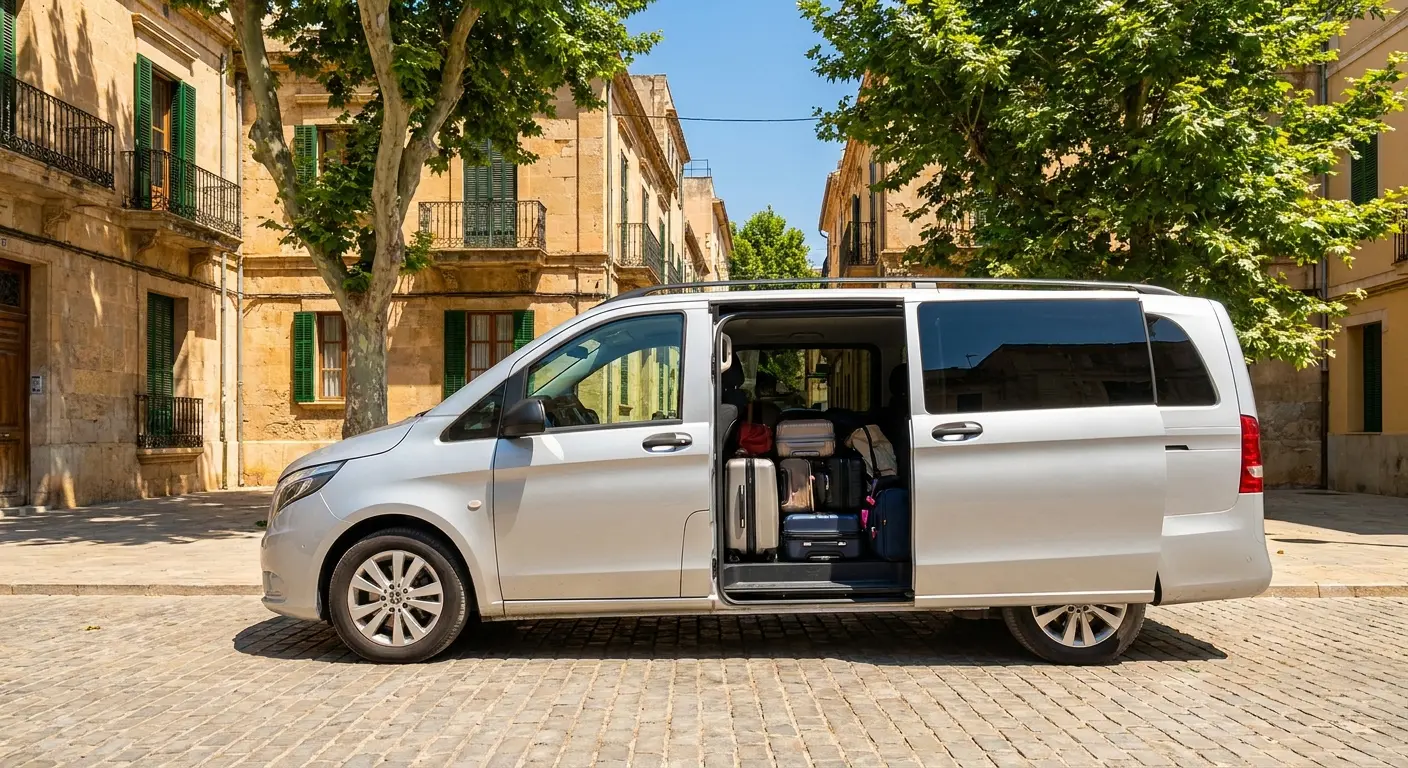
Suggested image: a spacious van parked on a sunny historic street. Alt text: “Parking and street planning for families renting a large car in Istanbul”.
A Real Six-Day Route and Fuel Math
The Demir plan is a useful budget example:
- Day 1: Airport to Sultanahmet hotel (about 45 km). Short arrival run.
- Day 2: Sultanahmet area on foot and tram; car stays parked (about 10 km).
- Day 3: Emirgan, Ortaköy, Beşiktaş loop (about 35 km).
- Day 4: Bursa day trip, mostly motorway (about 230 km).
- Day 5: Asian side: Kadıköy, Moda, Bağdat Avenue (about 50 km).
- Day 6: Hotel to airport (about 45 km).
That is roughly 415 km. At an average of 11 litres per 100 km in mixed city driving, you are looking at about 46 litres, with the motorway-heavy day pulling the average down. Use the current pump price and add a 10 percent buffer. Tolls are a separate line; check the toll tag spend at return and add it to the budget.
Pickup and Return: The 15-Minute Checklist
- Photograph and film the vehicle from all four sides, with the plate and odometer visible.
- Shoot the wheels, bumper corners, mirrors and windscreen separately.
- Note the fuel level and mileage on the handover form.
- Check the boot floor and under-seat areas for pre-existing damage or missing parts.
- Confirm the toll tag is active — see it on screen if possible.
- Have the child seat fitted at pickup rather than doing it yourself later.
- Save the roadside assistance number and a contract copy on your phone.
Repeat the routine at return and leave with a signed handover sheet. A verbal “all good” is worth nothing against a damage invoice two weeks later.
How to Add Comfort Without Adding Cost
- Shift your dates: Midweek pickups and returns are usually cheaper than weekend ones.
- Collect in the city: Airport pickup is convenient but often pricier. City-office collection with airport return can work in your favour if there is no one-way fee.
- Book early: In summer, finding an eight or nine-seat vehicle is an availability problem before it is a price problem.
- Drop useless extras: Additional driver and child seat are genuinely needed on a large family vehicle; navigation and “premium packages” usually are not.
- Ask for the weekly rate: For seven days or more, request the weekly package instead of multiplying the daily rate.
- Plan the out-of-town day honestly: A Bursa day trip can make a car worthwhile, but combine it with city parking fees and the maths changes. Decide the route before you decide the vehicle.
Five Mistakes That Cost Money
- Choosing by seat count. Seven seats do not cover eight people; nine seats give you luggage flexibility.
- Not asking about the boot. The photo car never represents a family with six suitcases.
- Ignoring the excess. One small scrape can take a bite out of the holiday budget.
- Skipping the parking plan. A van that cannot enter the hotel's garage means hunting for street parking every night.
- Rushing the handover. Fifteen minutes of photos prevents every argument at return.
Frequently Asked Questions
What licence do I need to rent a spacious car for eight people in Istanbul?
A standard category B licence covers vehicles up to nine seats including the driver. Larger minibus classes may require additional conditions; confirm the seat count and licence requirement in writing at booking.
How far ahead should I book in summer?
Four to eight weeks is reasonable for July, August and public holidays. Eight and nine-seat vehicles are limited stock, so leaving it to the last week usually removes model choice entirely.
Are child seats included?
It varies by supplier; some include the first seat free. Ask the same question for booster seats if your child is over six.
How large is the deposit hold?
It depends on vehicle class and insurance package, and it is blocked on a credit card. Treat it as separate from your holiday budget; refund timing varies by bank from a few days to a few weeks.
How much does chauffeur service add?
There is a wide band depending on vehicle class, hourly limits and driver languages. The hybrid build — a few driven days plus self-drive days — usually delivers the best cost-to-comfort ratio for families.
The Family's Decision
The Demir family did not repeat the mistake. On their next visit they booked a nine-seat sliding-door minivan: the tailgate closed on the first try, the stroller folded flat against the side, and they added a single chauffeur day for the Bursa trip. They paid less in total than on the first attempt, because they asked the right questions before booking — how many suitcases, how many seats, how many days, which route.
For a family of eight, renting a spacious car in Istanbul is ultimately a budget decision: prioritise cargo volume over seat counts, total cost over daily rates, and everyday usability over showroom appeal. When you are ready to compare current classes, seating layouts and pickup points, start with Turlago's premium car rental options and build your own checklist before you book.