Istanbul Car Rental: Lake Büyükçekmece and the Old Village Roads
The north shore starts where the highway ends
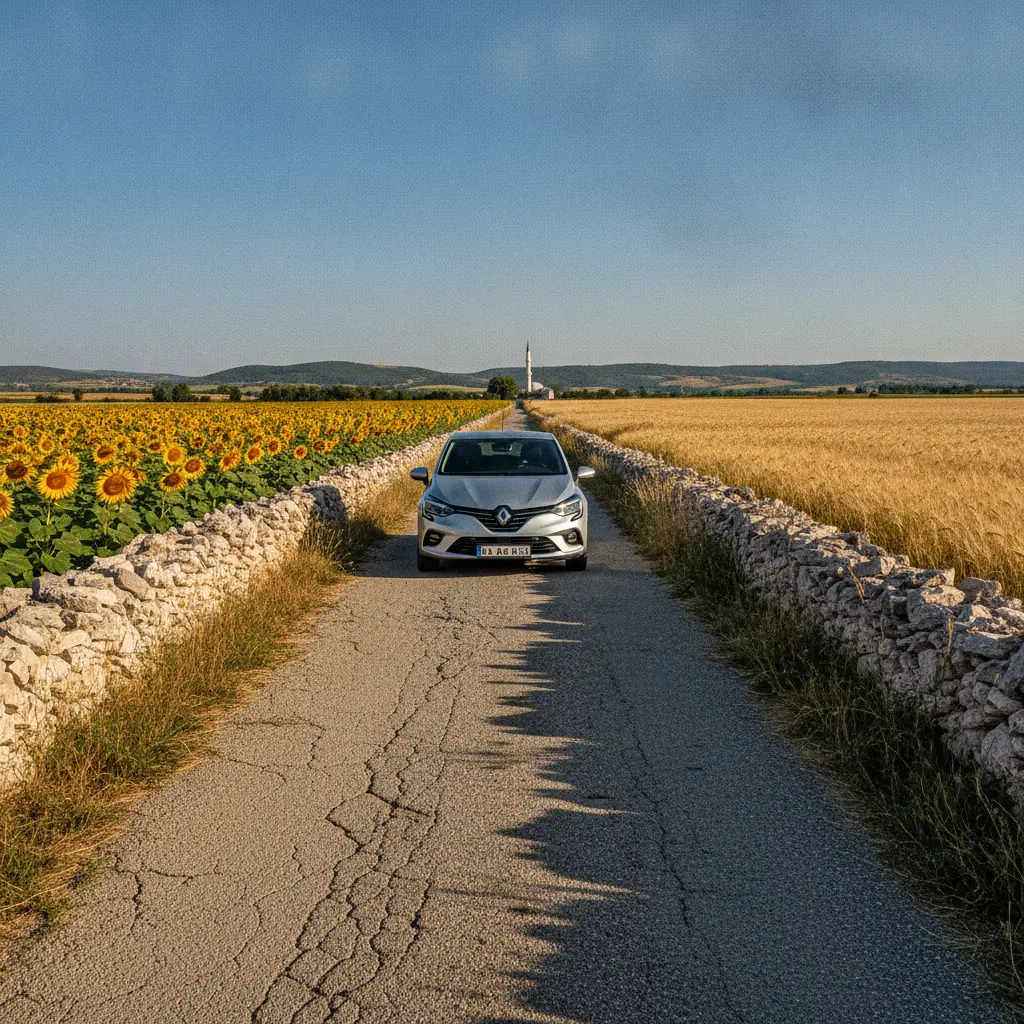
Most visitors to Istanbul never see the northern edge of Lake Büyükçekmece, and that is precisely why it works. The southern shore is the version everyone knows: the D-100 corridor, the retail parks, the seaside strip, the traffic. Cross to the north side and the same body of water feels like a different province. The roads narrow, the retail disappears, and within twenty minutes of leaving the motorway you are climbing a ridge road with the lake sitting below your right shoulder and sunflower fields on your left.
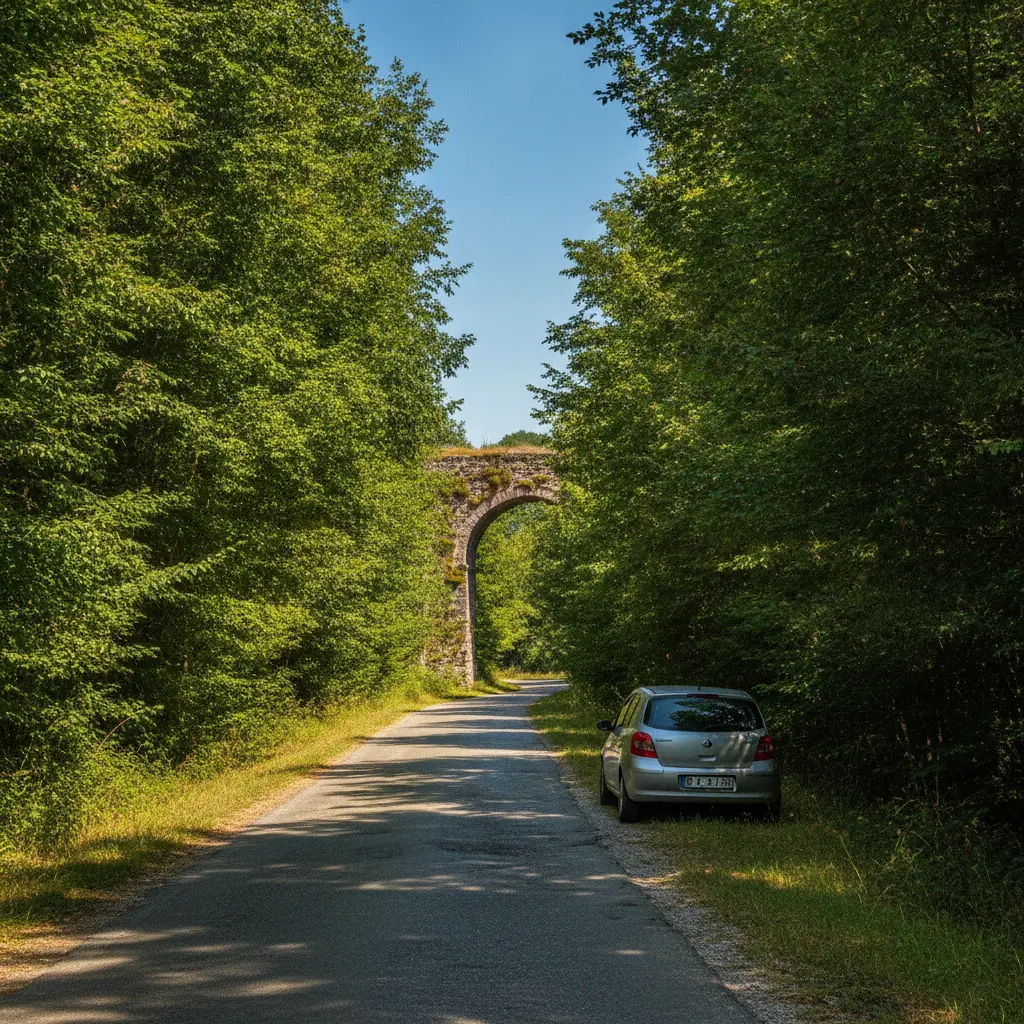
The route itself is simple to describe: start near the western tip of the lake, where the historic stone bridge and the old waterworks mark the point where the lake meets the sea. Climb north onto the Çatalca plateau. Follow the ridge road that links the villages of the northern bank. Loop east through Çatalca town, detour to the İnceğiz canyon area, and return along the quieter Silivri line instead of rejoining the highway. Door to door that is roughly 100 to 130 kilometres — half a tank, but easily a full day if you take wrong turns.
What follows is not another list of viewpoints. It is a route guide written around the two things that actually determine whether this trip feels cheap or expensive: the local geography nobody explains, and the way car rental pricing is structured for a route exactly this length. You can compare current fleets and delivery options on Turlago premium car rental options while reading, and match the notes below to your own mileage plan.
Three kinds of road, and why the difference matters
The network around the lake is not a single artery. It is three parallel roads with completely different characters, and telling them apart saves both time and fuel.
- The southern corridor (D-100 and the coastal strip): Wide, fast, signposted, useful only as a means of getting to the western tip. Nobody drives this for pleasure.
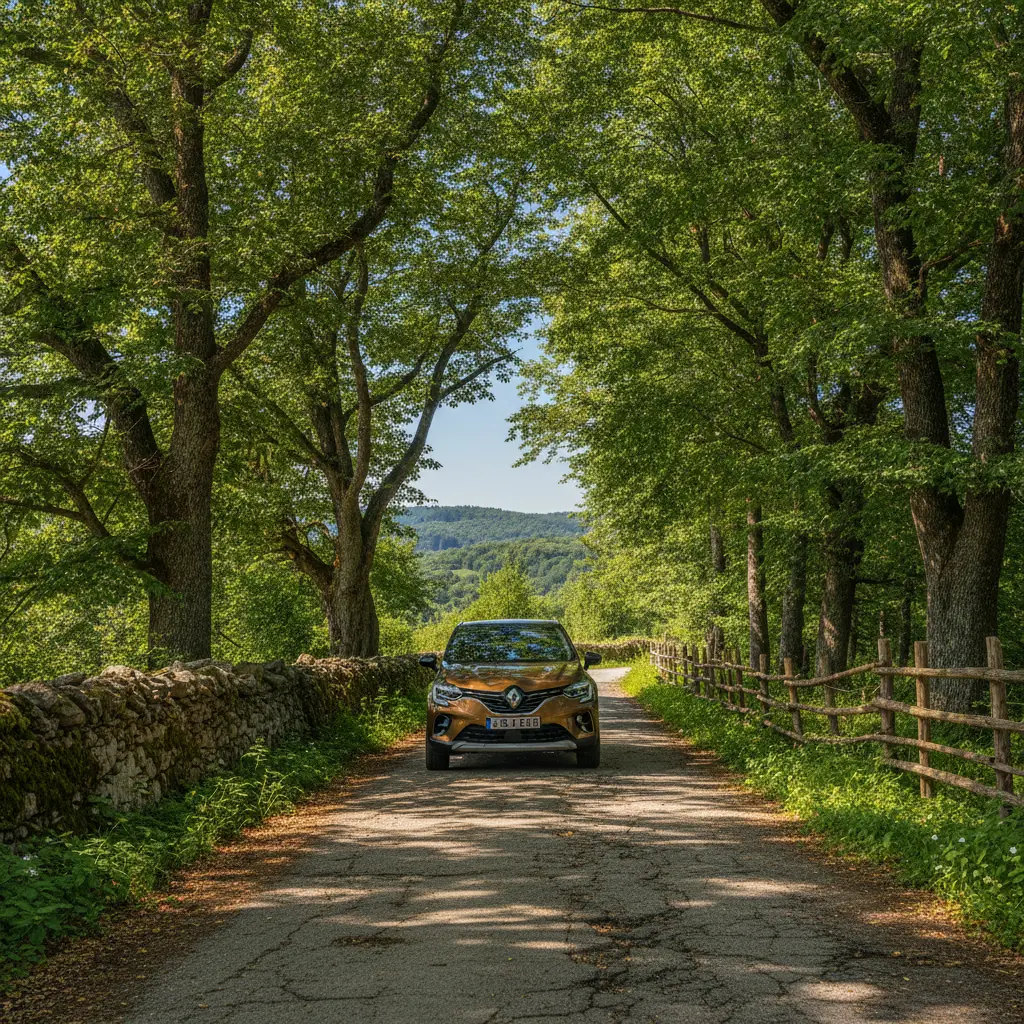
- The northern ridge road: The link that climbs from the Kamiloba, Celaliye and Türkoba side up to the plateau. Asphalt is generally sound but the width varies, and on some stretches you will need to pull onto the shoulder to let an oncoming car pass. This is where the best elevated views of the lake are.
- The village connectors: The lanes around Karaağaç, Ahmediye, Subaşı and Ovayenice. Some are stabilised gravel, some concrete. Navigation apps will confidently send you down a field track here; village signs are more reliable than the map.
- The Çatalca–İnceğiz line: The scenic and historic segment, completely different in landscape from the lake basin. Worth a detour of roughly 25 to 30 kilometres round trip.
- The Silivri–Çatalca link: A long, empty agricultural road via Gökçeali, Seymen and Kurfallı. The best alternative return, because it lets you exit north without touching the evening highway crawl.
A sequence that works: start at the western tip early, climb the ridge road, spend midday in Çatalca town, detour to İnceğiz in the afternoon, and return via the Silivri line. The sun stays behind you for most of the drive, which matters more than it sounds — both for photographs and for how tired your eyes feel at the end.
What actually drives the price of this rental
Two people can drive identical kilometres on this route and pay noticeably different totals. The gap is never the fuel. It comes down to four decisions made at the booking screen.
Car class: is an SUV genuinely needed?
The most common assumption about this area is that village roads require a high-clearance vehicle. They do not. Nearly every connecting road around the lake is asphalt or concrete, and the sections that remain unpaved are short and flat. A B-segment hatchback completes this route comfortably and is actually better on the narrow village lanes: easier to manoeuvre, easier to park, cheaper to run.
An SUV only makes sense if you are driving in winter after heavy rain and hitting muddy stretches, or carrying serious equipment — camera cases, bikes, camping gear. The premium shows up in three places at once: the daily rate, the fuel consumption, and the higher deposit block that some operators apply to larger classes. If you do not need it, do not pay for it.
Rental length: where the weekly threshold breaks
Pricing tends to step down at three days and seven days. Beyond the third day the daily rate usually falls; at seven days a weekly package takes over. This route can be done in a single day, but it is tiring. Stretch it to two days and the rental cost barely moves — meaning the true cost of day two is your accommodation, not the car.
Three days is the awkward length: still expensive per day, just short of the weekly break. Either compress to two days or push to four or five and add the Silivri coast and the northern Çatalca villages. Same weekly price, far more geography.
Pick-up location: airport versus city office
Airport pick-ups are convenient and almost always more expensive: an extra service fee, a higher deposit, and a thinner choice of vehicles. The efficient setup for this route is collecting from a city or suburban office and returning to the same place. A one-way drop is one of the fastest ways to inflate the total for no real benefit.
The five contract lines worth reading twice
- Mileage cap: This route sits between 100 and 130 kilometres. A 200 km per day allowance is more than enough; paying extra for unlimited mileage is wasted money here.
- Fuel policy: Full-to-full is the most transparent. Partial policies can add a refuelling service charge on return.
- Deposit block: The temporary hold on your card varies sharply by car class.
- Additional driver fee: If two of you will share the driving, add it at booking. It cannot be added retroactively at most offices.
- Damage excess: Standard excess matters more than usual on this route, because narrow lanes raise the risk of scrapes and stone chips above what you would see in city traffic.
Three budget profiles, one route
The comparison below is about cost structure, not absolute prices, which shift by office, season and fleet availability.
- The lean profile: B-segment car, city office pick-up, standard excess, daily mileage cap, full-to-full fuel. The car itself dominates the total; fuel is the smallest line. Low hidden-fee risk, low comfort.
- The balanced profile: C-segment automatic, city pick-up, raised damage cover, additional driver registered. The daily rate is higher, but shared driving cuts fatigue on a long day out. Most people end up here.
- The comfort profile: SUV or estate, airport pick-up, full waiver, unlimited mileage. Highest total, and the unlimited mileage is essentially unused — you will not come close to the cap on this route. Much of what you pay for is flexibility you never exercise.
Ask one question before you book: how many kilometres will this car actually cover? If the answer is under 150, paying for unlimited mileage and a higher class is not a rational choice.
Fuel, tolls and parking: the travel budget nobody counts
The rental rate is only part of the total. Three further lines matter on this particular route.
Fuel
Most of the drive is steady, low-speed running rather than stop-start traffic, which helps consumption. The ridge road climbs and the constant gear changes on village lanes pull it back up. Aim to leave with about half a tank and return with about half a tank; stations inside the villages exist but are sparse enough that you would rather not depend on them.
Tolls
This route mostly avoids the motorways, so tolls are a small line item. If you decide to use the D-100 or the TEM to save time on the way out or back, request a vehicle with an HGS/OGS toll tag. Passing a toll plaza without one means a fine, not a small fee — ask at booking.
Parking and stops
There are paid car parks along the southern shore. On the north side and inside villages, parking is generally free but tight. Nobody minds a car left outside a village café, but do not block a field entrance; that is the one thing that genuinely annoys a tractor driver.
When long-term rental beats daily rental
The Büyükçekmece–Çatalca corridor is a weekend escape route for people who already live in Istanbul. If you drive it several times a year, a monthly long-term rental can beat repeated daily bookings outright. Three situations where it wins:
- You repeat the weekend route regularly and the car also earns its keep in the city during the week, so the monthly rate spreads across far more days than a series of short rentals would.
- Your winter usage is unpredictable and a fixed monthly cost makes budgeting simpler than ad-hoc bookings.
- You are renting for business, where servicing, insurance and tyres sit inside the contract and total cost of use becomes predictable.
The trade-offs are real, though: long-term contracts usually define mileage as a monthly total and carry an early-termination penalty. Signing a monthly agreement to satisfy a passing curiosity is the mirror-image mistake.
The route, season by season
It is drivable all year. It is not the same drive all year, and your vehicle choice should move with the season.
- Spring (April–May): The plateau at its greenest, with the lake basin at its most alive. Rain days are frequent, so muddy patches are genuinely possible — the one season where extra ground clearance earns its keep.
- Summer (June–July): Sunflowers dominate the route in July. Open ground north of the lake offers little shade, so early starts are both cooler and better for photographs.
- Autumn (September–October): Harvest season. Tractor and trailer traffic peaks on the village lanes, so accept a slower pace from the outset. This is the best light of the year here.
- Winter (December–February): Misty and empty. You go for the silence rather than the view. Ice is possible, winter tyres are essential, and speeds drop accordingly.
How the road actually behaves
Three technical details separate this drive from city driving, and all three feed back into which car you should book.
Width. On parts of the ridge road, two cars can barely pass. When something comes the other way, you may need to put a wheel on the dirt shoulder. Large vehicles turn this into a chore; a compact car turns it into a non-event.
Unpredictable slow traffic. Tractors, trailers, sheep and cycling groups. Your average speed will be lower than planned — budget around two and a half hours for a hundred kilometres.
Unsignposted junctions. Village forks are frequently unmarked and navigation apps are inconsistent at exactly this scale. The practical fix is to ask in the village café. Thirty seconds of conversation beats ten minutes of driving the wrong way.
One thing to respect: the lake is protected as a drinking water reservoir. Swimming is not permitted, fires on the shore are not permitted, and vehicles are kept off the waterline. That protection is also the reason the northern shore still looks the way it does.
Where to stop, and where to point a camera
- The western tip and the historic bridge: A sixteenth-century stone bridge and associated water structures sit where the lake meets the sea. Quietest early in the morning.
- The high points of the northern ridge: The only belt with a full view across the lake. Small pull-offs exist; they are not marked.
- Around Karaağaç: Old stone houses, vineyards and narrow lanes. The best photographic ground on the route and the tightest parking.
- Subaşı and the surrounding waterworks: Quiet, impressive remnants of the region's water engineering history.
- Çatalca town: The right place for lunch. Strong local food culture and comparatively easy parking.
- The İnceğiz canyon area: Rock-cut structures and steep slopes. The final approach is narrow — leave the car at the entrance and walk.
One day or two? Two programmes compared
One day (about 110 km): Leave at 08:00, thirty minutes at the western tip, climb the ridge road, a short stop at Karaağaç, lunch in Çatalca, detour to İnceğiz, return via the Silivri line. Brisk but enjoyable. Lowest rental cost, highest fatigue.
Two days (about 160 km): Day one for the lake basin and Çatalca, day two for the Silivri coast, the Kurfallı–Seymen line and the northern villages. Because the car cost stays almost flat, the extra spend is essentially accommodation. This is the right choice if you actually want to know the area rather than tick it off.
Whichever you pick, do not schedule the return between 17:00 and 19:00. The junctions back onto the D-100 clog badly in that window.
Timing the booking
The variable that moves price here is not the date — it is availability. Weekend demand means cars collected Friday evening stay out until Monday morning, which thins the fleet for Saturday pick-ups.
- For a weekend route, collect on a weekday. Better rates, better choice.
- For public holidays and long weekends, book two to three weeks ahead; the difference within the same class is meaningful.
- For long-term rentals, start-of-month collections tend to be more flexible because of fleet rotations.
- Last-minute booking is rarely cheap here, because demand is concentrated into the weekend.
Five mistakes worth avoiding
- Paying for unlimited mileage without checking the cap you already have.
- Booking an SUV for village roads that do not require one.
- Choosing a one-way drop and doubling the cost for no benefit.
- Assuming there will be a fuel station somewhere around the lake.
- Trusting the navigation app and ignoring the village signs.
Frequently asked questions
Do I need a permit to drive around Lake Büyükçekmece?
No. The village roads and lake connections are public. The shoreline itself is protected as a drinking water reservoir, so vehicles are kept off the waterline and swimming is not allowed.
What daily mileage allowance is enough?
For the one-day programme, 150 to 200 kilometres is comfortable. For two days, a 300 to 400 kilometre package fits well.
Is an automatic necessary?
Not strictly, but between the ridge gradients and constant gear changes on village lanes, an automatic noticeably reduces fatigue if you are not used to driving in dense traffic.
Can this route be driven in winter?
Yes, but not without winter tyres and not during icy early mornings. Muddy stretches after rain are normal, and some contracts include a cleaning charge for heavily soiled vehicles.
Does an electric car work here?
On distance, yes — but charging infrastructure in the northern villages is limited. Plan to return with at least half your range intact and use the southern shore charging points as your starting anchor.
The expensive part is not the car
The northern shore of Lake Büyükçekmece and its old village roads are among the least-known and least-expensive routes you can drive out of Istanbul. What inflates the bill is never distance or fuel. It is the wrong car class, an unlimited-mileage package you will not use, an airport pick-up you did not need, and contract lines you did not read. Choose the right class, the right number of days and the right collection point, and this becomes one of the cheapest good weekends available in the city.
To compare classes, collection points and package conditions side by side, start with Turlago premium car rental options and match them against your own mileage estimate. A good plan will not rescue a bad car — but the right car turns a very ordinary road into the part of the trip you remember.