Istanbul Car Rental: Polonezköy Chestnut Forest Road Trip
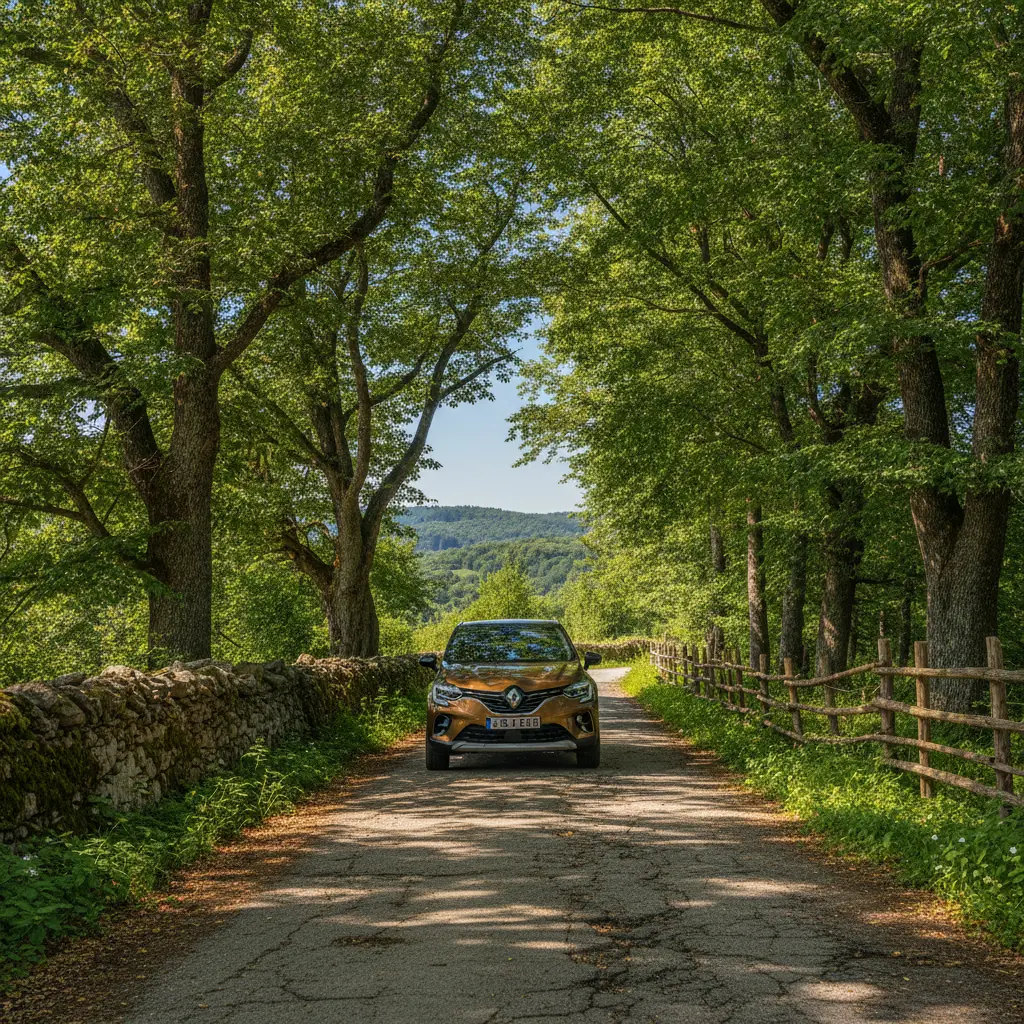
The road to Polonezköy does not announce itself. Somewhere past Beykoz the signage thins out, the asphalt narrows, and two cars passing each other need a few centimetres of goodwill from the verge. For anyone putting together an Istanbul car rental plan, this is not a coastal cruise or a motorway sprint. It is a chain of village lanes running under chestnut trees, where the corners are cut by shade rather than by kerbs.
Most route guides treat Polonezköy as a destination pinned to a map. That framing misses the point. The value of this drive lies in the thirty-odd kilometres of connecting lanes around it, and in the fact that the cost of doing it badly — wrong vehicle, wrong hour, wrong fuel policy — is quietly higher than the sticker price suggests. If you are comparing Turlago premium car rental options, the notes below are built to help you pick the right category rather than just the cheapest line on the page.
What the terrain actually asks of a car
Northern Beykoz sits on a ridge system that drops sharply to the Bosphorus in the south and rolls toward the Black Sea coast in the north. Roads follow that logic: short straights, blind corners, a bank on one side and a stream bed on the other. The surface is mostly asphalt, but village-centre sections carry years of patching, sunken manholes and edges that crumble into gravel.
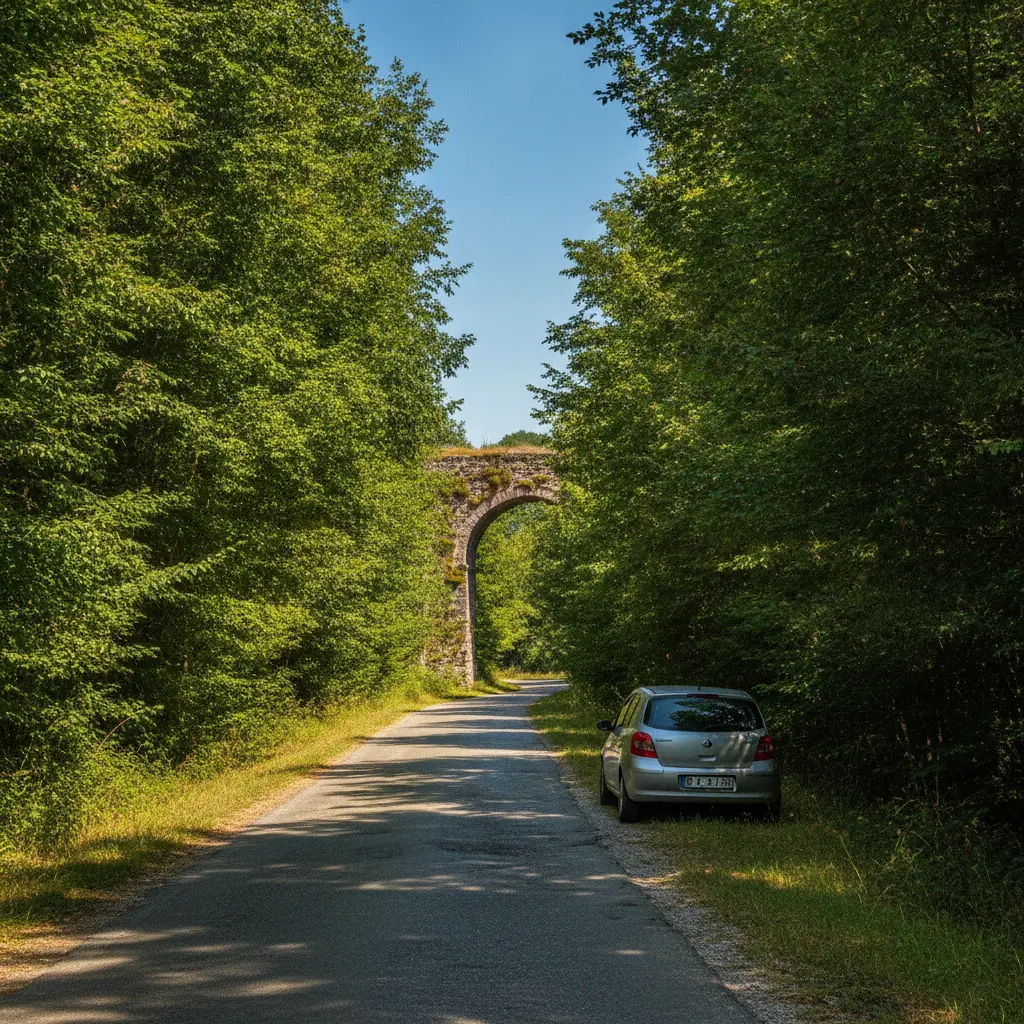
Chestnut trees define the place. In the higher parts of Beykoz, chestnut groves and natural stands close in on both sides of the road, at points forming a canopy that turns midday into something closer to dusk. That shade is a gift in July. In October it becomes a hazard, because fallen husks and wet leaves sit on the surface long after the rain has stopped and quietly extend your braking distance.
The other thing to internalise is how empty this area is. Between Beykoz centre and Polonezköy village there is very little in the way of fuel stations, open cafés or shops. This is a fill-up-before-you-leave route, not a figure-it-out-on-the-way route. Topping off in Kavacık or Beykoz centre is the single easiest way to avoid an annoying detour on the return leg.
Three approaches, three completely different drives
There is no single correct way in. Your starting point determines how long you drive, how much clutch work you do, and how much of the scenery you actually get to see.
The direct line: Kavacık to Beykoz to Polonezköy
Shortest and most obvious. On paper it looks like a 30 to 40 minute run from the Anatolian side. In practice, Saturday mornings between roughly 09:00 and 11:00 turn the Beykoz stretch into stop-start traffic, and a manual gearbox in that queue converts directly into fuel and patience. If this is your route, either leave before eight or accept an afternoon start.
The coastal arc via Riva
Instead of climbing straight north, drop toward the Black Sea coast and follow the Riva road before turning inland. The distance grows noticeably, but the traffic falls away almost entirely. You get a genuine coastal pause and, more importantly, a return leg that can be planned differently so the day does not feel like a there-and-back. Late afternoon light on the inland section is the reward for the extra kilometres.
The inner loop past Elmalı Reservoir
The least-known option, and the most scenic. Rather than taking the main artery, you wind through Beykoz’s interior toward the Elmalı reservoir area and connect to Polonezköy through forested link roads. Reservoir water, dense tree cover and almost no settlement make this the most rewarding line on the map. The trade-off is road quality and signage: variable surface, few markers, and junctions that look more drivable on a phone screen than they are in reality. Offline maps and a charged phone are not optional here.
Choosing a vehicle category without overpaying
Rental price lists push you toward the cheapest segment, and for this route that instinct is half right. You do not need four-wheel drive — the main roads are sealed. But the category you pick changes comfort, visibility and a set of indirect costs that never appear in the headline rate.
Compact hatchback: cheap, honest, limited
For two people on a day trip this is the sensible economic call. Easy to thread through narrow lanes, easy to park, light on fuel. The limits show up in the boot, the rear bench and the suspension, which transmits every patch and pothole. Four adults with luggage should rule it out immediately.
Compact SUV / crossover: the best balance for this route
A raised seating position lets you see oncoming traffic earlier on lanes that effectively become single-track — a real advantage, not a marketing one. The suspension copes with broken asphalt far better, and the boot handles a four-person day out. Fuel consumption is higher than a hatchback, but across a route with this much time spent in slow traffic, the gap stays reasonable.
Mid-size sedan: comfortable, awkward
Popular with people on longer rentals who want one car for both city and countryside. It is the most composed option on motorways and the most comfortable over distance. On Polonezköy’s village lanes, though, a 4.8-metre body means repeated reversing when you meet a tractor or a delivery van. If you go sedan, insist on parking sensors and a reversing camera.
Long-term rental: worth it or not?
For a single weekend run, no. But if you are in Istanbul for a week and want to combine city driving with the northern routes — Polonezköy, Riva, the Şile corridor — weekly and monthly rates push the per-day cost down meaningfully. The catch is mileage. Some long-term packages cap monthly kilometres, and the overage charge can quietly exceed what you saved on the base rate. Read that clause before you sign.
The real cost breakdown: what sits outside the daily rate
Two quotes that differ by a small daily amount can end up far apart once the trip is done. On this specific route, total spend is shaped by these items:
- Base rate: Moves with segment and season. Summer weekends and public holidays price noticeably higher than a Tuesday in October.
- Fuel policy: Full-to-full is the transparent option. Same-level return sounds fair until you are hunting for a station on the way back and paying a premium for the convenience.
- Mileage cap: Usually generous or unlimited on daily rentals, genuinely restrictive on long-term contracts. Anyone planning a Polonezköy–Riva–Şile triangle needs to check this line first.
- Additional driver: A fixed daily charge that looks trivial and then adds up to a meaningful line item over a multi-day booking.
- Deposit hold: Invisible in the quote, very visible on your card. The hold scales with vehicle class, and it locks spending power for the duration of the rental.
- Parking and village spend: Weekend parking in Polonezköy village takes time to find and some lots charge. Breakfast and market stops belong in the budget too.
- Damage excess: The standard policy excess is a real risk on narrow lanes with stone walls. Deciding on the excess reduction up front is cheaper than discovering the gap afterwards.
A practical method: ignore the daily rate and calculate the route total — base rate, estimated fuel, additional driver, parking, excess reduction. The cheapest headline quote frequently lands in the middle of the pack once that sum is done. Comparing categories side by side with the full total in front of you is the only comparison that means anything.
Driving through the chestnut forest: surface, gradient, corners
Leave the main road and the character changes fast. Where the chestnut canopy closes, it gets dark enough that headlights make sense at midday. That is not just atmosphere. When you exit that shade, your eyes need a couple of seconds to adjust, and a hairpin can easily arrive inside those two seconds.
The surface tells a seasonal story:
- Summer: Dry asphalt with gravel shoulders. Straightforward, but loose grit on corner entries will reduce grip more than you expect.
- Autumn: The most beautiful and the most demanding season. Wet leaves and chestnut husks stretch braking distances, and shaded sections stay damp all day.
- Winter: Ice is possible on higher sections in the early morning. Shade delays the thaw, so lanes inside the forest stay slick longer than the open road.
- Spring: Mud after rain and standing water where streams cross. Usually shallow, but deep enough to hide a pothole.
Gradients deserve honesty too. Several link roads are steep and sustained. In a situation where you have to stop and restart on a slope — an oncoming tractor, a dog, a delivery van — an automatic gearbox is a genuine comfort upgrade. If you are not fluent with a manual, choose automatic for this route and stop negotiating with yourself about it.
When to go: chestnut season versus high summer
The route works year-round but does not deliver the same experience in every month. Weigh three factors together: crowds, road conditions and price.
July and August are peak. Weekend midday parking in Polonezköy village is genuinely difficult, and rental rates sit at their annual high. In exchange you get long days, cool forest shade and the most predictable road conditions of the year.
September and October are the sweet spot. The chestnut harvest begins, village markets fill with local produce, and the crowds thin out. Rental prices ease off summer levels. The only adjustment is wet ground and an earlier sunset — do not leave the return leg until dusk.
November to March is cheapest and riskiest. Rain, fog and ice on higher ground are all realistic. Winter tyres and a daytime-only plan are non-negotiable. That said, an empty weekday drive through bare chestnut branches has a quality of its own.
April to June is the balanced choice: reasonable prices, everything green, crowds not yet arrived. Just keep the itinerary flexible around rain.
Where to stop along the way
Treating this as a point-to-point transfer is the biggest mistake people make. The road is the destination. A few stops worth building in:
- Polonezköy village centre: Founded in the nineteenth century by Polish settlers, the village still reads as a distinct place — wooden houses, gardens, and a breakfast culture that is the route’s anchor.
- Polonezköy nature park area: Twenty or thirty minutes on foot changes the whole feel of the day. Park, walk, then continue.
- Cumhuriyetköy and Paşamandıra: Quieter, less touristed village passes, and the right places to buy honey, cheese and chestnuts in season from local producers.
- Riva coast: If your return leg routes through here, a sea stop becomes part of the plan rather than a detour.
- Anadolu Kavağı: A classic but still functional stop if you want to drop down to the Bosphorus on the way back.
A day plan linking these stops works out to roughly 60 to 90 kilometres of driving. Budget fuel accordingly rather than assuming a short out-and-back.
Practical notes for village-lane driving
This is not terrain for city driving habits. A few things learned the practical way:
- A short horn before blind corners: On tight turns with no sightline, a brief tap warns an oncoming tractor or van. It is a local reflex, not rudeness.
- Dogs and livestock: Free-roaming dogs, occasionally in groups, and the odd flock on the road. Speed is the only real control.
- Meeting points: Where the road narrows to one lane, someone reverses. Remember the wider passing bays so it is not you.
- Navigation: Some forest link roads appear on maps while being unsuitable for a normal car. At a dirt junction, read the road, not the screen.
- Parking: Roadside parking in the village can block the lane outright. Use designated areas even if they charge.
- Night driving: Do not plan this route after dark. No lighting, hard corners, undefined edges.
Fuel, parking and the return plan
Beyond filling the tank before departure, check tyre pressures. Under-inflation measurably increases consumption on a route with this much climbing and coasting. Because station options thin out as you approach the village, plan your return fuel before you arrive rather than after.
Parking expectations should be realistic. On a weekend afternoon, free parking in Polonezköy village is a matter of luck. Building a paid lot into the budget from the start costs less than the mood tax of circling. Arriving early solves both the parking problem and the breakfast queue at once.
Two return options exist: the fast route back along the same corridor, or the longer arc via Riva. With daylight remaining, take the second. The route only feels complete when it closes as a loop rather than a line.
Frequently asked questions
Which vehicle class makes the most sense for this route?
A compact hatchback is enough for two. For three or four with luggage, a compact SUV is the best balance of comfort and forward visibility. A sedan works if you also need it in the city, but count on extra manoeuvring on village lanes.
What is the single most effective way to reduce rental cost?
Pick up on a weekday, keep collection and return at the same branch, minimise additional drivers, and price the excess reduction up front. Individually small, together they recover a meaningful share of the base rate.
Is the road sealed or gravel?
The main corridor is sealed. Forest link roads and some village stretches are patched, uneven or partly gravel, which is exactly why a car with more suspension travel is more relaxing than a stiff, low-profile setup.
Can it be done in one day?
Comfortably. An early start from Istanbul and an afternoon return covers both Polonezköy and the Riva arc. Allow a seven to eight hour window for a relaxed pace.
Is the route advisable in winter?
Yes on ice-free days, with winter tyres and daylight driving. Remember that higher sections can hold ice well into the morning.
The takeaway: plan the route and the budget together
Polonezköy and its chestnut forests are one of the most accessible ways to leave Istanbul and land somewhere entirely different within a couple of hours. Planning it purely by distance, though, costs you both the driving pleasure and the money. With the right vehicle class, the right season and the right route line, the total can come in below the quote that looked cheapest at first glance.
So compare route totals rather than daily rates: fuel, additional driver, parking and excess reduction all belong in the same calculation. Start your comparison with Turlago premium car rental options, match the vehicle class to the actual roads described here, and the day you end up with will be both cheaper and considerably better.