First Time Renting a Yacht in Istanbul: How the Process Works
If you are renting a yacht in Istanbul for the first time, the questions in your head are rarely about the boat. They are about the process: where do I start, what do I need to tell the operator, and what happens if I say the wrong thing? This guide is built around exactly that. There are no invented price tables and no brand claims here — just how the process actually runs, which questions to ask, and how to set realistic expectations before you step on board.
Most first-timers begin in the wrong place: scrolling through photos of boats. In reality the process starts on your side. How many people are coming, are there children or older guests in the group, do you want a short daytime cruise or a dinner on the water, and how flexible are you on departure time? Those four answers shape every quote you receive. The same yacht on the same day is often proposed with a completely different plan for a family than for a group of friends.
Logistics deserve a thought up front too. Reaching a Bosphorus marina by public transport is possible, but with luggage, a large group or small children it can eat the first hours of your day. Arranging private car rental options before you book is a simple way to guarantee you arrive at the dock calm rather than rushed.
Yacht, gulet, motor yacht, boat tour: are these the same thing?
This is where most confusion starts. In everyday Turkish, and in a lot of English-language listings, these words get used interchangeably. They do not mean the same thing, and knowing the difference is enough to ask the right question — you do not need any technical knowledge.
Motor yacht
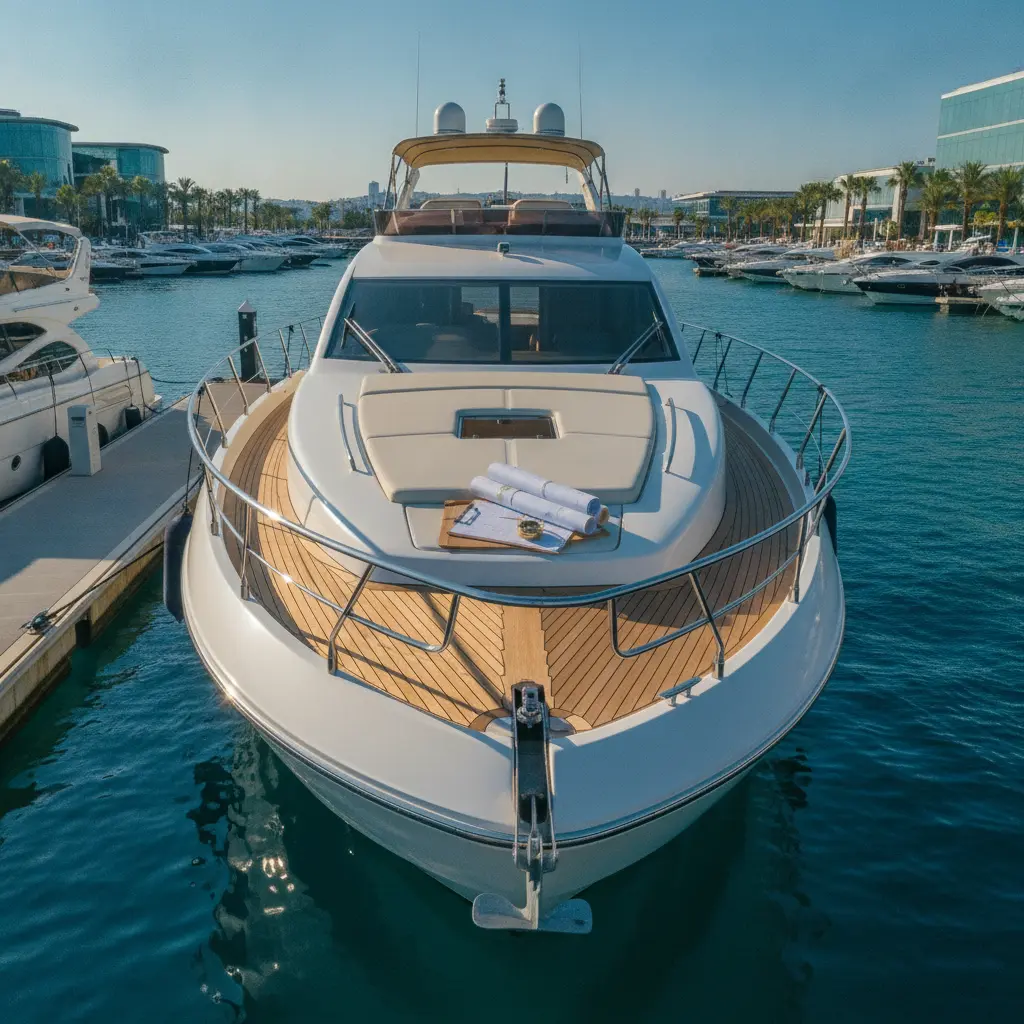
A powered vessel, usually over twelve metres, with an enclosed saloon and a deck. In Istanbul this is the most common choice for day cruises, business dinners and small celebrations. It is fast, the route stays flexible, and you can move inside when the wind picks up. The trade-off is deck space: on a crowded group, walking room is tighter than photos suggest.
Gulet
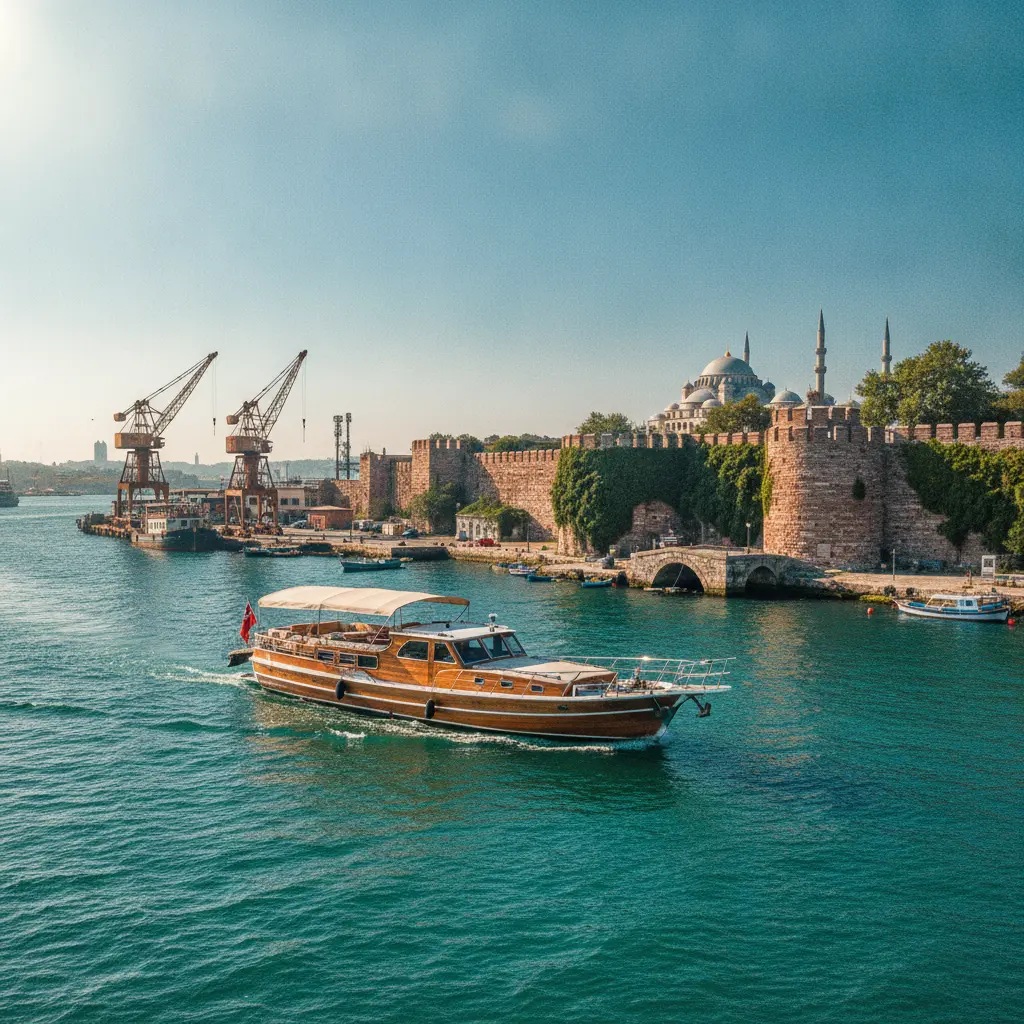
A wooden, wide-decked, slow and comfortable vessel. Gulets are classically associated with multi-day Aegean and Mediterranean cruises; in Istanbul they appear mostly for private dinners, long lunches and photo shoots. If you expect speed, a gulet will disappoint — the point is not arriving, it is being on the water.
Sailing yacht
A boat that moves under sail, usually with engine support. Sailing on the Bosphorus is beautiful, but wind and current mean the route does not always follow the plan. For a first experience, a sailing yacht asks for more patience with the schedule.
Shared day tour
Instead of chartering the whole boat, you buy a seat on a fixed itinerary. It is the most accessible entry point and perfectly sensible for a first taste. The catch is control: stops and music levels are set by the operator, not by you. The real difference between a private charter and a shared tour is not price — it is who decides.
Who is it right for? Matching the boat to your group
The most common first-timer mistake is choosing a yacht by its photo rather than by the group. The same boat can be perfect for a family and dull for a group of friends. The breakdown below tells you which question to prioritise.
Families with children
Priorities are clear: safety, shade, a toilet, easy boarding and short routes. Ask specifically whether children’s life jackets are available in small sizes, how high the guardrails are, whether there is shade or an indoor area during the middle of the day, and how steep the internal stairs are. A short cruise with one swimming stop and an early return will almost always produce a happier day than a long Bosphorus marathon. For families with toddlers, a half day is usually the better call than a full day.
Couples and special occasions
Size matters less than privacy and timing. A large motor yacht is unnecessary for two people; a smaller, well-maintained boat delivers a far better experience. When you request a quote, confirm whether anyone else will be on board, how many crew will be present, which part of the boat is yours, and when food service happens. If you want to avoid the busy bays, say so at the enquiry stage — the captain optimises the route on the day around weather and traffic, so your preference needs to be known in advance.
Groups of friends
Energy runs high: music, swimming stops and photos dominate. Two things need attention — capacity and sound. The certified maximum guest capacity should sit comfortably above your group size; a boat filled to its legal limit feels cramped by mid-afternoon. Second, raise the music question early. Some boats have sound systems, but volume is often restricted near marinas and residential shorelines. Learning this in advance prevents the first argument of the day.
Corporate events
Company dinners, team offsites and client events follow a slightly different process: invoicing, contracts, guest lists and punctuality come first. The critical question here is whether departure and return times can be guaranteed to the minute. In a corporate schedule, a half-hour delay on the boat breaks everything downstream. If you are planning a speech, a presentation or an awards moment, also check whether the enclosed saloon is actually suitable for a microphone and a speaker — not every motor yacht saloon is.
Larger celebrations
Birthdays, engagements and anniversaries bring extra requests: decoration, cake, a photographer. Mention these when you request the quote, not after you have booked. Permission to decorate, rules about bringing outside food on board, and whether a photographer can board are all things that turn into unpleasant surprises if they are settled on the day.
Choosing a duration: hourly, half day, full day or overnight
Day cruises dominate the Istanbul market, but there are four distinct formats. The right one depends on how you picture the day, not on what looks cheapest per hour.
- Hourly (usually 2–4 hours): Good for a short city cruise, a photo shoot or a business lunch. For larger groups, hourly charters are rarely efficient — boarding and disembarking consume a significant share of the time.
- Half day (4–5 hours): The most balanced option for families and first-timers. One cruise out, one swimming stop and the return fit comfortably.
- Full day (7–8 hours): Ideal if you want to see both shores, head north towards the Black Sea mouth, or reach towards the Princes’ Islands. Lunch is planned on board.
- Overnight: Less common on Istanbul departures, usually a multi-day cruise where marina fees, fuel and crew are added to the base charter.
One practical note: cost does not scale linearly with time. Fuel, crew and catering kick in, which often makes a full day better value than two half days. Still, for a first experience, a half day is the safest way to calibrate what you actually enjoy.
The process step by step, from first message to stepping aboard
This is the real sequence, simplified. Skipping steps tends to create problems that are hard to fix later.
Step 1: Fix your dates, and keep a window
Pick two or three possible days rather than one. Istanbul weather, especially in spring and autumn, is unpredictable, and wind can force changes. The flexible side always ends up with the better boat and the better rate.
Step 2: State your group size and profile precisely
Give adult, child and infant numbers separately. This drives capacity, life jackets, catering and seating layout. Adding people later may be impossible because the certified capacity is fixed.
Step 3: Break your budget into components
First-timers usually want one number. In reality the total has several parts: charter fee, fuel, crew, food and drinks, marina handling, extras and taxes. Ask for these itemised rather than as a single figure. Only then can you compare quotes meaningfully.
Step 4: Request at least three quotes using the same questions
Send an identical list to each operator. Different answers to identical questions are exactly the information you need. Deciding on a single quote is the riskiest move a first-timer can make.
Step 5: Verify the boat, the captain and the paperwork
Ask whether the vessel is licensed and insured, whether the captain is qualified, and what the certified maximum guest capacity is. If the answers are vague, drop that quote. Asking is not rude — a serious operator expects these questions.
Step 6: Contract and deposit
Get in writing how much deposit is required, what the cancellation terms are, what happens if the weather turns, and when the balance is due. A verbal agreement causes trouble even when both sides are acting in good faith.
Step 7: Plan transport and marina logistics
Which marina, which gate, who meets you, whose phone number do you have? Confirm all of this the day before. If you are moving a group with bags, arriving together rather than in scattered taxis saves both time and temper — private car rental options are a practical way to do it.
Step 8: Agree the on-board flow and the return time
Boarding usually starts with a short briefing: safety, toilets, shade, swimming rules. State your return time as well. If a car is collecting you at the marina, the time the boat ties up needs to be predictable.
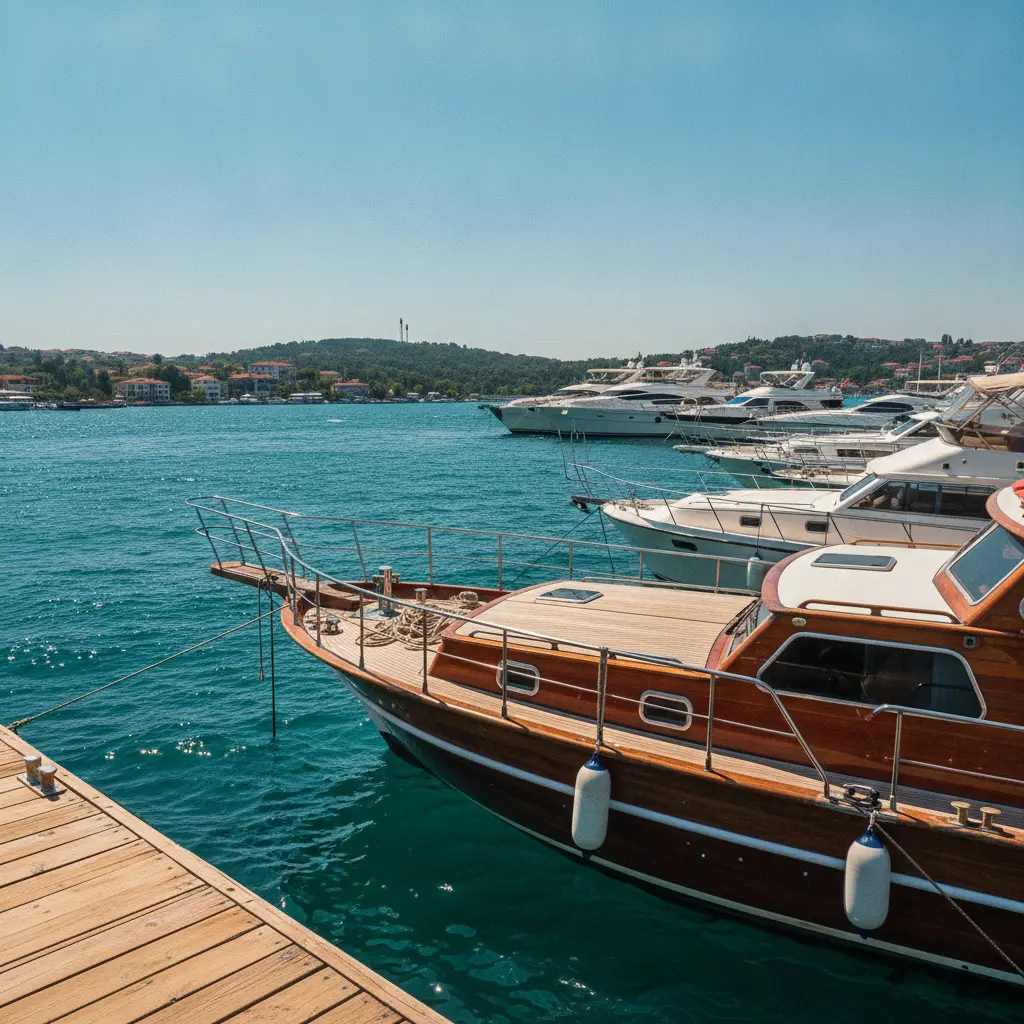
Suggested image alt text: White motor yachts and a wooden gulet moored side by side at an Istanbul marina with reflections on turquoise water.
Questions to ask before you confirm
The list looks long, but you can send it as a single message. Anyone who cannot answer it, or answers evasively, has made your decision easier.
- What is the certified maximum guest capacity?
- Are the captain and crew included, and how many people will be on board?
- What is included in the charter fee, and what is not?
- How is fuel calculated, and roughly what should we expect?
- Is food and drink included, and can we bring our own?
- Which marina do we depart from and return to, and can we board elsewhere?
- Is the route flexible, and who decides if the weather changes?
- Will there be a swimming stop, and what life jacket sizes are available?
- Is there wifi, a sound system or a fridge on board?
- What are the cancellation or postponement terms for bad weather?
- How much of the deposit is refundable, and under what conditions?
- Can you handle decoration, a cake or a photographer?
- How is payment made, and is an invoice issued?
- Who do I contact on the day if something changes?
What the budget actually consists of
This is the part that surprises first-timers most: the charter figure you see is not the total cost of the day. Knowing the components removes the surprises and lets you compare quotes honestly.
- Charter fee: The main line, driven by duration, boat type and season.
- Fuel: Included in some quotes, charged separately in others based on distance. Routes heading north up the Bosphorus burn more than a short city cruise.
- Crew: The captain is usually included; galley and service staff may be added.
- Food and drinks: Set menus, buffets and bring-your-own policies produce very different totals.
- Marina and port handling: Some marinas charge departure handling as a separate item.
- Extras: Decoration, photography, water sports, live music.
- Taxes: Always ask whether the quoted figure includes them or whether they are added on top.
A transparent quote itemises these. An operator who gives one figure and no detail has room to add charges on the day.
Which marina and which route? A short geography for first-timers
Yacht departures in Istanbul cluster along both shores of the Bosphorus. Where you start is really a question of which view you want.
- Southern European-side marinas: Closest to the city centre, convenient for short charters and business dinners.
- Northern European-side marinas: A calmer start and easier access to bays and green shoreline, ideal if you plan a swimming stop.
- Asian-side departures: Sensible if you want to head towards the Princes’ Islands, though a classic Bosphorus skyline cruise becomes a longer run.
Remember that a boat travels at a set speed and the return leg counts too. Departing from a southern marina and heading all the way to the northern end of the Bosphorus and back is technically possible on a day charter but tiring in practice. Captains usually recommend splitting the day into two or three anchors: one cruise, one stop, one swim.
Booking timing and seasonality
Demand on Istanbul’s water follows the temperature. Mid-June to early September is the peak, with weekends creating their own separate crush. May and October, when the sea is still reasonable, offer a much calmer experience.
A practical rule: two to three weeks ahead for a normal weekend, and about a month ahead for a fixed date such as an anniversary, birthday or company event. Last-minute bookers rarely get the type of boat they wanted — they get what is left. Morning departures are also an advantage, both because the water is calmer and because you use the daylight better.
Expectation management: what first-timers get wrong
Realistic expectations matter more than the boat itself. These are the most common misunderstandings.
- The boat may not look exactly like the photo on your day. Weather, light and occupancy differ; what matters is maintenance.
- You will not stop at every bay. The captain adjusts the route based on weather and traffic.
- Walking space on board is narrower than you think. Large groups need a movement plan.
- Volume is not unrestricted. Near marinas and residential shores there may be limits.
- The weather changes on the water. If wind picks up, the programme may shorten — that is a safety decision, not a failure.
- Food service takes time. A hungry group makes the best hour of the day tense; a small snack plan helps.
- Mobile signal can drop. Some stretches of the Bosphorus are weak; do not schedule business calls.
- The sun tires you more than expected. Hat, sunglasses and water are the three most forgotten items.
Suggested image alt text: Shaded seating area on a yacht deck with sunlight sparkling on the water and the Bosphorus shoreline in the distance.
Common mistakes and how to avoid them
- Deciding on one quote. Get three, and ask identical questions.
- Changing the headcount later. Certified capacity does not stretch.
- Ignoring fuel. Confirm whether it is included in the quote.
- No weather plan. Clarify cancellation and postponement terms before booking.
- Leaving transport to the last minute. Summer marina traffic causes real delays; leave early or pre-arrange a transfer.
- Raising extras on the day. Decoration, cake and photographers need lead time.
- Not describing the group. Mentioning children, older guests or mobility needs in advance changes both the boat and the route.
Frequently asked questions
It is my first time. Which type of boat should I start with?
For families or anyone unsure, a motor yacht for a half day is the safest introduction. If you simply want to test the experience, a shared day tour is also reasonable. A private charter becomes worth it when you want control and privacy.
Do I need a licence or any experience?
Not for a crewed charter. The captain drives; you do not. Bareboat charters, where you handle the boat yourself, are a separate category and not suitable for first-timers.
How far in advance should I book?
Two to three weeks for a normal weekend, about a month for fixed dates. Last-minute availability narrows sharply.
What should I bring?
A hat, sunglasses, a change of clothes, non-slip shoes, personal medication and wet wipes for children. Keep valuables to a minimum; storage on board is limited.
What happens if the weather turns?
The captain may change the route or shorten the cruise on safety grounds. Understanding how that scenario is handled — in writing — before you book prevents an argument later.
I am coming with a big group. What should I watch?
Confirm capacity, build a time buffer for boarding, and arrive at the marina together rather than in dribs and drabs. It removes most of the friction from the first hour.
Conclusion: keep the first attempt simple
Renting a yacht in Istanbul for the first time is far simpler than it looks, provided you move in the right order. Keep the date flexible, state the headcount precisely, break the budget into components, collect at least three quotes and ask the verification questions without embarrassment. Planning the first attempt as a short, single-stop outing lowers both the risk and the expectation — by the second time, you will already know exactly what you want.
Above all, remember that a yacht charter is an organisational exercise, not a status symbol. A smaller, well-kept boat on a busy day leaves a better memory than a large one. If you want to handle the transport side with the same care, take a look at private car rental options and turn the trip between your hotel and the marina into the calmest part of the day.