First-Time Yacht Charter: Captain and Crew Expectations
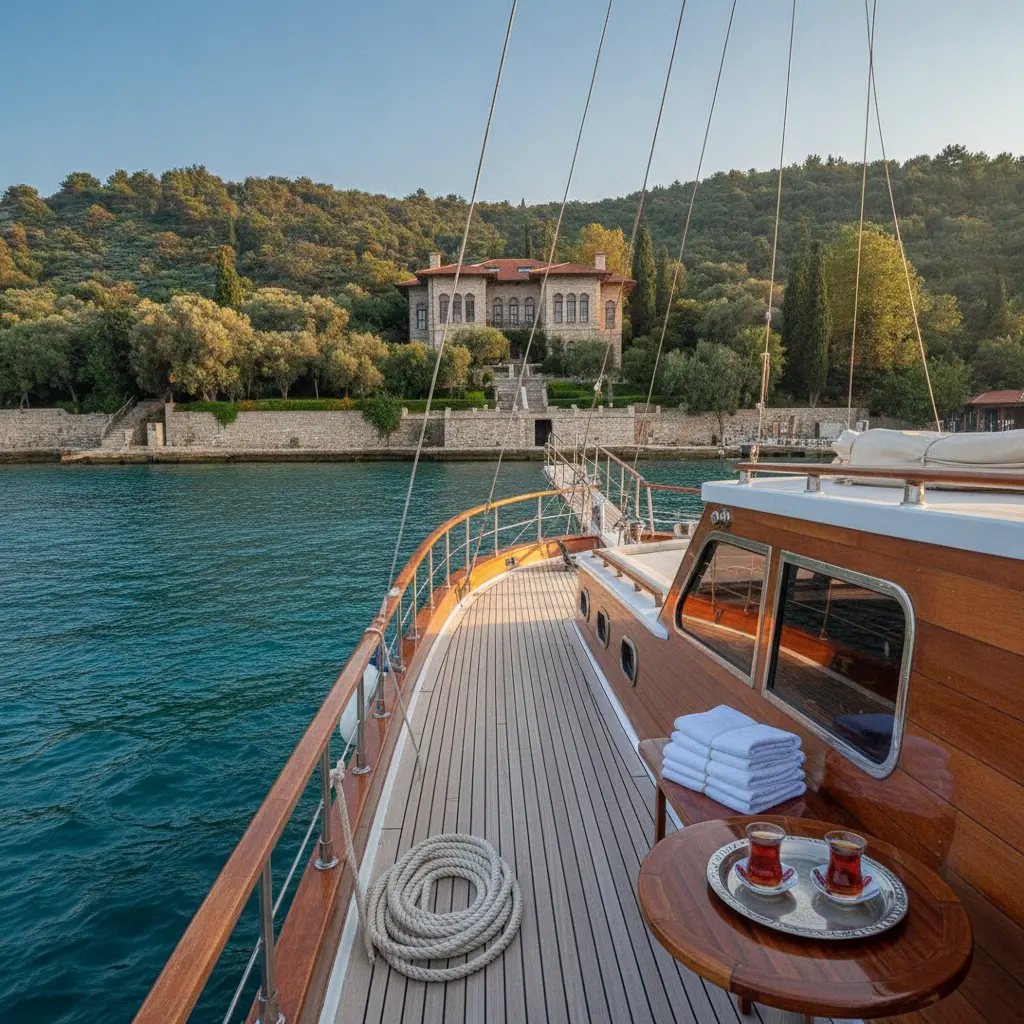
Almost everyone who books a yacht for the first time asks the same three questions, just in a different order: How do I talk to the captain? Will the crew be hovering over me all day? And what happens if I do something wrong? This guide is built around those questions, because a first-time charterer does not need nautical jargon. They need to know who does what, what they are entitled to ask for, and which requests are simply not fair to make.
Here is the short version: on a crewed yacht nobody is watching you. But you are also allowed to expect the crew to do their job. Drawing that line well is what separates a good charter from an awkward one. Below, we look at the line from four different angles, because a family with small children, a couple, a corporate team and a group of friends need very different things from the same boat, and a good crew reads that before you say a word. If you want the shore side sorted too, premium car rental options make the marina run effortless.
First, the distinction that changes everything: bareboat versus crewed
Yacht charter runs on two basic models, and you cannot set crew expectations without knowing which one you have booked.
- Bareboat: You sail the yacht yourself. It requires a licence, real experience and usually a sailing CV. For a first-timer on busy, current-heavy water such as the Bosphorus, this is not a realistic option.
- Crewed: A captain runs the yacht and owns safety on board. A host, cook or deckhand may be added depending on the operator.
- Partially crewed: The most common setup in Turkey. The captain is mandatory, the host or cook is optional. In other words, the phrase crewed yacht does not describe the same number of people on every boat.
This is where expectation management starts. Asking how many crew members are on board and what each of them actually does is not a difficult guest question; it is a professional one. If you cannot get a clear answer before you pay, treat that as information in itself.
One yacht, four very different guest profiles
The most common first-time mistake is choosing the boat without thinking about the group dynamic. Yet the way a crew works with you is shaped almost entirely by who you are travelling with.
Families with young children
With children on board, the crew's first priority is safety: life jacket checks, slippery deck surfaces, ladder and railing rules, and the timing of swim stops. A good captain covers this in a short briefing on day one and includes the children by name rather than talking over their heads. Your job is to send information in advance, not just the headline. Saying we have kids is not enough. Saying our six-year-old cannot swim and has a peanut allergy changes the entire plan for the crew, from the menu to the swim stops.
Couples
Couples usually want two things: privacy and an uninterrupted rhythm. In practice that means service you barely notice, breakfast ready when you wake up, dinner timed after the light fades over the water. Manage your own expectations here: total solitude is not possible on a crewed yacht, but your cabin is your private space and the crew sleeps in their own quarters. Agreeing that on day one is far better than feeling awkward about it on day three.
Corporate groups
With a company group the crew's role shifts slightly: running the schedule precisely, finding a quiet corner for a call or a short presentation, serving lunch without breaking the flow of the meeting. The most common problem on corporate charters is a vague agenda. Telling the captain we are a flexible group sounds polite and is completely useless. Saying we have a short talk at 11, lunch at 13 and a swim stop at 16 lets the crew build the day around you. It also helps to nominate one decision-maker, so the crew knows who to ask when something needs a call.
Groups of friends
Friend groups bring the highest energy and the least aligned expectations. Music volume, staying on deck late, respect for neighbouring boats and alcohol all become friction points if nobody raises them in advance. Remember that the rules on the captain's boat are not the rules of your living room. Noise limits at a marina and the comfort of the boat moored next to you fall under the captain's responsibility, which is why the question about turning the music down is not a restriction on your holiday. It is part of the job.
What the captain decides and what you decide
The big first-timer worry is who is really in charge. The answer is clear. You request the route and the programme. The captain delivers it. On safety, weather, navigation and the technical condition of the yacht, the captain's word is final. That is not a matter of politeness; it is how maritime law and insurance work.
In daily life it looks like this. Saying let us swim in that bay tomorrow afternoon is a completely reasonable request. If the captain answers that the holding is poor there, the wind funnels in from the wrong direction and suggests a bay two miles south instead, the useful move is to listen rather than negotiate. An experienced captain usually offers two or three alternatives, which is a good sign that they take the job seriously.
One more detail worth knowing: the captain also runs the boat as an operation. Fuel, water, waste, customs and marina formalities are all on their schedule. If you want to leave the dock at dawn, say so the night before. Announcing it at 07:00 while everyone is still asleep is a small thing that costs you a lot of goodwill.
Who is who on board
The job titles in a charter listing can be confusing. Here is the short glossary.
- Captain: Navigation, safety, programme and the general running of the yacht. Also your main point of contact.
- Host or steward: Cabin upkeep, service, drinks, breakfast and day-to-day comfort. If you are travelling with children, this is usually the person you speak to most.
- Cook or chef: Not on every yacht. Where present, menu planning, provisioning and special diets sit with them.
- Deckhand: Anchoring, mooring, tender driving, water sports equipment and the physical work on deck.
One realistic note for your expectations: a crew of three serving ten guests works at a serious pace. A host who is cheerful after twelve hours on their feet is delivering something valuable. Treating that as effort rather than entitlement sets the tone for the whole trip.
Questions to ask before you book
- Exactly which crew members are on board, and how many in total?
- What is the captain's experience, and have they worked this specific route before?
- Which languages does the crew speak? This matters if someone in your group does not speak English.
- Is food included or separate, and who plans the menu?
- How are allergies, special diets and vegetarian requests handled?
- Which extras sit outside the base price, such as fuel, marina fees and final cleaning?
- Does the operator have a stated policy on tipping?
- Where do the captain and crew sleep, and do they have separate cabins?
- Are the onboard rules shared in writing before departure?
- How does a change of programme work, and who approves it?
- What happens if the weather turns or the trip is cancelled?
- How do you reach the boat or the operator in an emergency?
Getting those answers in writing removes nearly every disagreement that could otherwise surface mid-charter.
Boarding day: the briefing and the famous shoe rule
The first thirty minutes on board set the tone for the rest of the trip. A good crew runs a predictable sequence: welcome and introductions, cabin allocation, a short safety briefing, a tour of the yacht and a conversation about the programme.
The safety briefing may feel like the boring part, but it is the only part you genuinely need to listen to. Where the life jackets are, where the extinguisher is, who does what if someone goes overboard, and where not to sit while the boat is moving. Hearing it once means you will know what to do if something happens, instead of looking around for instructions.
The shoe rule, oddly, is the most discussed item on any charter. Not wearing shoes on deck is not an aesthetic preference. It protects the teak and keeps the non-slip surface intact. Soft-soled shoes or sandals make your life easier. The same applies to small practical habits raised on day one: no wet swimwear inside the cabin, how towels are used, and how waste is separated.
Image suggestion: folded white towels and a bow line on a moored yacht. Alt text: first day onboard a chartered yacht, deck setup and welcome briefing.
Cabin privacy and where the boundaries sit
The most common first-timer concern is simply feeling self-conscious around the crew. The only real fix is to make the boundaries explicit.
The standard practice is straightforward: guest cabins are your private space. A host does not enter without knocking, even for daily cleaning, and the timing of cleaning is agreed rather than assumed. The captain and crew sleep in their own quarters and do not wander into yours. If anything about this feels unclear, asking on day one is completely normal: when is the cabin cleaned?
The courtesy runs both ways. Crew rest hours are as valuable as yours. Instead of rummaging through the galley at three in the morning, tell the host the evening before what you might need. It costs you nothing and it makes their day workable.
Food, menus and the allergy conversation
Food is the most talked-about and most disappointing part of yacht charters, and the reason is simple. Guests think like restaurant customers. A yacht galley is a small space with a small fridge and a limited supply chain.
Do three things. First, clarify the food arrangement when you book: is breakfast included, is lunch on board, what time is dinner served? Second, put allergies and intolerances in writing. I am a bit sensitive means nothing in a galley. A shellfish and peanut allergy with a cross-contamination risk means something specific, and the crew can act on it. Third, keep the menu flexible. A plan built around fresh fish and seasonal vegetables almost always beats a ten-page menu written weeks in advance.
One practical note: with a cook on board, changes are possible, but asking at lunchtime for something different that evening is not realistic. Mention it a day ahead and both the shopping and the preparation can be done properly.
Route flexibility and the weather call
The best and the most irritating thing about a yacht holiday is the same thing: the plan can change. Water that is glassy in the morning on the Bosphorus behaves completely differently once the northerly picks up in the afternoon. The captain's route suggestion is therefore not a matter of taste. It is a calculation.
Set yourself a simple frame. Your territory is what I would like to do. The captain's territory is how we can do that safely today. If you want to swim, say so, and you will get the bay with the least current, reliable holding and the best view. If you want to leave early and cover distance, say so, and the plan will be adjusted around fuel and marina timing.
When weather forces a change, treating it as part of the experience rather than a loss saves the rest of the trip. Good captains turn the change into an advantage: a sheltered bay on a windy day, an early start on a hot one, shade and a long lunch in the middle of the afternoon.
Tipping and extras: the topic everyone wonders about
Tipping is the question first-time charterers are most reluctant to raise. General industry practice on crewed charters is a thank-you gratuity, and the range most often discussed is 10 to 15 percent. That is a convention rather than a rule, and it varies by operator, country and what the crew actually delivered.
So do the simple thing: ask at the booking stage whether the operator has a stated policy and whether it appears in the contract. If it is written down, follow it. If it is not, and you were well looked after, handing a cash gratuity to the captain or the nominated crew member is the cleanest method, because that is usually how it is shared fairly across the team.
On extras, list them early: fuel, marina and mooring fees, port charges on international itineraries, and final cleaning. Not knowing which of these sit inside the package is one of the few ways a good charter ends on a sour note.
Communication style: when to speak and when to step back
The most useful rule for dealing with crew is to batch your requests. Saying we would like an hour of quiet at midday and coffee afterwards is both more polite and more effective than ten separate small requests across the day.
It also helps to remember that the crew has a workflow. Time outside service hours is when cleaning, preparation and rest happen. If you want music on deck late at night, mention it in the evening rather than waking the captain at four in the morning. And if something is wrong, raise it the same day, not three days later. Everyone is still on the same boat and a solution is still possible.
Accessibility, pets and special situations
Yacht charter is more accessible than most people assume, but not every yacht suits every guest. The number of steps, cabin headroom, the steepness of the route to deck and the position of the bathrooms vary enormously between boats.
If someone in your group has limited mobility, say so before booking and ask for the deck plan. On pets, policies differ completely between operators, and sharing the breed, weight and house-training habits of your dog will get you a much better answer than mentioning that you have a small dog.
Getting to the marina, what to wear and how to pack
The least discussed and most frequently derailed part of a yacht holiday happens on land. Traffic, parking, luggage handling and security at the marina gate can wear you out before you step aboard. If you are arriving as a large group, or you need to catch a flight on the way back, sorting transport in advance genuinely matters. Premium car rental options make the marina and airport transfer comfortable and predictable.
On packing, almost every first-timer brings too much. The practical list is short: soft-soled shoes, several swimsuits because you will change more than once a day, a light sun layer, a hat, sunglasses, personal medication, your preferred seasickness solution and one small waterproof bag. Hard, oversized suitcases are a problem in a cabin; a soft travel bag always works better.
Image suggestion: an organised soft travel bag and folded towels inside a yacht cabin. Alt text: packing for a first yacht charter, cabin storage and essentials.
If something goes wrong
- Tell the captain directly. They are the decision-maker on board and the person who can actually fix things.
- Be specific. Dinner has been late two nights running is actionable; the service is bad is not.
- Offer a solution if you have one. Crews can usually apply a practical fix immediately.
- If it remains unresolved, put it in writing to the operator before the trip ends. Complaints raised on the spot are the ones that get addressed.
Quick answers
Do I have to become friends with the captain?
No. A professional but friendly distance is completely normal, and it is what most captains prefer. The job is to deliver a safe, enjoyable trip, not to be your companion.
How often should I thank the crew?
As often as you like. The most concrete form of thanks, though, is not adding to their workload and respecting their service hours.
Can I charter a yacht on my own?
On a crewed yacht, yes, but the cost lands on one person, so a shared or small-group charter usually makes more sense. For solo travellers, joining a scheduled boat tour on fixed dates is the practical route.
Will the captain interfere with my plans?
The captain will not interfere with your plans; they will make them achievable. Knowing the difference is what sets the tone for the whole charter.
A good charter starts with a good briefing
If you take one thing from this guide, take this: the crew are not the staff of your holiday, they are the specialists who make it possible. The clearer you are, the better the service you get. Put your expectations in writing before you board, ask the questions you feel awkward about, and trust the captain on safety.
Know your group type as well. A family with children needs safety and flexibility; a couple needs privacy and rhythm; a corporate team needs schedule discipline; a group of friends needs clear boundaries agreed early. Each scenario points to a different yacht and a different crew setup. To compare options and build the whole plan, including the marina transfer, start with premium car rental options and browse yacht and boat charter choices on Turlago.