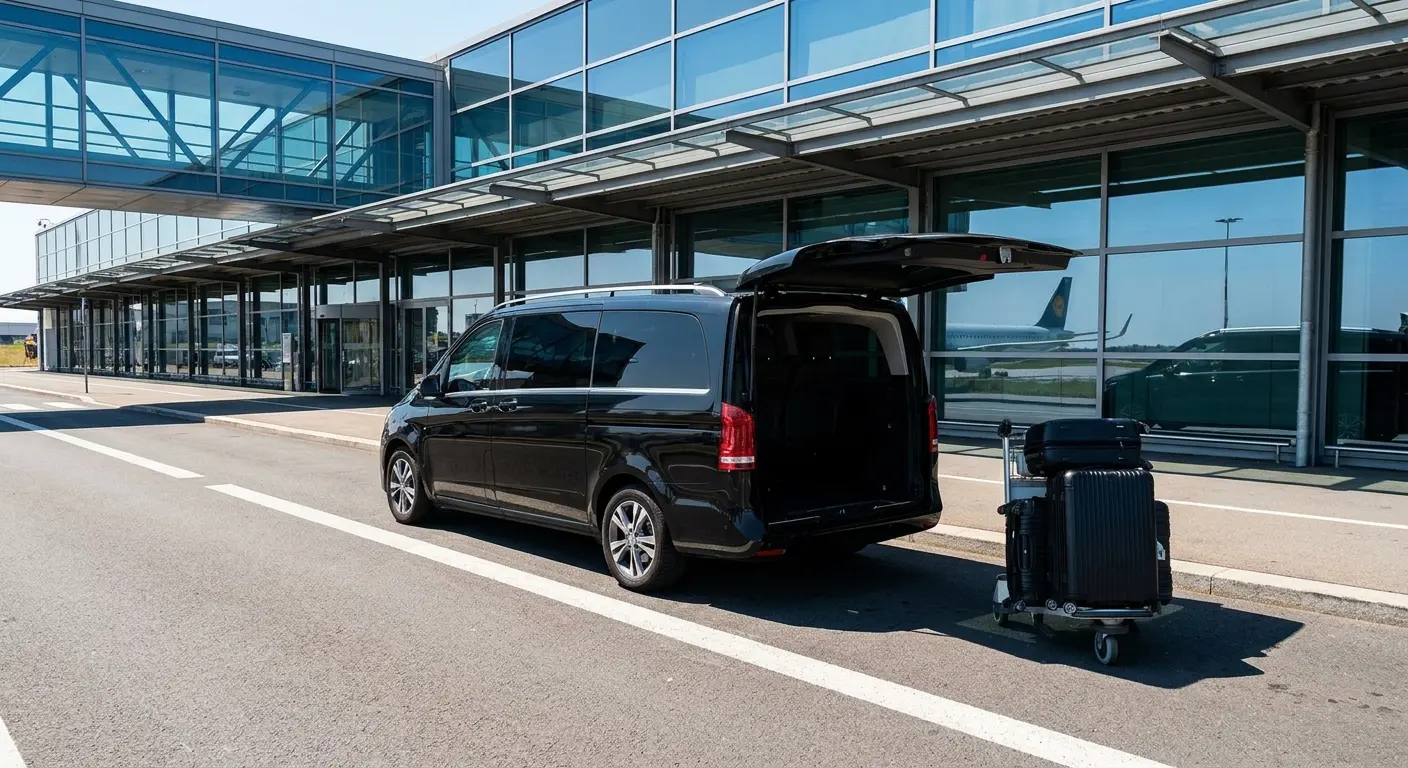
Istanbul Airport Transfer: A First-Timer's Step-by-Step Guide

You have just cleared passport control, collected your bags and stepped into the arrivals hall at Istanbul Airport. Signs point in six directions, drivers call out destinations, and a hundred other passengers are squinting at their phones trying to work out what to do next. If this is your first time arranging an Istanbul airport transfer, those first fifteen minutes can define how the rest of your trip feels.
This guide is written for someone who has never booked a transfer before. No jargon, no invented prices, no brand or vehicle-model recommendations. It answers three practical questions: what actually happens after I leave the terminal, which option fits my situation, and what should a first-timer watch out for? If you are still deciding between a chauffeured service and driving yourself, the Turlago VIP car rental page is a useful starting point, because transfer and car rental are two different products that travellers routinely mix up.
First, confirm which airport you actually landed at
Istanbul has two major airports and they sit at opposite ends of a very large city. That single detail reshapes your entire transfer plan. Istanbul Airport (IST) is on the European side, out towards Arnavutköy. Sabiha Gökçen (SAW) is on the Asian side, near Pendik and Kurtköy. Checking the three-letter code on your ticket determines everything from your hotel choice to your realistic travel time.
As a rough guide, Istanbul Airport to Taksim or Sultanahmet can take anywhere between one hour and ninety minutes depending on traffic. From Sabiha Gökçen to the same areas, it can stretch even longer once you factor in the bridge crossing. So when someone asks how long an Istanbul airport transfer takes, the honest answer is that it depends on which airport, which district, and which hour of the day.
- Istanbul Airport (IST): European side, large modern terminal, metro connection, far from the historic centre.
- Sabiha Gökçen (SAW): Asian side, more compact terminal, metro connection, crossing to the European side carries real traffic risk.
- True for both: Official taxis and pre-booked transfer vehicles pick up in designated areas. Ignore anyone approaching you inside the terminal offering a ride.
What happens in the first 30 minutes after you land
First-timers worry most about getting lost. In reality the sequence is quite predictable. Picture it in advance and the arrival hall stops feeling chaotic.
- Landing and passport control: On international flights, the queue can run 20 to 45 minutes, longer at peak times. Build this into your transfer timing.
- Baggage claim: Your belt number appears on the screens. In large terminals, walking between belts can take ten minutes or more.
- Customs and exit: Once through, you reach the arrivals hall. This is where free airport wi-fi lets you message your driver or share your location.
- Meeting point: If you booked a private transfer, most operators assign a specific exit door or letter. Confirm this before you travel, not after you land.
- Name sign or phone call: Meet-and-greet services have the driver waiting with a sign bearing your name. Others will call you once you are landside.
- Getting into the vehicle: Luggage is loaded and you are given the vehicle type and plate number. From here, your only job is the seatbelt.
- Departure: The route may change depending on traffic. A good driver will tell you the estimated arrival time, so ask.
The one detail that catches people out is a delayed flight. Professional operators take your flight number and track it, which means a late landing does not trigger waiting charges. Asking whether flight tracking is included is one of the most valuable questions a first-timer can ask.
Five ways to get from the airport into the city
You have several options and none of them suits everyone. Decide what matters most to you: the lowest cost, the shortest time, the most comfort, or the most predictability.
1. Metro and rail connections
The metro line serving Istanbul Airport is boardable inside the terminal and is the cheapest option available. Its great strength is immunity to traffic. Its weakness is the number of connections and the stairs you will negotiate with luggage. It suits solo travellers with a single backpack who are watching their budget and enjoy figuring out a new city. Once you have two large suitcases, comfort drops sharply.
2. Airport shuttle buses
Shuttle services run to fixed hubs around the city and require fewer changes than the metro, with more room for luggage. The catch is the fixed routes: if your hotel is not on the line, you will still need a taxi at the other end. Departure frequency can also vary with demand and drops late at night, so check the timetable before relying on it.
3. Taxis
Taxis are the most flexible option because they require no planning. The trade-off is that the meter keeps running in traffic, so the final fare is difficult to predict. A practical rule for first-timers: before getting in, ask roughly how long the journey will take and which route the driver intends to use, then sanity-check it against your own map. Avoid anyone at the kerb offering a ride outside the official queue.
4. Private and VIP transfers
A private transfer reserves a vehicle for you alone: no shared passengers, a greeting at the exit, help with luggage and a price fixed in advance. For first-time visitors who do not speak the language, arriving late at night, or travelling in a group, it is the most predictable choice. It is not the cheapest option, but the total cost is far easier to calculate than a taxi that waits in traffic. You can compare vehicle classes on the Turlago VIP car rental page.
5. Hotel shuttles
Some hotels run their own pickup service. It sounds effortless, but check two things: whether it only operates at certain hours, and whether the shuttle stops at several hotels on the way. Also confirm whether the fee is added to your room bill or paid separately.
How a VIP transfer actually works, step by step
The biggest unknown for first-timers is the process itself: who calls whom, when money changes hands, and what happens if the plane is late. Here is the standard flow of a professional transfer operation.
- Booking: You provide date, time, flight number, passenger count, luggage count and drop-off address. Vehicle class depends on all of these.
- Confirmation and price: The total is confirmed in writing, including exactly what is covered: motorway tolls, bridge fees, parking, waiting time.
- Flight tracking: The driver monitors your flight number, so an early or late landing is factored in automatically.
- Driver details: Hours before arrival you receive the driver's name, phone number and vehicle plate.
- Greeting: The driver waits in the arrivals area with a name sign, which removes any risk of getting lost in a busy terminal.
- Meeting and verification: The driver confirms your flight details, then walks you to the car park or pickup lane while luggage is loaded.
- The journey: The route is planned with traffic alternatives, and breaks can be arranged if you need them.
- Arrival and payment: You are dropped at the agreed address. Payment may be prepaid, by card or in cash, so confirm the method in advance.
The one thing that can stay hidden is waiting time. After you land, baggage can take a while to appear, which is why most meet-and-greet services include a free waiting allowance. Asking how many minutes that allowance covers is essential for a first-timer.
Ten questions to ask before you book
Save this list in your phone. If a provider answers all ten clearly, you are very likely dealing with a professional operation.
- Is the price fixed or traffic-dependent? A fixed price is the single most useful thing for anyone budgeting.
- Are motorway, bridge and parking fees included? On airport runs these can add up noticeably.
- Is there a charge if my flight is delayed? With flight tracking, usually not.
- How many minutes of free waiting time are included? Immigration and baggage can easily take an hour.
- Is the greeting done with a name sign? In a busy terminal this detail matters a lot.
- What vehicle class and capacity do I get? Report passenger and luggage numbers accurately; a cramped car ruins a long ride.
- Can you provide a child seat? Essential for anyone travelling with small children.
- How do I pay? Cash, card or online, and is a receipt or invoice issued?
- When will I receive the driver's details? Advance plate and phone details build confidence.
- What is the cancellation policy? If plans change, how late can you cancel without a penalty?
Realistic travel times by district
The most common disappointment for first-timers is time. On a map, 35 kilometres looks trivial. In Istanbul traffic it can mean 40 minutes or 100. The estimates below assume reasonably flowing traffic; add a buffer during peak hours.
- Istanbul Airport to Taksim / Beyoğlu: roughly 50-80 minutes.
- Istanbul Airport to Sultanahmet / Eminönü: roughly 55-85 minutes.
- Istanbul Airport to Beşiktaş / Levent: roughly 45-70 minutes.
- Istanbul Airport to Bakırköy and the old airport district: roughly 40-60 minutes.
- Istanbul Airport to Kadıköy (Asian side): roughly 70-110 minutes, bridge traffic dependent.
- Sabiha Gökçen to Kadıköy / Ataşehir: roughly 35-60 minutes.
- Sabiha Gökçen to Taksim / Sultanahmet: roughly 60-110 minutes.
- Sabiha Gökçen to nearby hotels: roughly 10-20 minutes.
Treat these as planning tools, not guarantees. If you have a flight or a meeting to catch, add at least 30 percent to your own estimate. In Istanbul, traffic surprises are the norm.
Seven factors that determine the price
Transfer pricing is not random. Understanding these variables explains why two quotes for the same trip can differ.
- Distance and route: Kilometres between the airport and your destination set the baseline.
- Vehicle class: Economy, comfort and larger VIP classes carry clearly different rates.
- Passengers and luggage: If baggage exceeds the boot capacity, a larger vehicle becomes necessary.
- Time of day: Late-night and pre-dawn pickups may carry a surcharge.
- Waiting time: Flight delays, long immigration queues or extra stops extend the clock.
- Add-ons: Child seats, name-sign meet and greet, extra stops and intercity runs all affect the total.
- Season and demand: In peak tourism periods and around major events, availability tightens and rates rise.
Do not compare only the headline number. Two quotes that look identical may differ in whether tolls and parking are inside the price or billed on top.
Luggage, child seats and larger groups
Planning your luggage
The gap between cabin bags and large suitcases directly affects vehicle choice. As a rule, a given vehicle class carries a certain number of large suitcases, and that number is not the same as the passenger count. Four travellers with four big suitcases may not fit a standard car. Stating exactly how many large bags you have prevents an awkward moment at the kerb. Strollers, ski bags and golf bags should be declared separately.
Child seats and infants
If you are travelling with a baby or small child, request a child seat or booster at the time of booking. This is one of the requests that cannot be solved last minute, because not every vehicle carries them. Providing the child's age and weight ensures the right seat is allocated.
Groups of six or more
Larger groups have two options: one large minibus-style vehicle, or a two-vehicle convoy. A single vehicle is usually better value but can be tight on luggage. With a convoy, insist that both vehicles depart together so the group is not split. For weddings, sports teams and corporate guests, a single meet-and-greet point keeps everyone together in a crowded arrival hall.
Night arrivals, morning rush hour and the reality of traffic
Istanbul traffic shifts dramatically through the day. The inbound direction is heaviest between roughly 07:30 and 10:00, while the outbound direction peaks between 17:00 and 20:00. Weekend mornings are usually calmer, although in summer the congestion simply moves towards coastal and tourist districts at different hours.
For arrivals after midnight the situation cuts both ways. Roads are usually clear, so journey times shrink, but public transport thins out or stops altogether. At that hour a pre-booked transfer becomes the only genuinely predictable option. If you are arriving at night, also confirm that your hotel reception is staffed, since some boutique properties require advance notice for late check-in.
If you have an early morning flight, note that leaving the city in the morning is generally the easier direction. Evening departures, by contrast, collide with the worst of the outbound rush.
Eight mistakes first-timers make
- Not providing the flight number: Without it there is no flight tracking, and delays can trigger waiting charges.
- Not asking for the meeting point: Waiting at the wrong door can cost you half an hour.
- Misreporting passenger and luggage numbers: A small car arrives and the bags do not fit.
- Not clarifying what the price covers: Tolls and parking get added later.
- Not asking about payment methods: Finding cash at an airport can be harder than expected.
- Ignoring the waiting allowance: A long immigration queue can push you past the free window.
- Leaving no contact details: If the driver cannot reach you, the meeting is delayed. Give a reachable number and a messaging app contact.
- Booking at the last minute: In high season suitable vehicles sell out, so booking a few days ahead is the safest route.
Transfer day checklist
- Booking confirmation, digital or printed, with the meeting point written on it
- Flight number and boarding pass
- Driver name, phone number and plate number
- Your drop-off address written out, including local characters
- A small amount of local currency for cases where cards are not accepted
- A charged phone and a power bank
- Confirmation that a child seat has been reserved, if you need one
Payment, extras and receipts
Payment is the part first-timers hesitate over most. Three models are common: prepayment online at booking, card payment in the vehicle, and cash. Whatever applies, confirm it in writing. If you are travelling on business, say upfront whether you need a proper invoice and whether a tax number must appear on it.
Extras typically come from a short list: extended waiting, additional stops, night tariffs, tolls and parking, and vehicle upgrades for excess luggage. A professional operator states these at the booking stage. If a price appears out of nowhere, settle it before the vehicle moves.
Tipping is not obligatory. A small thank-you for good service is a courteous gesture, but it is not an expected charge and certainly not a negotiation.
Intercity transfers: Bursa, Sapanca, Abant and beyond
If you are landing in Istanbul but not staying there, the definition of a transfer changes completely. Heading to Bursa, Sapanca, Abant or the İzmit area turns your ride into an intercity journey that needs real planning.
Two details matter on these routes. First, whether the gulf crossing and motorway tolls are included, because they materially change the total. Second, combining these routes with public transport is almost always more laborious: more connections, more time, and more effort with luggage. If your flight lands late at night, a private vehicle is effectively the only sensible option.
On intercity runs, extra stops (a ferry terminal, a rest break) change the price, so mention them at booking and the route will be planned around them. Give your arrival time accurately too: on these roads travel time is more predictable than inside the city, though winter weather can still rewrite the schedule.
Frequently asked questions
How far ahead should a first-timer book?
In normal periods, 24 to 48 hours is enough. In summer, around public holidays and during major events, booking a week ahead gives you better availability and better rates.
What if my flight is delayed?
With operators that track flights, the booking is simply rescheduled. Ask specifically whether flight tracking is part of the service.
Are credit cards accepted, or do I need cash?
It varies by provider. The safest approach is to confirm the payment method in writing and to carry a small amount of local currency as backup.
Is public transport or a transfer the better choice?
For a solo traveller with one bag, arriving in daylight, staying near the centre, public transport is excellent value. For groups, heavy luggage, night arrivals, language barriers or tight schedules, a transfer is far more sensible.
How do I find my driver in a crowded terminal?
Three things solve this: a name sign, the vehicle plate number, and the driver's phone number. With those in hand, a busy arrivals hall stops being a problem.
What is usually included in the price?
Typically the vehicle, the driver and a set waiting allowance. Tolls, bridge fees, parking, night surcharges and extra stops are often variable, so read the quote carefully for these lines.
What is the difference between a transfer and a car rental?
With a transfer, the vehicle and driver come as a package and you simply name the destination. With a rental, you drive yourself and take on parking and traffic responsibility. For short city visits, a transfer is usually less exhausting. If you want to compare the two, the details on the Turlago VIP car rental page are a helpful reference.
Conclusion: five rules that make a first transfer easy
An Istanbul airport transfer looks complicated the first time and becomes routine the second. What closes the gap is asking the right questions in advance. Share your flight number, get the meeting point in writing, report your passenger and luggage numbers honestly, clarify exactly what the price covers, and confirm how you will pay. Those five steps turn your first half hour in the city from a scramble into a smooth start.
If you would rather plan your route and vehicle ahead of time, take a look at the Turlago VIP car rental page to compare transfer and vehicle options in one place. But remember the real test: the best transfer is the one that leaves you with nothing to think about once you walk out of arrivals. Do the planning before you fly, and let the driver handle the rest.