Istanbul Bus Station Transfer: A Step-by-Step First-Timer's Guide
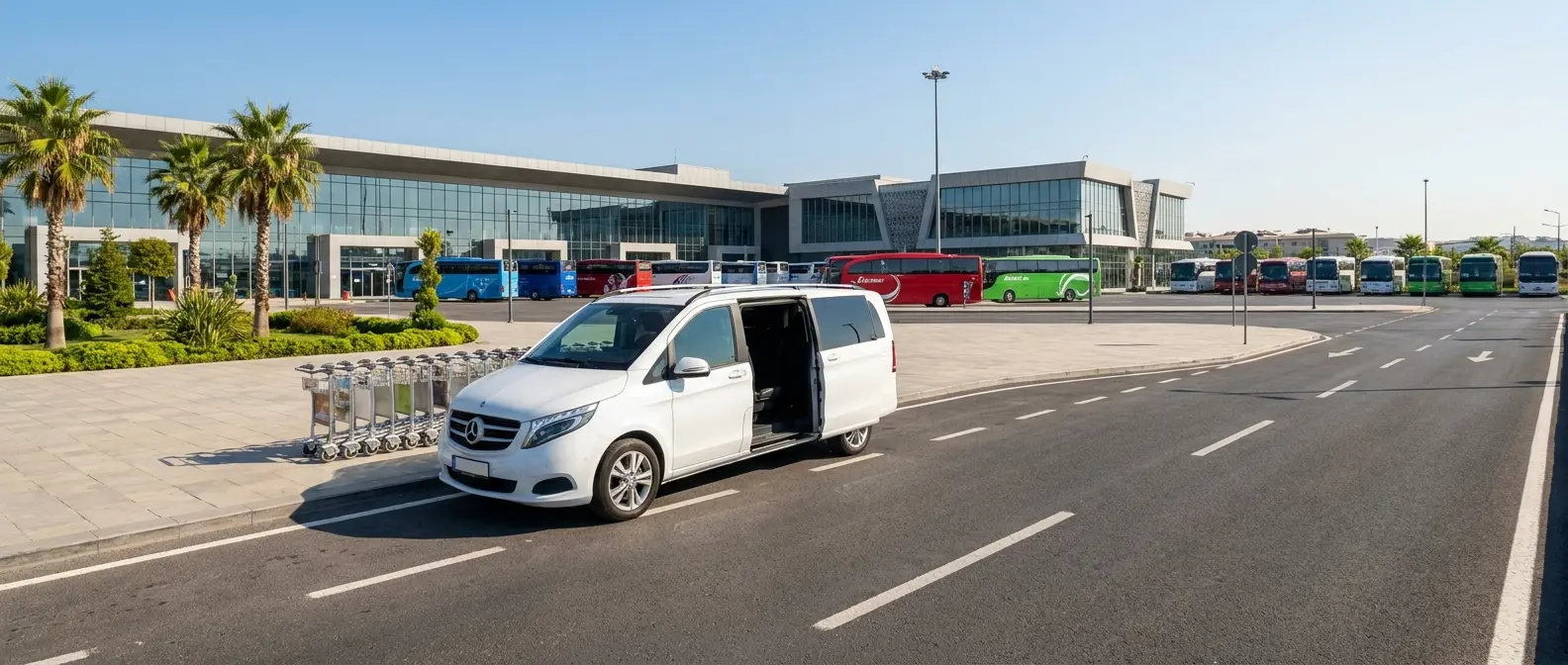
Arriving in Istanbul by intercity coach for the very first time is a strange mix of excitement and mild panic. The bus pulls into a vast terminal with more platforms than you can count, dozens of travellers move in every direction at once, and someone is already asking whether you need a transfer. Here is the reassuring part: getting from the bus station into the city comes down to choosing one of four options, deliberately. This guide walks you through everything that happens between stepping off the coach and handing your passport to a hotel receptionist, written for someone who has never done it before. If you would rather compare options before you travel, start with Turlago transfer services, and if comfort matters more than cost on this trip, look at premium car rental as well.
Step 1: Find Out Which Terminal You Are Actually Arriving At
"The Istanbul bus station" is not a single place. Most long-distance coaches terminate at Büyük İstanbul Otogarı in Esenler, on the European side. It is the largest and busiest coach terminal in the city, and it is the one most travellers mean when they say "otogar". A number of services heading to the Anatolian side, or coming in from the Black Sea and central Anatolia, use Alibeyköy Cep Otogarı instead. Some carriers also drop passengers at intermediate stops around Dudullu and Samandıra on the Asian side.
Seeing the word "Istanbul" on your ticket is not enough information, because where you get off determines your entire onward plan. Before you buy, ask the coach company three specific questions:
- What is the final stop? Esenler, Alibeyköy, or an intermediate stop on the Asian side?
- What is the estimated arrival time? Traffic can shift this by an hour or two, so build flexibility into whatever you book.
- Where is the company's desk and which platform? That is where you go if something goes wrong with your luggage or ticket.
One more detail worth confirming: whether your coach genuinely terminates at the station or drops passengers at an intermediate point inside the city. Some operators do the latter, and if that happens your transfer plan changes completely. Getting this confirmed in writing when you book is the single biggest time-saver for a first-time visitor.
Step 2: Five Things to Do in the Last 30 Minutes on the Bus
The most stressful part of the bus station experience is actually decided before the coach even enters the city. Handle these five things while you are still seated, so you never have to make decisions while standing in a crowd:
- Get your luggage tag within reach. If your bag went into the hold, retrieving it without a tag or sticker at the collection point takes far longer.
- Charge your phone. Finding a working power socket at a coach terminal is mostly luck, so top up your battery before you arrive.
- Prepare offline maps and internet. Terminal Wi-Fi is rarely reliable. Load your route and your ride-hailing app in advance.
- Share your location with someone. This matters most for late-night arrivals and costs you nothing.
- Confirm your transfer details. If you have booked a private transfer, have the driver's name, vehicle plate and meeting point written down.
Do these five things and the moment you step onto the platform you already know your next move. For first-time bus station transfer users, the real challenge is not a lack of information, it is having to decide at the worst possible moment.
Step 3: The First 15 Minutes — Luggage, Wayfinding and Crowds
When the coach pulls in, almost everyone stands up at once. Resist it. Waiting two extra minutes on board is far more comfortable than jostling at the luggage hold. Once you have your bag, follow this order:
- Read the platform signage first. Terminal signage is large and colour-coded; use it to work out which direction you need.
- Head for the main hall. At Esenler, platforms open onto a wide concourse; the main hall is where metro entrances, information desks and waiting areas are.
- Use the information desk. If this is your first time, ask the basic questions there: where is the metro, which exit has the taxi rank, is there left luggage?
- Handle essentials. Some restrooms in the terminal are paid, so keeping small change handy makes life easier.
- Sort out your transport payment. If you plan to take the metro, vending machines for the city's transit card are in the main hall.
One warning worth taking seriously: people will approach you near the platform exits offering a transfer. Some are legitimate drivers, many are unlicensed middlemen. Never accept a ride before the price and the vehicle are clear. There are two safe choices here — the official taxi rank, or a transfer booked in advance with a known plate number and driver name.
Step 4: Getting Into the City — Four Options, Honestly Compared
There are four realistic ways out of the terminal. Which one is right for you depends on how much luggage you have, what time you arrive, your budget and how many people are travelling with you.
1. Metro — Cheapest, and Traffic-Proof
Esenler's biggest advantage is that it has a metro station inside the terminal complex. The "Otogar" station on the M1 line is part of the building, which means you never have to step outside to reach it. Trains toward Yenikapı connect you to both the Marmaray cross-strait line and, via the M2 line, to Taksim.
Best for: solo travellers and couples with one or two small bags. Downsides: crowded at peak hours, you have to manage stairs and transfers with luggage, and service thins out late at night. If you are heading to the Asian side, count on at least two changes.
2. Taxi — Door to Door, With an Unpredictable Price
An official taxi from the rank takes you straight to your hotel door. The catch is that in Istanbul traffic, a 12-kilometre trip can take thirty minutes or ninety. The fare depends on distance and traffic, so before you set off, check an estimated range in a ride-hailing app so nothing surprises you at the end.
Practical tips: avoid cars offering rides outside the rank. Make sure the meter is running when you get in. Carry both cash and a card for late-night arrivals. And show the driver your hotel address written in Turkish — it is the simplest way to avoid a language mix-up.
3. Private / VIP Transfer — The Most Predictable Option for First-Timers
A private transfer removes the guesswork entirely. You book in advance, you know the price in advance, the driver meets you at the platform exit holding a sign with your name, and you are driven directly to your hotel. Because the plate number and driver details are shared beforehand, the "who can I trust here?" question disappears.
Ideal for: first-time visitors, late-night arrivals, families with children, older travellers, larger groups, anyone with several suitcases, and business travellers on a tight schedule. The trade-off: a higher price than the metro. In exchange, the price is fixed, so being stuck in traffic does not inflate your fare. You can compare vehicle classes and routes on the transfer services page.
4. Hotel Shuttle and Shared Transfer
Some hotels run a free or low-cost shuttle at set times, and it is worth asking about this when you book, because it is rarely advertised. A shared transfer works differently: several passengers heading the same way travel together in one minivan. It is cheaper, but the ride ends when the last passenger is dropped off, not when you are. If your arrival time matters, this is not the option to pick.
Step 5: How to Decide Between Budget, Speed and Comfort
The comparison below gives you a general framework for a typical trip from the terminal into the city centre. Exact fares are updated through the year, so always check the current tariff for your travel date.
- Lowest cost: metro. Unaffected by traffic, predictable timing, but requires you to manage luggage and transfers.
- Fastest door-to-door: usually a private transfer; similar timing to a taxi depending on traffic, but at a fixed price.
- Most flexible: taxi. You leave whenever you want, but both time and price vary.
- Cheapest comfortable option: shared transfer, lower cost but longer and with multiple stops.
- How to choose: look at total cost plus time plus stress, not cost per person alone. For a family of three, a taxi or private transfer per person can come surprisingly close to the metro.
Most first-time visitors plan their coach ticket in detail and their transfer hardly at all. Yet the transfer is what determines how the first hours of the trip actually feel.
How to Book a Bus Station Transfer on Turlago: Six Steps
Booking a private transfer takes less time than you expect. Here is the sequence:
- Set your route. Be precise about the pickup point (Esenler, Alibeyköy or a specific address) and the drop-off (your hotel address).
- Enter date, time and passenger count. Use your coach arrival time and leave a buffer of 30 to 45 minutes for delays.
- Choose a vehicle class. Passenger numbers and luggage volume determine this. Sedan, minivan and minibus options are usually available.
- Add your service details. If you have the coach company name and service number, include them, so the driver waits with the right information if you are delayed.
- Read the meeting instructions. Your booking summary should tell you exactly where the driver stands, what the sign says and how to reach them.
- Save the confirmation and plate number. On travel day, keep the plate and driver name accessible offline in case your connection drops.
For longer stays, daily city use or a combination of intercity travel, premium car rental can work out cheaper than repeated single transfers. If you will be moving around Istanbul for two or three days, it is worth comparing.
Ten Mistakes First-Time Bus Station Transfer Users Make
- Not leaving any buffer on arrival time. Intercity coaches get delayed by traffic; allow 30 to 45 minutes of flexibility on any timed transfer.
- Not checking how you will pay. Large banknotes can be awkward on public transport, and card readers in taxis do not always work.
- Not having the hotel address in Turkish. Showing a driver an address in a foreign script is the most common cause of ending up in the wrong place.
- Negotiating at the platform exit. Dealing with unlicensed touts is both pricier and riskier. Booking ahead removes the problem completely.
- Losing the luggage tag. If the collection point asks for it, it needs to be in your pocket.
- Planning a night arrival as if it were midday. Late-night metro services thin out and surroundings empty; here a private transfer becomes close to essential.
- Mentioning child seats at the last minute. State child seat requirements at the time of booking.
- Lingering inside the terminal. These buildings are enormous; walking to the exit can take 10 to 15 minutes. Time your transfer accordingly.
- Changing money at the terminal. Exchange rates and commissions at coach stations are usually worse than in the city centre.
- Having no backup plan. Think ahead about what happens if your phone dies — carrying your hotel number on paper is the simplest fix.
Night Arrivals, Families and Larger Groups
Night arrivals: after 11 pm, metro and surrounding transport options thin out dramatically. Travelling alone at that hour, a pre-booked private transfer is both safer and far less tiring. Waiting in a lit, busy area inside the terminal is always preferable to waiting on the roadside outside.
Families with children: luggage, a stroller and a child at the same time is the hardest combination to manage. In this situation, metro transfers can turn into genuine misery. A door-to-door transfer prevents most of the meltdowns that come with a tired child.
Larger groups: for four or more people, state your group size clearly when booking. A "we'll just grab two taxis" plan falls apart when there are no empty taxis at the rank. Group transfers are usually the option that brings the per-person cost down the most.
Older travellers: after a long coach journey, stair-heavy metro interchanges and crowded platforms are hard work. In this case, choose a vehicle class with easy boarding and a high roof.
Connecting Between Terminals: Coach-to-Coach Transfers
Some travellers use Istanbul purely as a connection point, arriving from one city and departing for another. In that scenario the gap between your two coaches becomes the critical number. The distance between Esenler and Alibeyköy looks short on a map, but with traffic it can eat serious time, so leaving at least three hours for the connection is realistic rather than generous.
For terminal-to-terminal moves, a private transfer is the most dependable option: the driver collects you from your first coach and drops you at the entrance of the second terminal, ideally at your onward operator's desk. If you are travelling with large suitcases, this is the option to take without hesitation.
Connecting to Airports and to Your Hotel
If your route continues from the bus terminal to an airport, remember that the distance between the city's two main airports is as long as a full intercity hop in some countries. For these connections, airport shuttle services, metro lines and private transfers are all worth comparing side by side. Shuttle routes and timetables change seasonally, so always verify the current information for your specific travel date.
On the hotel side, the most common mistake is assuming that a centrally located hotel means an easy drop-off. Many hotels around the historic peninsula and Beyoğlu sit on narrow streets that vehicles cannot enter. Asking your hotel in advance where vehicles can pull up will save you from hauling suitcases through the middle of a street.
Hidden Costs That Inflate Your Transfer Budget
- Waiting charges: some transfer services bill extra beyond a set waiting period. Read the meet-and-greet policy before booking.
- Luggage limits: vehicle classes have finite boot space. Declare large or numerous bags, or a second vehicle may be needed.
- Night tariffs: some providers apply a different rate for late-night hours.
- Extra stops: requesting an additional stop en route may carry a supplement.
- Bridge and motorway tolls: for cross-continental or intercity routes, check whether these are included in the quoted price.
The good news is that all of these stop being surprises the moment you clarify them at booking. Uncertainty usually costs more than the fee itself.
Safety, Luggage and Lost Property
Coach terminals are among the busiest public spaces in Istanbul, and entrances have security screening. Keep valuables out of sight in platform crowds and wear your backpack on your front. Check the tag when you collect your luggage.
If you leave something behind on the coach or in the terminal, the route is straightforward: contact the coach company's Istanbul office or call centre first, then visit the terminal's lost property office. The two details that make these processes work are your ticket number and the vehicle plate. Keep both saved on your phone for the whole trip.
Frequently Asked Questions
What is the easiest way to get from the bus station into the city?
For a first-time visitor, a pre-booked private transfer is the easiest, because the meeting point, price and destination are all settled in advance. The cheapest option is the metro, and at Esenler the station is inside the terminal, so you never need to go outside.
Can I buy the city transit card at the bus station?
Yes. Vending machines in the main hall let you buy a card or top one up. It works on the metro and on most public transport in the city.
What should I watch out for when taking a taxi?
Board at an official rank, confirm the meter is running, and ideally book through an app. App bookings show the plate and an estimated fare in advance, which reduces the chance of a disagreement.
What happens to my transfer if my coach is delayed?
Reputable transfer providers track your arrival using the service details you supplied. That is exactly why giving your coach company and service number at booking matters.
Is it possible to get from the terminal into the city after midnight?
Public transport runs far less frequently overnight. At those hours, a pre-arranged private transfer is the most reliable choice.
How far in advance should I book?
During peak season and public holidays, a few days ahead is wise. At other times, 12 to 24 hours is usually enough to secure the vehicle class you want.
The Bottom Line: After the First Trip, the Terminal Stops Being Intimidating
An Istanbul bus station transfer feels complicated the first time only because you are asked to make many decisions at once. The correct order is simple: confirm your arrival terminal when you buy your ticket, use the last 30 minutes on board to get ready, head for the main hall once you have your bag, and then execute the transport option you already chose. The choice between metro, taxi, shared transfer and private transfer comes down to where your budget, your luggage and your arrival time intersect.
If comfort and predictability matter most, the smartest move is to book the transfer before you travel. Compare routes and vehicle options on Turlago transfer services, and if you need flexible, longer-term mobility around the city, look at premium car rental. Once you plan the first journey properly, the second time around the terminal is just a stop, not an obstacle.