Istanbul Car Rental: Economy vs Mid-Size vs Family Class
Why the Real Decision in Istanbul Car Rental Is Class, Not Brand
Most travellers start their rental search with the wrong question. They ask "which brand?" when the cost that actually lands on their invoice is decided by something else entirely: the vehicle class. Walk into the same Istanbul office on the same day and price the same duration across economy, mid-size and family classes, and the daily rate can double from the cheapest to the priciest option. So the honest question is: is that gap worth paying, or are you simply over-buying?
This guide puts economy, mid-size and family class vehicles side by side and judges them strictly on budget and total cost. The goal is not to upsell you the largest car on the lot, but to show you which class genuinely fits your trip. You can compare car rental options on Turlago and apply the criteria below to your own dates.
What "Vehicle Class" Actually Means
In the rental world, "class" is less a technical standard and more a segment label. Within one class you can find different brands, different boot volumes and different fuel types. That is why you should look at the concrete attributes behind the label, not just the label itself.
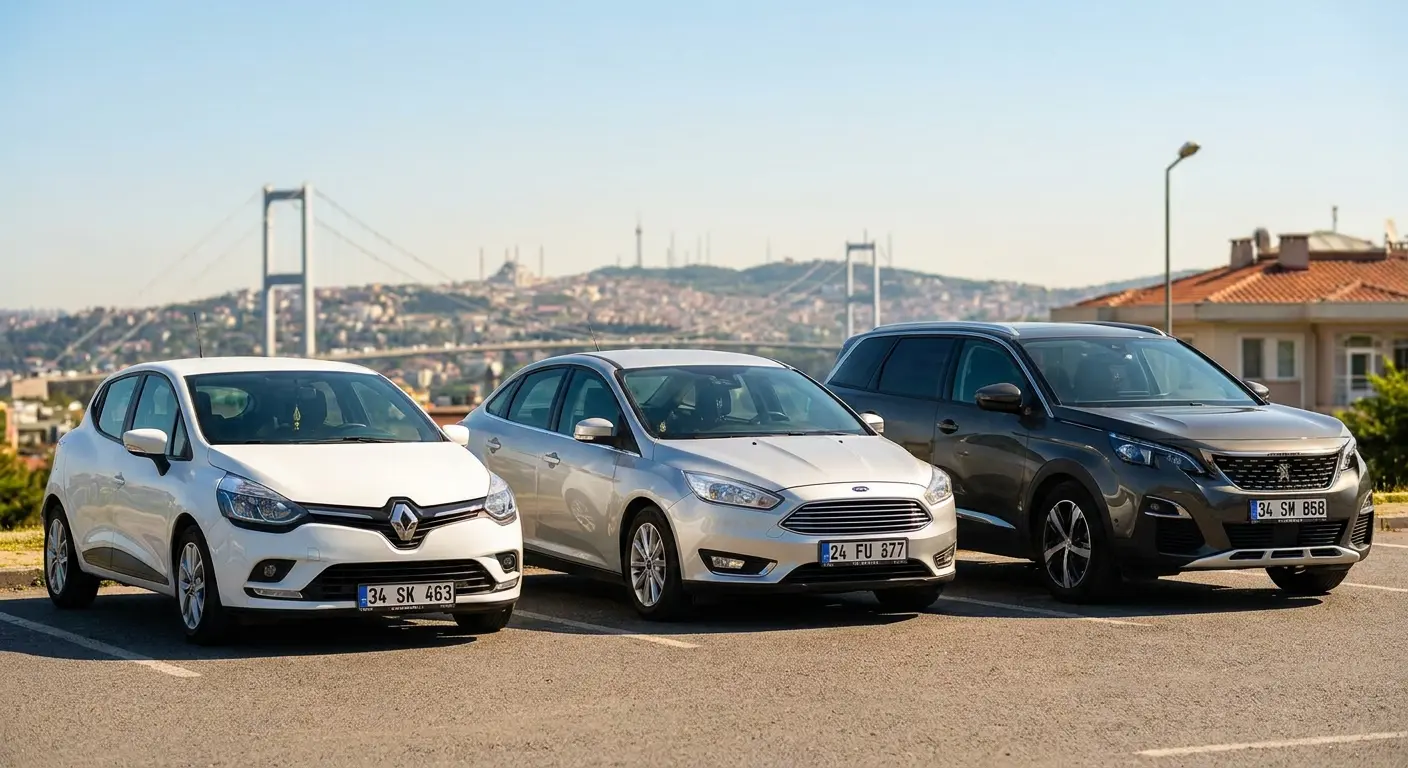
- Economy (A/B segment): Small 3–5 door cars, usually 1.0–1.4 litre engines, seating 4–5. Low fuel consumption, easy parking, lowest daily rate.
- Mid-size (C/D segment): Sedans or hatchbacks, 1.4–1.6 litre engines, noticeably more interior room, a high share of automatics. The balance point between comfort and price.
- Family class (MPV/SUV/D segment): Six to seven seats, large boots, higher ride height. Built for long drives, bigger groups and heavy luggage.
One detail that catches people out: the class label does not guarantee the transmission. Automatics exist in economy class but usually at a premium, while in mid-size and family classes an automatic is effectively standard. Always add the transmission column to any price comparison.
Eight Variables That Move the Price More Than the Class Does
In Istanbul, the daily rate is not driven by vehicle class alone. Two cars in the same class can differ sharply for the reasons below. Check each one before you book.
- Rental length: Daily rates are highest for one-day hires. At three days, seven days and especially beyond thirty days, the daily rate falls significantly.
- Season: July–August and public holidays push fleet demand to its peak and rates upward. November–February often brings low-season discounts.
- Pick-up and drop-off location: Airport desks may add a surcharge, while a city office can be cheaper.
- Transmission: An automatic raises the daily rate even within the same class.
- Fuel type: Petrol, diesel, hybrid and electric cars differ in both daily rate and cost per kilometre.
- Mileage limit: Unlimited mileage versus a 200 km/day cap is a meaningful difference.
- Insurance tier: Basic cover with an excess versus zero-excess full protection can differ by half the car's rental value.
- Pick-up and return time: A late-night drop-off or a very early pick-up can trigger extra fees.
Comparing daily rates without writing all eight variables into one table is misleading. When two offices quote different prices for "the same class," it is almost always because these variables are set differently.
Economy Class: Who It Fits and Who It Quietly Frustrates
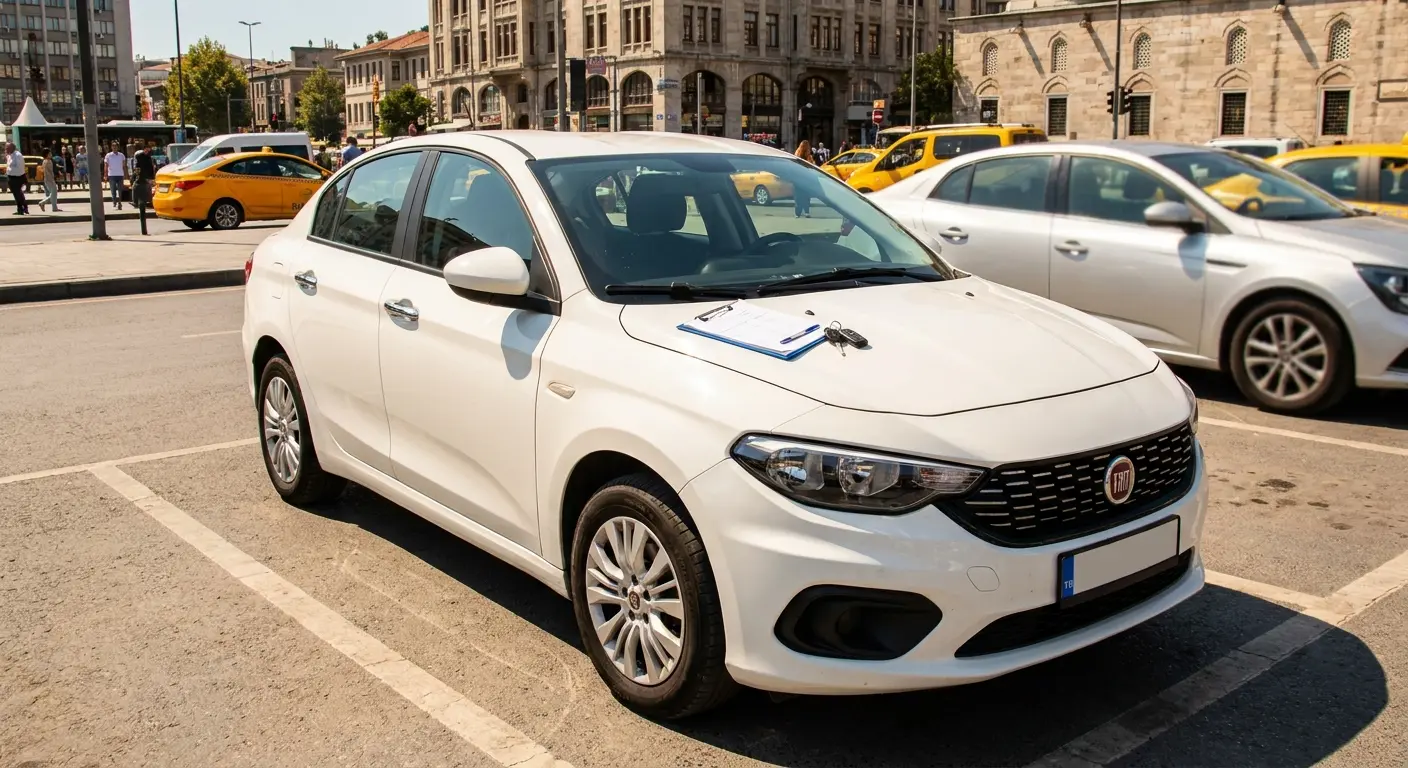
Economy is the most popular class in Istanbul, and the reason is obvious: the lowest daily rate, low fuel consumption and easy manoeuvring through narrow streets and tight car parks.
When economy is the smart choice
- Short city errands: office-to-client runs, shopping, hospital visits, school pick-ups, and days spent in stop-start traffic.
- One or two travellers with light luggage and modest comfort expectations.
- Districts where parking is a fight: the backstreets of Kadıköy, Beşiktaş or Nişantaşı punish large cars.
- Trips where a mileage cap will not bite, roughly 50–80 km per day.
Where economy quietly costs you
- Highway fatigue: A 1.0–1.2 litre engine works hard at full load on the TEM or Northern Marmara motorway; above 120 km/h, noise and consumption climb together.
- Boot space: Two medium suitcases plus a cabin bag can already be tight, and it is simply not enough for a family of four.
- Air conditioning: With the A/C on, small engines lose performance and burn noticeably more fuel.
- Equipment: Reversing cameras, cruise control and lane-assist features are usually absent.
For a short, city-bound trip with few passengers, economy delivers the best price-to-performance ratio on the market. But if four people are planning a five to seven day Black Sea or Aegean loop, economy is the wrong answer from the start.
Mid-Size Class: Where Price and Comfort Meet
Mid-size is often called the golden mean of the Istanbul rental market. The daily rate is higher than economy, but in return you get meaningful gains in comfort and safety.
The concrete advantages
- Interior room: Three adults can sit in the back with reasonable comfort; in economy that is usually two adults plus a child.
- Boot: Two large and one medium suitcase fit easily, and a sedan body gives you a clean, secure load area.
- Handling and safety: A longer wheelbase, better suspension and typically more airbags and electronic aids such as ESP, ABS and hill-start assist.
- Automatic transmission: In Istanbul traffic, an automatic reduces both fatigue and the fuel penalty of constant clutch work.
When to pick mid-size
Mid-size is close to unbeatable in three scenarios:
- Intercity motorway trips: Bursa, Izmir, Ankara or Eskişehir, roughly 200–500 km. Cruise control and an automatic are simply a tier above economy here.
- Business travel for three or four people: Enough room for suitcases, laptop bags and meeting clothes, in a car that reads as professional.
- Airport-to-hotel comfort: On the long run from Sabiha Gökçen or Istanbul Airport into the city, rear-seat comfort is genuinely felt.
The hidden cost of mid-size is rarely fuel; it is parking. Many Istanbul indoor car parks still treat a C-segment sedan as a standard-size vehicle, so you pay the standard rate. That is why mid-size can be only slightly dearer than economy for city driving while feeling noticeably more comfortable.
Family Class: What You Are Really Paying For
Family class — MPVs, SUVs and seven-seat models — carries the highest list price. It is worth being precise about what that premium buys: volume, safety and load capacity, not simply a bigger body.
When family class is genuinely necessary
- Five to seven passengers: Simply not possible in economy or mid-size. Seven seats make this class mandatory.
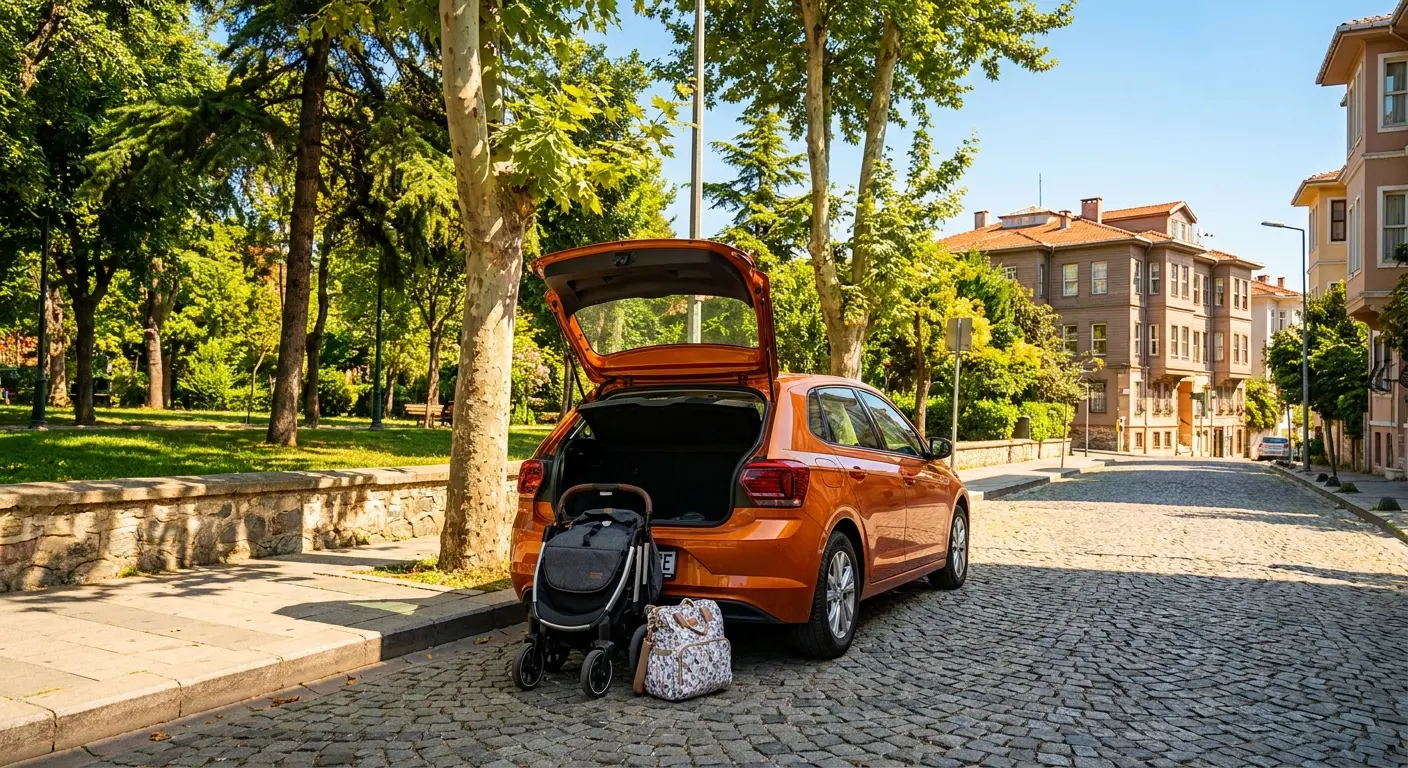
- Long holiday routes: Child seats, a pram, four suitcases, a cool box and toys in one car means you need the boot.
- Long drives with comfort expectations: The winding, hilly roads of the Black Sea highlands, Aegean villages or the Taurus mountains favour the SUV's grip and visibility.
- Transporting elderly or less mobile passengers: The higher body makes getting in and out far easier.
Where family class bites back
- Fuel: Big body, automatic gearbox and A/C on, in city traffic, push consumption up sharply. A full tank can cost 1.5 to 2 times an economy fill.
- Parking: Many Istanbul indoor car parks have height limits and a larger-vehicle tariff. Some underground car parks are simply off-limits to an SUV.
- Traffic and manoeuvring: Parking in tight streets in areas like Nişantaşı or Cihangir becomes genuinely tiring.
- Deposit: Higher vehicle value means a higher blocked deposit on your card.
In short, family class answers a necessity, not a preference. A family of four usually does not need it; a spacious mid-size sedan is more than enough.
Three Scenarios, One Verdict Each
The table below shows which class is the smarter pick in three typical scenarios. Rates are given as ranges; actual prices vary with season, office and insurance tier.
- Scenario A — two people, three days, city only: Economy. Lowest daily rate, easy parking, low fuel. Economy wins.
- Scenario B — four people, five days, Bursa–Izmir motorway: Mid-size sedan. The boot, automatic and cruise control make the difference felt. Mid-size wins.
- Scenario C — six people, seven days, Black Sea loop: Family class SUV or MPV. Space and safety are mandatory. Family class wins.
Notice what this does not say: it does not say the expensive option is the better option. Match the scenario to the class, and each tier delivers the best price-to-performance ratio within its own bracket.
Daily, Weekly and Monthly: How the Rate Dilutes
Car rental is a classic case of economies of scale: the longer you book, the lower the daily rate. Understanding this relationship directly improves your total cost maths.
- One day: The highest daily rate, because fixed costs — cleaning, checks, insurance activation — land on a single day.
- Three to four days: Light discounting begins.
- Seven days (weekly): The daily rate falls clearly below a one-day hire. This is the sweet spot for longer holidays.
- Thirty days and beyond (monthly): The most economical option for people staying in the city for a while, between homes, or corporate users. The daily rate drops another tier from weekly.
A practical rule: if you need five days, price the seven-day package. In some offices a weekly package costs less than a five-day hire, and when the gap is small, taking the package is the better deal.
Seasonality in Istanbul: When Rates Fall
Demand in the Istanbul rental market swings through the year. Knowing the rhythm lets you save meaningfully by booking the same class at the right moment.
- Peak demand: Late June to early September, Ramazan and Kurban Bayramı weeks, New Year, and long public holidays. Economy and family class cars sell out fast and remaining cars get expensive.
- Medium demand: May, late September and October.
- Low demand: November to February, excluding the New Year week. City economy and mid-size rates reach their most competitive levels here.
Booking timing matters too. In peak season, two to three weeks ahead tends to give the best balance; in the low season, three to five days ahead is usually enough. Last-minute leftovers are almost always priced higher because supply has shrunk.
Insurance, Deposit and the Hidden Cost Lines
The line that surprises your budget is rarely the car itself; it is insurance and the deposit. Read these sections carefully before signing anything.
Insurance tiers
- Basic cover: Compulsory traffic insurance plus collision cover, but with a high excess. You pay part of any damage.
- Excess reduction: Lowers the excess amount for a daily fee.
- Full protection (zero excess): Raises the daily rate but removes most of the damage risk from your shoulders.
- Add-ons: Glass, tyres, underbody and minor damage are often excluded from basic cover.
How deposits work
A deposit is the amount the office temporarily blocks on your credit card. The higher the class, the higher the deposit. For a family-class SUV, the blocked amount can be markedly larger than for economy. Checking your card limit in advance avoids unpleasant surprises at the desk.
The most-missed hidden lines
- Airport surcharge
- Additional driver fee
- Child or booster seat fee
- Navigation or toll-device rental
- Excess mileage charge
- Pick-up or return time difference
Together these can add 20–30% to the car-only price. "X per day" is never a final figure; always ask for the total price.
Fuel Type and Your Budget: Petrol, Diesel, Hybrid, Electric
Fuel type can affect total cost more than the daily rate does, especially over long distances.
- Petrol: The most common and easiest to find. City consumption is higher, but the daily rate is usually the lowest.
- Diesel: Lower consumption on motorways and long runs. New-generation diesels are declining in fleets, so availability can be limited.
- Hybrid: Noticeably reduces fuel burn in Istanbul's stop-start traffic. The daily rate is higher, but heavy city use can close the gap.
- Electric: Lowest cost per kilometre, but charging infrastructure varies by district. Charging time, route planning and charger locations must be considered in advance.
Rule of thumb: for long-distance plans, diesel or hybrid; for city-only driving, a petrol economy car is usually the smartest choice. Electric works beautifully for short city trips and needs a charging plan for anything longer.
Everyday Details That Shape Your Istanbul Rental Budget
What strains the budget most is not the rental rate but the reality of driving in the city. Factor these in early and there are no surprises.
- Toll devices: Bridge and motorway crossings in a rental car are made via an automatic transponder. The amount is billed to you at the end of the contract; tolls are generally not refunded.
- Parking: Indoor car park fees can be a serious daily line item, and some car parks refuse SUVs due to height limits.
- Traffic density: Stop-start traffic inflates fuel consumption beyond normal. Driving the same distance at night is more efficient in both fuel and time.
- Traffic fines: Rental companies pass fines to you and usually add an admin fee. Respecting speed limits and parking rules directly reduces hidden cost.
- Fuel policy: Full-to-full is the most transparent: pick up full, return full. On empty-to-empty policies you can end up paying an inflated refuelling charge.
With a Driver or Self-Drive: Which Is Cheaper?
Hiring a car with a driver in Istanbul is a real convenience, especially for visitors unfamiliar with the traffic or for those moving between business meetings. But the budget comparison between the two models needs to be read correctly.
- Self-drive: Daily rate plus fuel, parking and fine risk, all yours. Budgeting is straightforward, but driver fatigue is a cost too.
- With driver: Includes the driver's daily fee plus fuel and route planning. It looks pricier upfront, but parking, fines and damage liability disappear. For larger groups and short business trips, the per-person cost can approach the self-drive option.
The dividing line: two to three city days with short distances favours a self-drive economy car; many stops, long day programmes and a foreign team usually favours a car with a driver.
A Decision Tree: Choose Your Class in Four Questions
Answer in order; the first yes is your class:
- Five or more passengers? Yes → family class (MPV/SUV). No → go to 2.
- Driving more than 150 km per day? Yes → mid-size sedan, automatic. No → go to 3.
- More than two medium suitcases? Yes → mid-size hatchback or sedan. No → go to 4.
- City only, two people, tight budget? Yes → economy class. Correct.
This tree prevents the most common over-spend: a family of three booking an SUV because they "feel like a big family," then stretching their budget with parking and fuel. Match the car to the trip, not to the feeling.
Ten-Point Pre-Booking Checklist
Whether you choose economy or family class, these checks cut total cost meaningfully:
- Did you receive a total-price quote, not just a daily rate?
- Is the insurance excess stated in writing?
- Is there a mileage cap, and what is the overage charge?
- Are the deposit amount and card block clear?
- What is the fuel policy?
- Is there an additional driver fee?
- Is the child seat chargeable?
- Are pick-up and return times included in the price?
- Is the class guaranteed, or "or similar"?
- Is there an airport surcharge?
Once these ten are clear, you can see the true gap between two offices for the same car. Often the cheapest-looking quote becomes more expensive than a mid-size offer once the hidden lines are added.
Frequently Asked Questions
Which rental class is cheapest in Istanbul?
Economy (small hatchback) generally carries the lowest daily rate. However, once long-distance highway driving is involved, a fuel-efficient diesel or hybrid mid-size car can become cheaper overall than an economy petrol car.
How much does an automatic add to the price?
Within the same class, an automatic is listed higher than a manual. The gap is wider in economy class, while in mid-size and family classes an automatic is effectively standard, so the difference is smaller.
Is an "or similar" booking risky?
"Or similar" means the office can hand you a different model in the same segment. Body type and boot volume are usually preserved, but brand and equipment can change. If you need seven seats in family class, state it explicitly in the contract.
Is it cheaper to rent from the airport or from the city?
Airport desks may add a surcharge, and city offices are sometimes cheaper. But airport pick-up saves you time and a taxi fare. Always compare on the total price.
How do I choose a class for a long-term rental?
For monthly or longer hires the daily rate drops, but you must clarify who covers fuel, insurance and maintenance. Mid-size is the most balanced choice for most long-term users; family class only makes sense if you genuinely need to move six or seven people.
Conclusion: The Right Class for the Right Budget
The most expensive car in the Istanbul rental market is not the best car. Economy gives the strongest price-to-performance ratio for short city driving. Mid-size balances comfort and budget on motorway trips and for groups of three or four. Family class only makes sense when you genuinely need to move five to seven people over long distances.
When you calculate total cost, do not stop at the daily rate. Write fuel, parking, tolls, insurance excess, mileage caps and deposits into a single table. That habit alone can save a serious amount over a week's rental.
To see different classes side by side for your own dates and compare current rates, compare car rental options on Turlago. Choose your class deliberately, and your Istanbul drive becomes both more comfortable and more economical.