Istanbul Luxury Yacht Charter: 23-Guest Bosphorus Route
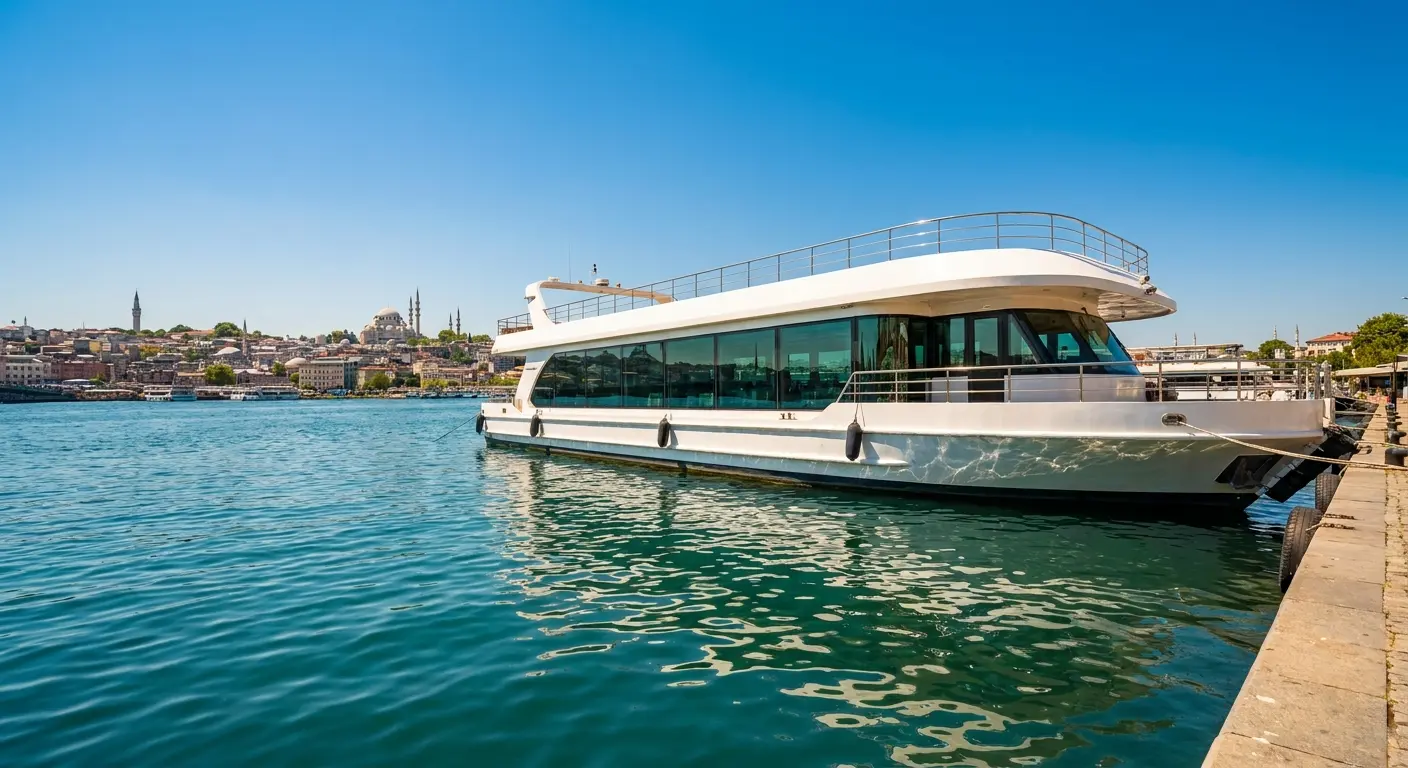
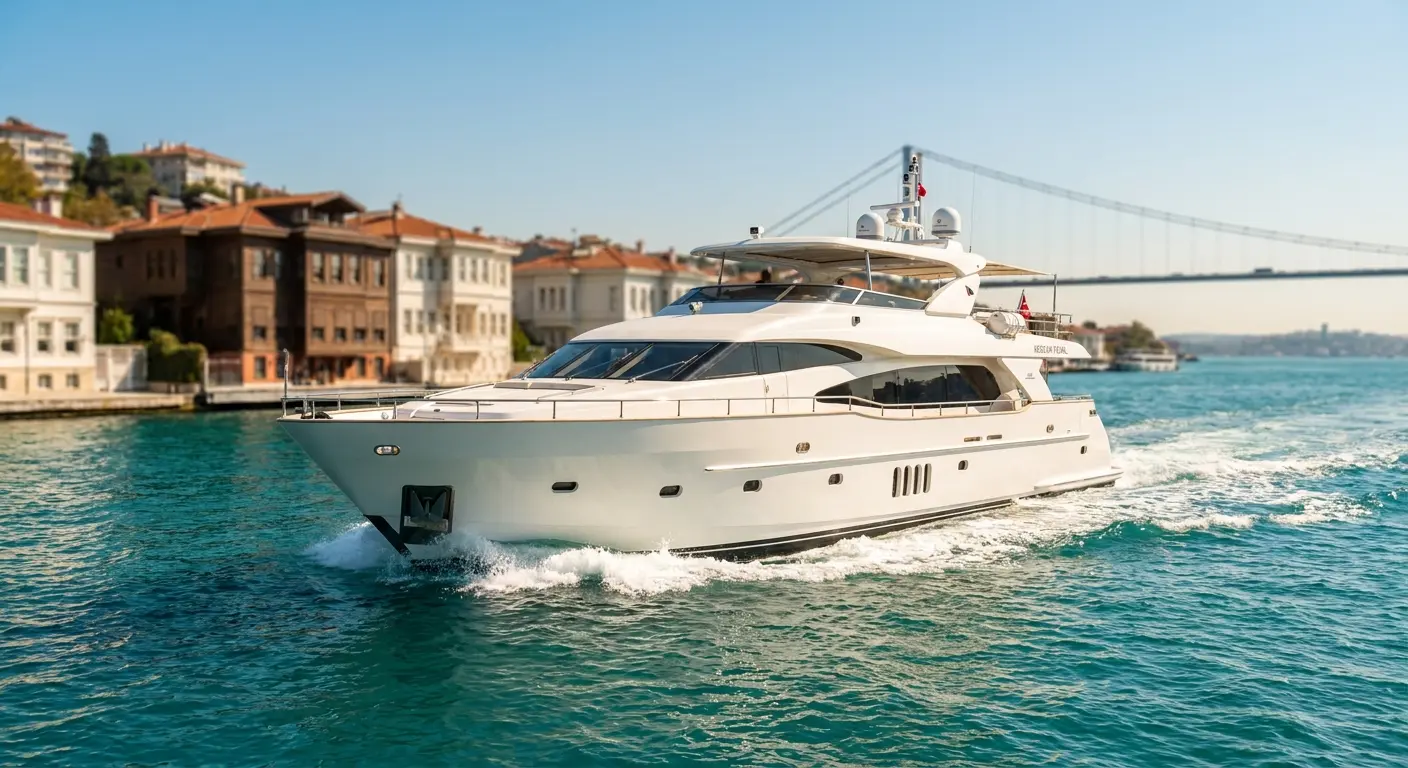
Stand at Karaköy pier and watch a boat leave: within two minutes the captain has already made the decision that defines the whole trip. Turning south means slipping under the Galata Bridge into the still water of the Golden Horn. Turning north means committing to the strait itself, where the surface current nudges the hull and the Dolmabahçe waterfront opens up ahead. Every Bosphorus charter is therefore a choice between geographies, not a single fixed itinerary. This guide walks through the real route legs available to a 19-metre, 23-guest motor yacht departing from Karaköy — and you can view the 23-guest luxury motor yacht charter on Turlago before reading further.
Why Karaköy is the right place to start
Karaköy sits exactly where the Golden Horn meets the Marmara end of the Bosphorus, which makes it the only pier in the historic core with a genuine two-direction choice. On land it is also the most practical assembly point in the city: the T1 tram line, the city ferry piers, the historic Tünel funicular and the Bankalar Caddesi corridor all converge within a few minutes' walk. For a group of 23, that matters more than it sounds — one meeting point, one short walk, one boarding.
There is a historical layer too. The streets behind the pier held the banking houses of the late Ottoman city, and the Galata slope above them still carries the Kamondo Stairs and the old merchant hans. Sailing out of Karaköy is therefore not just leaving from a jetty; it is leaving from the water gate of the city's commercial history.
The one practical warning: Karaköy road traffic builds up quickly in the morning and late afternoon. Ask your group to arrive thirty minutes before departure. Anyone coming from the Asian side can take a ferry directly to Karaköy; anyone arriving by intercity bus should plan on the tram from Taksim rather than a taxi through the tunnels.
Leg one: Dolmabahçe, Çırağan and Ortaköy
Heading north, the first stretch is the formal face of the strait. The sea façade of Dolmabahçe Palace, the long Çırağan frontage, the Yıldız slopes rising behind them and finally the small bay of Ortaköy. From the water the palace reads as a single continuous composition with its clock tower and the hillside behind it — best photographed in the afternoon, when the light comes across rather than against the façade.
Ortaköy is where the two symbols of the route meet in one frame: the slim baroque waterfront mosque at the water's edge and, directly behind it, the towers of the 15 Temmuz Şehitler (Bosphorus) Bridge. Passing beneath the bridge is the psychological threshold of the trip. For most groups this is the moment the trip stops feeling like a city harbour cruise and starts feeling like the Bosphorus proper.
Because this leg is short, it is also the most cost-efficient route if you are paying by the hour. The listing shows an hourly rate of TRY 5,500; always confirm the current figure and what it includes on the listing page rather than relying on a second-hand quote.
Leg two: Arnavutköy, Akıntıburnu and Bebek
Beyond the bridge the shoreline changes character completely. Kuruçeşme gives way to Arnavutköy, where the old timber yalıs step right down to the water and the coastline folds into small recesses. At the point known as Akıntıburnu — literally "current point" — the Bosphorus flow is at its most noticeable, which is why captains usually keep a line slightly offshore instead of hugging the buildings. Across the water, the Kandilli headland on the Asian side carries a similar reputation among local sailors.
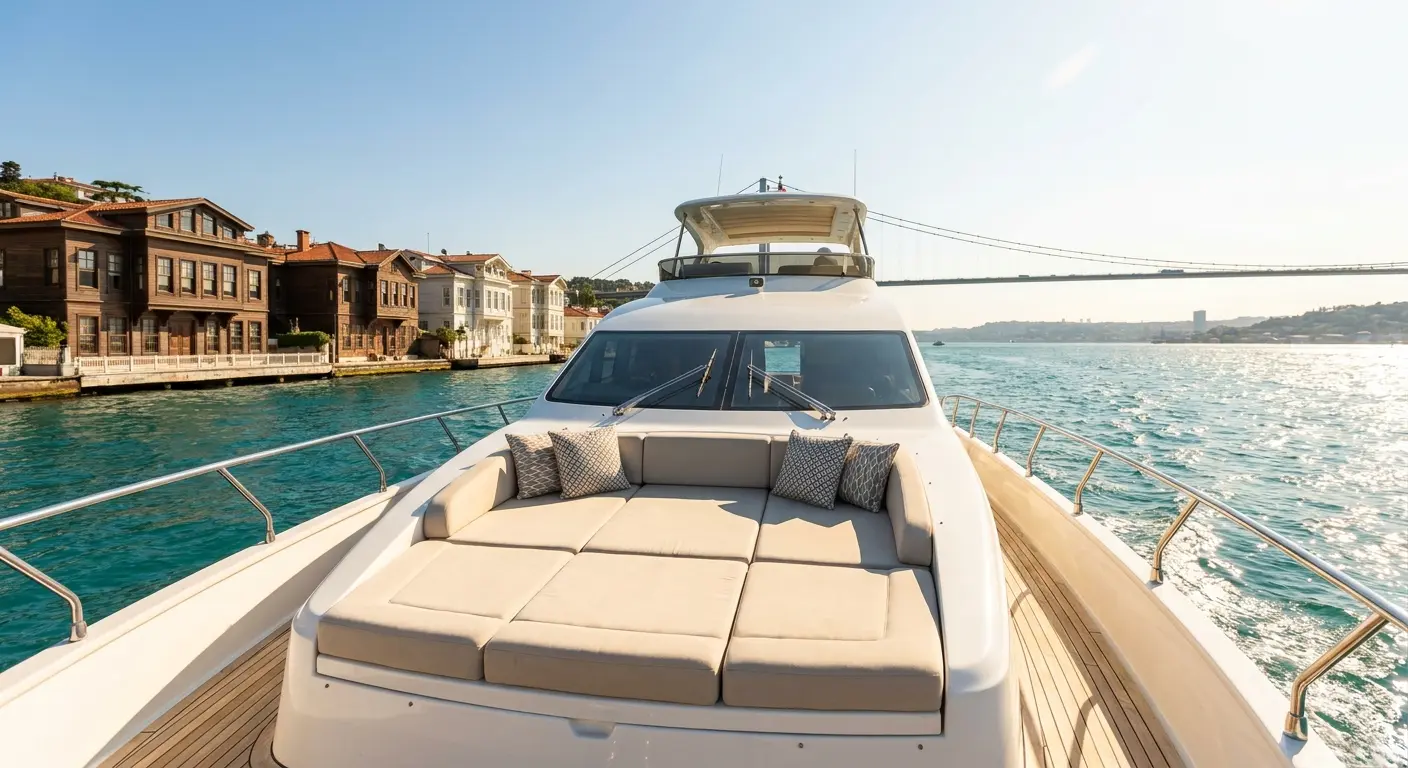
Bebek bay opens immediately after. It is one of the most sheltered and most crowded anchorages on the strait, with waterfront cafés, hillside gardens and the silhouette of Rumeli Fortress visible behind. This is the stretch where the boat's own deck becomes the attraction: a 19-metre motor yacht with wide seating gives a group of 23 enough room to spread out, talk and take photographs without queuing for a rail.
One honest expectation to set in advance: swimming stops are not part of a standard Bosphorus line. The current and the commercial traffic make casual swimming unsafe, and the captain has the final word. If swimming matters to your group, ask specifically which sheltered bays the captain is willing to use — and accept a shorter route in exchange.
Leg three: the mansion corridor of Emirgan, İstinye and Tarabya
Past the second bridge the strait settles into its calmest and most residential stretch. Emirgan brings the grove on the hillside and the museum on the waterfront; İstinye cuts inland with its sheltered inlet; Tarabya gathers its fish restaurants around a small bay; Yeniköy continues with long white yalı façades. The shoreline here is softer, the buildings further apart, and the water quieter.
Local detail worth knowing: this is the section that still feels like the old Istanbul summer resort. Toward Kireçburnu the waterfront turns into wooden jetties, small fishing boats and narrow lanes opening directly onto the sea. If your group wants natural photographs rather than palace façades, this is the better half of the route.
For planning: this corridor is roughly a 1.5–2 hour sail from Karaköy. A three to four hour charter reaches it and returns without rushing. Anything further north requires buying more hours, because the meter runs on time and the geography does not shorten itself.
Leg four: the northern gate at Sarıyer and Anadolu Kavağı
Past Büyükdere the landscape hardens. Buildings thin out, the hills rise, and the water darkens. Rumeli Kavağı and its counterpart Anadolu Kavağı are fishing villages sitting at the mouth of the strait, and behind Anadolu Kavağı the ruins of Yoros Castle occupy the ridge. From the water, the castle silhouette and the open Black Sea appear in the same frame.
Further north still, the Yavuz Sultan Selim Bridge spans the strait between Garipçe and Poyrazköy, adding a completely different scale to the view. Reaching it is a serious time commitment: boat speed, weather and commercial traffic all affect the calculation, and it is not a decision to make on the morning of departure.
Straight advice: if your group's priority is conversation, food and a beautiful backdrop, turning around at Tarabya or Yeniköy usually produces a better day than pushing to the Black Sea mouth. The northern run suits photographers, boat enthusiasts and anyone who genuinely wants to see the strait end to end.
The Asian return: Beykoz, Kanlıca, Küçüksu and Çengelköy
Crossing to the Asian shore changes the texture of the trip again. Beykoz's green ridges, the small Kanlıca pier famous for its yoghurt, the mouth of the Göksu stream with the Küçüksu pavilion beside it, and Anadoluhisarı — the older fortress facing Rumeli Hisarı across the water. Seeing the two fortresses aligned is one of the most photographed compositions on the strait.
Then come Kandilli, Vaniköy and Çengelköy, where plane trees shade the waterfront cafés and the pace drops noticeably. Using this shore as the return leg is the smartest way to avoid covering the same ground twice: you see both banks in a single programme instead of sailing the European side out and back.
On the final approach, the sea façade of Beylerbeyi Palace, then the Maiden's Tower off Salacak and the Üsküdar shoreline close the loop. If seeing the Maiden's Tower in daylight is a priority, build the schedule around it — the return leg is almost always the part that gets squeezed.
The alternative southern route: Maiden's Tower, Haydarpaşa and the islands
Turning south-east from Karaköy trades the mansions for the city skyline. Salacak and the Maiden's Tower, the Üsküdar waterfront, the historic Haydarpaşa railway building, then Moda and Fenerbahçe bays. With more hours available, Kalamış and the Princes' Islands come into range.
This is a strong option for visitors with limited time, for corporate groups, and for anyone who wants a short sea break before an evening programme in the city. It is not, however, a substitute for the Bosphorus experience: if you came for the palaces and timber yalıs, the southern route will not deliver them. Choose by what you actually want to see, not by what sounds shortest.
Route by duration: two, three, four and six-plus hours
Because charter pricing is hourly, duration is the single most important decision. This is a realistic planning frame for a motor yacht departing Karaköy:
- Two hours: Karaköy – Dolmabahçe – Çırağan – Ortaköy – under the bridge and back. Short, dense with scenery, ideal for a toast, a proposal or a compact celebration.
- Three hours: the same plus Arnavutköy, Bebek and the Rumeli Fortress frontage. The most balanced choice for first-time charterers.
- Four hours: reach Emirgan, İstinye and Tarabya and still leave time for food and conversation.
- Six hours and beyond: Yeniköy, Büyükdere, Sarıyer, Rumeli Kavağı and Anadolu Kavağı, with the Asian shore — Kanlıca, Küçüksu, Çengelköy — on the return. A full day, and the most satisfying frame for larger groups.
Treat this as a planning tool, not a promise. Actual timings depend on cruising speed, weather and the day's commercial traffic, which is why agreeing the route with the captain before booking is the most reliable step you can take.
Which group should pick which route
Families and multi-generation groups
The main risk with children and older guests is an over-packed programme. A two to three hour Karaköy–Ortaköy–Bebek loop keeps boarding and disembarking to a minimum while still delivering the strongest scenery. Ask about shaded seating, toilet facilities and how easily people can move around the deck before you discuss price.
Couples and celebration bookings
Proposals, anniversaries and quiet evenings work best on a short route with one clear visual set-piece: the Maiden's Tower silhouette, or the passage under the bridge. A 23-guest yacht is usually too much boat for two people, so this listing makes more sense when the celebration itself is a larger party.
Corporate groups
For companies, the flow matters more than the view. Departing from a central pier like Karaköy means everyone gathers at one point. Three to four hours allows an opening address, a pause at the bridge passage and a relaxed return along the Asian shore. If your headcount is close to 23, do not push past it — space and service both suffer.
Friends and pre-wedding groups
These groups usually want a longer, livelier day. The full northern run, with a sense of arrival at Anadolu Kavağı and the Kanlıca–Çengelköy shoreline on the way back, fits that profile well. Be explicit about swimming expectations up front, since the strait's current rules out casual dips.
Wind, current and season: the invisible route planners
Two local wind names explain most Bosphorus decisions. Poyraz blows from the Black Sea direction and can rough up the northern legs, prompting captains to shorten the route or turn south instead. Lodos comes from the Marmara side, often softening the view with haze while flattening the water. Neither is a reason to cancel by itself; both are reasons to stay flexible.
The current matters too. The surface flow generally runs from the Black Sea toward the Marmara, which changes the time and fuel calculation on the return leg. Experienced captains may keep closer to the shore on the way out and stand further off on the way back, using the water rather than fighting it.
Season shapes the options. April to October gives the widest route flexibility and the most comfortable decks; winter months favour shorter, more sheltered itineraries and daylight departures. For photography, mid to late afternoon is the most reliable window for the palace and yalı façades.
Pre-departure checklist at Karaköy
- Confirm the headcount. Capacity is 23; finalise the guest list before planning food and drink.
- Set the meeting time around traffic. Aim for 30 minutes before departure — Karaköy gets congested in the morning and evening.
- Get the route agreed in writing. "X hours, up to Y point" prevents most misunderstandings.
- Ask about catering rules. Can you bring your own food and drinks? Is there service? Any extra charge?
- Learn the weather cancellation policy. What happens if the poyraz picks up?
- Verify the price on the listing page. The hourly rate and inclusions are published there — not in a message thread.
Six questions, asked before you pay, eliminate most of the friction that people later describe as a bad charter. On a 23-guest luxury motor yacht, satisfaction usually comes down to how well expectations were set, not to the boat itself.
Frequently asked questions
Can we stop for a swim in the Bosphorus?
Not on the main channel. Current and shipping traffic make casual swimming unsafe, and the captain makes the final call. If swimming is essential, ask which sheltered spots are possible and plan a shorter route as a trade-off.
Is 23 people crowded on a 19-metre yacht?
It is a workable number with room to move and sit. If a large part of your programme is seated — a meal, a presentation, a formal celebration — ask in advance how the deck is laid out for seated groups.
Can we board somewhere other than Karaköy?
The listing specifies Karaköy pier as the departure point. Any alternative should be requested and confirmed during booking rather than assumed.
What is the best time of day?
Afternoon for light and photography, morning for a calmer feel. For larger groups, daylight departures are simply easier for boarding, service and disembarking.
Final thought: plan by geography, not by habit
A Bosphorus charter from Karaköy is really a stack of small geographic decisions: the Golden Horn or the strait, under the bridge or north of it, turn at Bebek or push to the Black Sea mouth. Decide those according to your hours, your group and the wind, and the trip stops being a generic boat ride and becomes a properly planned day on the water. You can view the 23-guest luxury motor yacht charter on Turlago for capacity, departure details and the current hourly rate. One last local note: from the water, this city looks considerably less crowded than it does from the bridge.