Istanbul Yacht Rental: Autumn Morning Tour Timing Analysis
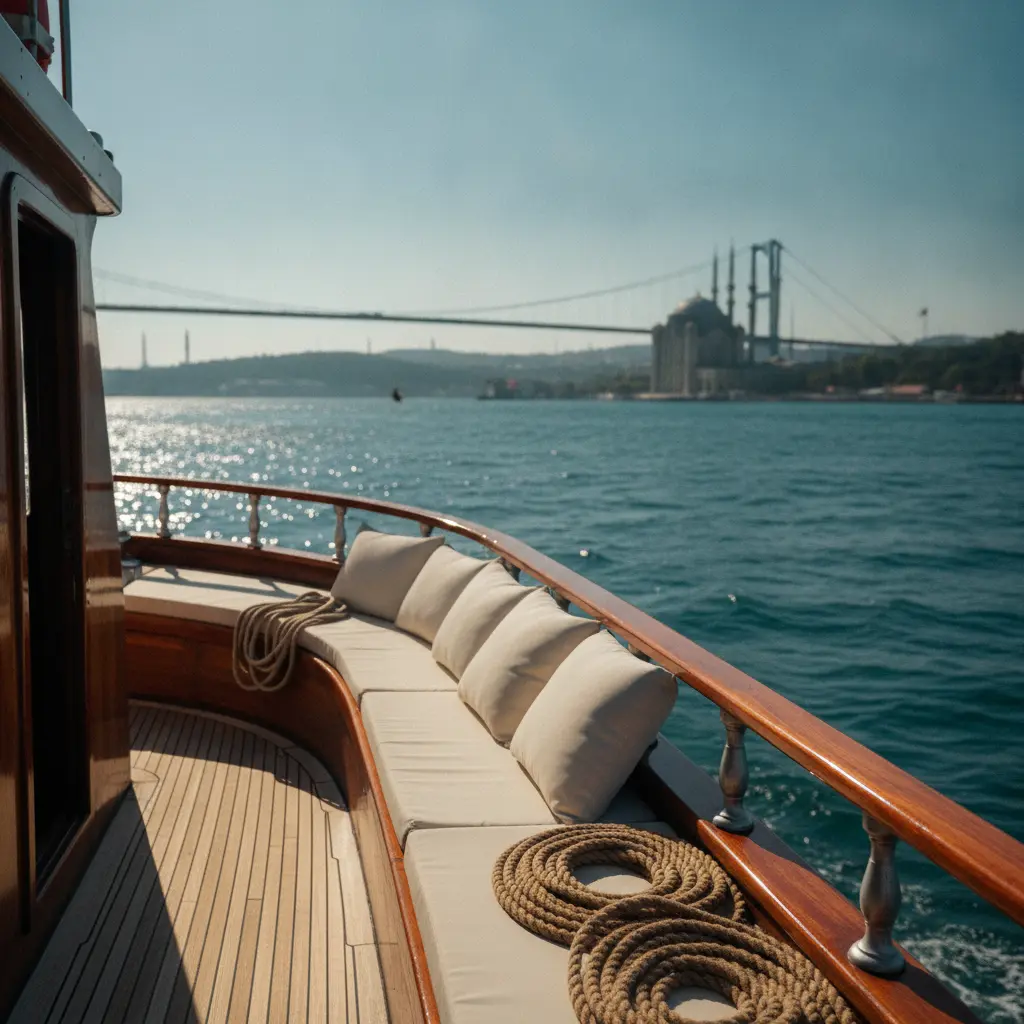
Most people who charter a yacht in Istanbul in autumn pick the boat first and the departure time last. That order is backwards. Between September and November, what actually decides whether your morning on the water feels effortless or slightly off is not the length of the hull or the age of the cushions — it is the hour you cast off. The same gulet, the same route, two departures at 08:00 two weeks apart, can feel like two different cities.
What follows is a timing analysis, not a route brochure. Which month forces which hour, when the Bosphorus is genuinely flat, where the light lands, and why a family with small children and a corporate team should not be booking the same slot. The goal is to give you a framework, so you can pick the window that fits your group instead of accepting whatever is left.
One thing worth sorting before the boat: the forty minutes on land. Arriving at the pier without fighting morning traffic protects the best part of the trip. Turlago VIP car rental service exists precisely to remove that friction.
Why an autumn morning has its own rulebook
The difference between a summer morning and an autumn morning on the Bosphorus is structural, not just a matter of a few degrees. Three variables shift at once, and all three affect your departure time.
The angle of the light
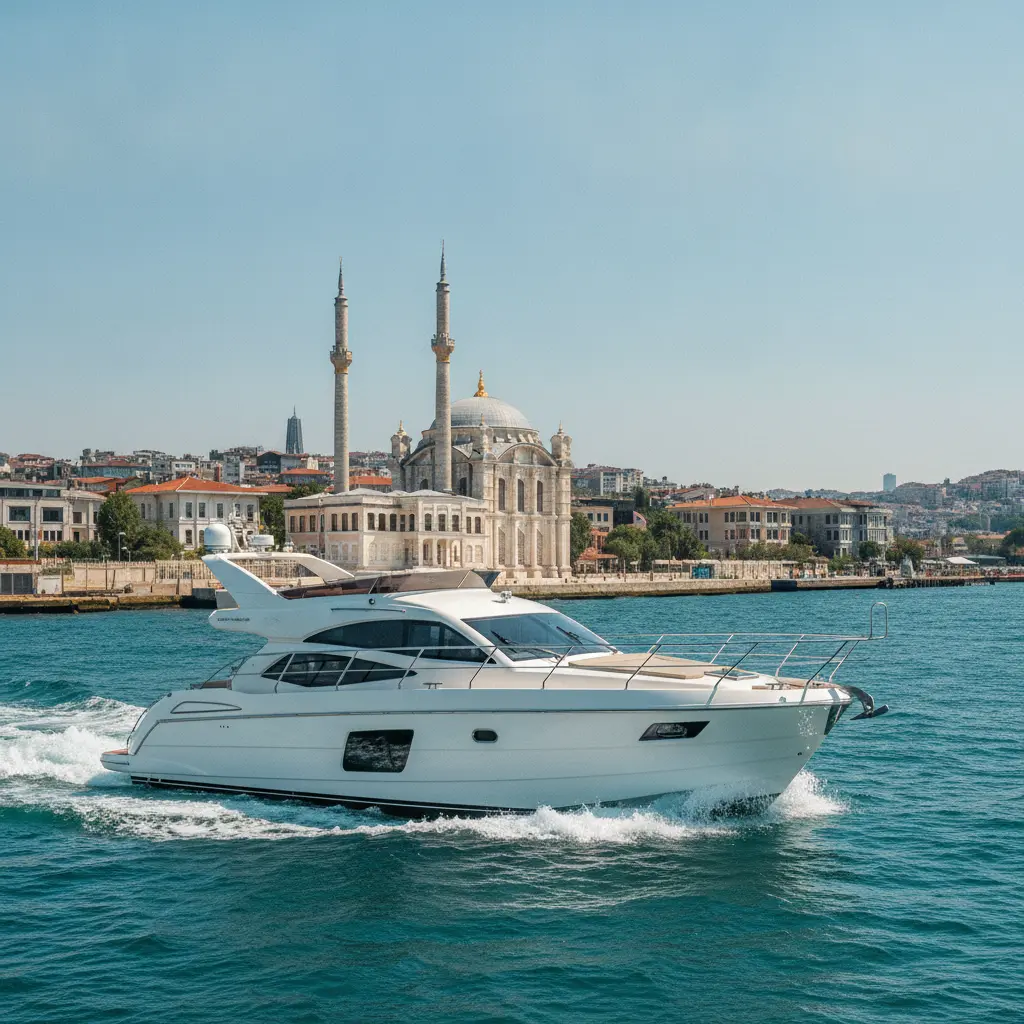
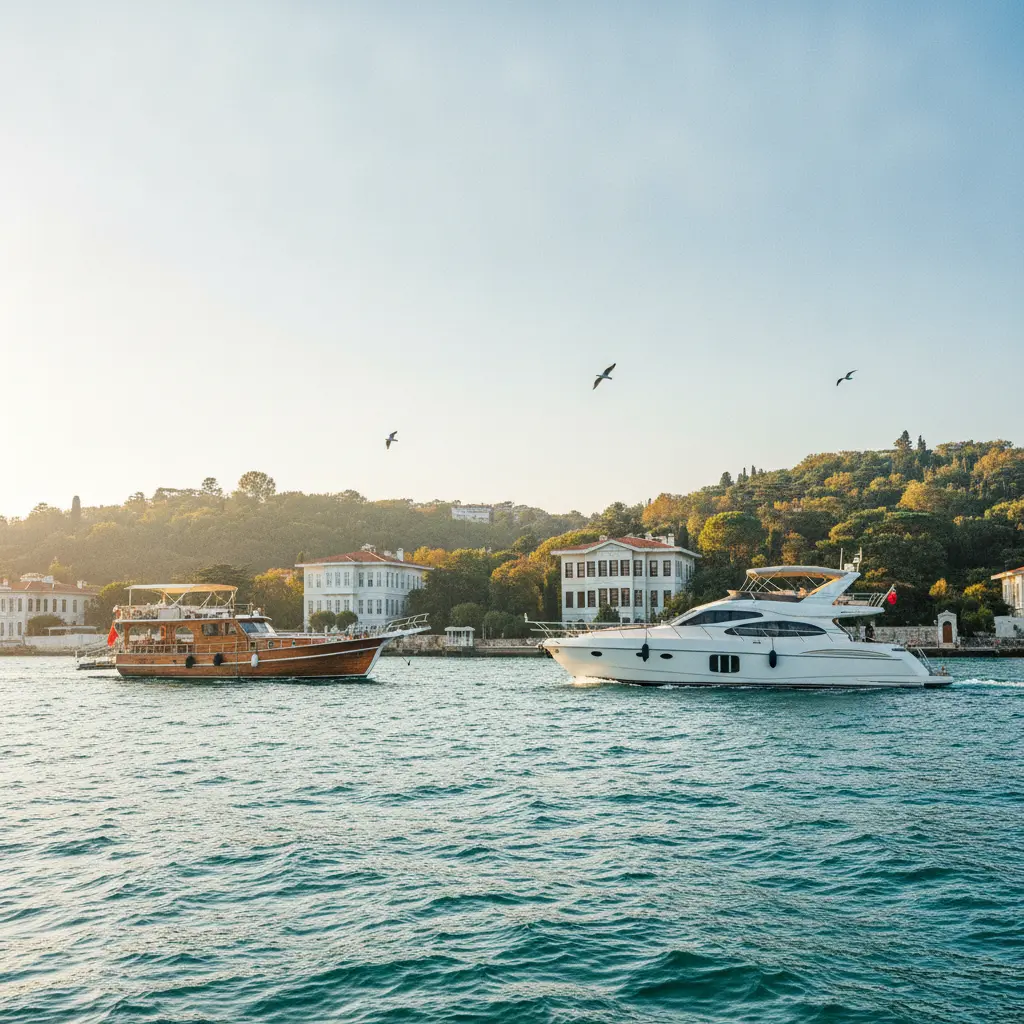
In summer the sun climbs quickly and sits high, producing bright but flat conditions. By autumn, sunrise has drifted toward the southeast, so the light reaches the strait from the side — from the Anatolian shore. The practical result: around 08:00, the waterfront mansions, wooden facades and hills on the European side are lit at a raking angle, and texture appears. By 11:00 the same view has gone even and contrast-free. If you plan to shoot photos or video, that alone is a reason to choose your hour deliberately rather than by convenience.
The wind clock
Istanbul’s autumn signature is the poyraz, a dry, cool wind from the northeast. It typically strengthens through the day: weakest in the early morning, more pronounced by afternoon, especially in the northern half of the strait. The old advice — go out in the morning while the water is calm — holds more reliably in autumn than in summer, but only up to a point. Past about 10:30, northbound routes can meet a short, choppy sea even on an otherwise pleasant day.
Temperature layers
In September the sea is still warm and the air sits above 20°C by mid-morning; a t-shirt on deck is fine. October mornings start around 14–16°C and climb to 19–21°C, so a light windproof layer does the job. November opens at 10–12°C with sea temperatures around 16–17°C, and you may prefer breakfast in an enclosed saloon rather than on the aft deck. In other words, the phrase “morning cruise” describes a very different comfort level as the season advances — which is why where you sit on the boat matters as much as which boat you book.
Month by month: three seasons wearing one name
Treating autumn as a single block is the most common planning error. The three months behave like three different seasons.
September: summer’s afterglow, worth the early alarm
Sunrise in early September lands around 06:30. This is the golden stretch for early risers: leave the pier at 07:30 and the city is still half asleep, the water is glassy, and there is no other traffic in front of the waterfront mansions. Air temperatures sit near 20°C in the morning with sea temperatures around 23°C, so nobody is cold. A three-hour route — say Beşiktaş, Ortaköy, Bebek, Kandilli — is the most balanced choice of the month. If swimming is part of the plan, note that the main shipping channel is not the place for it; you need a route that heads for sheltered bays to the north or toward the Princes’ Islands, which adds at least an hour and pushes departure to 08:00. September weekends remain busy, so flexibility is thinner on Fridays and Saturdays.
October: the most balanced window of the year
Sunrise slides to roughly 07:00–07:15. Air sits at 19–21°C, sea around 20°C. The poyraz becomes a regular feature but stays gentle in the mornings, which keeps sea conditions predictable for weeks at a time. For my money, October is the most rewarding month for an autumn morning charter: directional light, clear air, fewer crowds than September, and still a wide choice of boats and crews. A 09:00–09:30 departure catches the light and skips the early chill. From mid-October, a thin haze can sit over the northern stretches at first light — beautiful for photographers, but it can read as “the weather has closed in” to a guest expecting postcard clarity. A good operator mentions this before you ask.
November: short, selective, weather-dependent
Sunrise drifts toward 07:30–07:50, so “morning” physically shrinks. Air runs 12–17°C, sea 16–17°C, and rain bands and windy spells become more frequent. In November, timing stops being a preference and becomes a requirement: the most reliable window is 09:30–12:00. Earlier departures risk mist and cold; later departures run into the chop that builds with the wind. Keep charters to two or three hours, insist on an enclosed saloon, and reconfirm the forecast 48 hours out. In exchange, November offers the emptiest water and the quietest version of the city — high value for photographers and couples who want stillness rather than a party.
Hour by hour: who should leave when
07:00–08:30 departures
Upside: flattest water, least traffic, cleanest air, most directional light. Ferries and other tour boats are not yet on their loops, so backgrounds stay uncluttered. Downside: chill, mist risk in November, an early alarm, and occasionally an early-departure surcharge or minimum notice with some operators. This slot suits two groups best — photographers chasing light, and couples who want the strait to themselves. If you take it, move breakfast onto the boat. Tea on deck as the sun clears the Anatolian hills turns the same route into a different experience.
09:00–11:30: the broadly compatible window
For most groups in autumn, this is the right answer. The air has warmed, the light is still angled, and the wind has not yet built. It fits a family’s wake-up, breakfast and departure rhythm; it gives a corporate group a clean block before or after a meeting; and it naturally becomes brunch format for friends. One caveat: after 10:00 the strait gets busier, and finding a quiet angle near Ortaköy and Bebek becomes harder. Ask the captain to run north before 10:00 and take the return leg through the busier stretch.
Late-morning departures after 11:30
Technically still morning, but a different character: wind up, water textured, light flattening. In exchange you get the warmest part of the day, which matters most in November. This slot works well for larger friend groups and anyone who wants a longer brunch cruise. Budget for afternoon traffic on the return to the pier.
Wind, current and sea state: why mornings stay calm
The Bosphorus runs a two-layer current system: a lighter, less saline surface flow from the Black Sea toward the Marmara, and a denser counter-current beneath it moving the other way. Surface flow has a real speed to it and is always part of navigation planning. When wind blows against that surface flow — particularly the northeast poyraz — the result is a short, steep chop. When wind runs with the current, the water stays far more forgiving.
That is exactly where the autumn morning wins: the wind has not yet strengthened, so the surface stays flat regardless of which way the current is running. Which is why a serious timing analysis looks at the wind curve across the day, not just the air temperature. The most useful question you can ask an operator is this: “On this date, how does the wind shift between 09:00 and 15:00?” An operator who answers that specifically is actually watching the water.
One more practical lever: running north means punching into the current, while the return is faster. Use that. Put the northbound leg in the calm morning hours and the return in the part of the day when the wind picks up. Heavier displacement hulls such as gulets absorb chop better; motor yachts are quicker but livelier in a short sea. Both work in September and October; by November, an enclosed saloon is the deciding feature.
Matching the window to your group
Families with young children
Best window: 09:30–10:00 departure, two to three hours. It matches the wake-up and breakfast rhythm, the morning chill has burned off, and the return lands near nap time. Keep the route short — Maiden’s Tower, the Ortaköy waterfront and the first bridge are plenty for a child. Practical notes: pack a spare fleece or thin blanket, insist on non-slip shoes, and ask in advance about railings or netting around the deck seating. In November an enclosed saloon is non-negotiable; in October open deck works until midday. For families with infants, even the number of steps at the boarding point is worth asking about.
Couples
Best window: 07:30–08:30 in September and October, or 09:30 in November. In the earliest hours the strait is nearly empty: no other boats in front of the mansions, no noise, just water and gulls. That makes it the right slot for a proposal, an anniversary or simply a quiet breakfast for two. If you are filming, the side-lit morning sun flatters faces while midday light hardens shadows. On smaller motor yachts (8–12 guests) the crew is also less stretched at that hour, so service is quicker. In November, pushing departure to 09:30 buys the same stillness without the shivering.
Corporate groups
Best window: 08:30–10:00 departure, two and a half to three and a half hours, back at the pier by 12:00–13:00. The team does not lose the rest of the day and the meeting block survives. Morning charters carry two structural advantages over evening ones: alcohol is not expected, so next-day performance is unaffected, and the return to the day’s programme is simple. In autumn, boat availability in the morning is more flexible than in high summer, which makes planning for larger teams easier. If there will be a presentation or a short speech, choose a boat with an enclosed saloon and a proper sound setup — acoustics scatter on an open gulet deck. Handle ground transport separately so a forty-person team does not arrive at the pier in fragments; that is where Turlago VIP car rental service makes the logistics a single decision instead of ten.
Friend groups
Best window: 10:00–11:00 departure, three to four hours. A group that does not wake early will not make a 07:30 call time; 10:00 makes the meet-up realistic and fits brunch format. In autumn, these hours are comfortable for sitting on deck, and for a larger group it is wise to book a boat with at least 20 percent more capacity than your headcount so nobody is perched. In November, open deck is a short, pleasant interlude — look for a heated saloon. Clarify the music and sound policy at booking; some boats and some berths have hour-based restrictions.
Route and duration planning for a morning charter
In autumn, duration planning works differently: with a shorter day, time spent moving is worth less than time spent along the shore. The following assumes a city-centre departure (Karaköy, Kabataş or Beşiktaş).
- 2 hours: Karaköy, Maiden’s Tower, Ortaköy, under the first bridge and back. Short but iconic; a 10:00 start returns you at noon. Good for families and tight schedules.
- 3 hours: Beşiktaş, Ortaköy, Kuruçeşme, Bebek, Kandilli. Waterfront facades, hills and both shores in one go. The most balanced duration for an autumn morning.
- 4 hours: Add Emirgan, İstinye, Tarabya and Yeniköy, with room for breakfast and photo stops. Ideal for couples and corporate groups.
- 5+ hours: Anadolu Kavağı and the Black Sea mouth. Genuinely a half-day charter; requires an early start and carries real weather risk in November.
Do you actually need the Black Sea exit?
Running to the northern end of the strait is the headline route, but in autumn the decision should be deliberate: you head north into the current and come back with the wind rising, so the total easily passes five hours. A smarter structure is to place the northbound leg in the calmest part of the morning and start the return before midday. I would not recommend it in November; in October it is worth it when the weather window is clean. The southern strait and the Golden Horn should always be your sheltered fallback on windy days.
Departure points and the morning traffic problem
The most overlooked part of timing analysis is the forty-five minutes before you step aboard. Between 07:30 and 09:30, Istanbul’s cross-strait traffic — especially bridge crossings from the Asian side to the European side — tightens noticeably. Choosing a departure point on your own side is therefore the single smartest logistical move you can make.
On the European side, Karaköy, Kabataş, Beşiktaş, Ortaköy, Kuruçeşme, İstinye and Tarabya all work for morning departures. On the Asian side, Beylerbeyi, Çengelköy and Kanlıca are the practical options. Karaköy and Kabataş win on public transport connections but lose on road traffic at that hour; Beşiktaş and Ortaköy offer a better balance of parking and access. The rule is simple: plan to arrive 30 minutes before departure. Boarding, safety briefing and settling in genuinely take that long.
Notes for photographers
Autumn mornings are the most forgiving time of year to photograph Istanbul: clear air, lower humidity, directional light. A few practical points:
- Side light builds texture in the mansion facades; ask to run close to shore for backlit silhouette attempts.
- A moving boat rules out long exposures. Think 1/500 or faster to avoid softness.
- Coming up from cool water into warm air fogs your lens; keep the camera in the bag and near ambient temperature.
- A polarising filter cuts glare on the water and adds depth — close to essential in October and November.
- November haze in the north creates layered compositions; a 70–200mm range tends to be more useful than a wide angle for those scenes.
What to wear and pack
One rule for autumn mornings: layers. On the water it feels a degree or two cooler and noticeably breezier than in the city. September: t-shirt plus a light windproof shell. October: long sleeves, a light fleece, a windproof layer. November: thermal base, warmer fleece, hat and gloves. Non-slip shoes are essential — the deck can be wet with morning dew.
A short pack list: sunglasses (yes, in autumn too), lip balm, a small thermos, a spare set of clothes for children, and seasickness medication taken in advance if you are prone. Even on a stable boat, an early start on an empty stomach can unsettle some people; a light breakfast helps.
When to book
Autumn demand for yacht charters is more predictable than in high summer, which works in favour of flexible planners. A practical approach:
- September weekends: demand is still high; two to three weeks ahead is sensible.
- October: the widest choice. One to two weeks is usually enough, though corporate events can absorb specific dates quickly.
- November: short-notice booking is possible; the real issue is weather. Keep dates flexible, confirm 48 hours out, and get cancellation and postponement terms in writing.
Do not rely on a single forecast source; check wind direction and speed separately from precipitation. And ask the operator to define a weather cancellation: at what wind speed is the trip called off, and is the remedy a refund or a date change?
Questions to ask before you book
- On this date, what are the wind direction and strength in the morning, and how do they change through the day?
- Is there flexibility to shift departure by 30–60 minutes based on the forecast?
- Is there an enclosed, heatable saloon, and how many guests does it seat?
- How many crew, what languages do they speak, and do they have experience with young children?
- Are fuel, crew, cleaning and berth fees included in the quoted rate?
- Are food and drinks included, and can we bring our own?
- What is the weather cancellation policy, and how much notice is required?
- How many life jackets are on board, and are there child sizes?
Five timing mistakes that spoil otherwise good trips
- Ignoring the month. Assuming 08:00 in September and 08:00 in November are the same thing. The difference changes clothing, route and mood.
- Reading sunrise off an old calendar. In autumn sunrise moves noticeably later every two weeks; a 07:00 departure means daylight in September and darkness in November.
- Forgetting that wind builds after noon. Northbound routes after 11:30 can surprise anyone who assumed mornings stay calm all morning.
- Arriving at the pier at the last minute. Fifteen minutes lost to traffic is fifteen minutes of good light lost.
- Cramming a long route into a short day. A five-hour Black Sea plan in November trades comfort for distance; shorten the route or move it south.
Choosing your own window
Finding the right hour in autumn comes down to three questions: how many people are in your group and what is their wake-up rhythm; is light or stillness the priority; and how much weather flexibility do you have?
Combine the answers and the picture resolves. Families with young children: 09:30–10:00 in October and November, two to three hours, short route. Couples: 07:30–08:30 in September and October, 09:30 in November. Corporate teams: 08:30–10:00 in any autumn month, back by midday. Friend groups: 10:00–11:00 with brunch format. Photographers: the early window all season, and the hazy northern mornings in November.
Which is the short version of this Istanbul yacht rental autumn morning timing analysis: in autumn, a good charter starts with the right hour, not the newest boat. Set the time first, then find the boat, crew and route that fit it. For current availability, boat options and seasonal programmes, start with Turlago VIP car rental service and fold your pier transfer into the same plan — one decision instead of three.