Private Yacht Charter Checklist: 12-Guest Prep Guide
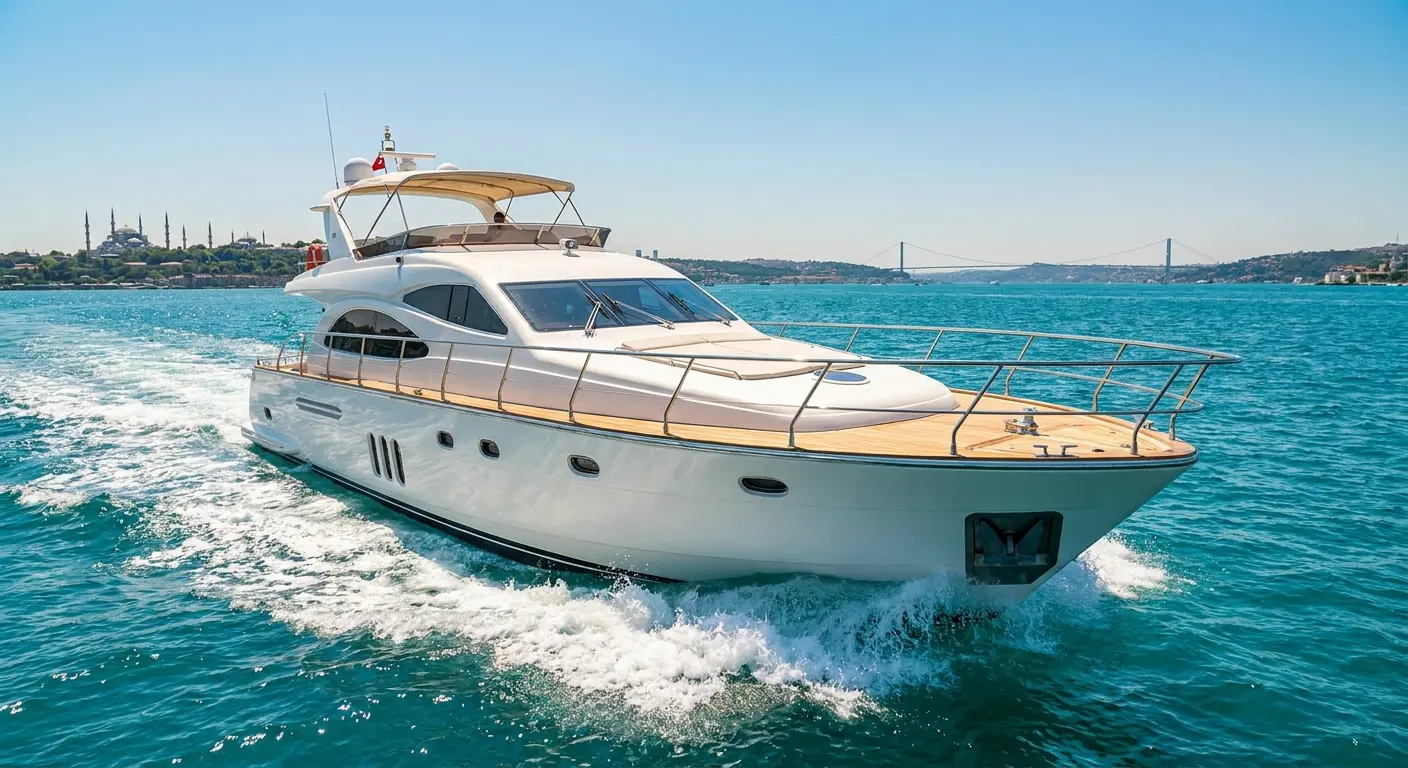
Most people make the yacht decision long before they know what to do next. The date is roughly set, the budget has been discussed, the group chat has already voted yes. What is missing is not enthusiasm — it is a sequence. This guide breaks the whole thing into three stages (before you book, while you book, and after you book) using one concrete reference point: the 17-metre, 12-guest motor yacht at Balat Sahili. You can view the Özel Yat İle Sınırsız Hizmet boat on Turlago while you read, because every checklist item below maps to something you can actually confirm on that listing.
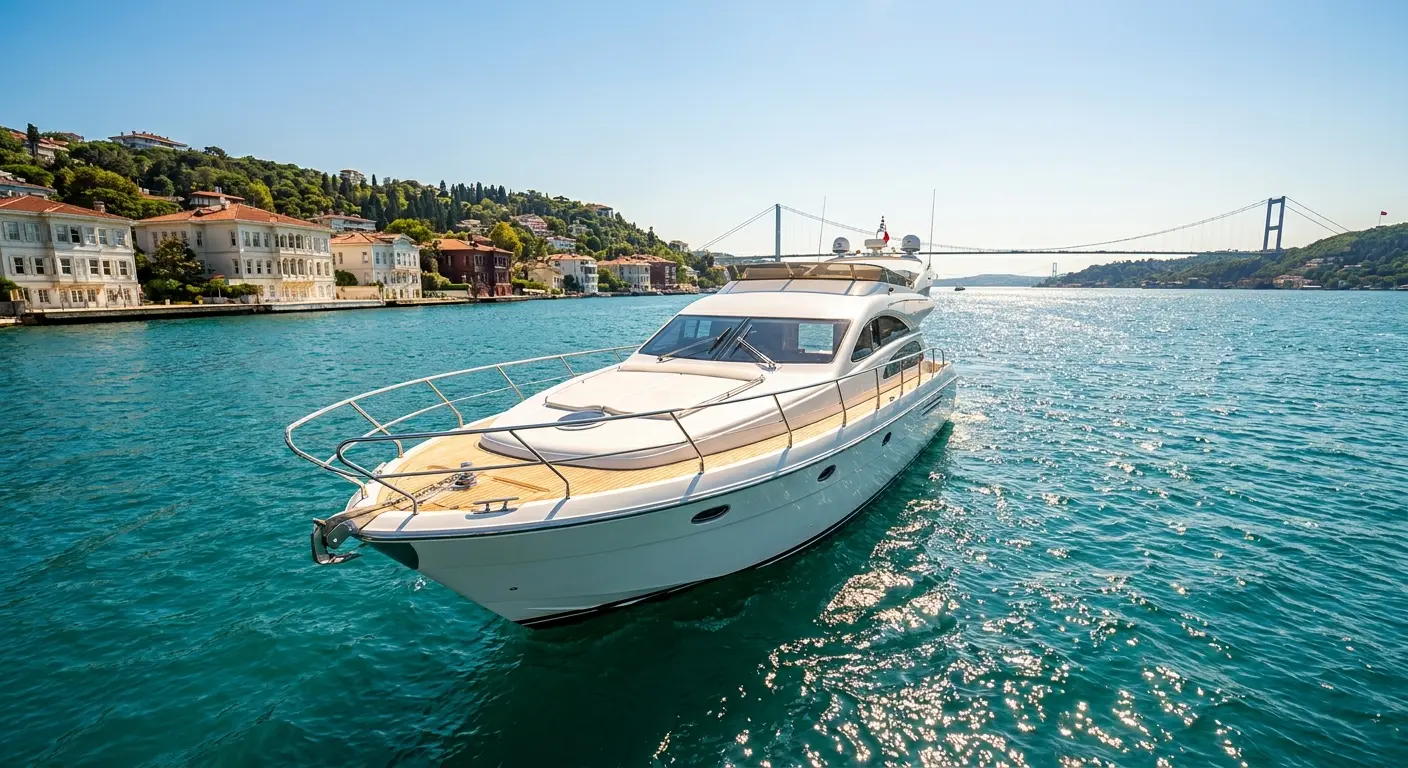
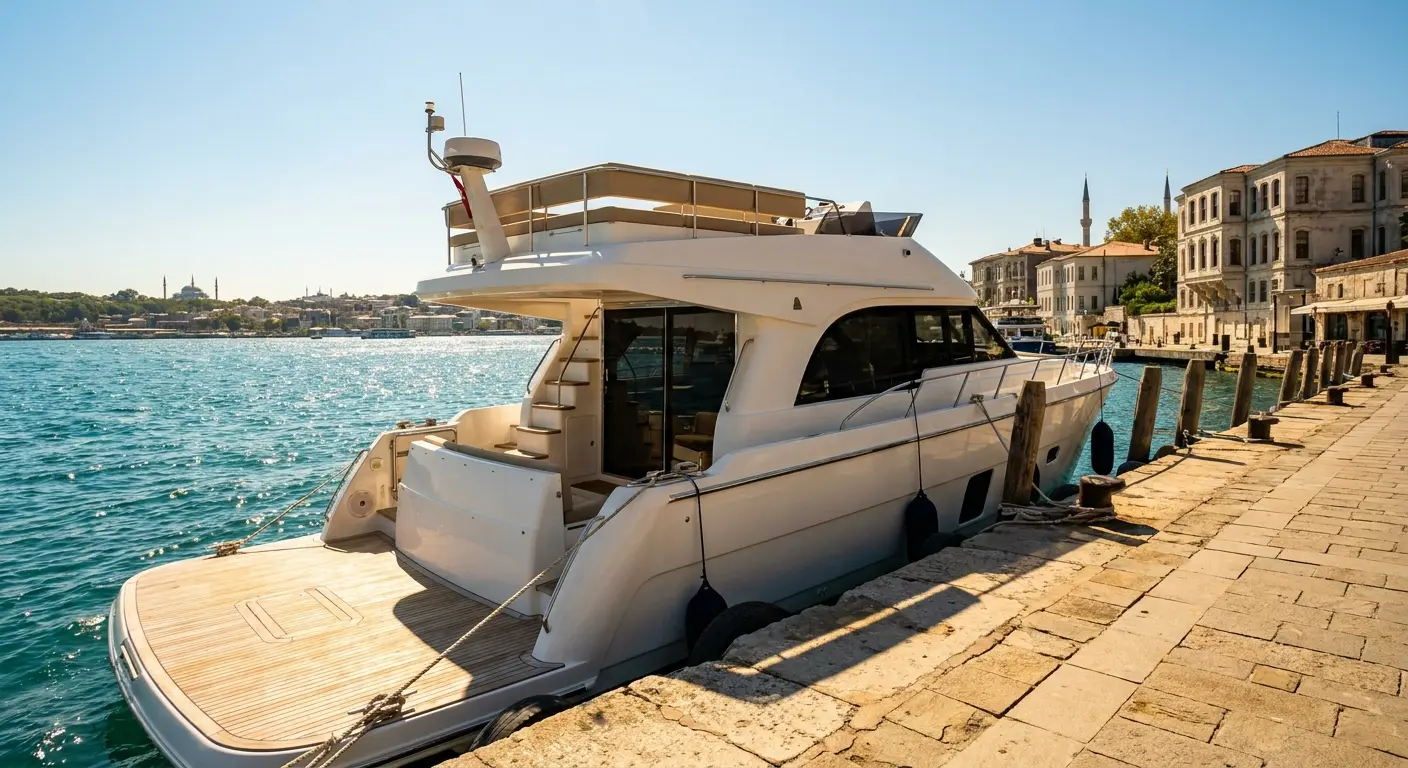
The listing sets its own tone: this is a boat “for people who value the experience rather than the show.” That single sentence defines the preparation style. No over-the-top decoration, no theatrical add-ons. Instead: accurate guest count, a realistic time slot, a clear food and drink plan, and written answers from the operator. The boat itself is deliberately understated — a lounge inside, a seating group on the upper deck, night lighting and a good sound system. Your checklist should be equally understated, and just as deliberate.
Image note: supporting photos should show the upper deck and the simple interior; alt text should keep the phrase “12-guest motor yacht departing from Balat Sahili.”
Who This Guide Is Actually For: Four Group Types, Four Different Checklists
The same 12-guest boat becomes a different product depending on who is standing on the pier. Capacity is a number; how you fill that number is a decision. Find your group below and the priority order of your preparation becomes obvious.
Families: Comfort and Supervision First
For families with children, the most valuable phrase in the listing is “quiet, comfortable, well maintained.” Those three words matter once there are kids on board. Preparation focuses on timing, supervision and spares: choose the departure slot when energy levels are highest, agree in advance who watches the deck edges, and pack a change of clothes per child. The upper-deck seating group helps here — grandparents and children can stay in the same visual zone instead of splitting between levels. If you are planning a multi-generation gathering, confirm the seating layout before you confirm the date.
Couples: A Quiet Day, an Unhurried Evening
Booking a 12-guest yacht for two people sounds excessive until you consider what it actually buys: space, silence and rhythm. The listing’s night lighting detail matters more than it appears — an evening departure changes the boat entirely. For couples, the checklist is short and precise. Ask when the deck lighting comes on, whether you can connect your own playlist to the sound system, and what time the return is scheduled. If you are expecting a private experience, confirm explicitly whether the boat will be shared with another group in that slot.
Friend Groups: Twelve People Is a Logistics Project
The biggest risk in a friends’ boat day is not the sea — it is compressing the organisation into the final 24 hours. Collecting money from twelve people, fixing a meeting point and dividing food duties takes longer than anyone expects. Split it into three moves: lock the guest list and collect payment through one person, set a shared meeting point 90 minutes before departure, and publish who brings what in writing. The listing mentions birthdays and celebrations, and that flexibility is real — but flexible does not mean unplanned.
Corporate Groups: Predictability Beats Spectacle
Corporate hosting tends to be judged on two things: capacity and impression. This boat’s restrained design suits a calm client gathering far better than a loud, themed party. Corporate preparation has its own first items: invoicing and contract terms, a firm date for the final headcount, written confirmation of departure and return times, and a guest arrival plan. If you are comparing concepts in the same week, the classic lobster motor yacht charter option gives you a useful second reference point.
Before You Book: A Nine-Point Decision Checklist
Only a handful of things genuinely need to be settled before you pay. If any of them is skipped, it will surface on the day.
- Is the headcount final? Read 12 as a maximum. Filling all 12 seats and then trying to add a thirteenth is the single most common frustration.
- Is the date and time fixed? Not “sometime that weekend” — a specific day and a specific slot.
- How many hours? Pricing is listed per hour, so the total duration is the number that matters.
- Is departure from Balat Sahili confirmed? The listing points to Balat Sahili; still, ask for the exact meeting point in writing.
- What is the route? You are not setting the itinerary. Ask for the operator’s standard route and how the time is split along it.
- Who is crewing the boat? Ask how many people will be on board as crew and who is at the helm.
- Is food and drink included? Included, bring-your-own, or serviced on board — these are three different answers.
- Are payment and cancellation terms written down? Ask for a message or contract, not a verbal agreement.
- What exactly does “unlimited service” cover? Request the practical scope, item by item.
Seven of these nine are resolved in a single message. The length of your pre-booking conversation is inversely proportional to the number of surprises on board.
Time of Day: Daylight or City Lights?
The listing describes two distinct moods in one line: calm water and open sky during the day, then the city’s lights in the evening. This is the most consequential choice on your checklist, because a daytime departure and an evening departure turn the same boat into two different venues.
Choose daytime and your priorities are shade, water, light food and photographs. Towels, hats, sunglasses and a spare shirt belong on the list. The interior lounge is a genuine escape for anyone who needs a break from the sun — knowing that in advance prevents the usual jostling for the shaded corner.
Choose evening and the priorities shift. Once the deck lighting comes on, the atmosphere changes completely, so bring a light layer, wear shoes with grip, and keep the styling simple. Ask what time the return is and how disembarkation is handled after dark.
Season affects this more than most people expect. In high summer, midday on an open deck can be punishing; early morning or late afternoon is often the more comfortable booking. Spring and autumn give you balanced light and temperature across the whole day. Whichever you pick, review the marine forecast with the operator 24 hours out — it is the cheapest insurance available for the whole trip.
Reading the 3,750 TRY Hourly Rate: A Budget Checklist
The listing gives one clear number: 3,750 TRY per hour. No daily package price is published. That means two things must be settled before you build a budget — the total number of hours, and what the price actually includes.
- Total hours: multiply the hourly rate by the hours you plan. This is the anchor figure.
- Cost per person: divide the total by your headcount. With 12 people, the per-head figure is usually lower than people guess, which makes the group conversation much easier.
- Food and drink: included, extra, or bring-your-own? This is the most volatile line in any boat budget.
- Service extras: sound system use, ice, glasses, napkins — confirm what falls inside the rate.
- Transport to and from Balat Sahili: outside the boat budget entirely, but part of the group’s shared cost.
- Tips and small expenses: small but real. Agree on it up front and it never becomes awkward.
- Payment method and timing: how much deposit, and when is the balance due?
If one person is collecting money, finish collecting before you book. The classic failure sequence: the boat is secured, two people drop out, the per-head cost rises, and the mood of the day drops with it. Knowing the cancellation terms protects you; getting a firm confirmation from every guest before committing protects you more.
While You Book: Twelve Questions to Send the Operator
These look like a lot, but sent as one message they take two minutes to answer — and keeping the replies saves you almost every on-board disagreement.
- What exactly are the departure and return times, and how early should we arrive at the pier?
- Where precisely is the meeting point at Balat Sahili?
- Which areas does the standard route cover, and how is the time divided?
- Is there a swimming stop, and if so, where?
- How many crew members will be on board?
- Is food and drink included? If not, how does bringing our own work?
- Can we connect our own playlist, or is the sound system operated by the crew?
- What is allowed for decorations, cakes or a small celebration?
- Are life jackets available for children and toddlers?
- If weather forces a cancellation, what is the process — refund or date change?
- What is the payment schedule, deposit amount and balance deadline?
- What are the house rules on shoes, smoking, and items not to bring?
Questions 10 and 11 are the two most frequently skipped, and both have financial consequences. Booking without understanding the weather cancellation policy puts your plan and your budget at risk at the same time.
Using the 12-Guest Capacity Properly
Twelve is generous for a small group and exactly at the limit for a large one. On a 17-metre motor yacht, that capacity works comfortably — but only if the group is arranged, not just counted.
- Mixed energy levels: the upper-deck seating group and the interior lounge let active and quiet guests share the same day without negotiating space all afternoon.
- Families with children: the more children on board, the more important it is for supervising adults to sit close to the deck edges.
- Wide age range: pick the departure slot for the youngest and the oldest guest, not for the average — averaging usually leaves everyone slightly tired.
- Corporate teams: rather than one continuous group conversation, plan a rotation so smaller clusters form naturally.
If you need to add a guest later, tell the operator at least 48 hours ahead so there is time to explore alternatives if the capacity is full. For a larger event, the 23-metre party-equipped yacht charter in the Bosphorus is a sensible capacity comparison.
Getting to Balat Sahili: Arrival Is Part of the Preparation
On boat days, the stress almost never comes from the water — it comes from getting there. Aim to be at the pier 45 to 60 minutes before departure. That buffer absorbs the group scattering, the late arrival, and the rush to jump aboard.
Build the arrival plan in three parts. First, transport: having most of the group travel together removes parking and traffic uncertainty. Second, the meeting point: everyone should have the same pin on their phone — “we’ll find each other by the water” does not work with twelve people. Third, load distribution: if you are bringing food and drink, split the heavy bags between two people rather than assigning them all to one. Bag chaos on the pier is the most reliable way to spoil the first half hour on board.
One more thing worth settling early: the return. On evening departures, a beautiful day can end in a taxi queue if nobody planned the way home. Agree on the return arrangement before departure and the day closes as properly as it opened.
The Boat Bag: What to Bring and What to Leave Behind
Split this into a personal bag and a shared bag. The personal bag should be light; the shared bag should be owned by someone.
Personal Bag
- Sun protection: high-factor sunscreen, hat, sunglasses.
- A towel — confirm whether one is provided before assuming.
- A spare shirt or a light layer; evenings cool down on the water.
- Non-slip shoes or sandals. Wet deck plus smooth soles is the most common slip on board.
- Personal medication, seasickness precaution, a small pack of tissues.
- A small waterproof pouch for phone and camera.
Shared Bag
- Enough water — calculate by headcount multiplied by hours.
- Easy finger food: fruit, nuts, crackers. Heavy, sauce-based dishes are awkward on a deck.
- Ice and drinks (ask whether ice is supplied).
- A rubbish bag and wet wipes.
- If celebrating: a sturdy cake carrier, candles, plates and cutlery.
Restraint is a skill here. With twelve people, if everyone brings “just one thing,” the boat becomes a storage unit. Assign the shared bag to two people and post the list in the group chat so nobody doubles up.
The First 30 Minutes On Board: A Settling-In Checklist
The first half hour sets the tone for everything after it. Turn it into a routine.
- Quick introductions: meet the captain and crew and learn who handles what. That single step removes the “who do I ask?” hesitation for the rest of the day.
- Safety briefing: where the life jackets are, deck rules, what to do in an emergency. If it is not offered, ask for it.
- Choose your zones: walk the upper deck, the interior and the shaded areas once, and settle the seating arrangement now rather than later.
- Bag placement: separate wet from dry. Wet swimwear left on the seating group is the detail everyone quietly resents by the end of the day.
- Sound system: learn how it works early and let the volume be a group decision.
- Photo plan: light and angles are best just after departure. Gather everyone for the group shot in the first ten minutes.
Six steps, ten minutes. In return, nobody spends the rest of the day wondering where to put anything.
Weather, Seasickness and Cancellation: Managing the Real Risks
The one honest rule of planning on water is that the plan depends on the weather. Do two checks: 48 hours out and 24 hours out. Wind direction and strength may push the route toward a more sheltered line, and since the operator sets the itinerary, that conversation is yours to start.
Be direct about seasickness. Anyone who is prone to it should take precautions before departure — taking them on board is usually too late. If a guest has never been on a boat, tell them in advance and reserve them a spot on the open deck where they can look at the horizon. The interior lounge is a useful backup for exactly this situation.
On cancellation, one rule applies: get everything in writing. Is a weather cancellation refunded or rescheduled, and when is the final call made? Do not pay before you have clear answers to those three questions. The same logic applies inside your group: if someone drops out, who absorbs the cost? Settling that before you book is the only real protection against a difficult conversation later.
Planning a Celebration: Cake, Music and Sequence
The listing explicitly mentions birthdays and special occasions, but “celebration” means something different to everyone. Set expectations early: are you decorating, bringing a cake, and whose playlist wins?
- Cake: fridge space on board may be limited. Collect the cake just before departure and choose a sturdy carrier. Candles and a lighter are the two most frequently forgotten items.
- Decorations: balloons and confetti behave badly in wind and end up in the water. Choose weighted, simple, easy-to-clear decorations and tell the operator what you plan to bring.
- Music: there is a good sound system, but everyone’s playlist is different. Pick the moment (cake, speech, group photo) in advance and choose one track for it — it noticeably improves the flow of the day.
- Speeches and photos: in a large group, nobody organises the group photo spontaneously. Appoint one person as photo lead.
- Surprises: if you are planning one, brief the operator. A surprise the crew does not know about rarely stays a surprise.
If you are aiming at a larger party format, the preparation logic stays the same but the scale changes; the special occasion and party boat options are a useful comparison at that point.
After You Book: The 48-Hour and 24-Hour Checkpoints
This is the stretch most people leave empty, and where things usually go sideways. Set two simple checkpoints.
48 Hours Before
- Finalise the guest list and send the confirmed headcount to the operator.
- Settle the food and drink plan: included, brought on board, or delivered — and by whom.
- Review the forecast with the operator; raise any route or timing change now.
- Send the meeting point and time to the group in writing.
- Complete the payment schedule; clear any outstanding balance.
24 Hours Before
- Send a short reminder: time, place, clothing, shoe rules.
- Pack personal bags; do not leave medication and sunscreen to the last minute.
- Keep your phone charged and save the operator’s number.
- Check the celebration kit: cake, candles, decorations, playlist.
- Confirm transport and allow a traffic buffer.
Two checkpoints are enough to make the day start with everything in place. It does not look complicated, because it is not — it just has to happen in order.
After the Return: Feedback and Notes for Next Time
When you step off the boat, everyone is tired and happy, which makes the first half hour of the journey home the right moment for feedback. Ask three questions: what did you enjoy most, what was missing, and what would we change next time?
Write the answers down. The information that helps most on a future booking is rarely dramatic: which time slot suited the group, whether the food and drink balance worked, whether the headcount felt right, and whether the split between interior and deck matched expectations. This particular listing has no user rating or reviews yet, which makes your own notes the first-hand record — and worth sharing as a review so the next group can decide faster.
For a 12-guest boat, “who is this right for, and who is it not right for” is genuinely scarcer information than the price. If you can answer that after your trip, you have done the next group a real favour.
Seven Preparation Mistakes That Keep Repeating
None of these have anything to do with the boat. All of them are organisational.
- Leaving the headcount to the last minute. Filling 12 seats and then trying to add one more is the most common problem.
- Over-reading “unlimited service.” Ask for the scope in items, not in adjectives.
- Assuming a daily price. The listing quotes an hourly rate; there is no published day package, so calculate the total from the hours.
- Never asking about cancellation. Weather-related cancellations need a known process before you pay.
- Skipping the arrival plan. Arriving late means spending the best hour of the day in traffic.
- Overpacking. A shared bag for twelve people grows without limit; assign it to two people.
- Not planning the music and the celebration moment. There is a good sound system on board — it goes unnoticed if nobody plans when to use it.
The Takeaway: A Good Boat Day Starts With a Good List
The 17-metre, 12-guest motor yacht departing from Balat Sahili invests in experience rather than display: simple design, a balanced deck layout, an interior lounge, upper-deck seating, night lighting and a quality sound system. It is aimed at people who want to enjoy the day on their own terms — which means your preparation should be just as understated.
Work through the nine pre-booking points, send the twelve questions in writing, then run the 48-hour and 24-hour checkpoints. Give the first half hour on board to settling in, and do not leave the cake and candles to the final morning. Ask three questions on the way home. That is the whole system — and the return is a day that never starts with “I wish we had.”
If you are at the decision stage, view the Özel Yat İle Sınırsız Hizmet boat on Turlago to see capacity, location and pricing in one place, then confirm date and availability directly with the operator. Comparing concepts in the same week? Take a look at the classic lobster motor yacht charter and the 23-metre party-equipped yacht charter in the Bosphorus. Whichever you choose, this checklist still applies word for word: the right questions, written answers, and preparation done on time.