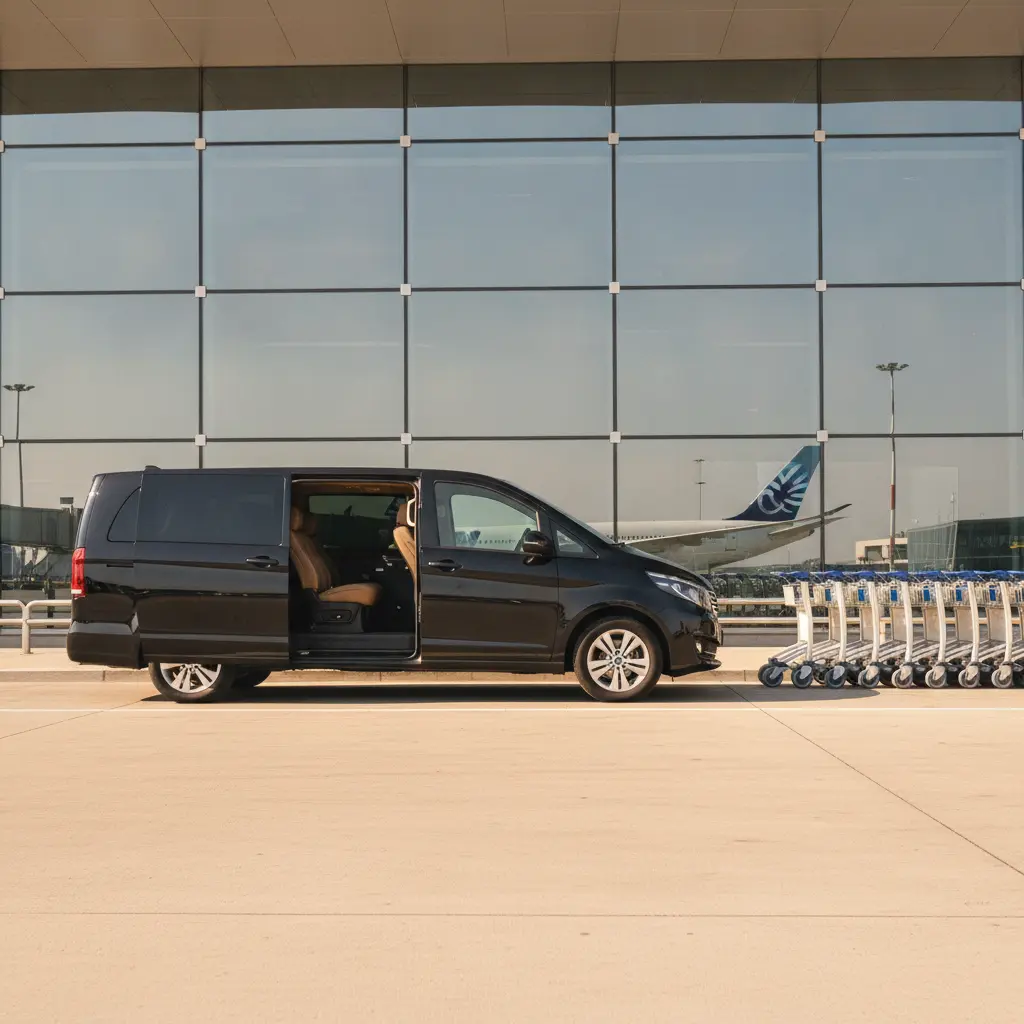
Sabiha Gökçen Night Arrival Transfer: Hour and Season Planning
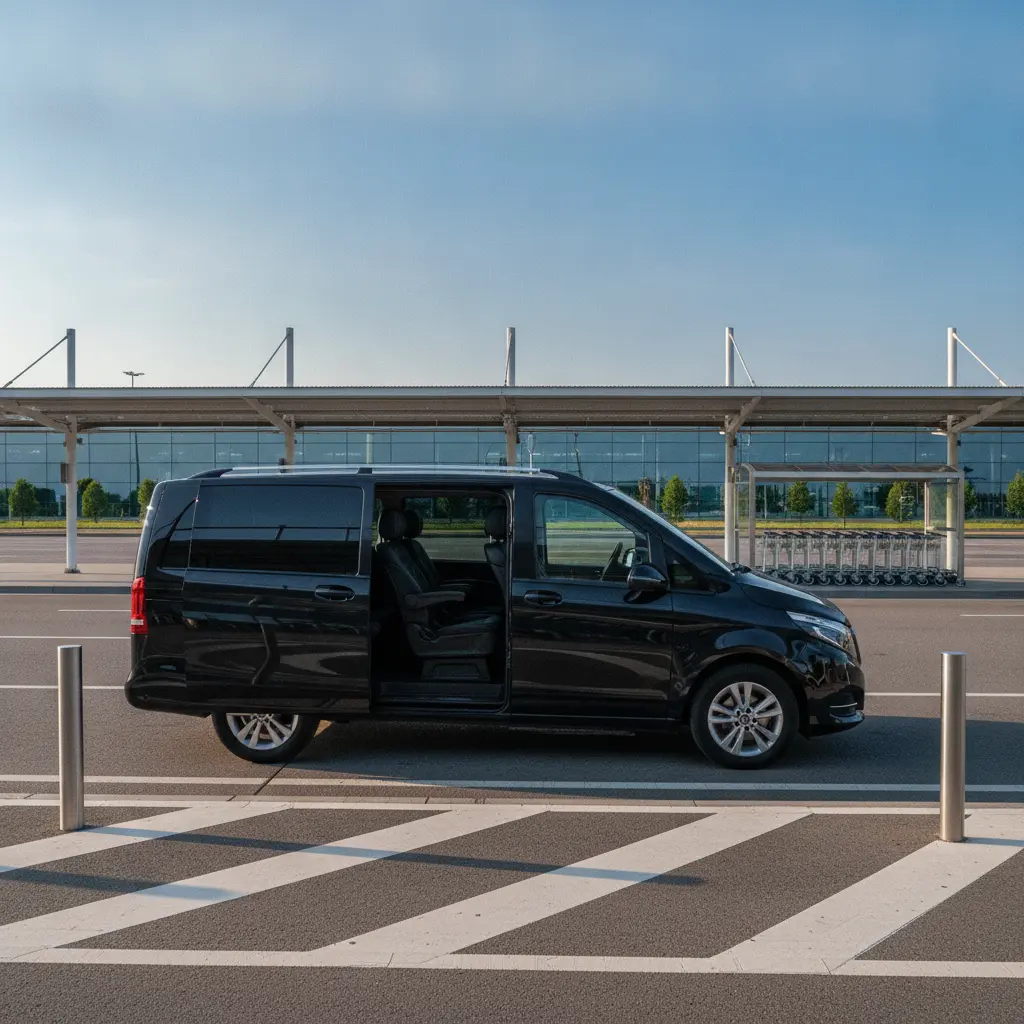
Your flight touches down at 01:20 at Sabiha Gökçen. The baggage belt opens at 01:45, and by 02:10 you are standing in the arrivals hall with no clear idea of how you are getting to the city. The problem at that hour is rarely distance — it is that the options that work at 21:00 simply do not exist at 02:00. This guide splits the night into three distinct time windows and the year into four periods, then builds a step-by-step plan for each combination so that you never have to make the decision while exhausted.
Planning ahead pays off in a specific way: the price of the same journey may not change, but the uncertainty at the moment of landing disappears. If you want a fixed price agreed before departure, you can browse premium chauffeured car rental options on Turlago and lock in your Sabiha Gökçen pickup before you fly.
Three night windows at Sabiha Gökçen — and why they behave differently
The terminal itself runs around the clock, but the transport ecosystem around it slows down in stages. The most common planning mistake is treating “night” as one block of time. In practice, three windows matter.
22:00 – 00:00: busy but still moving
This is the second peak of the day. Evening arrivals from Europe and the Gulf land in clusters, and the baggage hall and exit doors see short bursts of congestion. Public transport is usually still running, but there is a real deadline pressure to catch the last services. Our advice for this window: set your pickup for 20–30 minutes after scheduled landing. Baggage reclaim is slowest here of any window in the night.
00:00 – 03:00: the critical window
This is the stretch people actually mean when they search for a night arrival transfer. The terminal is alive, but the world outside has gone quiet. Problems stack up in a predictable order: a delayed bag, a single flight creating a long queue at passport control, no taxis at the kerb, and city-bound public transport that either does not run at this hour or runs very rarely. In this window, the gap between a pre-booked driver who is already waiting and a hopeful walk to the taxi rank is far bigger than most travellers expect. Fatigue is at its peak, which is exactly when judgement is at its worst.
03:00 – 06:00: quietest, least predictable
The terminal nearly empties, bags arrive faster, and you clear the exit doors in five minutes. In exchange, the number of options outside drops to a minimum. The logic flips: you are no longer paying for a ride, you are paying for a vehicle that waits for you. On the plus side, city traffic is effectively zero, so the drive itself is shorter even though the distance is identical.
The lesson across all three windows is to book by scenario rather than by clock time. Not “I need a car at 01:30” but “if my flight lands at 01:30 and baggage takes 45 minutes, the car should be at the door at 02:20.”
Season by season: four periods that change the same night
Airport density is not constant across the year. A 01:00 landing in February and a 01:00 landing in August are two different experiences.
November – March: low season, high uncertainty
With lower traffic you move through the terminal quickly — baggage often arrives within 20–25 minutes. The defining feature of this period is weather-driven disruption. Fog, snow and wind can push your schedule in either direction, so flexibility matters more than price. Choose a booking that tracks your flight number and does not add charges when the flight is delayed. It is also worth confirming winter tyre arrangements for any road transfer in this period; reputable operators handle it as standard, but confirm rather than assume.
Best for: travellers who dislike crowds, want predictable costs and can be flexible with dates. Also the right window for ski trips and winter tour departures.
April – June: the most balanced period
The weather warms, sunset moves later, and night arrivals feel noticeably easier. The advantage is that even a 00:30 landing happens while the surroundings are not yet completely dead. Prices sit below the summer peak and vehicle availability is healthy. Watch out for public holiday weeks, which can spike demand above the seasonal average and leave last-minute bookers without their preferred vehicle class.
Best for: city breaks, culture trips and business travel combinations.
July – August: peak season, highest demand
Hotels and transfer fleets around Sabiha Gökçen run close to capacity. You will see more vehicles waiting outside even at midnight, but finding one at the last minute gets harder precisely because fleets are fully committed to pre-booked work. The rule in peak season is simple: book at least 48 hours ahead, ideally five to seven days. You do not want to be hunting for a large-boot vehicle at 02:00 in mid-August.
Night temperatures are also high in this period, so air conditioning and a meeting point that does not leave you standing outside matter more than usual.
Best for: families, larger groups and travellers on a tight holiday schedule — provided you book early.
September – October: a quiet transition with a busy edge
Prices ease while the weather stays warm. The only risk is that early September’s late-summer rush and mid-October’s calm happen inside the same month. Check weekday versus weekend demand; September weekend flights are noticeably fuller.
Step by step: how to plan a night arrival transfer
The sequence below works backwards from your landing time. Follow it in order and you will not need to make any decisions at the arrivals door.
- Note your scheduled landing time and terminal. Domestic and international arrivals exit at different points at Sabiha Gökçen, which determines your meeting point.
- Define your baggage profile. Cabin bag only, or large suitcases plus a stroller plus a ski bag? Vehicle class follows from this, not the other way around.
- Confirm your destination and any intermediate stops. Extra stops at night add real time; also check whether your hotel reception is staffed overnight.
- Get the meeting point in writing. “Airport pickup” is not enough. You need the exit door, the number, or the exact spot where the driver will stand.
- Ask whether flight tracking is included. Professional services monitor your flight number, so a delay does not leave a driver idling or, worse, gone.
- Choose your greeting style. Name board at the door, or a phone call from the driver? At night, a name board saves time in a crowded exit hall.
- Read the payment and cancellation terms. Is the price fixed? Is there a night surcharge? Are bridge and motorway tolls included? What happens if the flight is cancelled?
- Save the driver’s contact before boarding. You may not have in-flight internet — take a screenshot.
The whole sequence takes ten to fifteen minutes. In return it removes the forty minutes of standing in a terminal at 02:00 wondering what to do next.
If the flight is delayed: managing the most common scenario
Delays of 30 to 90 minutes are the norm rather than the exception at night. What matters is how your booking behaves, not the plan on paper. Confirm three things:
- Free waiting time: most bookings include a set period after landing, after which an hourly rate applies. Know the number.
- Flight tracking: if the operator monitors your flight, the delay stops being your problem.
- Communication channel: is there a number or chat you can message before departure? A two-line message before takeoff prevents a lot of confusion on the ground.
In winter, treat delay as the default assumption. In summer, delays are more often caused by evening congestion and tend to ease as the night goes on.
Vehicle class: the details that matter at 02:00
- Passengers and luggage: four adults plus four large suitcases will strain a standard sedan. Nobody wants to hold a suitcase on their lap at two in the morning.
- Child seats: the most commonly forgotten detail for families arriving late. Provide age and weight when booking.
- Cabin comfort and quiet: after a long flight, forty-five minutes of road time is where vehicle quality actually shows.
For larger groups, two coordinated vehicles can be more practical than one oversized one — just make sure both are scheduled around the same landing time.
How to read the price: night surcharges and seasonal shifts
A night transfer price has three components: distance, time window and season. Distance is fixed; the other two move. That is why “night transfers cost more” says nothing useful unless you also ask which hour and which season.
- Fixed price: the total is agreed before you travel. This is the preferred model at night because there are no surprises after landing.
- Night surcharge: some operators add a fee after a certain hour. Ask at the time of booking, not at the kerb.
- Extras: bridge and motorway tolls, waiting time beyond the free period, additional stops. Cross-continental journeys at night may use a tolled bridge route — confirm whether that is included.
- Cancellation terms: know what happens if your flight is cancelled or you do not travel.
Honestly, the trap for price-focused night travellers is a low headline rate with a short free waiting period. A 50-minute delay then turns a cheap ride into an expensive one. Compare scenario-based total cost, not the headline number.
What about the alternatives at night?
Being straight with you: at night the alternatives thin out. Airport shuttle and public transport schedules change seasonally, so check current timetables on official sources before you rely on them. Assume metro and shuttle services may not be running overnight, and plan accordingly.
Taxis are the most visible option, but they carry two unknowns at night: queue length and an unknown final price. When a full wide-body lands at 01:30, nobody can predict the length of the taxi line. A pre-booked transfer removes both variables.
Seven mistakes people make on night arrivals
- Booking the car for the scheduled landing time and ignoring baggage time.
- Not getting the meeting point in writing, then dealing with phone calls in a crowded hall.
- Using a plan built for international arrivals on a domestic flight, or vice versa.
- Booking on the day during peak season.
- Choosing a vehicle by headcount rather than by luggage volume.
- Not asking whether bridge and toll charges are included.
- Leaving the driver’s contact only in an email rather than on the phone.
The 24-hour pre-landing checklist
- Flight number and scheduled landing time confirmed?
- Meeting point and pickup time in writing?
- Driver name and contact saved on your phone?
- Free waiting period and delay policy clear?
- Final passenger and luggage count shared?
- Payment method and extras confirmed?
- Hotel reception confirmed to be open overnight?
Conclusion: treat a night arrival as a logistics problem, not a gamble
Landing at Sabiha Gökçen after midnight is not difficult in itself. What is difficult is making decisions while tired and short of information. Once you have analysed the time windows and the seasonal effects, the only thing left to do at the arrivals door is get into the car. A fixed price, flight tracking and a clearly stated meeting point remove the most unpredictable part of the night.
For anyone landing between 00:00 and 03:00, or travelling in the July–August peak, booking early is less about saving money and more about managing stress. Winter rewards flexibility; spring rewards early booking. If you would rather travel with a driver already scheduled, compare options through premium chauffeured car rental on Turlago and build a plan around your flight time today. The best decision you can make at a midnight arrivals hall is the one you already made before you left.