Thessaloniki & Kavala Tour 2026: Best Time To Visit Guide
Thessaloniki and Kavala sit in northern Greece, close enough to the Turkish border that you can cross into Europe before lunch. For travellers holding a Turkish special (green) passport, this route is the simplest visa-free taste of the European Union there is. The harder question isn't whether to go — it's which month to choose. The same itinerary feels completely different in drizzly April, blazing August and golden October. This guide maps out the best time for a Thessaloniki & Kavala tour, season by season, with price and crowd timing you can genuinely plan around. For live departure dates and full route details, view the Thessaloniki & Kavala Tour on Turlago.
Who actually gets the visa-free version of this trip?
"Visa-free Europe" sounds like marketing, but for Greece it is a concrete reality — for the right passport category. Before you pick a season, get this straight:
- Turkish green (special) passport: Exempt from the Schengen visa for short tourist stays. You can enter Greece without a visa, though carrying a return ticket, hotel booking and proof of funds makes the border smoother.
- Grey (service) and black (diplomatic) passports: Similarly exempt for both official and tourist travel; still worth travelling with the same supporting documents.
- Burgundy (ordinary) passport: A standard Schengen visa is required. Most tours help with the file and appointment tracking, which is one reason going with a package simplifies the process.
One commonly confused detail: Greece has run a visa-on-arrival scheme for certain Aegean islands (Rhodes, Kos, Samos, Lesbos, Chios and a few smaller ones) since 2024. But Thessaloniki and Kavala are mainland cities and fall outside that programme. So if you carry a burgundy passport, you still need a regular Schengen visa for this itinerary. Knowing that upfront saves a lot of last-minute disappointment.
Season by season: what each month gives you
Both cities sit in northern Greece, exposed to the cooler Aegean breeze. That makes summers a touch more bearable than Athens or the southern islands, and winters noticeably cold. Here is the honest picture of all four seasons.
Spring (March–May): the cities at their liveliest
March is the door cracking open: daytime temperatures hover between 13 and 17°C in Thessaloniki and evenings still require a jacket. April changes everything — trees blossom, the waterfront promenade fills up and the city shakes off its winter sleep. May is, to my mind, the most balanced month of the year. Temperatures sit between 20 and 26°C, crowds have not yet reached August levels and hotel rates stay reasonable. If Greek Orthodox Easter falls in this window — it sometimes differs from Catholic Easter — you get to witness one of Greece's most passionate cultural and religious celebrations: candlelit processions and traditional feasts. Kavala is quiet in these months, and you can wander the narrow lanes of the Panagia district almost alone.
The one drawback of spring is the sea. Even in late May, water temperatures rarely exceed 18–20°C, so swimming takes courage. If you are here for the city, culture and food rather than the beach, this will not bother you.
Summer (June–August): sea, festivals and peak crowds
June is the smart summer month: the sea starts to warm up (23–24°C), daytime highs stay below 30°C and Greeks have not yet decamped en masse to the coast. July heats up and crowds grow, with shade temperatures reaching 33–36°C, so split your sightseeing into early morning and late afternoon slots. August is a different world: the Assumption of the Virgin Mary on 15 August (Dekapentavgoustos) is Greece's busiest holiday period, and the country practically moves as one. Thessaloniki, Kavala, the nearby Halkidiki peninsula and Thassos Island all fill to the brim. Hotel and ferry prices peak, and beachfront tavernas require reservations.
The upside of summer is the festival calendar and outdoor life: evening walks along the Thessaloniki waterfront, long dinners at Kavala's seaside tavernas and easy day-trip ferries to Thassos are all particular to this season.
Autumn (September–October): the golden window
If I had to choose a single period, I would point to mid-September through mid-October. The sea is still warm (24–25°C in September), the air softens, crowds disperse and prices ease. In Thessaloniki, the Dimitria cultural festival and the November International Film Festival fill the city with art and events. In Kavala, the grape and olive harvest begins, and the local markets are at their richest. For photographers the light is ideal too: soft, golden tones replace the harsh glare of a summer midday.
By late October the air cools, but the weather remains perfect for city walking. A warm layer and a light waterproof jacket are enough.
Winter (November–February): quiet, cheap and festive
Winter in northern Greece is genuinely cold — Thessaloniki can drop to 5–12°C with a biting wind, and seasonal businesses in coastal Kavala close, while Thassos ferry schedules thin out. Yet winter has its own appeal: in December, Thessaloniki's central squares host Christmas markets with mulled wine and traditional sweets, making a cosy weekend. Hotel prices are at their yearly low, museums are nearly empty and you can find empty photo spots with ease.
In short: winter suits budget-conscious, culture-first travellers; it does not suit anyone dreaming of beaches and swimming.
Month-by-month comparison: weather, crowds and cost
Use this quick reference to speed up your decision. Figures are averages and can shift a few degrees year to year:
- March: 8–17°C, very quiet, lowest prices. Good for city tours, not for the sea.
- April: 12–21°C, moderate crowds, fair prices. Quiet outside the Easter rush.
- May: 16–26°C, growing crowds, mid-range prices. The most balanced month.
- June: 20–30°C, crowds rising, prices rising. Beach season opens.
- July: 23–34°C, busy, high prices. Hot but manageable.
- August: 24–36°C, peak crowds, highest prices. Book early, no exceptions.
- September: 20–30°C, easing crowds, good prices. Sea still warm. The golden season.
- October: 15–24°C, quiet, good prices. Ideal for city and culture.
- November–February: 5–15°C, very quiet, lowest prices. Culture and Christmas markets.
Best travel windows for 2026
Weather is only half the story — the holiday calendar matters too. Here are the three most productive windows for a Thessaloniki & Kavala tour:
- 20 May – 15 June: Ideal weather, balanced crowds, prices before their peak. Perfect for combining city touring with gentle sea time.
- 10 September – 10 October: Warm sea, fewer people, beautiful light, reasonable prices. First choice for photographers and food lovers.
- Early November (short break): Thessaloniki's cultural and film festival season. Budget-friendly, empty museums, a city full of art.
Try to skip mid-August (especially 10–20 August): hotel rates can double and border queues stretch.
What to do in Thessaloniki, season by season
Thessaloniki lives year-round but shows a different face each season. The White Tower and the waterfront promenade are at their best in spring and autumn; in summer you want them at dusk. The slopes of Ano Poli (the Upper Town) are cloaked in wisteria in April and rust-red leaves in October. The Kapani and Modiano markets are liveliest in the early morning and stay stocked even in winter with fresh fish and olives.
Ancient sites such as the Roman Forum, the Rotunda and the Arch of Galerius are nearly empty in winter but busy in summer, so plan those visits for 09:00–11:00. The city's signature sweet, bougatsa, and the almond trigona Panoramatos are treats whatever the season. For evenings, the Ladadika district is lively all year; in summer, arrive early to claim an outdoor table.
What to do in Kavala, season by season
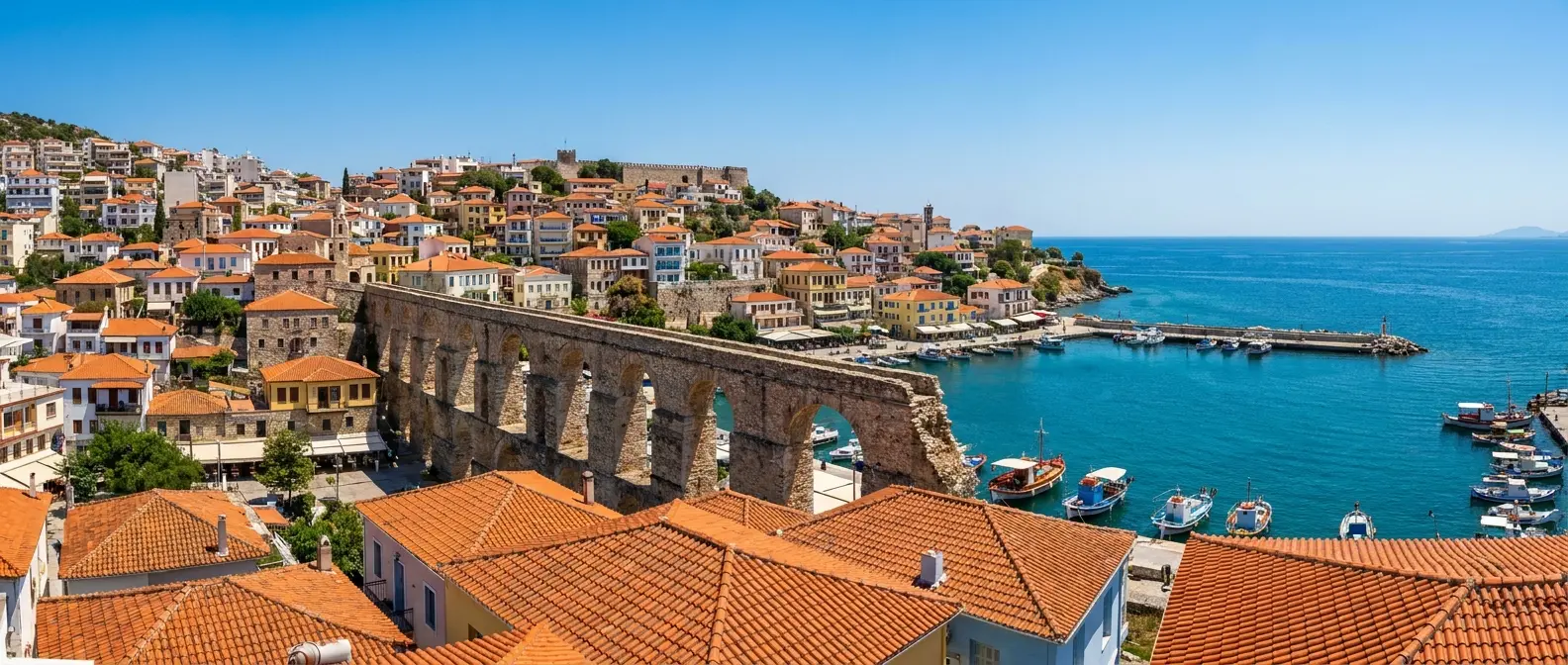
Kavala is a smaller, more postcard-perfect city than Thessaloniki, spread over hills with the Kamares aqueduct and the Panagia district at its heart. Walking the stepped lanes of Panagia is far more pleasant in spring and autumn; in July and August those steps can leave you drenched. The Tobacco Museum and the House of Mehmet Ali Pasha (Imaret) can be visited year-round. Seaside fish tavernas serve fresh seafood in any season, but al fresco dining is best from May to October.
The nearby Philippi archaeological site and the Amphipolis excavations are far more comfortable to explore in the cooler months. Day-trip ferries to Thassos run regularly from mid-April to late October and thin out in winter. For beach lovers, the coves of Rapsani and Batis are at their brightest between June and September.
How to plan the journey: route and transport
Tours leaving Istanbul usually cross the İpsala border, then follow the Egnatia Odos east–west highway past Alexandroupoli and Komotini to reach Kavala — roughly 350–400 km and 5–6 hours by coach. Thessaloniki lies a further 150–160 km west, so a tour combining both cities covers around 550–600 km and 6.5–7 hours of driving. That means cramming both into a two-day trip is tiring; I recommend at least three days.
If you drive yourself, sort out green card (green insurance) and any international driving permit requirements in advance. On Greek motorways, the Egnatia Odos toll stations charge fees, so keep cash or a card handy. At the border, burgundy passports face a visa check while green passports generally pass an ID check. In peak periods (August, religious holidays) queues at the Kipi–İpsala crossing can be long, so crossing early in the morning pays off.
Budget: when it's cheap and when it's pricey
Two forces set the price: season and how early you book. From November to March, hotel rates are at their yearly low. April and October sit one step up, May–June and September are the "sweet spot" and July–August peak. Flights and coaches follow the same rhythm: holiday weeks and mid-August cost the most, while November–February and early spring are the cheapest.
A simple rule: if you plan outside August, the same budget can buy you an extra night or a more central hotel. Early-booking discounts tend to be most generous for April–May trips. On the food side, Kavala and Thessaloniki are noticeably cheaper than Athens, which keeps the daily spend friendly.
How many days do you need? Two, three or four?
- Two-day tour: Usually focuses on one city or stays superficial. Too much time on the road; seeing both cities is exhausting. For the rushed traveller.
- Three-day tour (ideal start): One day Thessaloniki, one day Kavala, one day for a Thassos ferry or the Halkidiki coast. Balanced and satisfying.
- Four-day tour (most comfortable): Time to breathe in each city, fit in museums and markets, and enjoy unhurried dinners. Comfortable even without your own car.
Too many travellers pick two days and come home tired. If the budget allows, three to four days does this route justice.
Visa timing for burgundy passport holders
You will need a standard Schengen visa, and timing is critical. For the summer season, booking an appointment in March or April is almost essential — apply early. The application typically requires accommodation bookings, travel insurance, bank statements and proof of employment or income. If you travel with a tour, the agency's invitation or booking documents speed things up. Make sure your visa validity fully covers your travel dates; entry-exit days and multiple-entry rights matter in a Schengen visa.
In short: with a green passport the process is easy; with a burgundy passport, start at least six to eight weeks ahead.
Booking and crowd calendar: what to watch and when
Knowing Greece's holiday rhythm saves your plan: 1 May, 15 August and Easter trigger a domestic tourism surge. On those dates, book hotels and ferries at least two to three months ahead. In Thessaloniki, a major congress or trade fair (the International Fair period, for example) can fill hotels fast, so check the calendar. Locals near Kavala flock in at weekends; staying midweek is calmer and cheaper.
When it comes to tours, the windows that sell out fastest are May–June and September, precisely because savvy travellers chase those sweet spots.
Practical tips: money, connectivity and small details
- Money: Greece uses the euro. Cards are accepted almost everywhere, but carry cash for small tavernas and markets.
- Connectivity: Roaming charges on some Turkish networks are high; a local SIM or eSIM is a cheaper option.
- Language: English is widely spoken in Thessaloniki and Kavala, but a few Greek words (efharisto, kalimera) go a long way.
- Dining hours: Dinner usually starts after 21:00, and restaurants stay open late.
- Driving: If you drive yourself, add motorway tolls, parking fees and fuel to your budget.
- Insurance: Even with a green passport, a travel health insurance policy is worth arranging.
Frequently asked questions
What is the best month for a Thessaloniki & Kavala tour?
Broadly, late May to early June, and mid-September to early October, are the most balanced periods. Weather, crowds and pricing all meet at their best in these windows.
Can I visit Thessaloniki and Kavala visa-free with a green passport?
Yes. Turkish special (green) passport holders are exempt from the Schengen visa for short tourist stays. Still, confirm the current rules through official consular sources before you travel.
How many days is ideal?
At least three days, ideally four, to explore both cities and their surroundings comfortably. Two-day tours tend to feel rushed and tiring.
Is it worth going in August?
It is possible, but August is the busiest and priciest period. If you want the beach and festival atmosphere, be prepared for crowds and higher costs. Alternatively, consider early September.
Can you travel in winter?
Absolutely. Christmas markets, empty museums and low prices make winter appealing; just leave beach and swimming expectations behind.
Conclusion: the right time makes the route
With their geographic proximity and rich cultural layers, Thessaloniki and Kavala are among the most accessible gateways to Europe for travellers leaving Turkey. But how good that gateway feels depends entirely on your timing. Swap the August crowds for September light, and the March chill for May energy, and the same route gives you far more. Weigh weather, crowds and budget together, pick the window that suits you and plan the route. For departure dates, full itinerary details and availability, view the Thessaloniki & Kavala Tour on Turlago and live your visa-free European dream in the right season.