VIP Transfer Istanbul: Timing Your Ride by Season and Hour

Why Timing Matters More Than the Car Itself
Your flight lands at Istanbul Airport at 06:40 and you have a meeting in Levent at nine. Or the opposite: you touch down at Sabiha Gökçen at 01:20 with a hotel in Sultanahmet and an early start the next morning. In both cases the question that decides how your day goes is not which car you booked. It is which slice of the day your journey lands in. The same route, the same driver, the same vehicle can take thirty-five minutes at eleven in the morning and ninety minutes at half past six. That is why Turlago VIP vehicle rental options make most sense when you look at the schedule first and the car class second.
This guide breaks Istanbul transfer planning down by hour of day and by season. It is not a price list. It is a timing manual: what you will actually meet on the road at each hour, how far ahead you should book in each period, and which traveller profile each season suits best.
Istanbul Traffic by the Hour: Six Windows You Can Plan Around
Istanbul traffic does not follow a simple morning-and-evening pattern. School pickups, shift changes, weekend shopping traffic, bridge maintenance work and summer coastal congestion all keep reshaping the picture. Even so, there are six windows you can rely on when building a transfer plan. The durations below describe the typical Istanbul Airport to Taksim or Besiktas corridor; your own route will shift them.
04:00–07:00 | The Quiet Window
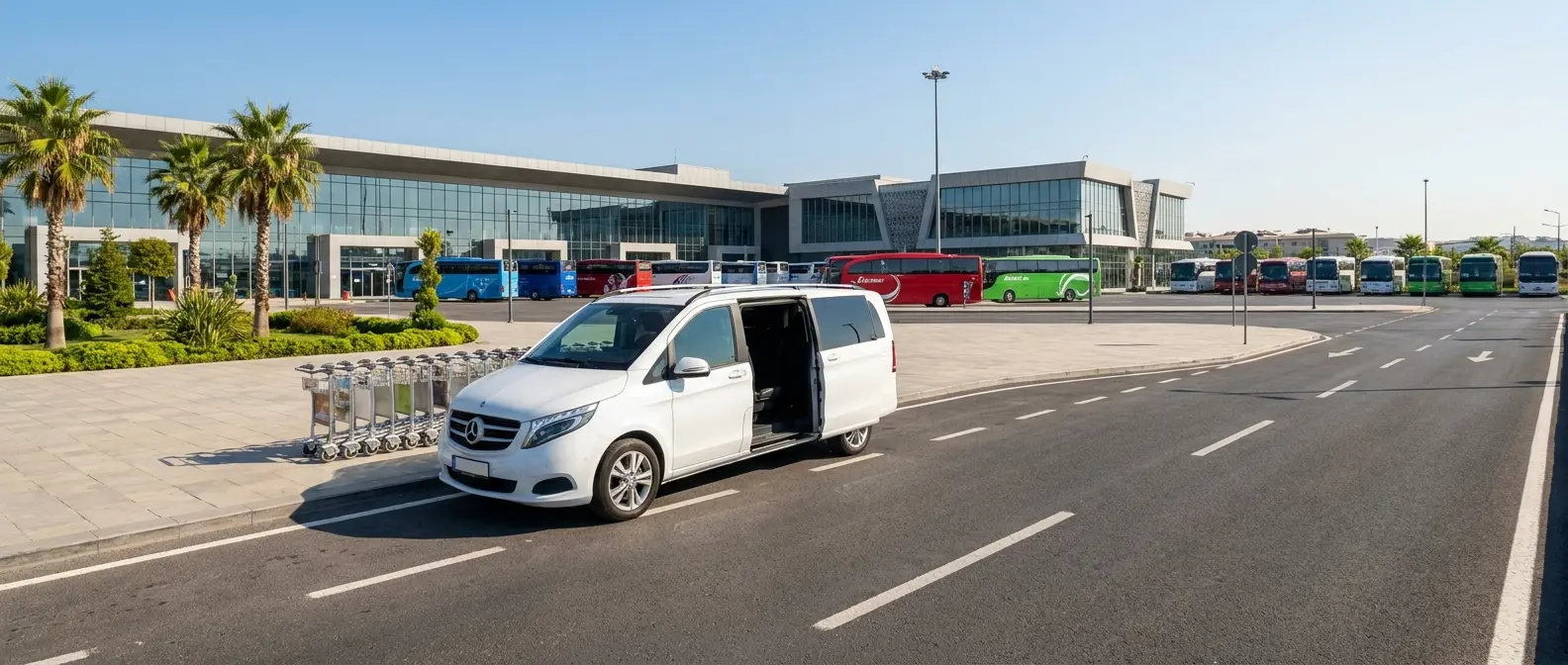
This is the most predictable traffic Istanbul offers. Roads are still empty, so airport-to-centre times stay close to constant. It is the safest slot for early departures and for travellers heading to a morning meeting. The only weak point is the airport itself: with so many arrivals landing at this hour, baggage belts and passport control can stretch. Add at least 45 to 60 minutes to your landing time and confirm the meeting point with your driver in advance. Hunting for a name sign in a crowded terminal at dawn is the single most common reason a perfectly planned transfer slips.
07:00–10:00 | Morning Peak
School shuttles, commuter traffic and intercity bus movements all collide in these three hours. A thirty-minute drive can stretch to 55 or 70. Heading towards the airport, the TEM and O-1 links are the worst offenders. If your flight departs between 09:00 and 11:00, leave your hotel about forty minutes earlier than you would normally plan. For Sabiha Gökçen the rule is even stricter, because the bridge and tunnel connections on the Anatolian side effectively stall at this hour.
10:00–16:00 | The Comfortable Corridor
Midday is the most balanced stretch of the day. School and office movement has dropped and the short lunchtime bump clears within half an hour. If you value comfort over squeezing every minute out of your trip, aim your arrival or departure at this corridor. It is also the least stressful window for travellers coming from the intercity bus terminals. The only midday risk appears in summer, when coastal and shopping districts briefly congest on weekends.
16:00–20:00 | Evening Peak
The hardest window of the day. Office exits, school exits and evening social traffic overlap. Anyone who has to reach an airport in these hours should check live traffic before leaving and plan for twice their normal journey time. Friday evenings, the day before a public holiday and evenings with major events push this peak even harder. Between 17:30 and 19:30 on a weekday, no transfer slot in Istanbul is truly guaranteed.
20:00–24:00 | The Evening Slide
Congestion unwinds quickly but does not fully vanish. Around the city centre, restaurant and nightlife traffic creates a short second wave between 22:00 and 23:30. For late arrivals this window is usually comfortable, though journeys ending in Beyoglu, Nisantasi or Kadikoy should still expect a slowdown in the final few kilometres. On night arrivals, agreeing the exact meeting point and a messaging channel in advance matters far more than it does during the day.
00:00–04:00 | After Midnight
Empty roads, shortest travel times. Two things still need planning: the driver's night shift arrangement and your hotel's check-in process. Confirm that your reception is staffed around the clock, and ask during booking whether extended waiting time at night carries a surcharge. Confirming any after-midnight booking at least 24 hours ahead dramatically reduces the risk of a cancellation or a delay.
Arrival Points Behave Differently
People talk about Istanbul transfers as if there were one single gateway. In practice, each entry point has its own daily rhythm, and the difference between them has less to do with distance than with how that point operates through the day.
Istanbul Airport (IST)
Sitting in the north of the European side, this terminal has the greatest single influence on how long a transfer takes. With clear roads, reaching Taksim can take 40 to 45 minutes; during the evening peak the same trip can run to 80 or 90. The terminal is also vast, meaning long walking distances, so build in a 30 to 40 minute buffer between landing and reaching the car. Late at night, when the roads open up, this becomes the fastest gateway of all.
Sabiha Gökçen (SAW)
The Anatolian side airport is the most schedule-sensitive of the two, because its connection to the centre runs through bridges and tunnels. Reaching Kadikoy can take 50 to 60 minutes during the morning peak, while the same distance drops to about 25 minutes after midnight. For travellers crossing to the European side, the choice between the two bridge routes should be made according to the hour. During morning and evening peaks, alternative routes gain a clear advantage.
Intercity Bus Terminals
Coach terminals follow a different congestion pattern from airports. Buses depart and arrive through the night, so these hubs stay alive around the clock. A short burst of activity appears between 07:00 and 09:00 as coaches from Anatolia arrive. When planning a transfer from a bus terminal, account for the chance that your coach runs late and book a flexible waiting arrangement if possible.
Cruise Ports: Galataport and Karaköy
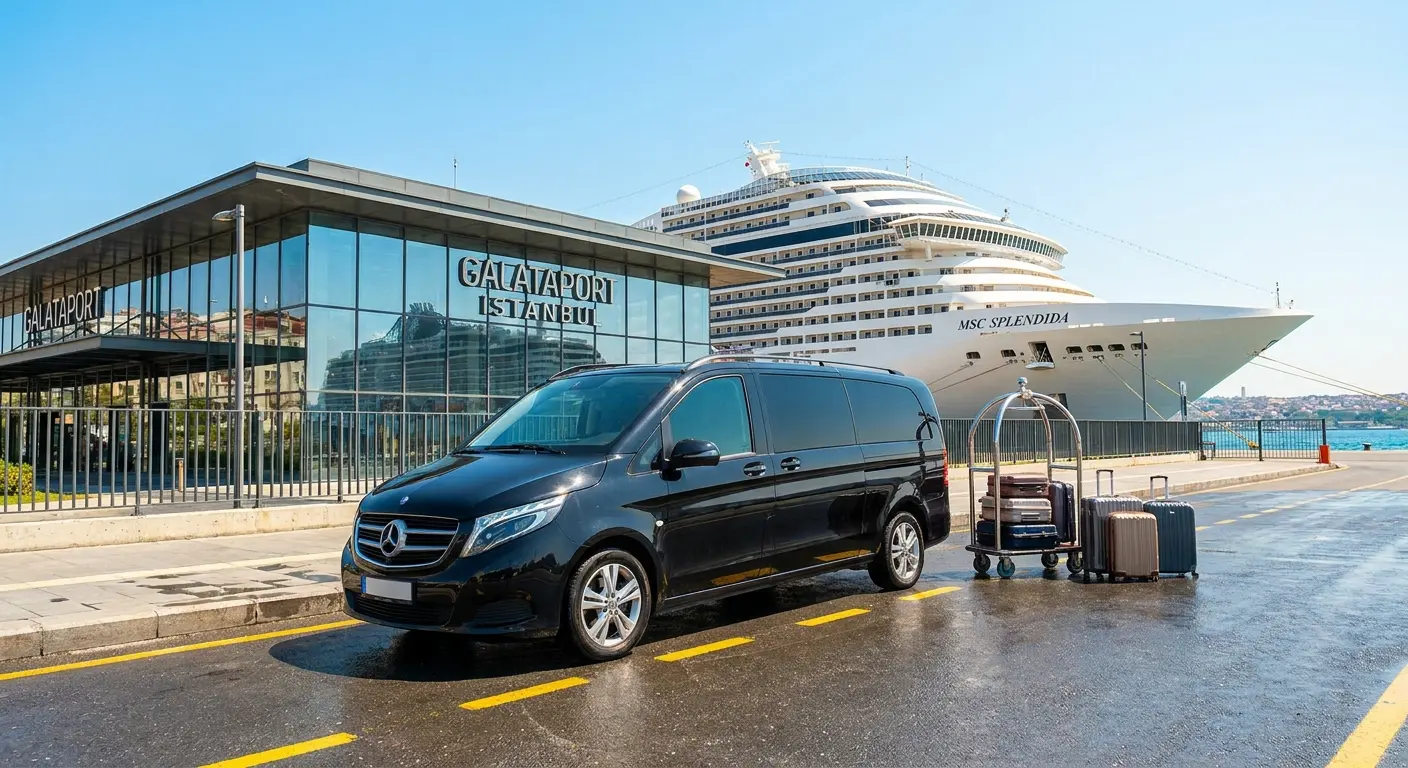
Once cruise season opens, this part of the city runs on an entirely different rhythm. Ships usually dock early in the morning and passengers flood into the city between 09:00 and 11:00. Those two hours are the busiest window around Galataport for taxis and transfer vehicles alike. The practical approach for cruise passengers is to treat disembarkation as a 45-minute range rather than a fixed time, and to describe the meeting point inside the port precisely in advance.
Season by Season: What Changes and When
Transfer demand in Istanbul does not stay flat through the year. Tourism season, business travel calendars, religious holidays and school breaks all move the needle. Matching your plan to the season gives you a noticeably better experience for the same service.
December to February: Low Demand, High Uncertainty
Winter leaves the city quieter, but it introduces one dominant risk: weather. Snow and ice can make travel times on bridge crossings and elevated routes genuinely unpredictable. Choose flexible cancellation terms during this period so a cancelled flight does not leave you exposed. In return, winter offers the best vehicle availability of the year. New Year week is the exception: visitor numbers rise sharply and bookings should be made at least a week ahead.
March to May: The Most Balanced Stretch
Spring is the most comfortable season for transfer planning in Istanbul. Weather is predictable, tourist pressure has not yet peaked and prices sit around the annual average. From mid-April the city's cultural and conference calendar picks up, increasing weekday business transfer demand. For anyone seeking a balance between budget and comfort, late March to mid-May is the sweet spot.
June to August: Peak Season and the Cruise Wave
Summer brings two separate surges. The first is classic tourism. The second is the cruise ship docking schedule. July and August combine the highest vehicle demand with the heaviest traffic. Leaving a VIP transfer booking to the last day in these months sharply increases the risk of finding your preferred vehicle class unavailable. One more summer note: coastal routes slow noticeably on Saturday and Sunday afternoons, when half of Istanbul heads for the Bosphorus or the Marmara shore.
September to November: A Quiet Second Spring
From mid-September visitor numbers fall while the weather stays pleasant. These are the busiest months for business travel, since trade fairs and congresses keep Istanbul lively between September and November. The advantage is a sensible balance between traffic and price. As November progresses, rainy days become more frequent, which again calls for flexibility in time estimates.
Public Holidays, Religious Festivals and Big Events
Some short periods affect Istanbul traffic more sharply than the season itself. During these, rethink your transfer plan by day rather than by hour.
- Ramadan and Eid al-Adha: City traffic nearly empties on the first morning of the holiday, but the two days before and after see peak congestion around bus terminals and airports. Travelling on the first holiday morning gives you one of the smoothest rides of the year.
- New Year week: Between 29 December and 2 January both city and airport transfer demand rises. Around the centre, late-night congestion climbs above the normal night baseline.
- Long public holiday weekends: Outbound traffic peaks on Thursday evening and Friday morning; return traffic peaks on Monday evening.
- Major sport and culture events: Stadiums and concert venues create short but intense congestion when the event ends. If your route passes one of these areas at that time, plan an alternative.
Matching the Season to the Traveller
Different travellers need different things from the same city. The pairings below show which season and hour combination suits which profile.
- Business travellers: The weekday 10:00–16:00 corridor combined with March to May or September to November is the most efficient pairing. Traffic is predictable and the risk of missing a meeting is low.
- Families with children: In summer, aim for early morning or the after-midnight window. A midday journey with children is tiring both in time and in patience.
- Cruise passengers: Plan around the docking time. Between June and August, port congestion means your transfer should begin at least three hours before the ship sails.
- First-time visitors: Midday between 10:00 and 16:00 lets you see the route and arrive without stress. Arriving at night means missing the first impression, which can be a real drawback.
- Budget-conscious travellers: Winter and weekday daytime hours offer the best rates, since lower demand keeps more vehicles available at lower prices.
Choosing the Vehicle Class Around Your Schedule
Vehicle choice is not only about passenger numbers. Season and luggage volume both play a part. Winter luggage is bulkier, while summer travellers often carry less for the same group size. In snow or heavy rain, vehicles with a higher seating position also make boarding and alighting noticeably easier.
- Sedan class: Ideal for one to three passengers with light luggage, and the most practical choice for hotels on narrow streets.
- Upper-segment VIP sedan: Designed for solo travellers or two-person business trips, with a quiet cabin and generous legroom. The most frequently requested class for airport pickups.
- VIP minivan class: The right call for four to six passengers travelling with suitcases. For families and small business groups, luggage capacity is usually the deciding factor.
- Minibus and midibus class: For large groups, wedding parties and team trips. In this class, book at least a week ahead; availability tightens quickly in summer.
How Far Ahead Should You Book?
The ideal booking horizon shifts considerably with the season. The list below weighs demand against planning comfort.
- Peak season (June to August, New Year week): At least 7 to 10 days ahead. Most of the fleet is reserved early, and last-minute options tend to be both pricier and narrower.
- Religious holidays and long weekends: At least 10 to 14 days ahead, as demand climbs above normal seasonal levels.
- Shoulder season (March to May, September to November): Three to five days is enough. Choice stays wide and prices stay balanced.
- Midwinter (January and February, excluding New Year): Even one or two days ahead usually works. Still, prefer flexible cancellation terms because of weather risk.
- Late night and very early morning: Fewer drivers work these hours, so book at least 48 hours ahead regardless of season.
VIP Transfer vs Taxi vs Public Transport: The Real Cost Is Time
There are several ways to get from an Istanbul airport into the city. Comparing them purely on price is misleading, because the biggest difference lies in time spent and uncertainty absorbed.
- Public transport: The cheapest option, but the multi-leg structure and the difficulty of managing luggage make it slow. Late at night, service frequency drops sharply.
- Taxi: Door to door, but during peak hours you may queue for a vehicle and route certainty is lower. Finding a taxi is easy at night and harder during the daytime peak.
- VIP transfer: Fixed pricing, a pre-assigned vehicle and a meet-and-greet service. Flights are monitored, so a delayed landing does not create extra charges or waiting disputes. Even during peak hours, the process stays predictable.
In other words, what you pay for with a VIP transfer is not only the car. It is the removal of uncertainty, the guarantee of arriving on time and the comfort of not wrestling with your own luggage. You can compare vehicle classes and their seasonal suitability on the Turlago VIP vehicle rental page.
Step by Step: What Happens at the Airport
First-time users of VIP transfers usually want to know exactly how the process unfolds from landing to hotel. A well-planned transfer runs like this:
- Flight details shared: You provide your flight number at booking, so the driver tracks the actual landing time and adjusts if the flight is delayed.
- Post-landing recovery time: Between 30 and 60 minutes is allowed for passport control and baggage claim. The exact figure depends on which hour of the day you land.
- Meeting point: The driver waits at the terminal exit with a name sign or at a previously agreed spot. During busy hours, agreeing this point in advance is critical.
- Luggage handling: The driver loads your bags, and you receive the in-car amenities and journey information.
- Route selection: The driver picks the fastest of several options based on live traffic conditions at that hour.
- Hotel arrival: You are accompanied to the hotel entrance and, where needed, the driver liaises with reception.
What Actually Drives the Price
VIP transfer pricing is not calculated on distance alone. Knowing where the differences come from helps you avoid surprises at the end of the trip.
- Time of day: Late-night and very early services may carry a supplement because driver shift patterns change.
- Season: Prices rise during the summer high season and around public holidays.
- Vehicle class: The gap between a sedan and a minibus widens significantly with passenger and luggage capacity.
- Waiting time: Extended waits caused by flight delays are charged in some tariffs, so ask about included waiting time when booking.
- Extra stops: Adding an address along the way is not part of a standard plan and is charged separately.
- Cross-city routes: Transfers from the European to the Asian side add a bridge crossing component.
Common Timing Mistakes
Experience shows that most transfers that go wrong are not caused by the car or the driver. The problem usually sits in the planning stage.
- Confusing landing time with the moment you actually exit the terminal. Skipping that 30 to 60 minute gap derails the whole day.
- Scheduling multiple transfers too close together, with no slack between pickup, meeting and hotel check-in.
- Assuming normal traffic on Friday evenings or Sunday return hours.
- Leaving the booking until the last moment in peak season and watching the options disappear.
- Ignoring port congestion on cruise ship days.
- Choosing a non-flexible winter booking with no cancellation protection against bad weather.
Pre-Departure Checklist
- Have you added your flight number and actual landing time to the booking?
- Do you have the meeting point inside the terminal and the driver's contact details?
- Does the vehicle class match your luggage count?
- Have you moved the pickup time at least 30 to 45 minutes earlier to match the traffic window?
- If your flight lands at peak hour, have you adjusted your hotel check-in expectation?
- If you arrive at night, have you confirmed that your hotel reception is open around the clock?
- Have you asked about waiting time and extra stop charges before booking?
- If you are travelling during a holiday period, did you choose flexible terms?
- Have you clarified payment methods and invoice requirements?
- Do you have a backup contact channel for emergencies?
Final Thoughts: Hour First, Car Second
Done right, a VIP transfer in Istanbul is genuinely comfortable. Done at the wrong hour, it turns into an expensive lesson in traffic. What separates the two is not the brand, the model or the price. It is knowing in advance which window of the day and which season your journey falls into. Once you factor in everything from the morning peak and the after-midnight window to winter ice risk and the summer cruise wave, you get a far better ride for exactly the same budget.
For your next trip to Istanbul, settle the calendar first, define your time window and only then choose the vehicle. You can review vehicle classes, seasonal suitability and booking options on the Turlago VIP vehicle rental page and build your plan today.