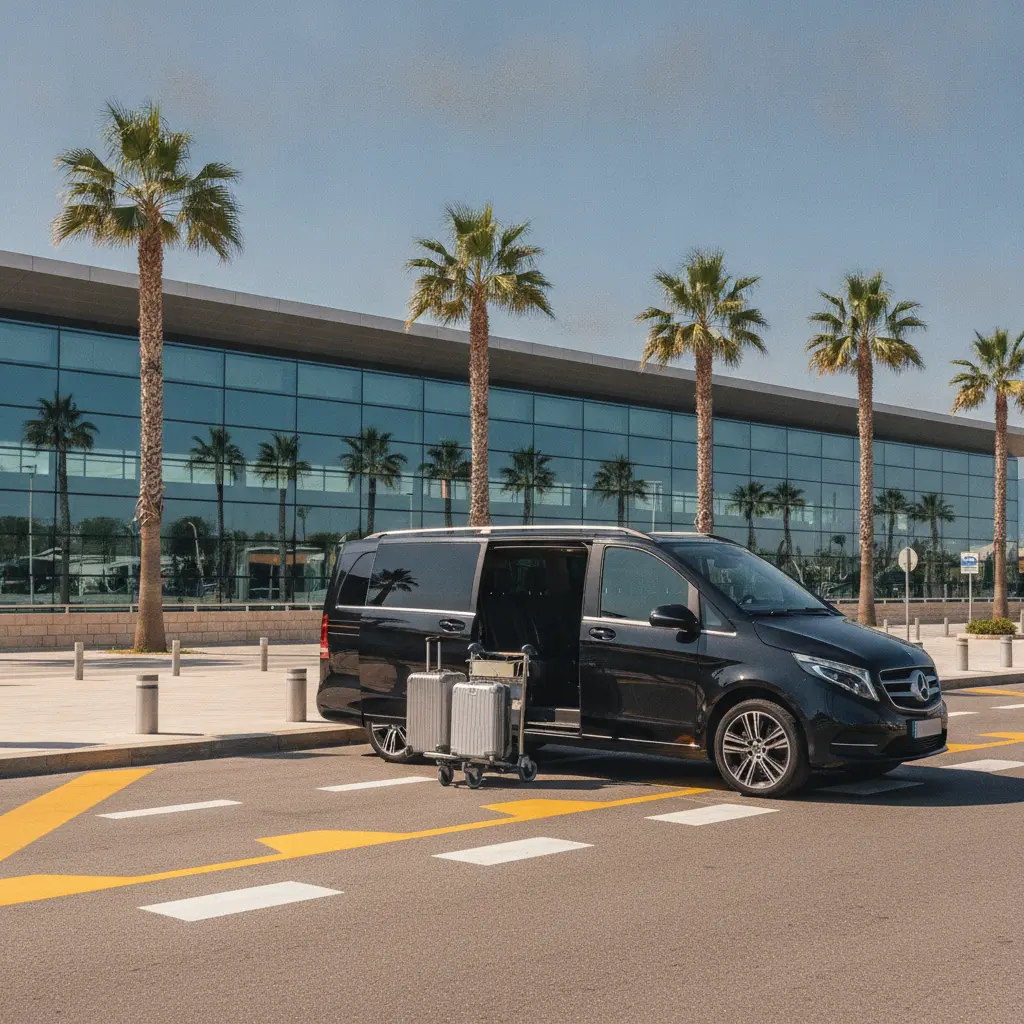
What Details Do You Need for Istanbul Airport Hotel Transfer?
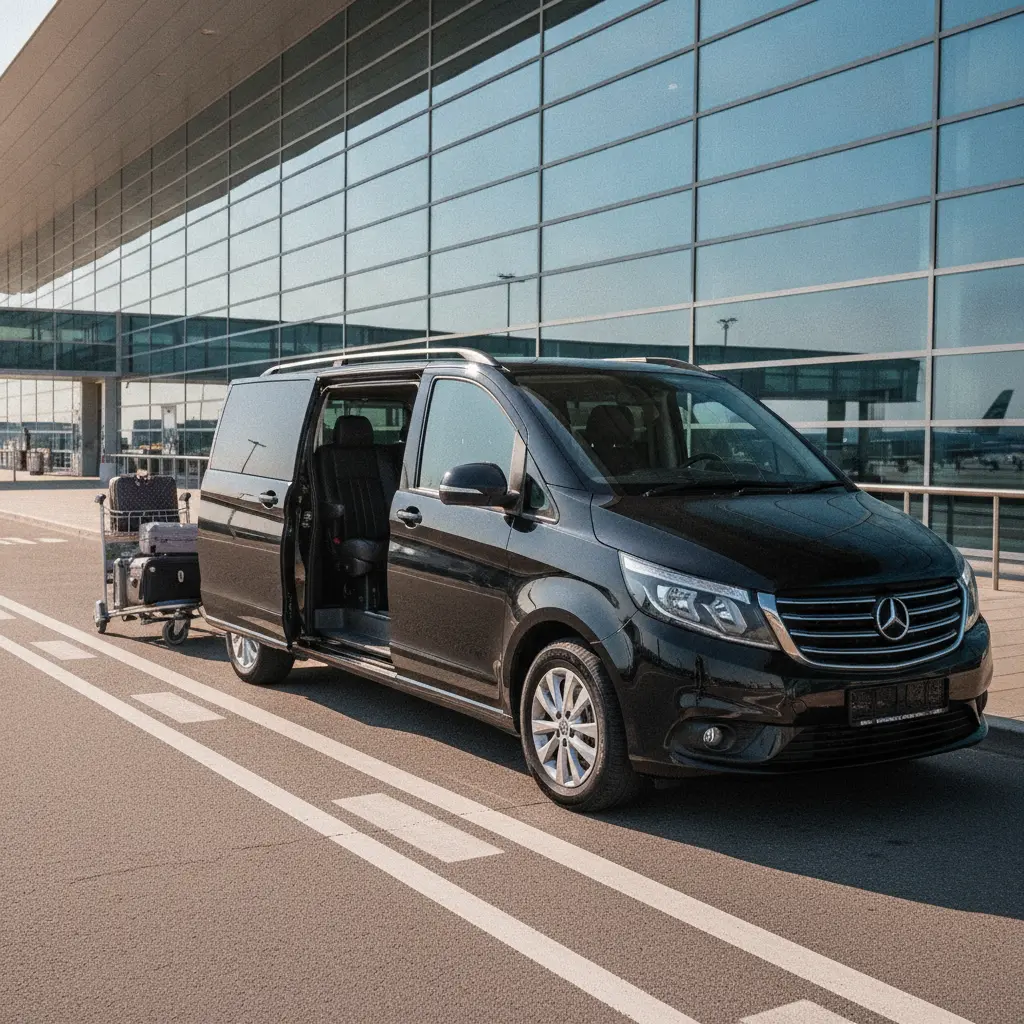
Most travellers book the flight first, the hotel second, and treat the airport-to-hotel transfer as an afterthought squeezed into the final ten minutes before departure. Then the booking form opens, and the questions start. Do they want the flight number or the airline? Where do I find the terminal? Is a street address enough, or do they need the postcode? And how exactly do you count luggage?
This guide answers those questions in order. Below you will find every piece of information an Istanbul Airport hotel transfer actually requires, grouped by what it is and why the provider asks for it. The list applies whether you book through the chauffeured car rental options on Turlago or anywhere else. The goal is not to fill in a form — it is to fill it in correctly the first time, because almost every airport transfer mishap traces back to a missing or wrong detail.
Quick answer: the form is really asking for nine things
If you want the short version, this is the complete list:
- Pickup date and time — the aircraft landing time, not departure.
- Flight number and airline — so the ride can be tracked.
- Airport and terminal — in Istanbul, is it IST or Sabiha Gökçen?
- Arrival type — international or domestic arrivals; the meeting point differs.
- Hotel name, full address, district and the hotel's phone number.
- Passenger count — adults, children and infants counted separately.
- Luggage count and type — large cases, cabin bags, special equipment.
- Vehicle class — chosen from the passenger-plus-luggage equation.
- Contact details — a WhatsApp number that stays reachable in flight mode plus an email.
Anything outside these nine items — child seats, pets, name boards, invoicing, extra stops — belongs in the notes field and usually requires confirmation or an extra fee. In practice, the notes field is never what slows a booking down. An incomplete first nine is.
Can you book a transfer without a flight number?
Technically yes. Give a date, a time and an address and a car can be reserved. In practice, you are giving up the single most useful safety net in the whole process.
With a flight number, the operator tracks the aircraft. If you are delayed by forty minutes, the driver sees it and does not sit idle or leave early. If you land ahead of schedule, the car can be repositioned. Without a flight number, the driver only has the time you typed. If passport control takes an extra fifty minutes, they have no way of knowing that you are still inside the terminal rather than a no-show.
One formatting note: write the flight number as airline code plus digits. "The evening Turkish Airlines flight" is not a flight number — the same carrier operates dozens of flights a day, and that description identifies none of them.
Why does the terminal field matter at a single-terminal airport?
Istanbul Airport (IST) operates from one large terminal building, with international and domestic passengers under the same roof. That makes the terminal field feel redundant, but the distinction that actually matters is not the terminal — it is which arrivals level and which exit you will walk through.
An international arrival clears passport control and baggage reclaim before emerging into the arrivals hall. A domestic arrival takes a shorter route and exits elsewhere. Telling the provider "international arrival" or "domestic arrival" is what determines where your driver stands.
Here is the mistake that costs the most: Istanbul has two airports. Istanbul Airport (IST) sits on the European side; Sabiha Gökçen (SAW) is on the Asian side. Selecting the wrong one in a booking form means a car waiting on one continent while you stand on the other, and the cross-city journey between them can exceed ninety minutes in traffic. Check the three-letter code on your ticket before you do anything else: IST or SAW.
Is a hotel address enough?
No. A hotel name plus a street address is a good start but an incomplete instruction. The most common failure is not a wrong street — it is a chain hotel with more than one building in the same city, or a boutique property whose reception entrance is on a different street from its address.
What a transfer form should contain:
- The hotel's full trading name — exactly as it appears on the sign, not the shorthand you use with friends.
- Street, building number, neighbourhood and district — in Istanbul the district is essential, because it drives both distance calculation and pricing.
- The hotel's reception phone number — so the driver can call directly if the street entrance is unclear.
- A note on vehicle access — many properties in Sultanahmet, Galata and Balat sit on pedestrianised or extremely narrow streets. Flagging this in advance removes the surprise of being dropped three hundred metres from the door with four suitcases.
One more detail that genuinely helps on a late arrival: some hotels have their reception on a different street from the main door. A single line in the notes — "entrance is on the side street" — saves a ten-minute search at midnight.
How should you report passenger and luggage numbers?
The most frequent error is counting only adults. Vehicle capacity is determined by seat count and luggage volume together, so children and infants must be listed too.
A good format looks like this: 2 adults + 1 child (age 6) + 1 infant (14 months). Ages matter because they determine whether an infant carrier, a child seat or a booster is fitted. If an infant will travel on a lap, say so explicitly — in some vehicle classes the infant seat is standard, in others it is on request.
For luggage, a number is not enough; the type matters:
- How many large check-in suitcases?
- How many cabin bags or backpacks?
- Is the stroller foldable or rigid?
- Any non-standard equipment — skis, snowboard, golf bag, surfboard, bicycle?
- Any bulky but light extras such as boxed purchases or shopping bags?
A useful rule of thumb: three large suitcases plus two cabin bags will not fit comfortably in a standard sedan with four passengers. Upgrading one vehicle class at the time of booking is always cheaper and easier than redistributing suitcases across your laps in the airport forecourt.
What exactly should you write about child and infant seats?
"I need a child seat" is not sufficient, because there are three different products and the correct one depends on age:
- Infant carrier — roughly 0-1 year / up to 13 kg, rear-facing.
- Child seat — roughly 1-4 years.
- Booster seat — roughly 4-7 years.
Put the child's age and weight in the notes. State the number of seats too: two children means two seats, and two seats occupy a significant part of the rear bench. A child seat request therefore influences vehicle class selection as well — three adults plus two child seats will feel tight even in a mid-size SUV.
Also plan for the reverse scenario. Child seats are often free of charge but they are not automatically guaranteed. When the confirmation arrives, look for an explicit line confirming the seat. If it is missing, ask for written confirmation before you fly.
What determines the right vehicle class?
Vehicle class is not chosen on passenger count alone. Three variables interact: how many people, how much luggage, and how much comfort you actually need.
A rough guide:
- 1-3 passengers, 2-3 cases: a sedan or compact executive car is plenty.
- 4 passengers, 4+ cases: a large-boot SUV or full-size sedan.
- 5-6 passengers: a VIP van class becomes close to mandatory.
- 7+ passengers or a large family group: minibus class; do the luggage maths twice.
Comfort expectations are a real variable too. A solo business traveller heading straight to a meeting benefits from a quiet, spacious car. A family of three at the start of a holiday benefits far more from boot volume than from seat trim.
One warning: class names vary between providers, and the word "VIP" on its own describes no specific standard. Before booking, ask for a sample vehicle photo, a model-year range and the stated luggage capacity. If you are booking through Turlago, you can compare classes directly on the chauffeured car rental options page.
How early should the car be at the airport?
There is no single correct answer, because there are two different scenarios.
Scenario one — the car should be waiting when you walk out. The driver needs to be airside-side of the terminal roughly 15-20 minutes before touchdown. That buffer does not cover passport control or baggage reclaim; it simply means the vehicle is already positioned.
Scenario two — the realistic one. On an international arrival, allow 40-60 minutes from touchdown for immigration, baggage and walking. The safest approach is to enter the aircraft's landing time in the pickup field and add a note saying "flight landing time". The provider tracks the flight and positions the car accordingly.
Many forms have a separate field for free waiting time — how long the driver waits after landing before charging. For international arrivals this is commonly 45-60 minutes and for domestic 30-45 minutes. Clarify it before you book. When the queue at passport control snakes around the hall, an unclear waiting policy is what turns a fixed price into a variable one.
What happens if your flight is delayed?
With flight tracking in place, a delay is usually a non-event. The operator sees the new landing time and adjusts. You do not need to do anything — though a quick WhatsApp message is good practice if the delay exceeds two hours.
The situations that do cause problems are these:
- Cancellation and rebooking onto a different flight. This is not a delay, it is a new arrival. Send the new flight number.
- Diversion to a different airport. Rare but real — an aircraft can be redirected to Sabiha Gökçen. The transfer has to change with it.
- Missing baggage. If the lost-luggage desk takes two hours, you may still be in the terminal long after the free waiting window closes. Tell the driver rather than letting the clock run silently.
How do late-night arrivals and peak holiday periods change the form?
For a late-night landing the form is identical, but two details matter. First, many operators apply a night tariff for arrivals between roughly midnight and 06:00 — ask about it before booking rather than at the kerb. Second, at night the taxi queue outside is shorter, but finding your specific driver can be harder, which makes sharing a live location over WhatsApp considerably more valuable.
Holiday periods are their own category. Turkish public holidays — Ramadan Bayramı and Kurban Bayramı — plus New Year and midsummer weekends produce heavier traffic on both the airport approach roads and the city centre. During those windows:
- Do not leave the booking until the last day; reserve several days ahead.
- Add extra traffic buffer to your planned pickup time.
- If you arrive before hotel check-in, note it on the booking. Some providers are flexible about holding the car or the driver while you drop bags at reception.
Does the return leg need a different set of details?
Yes. The outbound leg runs airport to hotel; the return runs hotel to airport, and the logic inverts.
- Pickup time is now calculated backwards from departure. For international flights, aim to be at the airport three hours before departure; for domestic, two hours. Then add city traffic allowance.
- Pickup address is the hotel; the drop-off address is the airport and terminal.
- The flight number must be the return flight, not the inbound one — a very common copy-paste error.
On traffic: central Istanbul slows sharply between roughly 07:30-10:00 and 17:00-20:00 on weekdays. For a 10:00 departure, leaving at 06:30 is usually safer than leaving at 07:00, even though it feels early.
What about payment, invoicing and cancellation terms?
The last section of a booking form is the one people skim, yet for anyone travelling on business it is the most consequential.
- Payment method: cash, card or prepayment. Confirm whether cards are accepted at the airport, since finding a working ATM after a late landing is not guaranteed.
- Currency: whether the price is quoted in lira, euros or dollars, and how exchange differences are handled.
- Invoice details: company name, tax office and tax number. Without these, a corporate expense claim cannot be processed.
- Cancellation policy: how many hours before pickup is cancellation free? What happens if the flight is cancelled? Is there a no-show charge?
- Extras: motorway and bridge tolls, parking, night tariff, extra stops, extended waiting. Get written confirmation of what is included in the quoted price.
Istanbul Airport sits in the Arnavutköy district, north-west of the city. The distance to the Taksim area is roughly 40-45 km, typically 45-75 minutes depending on traffic. A hotel on the Asian side involves a bridge crossing and can push the journey to 60-90 minutes. Keep that in mind when comparing quotes: one price often looks lower simply because tolls and bridge fees sit outside it.
Special cases: pets, sports equipment, extra stops
Anything outside the standard pattern is invisible unless you write it in the notes field. The usual suspects:
- Pets: is the animal in a carrier, what does it weigh, and is the vehicle suitable? All three need to be declared at booking. A pet mentioned on arrival may be refused.
- Skis, snowboards, golf bags: these do not fit standard luggage volume. Declare them as separate equipment.
- Extra stops: dropping a relative en route or stopping at a pharmacy may be chargeable. Declaring it in advance is always smoother than negotiating in the car.
- Name board: invaluable for first-time visitors, non-Turkish speakers and large groups. Ask whether it is included or an add-on.
- Luggage assistance: with elderly passengers, small children or many cases, confirm that the driver will help with bags.
Which details should you never share?
A transfer booking requires personal data, but there is a limit. Do not send any of the following over WhatsApp or email:
- Full card numbers, CVV codes or photographs of a payment card.
- Passport or national ID scans.
- National identity numbers — a tax number is sufficient for invoicing.
- Bank account details.
Safe payment routes are the provider's own checkout page, a virtual POS link, or payment in the vehicle. A message asking you to "send card details to secure the booking" is a red flag regardless of how legitimate the channel appears.
What should you check once the confirmation arrives?
A confirmation email is not a receipt; it is a contract. Before you archive it, read these five lines:
- Date and time — be careful with times like 00:15. Is that the night of the 14th into the 15th, or the 15th into the 16th?
- Flight number — is it your actual flight?
- Airport — IST or SAW?
- Hotel name and address — is the correct branch listed?
- Vehicle class and passenger/luggage count — if it says four passengers and you are five, correct it now, not at the kerb.
Also check whether driver details and the vehicle plate are shared within 24 hours of pickup. If not, send a confirmation message on the morning of arrival. One message is all it takes to avoid the classic airport-forecourt moment of phoning around while your suitcases circle you.
Seven mistakes worth avoiding
- Entering the departure time. The pickup time is the landing time; enter departure and the car arrives while you are still in the air.
- Choosing the wrong airport. Confusing IST with SAW is the most expensive error on this list.
- Under-reporting luggage. Arriving with four cases when two were declared means a vehicle change and an extra charge.
- Using a shortened hotel name. With two branches of the same brand, that ends at the wrong door.
- Not counting children. It throws off both seat count and seat type.
- Not allowing flight tracking. You lose the entire delay buffer.
- Skipping the cancellation policy. Change your plans and the refund may not exist.
The bottom line: how to finish the form in five minutes
The information needed for an Istanbul Airport hotel transfer is not complicated. It simply has to be prepared in advance. Before you open a booking form, write these down — on paper or in your notes app: flight number and landing time, airport code, arrival type (international or domestic), hotel full name and district, hotel phone number, adult-child-infant split, large and cabin luggage counts, any special equipment, child seat ages if relevant, and invoicing details. Those dozen lines let you complete the form once and correctly.
If you want to go one step further, book the transfer in the same week as the flight and hotel. Leaving it to the final days reduces vehicle availability and raises prices. To compare chauffeured vehicle classes that match your flight and luggage, take a look at the chauffeured car rental options on Turlago.
One last thought: the transfer is the first and last forty-five minutes of your holiday. When those minutes go smoothly, everything in between feels easier. A booking made with the right details is always better than standing outside arrivals, suitcases in hand, scanning a car park for a vehicle that may or may not be yours.