21m Custom Motor Yacht Bosphorus: First-Timer's Guide
If you have never chartered a yacht, your real question is not "how much?"
Almost everyone who opens a motor yacht listing for the first time looks at the price first. The price, however, is the clearest part of the whole page: this 21-metre custom-built motor yacht on the Bosphorus is listed at TRY 6,000 per hour. What actually keeps people up at night is everything else. Who meets me at the pier? What time do I need to be there? Do I take my shoes off? How does a 20-guest boat feel with only eight people on board? And what exactly does "three hours on the Bosphorus" cover?
This guide is written for someone with zero charter experience. It translates the jargon, sets realistic expectations, and uses only the figures published on the boat's Turlago listing: 21 metres in length, 20-guest capacity, departure from Arnavutköy Sahili, TRY 6,000 per hour. To see the boat's own page and availability, view the 21-metre custom-built motor yacht on Turlago.
What "21 metres" and "20 guests" actually mean in practice
Two numbers define almost everything about a charter: length and capacity. Once you understand them, you can predict how the day will feel.
Length: why 21 metres changes the experience
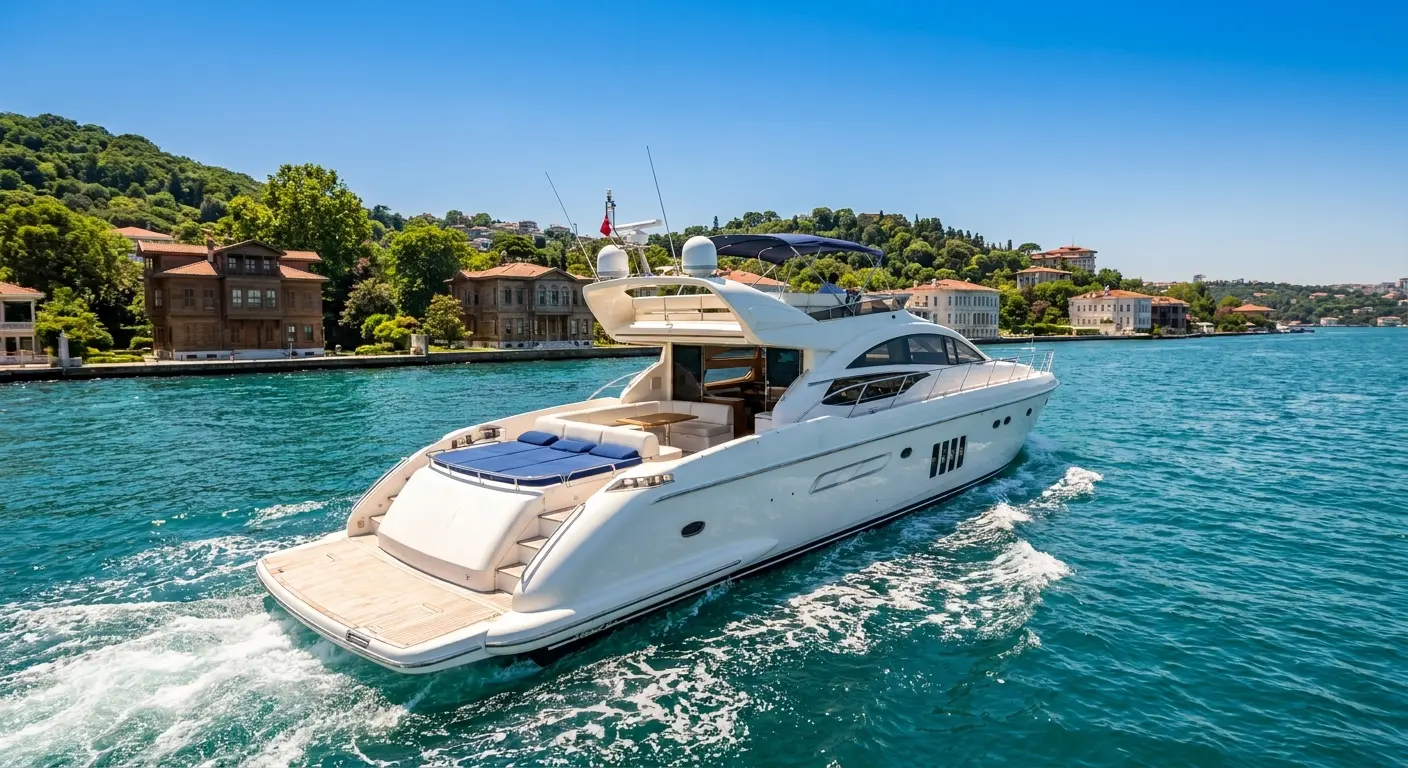
Twenty-one metres is the boat's length overall, measured bow to stern. It is not just a size figure; it is the threshold at which a deck can be planned in separate zones — seating groups, a service area, clear walkways. On a 16- or 17-metre motor yacht, the same number of guests can end up shoulder to shoulder. At 21 metres, people can sit without touching each other and the crew can move freely while serving.
On the Bosphorus specifically, length has a second, more technical benefit. The strait is known for strong currents and near-constant commercial traffic. A longer, heavier hull tracks more steadily in those conditions. That is not the same as promising perfectly flat water — no boat can promise that — but it is fair to say that a 21-metre hull absorbs the movement far more gently than a smaller craft.
Capacity: a ceiling, not a target
This is the single most misunderstood number for first-time charterers. Capacity is the maximum number of guests the boat can safely carry. It is not the number you are expected to invite. Chartering a 20-guest yacht with only 8 to 12 people on board is a genuinely comfortable experience: everyone finds a seat, the deck stays walkable, and someone leaning over the rail for a photo does not inconvenience anyone.
If you are a group of 18 to 20, manage expectations honestly. This is not a floating ballroom. Seating becomes shared, service queues form, music and conversation levels rise. What saves large groups is planning: agree the seating layout in advance, avoid scheduling all food service at one single moment, and keep people from constantly reshuffling around the deck. With up to about 15 guests, the boat is running well below its limit and almost everyone finds their own corner.
Where the boat departs from — and one detail you must confirm
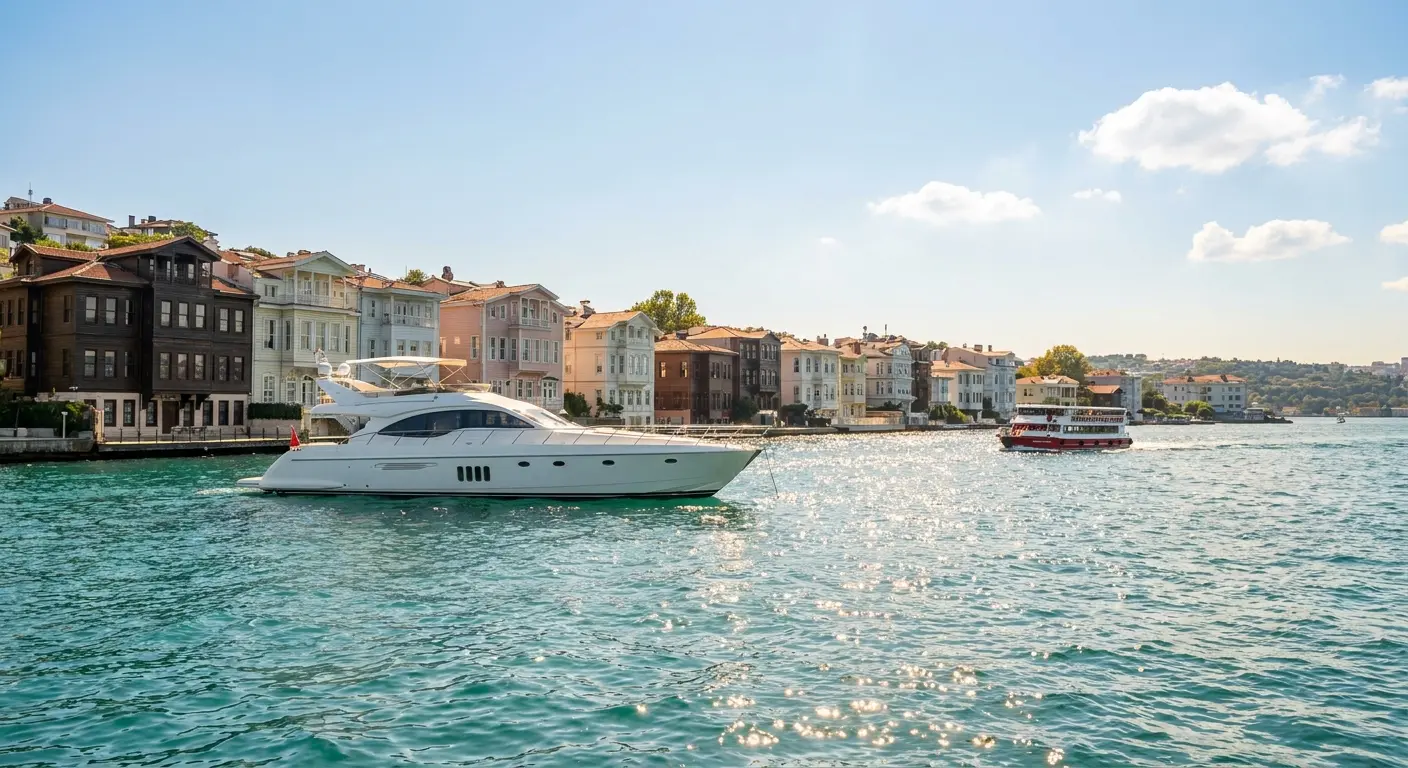
The listing records the home port as Arnavutköy Sahili, Istanbul. Arnavutköy sits on the European shore between Ortaköy and Bebek, a neighbourhood known for its wooden waterfront mansions and its calmer stretch of coastline. Departing from here puts you mid-strait, so you can head either south (Ortaköy, Beşiktaş, the Maiden's Tower area) or north (Bebek, Rumeli Hisarı, Kanlıca) without committing to a long one-way run.
The same listing description also refers to a journey starting from Kuruçeşme or Kuleli Marina. Read that not as a contradiction but as a confirmation item. For a first-time charterer, the most expensive mistake is showing up at the wrong pier. Once your booking is confirmed, get the departure point in writing — a message or a booking note. Do not set off until you have a written sentence along the lines of "we meet at this address at 14:00."
A discrepancy in the listing: how a first-timer should handle it
The same description mentions the boat as 17 metres in one place, while the title and technical fields state 21 metres. This kind of inconsistency does appear on marketplaces from time to time and can simply reflect the boat changing hands. The lesson for you is straightforward: before booking, confirm the length, capacity and departure marina in a single written message. That habit protects you and removes any chance of surprise on the day. If you are booking through a platform such as Turlago, send that confirmation request through the same channel.
From booking to pier: a step-by-step walkthrough
For someone who has never chartered, the process looks abstract. In reality it follows a fairly predictable sequence:
- Choose the boat and date: pick an available slot from the listing. Peak Bosphorus season runs May to September; Friday and Saturday evenings and public holidays can fill weeks ahead.
- Decide the duration: most first-timers find three hours ideal — two hours feels rushed, four hours is comfortable for a meal-centred programme.
- Declare the exact headcount: including children. Staying within the maximum capacity matters for both safety and comfort.
- Select add-on services: meal menus and celebration arrangements are added from the extras section during booking.
- Get written confirmation: departure time, departure point, precise meeting instructions and a contact number.
- One day before: check the weather and speak to the operator one last time.
- Arrive early: be at the pier 15 to 20 minutes before the meeting time. If you are late, the charter clock does not usually extend, because the boat may have another booking after yours.
What happens in your first fifteen minutes on board
This part makes people unnecessarily nervous, yet the flow is simple. You are met at the pier, boarding is organised, and a short safety briefing follows. It covers where the toilets are, where the life jackets are stored, how to move around the deck, and what to do in an emergency. It can feel like a formality. Listen anyway — for a first-time guest, those three minutes make the rest of the day effortless.
Footwear is the most common question. On deck, non-slip shoes with clean soles are generally preferred, and some boats ask guests to go barefoot or in socks on certain surfaces. Asking about this before you book also tells you what to pack. High heels, slick-soled sandals and hard-soled boots are all wrong for a moving deck.
Reading the TRY 6,000 hourly rate correctly
The published figure is clear: TRY 6,000 per hour. The classic first-timer mistake is treating that number as the total budget. The hourly rate multiplies by duration to produce the charter fee. Arithmetically it looks like this:
- 2 hours → TRY 12,000 (worked example)
- 3 hours → TRY 18,000 (worked example)
- 4 hours → TRY 24,000 (worked example)
These figures are simple multiplication of the published hourly rate. The listing does not state the minimum charter duration, nor whether crew, fuel, cleaning and basic refreshments are included in that rate. Before paying, settle three questions: (1) What is the minimum booking duration? (2) Does the hourly rate include crew, fuel and basic catering? (3) What are the cancellation and rescheduling terms? Do not pay until you have those three answers in writing. It is the single most valuable habit a first-time charterer can build.
Costs that quietly add up
Budgeting only the charter fee is misleading. Items that can appear on the day include food and beverage menus, celebration arrangements such as a cake, decorations or music requests, parking and transport around the marina, and any request to extend your time (always subject to availability and never guaranteed). Collecting all of these into one question list before you book removes the possibility of surprises later.
Two, three or four hours: what each duration really gives you
- Two hours: short and brisk — boarding, a brief cruise, and the return leg. Best suited to sightseeing and photography. With a larger group, the time disappears into settling in and service.
- Three hours: the most balanced option for first-timers. A relaxed cruise, enough time to sit and eat, a photo stop on deck, and an unhurried return.
- Four hours and beyond: suited to meal-centred programmes, celebrations or corporate gatherings, where food service, speeches and music need room to breathe.
A simple test when deciding: if your group includes more than five children, keep it short. If the group is mainly about food and conversation, do not go below three hours.
The route: what you actually see leaving Arnavutköy
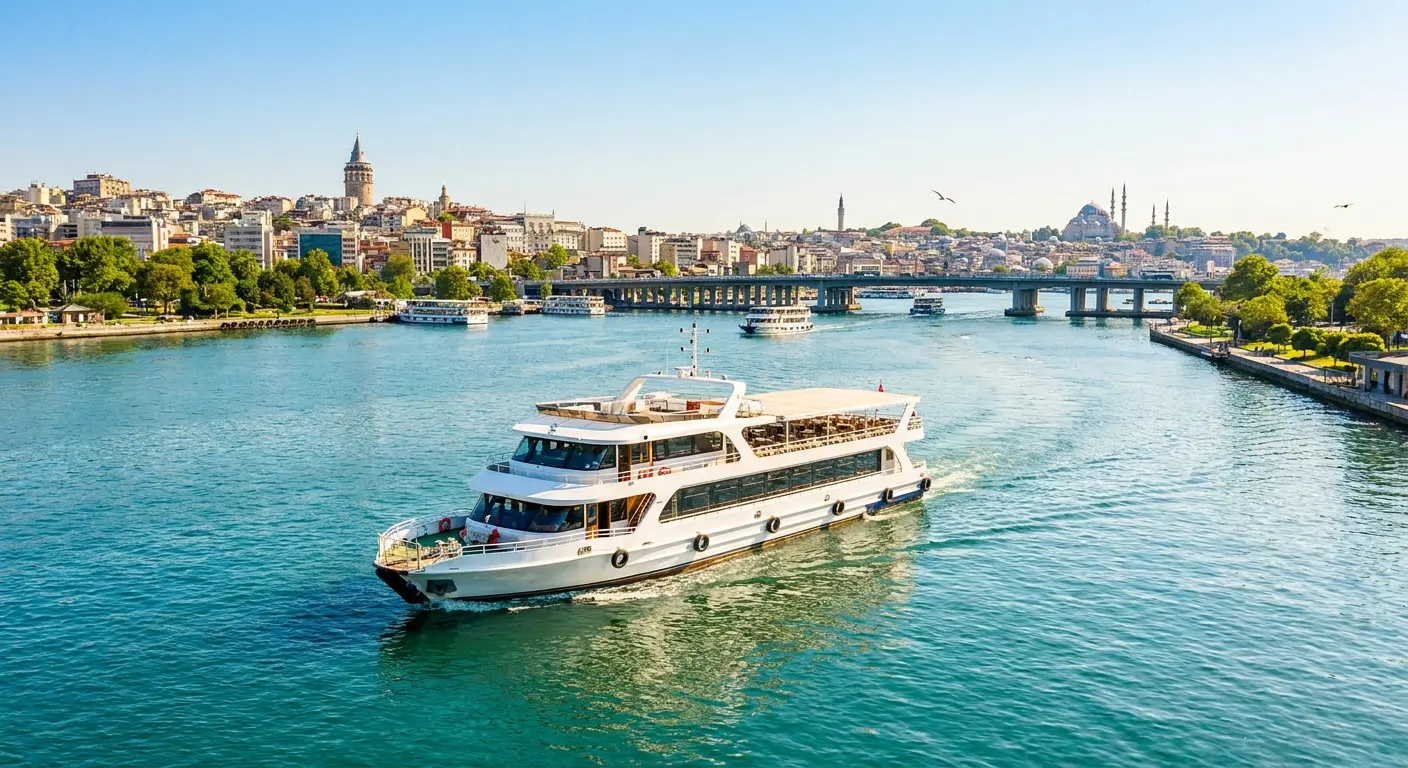
Because Arnavutköy sits mid-strait, it opens in both directions. Northbound you pass the Bebek bay area, the Rumeli Hisarı stretch, Kandilli and Kanlıca. Southbound you come down towards Ortaköy, the Beşiktaş shoreline and the Maiden's Tower area. The waterfront mansions lining both shores, the historic buildings at the water's edge and the constant marine traffic mean the route itself becomes the scenery.
Honesty matters here: the exact route depends on your departure time, sea and weather conditions, and the captain's judgement. No listing can guarantee "we will be at this point at this hour," because currents, wind and vessel traffic directly reshape the plan. Treat your wish list as a request rather than an itinerary: "we would like to head north towards Rumeli Hisarı" is a perfectly normal thing to say, and captains accommodate such requests whenever conditions allow.
Who suits this boat? Four group profiles
Families
A 21-metre hull with a generous deck is the biggest advantage for families with children. There is room for kids to move around and a separate area where adults can sit and talk, which keeps the day relaxed. Afternoon departures work better for younger children; late evening programmes often end in tiredness.
Couples
Booking as a party of two means you are effectively chartering a private space while the boat runs far below capacity. A quiet meal against the Bosphorus, a calm cruise and plenty of photo opportunities fit into two to three hours. Midweek dates outside peak season are noticeably calmer.
Groups of friends
Groups of 10 to 16 are this yacht's most natural audience. For celebrations, birthdays or simply a reason to get together, music and seating layout drive the experience. Having one clear organiser inside the group prevents service and timing chaos.
Corporate teams
Three hours in a closed meeting room becomes an entirely different experience on a boat moving through the Bosphorus. The one rule for corporate groups is to keep the agenda realistic: a stable area for presentations, quiet for discussions, and order for service. Splitting the time into a presentation block and a free block noticeably improves the outcome.
Expectation management: what will and will not happen
This is the most useful section for anyone stepping onto a private charter for the first time.
What will happen:
- You will be met at the pier and given a safety briefing.
- Once underway, the city noise drops away and the view keeps changing.
- You will find separate areas for sitting, eating and taking photos.
- If you selected extras, your meal and celebration details will be built into the programme.
- Crew will be on hand throughout the cruise.
What will not happen:
- The boat is not a private island; it shares a busy waterway with ferries and commercial vessels.
- Do not expect a perfectly motionless floor — there is always some movement on the water.
- Time is not flexible. If you arrive late, the charter does not automatically extend.
- Nothing that is not written in the listing is included by default. Ask about everything you want.
- It is not designed for an uncontrolled, high-volume party; neighbouring boats and shoreline residents are sensitive to noise.
Month by month on the Bosphorus
- May-June: mild weather and long daylight hours; among the most enjoyable windows of the year, especially late afternoon.
- July-August: hot and busy. Shaded seating and cold drinks matter most. Weekend slots sell out fastest.
- September: the water is still warm and the crowds thin out — the most rewarding month for photography and calm cruising.
- October-November: cooler, windier days arrive. Shorter durations and boats with enclosed seating make more sense.
- December-March: winter conditions on the strait can be harsh; strong wind and rain may force rescheduling, so keep dates flexible.
One rule applies in every season: find out in advance what happens if weather forces a cancellation or postponement. That single piece of information protects your plans from collapsing at the last minute.
Nine mistakes first-time charterers make
- Heading to the pier without written confirmation of the departure point.
- Under-reporting the headcount and updating it at the last minute.
- Assuming the charter clock starts at the meeting time — it starts when the boat moves.
- Never asking about the minimum booking duration.
- Leaving food and drink arrangements to the final day.
- Turning up in high heels or slick-soled shoes.
- Not asking about child-sized life jackets in advance.
- Skipping the weather check the day before.
- Calculating the whole budget from the hourly rate and ignoring add-ons.
A twelve-item packing checklist
- High-factor sunscreen and a hat
- Sunglasses
- A light layer or windbreaker for evening cruises
- Non-slip shoes or sandals
- A change of clothes, especially with children
- Motion sickness precautions if you have struggled at sea before
- A note to request child life jackets
- Phone and power bank
- Cash and a card for extras
- Personal medication
- A small bag — large suitcases and hard cases eat deck space
- Bottled water, the most commonly forgotten item on sunny days
Food, music and celebrations: how customisation works
The listing description states that cruises can be personalised and that food menus and organisational details can be added through the extras section. In practice this means one thing: if you want catering, do not leave it to the last day. Food preparation, service layout and crew planning are arranged in advance, and late requests may simply not be possible.
If you are planning a celebration — a birthday, an anniversary, a proposal — clarify which parts you handle and which parts the boat provides. Decoration, cake and music are usually separate line items. For groups that want dinner and music combined into one programme, an evening-format option is worth reviewing; see the Bosphorus dinner cruise and entertainment experience. If your plan leans towards a larger, party-focused group, the 23-metre party-equipped yacht for charter on the Bosphorus gives you a useful comparison point.
Safety: six questions worth asking before you board
- How many crew are on board, and what is the captain's experience?
- Where are the life jackets stored and how many are there?
- Are there life jackets in children's sizes?
- Who decides whether to sail in poor weather, and how is that decision made?
- Is there a first aid kit and communication equipment on board?
- What is the procedure if someone falls overboard?
Asking these questions does not offend anyone. Professional crews answer them willingly. If you cannot get answers, that in itself is a warning sign.
Choosing between boats: which suits whom?
- A large, party-driven celebration: groups wanting a bigger hull and stronger party setup should look at the 23-metre party-equipped yacht for charter on the Bosphorus.
- A classic, elegant atmosphere: if design and character come first, compare the classic Lobster motor yacht charter option.
- First-timers wanting balance: with 21 metres of length and capacity for 20 guests, this motor yacht offers a spacious deck at a reasonable budget — a solid middle path. For full details, view the 21-metre custom-built motor yacht on Turlago.
Frequently asked questions
How many guests does this yacht take, and what does it cost?
The listing states a capacity of 20 guests, a length of 21 metres and an hourly rate of TRY 6,000. Confirm the minimum duration and what is included in the rate before booking.
The boat has no reviews yet. Is that a problem?
There are no reviews on the listing at present. That does not mean the boat is poor; it may simply be newly listed. In this situation, speak directly with the operator before booking and get photos, crew details and departure information in writing.
Where exactly does it depart from?
The listing's port field says Arnavutköy Sahili, Istanbul, while the description also mentions Kuruçeşme or Kuleli Marina. Confirm the exact meeting point in writing after booking.
Is two hours enough?
It is enough for sightseeing and a short cruise, but three hours is noticeably more comfortable if you want to sit down for a meal.
Is it suitable for families with children?
The generous deck and separate seating areas work well for families. Always ask in advance about child life jackets and prefer afternoon departures.
Are food and music included?
According to the listing description, food menus and organisational details can be added through the extras section. Treat them as add-ons rather than standard inclusions.
What happens if the weather turns bad?
That depends on the operator's policy and your booking terms. Ask about cancellation and rescheduling conditions in writing before you pay.
Final word: three golden rules for your first charter
Chartering a yacht on the Bosphorus for the first time comes down to three sentences. First, confirm everything in writing — departure point, time, duration, headcount and what is included. Second, choose a duration that matches your group's real rhythm; a rushed schedule ruins the view. Third, treat capacity as a safety limit rather than a target; a 20-guest yacht carrying 10 to 14 people almost always delivers the best experience.
With 21 metres of length, capacity for 20 guests and a departure from Arnavutköy Sahili, this custom-built motor yacht is a well-balanced choice for a first Bosphorus charter. To see the price, capacity and availability in one place, view the 21-metre custom-built motor yacht on Turlago — and ask every question you have before you book, because that is what turns a good day on the water into an effortless one.