Benelux Paris Germany Tour 2026: Which Date Fits You Best?
Same Itinerary, Two Very Different Trips: It Comes Down to the Calendar
The 2026 season of the Benelux & Paris & Germany Adventure Tour opens with 14 departure dates. The itinerary is fixed, the hotel category is fixed, the guide is fixed, the airline is fixed. The only variable is the date you pick — and that single choice shapes everything: how you dress in Luxembourg, how long you can sit outside in Amsterdam, how much elbow room you get in front of the Louvre, and whether your photos look flat or luminous.
This guide is not a rehash of the tour description. It answers one question: which departure date actually suits you? To see the full route, inclusions, exclusions and the day-by-day programme in one place, view the Benelux & Paris & Germany Adventure Tour on Turlago and keep this article open while you decide.
The Backbone of the Route: 8 Days, 5 Countries, 4 Hotels
This is not a resort holiday with day trips. It is a northbound line that starts in Paris and ends in Amsterdam. Here is how the nights are distributed:
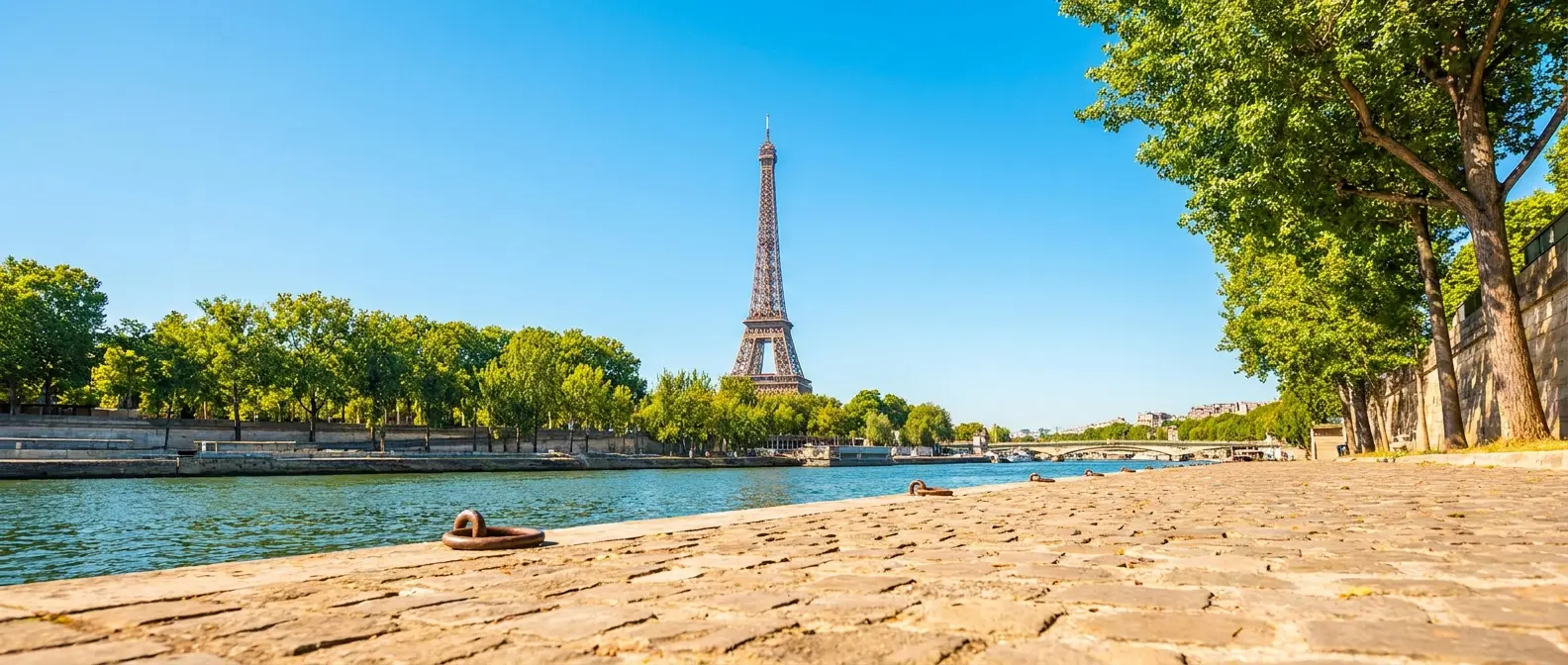
- Paris – 3 nights: the longest stay. The Eiffel Tower, the Seine, the Louvre district, Montmartre and outlet shopping all sit in this block.
- Luxembourg – 1 night: arriving via Metz, one of France's oldest cities, then heading out to Trier the next morning.
- Brussels – 1 night: the Trier and Brussels city tours share a single day — busy but well paced.
- Amsterdam – 2 nights: Marken, Volendam, Zaanse Schans and the canal ring live here.
Two practical consequences follow. First, you will repack twice on genuinely busy days (the Paris checkout and the Brussels checkout). Second, because Paris gets three nights and Amsterdam two, you actually get to settle in: unhurried breakfasts, an evening stroll without a suitcase, the feeling of a city rather than a checkpoint. Four hotel changes across eight days is a reasonable number — you are not living on the coach.
Reading the 2026 Calendar: 14 Dates, Five Distinct Seasons
The published departures are 11 April, 23 May, 6 June, 20 June, 4 July, 18 July, 1 August, 15 August, 29 August, 26 September, 10 October, 24 October, 7 November and 5 December. Do not read these one by one. Read them in blocks, because dates inside a block behave similarly.
Block One — Spring Opening: 11 April and 23 May
These two dates land in the most changeable weather of the year. Mid-April in Paris sits around 14–17°C by day and turns distinctly cool after dark. In Amsterdam, wind coming off the canals makes the air feel colder than the thermometer suggests. By late May the picture softens considerably: 23 May is the most balanced spring option — crowds are not yet at peak and the weather rarely fights you.
The real prize in this block is light. Across northern Europe in April and May, sunset stretches late; after dinner in Paris you will still find a bright sky. This suits photographers, early risers who want the Eiffel district before the crowds, and anyone who wilts in heat.
The trade-off is unpredictability. One day sunny, the next a fine drizzle. Layer up: a light rain shell or windbreaker and a compact umbrella are non-negotiable.
Block Two — Early Summer: 6 June and 20 June
This is the sweet spot of the entire calendar. Temperatures are comfortable, days are long, and the cities have not yet surrendered to the July–August surge. Because 6 June falls before most European school holidays begin, the passenger mix skews toward couples and groups of friends rather than families.
Evening walks are the highlight in this block. The Montmartre stairways, the Seine embankments, the green of the Luxembourg Garden — all far more pleasant than in April or May. Amsterdam in June also shows its cycling culture at full volume: the city feels alive without feeling suffocating.
Block Three — Peak Season: July and August (4 & 18 July, 1, 15 & 29 August)
Five departures make this the densest block of the year, and the pros and cons are almost perfectly symmetrical.
The upside: highest temperatures, longest days, lowest chance of rain. On the 18 July or 1 August departure, Amsterdam stays light until around 21:30 — which means you can see the cities in late-day light. Cafés spill onto pavements, parks are at full capacity, and canal-side evenings work exactly as you imagine them.
The downside: the area around the Louvre, the forecourt of the Eiffel Tower and the Champs-Élysées can be genuinely tiring in July and August. Getting a clean angle for a photo on Brussels' Grand-Place takes patience. Popular stops such as Zaanse Schans get physically crowded. Managing coach temperature also becomes a real concern — carry water.
Mid-August (15 August) overlaps with European domestic holiday season, so a handful of small restaurants and independent shops may be closed. Major museums and the organised city tours run normally.
Block Four — The Golden Window: 26 September and 10 October
These two dates strike the best balance of the whole year. The weather still supports long days outdoors, crowds have thinned, and the light has softened. Late September in Paris is when the city returns to its own rhythm: locals are back from holiday, streets are lively, but the tourist wave has receded.
The difference is most obvious in walkable cities like Luxembourg and Trier. You move freely among the Roman remains, around the Porta Nigra, without queuing. Museum lines in Amsterdam shorten. And for photographers, the lower autumn sun angle stretches shadows and adds depth to every frame.
The one risk is that rain returns to seasonal norms. A light waterproof jacket is enough for late September and early October.
Block Five — Late Autumn and Winter: 24 October, 7 November, 5 December
These three departures create a completely different travel profile. Daylight drops below nine hours and cities go dark early. That said, this block has its own genuine strengths.
24 October catches the peak of autumn colour: around Trier and in green cities like Metz, the trees turn gold and orange. The November and especially the 5 December departure edge into Europe's Christmas market season; festive lighting starts appearing in Brussels and Amsterdam in early December, and Paris shop windows are dressed.
Be honest with yourself though: on 5 December, daytime temperatures drop into the 3–7°C range, and wind chill takes it lower. Thermal base layers, a heavy coat, a hat and gloves are not optional. The short daylight also means a large share of city touring happens after dark.
Month-by-Month Weather and Packing: A Realistic Picture
Treat the following as a planning tool, not a forecast. Regional averages for the cities on this route:
- April (11 April): 13–17°C, changeable, high chance of showers. Rain shell plus layers.
- May (23 May): 17–21°C, balanced, cool evenings. Light jacket, scarf.
- June (6 and 20 June): 20–24°C, long pleasant days. Light summer clothing plus one jacket.
- July–August (five dates): 24–30°C, hot and crowded. Cotton, hat, refillable bottle.
- Late September–early October: 16–21°C, soft light, moderate crowds. Thin rain jacket, comfortable shoes.
- Late October–November: 9–15°C, wet and windy. Waterproof jacket with a hood.
- December (5 December): 3–7°C, cold, short days. Coat, hat, gloves, thermals.
One rule applies to every season: comfortable walking shoes. Paris, Metz, Luxembourg, Trier, Brussels and Amsterdam are all toured on foot, and the bulk of every city tour is pedestrian. Heels or brand-new boots that have never been broken in are the single most common mistake on this itinerary.
Crowds, Cost and Comfort: The Hidden Price of a Date
The same tour delivers a different kind of value depending on when you go.
- April and November–December: quiet cities, no queues at museums or cafés. In exchange, weather may push you indoors and shorten outdoor time.
- June and late September: the optimum. Manageable crowds, cooperative weather, outdoor activities at full capacity.
- July–August: the liveliest atmosphere, the highest accommodation demand, the busiest city centres. If you plan to book anything independently during free time — a museum slot, a specific restaurant — book ahead.
The tour is listed at 41,836 TRY with a stated capacity of 100 passengers. That means popular dates can fill quickly. Balanced dates such as 6 June, 4 July, 1 August and 26 September tend to be the first to go. If you have decided, booking early is simply the sensible move.
Day by Day: The Pace You Will Experience Whatever Date You Choose
Day 1 — Istanbul to Paris
Meet at Sabiha Gökçen international departures three hours before the flight for ticketing and baggage. The Pegasus scheduled service takes roughly 3 hours 40 minutes. Transfer and hotel check-in on arrival. This day is deliberately light — no heavy touring after the flight.
Day 2 — Paris: Free Time and the Seine
After breakfast, the full day is free. Guests who wish can join the guide's optional Eiffel Tower – Seine – Louvre district tour (€100). The standout element is a boat trip on the Seine, passing the Eiffel Tower, Notre-Dame Cathedral, the Louvre, Pont Alexandre III, the Musée d'Orsay and the Institut de France — all seen panoramically from the water.
Day 3 — Paris: Montmartre and the Bohemian Side
Another free day with an optional tour (€90): Montmartre (the artists' hill), Notre-Dame Cathedral, the Luxembourg Garden, the Louvre district and an outlet stop. The route passes through Pigalle — home of the Moulin Rouge — then takes the funicular up to the artists' hill and the Sacré-Cœur Basilica.
Day 4 — Paris to Metz and Luxembourg
Early breakfast, check out, and head toward Luxembourg with a stop to tour Metz, a city that changed hands repeatedly between France and Germany. Moselle and Seille rivers, lakes, and the medieval "German Gate" are among the highlights. Overnight in Luxembourg.
Day 5 — Luxembourg to Trier to Brussels
Depart in the morning toward Brussels with a stop in Trier, one of Germany's oldest cities, known in Roman times as Augusta Treverorum. The UNESCO-listed Porta Nigra, the Kaiserthermen imperial baths and the Roman bridge are the principal stops. Continue to Brussels for the city tour and overnight.
Day 6 — Brussels to Amsterdam
After breakfast, check out and head for Amsterdam, where you have free time. Guests may join the guide's optional Bruges tour (€45). Often called the Venice of the North, Bruges is UNESCO-protected for its preserved medieval architecture, narrow lanes, colourful gabled houses and canals. The walking city tour is the core experience here.
Day 7 — Amsterdam: Marken, Volendam and Zaanse Schans
Free time plus an optional tour (€100). The day covers Marken and Volendam — the best places to observe traditional Dutch life — and Zaanse Schans. Houses built on piles to withstand flooding, handicrafts, traditional costume and working windmills form the backbone of this day.
Day 8 — Amsterdam to Istanbul
Breakfast, check out, free time, airport transfer and the Pegasus flight back to Sabiha Gökçen. Five countries, six cities, hundreds of photographs in eight days.
Optional Tours: Where to Put Your Budget
The included services already cover city tours in Brussels, Luxembourg, Amsterdam, Paris, Trier and Metz plus professional Turkish-speaking guiding. The optional tours are what add depth:
- Day 2 – Eiffel Tower, Seine and Louvre district: €100
- Day 3 – Montmartre, Notre-Dame, Luxembourg Garden and outlet: €90
- Day 6 – Bruges tour: €45
- Day 7 – Marken & Volendam, Zaanse Schans: €100
All four together come to €335. If your budget is limited, prioritise the Seine boat trip in Paris — it delivers the highest return on experience of anything on the list — followed by Zaanse Schans with Marken and Volendam. Bruges is relatively cheap and folds neatly into the Amsterdam day.
Budget Reality: What Sits on Top of the Tour Price
Included: round-trip economy flights with Pegasus (SAW–ORY / AMS–SAW), airport taxes, 7 nights bed and breakfast in the stated hotel category, airport-hotel-airport transfers, all city transfers by private coach, six city tours, professional Turkish-speaking guiding and assistance, and TÜRSAB professional liability insurance.
Not included, and worth budgeting for:
- Visa fee and service charge
- Travel health insurance
- Hotel and tourist city taxes: €35 (payable to your guide)
- Lunches and dinners not stated in the programme
- Overseas departure tax
- Museum and archaeological site entry fees
- Optional tours, including Disneyland (ticket prices vary by season)
- Driver and guide tips (optional)
- Personal spending and hotel extras
A realistic food budget: a simple lunch in this part of Europe runs €12–20 and dinner €20–35. Setting aside €200–300 for eight days of meals prevents unpleasant surprises. Add optional tours and a total additional budget of €500–700 is a sensible planning figure.
Visa and Paperwork: Sort This Before You Pick a Date
The tour spans five Schengen countries: France (Paris, Metz), Germany (Trier), Luxembourg, Belgium (Brussels) and the Netherlands (Amsterdam). Entry is via Paris Orly and exit via Amsterdam Schiphol, so France is your main destination and the French consulate is where your application normally belongs.
Practical notes:
- Book a visa appointment at least six to eight weeks before departure; in summer this window stretches further.
- Hotel confirmation and flight documents are provided by the operator and can go straight into your file.
- Travel health insurance is not included — buy a policy that meets the minimum Schengen coverage requirement.
- The overseas departure tax must be paid before you leave.
There is one clear advantage to the autumn and winter departures (26 September, 10 October, 24 October, 7 November, 5 December): visa appointments are generally easier to secure than in peak summer.
Who This Tour Suits — and Who Should Skip It
A good fit: travellers who want to see a lot in a short window, people who prefer guided touring, anyone drawn to city and culture travel, those comfortable with coach transfers, and anyone wanting to cover the Paris-to-Amsterdam axis in eight days.
Not a good fit: anyone who wants to stay put in one city, or to spend each day on a beach. This is an urban culture tour with a brisk pace and a lot of walking. Early starts, coach boarding and repacking recur throughout the eight days.
One more note: for families with children, 6 June and 20 June align best with school calendars and mild weather. The winter departures (7 November, 5 December) can be tough with young children because of the cold.
Frequently Asked Questions
How long is the tour?
Eight days and seven nights: three nights in Paris, one in Luxembourg, one in Brussels and two in Amsterdam.
Which airports are used?
Outbound Istanbul Sabiha Gökçen to Paris Orly (ORY); return Amsterdam (AMS) to Istanbul Sabiha Gökçen. Scheduled Pegasus Airlines services, economy class.
Are meals included?
Breakfast is included at the hotels. Lunches and dinners not specified in the programme are not included.
What is the capacity?
The listing states a capacity of 100 passengers, which is why early booking matters on the balanced dates.
Which date is best for a first visit?
For balanced weather, moderate crowds and lively cities, 6 June, 20 June, 26 September and 10 October stand out. Choose July or August for maximum heat and the longest days, and April or November–December for quiet cities and minimal crowds.
The Takeaway: Choose the Date for Yourself, Not for the Map
Covering Benelux, Paris and Germany in eight days becomes a memorable experience when the date is right — and an endurance test against weather and queues when it is not. Ask yourself three questions. Do you handle heat or cool air better? How much tolerance do you have for packed city centres? And what matters more to you, photographic light or outdoor time?
If your answer is "balanced weather, walkable streets, moderate crowds," June and late September are your dates. If it is "heat, long days, streets buzzing," go for July or August. If it is "quiet cities, festive atmosphere, minimal crowds," aim for November or December. Whichever you choose, the programme is the same: three nights in Paris, a boat trip on the Seine, Roman traces in Metz and Trier, the Grand-Place in Brussels, and canals in Amsterdam.
To see the full 2026 departure calendar, the inclusion and exclusion lists and the complete day-by-day programme on one page, view the Benelux & Paris & Germany Adventure Tour on Turlago and lock in your preferred date today. The 100-passenger quota fills fastest on the balanced dates.