Bosphorus Cruise Prices 2026: Hourly, Private & Group Options
Why the same Bosphorus route can cost three times more on one boat than another
Ask two operators for a quote and you will get two different products. One prices per boat, the other per person. One assumes a two-hour loop, the other an all-day charter. That is why "how much is a Bosphorus cruise?" has no single answer. The question worth asking in 2026 is narrower: which booking model actually fits my group?
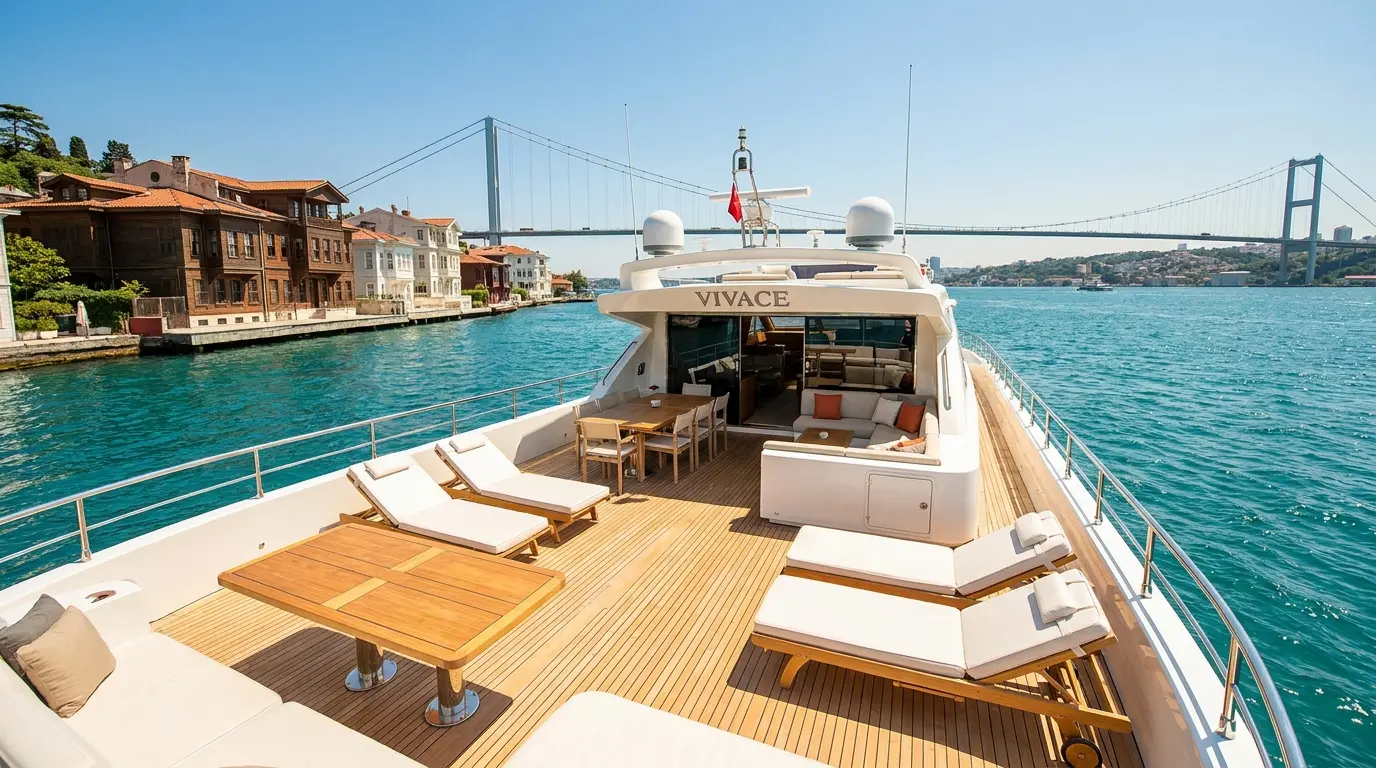
Price is not set by how a boat looks on Instagram. It is set by length and hull type, engine power, how many crew are on board, fuel burn per hour, season, day of the week, departure slot and what is bundled in. Take a listing like the luxury 16-metre custom-built motoryacht for charter on the Bosphorus, listed on Turlago: a vessel in this class is almost always chartered per boat rather than per seat, and fuel is frequently quoted separately. Know the line items before you sign, and nothing surprises you later.
What follows is not a price list. It is a breakdown of what creates the price, which model gives your group the best value, and where people waste money without realising it. We look at families, couples, friend groups and corporate teams separately, because the right boat for one is the wrong boat for another.
Four pricing models — and which one is yours
Bosphorus boat rental is sold as four distinct products, and they are not interchangeable. Identifying your category before you ask for quotes will save you a surprising amount of budget.
- Hourly private charter: the whole boat is reserved for your group, usually with a two-hour minimum. You choose the departure time and the route. The per-person maths looks expensive for a small group, but you get the vessel to yourselves, your own playlist and your own pace.
- Half-day charter (3–4 hours): the sweet spot for most visitors. You clear the city centre, reach the second bridge line and add a swim stop without exhausting anyone. Families and small friend groups get the best value here.
- Full-day charter (6–8 hours): programmes that push toward the Black Sea entrance, with lunch on board and two separate swimming stops. Because you are effectively living on the boat for a day, shade, bathroom count and catering quality become critical rather than optional.
- Per-seat group cruises: ticketed departures on 40–80 passenger vessels with a fixed route and often a guide. Lowest entry price, lowest flexibility.
The decision point is simple arithmetic. Once your group passes roughly eight to twelve people, a private charter usually becomes competitive on a per-person basis, because the boat fee is fixed and the divisor grows. Conversely, for a couple, an hourly private charter looks costly on paper — but spending two hours on a packed sightseeing boat you cannot control is a different kind of expensive.
When hourly charter makes sense
Hourly hire suits last-minute planners, short-stay visitors, business guests squeezing a cruise between meetings, and anyone who only wants to see one specific stretch of shoreline. Two hours comfortably covers the Ortaköy–Maiden's Tower–Bebek line. Four hours adds the Rumeli Hisarı stretch and one swim stop. One detail worth checking: some operators charge for every started hour and begin counting from your scheduled departure, even if the boat leaves late. Ask in writing whether the clock starts at departure or at boarding.
Why per-seat cruises are not automatically cheaper
Advertised per-seat fares often cover transport only. Drinks, photography, guided commentary and intermediate stops are add-ons. On a private charter most of those items are either included or entirely under your control. Without a scope column in your comparison, the cheap-looking option quietly becomes the expensive one.
What is inside the quote — and what quietly is not
There is no industry-wide standard for what a Bosphorus charter quote includes, so two similar-looking offers can differ substantially. Print both lists and tick off your quote before you commit.
Usually included
- Licensed captain and deck crew (a licensed captain is non-negotiable, not an upgrade)
- Use of the vessel: deck, saloon and audio system
- Safety equipment, life jackets and first-aid kit
- Standard cleaning and boat preparation
- Basic refreshments such as ice, water and glassware at most operators
Frequently treated as extras
- Fuel: On larger motoryachts this is often a separate line item. Hourly consumption depends on route length, hull weight and engine power. Check whether your quote says fuel included or excluded.
- Marina and pier fees: These vary by departure point and some operators add them afterwards.
- Food and drink: The single biggest budget variable. Is catering packaged, can you bring your own, and is kitchen use chargeable?
- Alcohol service: Licensing and operator policy vary; some boats restrict it. Ask separately whether you may bring your own.
- Water toys: Paddleboards, kayaks and jet skis are almost always extra.
- Ground transfers: Hotel-to-marina transport is rarely included.
- Gratuity and VAT: Always confirm VAT on corporate contracts. Crew gratuity is customary and expected.
Copying this list into your enquiry email and asking "which of these are included?" prevents most disputes later. Experienced operators answer it without hesitation; evasive answers are themselves a warning sign.
Choose by group type, not by photographs
The same boat does not suit everyone. A 16-metre custom-built motoryacht carries ten to twelve people comfortably but may be oversized for a family of six, and too small for a corporate group of forty, who would need two vessels or a larger gulet. Here is how the profiles differ in practice.
Families: shade, bathrooms and a short route
For families with children, the three things that matter most are, in order: shaded deck area, number of bathrooms, and a short programme. Sitting in direct midsummer sun turns a boat trip into a chore surprisingly fast, which is why semi-enclosed or canopied decks are worth paying for. Bathrooms get overlooked: in a group of eight, a single toilet becomes a bottleneck within the first hour.
Our recommended format for families is a weekday half-day charter between 10:00 and 14:00. Morning water is calmer, you are back before the heat peaks, and early slots are usually the most affordable part of the day. Adding a short swim stop at Bebek or Tarabya turns the trip from a sightseeing ride into something children actually remember.
Request child-sized life jackets in advance and tell the operator the ages and number of children. That single message also tells the crew how to plan the boarding and the swim stop.
Couples: small boat, few people, real privacy
The most common mistake couples make is choosing a crowded per-seat cruise to save money. The result is ninety minutes where you do not control the music, cannot ask the captain to pause, and are never actually alone. On the Bosphorus, privacy is the thing you are buying.
The most efficient choice for two people is usually a two- to three-hour private charter on a smaller, well-kept boat. Keep the route tight — Ortaköy, Bebek, Kandilli with one stop — and two hours feels generous. A mid-afternoon 15:00–18:00 slot gives calmer water, softer light and better photographs than the peak-demand evening departure.
If you are considering a packaged "celebration" add-on, remember that flowers, cake and decoration often cost more than they appear to in the brochure. Arranging those elements yourself is frequently cheaper and more personal.
Friend groups: sound system, deck layout and shared cost
Groups of six to fourteen are the segment that can push the per-person cost down hardest. Divide a fixed boat fee across a larger group and the number can fall to roughly a third of what a couple pays each. Three things decide whether the day works:
- Sound system and speaker placement: Speaker quality on deck shapes the experience far more than hull length does. Ask whether you can connect your own device.
- Deck layout: A large sunbathing area or a seating-heavy configuration? A high-energy group wants sun pads and open space; a quieter group wants comfortable seating.
- Cooler capacity: If you are bringing your own drinks, ask how large the cooler is and whether ice is provided.
A four- to five-hour programme typically runs as two swim stops, a solid playlist and a late-afternoon return. If the group is splitting the bill, agree upfront which items are fixed (the boat) and which are variable (fuel, food, drinks) so the reckoning at the dock is uneventful.
Corporate groups: invoicing, capacity and schedule discipline
For company events the priority order changes. Price is no longer the only deciding factor; invoicing, VAT, date blocking, guaranteed capacity and schedule discipline move to the front. For teams of twenty to forty, chartering two boats that sail the same route side by side is often both more flexible and, in some cases, cheaper than one very large vessel.
Clauses worth adding to a corporate contract:
- Departure and return times confirmed to the minute
- Invoicing details and applicable VAT rate
- Guaranteed capacity and the rule for last-minute extra attendees
- Permission for branded signage, banners or presentation equipment
- Microphone and PA system availability
- Catering menu with allergen information
- Alternative-date right in the event of bad weather
The most common operational failure on corporate charters is serving lunch while the boat is moving. Serving at anchor is better for comfort and much better for safety. Build that into the schedule from the start.
How to build a realistic 2026 budget
Instead of hunting for a single number, use this formula:
Total cost = (hourly boat rate × hours) + fuel + crew gratuity + catering + extras + transfers + VAT
Fuel is the most volatile item in that equation because it scales directly with route, speed and vessel weight. Reaching the Black Sea entrance burns noticeably more than a short Ortaköy–Beşiktaş loop. That is why "which route does this price assume?" is the single most important question you can ask when comparing quotes.
Season calendar: what each month changes
- Early May to mid-June: the most comfortable window on the Bosphorus. Calmer water, mild air, prices not yet at peak. Early bookers get a real advantage.
- July and August: high season. Demand peaks and available boats disappear. Leaving a weekend booking to two or three days before departure means paying a premium or finding nothing.
- September: sea still warm, air softer, crowds thinner. For anyone planning a swim stop, this is the most rewarding month of the year.
- October: evenings cool down but daytime cruises remain enjoyable, and rates drop clearly compared with midsummer.
- Public holidays: the busiest and most expensive dates of the year. Book at least a month ahead — not just for price, but to find any boat at all.
Day of week and departure slot
Weekend rates sit noticeably above weekday rates, and Thursday or Friday often still qualifies for weekday pricing at many operators. Within the day, morning departures are generally the cheapest and near-sunset departures the most expensive. An honest note here: sunset cruises are priced at a premium largely because they photograph well and get shared endlessly. Running the identical route at 15:00 costs materially less while giving up very little of the experience.
Chartering a 16-metre custom-built motoryacht: a verification checklist
Vessels in this class are usually chartered per boat under a bespoke agreement, which means more flexibility and more responsibility on your side. Confirm the following before you pay a deposit.
Safety and technical checks
- Captain's licence and the vessel's registered home port
- Capacity certificate — ask separately for comfortable cruising capacity and legal maximum
- Number of life jackets, plus availability of children's sizes
- Fire extinguishers, first-aid kit and life raft status
- Canopy or shade coverage and sun cushions
- Number of bathrooms and whether all are working
- Cooler volume and permission to use the galley
- Sound system, Bluetooth connectivity and external input
- Swim ladder or boarding platform for entering the water
What the agreement should contain
- Exact departure and return times
- Route described in outline (Ortaköy, Bebek, Rumeli Hisarı and so on)
- Whether fuel is included, and the estimated fuel cost if not
- Maximum number of guests and capacity limit
- Itemised list of included and excluded services
- Payment schedule and deposit terms
- Weather, cancellation and refund policy
- Whether crew gratuity is expected
Cancellation, weather and route changes
Sea conditions on the Bosphorus rarely cancel a cruise outright, but strong wind can shorten the route for smaller boats. Good operators offer an alternative date or a partial refund. "The captain's decision is final" is a standard clause, but what happens if the trip is cancelled should be written down separately. If you are booking more than a day ahead, those two minutes spent reading the weather clause are the best two minutes of your planning.
What two, four and six hours actually reach
Choosing a duration is really choosing a route. This framework keeps your expectations honest.
- 2 hours: Ortaköy, around the Maiden's Tower, Beşiktaş, in front of Dolmabahçe and the entrance to Bebek bay. Continuous cruising, no stops. Good for a fast look at the city shoreline.
- 3–4 hours: all of the above plus Kandilli, Rumeli Hisarı and Anadolu Hisarı, with one short swim stop. The most requested format by a wide margin.
- 5–6 hours: Beylerbeyi, Çengelköy, Tarabya and Sarıyer, two separate swim stops and usually lunch on board. A full-day charter of seven to eight hours extends to the Black Sea entrance and typically requires sailing back against the northern wind.
One practical reality: because of current and commercial shipping traffic, long routes on the Bosphorus take longer than they look on a map. Rather than scripting the day minute by minute, tell the captain your three priority stops. The day flows better and is safer.
Food and drink: bring your own or book catering?
This is where most of the budget difference appears. The broad options:
- Bring your own: the cheapest and most flexible route. Confirm in advance whether you may use the galley and the cooler. Mezze and cold dishes spoil fastest, so plan the menu around limited refrigeration.
- Packaged catering: convenient and time-saving, priced per person. If the menu is grill-heavy, ask whether service happens at anchor or while moving. At anchor is both more enjoyable and safer.
- Hybrid: book the main course through catering and bring your own drinks and dessert. This cuts cost substantially without any drop in quality, and many groups end up here.
Alcohol policy varies by operator. Whether you may bring your own, how service works, and whether glassware and ice buckets are provided should all be settled before you book. For corporate events, sending the drinks list and non-alcoholic alternatives ahead of time reads as professional preparation.
Seven ways to raise the experience without raising the budget
- Sail on a weekday: same boat, same route, lower rate.
- Take the 15:00 slot instead of sunset: the light is still excellent, the price is lower and the boat is less contested.
- Split a per-boat charter: larger groups drive the per-person figure down fast; a small group that invites friends changes the maths entirely.
- Shorten the route, not the time: a four-hour cruise on a shorter route usually beats a rushed two-hour dash. The best stretches of the Bosphorus start within the first half hour.
- Target the shoulder season: early June and September offer the best intersection of price and comfort.
- Arrange your own transfers: if a marina transfer is bundled into the quote, compare it with booking separately.
- Book early: in high season this buys both price and availability. Choose an early booking with a flexible cancellation policy whenever possible.
Twelve questions to ask before you book
- Is the price per person or per boat?
- Is fuel included? If not, what is the estimated cost?
- What are the exact departure and return times?
- How many guests can the boat carry, and what is the comfortable cruising capacity?
- How many bathrooms are there?
- How much shaded and sunbathing space is available?
- Can I play my own music through the sound system?
- Is food and drink included, and may we bring our own?
- Is there a swim stop, and where?
- What is the cancellation and refund policy in bad weather?
- How do deposits and payment schedules work?
- Do you issue an invoice, and what is the VAT rate?
Mistakes that cost people money
- Comparing headline prices only: without a scope comparison, the cheapest-looking option often ends up the most expensive.
- Pushing past capacity: exceeding the legal guest limit is both a regulatory problem and an instant comfort killer.
- Deciding from photographs: marketing images are sometimes years out of date. Recent guest reviews tell you more about the boat's real condition.
- Not asking about fuel: it is the line item that surprises people most.
- Booking at the last minute: in high season, finding a boat at all becomes a bigger problem than the price.
- Ignoring the weather plan: taking a small boat on a long route in a windy forecast ruins the day.
- Over-scheduling: the best moments on the Bosphorus tend to happen in the unplanned gaps.
Frequently asked questions
Which day of the week is cheapest for a Bosphorus charter?
Monday and Tuesday are usually the quietest and cheapest days for weekday pricing. Thursday and Friday can still qualify for weekday rates, but only if you book early enough.
How large does a group need to be before a private charter makes sense?
Above roughly eight people, the per-person cost of a private charter starts to approach group-tour levels. Beyond twelve, it is usually the better deal — provided the boat you choose has the capacity to match.
Can we bring our own food?
It depends on the operator. Many allow it, some charge a service or cleaning fee. A single email before booking settles it.
Is a Bosphorus cruise safe with children?
Yes, on a boat with a licensed captain and sufficient life jackets. For younger children, choose morning departures, calmer water and shorter routes, and never leave them unattended on deck.
Do Bosphorus cruises run in winter?
Yes, usually on enclosed-saloon boats over shorter routes, and at considerably lower prices than midsummer. Wind-related cancellations are more likely, so prioritise a flexible cancellation policy.
How far ahead should I book?
Three to four weeks minimum for July, August and public holidays; about a week for May, June, September and October; two to three days in winter. Corporate groups should block dates considerably earlier.
The bottom line: ask the right questions and the price follows
Bosphorus cruise prices in 2026 will not collapse into a single number, because four different products are being sold under one familiar name. Protecting your budget is not about haggling; it is about clarity. Which model fits your group, what is included, is fuel in the quote, and how many guests can the boat legally carry. Groups that get straight answers to those four questions routinely charter one class of boat higher for the same money.
Short shaded programmes for families, small private boats for couples, shared costs and a serious sound system for friend groups, an invoiceable and tightly scheduled day for corporate teams — all of it is possible on the same stretch of water with different planning. When you are ready to compare options, view the luxury 16-metre custom-built motoryacht for charter on the Bosphorus on Turlago and work out the per-person cost for your own group size. To compare routes and durations side by side, view the 16-metre luxury custom motoryacht Bosphorus charter tour on Turlago.