Bucharest Transylvania Castles Tour: Best Time for the 4-Day Bus
Most people planning the Bucharest Transylvania castles tour start with the calendar and ask which month looks nicest. On this particular four-day bus loop from Istanbul, that is the wrong first question. The trip leaves Türkiye in the evening, crosses the Bulgarian border overnight, spends two nights in Bucharest, dedicates one full day to Sinaia, Bran and Brașov, and closes with a stop in Veliko Tarnovo before the drive home. Because the structure is fixed, the date you pick changes almost nothing about the route — but it changes daylight, border queues, castle crowds and how tired you feel on the last night. This guide walks through the real programme month by month. You can also view the Bucharest Transylvania Castles Tour on Turlago while you read.
One clarification before we start: despite the name, this is a three-country loop. You travel through Turkish Thrace, northern Bulgaria and the Romanian regions of Wallachia and Transylvania in a single arc. Weather, road conditions and visitor numbers do not move in sync across those areas, so each section below treats them separately rather than offering one blanket verdict.
Why timing means something different on a four-day bus loop
If you fly into Bucharest and stay three nights, choosing dates is mostly about airfare and hotel availability. Here, the date shapes the experience itself. The journey begins with an overnight coach ride: departures from Istanbul run between 19:30 and 22:00, reach the Kapıkule border crossing near Edirne, and continue through Bulgaria to arrive in Bucharest in the early morning. You sleep on the road and start sightseeing the same day you arrive.
Three practical consequences follow. First, border processing time at Kapıkule can vary significantly by season; summer and public holiday returns are the usual culprits for longer waits. Second, the entire third day is committed to Transilvania, so the number of daylight hours you get directly determines how much of Peles Castle, Bran village and Brașov you can genuinely absorb. Third, the final day combines a stop in Veliko Tarnovo with a 640 km run from Bucharest back to Istanbul, with an estimated Istanbul entry around 01:00 depending on customs. That is manageable in June and genuinely demanding in January.
So treat this as an operational decision rather than an aesthetic one. The sections below break it down by month, by weekday and by budget.
Month by month: what each window actually delivers
Everything below assumes the published programme stays the same: two nights in Bucharest, one full Transylvania day, one return day via Veliko Tarnovo. What changes is the comfort level inside that frame.
April and May: the most balanced light-to-crowd ratio
Spring is arguably the sweet spot for this specific itinerary. Days are long enough that moving from Peles Castle and Monastery in Sinaia to Bran Castle and then into Brașov's old town does not feel rushed. The Carpathian foothills are green, temperatures are usually comfortable for walking, and strolling from Piața Sfatului toward the Black Church does not turn into a heat management exercise.
The trade-off is variability. Early April can be unsettled, and stepping off an overnight coach in Bucharest in the morning can feel chilly. Day two's panoramic city tour happens largely outdoors, so layering is not optional. Spring also overlaps with European school breaks and long weekends, which can push group numbers up at the castles.
June to August: maximum daylight, maximum company
Summer looks like the easy choice and is really the one that rewards planning most. The advantage is obvious: with daylight lasting until close to 21:00, the third day never feels compressed. You can walk Brașov's medieval core at an unhurried pace and still see the city walls, the History Museum and the Black Church in comfortable conditions. Bucharest's wide boulevards, the Triumphal Arch and Republican Square are far more photogenic in summer light.
The downside comes in two parts: heat and volume. In Bucharest, the free time on day two can be draining if you stay outdoors through the afternoon, and Peles and Bran see their heaviest group traffic in July and August. The return leg through Kapıkule can also stretch. One adjustment fixes most of this: carry water and a hat for the morning blocks, and shape the afternoon free time around shade and short breaks rather than a long walking loop.
September and October: my first choice for this itinerary
What a four-day bus loop really needs is balance — not scorching, not dark by late afternoon, not peak season. September and early October deliver exactly that. Bucharest still has long, pleasant days, cooler evenings make the overnight coach leg easier to recover from, and the forested slopes around Sinaia turn gold while Peles sits in the middle of it. For anyone carrying a camera, this is the most productive window of the year.
One caveat: by late October sunset arrives noticeably earlier. Since day three packs Sinaia, Bran and Brașov into a single arc, the light will naturally fade during the final stops. That is not a flaw in the tour, just a reason to set expectations. If photographing Brașov's old town matters to you, spend the free time around Piața Sfatului and shoot details rather than wide panoramas.
November to March: lower prices, higher concentration required
Winter does not make this tour impossible, it makes it a different tour. Short days compress the Transylvania section considerably: panoramic stops get shorter, walking segments speed up. On the other hand, the two-night Bucharest base becomes an asset, because a well-located hotel lets you use short daylight hours efficiently.
The real risk sits on the transport side. Snow and ice on the Bulgarian transit route can add time, and border processing can slow further. The published arrival estimate of around 01:00 in Istanbul already depends on customs clearance, so in winter avoid booking anything early the following morning. In exchange, snow-dusted castles, thinner crowds and a genuinely quiet experience are real rewards for the travellers who want them.
Weekday choice: the four Istanbul pickup points and your first night
On this programme the day you depart matters as much as the month, because day one belongs entirely to Istanbul traffic. The published meeting points are:
- 19:30 — Kadıköy Wedding Hall (earliest and simplest option from the Asian side)
- 20:30 — Mecidiyeköy, in front of Oto Ekspertiz (convenient for the city centre)
- 21:30 — İncirli, in front of Ömür Plaza (European side, roughly toward the Edirne road)
- 22:00 — Beylikdüzü, in front of Marmara Park (closest to the motorway, final boarding)
The practical equation is simple. On the eve of a weekend, especially Friday, Istanbul's main arteries can put the 20:30 and 21:30 pickups at risk. If you are coming from the Asian side, the 19:30 Kadıköy departure gives you both an earlier start and less uncertainty. If you live on the European side, the 22:00 Beylikdüzü point is the safest bet because the coach is already heading out toward the motorway.
Midweek departures have a quieter advantage too. A tour starting on a Monday or Tuesday usually means lighter queues at Kapıkule and thinner crowds at the castles, and your return day will not land on a weekend, which makes easing back into normal life easier.
The four days, read through a seasonal lens
Below is the actual flow of the programme, with a note on how each day behaves in different seasons. Reading this alongside your calendar will be more useful than any general advice.
Day 1 — Istanbul to Kapıkule: the least predictable part of the trip
You depart from the chosen meeting point in the evening, travel via Edirne to the Kapıkule border gate, complete passport and customs formalities, and continue through Bulgaria to reach Bucharest in the early hours. This night is the most variable element of the whole tour. If the border queue stretches, coach time increases, and that directly affects your energy on day two.
Seasonally, the pattern is clear: summer and holiday periods raise the chance of border delays, while winter weather can add time on the road. A small sleep kit — travel pillow, earplugs, a light scarf — is the cheapest upgrade to the entire four days. Limited water is served on board, but refilling your own bottle is still a good habit.
Day 2 — Bucharest: panoramic tour, free time and two optional extras
After the morning arrival you head into the centre of the city known as Little Paris. Built along the Dâmbovița, a tributary of the Danube, Bucharest has around 2.5 million residents and pairs historic buildings with broad boulevards and open squares. The panoramic tour covers Republican Square, the National Library of Romania, the Triumphal Arch, the University of Bucharest building, the National Theatre, the Palace of Parliament, the Royal Palace, Cretulescu Church and St. Stavropoleos Church. Free time follows, then a transfer to the hotel.
Season affects this day in two ways: how long you comfortably spend on foot, and which optional tour makes sense. In hot months, carry water for the outdoor sections of the panoramic loop; in cooler months the same pace feels effortless. Optional extras are the Village Museum tour at 20 EUR or the Romanian Night at 60 EUR. If your day turns rainy, prioritising the evening option over the open-air museum is the more sensible swap.
Day 3 — Sinaia, Bran and Brașov: the day the tour is built around
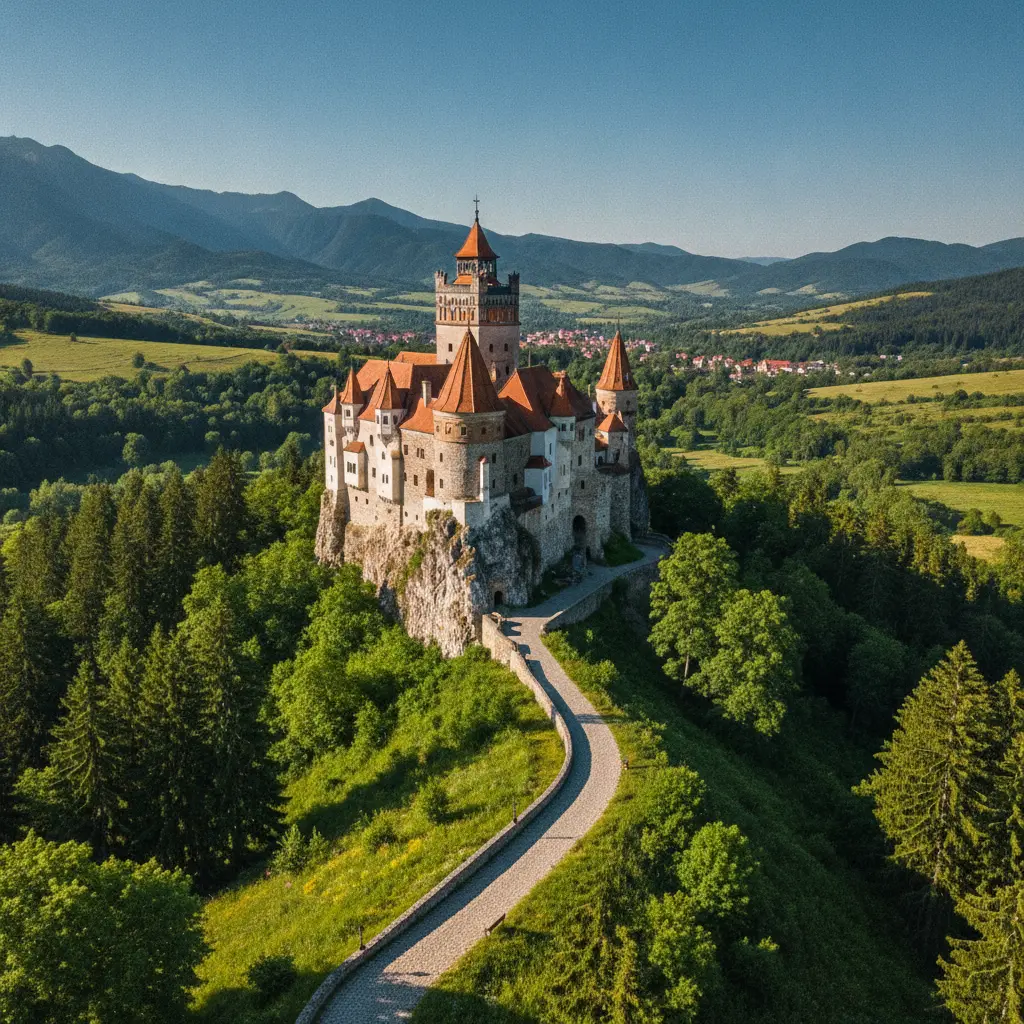
After breakfast and free time, guests can join the optional Transylvania–Dracula's Castle tour at 55 EUR, with castle entrance fees excluded. This is the heart of the programme: the route heads into Transylvania to see well-preserved medieval towns. In Sinaia you visit Peles Castle and Monastery, one of Europe's finest castle complexes; then Bran village for Dracula's Castle, followed by Brașov. In a city that still keeps its medieval appearance, you walk the old streets and see Piața Sfatului, the Brașov History Museum, the Black Church and the city walls panoramically. The group returns to Bucharest for the second overnight.
The seasonal read here is short but decisive. When three stops share one day, daylight is your most valuable resource. Spring and autumn offer the best balance; summer gives you room to breathe; winter shortens the final stops. If it rains, Brașov's cobbles get slippery — sturdy closed shoes are not a luxury on this tour, they are equipment.
Day 4 — Veliko Tarnovo and the long way home
After breakfast the rooms are vacated and the coach heads toward Istanbul. On the way you make a panoramic stop and get free time in Veliko Tarnovo, Bulgaria's former capital, built across four hills above the Yantra river valley. The group then crosses at Kapıkule and continues to Istanbul. The Bucharest–Istanbul route is 640 km, with an estimated Istanbul entry around 01:00 depending on customs processing.
Season shapes this day almost entirely through light and meal rhythm. Breakfast at the hotel is included as an open buffet; lunch is taken during free time in Veliko Tarnovo and dinner at a motorway facility on the Edirne–Istanbul road. In winter, this final day can effectively happen in darkness, so anyone hoping to photograph Veliko Tarnovo should aim for spring through autumn. And a 01:00 arrival is worth factoring into the next day's plans.
Castle-day timing: light, queues and footwear at Peles and Bran
Peles Castle and Monastery, Dracula's Castle in Bran and Brașov's medieval centre are three different physical experiences. Peles is about walking and views; Bran sits on a hill and involves a short but inclined approach; Brașov is a mostly level historic core built around a square and a church.
Read your season against that: if crowds bother you, aim for late spring or early autumn; if you want a long, unhurried day, choose summer; if you want snow-covered towers and a quieter atmosphere, choose winter. Summed up in one line, the most efficient window for day three is September to October, with April and May second. Light, crowd levels and walking comfort all land in a reasonable range at the same time.
For photographers, one extra note: harsh midday light blows out Bran's white walls. Shooting earlier in Sinaia and moving into Brașov's shaded streets as the day progresses gives you far more balanced results — and since the programme starts early, this happens naturally.
Budget by season: what 7,927 TRY covers and what it does not
The listed price is 7,927 TRY, with capacity announced at 100 guests. Prices can shift by departure date, so treat that figure as a reference point. The inclusions and exclusions matter more, because that is where budget surprises hide.
Included:
- Transportation in luxury coaches
- Local professional Turkish-speaking guiding services
- Two nights in 3-star or 4-star hotels in Bucharest with breakfast
- Panoramic city tours and transfers specified in the programme
- City taxes, customs taxes, motorway, parking and checkpoint costs
- Limited water service on board
Not included:
- Museum and site entrance fees
- Optional tours: Village Museum 20 EUR, Romanian Night 60 EUR, Transylvania–Dracula's Castle 55 EUR (castle entries extra)
- Lunches and dinners
- Hotel extras, driver and guide tips, personal spending
- Schengen or Romanian visa (green passport holders are exempt)
- Turkish overseas exit fee and mandatory travel health insurance
Season affects your budget in two places: meals and optional tours. Winter raises spending on hot drinks and indoor breaks; summer shifts it toward water and light meals. Because the optional tours are priced in euros, exchange rate movement can affect your total — once your date is fixed, budget those three items as a separate line.
Packing for a night bus across seasons
On a four-day trip, baggage discipline matters more than on a longer holiday. You spend two nights in a hotel and one night on the road, which means you will not reach most of your suitcase for two days. Keep a separate overnight bag.
- Spring and autumn: layers, a light rain shell, closed shoes with grip, a thin scarf or cardigan for the coach.
- Summer: hat, sunglasses, high-factor sunscreen, refillable bottle, light cotton and linen, one long-sleeved layer for air conditioning.
- Winter: thermal base layer, waterproof and non-slip boots, gloves, beanie, thick socks, a spare pair of shoes for wet days.
- Every season: passport, insurance policy, charger and plug adapter (Romania uses 230V sockets), small amounts of Romanian leu and Bulgarian lev in cash, personal medication.
One commonly missed detail: because both nights in Bucharest are at the same hotel, your main luggage stays put, and on day three you only carry a day bag to Transylvania. Layers, water and a snack for castle day; everything else can stay behind.
Who benefits most from which window
- Photographers: September to October. Carpathian colour and soft light make Peles and Bran far more rewarding.
- Retirees and slower-paced travellers: April to May and September. Fewer crowds, comfortable walking weather.
- Families: June to August. Long days keep the schedule loose and make breaks easier with children.
- First-time overseas travellers: a midweek departure in spring or autumn. Both the border crossing and city crowds are easier to manage.
- Budget-focused travellers: November to March, with the caveat that winter compresses the programme.
Five timing mistakes to avoid
- Ignoring the return night. An estimated 01:00 arrival in Istanbul makes next-morning commitments risky.
- Leaving optional tours out of the budget. The Transylvania–Dracula's Castle tour at 55 EUR is the backbone of the trip, and entrance fees are separate.
- Underestimating weekend traffic. On Friday evenings, the 20:30 and 21:30 pickups carry real risk; an earlier point makes life easier.
- Expecting the same pace in winter. Short daylight compresses the three stops on day three; plan expectations accordingly.
- Leaving visa and insurance to the final week. Romanian visa and mandatory travel health insurance are not included; green passport holders are exempt from the visa.
The bottom line: your date quietly decides the third day
The Bucharest Transylvania castles tour is a tight loop through three countries in four days. Its strength is the fixed structure: two nights in Bucharest, one full Transylvania day, a Veliko Tarnovo stop on the way home. The quality of everything inside that frame is largely down to the dates you choose. In short: September to October for the best light-to-crowd balance, summer for the longest and most relaxed days, winter for quiet and snow-dusted castles, and midweek departures as an advantage in any season.
To lock in your date and compare current departures, pickup points and pricing, view the Bucharest Transylvania Castles Tour on Turlago, where the full programme, inclusions and meeting points are laid out on one page. On a four-day coach loop, a well-chosen date works like the lightest item in your suitcase: it takes up no room and carries the whole journey.