Selanik Meteora Kavala Tour: Best Month to Go
Most people pick a tour date by looking at the price. On this route, that is the wrong order. The Selanik, Meteora and Kavala trip is a fixed four-day loop from Istanbul, and roughly half of it happens outdoors on foot: a walking city tour in Thessaloniki, an optional full day among the clifftop monasteries of Kalambaka, and a panoramic walk through Kavala's old town. The itinerary does not change between March and October. What changes is how much of it you actually enjoy.
This is a timing guide, not an itinerary summary. If you want the route itself, you can view the Selanik, Meteora and Kavala tour on Turlago. If you want to know which month to book, keep reading. The short version: mid-May to early June and mid-September to mid-October are the two windows where this route performs at its best.
Four things that actually decide your dates
This trip does not sit inside a single climate. It moves through a coastal city, a mountain-plain monastery complex and a second coastal city, with a long overnight coach leg at each end. Four variables matter more than anything else:
- Overnight coach comfort. Pickups run from 21:00 in Kadıköy through 23:15 in Silivri, and most of the driving happens while you are supposed to be asleep. Interior temperature and air quality on the bus are seasonal issues.
- Thessaloniki is a walking city. Day two leans heavily on foot: the Kordon waterfront, Aristotales Square, the White Tower area. Both extreme heat and steady rain cut into that.
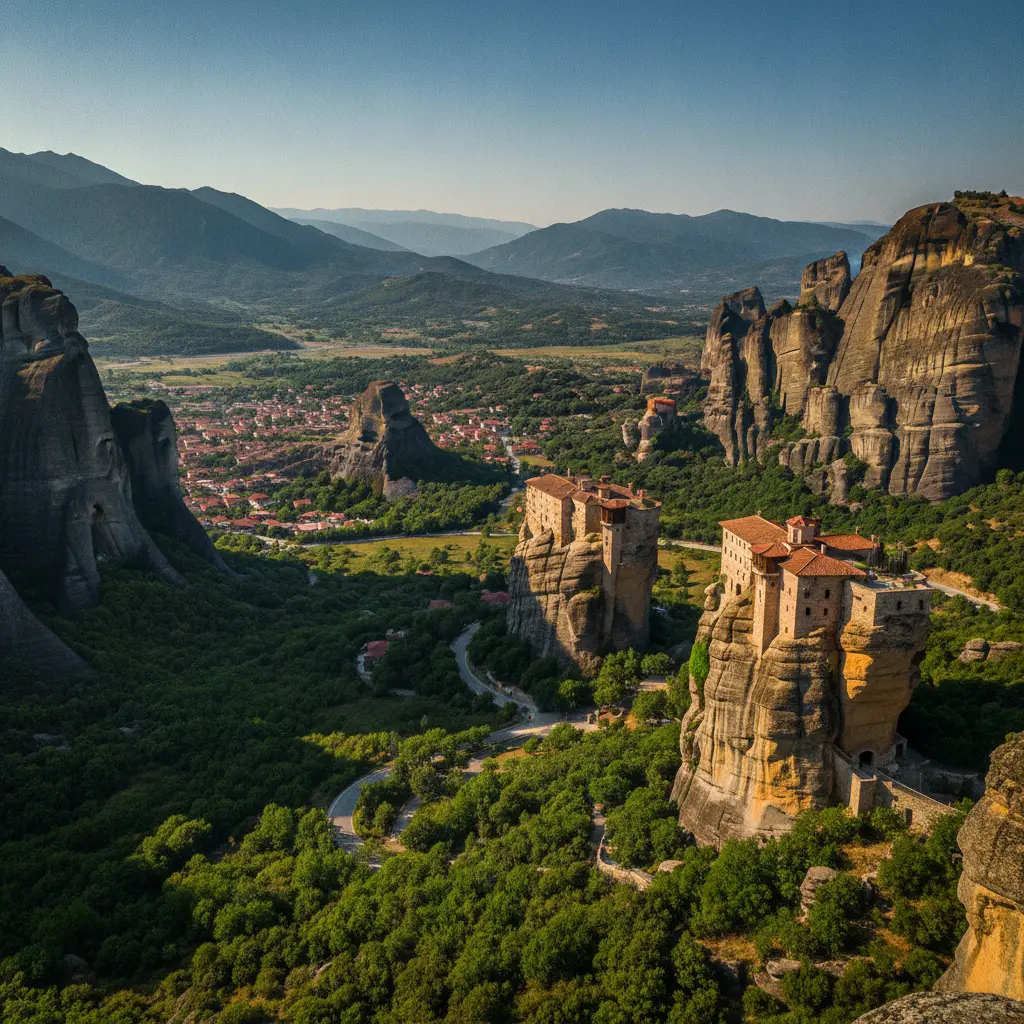
- Meteora sits high up. The monasteries near Kalambaka are built on rock pillars roughly 200 metres above the plain. Wind, cloud and temperature behave differently up there than in the valley.
- Kavala's tour is outdoors. Day four is a walking panorama past the aqueduct, the port, the fortress and the Panagia district. It is brisk and open-air.
You are not hunting for one perfect month. You are looking for the month that keeps all four of these tolerable at once.
Month by month on the Selanik–Meteora–Kavala route
April and May: the smartest opening of the season
Early April is still a gamble. Rain is likely and evenings are cool. From late April, though, the route changes character. Thessaloniki daylight settles into a band where walking is genuinely pleasant and sitting outside on the Kordon does not feel like a punishment. In Meteora the rock faces catch sun all day without the punishing heat of high summer, which makes the monastery stairways far easier.
May is arguably the strongest single month for this itinerary. The landscape around Kalambaka is at its greenest, Thessaloniki's outdoor cafés are fully open, and the domestic Greek holiday wave has not arrived yet. You are not queuing for a photo in front of the White Tower.
May caveat: breakfast on day two is picked up en route as an extra, which means an early start. Bring a light layer for cool mornings.
June, July and August: the route works, but you pay for it
Thessaloniki gets genuinely hot in summer. Midday walks along the Kordon shift from pleasure to chore. The good news is that the panoramic city tour on day two runs in the morning, so the sightseeing core is handled before the worst heat. The catch is that free time then lands in the afternoon.
Meteora has a partial advantage: elevation means mornings can be cooler than the plain below. Even so, the optional full-day excursion on day three (45 EUR) is more exhausting in summer. Water and a hat are not optional.
The real cost is crowding. July and August overlap with Greece's own holiday season, so restaurant waits in Thessaloniki and Kavala stretch out. With a stated capacity of 100 passengers, summer departures also tend to fill faster.
If you are going in summer: skipping the day-three extra and staying in Thessaloniki is a completely legitimate choice. Breakfast at the hotel, shade during the hottest hours, Kordon in the late afternoon. That is a smarter summer plan than forcing a full day of walking.
September and October: the second golden window
From mid-September the heat breaks while the cities are still in summer mode. Walking tours in Thessaloniki become comfortable again, and lingering over food near Kavala's port during free time turns back into a pleasure rather than a endurance test.
October brings the best light of the season. The rock formations at Meteora pick up a far more defined texture under a lower sun angle. If photography matters to you, early October may be the most rewarding version of these four days.
October caveat: evenings cool down noticeably, and the optional Greek taverna evening with bouzouki music on day three (50 EUR) may be largely outdoors. Pack a warm outer layer.
November to March: not the right season for this route
Check the live calendar for winter departures, but I would not recommend this itinerary in the cold months. The reasons are practical. The first day already involves a long overnight coach leg; add cold and rain and the recovery cost goes up sharply. Access roads to the clifftop monasteries can become harder in wind and ice. Kavala's aqueduct and fortress walk is open-air and gets shorter in winter daylight.
Shorter days also mean weaker light for the panoramic tours. If the whole point of these four days for you is walking and photographing, daylight is not a detail — it is the product.
Day by day: how the season changes each leg
Day 1 — Istanbul to the İpsala border, overnight
Pickups run from 21:00 at Kadıköy through 21:30 Mecidiyeköy, 22:00 İncirli, 22:30 Beylikdüzü and 23:15 Silivri. The route follows Malkara and Keşan to the İpsala crossing, where passport and customs formalities are completed before the overnight drive continues.
Season affects two things here: departure timing and time spent at the border. In summer, especially around weekend return traffic and public holidays, queues at the crossing are more likely. In winter the risk shifts from queues to road conditions.
Practical takeaway for day one: a small travel pillow, earplugs and one extra layer. Coach air conditioning runs all night, and people get cold even in August.
Day 2 — Thessaloniki panorama: morning heavy, afternoon free
Arrival in Thessaloniki starts the panoramic city tour. The order runs: Aya Dimitros Church, the largest in Greece; the house where Mustafa Kemal Atatürk was born and lived; then Ayasofya Church, Bey Hamam, Hamza Bey Mosque, the Bedesten, the White Tower, the Döner Tower and the International Fair grounds. Free time covers the Kordon waterfront and Aristotales Square, and before heading to the hotel the group stops at the statue of Alexander the Great.
The timing insight for this day is simple: the dense sightseeing happens in the morning, the walking-heavy free time in the afternoon. In a hot month, shorten the afternoon Kordon walk and move into shade. In a cool month, do the opposite — stretch the afternoon, because this is the best part of the city.
Note that morning breakfast is bought en route as an extra, and lunch and dinner are not included. In Thessaloniki, the smartest window to eat during free time is the lull after the midday rush.
Day 3 — Free day in Thessaloniki and the Meteora decision
The programme leaves this day free in Thessaloniki, with an optional full-day Meteora (Kalambaka) excursion available for 45 EUR. After buffet breakfast at the hotel, the group drives to the monastery complex built on rock pillars about 200 metres above the plain, still active today, and tours the monasteries in detail before free time in Kalambaka town centre and a transfer back to the hotel. In the evening there is an optional Greek taverna night with bouzouki music for 50 EUR.
Your season should shape this decision:
- Spring and autumn: go. These are the most comfortable conditions for climbing to the clifftop monasteries.
- July and August: if you go, use the early start, carry water and wear a hat. Staying in Thessaloniki instead is a real option, not a compromise.
- Wet or windy periods: monastery opening hours and conditions can shift. Confirm with your guide on the day the excursion runs.
One budget note: optional excursions are not included in the tour price and count as out-of-programme activities. Treat 45 + 50 EUR as a separate line item.
Day 4 — Kavala and the return: a daylight-dependent day
After breakfast and check-out, roughly 2.5 hours of driving brings the group to Kavala. The panoramic tour covers the aqueducts, the port, the fortress, Panagia, the lighthouse, and the churches of Aya Nicholas and Teodoro Kimissi. The walking route passes the Kavalalı Mehmet Ali Pasha almshouse and statue, followed by free time for lunch and local shopping. The return follows the Egnetia road past İskeçe, Gümülcine and Dedeağaç panoramically before reaching the İpsala crossing.
This day runs entirely on daylight. In winter months, light is already fading by the time you reach Kavala, and the city tour loses much of its impact. In spring and summer, Kavala's amphitheatre-like hillside layout and harbour area read clearly. Since the drive home runs into the night, avoid scheduling anything critical for the following morning.
Price, crowds and hotels: how the season hits your wallet
The listed starting price on the platform is 8,094 TRY. Included: return transport on luxury coaches, two nights bed and breakfast in Thessaloniki depending on the hotel package selected, the environmental and city tours specified in the programme, professional Turkish-speaking guiding, limited water service on board, and compulsory professional liability insurance.
What is not included matters more for budgeting:
- Turkish overseas exit fee
- Museum and archaeological site entry fees
- Compulsory overseas travel health insurance (20 EUR)
- Local border-crossing service fees (20 EUR)
- Schengen visa fee
- Hotel and city taxes
- Lunch and dinner, plus the en-route breakfast on day one
- Optional excursions and out-of-programme trips
Season affects this indirectly but genuinely. In high season, free-time meals and city spending in Thessaloniki cost more because demand is higher. In shoulder season the same budget buys more room to manoeuvre.
There is also a hotel detail worth knowing: the programme offers accommodation either in Thessaloniki's city centre or outside it. A central hotel is a real advantage if you want to walk down to the Kordon in the evening; an out-of-town hotel means a quieter night. In peak season, central availability can thin out, so settle your preference early.
What to pack, by month
Four days, coach-heavy, two border crossings. The packing list shifts more than you would expect.
April–May and September–October
- Layers: t-shirt, light sweatshirt, packable rain shell
- Comfortable walking shoes for the White Tower area, the Kordon and the Kavala walk
- A thin scarf: useful on the overnight coach and on cool evenings
- Folding umbrella
June–August
- Sunscreen, hat, sunglasses
- Light, breathable fabrics in pale colours
- A spare t-shirt for walking days
- A refillable bottle — on-board water is limited, so carry your own
Constants for any season
- Passport, visa paperwork, printed travel health insurance
- Power bank and charger (Greek sockets match Turkish ones, but coach and hotel charging is limited)
- A small daypack — the main suitcase stays at the hotel during day tours
- A light shawl: some monasteries expect shoulders and knees covered
Three timing mistakes people keep making
- Choosing dates purely on price. The cheapest departure is rarely the best experience on a route where two of four days are outdoor walking. Weather is the real cost driver here.
- Locking in Meteora before you arrive. The optional excursion is excellent, but it is optional. On a wet or brutally hot day, staying in Thessaloniki is a legitimate plan the programme explicitly allows.
- No buffer around the border day. Time spent at İpsala varies. If you have something critical the morning after you return, factor that in.
Frequently asked questions
What is the best month for this tour?
For most travellers, mid-May and mid-September offer the best balance: comfortable walking in Thessaloniki, easy monastery visits at Meteora, and pleasant conditions for the Kavala panorama.
Is summer a bad idea?
Not bad, just different. Thessaloniki afternoons get tough, so flex the free time toward the evening and treat the morning panorama as the main sightseeing block.
How large is the group?
Capacity is listed at 100 passengers, which makes season selection more important than usual. Shoulder-season departures feel considerably more spacious.
How long is it, and how many nights are included?
Four days total, with two nights bed and breakfast in Thessaloniki depending on the hotel package. Day one is spent on the overnight drive and the final day on the return journey.
Do I need a visa?
The Schengen visa fee is not included, so you handle your own visa process separately. The Turkish overseas exit fee, the 20 EUR local border service fee and the 20 EUR compulsory travel health insurance are also separate items.
The takeaway: change your calendar, not the route
Because the itinerary is fixed, this trip is unusually predictable. The stops do not move: Aya Dimitros and Atatürk's house, the White Tower and the Kordon, the clifftop monasteries above Kalambaka, the aqueducts and lighthouse of Kavala. What moves is how comfortably you experience them. So optimise the calendar rather than the destination — mid-May, early June, mid-September and early October are the windows where this route gives you the most.
Once you accept that two of the four days are spent walking outdoors, one is deliberately free, and two nights are in Thessaloniki, the logic of date selection becomes obvious. For current departure dates, hotel packages and availability, check the Selanik, Meteora and Kavala tour details on Turlago and keep these seasonal notes next to you while you compare.
One last reminder: optional excursions (Meteora 45 EUR, Greek taverna 50 EUR), lunches and dinners, museum entries and hotel-city taxes are not part of the tour price. Build them into your budget up front, and you will spend the four days looking at the view instead of at your wallet.