Car Rental Near Istanbul: Northern Forests & Coastal Villages
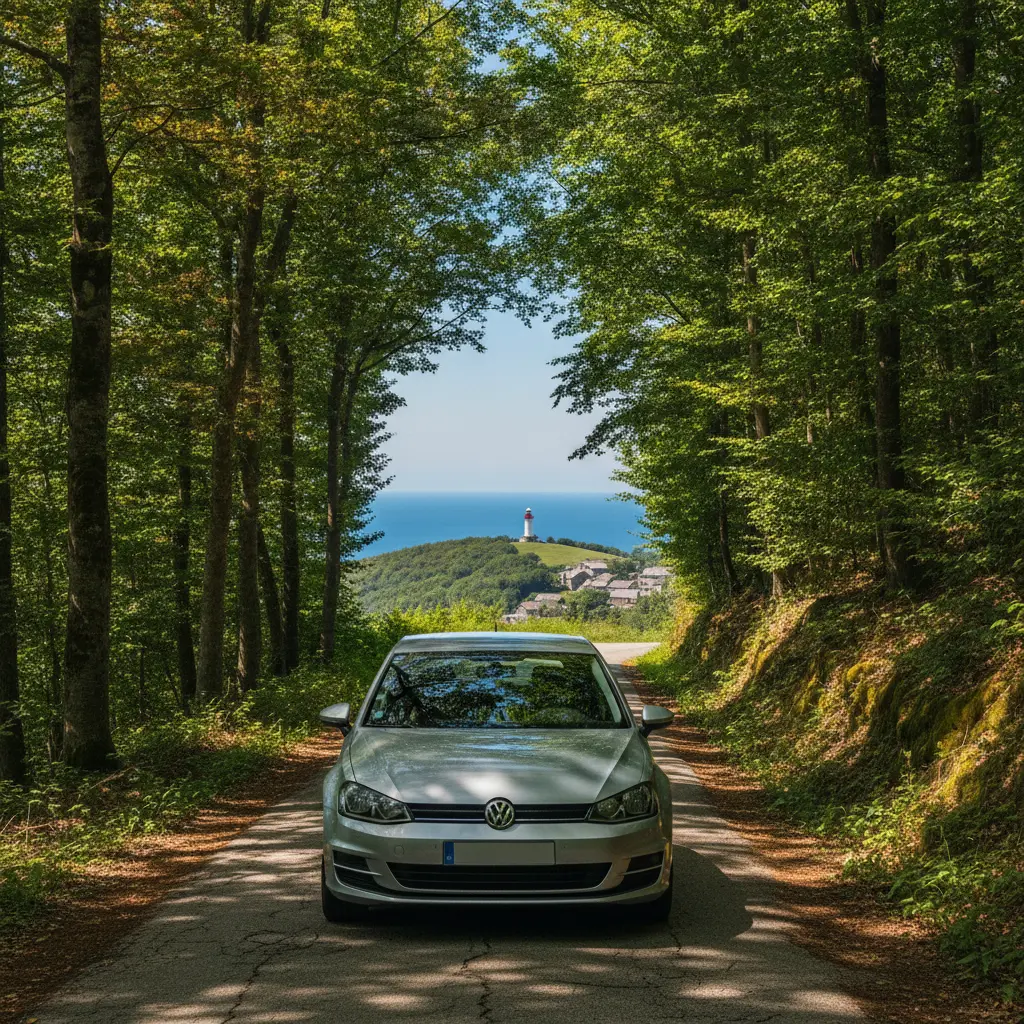
Get off the Şile bus in Ağva and you still have roughly four kilometres of walking before you reach the village centre. Step out of the Kilyos minibus and the two halves of the beach are joined by a coastal road you have to walk. Reaching Rumelifeneri means Sarıyer first, then a second minibus, then patience. Istanbul's northern belt looks like a thin strip on the map, but on public transport it is a sprawling geography where every village turns its back on the next one. That is precisely why a car rental around Istanbul makes sense for the northern forests and coastal villages route: browse Turlago car rental listings and build the day around your own clock instead of a timetable.
What follows is not a scenic essay about where two continents meet. It is a working guide to the northern belt: which roads narrow, where you can actually park near the water, which stretches are tolled, and how the rental budget really adds up once fuel, deposits and one-way fees enter the picture. On this route the expensive part is rarely the car. It is the unplanned detour.
Why the northern belt demands a car: the geography of distance
The north of Istanbul is not one line but three separate wings. To the west, a corridor runs from the Belgrad Forest and Kemerburgaz up through Zekeriyaköy and Uskumruköy to Kilyos and the Ağaçlı dunes. In the middle sits the northern mouth of the Bosphorus: Rumelifeneri, Garipçe, Poyrazköy and Anadolu Kavağı. To the east, a long corridor runs parallel to the Black Sea through Riva, Şile and Ağva. The three wings look like neighbours on a map, but the connecting roads wind, and public transport feeds each wing separately. Moving from one to another almost always means going back into the city first.
A concrete example: Kilyos to Rumelifeneri is short as the crow flies and perfectly reasonable by road. By bus, you generally have to route through Sarıyer, which means doubling back over ground you have already covered. Şile to Ağva is a half-hour drive but a gamble on timetables. This is where a rental car earns its keep. What you buy in the north is not money but stops per day.
There is a second characteristic worth knowing before you book: settlements are sparse and businesses are seasonal. Driving yourself gives you two practical advantages. If a village restaurant is closed, the next village is ten minutes away. And you can stay until the light goes, because the return time is yours to set. On public transport, missing the last bus in a place with almost no accommodation is a genuine problem, not an inconvenience.
Four route skeletons: half day, full day, overnight, long weekend
Your rental budget is driven mostly by how many days you hold the car. The northern route splits naturally into four skeletons, each with a different fuel and parking load.
- Half day (4–5 hours): Either the Belgrad Forest and the Bahçeköy dams, or the Kilyos–Uskumruköy line on its own. You still pay a full daily rate at most companies, but fuel consumption stays minimal. Ask whether a half-day package exists; many operators enforce a one-day minimum.
- Full day (9–11 hours): Belgrad Forest in the morning, lunch around Zekeriyaköy, Kilyos or the Ağaçlı dunes in the afternoon, fish in Rumelifeneri at dusk. This is the most efficient skeleton and comfortably fits within one tank.
- Two days, one night: Western wing and the northern Bosphorus on day one, overnight in Şile or Ağva, eastern wing on day two. Expect to refuel somewhere in the middle of day two.
- Long weekend (3 days): The route can stretch as far as Kıyıköy and Çilingoz. This version carries real risk if your contract has a mileage cap, so read that clause before you sign.
Factor traffic into the skeleton you choose. Leaving the city on Friday evening can be more tiring than Saturday morning, and the Şile road turns into a single-direction flow at weekends. Sunday between 17:00 and 20:00 is the least rewarding part of any northern itinerary, so plan the return leg deliberately rather than drifting into it.
Where to collect the car: three starting points and what each does to your budget
1. Airport pickup
The default for anyone flying in. Airport branches usually hold more stock, but the base daily rate tends to sit above city locations, and one-way drops add a fee. For this particular route the airport has a hidden cost: it is further from the forest belt than the city is, so you burn fuel and daylight before the route even starts.
2. City pickup (Sarıyer, Maslak, Levent)
The most efficient start for the northern belt. Climbing from Maslak or Sarıyer towards Zekeriyaköy is the shortest entry into the forest corridor. Collect early and leave before 08:00 if you can; the difference in drive time is significant.
3. Pickup in the northern districts
Some operators offer handover points around Beykoz, Şile or Sarıyer. This is valuable if you want a one-way rental: collect in the city and drop in the north, or the reverse. Two cautions. Branch hours in outlying districts can be short, and some are closed at weekends. Confirm the handover time before you build the plan.
Whichever point you choose, pin down three things before signing: whether there is a mileage cap, what the one-way fee is, and how much deposit gets blocked on your card. These are the costs that sit on top of the advertised daily rate.
Building the rental budget line by line
Fuel: the real engine of the route
The northern belt produces a different fuel profile from city driving. Forest roads mean low speed but little stop-start; coastal roads mean gradients and bends that push consumption up. A rough framing: a return trip from the centre to Kilyos, to Şile, and to Ağva are three noticeably different numbers. Try to cover all three wings in one day and you may refuel twice. Photograph the fuel gauge at pickup, and confirm the return policy — same level, or full-to-full.
Tolls and bridge crossings
The northern axis includes tolled sections. Ask whether the car carries an HGS/OGS transponder; without one, crossing charges can come back to you with penalties attached. Using the northern motorway corridor saves time but costs money, while village roads are free but slow. Short hops favour the free road, long transfers favour the motorway.
Parking and beach entries
In Kilyos, Şile and Ağva, summer parking fees and beach entries land in your budget. Some coves have no formal parking at all, and leaving the car on the verge of a narrowing coastal road can turn into a difficult exit later. Forest recreation areas may also charge an entry fee.
Insurance and excess
Standard cover leaves you liable for an excess in the event of damage. Northern roads generate small damage: stone chips, a branch scratch on a narrow village lane. An add-on that reduces the excess to zero raises your daily cost, but over a two-day route that difference is usually smaller than the cost of one unexpected repair. At minimum, know the excess figure before you drive off.
Driver age, additional driver, one-way
Drivers under 25 may face a young-driver surcharge. Adding a second driver carries a fee too, but on longer routes the ability to swap seats reduces fatigue, which makes it worth considering. One-way drop-off is the least visible line in the budget; if you plan to leave the car in the north, say so at the time of booking.
Deposit
The amount blocked on your credit card affects your cash flow, not the rental price. Some operators refuse cash deposits; some will not block on a debit card. Check your card limit before you travel.
The western wing: from Belgrad Forest to the dunes
The western wing is the easiest part of the northern route to reach and the least explored. Enter the Belgrad Forest via Bahçeköy and you meet a chain of Ottoman-era water dams: Kirazlıbent, Topuzlu Bent, the Valide Sultan dam, Ayvat Bendi and, higher up, Büyük Bent. Most sit within short walking distance of one another, and by car you can move between the forest's different entrances in a single morning. Visitors arriving by public transport usually see one dam and turn back; the advantage of a car is being able to try three.
The forest's northern exit opens onto Kemerburgaz and Göktürk, both good for a quiet breakfast stop. The Zekeriyaköy and Uskumruköy corridor links forest to sea: a morning walk under beech, an afternoon by the water. The descent from Uskumruköy to Kilyos is one of the north's most enjoyable drives, and the bends deserve respect rather than speed.
Kilyos (Kumköy) and the Ağaçlı dunes just west of it form the best-known stretch of northern coast. Ağaçlı is wind-shaped, sparsely vegetated sand, and driving onto it is both prohibited and dangerous. Park on firm ground and walk. The small coves east of Kilyos are where people go to escape the crowds, though the access lanes are narrow and some offer no easy turning space.
The northern tip: lighthouses, Bosphorus villages and fish counters
Rumelifeneri sits where the Bosphorus opens into the Black Sea. You can walk around the lighthouse, and by late afternoon the fish counters come alive. Immediately south, Garipçe is known for its view of the bridge over the inlet; reaching the upper slope means driving, because the gradient is punishing on foot.
On the eastern shore of the Bosphorus, Poyrazköy and Anadolu Kavağı complete the picture. Anadolu Kavağı is the north's best-known stop, with its climb towards Yoros Castle. Arriving by car, know that part of the ascent is pedestrian-only and the car belongs near the village centre. Around Poyrazköy some areas are military zones; respect the signage before raising a camera.
Budget-wise, this is the shortest wing. Rumelifeneri to Anadolu Kavağı is the briefest and most scenic section of the whole northern axis. Even so, crossing from the European to the Asian shore at this latitude is limited, so splitting the two shores across two days beats forcing them into one.
The eastern wing: the Riva, Şile and Ağva corridor
The eastern wing is the longest and thirstiest part of the route. Reaching Riva via Beykoz brings you to a wide beach where the stream meets the sea, with the village's old stone bridge nearby. Parts of the approach are unsurfaced and turn to mud after rain, so skip those sections in a saloon.
Şile is the north's most famous district. Beyond the lighthouse, the rocky headlands and the beaches, the real discovery is the back streets and the Şile cloth stalls. Ağlayankaya and the coves around it are calmer than the main beach. Parking in Şile during summer is a genuine problem: use the outer car parks instead of attempting three-point turns in narrow lanes.
Ağva lies roughly 40 kilometres east of Şile, built between two streams — the name itself means between the rivers. Walking along the Yeşilçay and Göksu, an early breakfast at the river mouth, a rented bicycle through the village: these are the standard activities. Arriving by car lets you use Ağva as a base and make short excursions to nearby villages. Push further towards Kıyıköy and Çilingoz and the total mileage climbs sharply, making an overnight stay necessary rather than optional.
A driving note for the eastern wing: the Şile–Ağva road is largely single carriageway with bends and truck traffic. Drive it in daylight and avoid returning after dark. Speed checks are frequent along this stretch, and in a rental car a fine is an unwelcome souvenir.
Driving notes: fuel, navigation and parking
- Fuel stations: frequent on the main axis, sparse on village roads. Top up at half a tank between Şile and Ağva.
- Navigation: mapping apps sometimes route you onto unsurfaced shortcuts in the north. Stick to the main corridor rather than accepting the clever suggestion.
- Animals: early mornings on forest roads and at village exits can bring free-roaming animals onto the tarmac. Slowing down is the only defence.
- Parking: use the open areas at village entrances rather than driving into narrow coastal lanes.
- Vehicle class: a compact car handles the classic route comfortably. Only if you plan the Kıyıköy extension or unsurfaced sections does a higher-bodied class become worthwhile.
- Luggage: if beach and forest share a day, bring a separate bag for wet swimwear — it protects the rental's upholstery and your deposit.
Seasonal calendar: what each month changes
April–May: The forest belt at its most alive, the coast still quiet, and rental demand low enough that choice is easy. The best balance of the year.
June: The sea is still cool but the roads fill. Rental rates begin their seasonal climb.
July–August: Peak demand. Cars get scarce, daily rates rise, beach car parks and beaches are crowded. Early booking and midweek pickups make the biggest difference to your budget in these months.
September–October: The finest window for the northern forests. The sea is still swimmable, crowds thin out and rental prices soften. If you can choose, choose this.
November–March: Forest roads turn muddy and a share of coastal businesses close. Rentals are cheap, but daylight is short — keep the route short with it.
Where to stop and eat: the route's food map
The least discussed and best remembered part of the northern route is the food stops. In Rumelifeneri, fish means whatever looked good on the counter that morning. In Anadolu Kavağı, yoghurt and village breakfast take precedence. Around Riva, small places serve village breakfast, best reached early at weekends. Şile brings local pastry and seafood; Ağva has made riverside trout a tradition.
One budget note: prices in coastal villages vary more than in the city. If you are planning both breakfast and dinner in the same day, replacing one meal with something from a village bakery frees up room in the rental budget. A small flask and a bottle of water in the car make the closed-hours stretches of the north far more comfortable.
Self-drive or chauffeured car: which one actually costs less?
The northern route suits self-drive. Roads are manageable, the scenery is part of the driving, and stopping where you like is the whole point. Still, a chauffeured rental can be the better call in specific cases:
- Your group is large enough that one driver will be exhausted by evening,
- You want a drink with dinner,
- You are travelling with family and would rather not negotiate parking on narrow village lanes,
- Your day is tightly scheduled with many stops and little slack.
A chauffeured car raises the headline daily cost but removes fuel, parking and deposit from your side of the ledger. For small groups, self-drive is usually cheaper; for larger ones, the per-person maths can flip. Compare per-person cost rather than the total — it is the only figure that means anything.
Five mistakes worth avoiding
- Trying to cover all three wings in one day. You will see neither forest nor coast; most of the day happens behind glass.
- Ignoring the fuel policy. Collecting full and returning empty turns into a refuelling charge that feels like a penalty.
- Overlooking a mileage cap. On a long-weekend itinerary, exceeding the cap can cost more than the daily rate itself.
- Planning the return after dark. The Şile–Ağva stretch is tiring at night; driving back in daylight is safer and less draining.
- Driving off without documenting condition. Two minutes photographing doors, bumpers and wheels settles the argument at drop-off.
Conclusion: in the north you buy time and stops, not kilometres
Seen through a budget lens, a car rental around Istanbul for the northern forests and coastal villages route is less expensive than it first appears. What drives the cost is not the daily rate but the route design. Give the western wing one day, the northern Bosphorus another and the eastern wing a third, and fuel, parking and time all fall. Try to jump from Kilyos to Ağva within a single day and both the money and the daylight evaporate.
Start with the skeleton, not the car class. How many days, which wing, where you sleep — once those three are settled, the vehicle and the rental length choose themselves. Browse Turlago car rental listings, compare handover points and contract terms, and know exactly which lines will appear on your final bill before you point the car at the northern villages. Up there, the most valuable thing you carry is not the fuel in the tank. It is the five spare minutes that let you pull over and look.