Istanbul Car Rental: Parking, Traffic and Pickup Point Guide
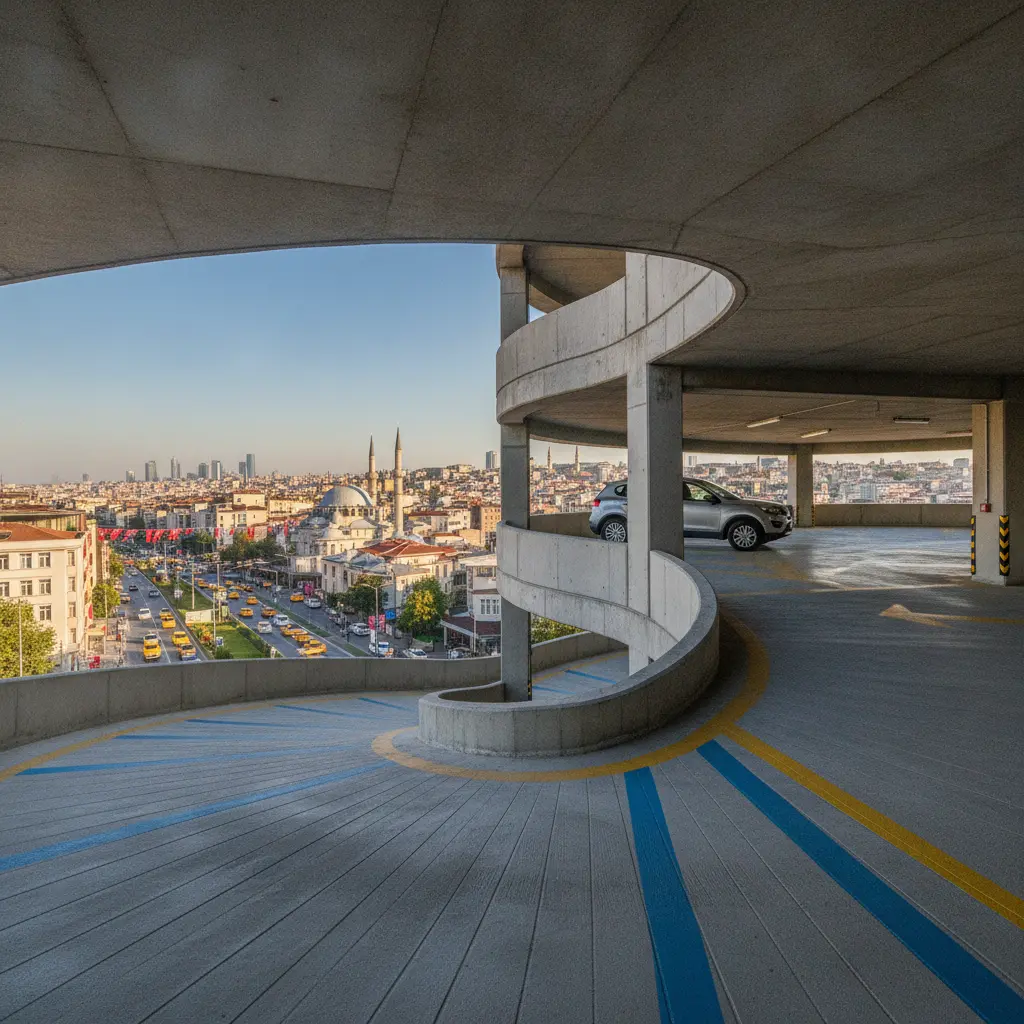
The daily rate on a rental quote is rarely the number you end up paying in Istanbul. What actually moves your budget is where the car is handed over, how many hours it sits in a paid car park, and when you choose to drive across the city. Two quotes for the same vehicle class can differ substantially for one simple reason: every handover point carries its own operating cost, and that cost is baked into the price you see. This guide breaks down the three decisions that genuinely shape your total spend — pickup location, parking, and traffic timing — and explains why each one matters before you sign anything. If you want to compare live options first, start with Turlago car rental options.
Why the pickup point quietly sets your total budget
Pickup location is the first line of the contract and the last thing most travellers compare. Yet it drives the price more than the car category does. An airport desk, a downtown office, a hotel delivery and a one-way drop-off are four different products with four different cost structures, and only one of them is likely to be the cheapest for your itinerary.
Airport desks: convenience with a surcharge built in
Desks at Istanbul Airport and Sabiha Gökçen stay open around your flight times and save you a taxi ride into town. That convenience is priced in: terminal space, extended staffing hours and round-the-clock readiness all add to the rate. Demand is also concentrated there, so the same vehicle class is often priced more competitively at a city office.
Run the comparison honestly. Add the cost of getting from a city office to the airport by taxi or metro, then weigh it against the airport premium. If you land at midnight with heavy luggage, or you plan to drive straight out of the city, the airport desk earns its surcharge. If you arrive in the morning and will spend three days in the centre, a city pickup is usually both cheaper and calmer.
One overlooked factor: queueing. In peak season, the time you spend waiting at an airport counter eats into the rental period that starts ticking at handover. Build a buffer of about an hour between landing and your booked pickup slot.
City offices: sharper prices, easier handovers
Offices in districts such as Kadıköy, Ataşehir, Levent, Beşiktaş, Bakırköy and Şişli tend to quote lower daily rates because their operating costs are lower. They also let you collect and return outside rush hour, which protects both your time and your fuel. Collecting at 09:00 from a city office is a very different experience from collecting at 17:30 in the middle of a bottleneck.
The trade-offs are practical rather than financial. Street parking near a small office can be scarce, the vehicle range may be narrower, and you should confirm in writing which address and which time window applies to your handover. Verbal slot times flex on busy days, and a missed slot at a small office can cost you a whole afternoon.
Hotel and address delivery: portable convenience, movable fee
Delivery to your hotel is a genuine luxury on a short city break, but it is a separate line item that varies with distance, time of day and demand. A weekend evening delivery typically costs more than a weekday midday one.
The most common problem with address delivery is damage inspection in a dim underground car park, done in a hurry. Insist on checking the car in daylight, photograph all four corners, and have every existing scratch and dent written onto the handover form. Five minutes of discipline here removes almost all risk of a dispute at return.
One-way rentals: the price of crossing the Bosphorus
Collecting on the European side and returning on the Asian side looks convenient until the one-way fee appears. Many companies only allow this between specific office pairs, and airport-to-airport drops are usually the most expensive version. Read the small print beneath the daily rate: the one-way charge, the different-return-location fee and the extra insurance lines all live there.
A useful rule: return the car on the same side as your departing flight. The one-way fee you would pay to switch sides is often higher than several days of taxis and public transport combined.
Parking: the invisible second rental bill
Parking is the fastest-growing line in an Istanbul car rental budget, because the meter runs while the car waits. A driver making three stops in a day can finish the evening with a parking bill approaching the daily rental rate. Modelling this cost before you book can change not only your rental length but even the car class you choose.
What a normal city day actually costs in parking
Central covered car parks charge hourly, and tariffs vary sharply by district. Rates around the historic peninsula, Nişantaşı and Levent sit at the top of the range, while car parks slightly further out offer day rates that are far gentler. Municipal car parks, shopping mall facilities and private covered garages are three different price tiers, and mixing them up wrecks a budget.
A workable estimate: count how many times you will park per day and how long each stop lasts. Two four-hour stops usually add more than the daily rental rate itself. If your day is entirely urban, compare the rental plus parking plus fuel total against a mix of taxis and public transport. A rental car wins mainly on days with an out-of-town leg or multiple stops that public transport cannot link.
Is your accommodation’s parking genuinely free?
When a hotel or apartment listing says parking is available, confirm what that means. Some include it at no charge, some bill per night, and some simply mean you can look for street space nearby. A central property with a covered garage can look pricier per night yet be the cheaper total once parking is included.
Ask about the garage’s height limit as well. Roof boxes and taller vehicles are regularly turned away from older underground car parks. That one-line answer saves you half an hour of circling the block on collection day.
Long-term rentals and monthly parking passes
If you are renting for a month or more, price parking as a monthly season ticket rather than a daily expense. Monthly passes are considerably cheaper than the daily tariff and remove the nightly hunt for a space. Residential and site garages usually require plate registration, a copy of the vehicle documents and sometimes a resident access card, so complete that paperwork before the rental begins.
Also account for idle days. If the car stays with you but you only drive at weekends, you are still paying to store it. For genuinely occasional use, short-term rentals or car-sharing often beat a long contract on total cost.
Traffic: you pay in time, fuel and tolls — not distance
In Istanbul, the distance between two points tells you almost nothing about how long the journey takes. That mismatch reaches your budget through three channels: fuel, bridge and motorway tolls, and time. Because rentals are billed in time blocks, congestion is a financial variable, not just an annoyance.
Rush hour and shifting your rental window
Certain morning and late-afternoon windows slow the main arteries and bridge approaches dramatically. If your rental is billed in 24-hour blocks, collecting at 16:00 versus 09:00 makes a real difference: an evening pickup spends its first day stuck in traffic. Choose your handover time around the road, not around your convenience.
Collecting early and leaving the city before mid-morning usually covers far more ground within the same billed period. On the return leg the same logic applies: schedule the drop-off away from the evening peak, or the extra time stuck in traffic becomes a late-return charge.
Bridge and motorway tolls: the invoice that arrives later
Istanbul’s Bosphorus bridges and several motorway links are tolled. On rental cars these crossings are usually recorded by an electronic tag in the vehicle, and the rental company bills you afterwards. This is the most surprising line item of all: the extra invoice can land weeks after your holiday.
Ask two questions at booking: how tolls are collected, and whether an administrative handling fee applies per crossing. Some companies add one, and across several crossings that fee grows faster than the tolls themselves. Clear any outstanding toll balance before you hand the car back rather than on the final morning.
Fuel policy: a quiet but significant swing
There are two common models: full-to-full, and a prepaid fuel package. With full-to-full you collect full and return full, so you only pay for what you burn. With a prepaid package you pay upfront for a tank and typically do not get a refund for fuel left in it.
For light city driving, full-to-full is almost always cheaper. A prepaid package can make sense on a long intercity route when you genuinely will not have time to refuel before returning, but do the arithmetic first. Photograph the fuel gauge and odometer at handover — most return disputes start with those two readings.
Handover and return times: how the clock changes the price
Some companies bill in rolling 24-hour blocks, others by calendar day. On a 24-hour basis, collecting at 10:00 and returning at 09:30 the next day counts as one day. On a calendar-day basis, the same itinerary can be charged as two. Over a weekend rental, that single difference can change half your total.
Clarify three things before booking: how the billing block is counted, what grace period applies at return, and whether overrunning is charged hourly or as a full extra day. Ask about early returns too — many contracts do not refund unused days.
Then there is flight delay. If your plane lands late and you miss your slot, office closing hours take over. If you plan a midnight collection, get written confirmation that the desk is open 24 hours, or you may find yourself at the terminal without a car.
Daily, weekly, monthly: which package actually saves money
One to three days: daily rates rule
Short rentals run on daily rates, and the total is decided by the insurance package and the pickup point rather than by the car itself. Here, upgrading the vehicle class buys you less than fixing the parking and fuel lines. In a dense city, a smaller car means easier parking and lower consumption.
Four to ten days: weekly packages start to bite
At around a week, most companies offer weekly pricing with a clear discount against the daily rate. This is the tier where the mileage limit matters most. If you plan to leave the city, a capped package can end up costing more than an unlimited one — ask for both numbers and compare the total, not the headline rate.
A month and beyond: long-term rental economics
Beyond thirty days the pricing logic changes completely. Monthly packages reduce the effective daily rate, broaden insurance cover, and sometimes shift maintenance responsibility to the company. In exchange, you need to read clearly who pays for parking, tyre replacement and traffic fines.
For anyone staying in the city over a month, long-term rental is usually the most efficient structure. Just be honest about usage: if the car sits idle most days, you are still paying for storage. A monthly contract pays off once you cross a certain level of daily use.
The contract clauses that inflate your final bill
The daily rate on the booking screen is only the opening figure. Get written answers to the following, and the surprise invoice at the end of your trip becomes far less likely.
- Mileage limit: excess kilometres are billed per unit, so unlimited packages usually win for out-of-town plans.
- Additional driver: adding a partner or friend to the contract carries a fee; leaving them off may void insurance cover for their driving.
- Young or new driver surcharge: drivers below a certain age or licence vintage often pay an extra premium.
- Damage waiver package: reducing the excess to zero is added per day. Worth it on short rentals, expensive over a month.
- Deposit hold: a blocked amount on your credit card restricts your available balance. Ask when it is released.
- Cleaning and return inspection: some contracts define charges for smoke odour, pet hair or excessive dirt.
- Traffic fine handling fee: beyond the fine itself, companies may charge an administration fee for processing it.
- Late return fee: applied hourly or as a full day once the grace period expires.
- Winter equipment: winter tyres, chains or all-season tyres may be an optional paid extra in colder months.
- Child seats and extras: child seats, navigation units and roof boxes are billed per day.
You will not trigger all ten, but any two or three together add a meaningful percentage to the daily rate. When comparing quotes, always ask for the total payable at the counter tomorrow morning, not the promotional daily figure.
Seasonality, demand and when to book
Istanbul rental prices are not evenly spread across the year. Summer months, public holidays and long weekends push demand to its peak, lifting daily rates and thinning out available classes. Booking early is the single most effective lever during those windows.
Early booking has a cost of its own: flexibility. Read the cancellation and amendment terms carefully. If your flight times might move, paying slightly more for a changeable rate is better than losing a non-refundable reservation entirely. In autumn and winter, prices are more competitive, but daylight is shorter, which compresses what you can realistically fit into a day of driving.
A ten-point checklist before you confirm
- Which address and which time window applies to my pickup?
- Is the return location the same, and if not, what is the one-way fee?
- Is the rental billed in 24-hour blocks or by calendar day?
- Is there a mileage cap, and what does unlimited cost?
- Is the fuel policy full-to-full or prepaid?
- How many paid parking stops per day should I budget for?
- Is parking at my accommodation free, and is the height limit suitable?
- How are bridge and motorway tolls collected, and is there a handling fee?
- What is the insurance excess and the deposit hold, and when is it released?
- What do the written cancellation, early-return and late-return terms say?
The real decision is the handover point, not the car
The most consequential choice in an Istanbul car rental is not the vehicle class. It is where you collect the car, where you leave it, and how many hours it will spend stationary in a paid space in between. Get those three right and the invisible costs layered on top of the daily rate largely disappear. For short city breaks, taxis plus public transport remain a strong alternative; a rental car earns its keep on out-of-town legs, multi-stop days and luggage-heavy itineraries.
Approach the decision as a bundle — pickup point, parking plan and billing block — and compare quotes on total cost rather than headline price. You can review current vehicles and handover locations on Turlago car rental options and build your budget around those three variables.